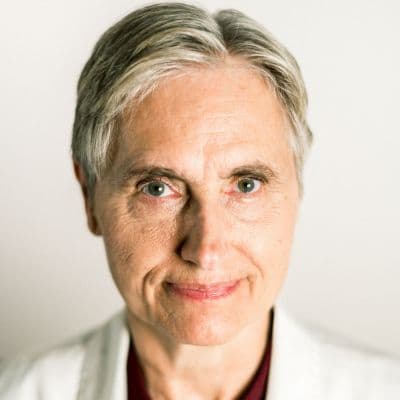
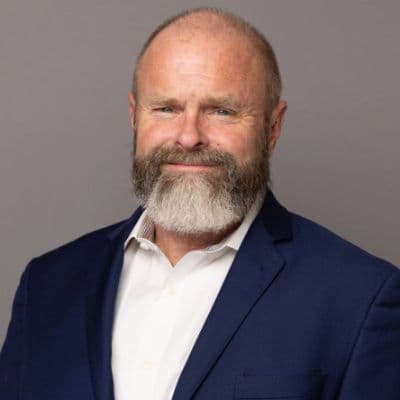
Full Transcript Introduction and Brian Dickersonu2019s Background 0:00 Welcome to another interview for the MS and Autoimmune Summit. 0:03 I'm Doctor Terry Wahls, your host, and today we're interviewing 0:07 Brian Dickerson, who is CEO of Flavin. 0:10 And, Brian is a health care lawyer with 30 years of experience. 0:15 And he founded the natural health product companies 0:19 focused on flavonoid based supplements designed to support 0:23 brain health, wellness, immune health and longevity for humans. 0:28 So welcome, Brian. 0:29 Is there anything else that you would like to add? 0:33 Oh, doc, I think that's a good support and thank you for having me on your show. 0:36 It's been an honor. 0:37 Yeah. 0:38 So let's talk about flavonoids. 0:41 What are they? 0:43 What what kind of compounds are they? 0:46 So flavonoids are under the polyphenol category. 0:49 And the flavonoids 0:51 kind of like when you look at your diet, when you talk about the leafy greens 0:54 and the, the right, the ripe colors, the purples, the greens, 0:58 the flavonoids are the 1:01 plant compounds that protect the plant 1:04 from oxidative stress, from the sun, from pests. 1:08 And they are very bioavailable for the plants. 1:12 It's just getting them bioavailable for us, for humans. 1:15 But it's one of the benefits as to why we eat leafy greens, why we eat the bright 1:20 fruits and vegetables, why oranges and grapefruits are good for us. 1:23 It's because those polyphenols, the flavonoids like quercetin, which I'm 1:28 sure everybody of your audience has heard of, are part of those flavonoids 1:32 that provide that benefit and that help to the plants and cellular. 1:37 They transfer over and help us when we actually eat those plants. 1:41 So, you know, for the listeners, 1:44 the phenol is a ring like structure 1:48 in poly means you have multiple rings. 1:51 For a long time, scientists thought these were not important compounds 1:55 because they're too big for humans to absorb them. 2:00 We didn't think they crossed into our bloodstream. 2:03 So for many, many years,
What Flavonoids Are and Why They Matter 2:06 scientists ignored this as a group. 2:10 And recently 2:12 we we will we looked at the epidemiology. 2:16 We saw the diets that had that were rich in these 2:19 polyphenols, these foods with ring like structures. 2:23 They have really much better health outcomes. 2:27 So we became much more interested in what are they? 2:32 How is it that these big structures that we can't absorb 2:37 have such a powerful health impact? 2:40 So part of what we figured out 2:44 is that the bacteria in our gut 2:48 helps to digest, interact with these polyphenols, 2:52 and then they break them up into smaller compounds that do get into our bloodstream 2:57 and have really powerful impacts on our health. 3:01 So let's do you want to talk about some of those observations 3:06 that, these polyphenols, these flavonoids have on our health? 3:12 Well, yes. 3:13 Like when you're talking 3:14 specifically about the ring structures, another key component is 3:17 there's a lot of supplements out there where you can just take the course 3:21 eating by itself. 3:21 But when you're eating that plant, those ring 3:23 features and function within the polyphenols are all combined together 3:28 from the research helps your body be able to break them down and absorb them more. 3:32 And as you just mentioned, doc, 3:34 there are some polyphenols that break down when they're actually in your mouth. 3:38 There's other polyphenols that have to go through the bacteria process in your gut, 3:43 and that's one of the reasons why eating fatty foods with polyphenol 3:47 is like an avocado or various olive oils helps with the polyphenol breakdown. 3:53 That's why olive oil mixed with a lot of different, 3:57 foods helps as well, because olive oil has the polyphenols in my well. 4:02 And when you look at the various polyphenols, some of them have pure 4:07 antioxidant capabilities that helps reduce the oxidative stress. 4:12 Others have been found to be 4:14 able to create what I call inflammatory healthy balance. 4:18 So help balance your inflammation because your body does need some inflammation. 4:22 And so it helps create that balance. 4:24 What we have seen as far as people 4:27 using the products is it helps with the blood flow. 4:30 It helps with inflammation health. 4:32 It helps with oxidative stress. 4:34 For me personally taken the brain health, I have CTE from college football. 4:40 And I can tell you when I take the brain health 4:42 watch, that's part of my daily regiment. 4:44 I do not have the migraine effect. 4:46 I don't have the, the, the, the throbbing in my head that I can get regularly. 4:52 And when you look at that research, it comes back down to the helping 4:56 the actually the blood flow and the cardiovascular inflammation health. 5:01 So that's just from a personal standpoint. 5:05 Now when you're taking these compounds, 5:09 how do we take them? 5:10 Are we wearing them on our skin or are we taken by mouth. 5:14 But the so what we create is a sublingual. 5:17 So it is dropped under the tongue with the basis of the research 5:21 that shows some of the flavanols, when they're absorbed in the tongue, 5:25 are able to cross the broad blood brain barrier, 5:27 whereas hamper fill is known more to be digested in the stomach. 5:32 So you swallow the remaining amount and it goes down into your stomach 5:36 and your digestive track. 5:37 And that's how it's absorbed with like, 5:39 as you've already mentioned, the bacteria interaction. 5:42 And in the body, 5:44 illnesses, just a couple drops. 5:46 I'm taking a,
How Flavonoids Are Taken and Dosed 5:48 how do we measure how much to take? 5:51 So it's a it's a droplet, so it's a 30 ML bottle. 5:54 It's a one ML dropper. 5:55 And basically people have their own protocol. 5:59 It's it's a supplement for. 6:01 So it's supposed to help what your nutritional balance is. 6:04 So with it when you look at your suggested diet 6:07 and the, the protocol, you're looking at the three, three, three. 6:10 And maybe somebody can get the full three cups of the leafy greens 6:14 or the sulfur based grains or the fruits. 6:18 If you are able not able to do that, you can take one meal 6:23 and you're going to get basically one milligram of those flavonoids. 6:27 Mix the quercetin, the easy GC, the reserve or tall. 6:31 And it's in a manner that your body's going to be able to absorb it. 6:36 And the bioavailability okay. 6:39 And so these are liquids. 6:42 They're not capsules. 6:43 And we take one mil five mils. 6:48 So it's up to with what you're using in your diet. 6:50 So if someone's eating a lot of greens doc 6:53 and they don't think they need it one ML is a great daily. 6:56 If for me, I would just personally say I take five miles of the brain health 6:59 every morning and I take five meals at night, 7:03 and that's just because I know from my body and me having the CTE 7:07 that that is what my body needs based upon my diet. 7:10 We should remind people, what is CTE? 7:14 That is what I can say is cause from is from college football 7:17 and the trauma to my brain from the multiple concussions that I had. 7:22 And it's basically what's been discovered over the last ten, 15 years 7:25 as to what a lot of college football players also soccer suffer from. 7:30 As far as the swelling in your brain from past wounds, past trauma. 7:35 Yeah. 7:36 So it's a chronic traumatic encephalopathy in people I have to meet. 7:41 I have to sort of worry about that myself. 7:43 Being a rough and tumble farm kid, I had the concussions as a kid, 7:47 and then I competed nationally in full contact free sparring and taekwondo. 7:52 We got two points for kicking people in the head, 7:56 so I've 7:57 had quite a few cushions by concussions myself, which, by the way, 8:02 does increase the risk for multiple sclerosis, ALS, Parkinson's. 8:06 And so for the listeners, I invite you to go back and tally up. 8:11 How many times have you seen stars in your life, 8:15 and every time you saw stars, that was a little concussion in those. 8:20 Concussions do increase 8:23 the vulnerability for brain trouble. 8:26 And it's so that is part of 8:29 perhaps why you developed multiple sclerosis, why you developed 8:33 an autoimmune problem that has neurologic or psychiatric symptoms. 8:38 And so go ahead, as we talked before, that was you. 8:42 You've you've received concussions, but you also were talking about the 8:45 concussions that you have given through your taekwondo and judo years as well. 8:50 Yes, yes, that is true. 8:52 You know, and when I entered medical schools, like, 8:55 yeah, I quit competing nationally, I still did. 9:00 I still taught, and I still was doing my forms, 9:04 but I stopped giving concussions, and I 9:10 hopefully did not 9:11 have any more concussions after that. 9:14 Well, as you said, like the stars, what was scary is when you go back 9:18 playing football in the 80s and 90s, early 90s, 9:22 so you saw stars all the time. 9:23 And that was kind of like a badge of honor. 9:26 You a good hit and oh, you saw stars 9:29 and or if you saw green because that's what what happened to you 9:32 hit so hard that you get up and everything is just green. 9:36 And it was a badge of honor almost, that it was a hard hit. 9:38 Great play. 9:39 And now we go back and learn that those were concussions,
CTE, Concussions, and Brain Health Benefits 9:42 so let alone the concussions that knocked us out of the games. 9:46 We were getting those concussions every day in practice. 9:49 Yeah. 9:49 And again, for the listener, I invite you to go back in 9:55 and think through. Did you how did you see stars as a kid? 9:59 Did you see stars as an adult? 10:02 And that is part of your burden, 10:05 part of your risk that Brian's telling us that, 10:10 his product has been very helpful for him. 10:14 And I'll say that after meeting Brian, I've added that to my regimen as well, 10:19 because 10:22 I don't want to have the concussive history 10:26 add to my risk for cognitive decline. 10:31 So how long would it take? 10:34 So if someone begins using the flavin flavonoids, what kind of symptoms? 10:40 What what would they notice? 10:42 And how long would it take to begin noticing these changes? 10:46 You notice, I would say, a relief 10:49 in the pressure within the day. 10:52 And I can tell you from suffering from migraines and 10:57 having friends that take the product because of their migraines and people 11:01 that played football with me and ranchers, like you're saying, doc, on a farm 11:04 and ranch, you get all kinds of injuries. 11:07 We see the relief of a migraine. 11:11 And when I'm talking about the migraine 11:12 is the pain, the pressure, the peripheral stars. 11:16 You started receiving that relief within 15 to 20 minutes. 11:20 And that is a tremendous benefit when you're used to having a migraine 11:25 and sometimes having to stay in a dark room for the entire day. 11:29 So that's a reactive measure. 11:33 If you start using the flavin brain, 11:36 you start not seeing the or feeling 11:41 the pressure, not feeling the throbbing within the first few days. 11:47 And if you keep taking it, you really don't feel it. 11:50 And I can tell you in the last three years, 11:53 prior to having the flavin brain, I would have 1 to 2 migraines a week. 11:59 I now today I had three migraines last year and I've had one this year. 12:05 That's it. 12:06 And in the listeners, 12:08 migraine and chronic headache 12:12 is a very common part of multiple sclerosis. 12:16 It is also a very common part 12:19 of the prodrome that we have 12:22 before the onset, multiple sclerosis 12:25 or a autoimmune disease with systemic, 12:30 you know, an autoimmune disease that is neurologic and psychiatric symptoms, 12:34 migraine and chronic headache 12:37 is a very common part of this. 12:40 And so the protocol that Brian 12:43 just outlined, I want to be sure that I am describing the correct product. 12:47 We're talking about the brain. 12:50 What is the name of the product? 12:51 It's really helpful for my brain health problem, not brain health. 12:55 Brain health. 12:56 So again, if you have headaches or migraines 13:00 as part of your symptom complex, I think this would be useful. 13:05 But in if for that circumstance 13:09 you'd start with one meal, 13:10 be sure you tolerate and you work up to five meals. 13:14 That would be the suggestion. 13:15 Yeah, yeah. 13:17 And then would they do five meals twice a day or maybe five once a day? 13:22 I would think five mill once a day would be very supportive 13:25 of what their nutritional needs are. 13:27 I do it twice a day just because I know that works for me. 13:30 So that's what I keep with I it may be the frequency 13:34 and severity of your migraine, but would probably tell you 13:38 we would five once a day be the right dose. 13:41 If you have a more severe migraine problem, perhaps 13:43 five twice a day may be more useful. 13:47 No. Yeah. 13:47 It's it 13:48 it's going to be up 13:48 to the doctors like you that can make that suggestion, but I, I, 13:52 I use it twice a day just because of my history. 13:54 Sure, sure. 13:57 So, all people talk about the blue zones, 14:01 you know, the areas where you live to 100 plus. 14:05 How do these zones use flavonoids? 14:09 Well, when you look at the blue zone diet stock, you're 14:11 looking at the the leafy greens you talk about. 14:15 And you could literally take the blue zone gardens and what they eat. 14:20 And in our facility in Florida, we grow those same plants indoors to 14:25 to extract the flavonoids. 14:27 So when you look at dill, for an example, 14:29 everybody may look at dill as just being this seasoning. 14:33 This herb dill has phenomenal amounts of flavonoids, not only a broad spectrum
Blue Zone Foods and Plant Sources of Flavonoids 14:38 of flavonoids, but the the depth and content of the flavonoids, parsley. 14:42 Everybody looks at parsley and celery as garnishment. 14:46 But when you look at the blue zones, when you look at a mediterranean area, 14:50 parsley, from giant Italian parsley to curl parsley, 14:53 they have high levels of camp or high levels of quercetin. 14:57 And that's part of like the leafy greens, suggesting that you have celery. 15:01 Just don't eat the actual stalk. 15:03 The celery leaves are high in camp or filled root in Napa, Jenin. 15:08 And we we do the same thing with all these plants. 15:11 We get the 15:13 most organic 15:16 heirloom seed that we can from those countries. 15:19 So from Japan, from Italy, from Greece. 15:22 And those plants end up being the plants we plant 15:25 and grow in our cultivation facility in Florida. 15:29 And then that's where we extract the flavonoids. 15:31 And we're getting these flavonoids. 15:33 These flavonoids are fresh from the plant, fresh from those blue zone areas 15:37 where you get me curious, where are the seeds you're getting from Japan? 15:42 Well, we get two different types of parsley 15:45 mitsu two parsley and then Japanese red parsley. 15:49 And then we also have Japanese buckwheat. 15:53 And then we also have an isoflavones an extract that we get from a soy. 15:59 But the soy is not like the soy that you have here in the United States. 16:02 It's just pure healthy soy. 16:04 And the flavonoids actually occur prior 16:06 to wear off before any proteins are developed 16:09 in. You 16:10 have any of their purple sweet potatoes? 16:14 We have the purple sweet potatoes all the time. Yeah. 16:16 So yes, not only the purple sweet potatoes beneficial, the Okinawa potato, but 16:21 also the, the greens, which are actually when you flip them over, they're purple. 16:25 But the tops that dark green, 16:27 the purple on the bottom side, those leaves are full of flavonoids. 16:31 Wow. Very cool, very cool. 16:35 And so how does flavor not provide the flavonoids 16:40 that are really part of the optimal wellness program? 16:45 So when we look at what was going to be the best mechanism to keep the flavonoids 16:49 stable, the research on that basically showed MCT oil. 16:55 And then using either an olive oil 16:58 we mixed and together we used and back and forth. 17:00 But what ended up being the best for the bioavailability 17:05 to the feeling the results was using the MCT oil. 17:08 And the MCT oil is now from a coconut. 17:11 A lot of people think it's from coconuts, from a coconut palm, 17:13 but is the heart of the palm where we get the oil. 17:16 And that oil then keeps the flavonoids thriving. 17:21 And the one negative about the flavonoids is they 17:24 they are very negatively reactive to light and to heat, 17:29 because that's what they actually do in the body and do in the plant. 17:32 So if a plant gets overexposed to light, too much sunlight, 17:36 too much heat, the flavonoids are what protects the plant. 17:39 And then that fraction needs the flavonoids and the flavonoids 17:42 when life gets burned out. 17:44 So for our part, we had to make sure that we protect the flavonoids, 17:49 the MCT oils one protectant, the other is like all of our bottles 17:53 are a matte colored white so the sun can't go through them. 17:57 And then secondarily, we don't want them in heat. 17:59 It's better to be put in a refrigerator or room temperature. 18:03 But that keeps the flavonoids life longevity and the strength of them. 18:07 And then that MCT oil, when you put it under your tongue, 18:10 is going to get absorbed quickly 18:11 there as well as since it's got a fatty chain acid, 18:15 when it gets into your stomach with the bacteria, it's broken down 18:18 and that's how your body absorbs it. 18:20 And your gas ethanol system doesn't need to shake the bottle than before. 18:25 If you shake it, yeah, if you shake it, it makes it more active. 18:27 So definitely shake it beforehand.
Product Formulation, Stability, and Delivery 18:30 And that's going to give it a more active state. 18:33 Okay. 18:34 And so we've talked about the brain health. 18:38 Is that the only wine that you have water a number of different lines. 18:43 There's other lines. 18:44 We have the immunity which is very relevant also to your patient mix. 18:48 The immunity has the higher reserve at all. 18:51 It's got the app engine and route. 18:53 And it also has SGC and that those flavonoids 18:58 are just the flavonoids that the studies have shown help boost the immune system, 19:03 where the flavonoids that we use and the concentration in the brain 19:06 is specifically from the study showing which flavonoids help brain health. 19:11 We also have the extra strength, which is just going to be designed 19:15 more for create an inflammatory, healthy balance. 19:19 And the flavonoids 19:20 you've got the can, flavonoids and the can of flavonoids have been shown 19:24 in studies to be very beneficial in creating that inflammatory balance. 19:28 A healthy balance. 19:30 And then we have the sprays and stuff like that, the topicals for people to use, 19:34 if they have areas of the body, their elbows, the wrists and the creams, 19:39 the same thing where we put the flavonoids in those products to help 19:43 you like an icy hot type application. 19:46 But the flavonoids are what's delivering the relief. 19:50 So that might be a sort of acute pain relief 19:54 or a muscle joint problem. 19:57 Correct. 19:57 Now, I know we have a lot of people who have difficulty 20:02 with restless legs or practically movement disorder. 20:06 Does this have any role for either of those? 20:09 Well, we have one of our tinctures is a neuropathy tincture. 20:13 And that neuropathy tincture is the one that we have found from people. 20:18 Adding it as a supplement helps them with the restless leg syndrome, 20:22 and to the point where 20:26 we've had various clinicians and physicians get back to us 20:31 with patients who, let's say, cannot feel their lower extremities and they start 20:36 using the neuropathy, those flavonoids are helping that oxidative stress. 20:40 And what ends up happening is the physician receives 20:45 a complaint from their patient that they're receiving sharp pain. 20:49 And the reason they're receiving sharp pain is it's their oxidase 20:53 stress is being relieved and the nerves are feeling for the first time. 20:58 And so if you take the neuropathy and you have issues 21:02 with your lower extremities as far as not feeling toes, not feeling feet, 21:06 the one negative is within the first 7 to 10 days, there's 21:09 going to be some sharp tingling pain from the flavonoids. 21:13 Given that extra support to your health and your. 21:16 What I can say is the support of your body, the what's needed. 21:19 And is that quiet down, then yes, it quiets 21:22 down by day 12 to 15, then it quiets down and it doesn't exist. And 21:26 you have people that are actually able to have the blood 21:29 flow and nerve feelings, and it's quite a benefit. 21:34 So probably particularly useful for diabetic retinopathy, 21:39 particularly useful for nutritional neuropathies as well. 21:44 But I want to get back to the restless legs in the periodic limb 21:49 movement disorder, 21:51 because that is very, very common in the setting of multiple sclerosis. 21:56 And or immunity with neurologic symptoms. 21:59 What are the products that you recommended for that? 22:03 It's a I would be using the brain health
Brain Health, Immunity, and Neuropathy Products 22:06 with the neuropathy with an amputee. 22:09 Yeah. 22:09 And it's it's specifically in neuropathy health 22:12 to help with and but help in the body in the 22:16 is the neuropathy health taken orally or is that. Yep. 22:19 Same thing as well okay. Yep 22:22 there is. 22:22 We do have the relief spray that people can use on their legs 22:26 and their ankles for the external comfort. 22:30 But if you're actually looking 22:31 at supporting that nutritional support, it's the neuropathy tincture. 22:36 Neuropathy tincture. 22:38 Yeah. 22:38 And is is that also in the MCT oil as well. 22:41 Yeah. Correct. Yep. 22:43 Okay. All right. 22:46 So we have the brain health 22:50 immunity support neuropathy. 22:53 Those are probably the three that are most relevant 22:56 for people with multiple sclerosis. 22:59 Am I correct on that. 23:00 You're correct doctor. Yeah okay. 23:03 And is this something that you take typically with food? 23:06 Without food, 23:09 you can take it with food or without food 23:10 if you're taking it with food, preferably fatties. 23:15 So when you're talking about an olive oil, you're talking about avocados. 23:18 It's phenomenal. Take with that. 23:20 And I know the people following, you know, the dangers of sugar. 23:24 But if you take it with sugar, 23:26 the flavonoids are going to work on fighting the sugar. 23:30 And so it's going to negate you taking it. 23:33 If you're if you have any sugar before or after with the flavonoids, 23:37 because the flavonoids are going to work on eating up the sugars. 23:40 Basically what you find in in vitro studies. 23:43 So yeah, stay away from sugar. 23:46 Yeah. 23:47 Let me reinforce that. 23:48 Added sugar and add it. 23:50 Also add in the white flour based. 23:53 Yes breads pastas, cereals most of which particularly 23:57 our breakfast cereals have a lot of added sugar added to them. 24:00 Those are the foods that are really destroying our health 24:04 and destroying the health of our children. 24:06 And so feed your kids fruit, nuts, seeds. 24:12 Give them vegetables, don't give them sugar and don't give them these cereals. 24:15 Those are so harmful for them. 24:18 So I could take these flavored flavonoids. 24:23 I could take them 24:25 without a meal, or I could take them before the meal and then eat a meal, 24:30 preferably one that has a bunch of fat with it, olive oil. 24:35 And I actually, I'm very, very fond of olive oil. 24:37 If you follow me on Instagram, you see that I mix olive oil with my herbs, 24:42 and right now I have lots of oregano coming up and a lot of chives. 24:47 So I make oregano chive pesto, 24:50 which I had last night with my fish, which was super delicious. 24:54 And then in a few weeks, we'll start having the basil 24:57 come in now, Bill, to make some basil pesto as well. 25:00 And so what? I think I'm here. 25:02 You tell me, is taking my flavonoid before the meal heavy? 25:07 My meal, in which I will have easily 2 to 3 tablespoons of my pesto, 25:13 very rich in olive oil, would be a great way to pair with that. 25:18 The flavor would be a great way, doctor. 25:19 Yes. Yep. Okay. 25:21 And when I, 25:22 when I take my brain health at night, I take a little shot of olive oil with it. 25:26 Okay. 25:27 Is there anything else that we have not yet covered, 25:30 Brian, that you'd like to highlight? 25:33 No, I think those are some great points to highlight, doctor.
How to Use the Products and Where to Buy 25:36 Okay, so if people are at a known spread like, 25:39 okay, I want to check this out, how how would they, get some flavor? 25:44 I they can go to flab relief.com. 25:46 That's the website. 25:48 And on the website we have all the products and go 25:51 specifically see it do a search for brain health neuropathy our immunity. 25:57 All those bottles are right there on the the first product page. 26:00 And they can order from there. 26:02 And then we're also offering 26:05 doc is because of your tremendous effort the The Wall diet 26:09 and educating everybody on how great a healthy diet is. 26:13 And polyphenols are anybody that orders, we'll have a code 26:16 available for them and they'll receive 25% off. 26:20 And then we're also donating 10% to your charity of choice 26:23 based upon your enlightenment of how great a healthy diet is. 26:28 And I think when I've been since we met, I've been in various conferences. 26:33 And your name has come up multiple times 26:35 when people come and talk to me about the event. 26:39 And we mentioned polyphenols and you're one of the top three people 26:42 I always get mentioned as far as have 26:44 I ever talked to Doctor Terry Wall on her diet? 26:46 And I'm like, yeah, I talked to Terry Wall, doctor. 26:49 Why? I know about her. 26:50 And I said, it's it's a great thing that she's done for us 26:53 as far as letting everybody know about the benefits of a true healthy diet. 26:57 Okay. 26:57 So filament relief.com. 27:01 And what's the code for that 25% off. 27:03 So hey so we wall 2525 27:10 okay I'm going to tell you to change that to walls within us. 27:15 Oh. Oh that's our able to do that. 27:17 It does. 27:17 It's got an S. 27:18 Oh bad I didn't know that C but it's got the S. 27:21 It's got this okay. 27:22 So walls 25 gets you 25% off. 27:25 And Brian and I are in complete agreement. 27:29 These flavonoids rock. 27:32 They are a cornerstone of getting your health back. 27:35 Brian, thank you so much. 27:36 This has been a wonderful interview. 27:38 Thank you so much for having me, doc.
Comments