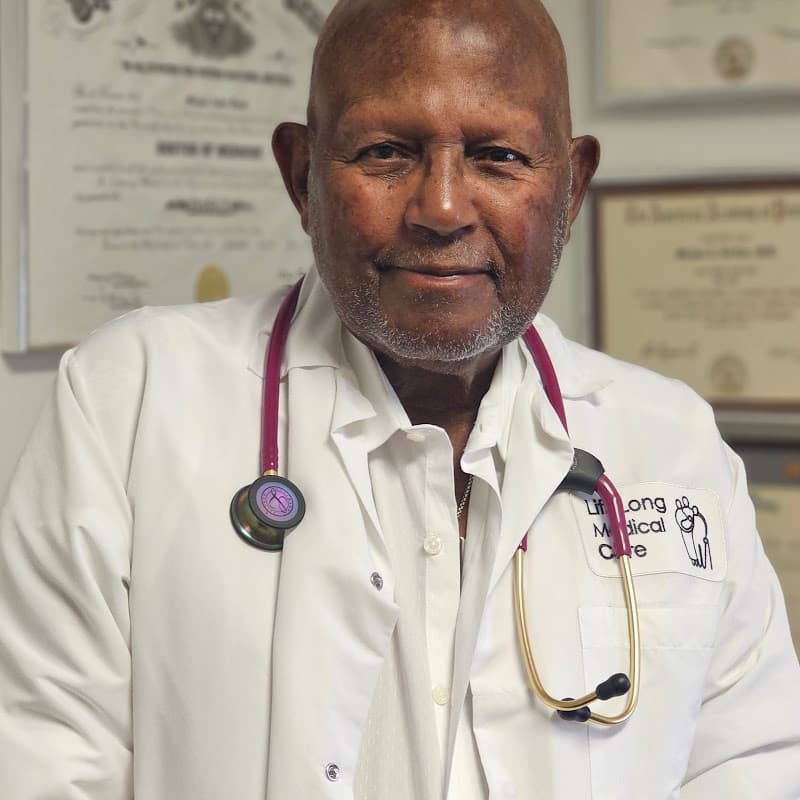
Full Transcript Introduction to the Wellness Watch 0:08 your health. 0:09 The African-American Wellness Watch. 0:12 Trusted information for us, by us. 0:16 Dr. 0:16 Mike Lenore and other experts from around the country and around world have the latest on how you and your family can get healthy and stay well. 0:26 It's time for the African American Wellness watch. 0:31 Welcome to today's special edition of the wellness watch, I'm your host Dr Mike of having Dr. 0:38 Ron Kennedy Bailey. 0:40 He's a chief psychiatry at Louisiana State University, the chief of the jail cell group of psychiatrists in New Orleans and the assistant dean of community engagement. 0:53 Dr Bailey is located in new Orleans, a very special place to talk about mental health. 1:00 Welcome to our program, Dr Bayley.
New Orleans After the January 1 Tragedy 1:02 Well, good afternoon and thanks for having me, Obviously, the events of New Year's Day have changed the landscape across the country, 1:11 maybe even across world. 1:13 But certainly in the city of new Orleans, how is the City of the New Orleans handling that? 1:19 Well, by definition, your points are correct. 1:23 The tragedy of January 1st, 2025 will live with us in infamy forever. 1:29 My team, our doctors, or our clinical staff, and our entire community, I think was shocked and surprised at the level of vulnerability that we all share. 1:38 That's a corner that I've stood on and many New Orleansians have, not just dozens of times, maybe hundreds of time on the corner of Canal and Bourbon Street, 1:48 next to Big Marriott is a very popular corner in town. 1:52 for engagement with people in town, for an activity, a conference. 1:56 It's just right in the middle of the action and a very fun loving place to be honest with you. 2:01 I think that a few things come to mind. 2:04 First, I acknowledge our relative vulnerability as Americans, as citizens in societies that increasingly are more at risk than we care to believe and initially considered. 2:19 I also think that the prospect that more of these issues are occurring may drive individuals to be more fearful of their own safety. 2:29 They may stay in more and not feel comfortable going out to engage to restaurants, to events, the aquarium, conferences. 2:38 but also I think less likely to want to be with their entire family, people they should actually protect. 2:44 Their children, their spouses will have you in these settings. 2:47 So it had a significant impact, I take on all of us, and it may do so for a long time. 2:52 We really need to get to the bottom of what we can do as psychiatrists to manage these concerns and prevent them going forward. 3:00 Yeah, you know, the reason it has had such a resonance around the world and certainly around the country. 3:06 It's piling on top of so many stressful situations that our populations are having to deal with. 3:14 Certainly the election of a new president was, regardless of what you think, a great extension in a lot of people. 3:21 And then war in Ukraine and the war and in the Middle East. 3:28 In fact, today, as I understand it, there is some kind of a ceasefire settlement, which may be calm things down just a little bit.
Collective Stress and Rising Anxiety 3:36 And this all becomes a collective stress on the general population, does it not? 3:41 It does. 3:43 Clearly, I think that these issues are cumulative. 3:46 By definition, as you point out, there's a collected stress. 3:49 It's growing. 3:50 Its incremental. 3:52 All too often, more things happen to add lighter fluid to the fire, so to speak. 3:57 Very little adds water and douses the So many of us have a growing sense of anxiety and concern, some would call it discernment. 4:06 I mentioned earlier, more fear and disbelief than a concept that one might be able to manage these problems and handle it. 4:15 In psychiatry, we often talk about defense mechanisms, and it's my impression that also often more of these events work toward overwhelming ones, 4:23 normative defense mechanism. 4:25 And at that point, if you can't handle it, you may develop some degree of psychic stress, which can lead to psychiatric diagnoses and problems, 4:32 anxiety, depression, other forms of affective illness. 4:35 These, I think, are our concerns going forward. 4:38 When I grew up in Texas, obviously we grew with a set of values. 4:43 and principles. 4:46 The perpetrator in this attack came from, you're from Beaumont, but I'm from Dallas. 4:53 Beaumeont is a small Texas town to me. 4:56 But we don't need to go into that. 4:58 He looked so normal. 5:00 So sensible. 5:01 Looked like your neighbor next door. 5:05 What are we missing in our society that we cannot identify and call and strip around the various layers to get to the kind of frustration he had that led 5:19 to him being, you know, recruited? 5:22 Well, it really is an operational term. 5:25 The reality is, Bowman is middle America, born and raised there, about 100 miles from Houston. 5:31 But like thousands and thousands of other small cities and medium sized towns. 5:37 Regular people do regular things. 5:38 As I understand this individual was a regular person or went to school and maybe worked a job and engaged with persons and didn't show any outward signs
Why Violent Behavior Is Hard to Predict 5:48 of aberrant behavior or violent tendencies or any undue risk. 5:53 As I understand, this will begin to see more regularly, not just in that event of January 1st, 2025 here in New Orleans, 6:00 but in many of these similar circumstances around the country, persons who many others would have deemed as normal. 6:08 in their actions, behavior, and past history are engaged in a remarkably abnormal and violent actions. 6:15 And that's just very difficult, I think, for us to make heads or tails of or make sense of as professionals. 6:21 As a psychiatrist, we have an additional responsibility, one that we should embrace to try to get to the bottom of it, as to how we might be able to be 6:33 much more forward-thinking in our approaches, progressive on our actions and develop strategies that allow society to be preventative in our approach. 6:42 Clearly, one thing that does happen is when psychiatrists make a recommendation to limit someone's freedom, society should give us more authority to do so. 6:52 I'm not so sure that society would have worked in this case. 6:55 Nobody took him to the hospital and tried to get him committed. 6:58 But throughout my career, Dr. 6:59 Lenoir and a 30 plus year career as a psychiatrist, it's been more difficult than it had been in the past for me when you try to get somebody admitted 7:07 to a psych hospital because of perceived future dangerousness for that to happen. 7:12 All too often, the concept has become a person can only be admitted into a hospital once they're already engaged in a violent act. 7:19 I think that's too much. 7:20 That goes too far. 7:21 And that puts society too at risk. 7:23 We should, that should change. 7:26 A question for you. 7:27 This is a situation that continues to recur. 7:30 Here's a man, though, however, who's just not mad at his family or mad in the neighborhood, but who was completely converted philosophically. 7:40 You know, as pediatricians, for instance, we took on the issue of, let's say, something like cold cough medicine. 7:47 And we decided collectively that we were going to stop the purchase of cough medicines for young children. 7:55 You belong to a number of organizations, National Medical Association. 8:00 Certainly, I've probably several psychiatry associations. 8:04 What are these associations saying about what we can collectively do differently in our societies to either identify or prevent something like this from 8:14 happening because of a change in a mentality of subtlety? 8:20 Well, so there are three things that come to mind, and I'm sure there Early in my career, mine and yours, we were trained as physicians that there were 8:30 four vital signs, temperature and breathing capacity and whether you had any heart rate and your pulse. 8:42 At some point in our career we decided to add pain as the fifth vital sign. 8:48 Now, I honestly believe that violence or violent tendencies should be a sixth vital sign metaphorically. 8:55 At every visit, every doctor should ask some questions about the risk of violence. 9:00 You'd be surprised how often, unbeknownst to you, a person will admit earnestly and honestly that they are having thoughts toward violence,
Mental Status Clues and Paranoia 9:10 whether they want to hurt themselves inwardly at a high risk for suicide or somebody else outwardly. 9:15 Because we're off the wheel, uncomfortable asking that question, they can linger in harbor for a long period of time before it spills out accidentally. 9:25 The kid who does a bad thing in school and then the principal, the teachers and the police ask, did anybody know it? 9:30 And somebody says that last week he said it's really a A second thing I think is also true that we may be able to do much better is be proactive, 9:39 not in asking that question, but following up with how does that link to what you would do in a circumstance. 9:45 If I ask somebody, are you violent? 9:47 They may say no or what have you. 9:49 But if I give them a hypothetical and ask, what would you do if this situation occurred? 9:54 Again, I remain very surprised in my current clinical practice. 9:57 how often individuals don't have the so-called defense strategies or compensatory strategies to work through stresses and problems without resorting straight 10:06 to violence. 10:06 We go from having a good relationship, everything is fine, to violent, without much in the middle. 10:12 So we have to develop those kinds of ego strengths that help you think through rationally in a normal ego format. 10:19 How do you handle problems and conflict and stress? 10:22 I think more people than we realize fall under that category. 10:25 The third and final point, I simply argue, is that when we do engage, resources have to be available to treat. 10:32 This is an old psychiatric story, but all too often, if you don't have private funds, we can't, and until you've preventatively And if you can't show that 10:42 you already committed a violent act, where then all the resources show up, then you go to hospital and you're committed and your inpatient hospitalization, 10:49 medications and management, residential therapy, too much happens. 10:53 I'm sorry, on the back end, we should put more on front end for prevention. 10:59 You know, I want to put you on a spot a little bit. 11:02 Uh, you read about this guy, and he read his background. 11:05 Um, he, read, about his experiences and his transition. 11:11 to a more active terrorist group. 11:15 Give me a mental status based upon, I don't expect you to make, you know, a clear diagnosis, but give me mental a status from what you read and what your heard. 11:25 The big seven, was he oriented? 11:27 Yes. 11:28 So he wouldn't show anybody an overt sign of a problem. 11:31 He knew who he was and where he, what the date was, basic stuff. 11:35 Next, what was his behavior? 11:37 It was calm and cooperative. 11:38 I mean, he was able to engage. 11:40 He wasn't, you know, walking around in a very aberrant or aggressive or agitated kind of fashion. 11:45 he didn't show any overt signs. 11:47 They showed pictures of him riding his bicycle down Bourbon Street a week or two before, so he's able kind to fit in, and that didn t draw any adverse 11:55 attention to him, which may have sent him to authorities. 11:57 Next, we actually move toward mood and affect. 12:00 In his mood, Prado was a bit sullen. 12:02 He may have been a little bit distant. 12:04 Some argued that he may been isolated in some circumstances, but not enough, I think, to draw the average attention of someone who was acutely depressed 12:12 and crying and sobbing and dysphoric and irritable and angry and moving toward a violent type action. 12:19 His affect, how he engaged, again, allowed him to kind of fit in. 12:24 It may have been a little bit odd to some, but not enough, I think, to draw the overt attention of someone who would want to hospitalize the person going forward. 12:31 And the last three are his thought processes. 12:34 They were probably goal-oriented. 12:35 It took a lot to kind of think through and plan in a logical fashion. 12:38 He wasn't illogical or disorganized overtly, having signs of a psychotic disorder, like being having schizophrenia. 12:46 And his dark content, although not harboring any overt violence to himself, may have regularly had thoughts that he kind kept amongst himself of homicidal 12:57 ideation when he heard others. 12:58 Too often we tend to see a person who is paranoid. 13:01 And what are the challenges with the symptom of paranoia, even with a number of status exams?
Primary Care and Early Prevention 13:06 is that very often it's the one that's least likely to be detected externally by someone who's not a professional. 13:11 So your friends and friends around you won't detect that. 13:13 Psychiatrists should be adept at doing so much of all of our training, but unless you volunteer and tell someone you're paranoid and fearful, 13:20 you think that somebody, psychotically, the marshals will come and get you from away, or you may think somebody who lives right next door to you is peeping 13:27 on you, spying on, if you don't volunteer those things, regular lay people, it doesn't come to their attention, that is gonna be a problem. 13:33 So the area I think that should be focused on is the content. 13:42 It probably was latent with Frank paranoia. 13:45 And obviously this is not, we wouldn't stamp this as the evaluation. 13:54 in terms of its application to him, because you didn't have a chance to sit and talk with him. 14:00 So I don't want people to misinterpret that you're definitely saying he was paranoid. 14:06 But based upon what you've seen, it certainly sounds like a possibility. 14:12 Here's where I think a lot of this stuff starts. 14:17 And I take it starts because we as physicians in primary care are not paying enough attention to the four or five things that you mentioned when we see patients. 14:29 We're under a lot of pressure, we're in a lotta stress, and we know about the social determinants, We know the psychiatric possibilities, 14:37 yet we don't seem to be able to incorporate effectively into our histories and physicals enough of the information about mental status of patients, 14:49 do you think that needs to change? 14:51 Absolutely. 14:52 So I think that you're ahead of your time. 14:54 The reality is there are some aspects of other disciplines in medicine that I have to consider as a psychiatrist. 15:02 We're trained, for example, that before you can make a psychiatric diagnosis, you should rule out medical. 15:08 A person should have gone to some other doctor at least once a year and got a physical. 15:12 and had baseline labs and ensure that we're not missing something. 15:15 Before I diagnose clinical depression, I should assure you don't have hypothyroidism, for example, which can present exactly the same as clinical oppression. 15:23 I think that analogy carries over to psychiatry. 15:26 We would be wise in our society to have an all hands on deck approach to decrease the risk and increased prevention of these kinds of violent acts. 15:36 More clinicians and all physicians should regularly be thoughtful and demonstrative of this concept, as you point out, I think, 15:44 theoretically, of a mental status exam. 15:47 We shouldn't wait until there's an initial consideration of the problem before we send someone as a psychiatrist for a formal assessment. 15:55 anymore than the psychiatrist. 15:56 Somebody walks in my office limping and they said they had a traumatic accident of their leg. 16:00 Maybe they have a broken leg, I gotta get them to a doctor to manage that. 16:04 I shouldn't ignore that and say, well, that's somebody else's area. 16:07 We all should think that how a person thinks and engages, That's important. 16:12 And we all shall recognize that we have an opportunity to have blanket of an assessment strategy that is far reaching much more likely, 16:21 I think, to have a high sensitivity, so to speak, and to catch or capture more persons who may be at some risk. 16:27 It's also true that physicians and clinicians who are not psychiatrists are more like to hear a story from an individual rather than a psychiatrist. 16:37 Of our 30 plus thousand suicides every year, almost 40,000 many years, the data remains that over half have seen a professional within 30 days of committing 16:48 suicide or the person who is a professional, over half of those persons saw an individual that was not a psychiatrist, a non-psychiatric professional or 17:01 a physician. 17:02 All clinicians should have this as a higher index of suspicion. 17:06 We should all be very mindful and thoughtful of the problems that are likely to occur overall, incrementally, if we don't capture these problems early 17:14 and create some degree of successful interventional strategy. 17:17 That's not happening enough in our society. 17:19 And the decision in New Orleans is today's discussion. 17:22 I'm really concerned about the bigger issue of how often this kind of problem is happening all over the country.
How New Orleans Has Changed 17:28 Well, I think one final question. 17:31 How do you think the city of New Ornans has changed based upon this incident? 17:35 become much more insular. 17:37 I think fewer people will want to be out, period. 17:40 More persons trying to figure out what they can do to protect themselves and limit their risk. 17:45 There's been a lot of discussion about putting up barriers and whether the mayor or the chief of police had ordered the barriers. 17:52 It's unfortunate, in my opinion, my professional opinion. 17:54 Those are all professional actions, and I'm not here to criticize any of them. 17:58 But when someone really wants to hurt large numbers of persons, An individual really does not care about or have disdain for getting caught. 18:06 It's remarkably, remarkably difficult to stop it. 18:09 What would really let you stop a problem is the person trying to figure out their getaway plan. 18:13 But now with these so-called kamikaze-like actions, going back, you know, 50 years ago to pile as a flight of plane into a ship knowing that they were 18:23 going to die, or the 9-1-2 actions of some of the years when the same issue was in play, 25 years almost, the reality is it's very difficult to prevent 18:33 these issues from happening behaviorally once a person decides they're going engage in it, and they don't mind if there's any way that somebody's going 18:40 get caught. 18:41 The way to limit these risks, is for psychiatry and mental health professionals to have more access, earlier access and earlier attempts at individual 18:51 strategies to capture people with a wide net, a highly sensitive net of persons early on who may be having a problem and then to be able to intervene. 18:59 There are people who find these individuals being what we call radicalized, and that can in some settings be linked to some degree of aberrant action. 19:08 You gotta sit down and you gotta talk about it. 19:11 very often these psychiatrists about action and thought and behavior, you have to hear what somebody's thinking. 19:18 They've got to tell you, for you to have a better idea what it might better do to limit the risk. 19:22 We must do that better in America going forward, or my unfortunate perspective is that these problems are likely to continue before they get better. 19:31 Dr. 19:32 Bailey, this was really a unique opportunity for us to talk to someone right on the ground, are able to make some observations, 19:38 not only about the act itself, but about general reaction of people to the Act and some suggestion about how we as clinicians can get together and cast 19:49 a wider tent, be more focused in our evaluations and incorporate a better mental status evaluation. 19:57 So thank you so much for joining us today, because I know it's a very busy time for you. 20:02 Today, I think this unique opportunity to Dr. 20:07 Ron Kennedy Bailey. 20:09 Clearly, we need to make some changes in our society. 20:13 We in the African American Wellness Project are going to continue to try and talk to professionals like this.
Closing Thoughts on Prevention and Health 20:20 we know that over the next several years, you're not going have access to a lot of the things that you've taken for granted in area of health. 20:28 And we're gonna try to supplement and patch that with continued information about what's going on, with analysis of what's happened and some of the ways 20:39 in which you can take advantage of health care system for you and your family. 20:43 So as we always end our program, we say health is our biggest asset. 20:47 Health is your biggest assets, so protect it.
Comments