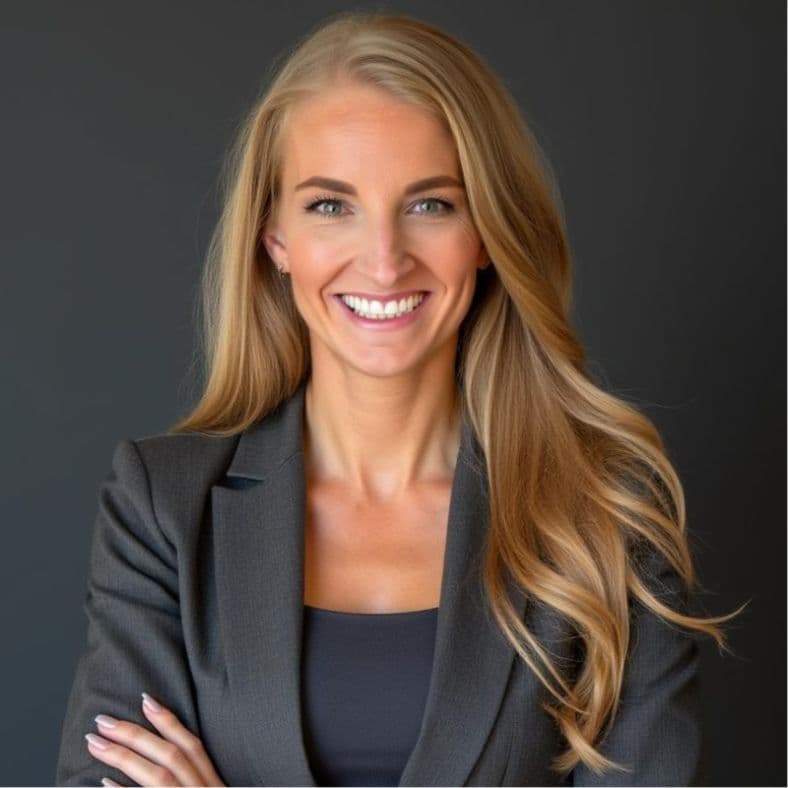
Full Transcript You know whatu2019s broken in healthcare 0:01 Welcome to the Startup Physicians podcast, where we explore how doctors 0:06 lead healthcare innovation. Please like and follow our show to join our 0:10 community of physicians contributing to meaningful change. 0:16 Hi everyone, welcome back to the Startup Physicians podcast. This is your host, 0:20 Dr. Allison Kurfman, and I'm here to tell you today that you know exactly 0:25 what's broken in healthcare because you've lived it. You've watched patients 0:30 suffer because of it, and that clinical insight is the most valuable thing a 0:35 startup can have, and it's yours. But knowing the problem and knowing how to 0:40 build a company around it are two completely different skill sets, and our 0:45 medical training didn't teach the second one. 0:48 So today on our podcast, I'm going to walk through the five foundations every 0:53 physician founder needs to go from clinical insight to launch. 0:58 I've spent the last several years working with countless founders, both 1:02 physicians and non-physicians, across healthcare. 1:06 I co-founded Imagine Pediatrics, which scaled to 100,000 patients and became a 1:12 multi-nine-figure company. And across multiple ventures, I've helped raise 1:16 over $100 million in capital. I spent time inside a top private equity firm 1:22 learning exactly how they assess and de-risk companies before putting 1:26 millions behind them. And through all of it, I've never stopped practicing 1:30 medicine. I still work in the pediatric emergency department. I still see kids 1:35 one-on-one because I love taking care of them, and I really believe that it's my 1:39 calling. And so I'm not advising from the sidelines. I'm in the same trenches 1:44 that you are seeing the same broken systems every day and wanting them to be 1:48 different. Every solution that I've designed in healthcare came directly 1:52 from my experience seeing patients, carrying their burdens, understanding 1:56 how the system harms them, and wanting it to be different. That's the starting 2:01 point. That lived clinical experience is the single most valuable thing a 2:06 healthcare startup can have. You can't hire for that, you can't 2:10 replicate it, and if you're a physician with an idea, you already have it. 2:15 But that perspective alone doesn't build a company. I've talked to hundreds of 2:20 physicians who want to contribute at a higher level and create a one to many 2:25 impact. So many of them have a clear clinical vision and no idea how to turn
Why most physician founders get stuck 2:30 it into a viable business. They see the problem, they feel the 2:34 urgency, and then they get stuck. So today I'm walking through the five 2:39 foundations that every physician founder needs. These are the things that I wish 2:43 someone had told me years ago. When I first co-founded my first 2:48 company, I literally went to the library and checked out Startups for Dummies. I 2:53 didn't know what any of the words meant, I had no framework, no roadmap, very few 2:58 people I could lean on or call. My co-founder and I figured it out, but it 3:02 took longer and was more challenging than it needed to be. 3:07 So as you navigate this pathway, if you're interested in being a founder, I 3:12 would love to help guide you so that you have all the resources and connections 3:15 that you need at your fingertips and the pathway to impact that you really 3:19 desire. I've also put together a free one-page 3:23 framework for you that maps out all five foundations that we'll talk through 3:27 today as a visual reference and you can download it at 3:30 startupsphysicians.com/resources 3:33 and download our physician founders framework. So let's get started. 3:37 Foundation number one is validate the right problem. 3:42 This sounds pretty obvious. It's the most common place where founders go 3:46 wrong. So you see problems every day in your 3:51 practice. You may have a lot of ideas for how to fix these problems and your 3:56 instinct is to start building. I would say don't do that yet. Not every
Foundation 1: Validate the right problem 4:03 problem is worth solving as a business. Some problems are real, but the market 4:08 is too small. Some are real, but someone's already solved them well 4:13 enough and it's a little bit too hard of a niche to get into and some problems 4:17 are real, but no one will pay to fix them. There may be too many 4:20 stakeholders. It's really hard to track down who carries the burden of this 4:26 problem. And some may feel urgent to you as a 4:29 clinician, but they don't register as priorities for the people who control 4:34 healthcare budgets. So, when you validate your problem that 4:38 you're trying to solve, it doesn't just mean asking a couple of friends if they 4:42 think it's a good idea. Validation really means talking to like 50 people, 4:48 whether it's patients, administrators, payers, other clinicians, potential 4:52 partners. You need to hear the same pain from multiple angles. So, you need to 4:57 hear someone say, "Oh, I would pay for that." Not just that sounds cool. Or you 5:02 need to understand who bears the burden of this cost or of this problem. And is 5:09 it because quite honestly, if the problem 5:13 lies firmly in the patients' camp, then you're talking about a 5:17 direct-to-consumer solution. So, you're asking who would actually pay to fix 5:20 this problem and if the answer is the patient, then that is a 5:24 direct-to-consumer payment model. If the answer is the 5:28 hospital system or the payers, that's a very, very different model. 5:33 So, I have actually known doctors who invested more than six figures into 5:38 something that never launched. They assumed the clinical need was 5:43 obvious, so the business case must be too. They were really gung-ho about 5:47 helping. They said, "Well, I want to be fast like a startup. I want to I want to 5:52 move and take action." Which is Those are great inclinations, but you have to 5:57 have a business case. And that's not something we learn in 6:00 medical school. So, that's not the same thing. I I learned this first hand. Many 6:05 of you know my story, but I built a virtual care program for medically 6:09 complex kids at a um a nonprofit hospital system. It was a 6:13 great pilot program. We reduced these children's hospitalizations by 35%, 6:19 cut their ER visits in half. The clinical and financial results were 6:24 undeniable, but the program still lost its budget during COVID because we did 6:30 not have a payment model at that time. So, we did not have We were trying to 6:35 prove that our model would work and then go to payers to to try to negotiate 6:39 payment, but COVID threw everything for a loop and a lot of budgets were lost 6:44 during that time period. And so, even though we had proof, we didn't 6:48 necessarily have business viability. So, the business case really requires 6:52 understanding who pays, how much, and why they would choose your solution over 6:57 the status quo. In my case, I did have a viable business model, but I was in the 7:02 wrong environment. It was a great place to create a pilot program, but in order 7:07 to truly create a scalable startup to reach the masses, I needed to step out 7:12 of the traditional health care system and into the startup world partnering 7:17 with a venture firm to put capital and resources behind the business model. So, 7:22 building something that can't launch is a really expensive lesson, and I don't 7:26 want you to have to learn that the hard way. And here's the part that makes this 7:29 harder than it sounds. Most physicians don't have anyone in their life who can 7:34 walk them through this process. So, you don't have co-residents who are doing 7:38 market validation or attendings that know how to build startups that you can 7:43 curbside them and ask them. You're really trying to learn a discipline that 7:47 didn't exist in your medical training and you're doing it alone. And that's 7:51 where most founders stall on this foundation number one. Not because they 7:56 can't do it, but because they don't have anyone showing them how and they don't 8:00 have the right connections. So, foundation number two, build your 8:04 business model and understand unit economics. These might be words you 8:09 haven't heard before, but once you've validated the problem, you need to 8:12 answer the most important question that any investor, partner, or payer will 8:17 ask, which is how does this make money? And the idea of unit economics really 8:23 intimidates a lot of physicians. It really shouldn't. It means one thing. 8:27 So, for every unit of your product or service, what does it cost to deliver 8:33 and what does it earn in revenue? So, for instance, if you're running a 8:36 service-based model, what does it cost to deliver one session or one 8:41 consultation or one assessment? When you take all the pieces, all of the 8:45 operational cost and the um the staffing cost, maybe you need like this much of 8:52 this person's time to deliver this and there's ways to calculate all of these 8:56 things. So, we're going to assess what does it cost to deliver one unit of your 9:00 product or service? And then what do you charge? What is your revenue for that 9:05 unit? And the easy math is that the revenue needs to be higher than the 9:08 costs for the model to work out. If you're building a technology product, um 9:13 what does it cost to acquire one customer per year and serve them for a 9:18 year and maintain your systems and your technology and your security and all of 9:21 that. And what will they pay you over that time? 9:25 So, this is not a one-time exercise. It's iterative. So, you have to build 9:30 what we call a financial model and then you show it to a lot of smart people. 9:34 They tell you everything that's wrong with it. They poke holes in it. They 9:37 tell you these costs are underestimated and your revenue projections are 9:41 inflated. You forgot to take account for something. And then you take all that 9:45 feedback, you go back, you revise the model, and you show it again. And every 9:50 round gets you closer to something that holds up. I very distinctly remember 9:55 building some of my earliest financial models and working with a bunch of 9:59 investment bankers who are really good at Excel. I even remember 10:03 being tasked the night before like a really big payer call to find $24 10:08 million in the model. Like we need to cut costs or increase revenue. We have 10:13 to find $24 million. And so that was a And obviously this is on a piece of 10:17 paper. Like this is not It's a thought exercise. But you want to You know, your 10:21 math teacher in like middle school said to show your work. Like you want someone 10:25 to be able to go in and be like, "Oh, I see how they got to this number." So 10:29 that was my joke with my co-founders at like 2:00 in the morning the night 10:33 before a big in-person meeting was that we had We were like, "We're going to 10:37 look in the couch cushions for $24 million." 10:40 Now granted, we did not get a payer contract that next day. We still had a 10:43 lot of work to do on the model. But they told us all the things that were wrong 10:47 with it, all the things we were missing, and then we kept going back and and 10:51 building that. So at Startup Positions, I I took all of that experience that I 10:56 had working at a firm, and I've built AI-powered tools for this exact process.
Foundation 2: Business model + unit economics 11:01 So our tools can walk founders through this multi-layered financial modeling 11:06 step by step. And I really pulled from how private equity firms assess 11:10 early-stage companies. You do not need an MBA. You need a framework and a 11:15 willingness to iterate. And the best thing about AI is that it is written in 11:19 English. So you can talk to it in English. You don't have to know code. 11:23 You don't have to know how to use Excel deeply. It's really phenomenal what 11:28 we've been able to do to create agents. And like I said, just a couple of years 11:32 ago, I was spending countless hours developing our clinical model with 11:38 investment bankers who could actually create it into an Excel model, and now I 11:42 can guide physicians who have no investment banking experience through 11:46 the process to create forward-looking, accurate, and predictive financials 11:51 using our customized agents. So, but I want to be honest with you. 11:55 This is where most physician founders feel the most lost. And actually, I know 12:00 a number of physicians who are running businesses who even say the 12:04 forward-looking financial modeling is the the thing that, you know, sometimes 12:09 they hire a fractional CFO to do this sort of work. I want you guys to know 12:13 how to do this on your own. I want you to know exactly how to build this. If 12:17 you were able to get through medical school, you are able to learn this, too. 12:20 Your the clinical side of things is intuitive to you. 12:25 And it has a lot of meaning to you. The financial modeling side of things feels 12:28 like a foreign language, and if you've never sat across from an investor who's 12:32 picking apart your unit economics, you just don't know what you don't know. And 12:36 that gap between clinical confidence and financial fluency is where companies can 12:43 So, it's not because the idea was wrong, but because the founder couldn't prove 12:47 the math worked and maybe never got that runway. 12:51 So, foundation three is standing up operations that scale. Speed matters in 12:59 healthcare startups. We There's a metric we use called like your runway, which is 13:03 like how many months you have before you run out of money. The companies that 13:08 succeed in healthcare innovation move fast. Within 6 months, your concept 13:14 needs to be validated, your model needs to work, and you need to be in front of 13:17 the right people. You cannot spend 3 months figuring out, you know, what 13:22 project management tool to use. You need operational templates. You need a tech 13:27 stack that works immediately, and the discipline to build systems instead of 13:32 one-off solutions. One of the biggest mistakes I see 13:35 founders building is point solutions. So, they say, "I am going to use AI to 13:40 solve this one super specific problem in clinical workflows." 13:46 By the time they finish making that thing, the landscape has shifted and 13:50 their very narrow solution is already outdated. We actually saw this recently 13:54 where there's been a bunch of companies that thing was that they do ambient 13:59 listening for for describing and and for documentation and and then like and 14:04 these companies are doing well, they're growing into multi-billion dollar 14:07 companies, and then like overnight Epic like released a feature that was like, 14:11 "Oh, yeah, we do that, too. All you have to do is like turn it on." I mean, that 14:14 really shakes things up. I mean, a lot of these companies already had a really 14:17 good foothold, and so they're going to have to adapt, they're 14:20 going to have to grow, but when the biggest distribution system within 14:24 health care just kind of turn something on that immediately competes with your 14:28 product, it's a big deal. When you're building something, you have to build an 14:31 operating system that can adapt. You have to use AI as the backbone of your 14:35 business from the start. It is not something you bolt on later. 14:39 It is a brave new world of building companies. We are all on the lookout for 14:43 what's the first company that sells for a billion dollars, is a unicorn, and has 14:48 a single employee. Like, that's going to happen. There are ways to set things up 14:54 that that you are using AI to create and grow a knowledge base of your concept 15:02 that will be like a growing brain as you grow. Um and 15:08 that feels like a whole new thing to learn. Like, that's not that we also did 15:12 not learn that in medical school. So, that is going to be really important. 15:15 You need to set up your data infrastructure, your communication 15:18 systems, your financial tracking, your project management, even like 15:22 administrative stuff like like how you organize and maintain documents. Um you 15:27 have to build that in a way that grows with you. You don't have to build all 15:30 that yourself. I think having templates, frameworks, and advisors who've done it 15:34 before can really give you a running start so that you can focus on what your 15:38 brilliance brings the table. Like I I don't know how to fix pre-operative 15:43 clearance or the care of glaucoma or you know, all these other things that you 15:47 guys know. You know exactly what the clinical problem is. I don't want you 15:52 wasting a lot of brain cells being like, "I don't know how to make a financial 15:56 model. I don't know how to build up an op system. I don't know how to create 15:59 the tech stack or choose all that. I don't I don't know how to make AI agents 16:03 that can run all this for me." So this is where the time pressure becomes real. 16:08 If you spend a year figuring out all these operational details and choosing 16:12 tools and learning project management methodologies, setting up your own 16:16 financial system from scratch, you're not going to be in your zone of genius. 16:21 And in healthcare innovation right now, a year is a lifetime. Companies that win 16:25 are the ones that stand up their operations in weeks, not months, because 16:29 they start with a proven system and just go for it. Foundation four is capital 16:34 strategy. This is where I can see the most 16:38 damaging mistakes. Physician founders often have an 16:42 erroneous belief that they need to fund everything out of pocket. 16:48 They think that they have a great idea, but they can't do it because they don't 16:53 happen to have 50 or $100,000 sitting aside somewhere. I actually don't know 16:58 anyone who has 50 or $100,000 sitting aside somewhere, and I know a lot of 17:01 very wealthy people. I I think that, you know, you have to think of capital in a 17:06 different way. It is a tool. It is accessible to us. We have credibility. 17:12 We have the ability to fundraise, even though that sounds really intimidating 17:16 to some people. People do it every day. And I've had doctors who have literally 17:21 come to me and said, "Here's my plan. I'm going to put $3,000 into building a 17:27 prototype of this technology product, and then I'm going to go figure out the 17:31 business model." They've like literally met with a dev team who's given them a 17:35 quote of 30 to a hundred I Someone else said $100,000 17:39 to create the MVP of their product. Which is great. You need an MVP of your 17:44 product. Now, a minimum viable product, you have to have the business model 17:49 before you go put capital into it. So, don't do that. I think you know, like I 17:53 said earlier in the episode, you have to validate if anyone's going to pay for 17:57 it. Um and it's not that the idea is bad. Like, if you skip the validation 18:02 and modeling steps and go straight to building and you fund it yourself, by 18:07 the time you realize the business model doesn't work, the money might be gone. 18:10 Or the market may have shifted. Or maybe you get this great product and it's 18:14 like, "Oh, wow, it's really ready to go, but you don't have the operations in 18:17 place to deploy it quickly." I Quite honestly, if you want to make a tech 18:22 product, like go use AI to make a mock-up. Like, that costs nothing uh but 18:27 your time, and and you can get a ton of feedback on like a um 18:32 uh mock-up of what the wireframes are going to look like and what the 18:36 functionality's going to be. You can make a requirements brief. There's so 18:40 much you can do on paper, especially with AI, to describe how you're going to 18:45 solve this problem. Do not go put 30 or $100,000 in into 18:50 building something, especially with your own capital. 18:54 Capital strategy means understanding all of your options and picking the right 18:58 one for your stage. So, believe it or not, most founders don't start by going 19:03 and raising venture capital funding. That's not step one. It's usually like 19:07 step five. So, before you go to venture capital, you want to consider these 19:10 options. The first thing is can you pre-sell your 19:14 product? So, can you get sales for especially if it's a 19:20 service-based product and deliver the solution maybe more manually 19:26 to a small group of paying customers and then use that revenue to build the
Foundation 3: Operations that scale 19:30 technology. This will both prove the demand and generate cash flow at the 19:36 same time. So, the second option is strategic 19:40 partnerships. Can you partner with someone who has either the development 19:44 background or resources, the distribution channels, or an 19:48 infrastructure that you need so that you're not paying cash for everything 19:53 yourself? So, a partnership model may be more a strategic assessment of giving 19:58 equity, but I want you to understand what a cap table is. Some of you are 20:03 like, "I don't even I don't even know what a cap table is." There's strategy 20:06 around how much of your company that you will retain ownership of and and my goal 20:12 is that all of you who decide to build businesses will retain majority 20:17 ownership of your venture. So, strategic partnerships are one option for bringing 20:23 in the right talent instead of paying for it, you're partnering for it. 20:29 The third is non-dilutive funding. There are grants, there are innovation prizes, 20:35 there are government programs that exist specifically for health care innovation, 20:41 and they don't take equity. This is like getting a loan you don't have to repay. 20:46 I mean, you have to apply for them, you have to know about them, 20:51 um but these are absolutely options. It is good for the economy for small 20:58 businesses to succeed and grow. There are reasons why there are investments 21:03 and and especially, you know, if you're working in a really impact-driven field, 21:08 there's probably a lot of philanthropy around it. People want small businesses 21:13 to succeed and to do great things, especially in healthcare. So, those 21:17 options exist. Fourth, family offices and angel investors. So, these are often 21:23 more accessible and a little more patient than venture firms. They have 21:28 different investment philosophies. If you've never been in this space, you 21:32 probably don't even know what a family office is, but it's a different type of 21:37 funding and so we can go into that deeper in a future workshop. And then 21:42 fifth is revenue-funded development. This is kind of along the same lines as 21:47 like pre-sales, but you use your early revenue to build your product 21:53 incrementally rather than raising a large round up front. 21:57 Again, my goal with every founder I work with is to help them retain majority 22:02 ownership of their company and their idea, which means being strategic about 22:07 when and how you take on outside capital, not giving away a huge percent 22:12 of your company in the first round because you didn't know that 22:15 alternatives existed. So, I just want you to think about that for a second. 22:19 Many physician founders I meet have never heard of non-dilutive grants for 22:24 healthcare innovation. They don't know that pre-selling their product is an 22:29 option. They don't realize a strategic partner could bring development 22:34 resources to the table so that they don't personally have to write a 22:38 six-figure check. They're making capital decisions with incomplete information 22:44 and those decisions can be permanent. You can't un-give equity. You can't 22:48 un-spend your savings. The founders who protect their ownership are the ones who 22:53 understood the full landscape before they made a move. Finally, foundation 22:59 five is pitch, network, and sell. So, no matter how strong your clinical 23:04 vision is, at some point, you need to put it in front of other people and 23:09 persuade them. So, that might mean pitching to investors, it might mean 23:14 pitching to either a hospital system or a clinic that could be your first 23:18 customer, it might mean pitching to a potential co-founder or advisor. And 23:22 most physicians have never built a pitch deck. You've never created a data room. 23:27 You might not know what a data room is. You may never have practiced delivering 23:31 a 3-minute elevator elevator pitch until it feels natural. And these are all 23:36 skills, and they're all learnable. But, founders have to be able to pitch. You 23:41 have to have this deep conviction that what you're doing matters, that you're a 23:46 storyteller, you're a you're someone who's advocating for patients, you have 23:51 this great idea, that you are so optimistic that it's going to work, and 23:55 you have to be willing to be told no over and over and over again, and still 24:00 just keep on going, and learning, and growing, and changing, and iterating. I 24:05 mean, those are personality traits that are are really important for 24:09 successful founders. But, the actual act of pitching and and sharing your vision, 24:17 that's a skill that you can learn. I'll tell you another funny story. I had a 24:21 mentor at my firm who was one of the most hilarious people I've ever known. 24:26 And he gave me a lot of feedback when I was first pitching. He was like, you 24:29 talk too much, you're not talking enough, you're not saying enough, da da 24:31 da da da da da da da da da da. Like, all this feedback. 24:34 And whenever we went into a pitch, he would sit across the table from me. We 24:39 had like hand signals where my business counterpart would talk about the total 24:44 addressable market and the financial model and stuff. And then she would say, 24:48 "And now, Dr. Kurfman can explain our clinical model." And that was my cue to 24:53 start talking. And then he would like signal me to be like, "Stop talking." 24:58 Like it was very funny, but I needed someone to teach me. I I didn't know how 25:03 much to say, and so it took a ton of practice and so many conversations. And 25:09 many pitches did not go well. I mean, we can 25:12 think back to some that it's like is actually like hilarious. We were in a 25:16 bad location for having this Zoom call. We were at a restaurant. We were 25:21 supposed to be in like a side room that was like a We were 25:25 finishing We had just finished a board meeting and then we had to get to this 25:27 pitch. And there was like really loud '80s music playing in this in this room, 25:34 and we could not find anyone from the restaurant to turn it off. So, you will 25:39 collect embarrassing stories from pitching, and you'll get better from it. 25:43 So, just realize learning how to pitch is part of being a founder. You will 25:48 have bad experiences. You will have good experiences. Um and you will get better 25:52 with every single one. And then networking piece is just as 25:56 important. It's about who you know, not how you do it. When you show an early
Foundation 4: Capital strategy 26:02 version of your financial model to a respected advisor and they give you 26:06 tough feedback, that is a gift. Incorporate it. Go back to them a month 26:11 later with the improved version. Now they believed in you because they 26:15 watched you iterate. And that advisor becomes an advocate. That's how your 26:20 network can turn into funding and into partnerships and into and into 26:24 customers. You need to learn to pre-sell. If you 26:27 can get five customers to pay for your product before it's fully built, you've 26:32 proven more about your business than any pitch deck could. Pre-sales are a strong 26:36 signal of demand. They can fund your development, and they can give you real 26:41 users whose feedback shapes what you build. 26:44 So, those are the five foundations. One, validate the right problem. Two, build 26:50 your business model and your unit economics. Three, stand up operations at 26:55 scale. Four, develop a capital strategy that protects your ownership. And five, 27:01 pitch, network, and sell. So, I want you to picture two versions 27:06 of the next 12 months. If you are an aspiring physician founder who thinks 27:10 you have a solution that could help your patients. So, in the first version, you 27:14 take what you learn today and you start working through these foundations on 27:18 your own. You might Google or use AI to look up healthcare startup financial 27:23 models and you can watch some YouTube videos on unit economics. You might ask 27:28 a friend of a friend who works in BC to look at your pitch deck. And you can 27:32 spend 6 months building something and then show it to an investor who still is 27:36 asking you questions you can't answer and you might realize you've been 27:40 solving the wrong problem the whole time. 27:43 That's not a failure of your effort, that's a failure of support. You were 27:47 doing it the best you could with what you had. 27:50 In a second version, you can walk into a room with 15 to 20 other physician 27:55 founders who are at the same stage as you. You have an entire team of experts 27:59 who have built companies, raised hundreds of millions in capital, and 28:03 they're looking at your specific business, your model, and your market. 28:07 You have AI tools that can build things for you and stress test your financials 28:11 in real time, coaches who've been exact through exactly what you're going 28:14 through, and a network that opens doors that you didn't know existed. 28:19 6 months, you could be standing at a health innovation conference pitching 28:22 your validated company to investors and partners who are ready to move. So, 28:27 that's not hypothetical. That is why we built the Startup Physicians Incubator. 28:32 It is our newest program. It's a 6-month program for physician founders starting 28:38 in June of 2026. We will have monthly live sessions with me, with a customized 28:44 curriculum, with expert coaching on every foundation, 28:48 AI-powered modeling tools, two in-person retreats, and a live pitch competition 28:53 with a large network of VCs. And a network that stays with you long after 28:57 the program ends. As physicians, we consult specialists every day. I am an 29:02 ER doctor. I know how to know what I don't know 29:06 and who to call. And we don't try to do everything ourselves. We will call a 29:11 cardiologist or a surgeon or a radiologist. And building a company 29:15 works the same way. The difference between founders who launch and the 29:20 founders who stall is not talent or intelligence. It's whether they had the 29:25 right people around them at the right time. 29:28 Love to invite you to download our free framework 29:33 at startupphysicians.com/resources. 29:37 It is our five foundations and it'll show you exactly where you stand. You 29:42 became a physician because you wanted to change lives and becoming a founder is 29:48 how you can change the system. Thanks for listening and I'll see you 29:52 next time. Thanks for listening to the Startup Physicians Podcast. This 29:56 community was built for doctors who want to contribute to the future of 29:59 healthcare. We offer support for physicians who are ready to make the 30:03 next step towards building the career they've dreamed of. 30:07 Visit startupphysicians.com to learn more. 30:11 And if this episode resonated with you, share it with another friend who needs 30:15 to hear it. Let's change the future of healthcare together.
Comments