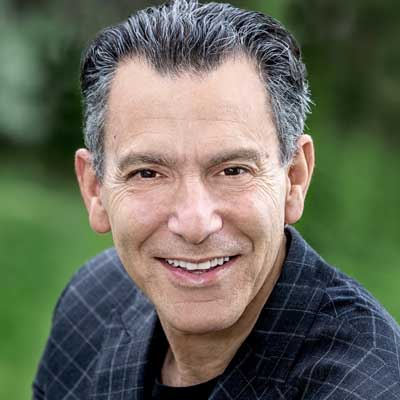
Full Transcript Opening on Heart Disease Prediction 0:00 What is the number one predictor of heart disease? 0:03 Actually, you know, I quote a European physician very, very well known in Europe, Ernest Schneider, who said, the best way to predict clogged arteries 0:13 is to look at arteries. 0:15 I mean, You can do every lab test in the world and come up with a pretty good prediction. 0:19 then look at an artery. 0:21 And if you find disease that wasn't predicted, you've got to completely reassess what's going on. 0:26 If you don't find a disease, that was predicted you got also reassessed. 0:31 Maybe stop some of the meds. 0:32 Stop a statin if find no atherosclerosis. 0:36 You're listening to the Lifestyle Medicine Podcast with Dr. 0:39 Ivan Rusilko, brought to you by Access Lab, where we explore new perspectives at the forefront of personalized healthcare. 0:50 Welcome back to the Lifestyle Medicine Podcast. 0:52 I'm Dr. 0:52 Ivan Rosilka, your host, and we're powered by Access Labs. 0:55 Again, if your doctor's not checking your labs, then they're not a doctor. 0:57 Today we have America's heart-healthy doctor, obviously his mother's favorite son, of course, Dr Joel Kahn, who's from Michigan. 1:06 So it's definitely great to have you on the podcast, my friend. 1:08 How are you doing today? 1:10 I am great and we're going to have fun. 1:13 And I, I actually have tattooed on my chest, test, not guess. 1:18 If you don't have 20 tubes of blood when they draw your labs, you have not been to the right doctor. 1:24 So we've only just met, so this was not a setup, but I couldn't agree more.
Podcast Introduction and Guest Welcome 1:32 learn so much about your health, but it's going to take, you know, not just lab work, the labwork is key. 1:38 We'll go from there. 1:40 Oh, for sure. 1:40 A hundred percent. 1:41 Again, like my biggest thing is I tell everybody lab works like the picture of a puzzle. 1:45 Us as physicians, we have so many different pieces of puzzles that we can kind of piece back people together. 1:49 But if you don't have the actual picture to look at you, your kind to shoot in the dark. 1:52 So I'm definitely happy that were sharing the same kind a vibe and especially since access is our big post here. 1:58 It kind make sense. 2:00 So first and foremost, can you kind of tell me how it is treating cardiology and everything heart related up there in Michigan? 2:05 Yeah, you know, honestly, I'm in my late 60s. 2:09 I've been doing this since I got into medical school when I was 18. It's true, University of Michigan too, a good one. 2:16 Graduated number one a long time ago. 2:21 I really thought by now I have a unique boutique practice. 2:24 We were just chatting. 2:25 I'm licensed in Florida in about 20 states. 2:29 That was a great idea to build my unique preventive practice, but it's killing me now. 2:34 It's distressing how much heart disease there is. 2:38 Just talk about start at age 35 and let's go up. 2:41 Occasionally, I had a patient this week. 2:44 First documentation of atherosclerotic heart diseases was 32. It's not a guy smoking two pack of cigarettes a day or doing cocaine. 2:52 They would happen to be born to a family from Mumbai and South Asians are very much at risk for heart disease. 2:59 So it is distressing how much heart diseases there is. 3:05 And if people write nothing else down, prevent nuts, then catch it early. 3:11 Diagnoses early and get rid of it. 3:14 But we catch it in the emergency room when it's been around for 20 years. 3:17 So we'll talk about, you know, how do we improve that paradigm? 3:21 But somebody helped me. 3:23 I am truly overwhelmed with patients and I'm grateful, but it is a lot of work. 3:27 No, I can only imagine. 3:28 Now, have you seen an uprise like you were saying? 3:31 So since when you started back then versus now, are you seeing a lot more people or is it just different ages that are coming? 3:37 Well, you know, the good news is there's some evidence that overall death from heart disease, it's still number one. 3:44 Men, women, number 1. The number-1 thing you should ask at your doctor visit or any other visit you have is, tell me about heart diseases. 3:53 What's my risk? 3:54 And forget about risk. 3:55 Do I actually have heart You know, so it's still number one overall deaths and heart attacks are down a bit, but not in young people. 4:03 They're just boys, you know peer reviewed, good quality scientific publication that like in the under 60, under 50 age, actually heart attack are on their
Heart Disease Trends and Prevention 4:12 way up. 4:13 Oh my God, with all these dollars and. 4:16 technology and national institutes of health, that should not be the case. 4:20 But young people are eating like crap and sitting around playing video games. 4:24 Of course, there's all kinds of exceptions, vaping and smoking flour and hookah and a whole lot of other contributors. 4:33 So no, we are not at the verge of eliminating heart disease. 4:39 It won't happen in my lifetime. 4:41 Man, that's crazy. 4:42 And again, like you're saying, just the high stress lifestyle, plus we have the food that we're eating. 4:47 I mean, I just got back from Southeast Asia and I was eating their versions of pizzas and then rice and all this kind of stuff. 4:53 So I lost weight. 4:54 It felt great. 4:55 The second I get back to the United States and put one thing near my mouth, you swell up. 5:00 Just what's in the foods, it's just taxing our system. 5:04 Like it is pretty much unbelievable. 5:08 comment, even people that are gluten sensitive, that they go to Europe and they eat the typical food. 5:16 It could be some pasta here and there, some pizza here, and some baguettes, croissant, they feel good. 5:22 They don't have their typical reaction. 5:24 And it's not just gluten. 5:26 The whole spectrum, it is the wine, the production of produce, fruits, vegetables, legumes, beans, peas. 5:34 They do have tighter regulations. 5:36 We all know our government allows all kinds of chemicals in our fruit loops. 5:40 They don't allow in the fruit in England, small inroads being made. 5:44 So anyways, yes, that's a contributor and you got to be smarter, wiser and work harder at it to navigate our current health. 5:54 in toxic environment and you can adjust today. 5:57 I mean, I'm a literature freak. 5:59 If you say what's your hobby reading articles today, paper was published out of France that the purchase of organic vegetables over conventional vegetables. 6:09 This is a controversial topic because they're expensive. 6:12 Maybe I was at Costco this morning, buy my organic berries because. 6:16 They got a lot of them and they are about half the price of the other markets around here. 6:20 And I don't have a tag that says Costco on it. 6:24 But breast cancer rates were 10% lower in women than answered in a very big database. 6:31 I buy organic blueberries, organic strawberries, what's called the dirty dozen from the environmental working group of people. 6:39 do or don't know that they should know what what's the dirty does it you should probably buy organic so and doesn't matter apparently breast cancer rates 6:49 go down 10 percent i'd like to slash breastcancer rates about you know 99 but we'll take 10 just from buying organic blueberries yeah No, 6:59 for sure. 6:59 And again, like it's scary. 7:01 Honestly, it is. 7:02 It's just terrifying. 7:03 I love when you talk about prevention, I think that's probably the most important part. 7:07 When somebody comes in, what are some of the labs you actually look at? 7:10 Because we all know HDL, LDL that kind of stuff. 7:13 But did you do any more in depth type of cardiac testing like apolipoproteins or things like that? 7:20 Yeah. 7:21 To give a shout out, and I have no financial relationship to access medical labs. 7:27 I don't. 7:28 We have, I just looked online, we have three brick and mortar facilities in Southeastern Michigan. 7:34 None of them are right near me, so I've not utilized them. 7:38 You guys got some kick-ass panels, the CardioPro Advanced Panel and the Cartio Pro Advanced Plus Panel, CP3. 7:46 And that's just honest, because that pretty much Very close to what I draw, and I'm not joking, if you leave my office and we haven't drawn 15 to 18 tubes 7:55 of blood on the first visit, more focused, selective on follow-up visits. 8:01 Yes, it's always an advanced lipid panel. 8:05 The actual research has your standard cholesterol panel, cholesterol, HDL, triglyceride, LDL. 8:11 LDl is calculated. 8:13 The number one number cardiologists try and treat is not actually directly measured.
Diet, Environment, and Organic Foods 8:17 It's an estimated number. 8:19 Now we can't be doing very well if we're doing that. 8:21 So I do the advanced lipoprotein fractionation. 8:25 The data is it's most important in people with metabolic disorders, pre-diabetes, hyperglycemia, obesity. 8:33 Well, welcome to 70 plus percent of America. 8:38 Everybody gets a lipoprotein A, I've done that for 20 years. 8:42 I'll take credit for that. 8:44 This is a shameless shout out. 8:49 Because it's a genetic cholesterol that we inherit from mom, dad, or both about one in five people, one and four people if you're African-American. 9:02 And it can destroy your arteries and your valves at a young age. 9:07 But it's not necessarily going to do it. 9:09 You just got to start by finding out if you inherited it and you have a high level or not. 9:13 Then we have to look at your arteries. 9:16 Apolipoprotein B. 9:17 Again, I don't want to sound like all I do is sit on the toilet and read medical literature. 9:21 Something proof of that. 9:23 A big, big prominent journal called Circulation Research, June 4th. 9:28 How's that for being up to date? 9:29 You know, 2026. Only talk about APO-B when you're talking to your doctor. 9:35 That's called Apolipoprotein B or APoB. 9:38 30 years ago, I gave a lecture on cholesterol with another lipid expert and all he talked about 30 ago was APob, APobe, Apob is the best test. 9:48 Thirty years later now in this research article, strongly urging us to change the conversation. 9:55 Every inflammation marker I can order, every insulin, insulin resistance marker, your hormones like testosterone in a woman, 10:04 a full menopausal panel, full thyroid panel. 10:09 Vitamin levels, B12, brand new article. 10:12 The elderly are being told their B12 is okay, but there's a reevaluation. 10:17 It's not okay in the elderly to have a B120 400. it may actually let your brain age faster and you may need a little better. 10:25 And the other thing is if your B 12 is low, which I am vegan and plant-based, so I have to be very careful with my patients who are. 10:33 like me that they supplement adequately with some form of B12. 10:38 But then your homocysteine level goes up on a vitamin level or a genetic basis or stress basis. 10:46 So you got to check a homocysteines level. 10:48 I do more than that.I do some dementia prediction lab work. 10:54 Maybe one of those blood biopsy cancer screening, I'm sort of mixed on that, they're so expensive right now. 11:00 It's a lot of lab work. 11:02 And then strive to improve the findings on the next visit, of course. 11:08 Well, for sure. 11:08 I always sit there and say, you know, the first lab testing is their report card. 11:12 The second lab test is my report. 11:14 So we're going to try to make sure and it's nice. 11:16 We'll sit and find things like, a high SCRP or something like that. 11:19 Patients don't really pay attention to that and all of a sudden you take them from a two, two and a half, three, all the way down to a one. 11:25 That's kind of like getting a Super Bowl, especially in this day and age. 11:28 Can you touch on some of that? 11:30 I just left a car dealership this morning, little minor adjustment. 11:36 It's just a Lincoln dealerships, it's not a Ferrari dealersship, not Prestige Imports in Miami. 11:43 He was a friend of mine and the owner of that. 11:46 Yeah, they send me a video. 11:47 I'm the technician Joe when they show me as they're scanning and they look at, you know, a 20 point checklist. 11:54 We don't do that for our body. 11:56 we do it for a car body and we got to start doing it. 12:01 No, for sure, and again, I think those kind of markers and those kinds of testings, even though they're not sexy, they are not fun, 12:07 you know, testosterone, that's fitness, fat loss, sex and that kind stuff, when you start looking at inflammation markers, 12:12 it's one of the most important gauges of why our hormones might be off, why are our fibroids off? 12:16 Why are hairs formed out? 12:17 All this different stuff. 12:18 So the correlation that you can make is not just one specific cardiology only, but cardiologist is translated to every different other part of a body. 12:26 So I think the lab testing is the most important.
Advanced Cardiac Lab Testing 12:29 When it comes to that, what would you say the more important heart marker testing diagnostic could be? 12:36 Would it be something like a lab test, would it a CTA, or what? 12:39 What would say? 12:41 It's a good question. 12:43 My Instagram reel a couple days ago was, what is the number one predictor of heart disease? 12:50 And semi-popular post, because I try and be provocative so people will watch for 59 seconds. 12:57 And I quote a European physician, very, well known in Europe, Ernest Schneider, who said, the way to predict clogged arteries is to look at arteries. 13:09 I mean, you can do every lab test in the world and come up with a pretty good prediction, then look in an artery. 13:15 And if you find disease that wasn't predicted, You've got to completely reassess what's going on. 13:20 If you don't find a disease, that was predicted you got also reassessed. 13:25 So maybe stop some of the meds, stop a statin if find no atherosclerosis. 13:31 There's a concept called vascular age or arterial age. 13:35 You're 49 years old, but a report comes back that says you've got the arteries of a 72 year old. 13:40 You know, when you stop crying, you get serious. 13:43 And there's a couple of ways to do that. 13:45 If you can find the location, very hard in Miami, a carotid intimal medial thickness, special ultrasound of the artery to the brain. 13:55 The report said the arterial age is, and it can come down and get better with lifestyle and other changes. 14:03 Probably even more important is the $100 corn artery calcium CT scan. 14:09 Only since 1990 has it been available, but widely available for 20 years for $10, $75, and $125. About a three-second test, 14:20 painless, no claustrophobia, not needle, nor injection. 14:24 If you're a calcium score of zero, you can take all those lab values and work on them. 14:30 You still got a pretty darn good outlook for five or 10 years, even if you have that high lipoprotein, little a genetic cholesterol or a high ApoB. 14:39 I don't put people on prescription cholesterol medicine if their lifestyle is good and their calcium scores zero. 14:46 That's supported by science, American Heart Association, guidelines, and others. 14:51 But if your calcium score, like the 35-year-old I saw two days ago, who at age 32, his primary care doc, I give him credit, 15:00 ordered a calcium scored at the age of 32. Came back 38. I mean, 99 out of 132-years-olds would have a Calcium CT score of zero. 15:11 He was 38, he went on to have the final test, the coronary CT angiogram. 15:17 More involved, got to inject the iodine guy. 15:20 Got to have a low heart rate with a beta blocker, little more radiation and a lot more money from $700 to $2,000. But incredibly accurate nowadays, 15:32 probably the most accurate imaging of your blood vessels available. 15:36 And a test I've ordered, you know, nearly a thousand patients in Southeastern Florida, Michigan, California, wherever you can get it anywhere. 15:44 It's called a CLEERLY. 15:45 That's a trade name of a AI software company, C-L-E-R-O-Y. 15:50 But if you really, really want to dig deep, grandma had a stroke, dad had to bite gas at age 49, mom has high cholesterol, 15:59 high blood pressure, and you're worried, you can start with a calcium score, but you probably want move to the more advanced coronary CT angiogram. 16:09 May not be insurance covered, the best care in the world is very often not insurance-covered, unfortunately. 16:16 Yeah, I know. 16:16 Go figure, right? 16:17 So I'm curious. 16:18 Actually, i'm going to bring my own labs in since you are a guru at this. 16:21 So she got the actual CT angiogram everything came back zero score zero calcium score, minimal uncalcified plaque. 16:29 But then when you take a look at my actual labs, you know, my cholesterol is around 300 My LPL is 160, my CRP is 0.5. You know what I mean? 16:39 It's great. 16:39 My PLAC is very, very low. 16:41 How worried should I be? 16:42 I'm mean my APO-B was minimally elevated and my Apo-A was perfect. 16:47 how worried I should be or focused on that when I have such a good result for my angiogram versus my labs and cholesterol. 16:54 Yeah, how old are you? 16:55 42. You're young, but you went beyond the calcium score to evaluate what we call soft plaque or non-calcified plaque, and you have very little. 17:06 The challenge though is hopefully you've got 50 years ahead of you. 17:10 And so step one, you do want to reevaluate. 17:14 Three years would be a reasonable interval, four years, something like that. 17:19 But that person probably does you, probably don't need a statin. 17:24 Unless you have a very high lipoprotein, you don't need an aspirin. 17:28 These are research studies that have shown that. 17:30 Whether you need to do anything about your high cholesterol, start with diet, look up something called the portfolio diet. 17:38 Other subtle changes, I'm completely plant-based. 17:42 You can drop your cholesterol 80 to 100 milligrams per deciliter with a lot of beans and peas and lentils. 17:49 You also can raise your Cholesterol, 100 milligram per desilater. 17:53 I had a lady this week that was so stressed out at Merrill Lynch. 17:58 All she does is eat beans for breakfast, lunch, and dinner because she has no time. 18:02 And she bumped her cholesterol up in a few months, a hundred points. 18:06 We'll get it back down. 18:08 get her a chef or food delivered or work on lifestyle. 18:13 How worried should you be? 18:14 There is a website you can put in some of your labs and your calcium score called AstroCharm, funny name, A-S-T-R-O-C-H-A- R-M dot org.
Artery Imaging and Calcium Scoring 18:25 It's from University of Texas Southwestern, good research. 18:29 And it'll tell you over the next 10 years, including your calcium score, it's a better calculator than most. 18:36 What's your risk of a heart attack is, what's the risk for the stroke is. 18:39 It is going to be pretty low with a calcium scores zero. 18:43 We don't have a similar calculator to put in your CT angiogram data if you did it quantitatively. 18:50 So, you know, there are supplements, red yeast rice, niacin, because statins are not overwhelmingly indicated in that setting. 18:59 You could take five milligrams of a risuvus statin every other day and maybe get your cholesterol down in the 230s, 240s if diet doesn't do it. 19:09 You know, big bowl of oatmeal every morning. 19:12 I just was quoted in Parade Magazine about the cholesterol lowering impact of Oatmeal. 19:18 It does, it's science, It works. 19:20 So I would, you know and workout, although workout it'll move your numbers. 19:26 in the right direction, but I definitely would retest a few years down the road. 19:31 I was just kind of curious, and I attribute that, because again, I live a very healthy lifestyle, exercise, all that kind stuff. 19:37 My father, God rest his soul, five heart attacks from atherosclerotic disease. 19:42 So it's a situation where I'm set up to have a heart attack and have this all go on. 19:47 And I do attribute my, again I think you can agree, the healthy life style, my dad drank like a fish and smoked like sailor, 19:54 uh, when it came to cigars and I think, you know, I don't, mean, like I do drink like a fish. 19:58 I'm not gonna lie. 19:59 Uh, but the whole cigar smoking, uh you get to bed at the right time. 20:02 Lifestyle is part of the reason, y'know, that I've been maintained because I been testing my labs since 2012, religiously, 20:08 four times a year. 20:09 My whole cardiac aspect and my cholesterol has been that from 280 to 320 the entire time, LDL's been high and that kind of stuff and, 20:15 by my genetics, i think I should have had a heart attack already. 20:18 But I, do attribute, the healthy lifestyle is what's kind have kept that that whole diabolical thing from happening. 20:26 So I do think lifestyle is a gigantic portion of, and it kind of goes along with what you were saying. 20:31 Well, I'll tell you, it's kind funny. 20:33 One of the patients I had this week was a gynecologist and he wanted me to write a note. 20:39 He's in his mid sixties. 20:41 I've known him forever. 20:41 And he's got some mild coronary disease and is on a number of lifestyle and prescription drugs. 20:50 He wanted me to write him a note that his one cigar a day, which he finds works better than Prozac or Xanax, is completely innocuous and I had to right 20:59 the note to his wife. 21:01 He's a smart man. 21:02 We together, I say you don't have to be perfect, but we together looked at the medical literature. 21:07 And unfortunately, about a year ago, there was a massive review article with hundreds of thousands of people. 21:13 And, you know, stroke rate and congestive heart failure rate do go up with regular cigar use. 21:19 So I bummed them out. 21:20 Okay, I'll cut back a little bit. 21:22 I won't do it every day. 21:24 Yeah, so your poor dad, you know, his cigar smoking may have contributed. 21:29 May have definitely caught up with him. 21:31 I'm curious though, when it comes to those kind of predictive factors, how much do you rely on HSCRP as a huge predictor of potential strokes, 21:39 heart attacks, angios and things like that? 21:40 Well, it's kind popular right now to actually say on social media that elevated inflammation panel like a high sensitivity C-reactive protein may be more 21:51 predictive of heart attack than your cholesterol level. 21:54 You know, cholesterol matters, but there's people with high cholesterol that don't have disease or heart attacks. 21:59 People with average cholesterol, they do have diseases and heart attack. 22:03 And you can say the same thing for C-reactive protein. 22:06 But number one, you have to check it. 22:07 Number two, then you got to put on your thinking gap. 22:10 Why is it high? 22:11 Are you 50 pounds overweight? 22:12 Do you stop at McDonald's on the way home and have a Diet Coke? 22:16 fish filet or regular coke even worse. 22:19 Maybe worse, do you never go to the gym? 22:22 Do you snore all night long because you won't go for the damn home sleep study? 22:26 Have you not been to a dentist and your gums are all infected? 22:30 And your root canal has a silent little infection that you need a CT scan to find? 22:36 Do you have psoriasis, lupus, rheumatoid arthritis? 22:40 Do have no omega-3 in your diet because you don't like salmon and you'd rather eat chicken, which doesn't have any omega 3 like most Americans. 22:49 So you got to go through that whole list. 22:51 And if you just get kind of cause you supplement omega three and get it better. 22:55 But yeah, so C-reactive protein is very important. 22:59 Little tough to bring down. 23:00 Some of the drugs like statins, if there's an indication, do lower C-reactive protein. 23:05 A more expensive drug called Nexlatol lowers C reactor protein, that's a cholesterol prescription drug. 23:12 Not all the cholesterol drugs lower a C reactive protein but if you lose a ton of weight with ZepBound or Wagovia, you'll probably lower your C Reactive 23:21 Protein if that is appropriate for you and you just can't manage it. 23:25 Jelly Roll lost all that weight. 23:27 Without, you know, Wigovia Mungiaro, he did it with kind of a mind, body, psychological approach. 23:34 A lot of fitness and change in diet. 23:37 God bless him. 23:38 He's a really good example that we all needed to see somebody famous trimmed down, not due to drugs, due the hard work. 23:46 Good for him or. 23:47 And when it comes to obviously HSCRP, what about PLAC or LP, PLA? 23:52 Yeah, it's always on my panel. 23:55 Yeah. 23:55 Less well known. 23:57 More important than HSCRP. 23:58 So I'm kind of curious to see what your thoughts are. 24:01 It wasn't called the plaque test, PLAC, and now probably it was trademarked or something. 24:07 I don't know the legal background on it. 24:09 Maybe a patent expired, but now it is called LPPLA2 test. 24:14 Not so easy to say. 24:15 And it can predict that a plaque in your artery, a heart artery or brain artery that may be unstable, may at risk of what we call plaque rupture,
Interpreting Labs Against Imaging 24:28 heart attack, stroke. 24:30 And we try like the devil to change diet, fitness, everything under the sun, dental health, sleep health. 24:38 Stress and the rest and see if we can get it down. 24:41 It does, it does move. 24:42 I mean, you can bring it. 24:43 Medication does bring you down too. 24:46 Not a big pill pusher, but. 24:48 If you've got serious heart disease, it's pretty hard to ignore decades of data for medication. 24:55 No, for sure. 24:55 Again, that's kind of one of the reasons I like testing. 24:57 So, I mean, especially again, you're coming to my clinic. 25:00 It's a longevity. 25:00 Why are you checking my heart? 25:02 But it's definitely a good predictor of lifestyle. 25:04 Obviously, if you have bad, bad inflammation markers, your not living the best lifestyle most of time. 25:09 But, it is also a unique thing too, because you'll see patients that come in or just, their inflammation marker is through the roof. 25:14 And then, its kind a wake up call. 25:16 You know what I'm mean? 25:17 Because when somebody comes in and hears like, oh wow, my hearts actually inflamed. 25:20 And they aren't, I mean, you can have great HDL, LDL and all that kind of stuff, which is fine. 25:24 But if you have that underlying fire that's beneath the floorboards, the situation where as I think, for myself at least, 25:31 again, no way a cardiologist like yourself, but I don't really pay much attention to the cholesterol unless there's something wrong with the actual inflammation markers. 25:39 Is that something that you would agree with or is that like, well, they're equally important? 25:43 I dont think it's necessary that you have to have both to plaque. 25:49 It's additive, but it's not necessary. 25:51 There are people that just have, you know, because my panel is extensive and I examine their arteries. 25:59 And sometimes we conclude the only target we found on your 22s of blood was lowering your LDL cholesterol, lowering you ApoB, 26:08 your inflammation panel looked good. 26:10 So it can happen without inflammation, yeah. 26:13 On the other hand, we have a lot of cannabis business in southeastern Michigan, all over Michigan next to California. 26:20 I think we're number two, strangely. 26:22 And one of the big dispensary owner friend of mine, not that I'm a user, but a patient friend. 26:29 You got to see my brother this week. 26:30 So his brother's 49, three pack a day smoker, not really working on his health very well. 26:37 And we got the whole panel of blood about 10 days ago and I met with him yesterday. 26:41 What do you think his high sensitivity C-reactive protein is on three packs of cigarettes a today? 26:46 You know, it was over 20. Or do think is LPPLA2 black test, you know it's over 180, which is insanely high. 26:53 He's lucky his calcium score was only 58, not 580. I didn't yet get a chance to do a CT angiogram. 27:02 And I wanted to get something right away. 27:05 Amazingly, his lungs did not show a cancer or emphysema, but I don't know that we're going to teach this old dog new tricks. 27:14 He is not real open to it. 27:17 No, no, for sure. 27:19 How important is hyperglycemia when it comes to the formation of atherosclerotic plaque? 27:23 I mean, when I see that, I try to go after that first and foremost if I suspect anything, you know, heart-related, obviously I refer out if it's needed, 27:32 but you hyper-glicemia I think is just as diabolic as a very high LDL. 27:37 And again, very common on social media. 27:39 I can name you the names that will say sometimes MD, DO, PhD, something. 27:45 You know, that we'll say insulin resistance is a more important predictor of atherosclerosis and cholesterol. 27:53 And you know they do go, they overlap because you get. 27:56 Low HDL, you get bad LDL particle profile. 28:00 You get high triglycerides with insulin resistance from an elevated waistline or a processed food diet, or it could be some genetics or too much soda or 28:10 other factors. 28:12 It's on the list. 28:13 Do I think it's more important? 28:15 No. 28:15 Cause again, I got too many people, way too patients. 28:18 that have a completely benign insulin resistance. 28:22 Their insulin is 3, their hemoglobin A1c is 5.1, there's seed peptide is checked. 28:28 There's other labs that do HOMA IR and a way to handle it. 28:32 Maybe they wear a CGM and all they want continuous glucose monitors. 28:37 It's clearly important.
Inflammation, Plaque, and Blood Sugar 28:38 The one that's often left out, statistically, actually, high blood pressure is more predictive of heart events than the things we've talked about. 28:48 Way back, 70s, 60s the Framingham Heart Study outside of Boston. 28:53 looked at smoking, blood sugar, cholesterol, diet, kind of early in the game. 29:00 And actually blood pressure was a much stronger predictor of developing a heart event than any of the others. 29:07 I begged my patients, buy a home blood-pressure cuff. 29:11 You know, I've got an Apple watch on, and I have tried all the wearables. 29:16 None of them do blood pressure right now. 29:18 They say they do, they don't. 29:19 The trend is certain findings for the stop blood pressures. 29:22 You just got to spend 60 bucks, put it on your arm once a week or more. 29:26 Make sure you're not walking around 170 over 90, because that may harden your arteries, take your sexual performance to hell. 29:36 It's powerful. 29:39 Now people are listening. 29:40 You mentioned sex, you know. 29:42 All kinds of ways to lower your blood pressure if it's elevated from natural lifestyle and prescription. 29:48 Yeah, no, for sure, I gotta say this has been great. 29:52 Usually whenever we come to the end of the podcast I like to ask everybody two questions and again I'm curious to see what you're going to say. 29:59 So first and foremost, if you are a patient that's looking to get more into the alternative aspect of looking at medicine from kind of a different way, 30:04 being like okay maybe I want to treat lifestyle as well as medically and things like that. 30:10 What's some good advice you can give the patients to kind of sit there and find a practitioner that you could trust who leads by example, 30:17 who actually knows more than just what the books teach them? 30:20 Yeah, it's actually tough because medical school, residency, grand rounds at hospitals, drug reps come into the office with pepperoni pizza all the time. 30:34 Not in my office because they know. 30:38 They better bring tabouli and hummus or something. 30:43 It's tough. 30:44 And that's the good thing about Access Medical Labs and some of the others, you can probably order some your own labs. 30:52 You may have to do a little research. 30:53 Go get a cardio pro panel on your. 30:57 And you may have to put it, I'm not a big fan of putting it in chat, GPT or Claude or something, but you can actually get some reasonable feedback. 31:05 And then the challenge is to find somebody to work with that can help you make progress. 31:10 Maybe you'll get AI advice. 31:12 I wouldn't necessarily trust AI inherently, it's not completely worthless. 31:17 Well, there's integrative trained doctors. 31:20 There's an organization called A4M, the letter four, dot com. 31:25 They have a drop down, find a practitioner near you or online. 31:30 Institute of functional medicine, that's called IFM.com. 31:34 they have, uh, Find a Practitioner. 31:36 Some of the plant-based organizations, if you want to kind of really push lifestyle over anything else will drop-down, you know, 31:44 in search. 31:45 You know, that's why people call my office. 31:47 They're online. 31:48 You'll find me an integrative cardiologist, you know. 31:52 After doing 500 episodes of my podcast called Hard Dog VIP and thousands of blogs and many, many interviews, and six books and other things, 32:02 they find you right away. 32:04 I'm grateful they found me, but stop calling, I need to get some sleep. 32:09 And so also curious now for doctors looking to become more integrative with the practices who are coming from that either right out of medical school or 32:17 just transitioning and a linear state. 32:19 What's some good advice if the physicians or healthcare practitioners that are actually trying to get more into this integrate of space? 32:24 Well, number one, it's incredibly rewarding. 32:28 I'm not even talking financially, I am talking patient care. 32:32 To have lifestyle medicine training, there is a group called American College of Lifestyle Medicine. 32:37 You can become certified, better understanding of diet, sleep, exercise, and other parameters. 32:45 Then there's these integrated medicine groups like A4M.com, IFM, Institute of Functional Medicine and others. 32:53 And you're going to pay some bucks to go through courses and get trained. 32:56 You're probably not going have anybody else pay for it.
Finding Integrative Practitioners and Training 32:59 Your group or your hospital, you know, there are formal fellowships like Andrew Weill, the white bearded doctor at University of Arizona. 33:08 It's another one. 33:09 He's been teaching a course for a long time. 33:13 So, yeah. 33:14 Putting in the effort and I get called all the time. 33:18 How do I have a practice like yours? 33:20 And I tell them exactly. 33:22 But the problem is I started all this. 33:25 I learned social media. 33:30 And more important than any of that, I did the courses for a year and spent tens of thousands of dollars, got certified and keep up to date. 33:40 But then it's so rewarding to have the big toolbox. 33:46 Prescription pad easy, testing pretty easy. 33:50 What do you do with an elevated LPPLA2? 33:54 What are you doing with elevated lipoprotein A? 33:58 You know, the standard toolbox is here's your statin and aspirin, I'll see you next year. 34:03 Works, people, but some people need much more than that. 34:07 Yeah, no, very, true. 34:09 Well, Dr. 34:09 Kahn, it's been an absolutely amazing time. 34:11 Can you tell everybody where they can find you? 34:12 Your books, your social media, you're podcasts. 34:14 Where can people find your wealth of knowledge at? 34:17 Trying to hide, and I don't want to tell people. 34:20 I have a central website, drjoelkahn.com, D-R-J-O-E-L-K-A-H-N.COM. 34:27 I think people can see my name on screen. 34:30 And it'll take you to my clinic, 500 episodes of a podcast called Heart Doc VIP, blogs, YouTube posts, many Instagram. 34:40 I'm new to TikTok in the last year, but a little late there. 34:44 Yeah, easy to find me. 34:46 Okay, perfect. 34:47 Well, I gotta say, it's been a pleasure again. 34:49 You know, thank you for stopping by the Lifestyle Medicine Podcast. 34:51 Like I said, we're powered by Access Labs. 34:54 you can find us on YouTube, you could find it on Apple, on Spotify, anywhere there's an actual podcast, You can you find our smiley faces. 35:02 So Dr. 35:03 Khan, Thank you so much for stoping by. 35:04 It's, been it has been real treat. 35:05 Real pleasure. 35:06 I hope we meet in Miami soon.
Closing Remarks and Access Labs Promo 35:08 Rock and Roll, or maybe at an A4M conference. 35:09 I'm always at them. 35:10 So, excellent. 35:11 Oh, yeah, I am speaking in December. 35:14 Yes, you will. 35:15 Fantastic. 35:17 Well, we'll have to get some taboo-y. 35:21 All right, my man. 35:22 Have a good one. 35:22 Thanks for joining us today on the Lifestyle Medicine Podcast. 35:26 At Access Labs, every innovation we pursue is driven by one bold purpose, making personalized medicine more practical and accessible for patients and providers. 35:36 If this episode sparked new ideas or challenged how you think about patient care, awesome. 35:41 Follow the show and share it with a colleague who's ready to level up their practice. 35:45 Head over to our website at accesslabs.com and register your practitioner account today. 35:51 You'll get access to over thousand routine and advanced biomarkers with 24-hour results. 35:58 When signing up, select Lifestyle Medicine Podcast as how you heard about us and score 10% off your first invoice. 36:06 Oh, and don't forget, drop us a review. 36:09 It helps more practitioners like you find us. 36:13 We'll see you next time.

Comments