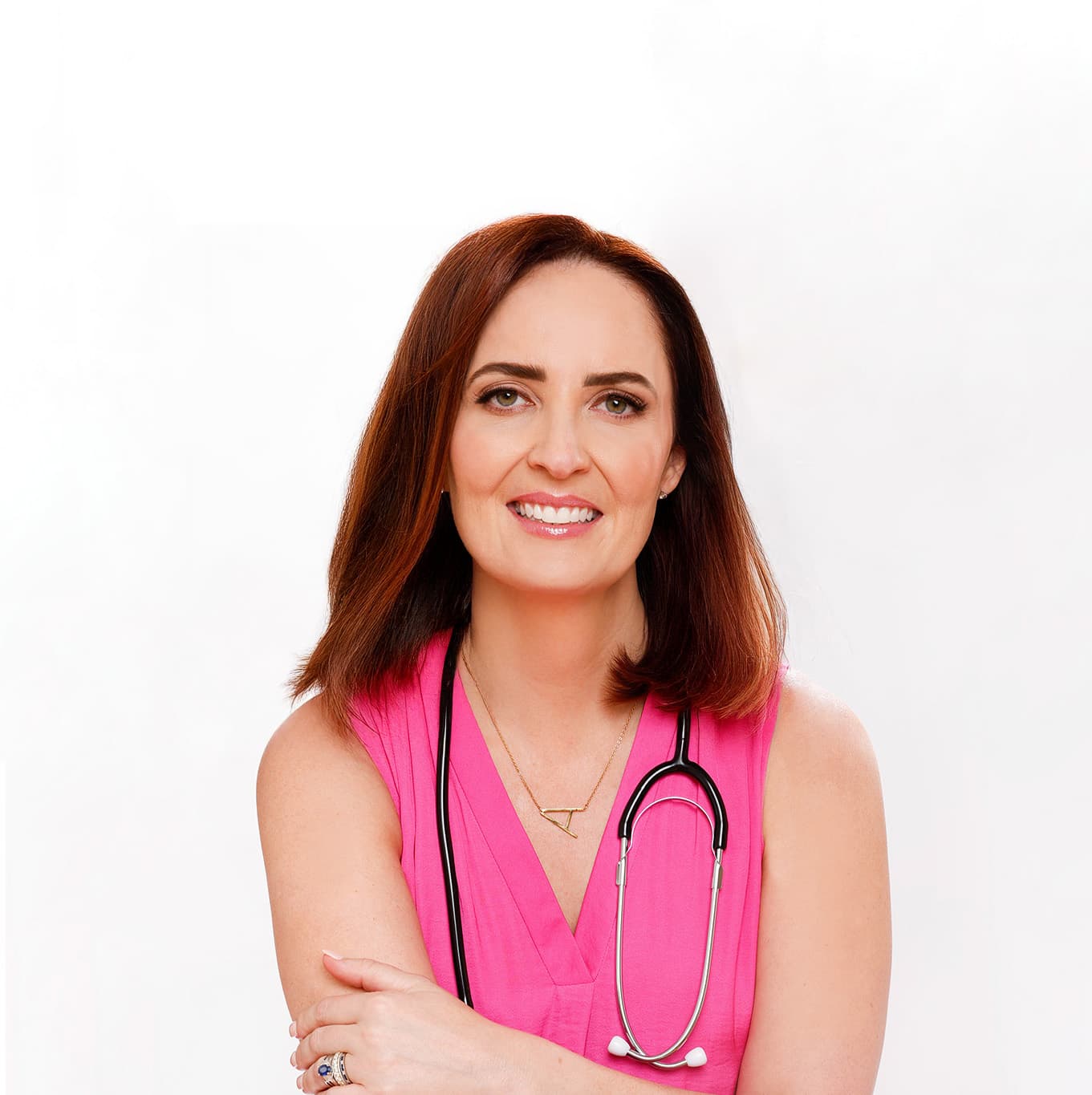
Full Transcript Podcast Introduction and Valentine's Day Setup 0:03 Welcome to Heartline, Changemaking in Healthcare. 0:06 I'm your host, Dr. 0:07 Andrea Austin, a board-certified emergency physician, physician development coach, and educator. 0:13 After years on the front lines, I've learned that real change in healthcare starts within. 0:18 Each episode invites you to explore the inner work that unlocks clarity and bold leadership, because healing systems through changemaking begins with following 0:27 our heartlines. 0:31 Hi, fellow changemakers. 0:33 Happy Valentine's Day week. 0:35 I know this week can be awesome if you're in a relationship or it can be really tough if maybe you're in a breakup or not in a relationship right now. 0:46 And I've been all of those things. 0:48 And this week, I'm going to read a couple of chapters from my book. 0:52 I've had some coaching clients that have come to me while they're going through a divorce. 0:56 And so I want to read that chapter because I think it has a lot of insights about how a really tough time in your life can be a period of growth. 1:06 And then I also want to read the chapter on partnering well, which is super short, because I think the most important thing about our personal lives and 1:16 honestly also our professional lives is who we choose to share it with. 1:19 And while I'm going to read the first chapter about the divorce where I quite frankly miss the mark, I have a really great husband now.
Chapter Four: Divorce and Self-Discovery 1:27 Enjoy these chapters. 1:29 If you enjoy the book, you can pick it up on Audible. 1:32 And regardless of what your love life is like right now, just love yourself. 1:38 That is the most important thing to have that self-compassion and to really be your own best friend this Valentine's Day and every day of the year. 1:47 So with that, let's jump in. 1:50 Chapter four, breaking point, navigating divorce and self-discovery. 1:54 Through an incredibly shitty period of your life, You're allowed to have joy in the middle, beginning, and during whatever part. 2:01 and that was a quote from Heartland podcast of February of 2023. 50% of Americans will get divorced at some point in their lives. 2:11 This process can be filled with pain, uncertainty, and the unraveling of dreams. 2:16 My journey through divorce began during medical school, and it made me reflect on the unique challenges that women physicians face regarding relationships, 2:24 marriage, and the complexities of life while doctoring. 2:28 While I'm not a relationship expert, I feel there is much to learn from my experiences trying to partner as a woman becoming a doctor. 2:35 The time pressures we face and the culture of perfectionism can take a heavy toll on finding and being a good partner. 2:42 As we start this chapter together, I want to be honest about my shortcomings and the lessons I learned from my divorce. 2:48 While my divorce was undeniably painful, there are also moments of unexpected happiness and fun. 2:54 Despite the turmoil, I was surrounded by supportive friends and engaged in activities that brought me joy. 3:00 It was a reminder that there's always a flicker of light amidst the darkness. 3:05 These moments of pleasure were a lifeline, keeping me afloat during the storm. 3:10 It's a realization that I wish I'd remembered during other challenging times like on deployment or the COVID-19 pandemic. 3:18 Now let me take you back to the beginning of my marriage. 3:20 I got married at the young age of 22. In hindsight, I realized how little I knew about myself and what I needed from a partner. 3:29 As a driven undergraduate and medical student, I focused primarily on checking off boxes of academic success. 3:36 Side note, I like to call this the achievement treadmill. 3:39 Signs that you're on the achievement treadmill are that you look for external sources of validation, frequently feel like you're not in control of how 3:47 fast or the incline, and you're exhausted. 3:49 Whether by design or inadvertently, many things in medical education and later medical industrial complex are incentivized to keep doctors on the achievement treadmill. 3:58 Back to 22 year old Andrea, there was little time for self-reflection and exploration of my desires and aspirations. 4:05 Marriage for me became just another item on the checklist, a natural progression after completing undergrad and entering medical school. 4:12 My first husband, whose name I've changed here, Matteo, was a Swiss foreign exchange student whom I met when I was 15 and profoundly affected me. 4:21 He was introduced by a friend serving as his host family. 4:24 His olive skin, jet black hair, thick hair, and soccer player physique were irresistible. 4:30 He was intoxicatingly handsome and he had a magnetic pull on me. 4:34 Our year of dating was intense and filled with new experiences and emotions I had never encountered. 4:41 However, the foundation of our relationship was built on codependency. 4:45 When you're into dating, Matteo fell into a deep depression. 4:49 Looking back, his depression likely reactivated some of the dynamics around my mother's episode of depression. 4:54 I knew that depression was not his fault and that it was a neurochemical imbalance. 4:59 I felt like our relationship crumbled around the same time. 5:03 But leaving him felt cold and I feared I would make his depression worse, even trigger suicide. 5:08 This led to the development of a codependent dynamic in which I felt like I was responsible for his well-being. 5:15 I stepped into the caretaker role and out of the girlfriend role. 5:18 Instead of a give and take, a dynamic emerged of me being the fixer, planner, and problem solver for everything that developed. 5:26 The hyper-functioning that I honed during my childhood was on overdrive with the struggle to balance being a great girlfriend, 5:32 working, and studying. 5:34 Not only would I be an A student, but I'd be everything to everyone in the dorm, as an RA, and with my free time, I'd be encouraging Matteo. 5:42 Being mired in everyone else's lives kept me from pursuing self-discovery. 5:46 Aside from my friend Jen, there wasn't anyone checking in on me. 5:50 Not that I blamed them, my external armor of I have it all together was ironclad. 5:55 I needed more self-exploration and introspection to prepare to be a partner. 5:59 The academic demands and the necessary volunteering or work experience to go into medical school take up a lot of time. 6:06 Only later when I found myself deeper into the relationship did I realize the magnitude of what I had committed to and the lack of solid foundation we 6:13 had built. 6:14 I also didn't know how to be with Mateo without being codependent. 6:18 Codependency is defined as an emotional and behavioral condition that affects an individual's ability to have a healthy, 6:24 mutually satisfying relationship. 6:26 It is also known as relationship addiction because people with codependency form or maintain relationships that are one-sided, 6:33 emotionally destructive, and or abusive. 6:36 For me, the mutually satisfying part was lacking. 6:39 Sure, there were some exhilarating moments, especially in the first year and later on trips to Europe, but overall it was a net negative for me. 6:46 It was not just a hard season, but a slog that I felt required to stick out, likely activated by the depressive episode Mateo experienced early on and 6:56 relapses throughout a relationship. 6:58 Many people, especially women, are drawn to medicine because of its inherent caretaking aspect. 7:03 We thrive on taking care of others. 7:05 I encourage aspiring and current doctors to consider whether their caretaking tendencies cross over into codependency in their relationships. 7:13 As our marriage began to fall apart, it became increasingly apparent that I had unintentionally enabled codependency that showed up as me trying to pick 7:21 up the pieces and shield him from failure. 7:22 I forgot that while I was an aspiring doctor, I could not heal a person's internal wounds. 7:29 To have the courage and clarity to leave, I had to confront the damage I inflicted that led to the end of the marriage. 7:36 I realized more factors influenced my decisions. 7:39 Growing up in the Midwest, it was a cultural norm to get married around 22. Many examples from my friends and family groups supported this pattern, 7:47 and with couples who had been together since their early 20s, were genuinely happy. 7:52 For some, this dynamic worked out well. 7:55 From my observations, a key for these couples is the ability to grow together. 7:59 No one is the same person after meeting their partner. 8:02 Life experiences change everyone. 8:04 Adding to the complexities, being a woman in medicine comes with inherent expectations and pressures. 8:09 We receive overt and subtle messages to be pleasing and accommodating. 8:14 These societal messages can influence our behavior, and in my case, they played a significant role in my decision to stay in the relationship, 8:20 even when it got to be emotionally and physically abusive. 8:26 If you are contemplating a career in medicine, particularly young women, pause and reflect on whether you genuinely have the time and space to get to know yourself. 8:36 Understanding what you need and want in a partner is vital before starting a lifelong commitment. 8:41 Building a solid foundation of self-awareness is critical to navigating the complexities of relationship while pursuing a career in medicine. 8:49 The decision to get divorced was both slow and fast. 8:52 Shortly after getting married at 22, I received an email That was the proverbial straw. 8:58 We are both supposed to graduate college simultaneously. 9:01 My husband didn't walk and sat in the audience with my parents at the graduation ceremony. 9:05 Considering his shy and nonconforming nature, I thought little of it then. 9:10 However, about a month after our wedding, his father sent an email containing my ex-husband's college transcripts. 9:16 It revealed that he had been cheating and failed all the courses in his last semester and had not graduated. 9:23 I read the email while surrounded by coworkers at my summer research job. 9:28 The shock, surprise, and heartbreak hit me all at once. 9:32 I recall that young 22-year-old version of herself excited about starting medical school and working hard as a research assistant. 9:38 As I absorbed the information, my heart raced and pounded with surprise and profound disappointment. 9:44 My colleagues beside me saw no external reaction as we worked that day. 9:48 I wanted no one to know that something was amiss. 9:51 This was typical for me in those years. 9:53 My perfectionism kept me from sharing anything that could dent the image that I didn't have my life together. 9:59 The situation shows an unhealthy form of compartmentalization. 10:02 I stayed at work all day, numb and detached and brooding over how to react when I got home. 10:08 Later, I'll discuss strategies to be more aware of when you're compartmentalizing and question if it is necessary or simply more of an avoidance strategy. 10:15 We'll also discuss how to move through emotions after necessary periods of compartmentalization in a healthier way. 10:23 So after receiving the email that day, I went home, I stormed through the front door and fueled by anger and disappointment. 10:28 I couldn't hold my anger back anymore. 10:31 I confronted my ex-husband about what I had learned. 10:35 I looked him in the eye and I said, I received an email from your father today. 10:38 I know that you failed your last semester and didn't graduate. 10:41 It's not okay, especially since you lied to me. 10:44 The air was thick with the ferocity of my words. 10:47 I demanded answers, desperately seeking an explanation for failing his classes and lying. 10:51 The response came, it doesn't matter anyway. 10:56 You're going to be a doctor. 10:57 He quipped back at me. 10:59 In that instant, as his words hung in the air, a realization washed over me. 11:04 His response was profoundly disappointing, but looking back, it was at least honest. 11:09 Yet, I wouldn't process the meaning behind his words. 11:12 Instead, I went into hyper-functioning overdrive and employed my favorite persona, the fixer. 11:16 I began brainstorming ways he could go back to college and some work he could do while he was in school. 11:22 He was indifferent to my long wandering list of potential solutions. 11:26 The argument began to fade, not because anything was resolved. 11:29 It was more of exhaustion of tears and circular conversations with the knowledge I had to be up in a few hours. 11:35 As I lay in bed that night looking at the ceiling, I knew the marriage was over. 11:39 My thoughts took on a repetitive, shame-inducing chorus. 11:43 How could I end a marriage after two months? 11:45 I thought about the celebrity couples that get divorced after a few months and how I judged them. 11:50 is immature and stupid. 11:52 Getting a divorce after a few months of marriage didn't seem all that unreasonable, unfortunate, but not unmanageable now. 12:02 Hey friends, Andrea here. 12:04 There are moments in a doctor's life that mark you forever, and for me, they often involve travel. 12:10 It's where I connect with awe and wonder that help me see my life and my career differently. 12:15 The Heart of Medicine in Uluru, Australia, July 29-31, 2026, is a retreat that is an immersive, soul-level experience at one of the world's most sacred landscapes. 12:27 It's a space to breathe again, to reconnect with your purpose, to hear your own voice without the noise of the busy clinical environments we all work in. 12:37 We'll gather a small group of clinicians for thought-provoking sessions, storytelling, cultural learning, and genuine rest. 12:45 Spots are very limited. 12:47 If your heart has been asking for something more, this is your invitation. 12:51 Learn more and register at coachingfordoctors.net.au or you can email me at andrea at andreaaustinmd.com. 13:05 Some may be wondering why it upset me that he didn't graduate college. 13:08 Simply graduating college is not necessarily correlated with intelligence or work ethic. 13:13 But I was learning what I want and need in a partner. 13:16 I like to read and talk about politics, culture, and art. 13:20 And I want to do it with a person I share my life with. 13:23 I also had many family members struggle with unemployment, limited by their lack of education. 13:28 While I didn't have the complete clarity on my wants and desires, I knew I wanted a partner who shared my intellectual curiosity. 13:35 I yearned for a partner that I could connect with deeply on a philosophical level, something I later called brain sex with my now husband. 13:43 I hope this intellectual connection would extend long past the more superficial aspects of physical attraction. 13:50 While plenty of intellectually curious people don't attend college, it was a shorthand for me, especially when I hadn't been exposed to people with varied 13:58 life experiences. 14:00 In addition, I wanted a partner. 14:02 What stung so much was that I would be the breadwinner for all of us under every circumstance. 14:07 I don't mind making more than my partner. 14:09 I mind when we're not in a partnership. 14:12 I couldn't articulate it, but in my bones, I knew I needed someone who could take care of himself, take the lead, plan ahead, 14:19 and frankly be self-sufficient, as I knew I'd work many long hours. 14:23 I knew I didn't want a grown child. 14:25 I was outgrowing this codependency phase of my life. 14:28 I desired a genuine partnership built on trust, support, and shared values. 14:33 At that moment, I knew it was time to walk away and seek a future where I could find the love and companionship I longed for. 14:40 However, I lacked the courage and knowledge to move forward. 14:44 Our marriage stayed in a suspended state of dysfunction for about another year. 14:49 One of my other go-to strategies when life is hard and I don't know how to proceed is to read books. 14:53 I also spend time alone, walking, and journaling. 14:57 Medical school started a few weeks after the disclosure and the pace of medical school left no space for me to think about how to extract myself from this 15:05 failed marriage. 15:06 Nearly every waking thought was focused on studying and there was a deep uneasiness that I wasn't good enough to be there. 15:13 I only got into one medical school. 15:15 I applied to seven schools, a smaller number than many. 15:18 I was overly concerned about the cost of the applications. 15:22 Only getting into one school activated an intense level of imposter syndrome. 15:26 And when medical school began, I was all in. 15:28 I put my marriage on pause and bottled up my emotions deep down inside of me. 15:33 It wasn't all bad either. 15:36 Becoming a doctor was my dream and the complexities of the human body and the science behind it genuinely enamored me. 15:43 Medical school became my refuge where I found comfort in pursuing knowledge and the companionship of my brilliant classmates. 15:51 While many people reminisce that their high school or college years were their best, medical school was the best time of my life until that point. 15:57 Despite the marriage difficulties and the suffocating imposter syndrome, I found a real sense of purpose and deep friendship in medical school. 16:05 Fortunately, there was a summer off between the first and second year and involved a few weeks away from Mateo. 16:12 Foremost, the summer between first and second year medical school is the last summer break we experience as medical students. 16:17 Yet, my summer break was interrupted by my military service obligation. 16:22 Right after my medical school acceptance, I signed up to join the Navy. 16:26 I was attracted to the idea of serving my country and honestly that they would pay for my medical school. 16:31 Also, I had a deep desire to leave Iowa. 16:33 While I knew very little bit about the military, I knew there was no Navy in Iowa. 16:39 While most of my classmates went on vacations, I went off to officer development school in Newport, Rhode Island. 16:46 The days were filled with nonstop activity beginning at the crack of dawn and continuing until late in the evening. 16:52 Amidst the chaos surrounded by my fellow newly minted Navy officers, I still found an internal process the last year in collapse of my marriage. 17:01 Quiet strength was growing inside of me and I was sure I was going to figure it out. 17:06 I was so ashamed that my marriage was ending.
Closing Thoughts and Outro 17:09 Again, listening to my inner voice, I knew I needed to confide in someone. 17:13 I had not shared what was going on with any friends or my parents. 17:18 I knew it was a risk to share what was happening, and I felt the safest person was a friend from my medical school class, 17:24 Miranda. 17:25 Miranda was slightly older than the rest of us because she hadn't pursued medical school right after undergraduate studies. 17:32 Originally from New York City, her life experiences differed from mine in most of the people from Iowa, where most of our med school class originated. 17:40 I was captivated by her background, her writing pursuits, and the incredible things she had done. 17:44 She was mature, engaging, and hilarious too. 17:47 Being around her, I sensed that she was a safe person to confide in, someone who could understand even if she hadn't experienced a mistake of the same magnitude. 17:55 Until this conversation with Miranda, everyone I talked to about my relationship thought it was an incredible fairy tale. 18:01 Marrying my high school sweetheart, a foreign exchange student, and going on European adventures together, people found it so romantic. 18:08 Miranda provided a different perspective. 18:10 She didn't find my story romantic and said divorce was a reasonable option. 18:15 The validation was like a salve on my soul. 18:17 I started to feel more whole and like I could trust myself to navigate the situation. 18:23 Going through a divorce was undoubtedly challenging, but I found comfort in the moments of raw vulnerability with people like Miranda and others who showed 18:32 tremendous kindness and compassion. 18:33 My friends from that period saw how broken I was and how much pain I was in, and they loved me anyway. 18:41 Once it was out that the divorce was happening, we planned a party. 18:44 As I walked down the hall of our medical school on the night of the party, I saw June, one of my classmates. 18:50 She looked tired, and although that was not so unusual, I could sense something more profound in her face. 18:55 I invited her to the divorce party and later learned she was going through a painful breakup. 19:00 That year I learned the power of vulnerability. 19:02 My friends later told me that in the first year of medical school, I was uptight and not that fun to be around. 19:08 Removing the veil of perfectionism, I began to make deep friendships and had many fun experiences I still cherish to today. 19:15 Along with medical school, the Navy played a significant role in helping me channel the fighter inside of me. 19:20 One of the most memorable experiences of officer development school was the USS Buttercup ship simulation. 19:26 This Navy ship simulator lives indoors, but within minutes of being aboard and traversing the compartments adjoining the watertight doors. 19:34 It's easy to forget that it's a simulator inside of a building. 19:38 The exercise begins with the ship slowly filling with water. 19:41 We had to work as a team to save the ship. 19:43 We patched holes and ran pumps to drain the water. 19:46 Though safety monitors were present, the experience felt uncomfortably realistic. 19:51 The water levels rose, reaching our necks, and shorter individuals even had to trend water at some times. 19:58 Through these Navy adventures, I discovered an inner strength I never knew I had. 20:02 As Glennon Doyle beautifully says, we can do hard things. 20:05 Each challenge I faced in the simulation and drills from jumping off the high diving board into the dark pool, firefighting, 20:11 or working to save a ship with water up to my neck revealed the depth of my resilience and capability. 20:17 I could feel the energy and determination to navigate the turbulent waters of divorcing while returning to the second year of medical school. 20:25 As doctors, our grit can be a strength and a weakness. 20:28 Grit can keep us in harmful situations. 20:31 We may fall into the sunk cost fallacy in which we are reluctant to let go or abandon something or someone because of how much time we've invested in it. 20:40 I had been with Mateo for six years, which weighed on me. 20:43 How could I let go of a relationship that I'd had for this long? 20:47 It is hard to acknowledge that something you've been working on, whether marriage or a job, is not working. 20:52 The first step is to stop digging a deeper hole. 20:54 What helped me let go of this marriage was to step out of my perfectionism. 20:58 A part of me worried what other people would think about the end of my marriage. 21:02 I finally realized this was my life, my story, and nobody knew the inside of my marriage. 21:08 It didn't matter what others thought about divorcing a mere year into my marriage. 21:14 I was suffering and living with toxic codependency. 21:18 While my ex may have been doing his best, I also knew he couldn't grow into the partner I needed. 21:23 it wasn't my job to stay and fix him. 21:26 As I began rearranging my condo, for one, I felt my heart sink. 21:30 Would I love again? 21:32 Or was my career the love of my life? 21:34 A small splinter of clarity began to emerge. 21:37 I knew I'd be better off alone than in a relationship that didn't light me up for the rest of my days. 21:43 I boldly chose myself and my career and my future happiness. 21:49 I started to hear my inner voice and trust her a little bit more. 21:54 I'm actually going to leave it there and save the partnering well chapter, which is incredibly short as a special Valentine's Day extra bonus. 22:05 So check back on Valentine's Day for that. 22:08 And if I can be of any assistance to you as you're navigating your changemaking journey on a personal or systems level, reach out to me at my website, 22:18 andreaaustinmd.com. 22:20 And don't forget to keep following your heartline. 22:29 Thank you for listening to Heartline, Changemaking, and Healthcare. 22:32 If this episode sparked something for you, I'd love for you to share it with a friend or colleague who's walking their own changemaker path. 22:39 If you're interested in coaching, consulting, or speaking engagements, you can find me at andreaaustinmd.com or connect with me on LinkedIn and Instagram. 22:48 I work with individuals and organizations who are ready to build meaningful, sustainable change without losing themselves in the process. 22:56 The views expressed on this podcast are my own and do not reflect those of any organization I work for or with. 23:02 This podcast is for education and entertainment purposes only and is not intended as professional advice, including but not limited to medical or psychological guidance. 23:12 Until next time, keep following your heartline.
Comments