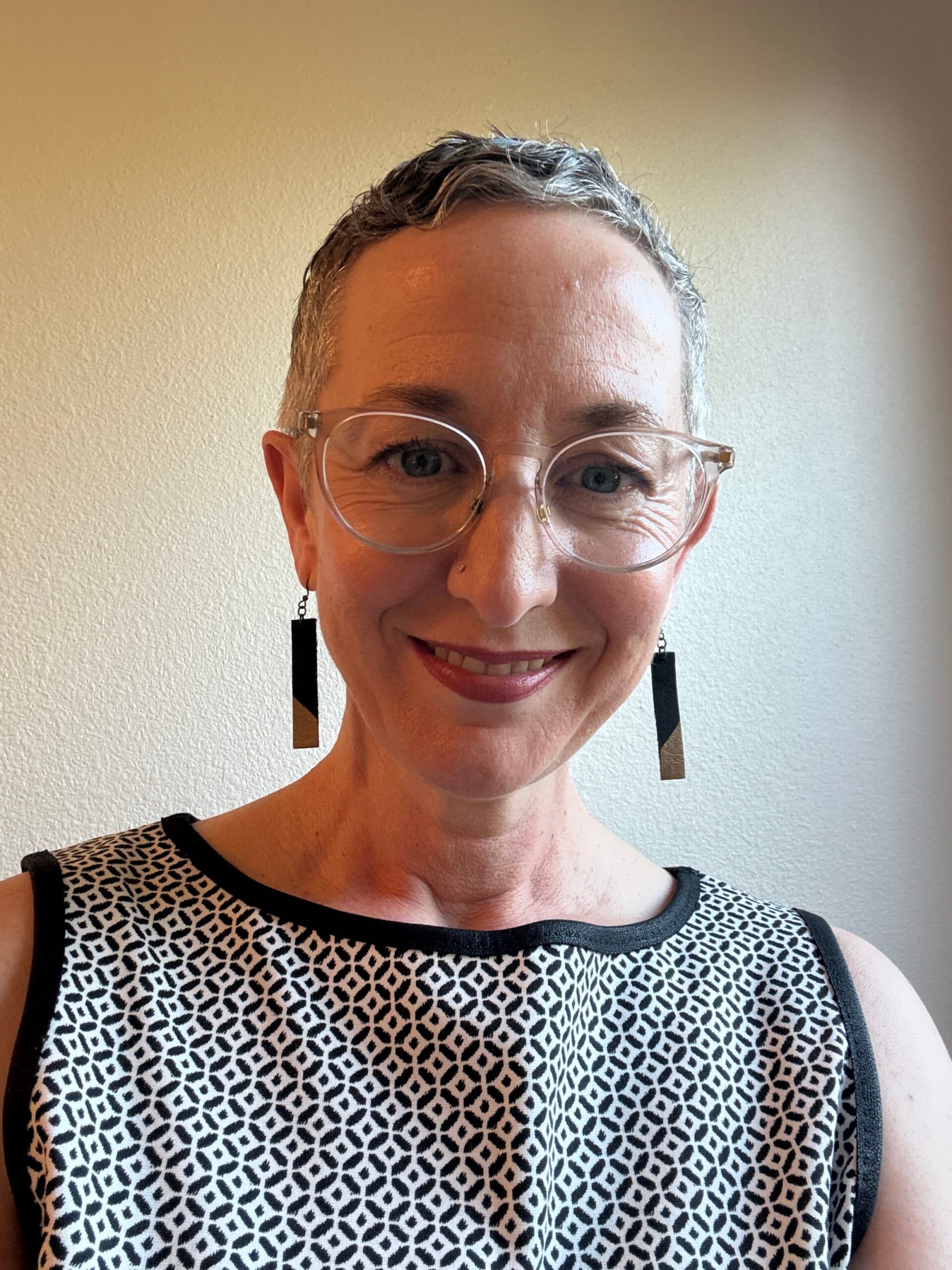
Full Transcript Introduction to Dr. Alicia Moreland-Capuya 0:01 Hi, the second speaker at the 2024 Institute of Coaching Conference was Dr. 0:10 Alicia Moreland-Capuya, who is from my hometown of Portland. 0:15 If you get to see this, Alicia, hey, let's have coffee. 0:18 She gave us an amazing talk about building trauma-informed organizations and people, why healing must be the way forward, 0:25 and I am just so enthusiastically aligned with all that she shared in this talk. 0:29 So I'm going to give you some of my notes and takeaways. 0:34 First, I want to mention that Dr. 0:35 Morelin Capuya I wrote a book called The Trauma of Racism, The People and Systems Fear Built. 0:41 I am excited to find that book. 0:43 Excited. 0:45 First, she introduced us to the concept and idea that won't be new to you, that safety is the first thing that we appraise in any new setting. 0:54 Seeking, being, feeling safe. 0:56 And it's something that everyone deserves to feel.
Safety as the Foundation for Thriving 1:00 Am I safe? 1:01 Am i loved? 1:02 am I cared for? 1:03 Then I can do my work. 1:04 Then i can be productive. 1:05 then I Can thrive then i Can actually be creative call back to the creativity from tomorrow mind I love this quote she shared the work of a lifetime is 1:17 regulating our emotions and considering others and those are things that are important to create a container the causes and conditions of safety for everyone 1:28 involved fear is a universal neurobiological response experience. 1:34 Fear that never turns off or that doesn't turn off in a reasonable time frame is trauma. 1:45 She showed us a slide. 1:47 This is your brain on fear. 1:48 It was fantastic. 1:50 And then traumatization occurs when the resources internally and externally are not A reflection question, are our systems and organizations built on our 2:03 greatest hopes and aspirations, or are they built from our biggest fears? 2:07 I would say that we say we're built by our aspirations but we act as if we are built with our great fears. 2:14 Something to ponder and reflect on deeply, I think for all people leading in organizations and building organizations. 2:23 Next, Dr. 2:23 Morellin Capuya shared isolation and sensory deprivation dysregulate our stress response.
Fear, Trauma, and Organizational Systems 2:29 She shared a Gabor Mate quote that the opposite of addiction is connection. 2:35 So instead of asking why is this person in addiction, we should be asking, why the deep emotional pain that resulted in the addiction? 2:46 Why stress manifests sometimes as addiction. 2:51 I love this pearl too. 2:52 We are designed to be interdependent, not independent, codependent or fully dependent. 3:01 So a little more on the trauma of exclusion. 3:04 She asked us to imagine when we were kids playing kickball, being afraid that we weren't gonna be picked for the team, right? 3:09 Everybody was probably there at some point or at least feared being there. 3:15 When we are excluded or we simply have the internal story the narrative, the perception that we're being excluded. 3:25 Three minutes of simulated experience resulted in negative affect that was detectable months later in an experiment where somebody had a simulated exclusionary. 3:37 So everybody wants to, needs to belong. 3:39 They want to belonging and they need to matter. 3:42 And that is why healing organizations and people in this way is critical and urgent. 3:50 We talked about intergenerational, transgeneratorial trauma and healing and I loved that she brought forward the concept that not only can trauma be passed
Belonging, Exclusion, and Intergenerational Healing 3:59 on generationally, so can healing. 4:01 These are like, we can create these new environments, memory markers in our DNA and RNA as part of our embodiment experience to move forward and to contribute 4:13 our healing in the arc of human history. 4:19 Signs of suffering, SOS, my brain made it. 4:25 Racism and phobias, transphobia, homophobia, xenophobia. 4:31 These are all needless stress, trauma, and suffering. 4:35 She called out an article I have not read. 4:38 looked up yet, but I will mention it for you, an article about hate and counter-transference, which sounds fascinating, and racism consciously denied but 4:48 subconsciously applied. 4:51 When she's explaining this to folks who have a question mark over their head, she says, have you ever had someone tell you that you were amazing but they 4:59 didn't treat you like it? 5:02 Love it, love it so much. 5:03 She talked about burnout and secondary trauma, which are always co-occurring. 5:07 And I like this definition of occupational-specific dysphoria as burnout. 5:14 Burnout, occupational specific dysphoria. 5:18 A protracted psychological and physical exhaustion as it relates to work. 5:24 Here are some sub points to that. 5:26 One, emptying the tank continuously is not sustainable. 5:30 It makes completely logical sense and having it framed in that succinct language is so good. 5:37 And then she reached to these prolonged responses to chronic interpersonal stressors on the job.
Burnout, Secondary Trauma, and Compassion 5:45 I love this list. 5:47 Unresolved conflict. 5:49 Work overload. 5:52 more to do than there is time or resources to it. 5:55 Lack of control, AKA autonomy. 5:59 Insufficient recognition or reward, including but not limited to financial reward. 6:04 Decisions that are perceived as fair and equitable versus unfair and unequitable. 6:11 And when there's a values conflict on the job, so moral distress, you're being asked to something outside of your moral boundary set. 6:20 She also shared that secondary trauma presents a lot like PTSD. 6:24 We have a a of the same neurobiological responses. 6:27 That was fascinating. 6:28 And she shared with us a book by Lipski named Trauma Stewardship that Dr. 6:33 Moreland Capuya says is so important to her that she reads it every year. 6:37 Traum exposure changes us fundamentally. 6:43 It sounds like this book is just super, super rich. 6:46 And then we talked a bit about the science of compassion, how compassion is beneficial not only to the recipient, but especially to The Giver of Compassion, 6:57 and that compassion increases vicarious optimism. 7:02 She recommends that we find ways to brush up against joy at least daily. 7:08 And I love this so much. 7:11 Just so many beautiful one line takeaways. 7:16 She recommend in our orienting to healing from trauma in organizations and individuals that reorient and reimagine that intentionally shift from transactional 7:30 to relational. 7:32 I think this is especially interesting because the transactional relational spectrum, especially in organizations, is a complex area where I there's so 7:44 much thinking and working and writing to do. 7:49 Listening is the form of love.
Relational Leadership and Trauma-Informed Organizations 7:52 Success versus mastery. 7:55 So this having grace for our failures again. 7:59 Success versus mastery. 8:00 So success is hitting the arrow or the dart at the bullseye. 8:03 One time that is success. 8:04 But mastery is grouping, a tight grouping. 8:08 When you are able to hit near the mark repeatedly because you have practiced. 8:13 Sometimes success it's just a lucky shot, but when you're mad, when have a mastery, there's more reliability in the system and important that we do have 8:24 grace for missing the work. 8:26 We have to have grace for missing the mark in trauma-informed spaces because we will. 8:31 And we need to focus on the effort as well as the impact. 8:35 She shared this concept of power circles and it comes from 360s where, where do you see yourself in relationship to the power source versus how do other 8:46 people see you? 8:46 Because oftentimes we are in leadership positions even when we deny to ourselves that we're in a leadership position. 8:54 So this is an interesting way to have a conversation about our localization of power in a less threatening way. 9:06 Organizations like people can be traumatized. 9:09 Organization like can heal. 9:12 They can grieve. 9:14 They can be treated as living things that need nurturing, not just machines. 9:20 So I love that. 9:22 And she left us with this question, what do you require to feel safe enough to do your job? 9:28 That we can ask ourselves that and that we ask those that are in connection with in work to start there. 9:35 Start from at least what you feel you need in order to be safe. 9:41 And then take that information and do something with it and then pay it forward and ask somebody else so that we have an ongoing ripple of how can I help 9:50 you feel safe enough to do your job? 9:52 Thank you, Dr. 9:54 Alicia Moreland-Cafuia for this wisdom. 9:56 I'll see you later.
Comments