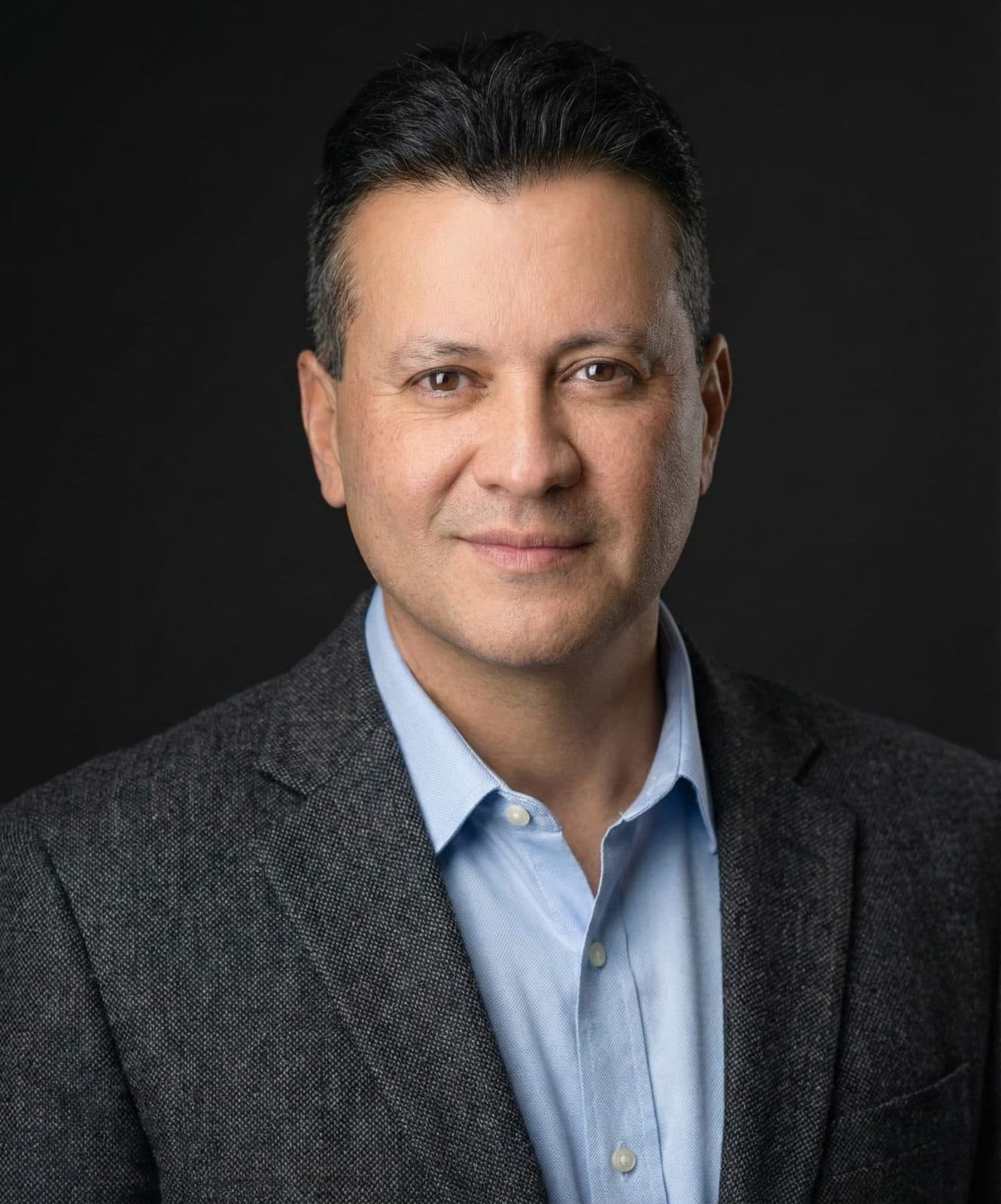
Full Transcript Introduction to Dr. Harvey Castro 0:00 Okay, we'd like to welcome on our guest, Dr. 0:02 Harvey Castro. 0:03 Thank you for joining us, Doctor Castro! 0:06 I really have enjoyed following you on LinkedIn. 0:10 I love that you are taking an innovative approach in healthcare and bringing large language models, chat, GBT. 0:18 There's lots of different companies formulating those models. 0:21 because you have been for the last two decades, you've been a healthcare innovator, a physician, CEO of a health care system, 0:29 and you bring so much wonderful knowledge to the area. 0:32 So again, thank you for joining us. 0:34 Thanks for having me. 0:35 Appreciate it. 0:36 All right. 0:37 Well, let's dig in there. 0:38 I was wondering how you found your love for talking on this topic. 0:44 You seem very passionate about it, and so it's definitely not traditional for physicians to be early adopters of healthcare innovation. 0:54 Yeah, good catch. 0:55 Um, I have to go into the background real quick. 0:57 I started playing, um, with the iPhone and the story goes, so I was in the emergency room coding a patient and this is when the iphone one came out and 1:08 I had asked the nurse, like, Hey, we need to start this IV drip. 1:11 And she got this big textbook, started going through it, found the dose, verified it and then started. 1:19 No, no, this could be a better way. 1:20 We got to do this within seconds. 1:22 The person's dying, they're coding. 1:24 And I taught myself how to program and did the first Ivy meds app in the world and went viral. 1:29 So fast forward, the reason I like sharing that story because it kind of makes more sense. 1:33 I was playing with ChatGPT. 1:38 And I'm playing with it thinking, oh my gosh, this is going to change healthcare. 1:42 This is gonna give access to people that don't, and this going help doctors in so many ways. 1:48 And so it's kind of funny. 1:49 I start writing a book on it. 1:51 Christmas holidays, my wife's like, what are you doing? 1:53 And then I'll write about this chat, CPT and healthcare, She's like, I don't know what this is.
How ChatGPT Sparked His Healthcare Interest 1:59 And then I explain it to her, she looks at me with a serious face and says, no one's ever going to read your book and no-one knows what they're saying. 2:06 I'm going be telling people for months, people are still going like what are you talking about? 2:10 And so I was like I care, still doing it. 2:12 Still tell my doctor friends and share it with them. 2:17 Well, I think, though, we are starting to see some interest. 2:20 I've been talking about digital health solutions in health care and writing on that. 2:24 And I, think when I first started writing and talking, about it I don't think anybody was reading it. 2:29 But now you're starting, to really see interest peaked. 2:33 Tell us how you think it can really address physician burnout, which is at an all-time high right now. 2:40 Yeah, no, that's awesome question on many levels. 2:43 Number one, you know, there's different parts of being burnt out. 2:46 You know the most obvious people talk about is the heavy administrative part of me having to dictate type. 2:52 I'm looking down on purpose like staring at my keyboard that I can't look at the patient. 2:56 Well, now AI is going to make it nice where this conversation we're having can be all transcribed and it's being integrated into the electronic medical record. 3:04 And so from a workload, I'll give you a real case point. 3:07 At one point I managed, you know, over 50 doctors and I hated when some of my doctors were older and they would only type with two fingers. 3:16 They would stay two, three hours after their shift and the shift was like 12 hours. 3:19 And I'm like, Oh my God, bless your heart. 3:21 You're here for 15 and you're coming back in another. 3:23 nine hours now to work again. 3:25 I was like, this can't happen. 3:26 And so they're like oh, let me get a scribe. 3:29 Then I felt bad that this was going on. 3:32 So now that happens. 3:33 The second layer of that burnout is just communication. 3:38 Here we are talking to one another, but there's some doctors that are, I'm going to say a little more stern and maybe can brush up their empathy skills. 3:46 Well, now with AI, you know, a lot of these issues with empathy and let's just say, be blunt, malpractice, comes from not taking your time and not doing 3:56 certain things in your patient interaction. 3:59 Now using AI to help you personally, to be more empathetic, help with your weaknesses, I see that as a strength now for our healthcare system. 4:08 Right, so Kevin brought up a really great point that I want to touch back on before we brought you on. 4:12 We were talking about the black box. 4:14 Why does that scare us? 4:16 And I think you really tapped in, like, why does it bother us that we don't know what's going on during the decision making of AI? 4:23 Let us know from a physician perspective. 4:27 You see, that's the hard part. 4:30 You know, everything is balanced in life. 4:33 Everything is we need to know. 4:35 As a doctor, I feel really confident about X, Y disease because I can literally kind of go through the decision process. 4:42 Here's A.I., literally this black box. 4:44 And I don't know how they went from point A to C. 4:47 And so we as healthcare professionals want to know, because our profession matters so much in the sense that if we make a mistake, 4:55 people die. 4:56 It's not like, okay, you're going to lose some money or, yeah, he bought the wrong stock today because AI now it's literally someone's dead. 5:02 And, so, we want it like look under the hood and say, Okay, how did you make that decision? 5:06 What did And so one of the common things is, you know, everyone's like, oh, the AI is outdated. 5:12 It was backdated by a couple of years ago. 5:14 You can't use it now. 5:15 you can still use It. 5:16 it's just you've got to learn how to use And that's why I'm a big advocate right now explaining how No, I think that's an excellent point. 5:24 And, you know, James, when we're looking at from a malpractice perspective, like if you're using a new tool, what are the things are you going to think 5:32 about there for the physician? 5:34 Sure. 5:35 Dr. 5:36 Castro, this was something we didn't get into yet, but in terms of the services versus Call it devices. 5:45 I mean, especially in health care You have from a legal standpoint you have okay. 5:51 Is this a a product liability issue? 5:54 Or is this say a medical malpractice issue, you know that you potentially are looking at the physician with respect to liability. 6:04 I mean, do you get any, I guess, with the respect of the physicians that you talk to, is that a concern as well, just from a liability standpoint? 6:14 Where do we fall? 6:15 Is this going to be our fault if it goes bad? 6:18 Does that make sense? 6:20 I love this topic. 6:20 It's a long question. 6:21 This is huge. 6:22 And from the legal point, look, Let me preface by saying at the end of the day, every doctor is responsible for their decisions.
AI and Physician Burnout 6:33 If I listen to your heart and I say, oh, my set the scope didn't work. 6:36 And that's why I'm here. 6:37 Right. 6:38 Is it on the set to scope manufacturer or is it all me? 6:41 That's going to be on me. 6:41 That sure. 6:42 If I use, you know, I'm gonna date myself, if I can use my phone, and I am looking at references and the reference is wrong, 6:51 is it that the references is me? 6:52 No, it's me again. 6:54 Because I was the decision maker. 6:55 I went to school, And I need to personally evaluate, going back to that first point, any look under the hood for this AI product and say, 7:01 okay, this is valid or incorrect, then I ultimately am responsible for that decision. 7:06 Here's the interesting part. 7:08 Right now, the standard of care is whatever is practiced. 7:12 Right. 7:12 What if, now there's, I don't want to go into it too much, but we can. 7:17 Depending on what AI we're talking about, right now we are talking chat GPT, that type of AI. 7:20 But what about the AI that's looking at CAT scans? 7:23 I was going to ask you about this. 7:25 I'm glad you're going here. 7:26 Okay, and what if one of my buddies has this, I'm a little jealous, but basically the skinny is patient shows up with stroke-like symptoms, 7:34 CAT scan has AI. 7:36 AI is literally looking at the read and saying, oh, this is a stroke and it's texting the radiologist, texting to the doctor saying hey, 7:43 look at this CAT Scan ASAP. 7:46 And so what happens now is the ER doctors like, hey, we got a stroke, We got to jump on it. 7:51 But what about the hospital across the street that decides we're not going to pay for that technology? 7:56 And what if a lawyer like you guys, awesome lawyers, come up and say, Hey, the standard of care is having this AI. 8:02 And this person now didn't get the antidote, didn�t get TPA, and because of it, now they are having damages. 8:09 No, and I want to take that a step further, Dr. 8:13 Castro, because we always know that AI is learning and we're adding more and more data, so it's changing. 8:20 So what if the standard of care is to rely upon AI? 8:25 And you just said you as a doctor, you're the final decision maker. 8:28 You rely on it and it gives you a bad output. 8:33 It's really a double-edged sword right now. 8:37 Yeah, let's take it to another level. 8:42 I saw this huge statement from the president of the AMA, I think it was last week, and his angle this year or one of his things that he wants to push is 8:53 that doctors are ultimately kind of shoved this AI in their face and say, here you go. 8:57 And ultimately, they're responsible. 8:59 But what if the AI is wrong? 9:00 What if it's doing things wrong, who really is responsible? 9:04 At the end of the day, the way the law is written, and the lawyer is going to push it, it is gonna be back on the doctor. 9:10 In fact, I always tell the doctors, hey, no matter what you do here, you're ultimately responsible If you can't go out and say, 9:17 oh, open AI, we need to sue, they're the responsible ones. 9:20 Now, here's the best part of it. 9:21 Here's a punch line. 9:22 And here is the fun part. 9:23 The minute this becomes a standard of care, in my opinion, I'm not a lawyer. 9:28 This becomes the standard care. 9:30 I think that's when things will change, because at that point, now doctors can say hey, this is the standard care, these are the tools, 9:38 this the output. 9:40 How can I defend myself here? 9:42 This is what led me wrong, and this it. 9:44 That's going to be an interesting dilemma. 9:46 But before we get there, go ahead. 9:48 Then, Dr. 9:48 Castro, it's all of a sudden becoming a products liability case. 9:53 Maybe, maybe. 9:54 Well, and to the first point, James, Misty, Dr. 9:59 Castro, I think that to be hospital that's across the street from the hospital, that maintains a certain degree of AI assistance with, 10:08 you know, its radiology department, there is nothing wrong with a hospital that doesn't have the capabilities to do those things.
Black Box Concerns and Medical Liability 10:18 And that maybe- Now. 10:20 Yeah, now. 10:21 I don't think it would even matter from, well, I think would matter for my standard of care perspective, but I do think, 10:26 or what I would think be necessary, Misty, would be laws in place mandating that everyone has some degree of AI. 10:34 Well, that's not what the standard to care is normally. 10:36 But it's almost like, if you think about it, like for instance, with I'm thinking about airbags. 10:40 Okay. 10:41 and when there were certain vehicles, You know when automobiles were being developed certain vehicles had certain kinds of airbags Canopies leg bags all 10:51 those sorts of things and that led to better safety results for the passengers in the vehicle It wasn't then turned into a standard of care issue. 11:00 No the DMV DOT came in said hey I don't know who it is, maybe Volkswagen, clearly has the jump on how to best deploy airbags during a crash. 11:10 This is a mandate for the entire industry now. 11:12 You need to have canopy, you need have steering column. 11:15 That's a great point. 11:17 Dr. 11:17 Castro, and I would like you to weigh in on this. 11:19 So what's going to be, doctors love and hate regulation. 11:24 I represent them all the time. 11:26 What do you think you're, you know, what's going to be necessary to get in there and regulate and make standards so that the medical community trusts AI more? 11:39 I think the ultimate is going to be, and you're going laugh when I say this, it's going be another large language model. 11:44 It may be ChatGPT 7 or 8. And in a serious note, I just think it will be a large-language model for that specialty. 11:56 If you go underneath the hood and look at this thing, the FDA has to regulate these items. 12:02 And here's the beauty, large language model has the pivot, has change. 12:05 The fact that we put information in it, it's going to change and every time you change the model, you got to go back and get FDA approval. 12:12 So this is going be really tough for the F.D.A. 12:15 They're going either have to kind of change their rules or create another way of regulating this. 12:21 Now, to answer your question, how to do it, the reason I went to all that background is we're going to have to doctors reinforce learning. 12:29 Meaning, right now, chat GPT, if you guys didn't know about this, is kind of crazy. 12:33 It was reinforced by humans, but those humans were in Africa and they got paid pennies to reinforce the learning from them. 12:41 And so if you think about it, if your asking a medical question, this was to a layman person looking at it and saying, yeah, 12:47 that looks like a good idea. 12:48 Sure. 12:49 Let's reinforce that now. 12:50 That's tough to think of. 12:52 And now you chat GPT a couple times with some serious things that I need to know the answer to. 12:57 And so my point is this, for a doctor to trust it, it's going to require doctors to reinforce it. 13:02 And I always say this. 13:03 It's not any doctor, just because you have an MD or DO behind your name makes you a doctrine. 13:07 No, It is going be the right doctrine who that right doctor is. 13:10 If I'm creating a program or a product that's in the emergency room, then it makes sense to have human reinforced learning from ER doctors. 13:18 and nurses and healthcare providers in that silo, but really doctors. 13:22 And that's where we're headed. 13:23 I think that is going to be the future and that will become the standard of care. 13:27 No, and I agree. 13:28 And I think that one of the issues we see is, you know, go back to AI's learning. 13:33 We depended on the data. 13:34 You know I, think there's also going to have to be some rules that require it to retest every so often, recertify, because we want to make sure that it's still, 13:44 two years from now, delivering reliable results. 13:48 Yeah, I love what you just said. 13:50 I just took an AI advanced course and they're talking about this theory of thrift and basically here's the model today but with time it kind of changes 13:59 and then you got to recertify it or you gotta change it because it doesn't apply. 14:03 My other example, it's reinforced learning. 14:06 If you have the wrong doctors reinforcing the then it's going to drift. 14:13 It's gonna change. 14:14 it is not gonna give you the same output because now let's say OS 5 or going into a chat GPT or let us take it on another level. 14:20 Let's see if I got I called all my ER friends and I was at a national conference with the ER and i said hey everybody turn on their phones let get on chat 14:28 gpt ask the question let reinforce and let push this one thing the model will look at that and say wow we just got 10,000 inputs for this one question, 14:37 maybe our model is wrong. 14:38 Maybe we need to pivot a little. 14:39 So that's what I'm saying. 14:40 It's still kind of, it can be pushed a lot and it, and can it be wrong? 14:44 What an emergency room setting benefit from AI? 14:49 Dr. 14:49 Cashel, how, because I'm thinking in an emergency room setting, there's a lot of judgment calls, a lotta quick thinking, 14:55 lotta quick decisions, alotta experience going to those decisions in the ER, cause those are some of the, I always thought some the more well-rounded physicians 15:03 or doctors. 15:04 How can- I appreciate it, cuz I am an ER doctor, so thank you. 15:06 See there you go. 15:07 So I was just thinking how beneficial would it be in that setting? 15:11 Giving the split-second decisions that had to be made, and sound judgment decisions they had be to made. 15:16 would AI be, I mean, would they just be stuck to putting something on the board like assistance needed stat? 15:22 You know what I'm mean? 15:23 I feel like that's as much as it can go for. 15:25 I wouldn't feel comfortable with anything more than that. 15:26 Kevin struggles with technology. 15:29 No, struggle with it, but there's so much on line at that point, Dr. 15:32 Castro. 15:33 Well, I think we need to add this to Dr. 15:36 Castro, and this is kind of a follow-up with Kevin. 15:40 You know, in our profession, egos play a big part. 15:49 That their professional judgment is the end all be all for a decision to be made. 16:00 And I would assume, well, I'm not going to assume. 16:02 I don't think doctors have egos at all. 16:06 But let's take that assumption. 16:09 I mean, is that part of the pushback, do you believe, with the AI, the technology that doctors are saying, wait a second, 16:18 you want to take away my professional judgment on what I've learned, what experience, and what i've been trained to do? 16:26 You want take it away from me and put it in this technology. 16:31 Do you see that as kind of a push back as well? 16:34 Yeah, I talk about this a lot. 16:37 There is that entitlement or I am a doctor and God like complex, you know, some doctors have that unfortunately, but I call it the bell curve distribution 16:48 and it's skewed with AI adoption. 16:51 You know, like I'm an early adopter, but I wanna be a little piece on that PC here and say, I feel like in general, doctors that are older are the ones 17:02 that fighting me the most. 17:03 Doctors that just graduated, that grew up with the iPhone, they have no other way of seeing life. 17:09 They love AI. 17:10 Like they can't wait to use it. 17:12 In fact, there are ones pushing it And so when you look at who's in power right now, it's the doctors that have years experience to have set the tone.
Standard of Care, Regulation, and Bias 17:22 And to your point of entitlement, yeah, It's tough to tell a doctor, say, hey, you're wrong. 17:28 This is actually correct. 17:29 Sure. 17:29 It is really tough again, going back to not knowing what's under the hood. 17:33 So it puts us in a bad place. 17:36 But with that said, I want to go back Kevin's point. 17:38 These are two examples that I always use in the ER world. 17:41 One's kind of cool. 17:41 I'm going to start with the cool one. 17:43 So, ChatGPT4 has a way of taking a picture and you can upload it and it'll analyze the picture. 17:49 Now, that technology is there but it's not implemented because there's enough GPUs out in the world to let them use it so that all of us can start using 17:58 it because it has too much power it is taking, so they haven't turned that feature on. 18:01 But, in theory, I can't wait for them to release it, because this is one of the first things I want to do. 18:07 As an ER doctor, when seconds count, I have patients that come in with overdose issues. 18:11 And normally, the way the story goes is ambulance comes in, they literally throw pills at me and say, here, doc, these are the pills we found on the bed. 18:19 We don't know what they are. 18:20 Patient obviously is unconscious. 18:22 I had no idea because I can't ask. 18:24 There's usually no family member. 18:25 So I'm like, all right. 18:27 Some looking at these pills. 18:28 Obviously, you can start looking the serial number and all that BS and look at it, send it to the pharmacy and let them look and get it. 18:35 But now, Take my iPhone, take a picture, uploads, and then I can put like a little vignette. 18:42 Now in the theory, all this would talk to the electronic medical records, so it would know the patient's weight, it will know their history. 18:48 So you put it together, AI looks at it and says, oh, this is Tylenol overdose. 18:53 That is linked to pharmacy. 18:55 Pharmacy is like, Dr. 18:56 Castro has a Tylenolyl overdose, patient weighs 70 pounds or 70 kilos, blah, let me send the antidote. 19:02 That whole process would take hours by the time I call poison control by a time. 19:06 I get the antidote by time, I figure out what I need to do. 19:10 Now, with this technology, it could take a quick picture. 19:12 It will analyze it, send it in the back and boom, you have my diagnosis. 19:17 That's fabulous. 19:18 The first example. 19:19 Well, what are some other areas like? 19:22 Go ahead, go ahead. 19:23 No, no, Kevin's ready to jump. 19:25 Give me one. 19:25 You had a second example that I was waiting on. 19:29 The second example real quick is, it's two in the morning, I'm a human being. 19:34 I've been up maybe 20 hours, and I am exhausted. 19:38 Unfortunately, just because it is late, doesn't mean I get to go to sleep. 19:42 So, the human factor plays in. 19:45 And I have seen patients a million times with the same thing. 19:49 But, how nice would it be, again, protecting HIPAA, not going to put any sensitive patient information, but how would be able to be put into GPT equivalent 19:58 and say a patient shows up with XYZ, what do you think it could be? 20:02 And it gives me a list and it says something that I'm like, holy cow, I didn't even think of that one, because I am tired, 20:07 it's two in the morning. 20:09 And then I was like you know what, let me add this test, go into the room, ask this question, now I can balance, augment my clinical decision process with AI. 20:19 Yeah, no, I think that's a fabulous example. 20:21 It's incredible. 20:22 And I mean, it's no different than, you know, we have all these complex calculators now, right, for engineers. 20:29 I'm interested to see which area of healthcare that you think large language models could most improve. 20:47 Now, let me ask you, when you say AI, are you saying specifically like GPT technology or are just saying AI in general? 20:54 I think the AI that powers different digital health solutions. 20:59 So it may be some of both. 21:03 No, I love what you just said. 21:05 I actually saw it. 21:06 You're going to hit me up later, and I'll find it and send it to you. 21:09 But I recently saw this cool diagram. 21:11 It was based on an article. 21:12 And it was talking about the elderly and how they would use AI. 21:15 That picture was just amazing. 21:20 Um, just from the simple telemedicine, but then I talk about this in my talks when I go national keynote stuff that I've done. 21:27 Oh, what about these printing your medications in the near future? 21:31 I'll have this printer and say I need a medicine or adjustment. 21:34 It'll be there. 21:35 So I'm doing, you're my doctor right there in a video screen. 21:37 You're seeing me and you say, Hey, to my printer and it's prints the medication. 21:42 And so to answer your question, yeah, I would argue that that's a good one because of so many levels to it, because believe it or not, 21:49 the most expensive part of healthcare is our elderly. 21:52 It's the last couple of years of your life. 21:54 So why not use this technology to help you extend that life and quality of life? 21:58 And there's so much things from wearables to robots. 22:01 I mean, we can have a whole podcast just on that one question. 22:04 Yeah, no doubt, 100%. Well, what's it going to take, I guess? 22:12 We've got all these competing things. 22:14 Physicians are worried about being sued for medical malpractice. 22:19 So when they're trying to use these more innovative digital health solutions, which do not have any clear standards right now, 22:28 what do you think, and the standard would be for medical malpractice, what would a reasonable physician do as due diligence? 22:37 What do think is necessary right now before you as a physician would? 22:41 Let all your friends go first, let all the other physicians go. 22:45 Don't be the guinea pig. 22:47 That's how you need to know. 22:50 Yeah, my ADHD brain's going to say two things. 22:53 One, it's also going vary on the zip code. 22:55 Are we talking California Silicon Valley standard of care or are we taking, you know, out in the country, Texas, where things are seen and done differently. 23:05 So that'll be interesting. 23:06 And so what will it take? 23:08 You know I love this idea and I don't know who coined this, but I actually like this. 23:14 It's just like when we buy foods, we look at the label. 23:17 I think we need that in AI healthcare. 23:19 Yeah. 23:19 We need to be able to say, okay, here's ChachiPT. 23:21 It was trained on this data. 23:23 it has the following biases. 23:26 The Indian population doesn't have data for Africa and literally be a white paper that I can look it. 23:32 Just like, when I order a medication and then when you pick up your meds, you get this white papers that's like huge thick and has like all these side effects. 23:39 Same thing. 23:40 Why not give that to you in healthcare? 23:41 So you look under it and say, oh, wow, it doesn't, I shouldn't use this in breast cancer. 23:45 Oh, shouldn t do this, this and that, that way the doctor knows. 23:48 And then the second part, he goes with the first is we need to just educate. 23:52 That's what I've been doing out there. 23:53 Just educate doctors how to use it. 23:55 I call it the good, the bad and the unknown because there's a lot of unknown stuff that that's going to start happening that you're like, 24:01 whoa, didn't see that one coming. 24:03 Yeah, no, I love that idea of having a label, a product label so you know exactly. 24:08 And that brings about an important point is bias in these AI systems and algorithms. 24:14 James, say if you were representing a black pregnant female who we know has not gotten equitable treatment and the doctor was relying upon some sort of
AI in the Emergency Room 24:28 AI system to help manage the patient, what would you want to know? 24:32 I try to put myself in the physician's shoes in this AI technology. 24:47 the ability to rely upon it and what, from a professional standpoint, I'm required to do to, you know, make sure that it's accurate. 24:59 Because my concern would be, as a physician, in a situation where my ultimate conclusion of what should happen is different than what the AI says. 25:10 Then what do you do? 25:11 So I, Look, as a lawyer, protocol, procedure, make sure everything was followed by the books, whatever. 25:23 What about the data? 25:24 What do you want to know about that data. 25:26 I know, sometimes you got to make them uncomfortable. 25:32 The data of what the AI is using? 25:35 Yes. 25:36 Well, I mean. 25:37 what if it trained it on all, you know white pregnant. 25:40 women. 25:41 I'd have a problem with that. 25:42 What if it relied upon the, you know, the lay person in Africa, like, Dr. 25:47 Castro was talking about, I would have concerns with. 25:53 And obviously the physician needs to know that, because if they're going to rely upon this, they need to what type of data is being utilized to come to 26:04 the conclusions that it is, You know, I've got a even as a lawyer. 26:10 I have a problem saying that the liability should be put on the physician when they are relying upon a specific technology that just shoots out whatever 26:25 that conclusion is. 26:27 Disagree. 26:28 Fundamentally disagree. 26:32 Especially if, you know, talking about the standard of care, if the reasonable person, Kevin, in that specialty relies on this, 26:42 relies upon this technology. 26:44 It shoots out a conclusion. 26:46 That's what happens. 26:47 And, it's just difficult for me. 26:50 Don't you think, Dr. 26:51 Castro, that in the situation that James just posed, Don't you think it would matter how much it varied from what you would normally do, 27:01 what your trained to do if the AI gives you something just slightly different, then that's sort of more reasonable for you to rely on as opposed to if 27:10 it just gives some wild treatment plan for the patient. 27:14 Exactly. 27:15 And this will be the interesting part. 27:17 Fast forward 10 years from now, who is going to be sued on these kind of cases? 27:21 Is it going be a young doc that takes something that maybe doesn't have that clinical gestalt? 27:27 I'm an old man. 27:28 I've been doing ER for like 20 years. 27:29 So it would take a lot of output from AI to convince me. 27:33 If it went way off, I'd be like, no, it's hallucinating. 27:35 It's wrong. 27:36 Whereas I feel like some of our younger docs, again, I'm dating myself, they're over reliant on technology. 27:42 They want to order the CAT scan, the x-ray, and the blood work and all that stuff. 27:46 And then they go like, oh, maybe I should have asked this question. 27:48 I wouldn't have done all of that. 27:50 Whereas the older doctors are putting it all together. 27:56 Show me the literature, show me how I should practice this way. 28:01 I need to see it." And then that's how they would do it. 28:03 But whereas the younger doc, I'm worried that some of them may just jump and say, yeah, let's just do that. 28:08 That's what he said. 28:08 Well, you're second-guessing yourself when you are young in your career, too. 28:11 Yeah. 28:12 And I mean, that is sort of like your default mindset, whereas when get more experienced, then you say no, no I've seen this a hundred different times. 28:20 This cannot be right. 28:21 So I think that an important point. 28:24 How do you train doctors? 28:26 When we're talking about, this is how AI wins. 28:31 Right here. 28:34 By hedging its bet. 28:36 I think if once it says like, as long as it doesn't give a definite answer, I think it's always gonna be on, and I that is how you'll always keep it on 28:46 the physician shoulders. 28:47 Sure. 28:48 By saying likely this, most likely that requires a physician to then do an additional layer of analysis or convincing of him or herself to reach a conclusion. 28:58 Because the moment that, to James's point, it gives a definite answer. 29:03 Tuberculosis. 29:05 And it's not tuberculosis and I relied upon it. 29:07 It's definitely his fault. 29:08 That's what I was doing. 29:09 The program. 29:10 Okay, it is not the physician's fault? 29:13 And I struggle with that, James. 29:14 I agree. 29:15 Because there's a judgment that comes into everything. 29:17 There's the best judgment rule that goes into there. 29:19 So I have a difficult time saying that you've comprised your medical decision with your background training and experience. 29:27 Assuming other physicians that are working on the floor with you and also your access to AI. 29:32 and you made the recommendation to the client, I mean to patient, not the AI, AI didn't make the recommendations, but AI made a recommendation for you. 29:40 And you got to make that judgment, hey, do I believe it or not? 29:41 Which is also I think a physician's role, But I'd be more on your side if the AIS said, Hey, this is what it is. 29:47 And it was wrong. 29:48 I agree. 29:48 Well, maybe that's a lesson for people developing these sort of systems. 29:51 But then how useful are they going to be? 29:54 I think there's lot of questions. 29:55 They're just going continue to move forward and these issues are going be tougher. 30:01 That's why people in Washington are trying to figure out how to better regulate AI. 30:05 Oh, I had this question. 30:07 And this is maybe to James' point more than anyone else is, if we are talking about AI, and what its capabilities are in the healthcare sphere. 30:17 And I'm just talking about in an emergency room. 30:21 Is there a world where it's no longer James, a good or a product, and now turns into a service based upon the fact that it is, 30:31 and I'm envisioning like almost like a assembly line kind of vibe in the hospital where we go to the Hospital, Dr. 30:37 Castro, we get in on a line. 30:41 We run through machines. 30:43 we run thru x-rays, cats, whatever. 30:45 It says, hey, this is what it. 30:46 You might need to go ahead and get a stint.
Human Judgment, Egos, and Clinical Trust 30:49 shovels you off to a room where there's a machine that has the technology to do it, and it gets done. 30:55 That's what I envision. 30:56 Well, this is virtual healthcare where it's headed, isn't it Dr. 31:00 Castro? 31:01 That's terrible. 31:02 Well, legal, that's a scary world for me. 31:05 And from a legal perspective, Kevin, you're talking about a device that is going to be a products liability claim versus a potential medical service that 31:15 will be medical malpractice claim. 31:17 Even from the legal standpoint, it's going Well, let's talk about this. 31:23 When we talk software as a service, which is what everybody's going to, there's a cloud platform and you log in, EHRs use it and everything. 31:34 If the AI is incorporated into that, is there even a products liability claim that you can bring forth because it's service and not a product? 31:47 I mean that's going to potentially leave a plaintiff without some sort of recourse and it's gonna leave the doctor holding the bag, 31:54 if you will. 31:55 Dr. 31:55 Cash, this is a question for you. 31:58 Bring it, bring it Kevin. 32:00 Even when that gets me worried here. 32:03 This is off topic because you've written numerous, numerous books on AI and chat GPT, X, Y, and Z. 32:12 And it seems like you done a lot of investigating into artificial intelligence. 32:17 If you haven't heard of this young man, it's fine, he's an old man. 32:21 Have you ever listened to Marvin Minsky's lectures on A.I.? 32:24 ? No, I haven't listened to his lectures, but I've heard him. 32:28 But I'm gonna have to put him on my list now. 32:29 Yeah, dude, so good. 32:30 I mean, he's kind of always... 32:31 He was talking about this long, long time ago about AI and sort of the risk associated with it. 32:37 And he had predicted this a long ago. 32:39 but always listen to some of his lecture to fall asleep, actually, to be quite honest with you. 32:44 He's got like a more kind about... 32:46 Obviously interesting. 32:47 ...but certainly cool to listen too. 32:49 Um, But in talking to about where We've got to stop with respect to relying and supporting the practice, whether it be healthcare or law, 33:02 on artificial intelligence. 33:04 Where does that line in your mind stop in the healthcare sphere where you're saying, hey, this is too far. 33:09 Like for instance, I'm thinking about physician assisted suicide and euthanasia, things of that sort. 33:14 When do we decide to pull the plug? 33:15 When is it okay to abort a fetus? 33:19 Things of, that's what, when do you think the line needs to be drawn for the assistance that a physician must have with respect to artificial intelligence? 33:26 Oh, that's a tough one. 33:27 I like it. 33:27 Like the deep ones. 33:28 Yeah. 33:28 You know, I have to agree. 33:30 Um, you know like the other day I saw an article about this machine that asks you questions and then you walk into it and it's chambered and in it helps 33:38 you basically kill yourself. 33:40 And it relying on AI to ask the right questions. 33:43 If you answer it, and the things like, yeah, okay, then, but you obviously have buy that piece of equipment from the manufacturer. 33:50 That's just crazy to me. 33:51 in my mind. 33:52 Like my preface and I start every statement with do no harm. 33:57 And as long as I'm not doing any harm, then I'll move forward. 33:59 But if I feel like it, I am causing harm then, and so that one would be one that I would not want to let my my leave my entire life or something that's 34:10 going to be relied on AI just because I know there's hallucinations. 34:14 I don't know. 34:14 There's gonna be mistakes. 34:16 Then the other part is, you know, always joke is like if I get upset with my kids and they do something wrong, I'm like, 34:21 all right, Wi Fi is turned off and then they freak out. 34:25 The same thing I worry with AI that that then if we're not being a doctor Plano be a Doctor and we'll rely on all these tools then you're gonna lose that 34:34 profession and I'm I Am really worried about the art of medicine not be in an art anymore in the sense that We're going to rely too much on this technology. 34:43 I am not saying that we shouldn't put it away I think we should use it But then it starts going into these weird lines like this euthanasia thing that 34:51 I don't agree with that. 34:52 It just feels wrong Yeah, no, I think we talked about that in the legal field using AI, you know, where where is that line? 35:00 Where do we lose the art of what we do? 35:04 Last topic I really want to talk to you about is medical robots, right? 35:08 So we we know where this is going on We're talking about a legitimate medical robot as you say black box and it don't mean the black backs I Think about 35:15 and that's about medical. 35:16 Are we talking like a real medical robust? 35:18 DaVinci, the Da Vinci robot, and literally the physician does not have his hands in the patient. 35:24 He's using a little... 35:26 He was using the joysticks. 35:27 Yeah, joy sticks. 35:28 Okay. 35:28 Do you see a time when they could map the person's body, set the program in Da Vinci and it just do its work? 35:37 100%. And then whose responsibility is it when something goes wrong? 35:43 It's down to that guarantee. 35:44 What do you think, Dr. 35:45 Castor? 35:45 Do see that in The Future of Medicine?
Future Uses: Elder Care, Robots, and Home Care 35:48 Yeah. 35:49 Sorry, I'm having to reach my monitor. 35:51 It sometimes wants to turn off. 35:53 Yeah, that one's a tough one. 35:55 And just because so many variables can go wrong, and I think at the end of the day, you still need a captain of a ship and that person should always be 36:05 a human being. 36:07 From an ethical point of view, it'll be interesting when the AI is way, like they're predicting it will be anywhere between 10 times to 100 times smarter 36:15 than Albert Einstein. 36:17 So then at that point, they could say anything to any human and none of us would know if this is right or wrong. 36:22 No, that's scary. 36:24 It's going to be very, very scary now. 36:27 I literally just wrote about this. 36:29 So I would say about two, three weeks ago, maybe ish. 36:31 And I wrote. 36:32 About robots combining robots, because two things are coming. 36:36 Open AI is coming out with the robot, but Tesla is. 36:38 Coming out. 36:38 With the. 36:39 Robot open AI and the owners of chat GPT. 36:41 They're coming through a second party that they have ownership. 36:44 with their robots by the end of this year. 36:47 And I thought, holy cow, you put JetGP T5 plus the robot. 36:52 Robot will have tactile sensation so it could push and it would get that feedback. 36:57 You put the eyes where it has the camera and these cameras nowadays. 37:01 Some people don't know this, but there's cameras now. 37:03 Like right now, if you had the software, you could guess my age through the cameras, although you can do it without the AI. 37:09 You could check my blood sugar and it would tell you the average blood pressure that I'm having. 37:13 Again, just with that camera, and my pressure. 37:16 I've seen other algorithms that the same camera and I'm asking the manufacturer to hook me up for these zoom calls that will actually do a personality 37:24 check waste on our voice and your face expressions. 37:27 And then I would be able to get a column here on my computer that would tell me everything about you guys. 37:31 It takes the fun out of dating though. 37:33 You know what I mean? 37:35 I can't date her, man. 37:36 She like, asks too much. 37:38 The problem with that, Kevin, is you would never have a date again. 37:40 You crazy. 37:41 Look, they like golly, he's possessive. 37:45 He is completely fake, everybody. 37:48 Well, what's that going to do for treatment at home? 37:51 That story, because all that technology is coming to the computer, and that computer is going to become literally a reality with the robot. 38:00 And I know people are going be like, this guy's crazy. 38:01 No, with this stuff, you can look it up and it's coming. 38:04 It's going interesting to see what's gonna happen to medicine. 38:10 Since we're all legal here, I'm gonna throw this out to you guys and you're gonna laugh at this one. 38:15 My prediction is that we are gonna start seeing AI and healthcare used in amazing ways, but it's gonna come from a third world country, 38:23 not from the United States. 38:24 Oh, of course. 38:25 Well, yeah, that's where the testing phase goes. 38:29 That's exactly what's going on. 38:32 I can agree with that. 38:32 You see these robots and stuff like that being used out in these third world countries and the United States lobbyists and laws and lawyers are going to say, 38:40 nope, that's not going happen. 38:41 And then interest groups that are saying, no, we're not gonna replace this profession with this. 38:46 It's going be interesting. 38:47 That's gonna come. 38:48 Oh, yeah, there there it will be interesting to watch, but I agree. 38:52 There's a lot of countries in this game, which I think is what makes it really interesting. 38:58 What it's like a race, it was like the race to space. 39:01 But it is the rest day on medicine. 39:02 I don't think you'll see a. 39:03 A lot. 39:03 Of it. 39:03 And I. 39:04 Think it, I, agree with you, Dr. 39:06 Castro. 39:06 Agree with that. 39:07 That the United States will. 39:08 Be slow to adopt a model in the totality of integrating AI in our everyday lives. 39:16 One place we will always be first, and that's with the armed services. 39:21 And I do believe we'll find applications for AI and artificial intelligence and bots and all that kind of stuff in the theater of war, 39:29 as they like to say, James. 39:31 My ADHD again, sorry, Kevin, but this one I saw, this is crazy. 39:34 There's an algorithm that maps out the terrain. 39:38 You tell it how many missiles you have, how may tanks, what your army, the weather, And it tells you how to attack the other side. 39:45 this algorithm will say you need this many tanks, you should attack at this time. 39:49 You should apply this tactic and this is how long it'll take. 39:52 And when I saw that algorithm, I thought, holy cow, like this. 39:57 Unreal. 39:57 That's insane. 39:58 Well, there's already a lot of research going on on how to support field medics better using AI and using sort of digital resources. 40:06 So I think you're right. 40:08 A lot. 40:08 Of times the military is an early tester on this sort of technology. 40:13 So that could be a place we see it. 40:15 I could see a world where I pull my phone like this and I have it, I say, how much can James bench press? 40:21 And I think it just, and there it is. 40:24 It'll be wrong. 40:24 295 pounds. 40:25 There it These guys are workout fiends and they're always in competition. 40:39 Actually, one more thing we're about to be done, but I want to add this in, Kevin. 40:43 I met with a company and their using the technology that came from the military. 40:49 And what they did, they haven't released it yet, but it blew my mind. 40:52 It's basically they created a virtual resident and what it does, it'll ask you every question that you need to know. 40:58 And by the time you like it, pretend to be like a nurse triage. 41:07 history, everything. 41:08 And then by the time you come to me, it's given me like all your old CAT scans, x-rays, all summarized and it has an algorithm that will go through. 41:16 It's like, oh, he's coming in for fever. 41:17 She's come in in her chest pain, blah, and by time they see me it, literally like having a virtual resident. 41:23 Then when I saw it my mouth dropped and he came from the military. 41:27 That is fantastic. 41:28 That's in best beneficial though. 41:30 I could see that. 41:30 Real world application for that in the military with them volume they do in theater of war or need for assessment. 41:37 Absolutely. 41:38 Well, Dr. 41:38 Castro, thank you so much for joining us on the Zealous Advocate podcast. 41:42 This was fun. 41:42 We need another one. 41:44 There's so many to talk about. 41:46 Please invite me again. 41:47 And I'd love to come again and let's do it again, and that's a first for me. 41:54 Well, that's the fact. 41:55 We'll do it. 41:56 Don't ever offer anything to us. 41:58 And we'll take it, we will take you up on that. 42:00 Well thank you.
Comments