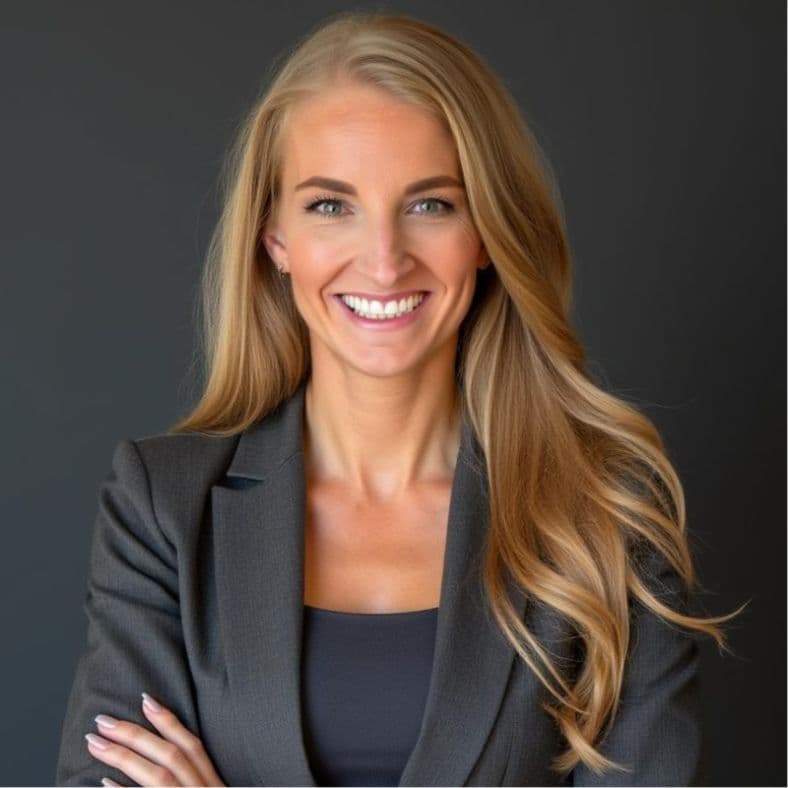
Full Transcript Meet Dr. Hilary Gallin 0:01 Welcome to the Startup Physicians podcast, where we explore how doctors 0:06 lead healthcare innovation. Please like and follow our show to join our 0:10 community of physicians contributing to meaningful change. 0:16 Everyone, welcome back to Startup Physicians. I am thrilled to be here 0:20 with Dr. Hillary Gallon today, an anesthesiologist turned startup founder 0:26 multiple times over, as well as an advisor consultant to startups. 0:31 Thank you, Hillary, for joining me today. 0:33 >> Thank you for having me. >> So, I would love if you could share a 0:38 little bit about your clinical background and your entrance into the 0:41 startup world and and how that unfolded. >> Absolutely. So, I'll start with my 0:45 clinical background. So, I am an obstetric anesthesiologist in a major 0:49 academic New York hospital. Do general anesthesia and I do obstetric 0:52 anesthesia, but along the way I've cultivated my interest in 0:56 entrepreneurship. And mostly I think about that as solving problems that I 0:59 see in my day-to-day. So, I've started two startups. One is called Fast Line, 1:03 which creates which has created a medical device to make central line 1:06 placement safer and easier. And the second one is called Arcs, which is 1:11 high-vis PPE that is made for women. >> That's amazing. So, a lot of people ask
From medicine, business, and engineering to startups 1:16 me like how do you even know to start a startup? You had a very interesting like 1:21 pre-clinical career. Can you tell a little bit about what that was and how 1:25 that led you to where you are today? >> Sure. I started in college as a 1:29 biomedical engineer. I've always been really interested in solving problems, 1:33 especially solving problems in people. And then after college, I went to 1:38 Goldman Sachs and I worked in their healthcare investment banking group. 1:41 That was a really wonderful experience where I learned about how to read 1:43 financial statements, how to buy and sell companies, and thinking about 1:47 business and medicine. Um I then went to medical school and 1:51 business school and while in residency decided to start these companies. And it 1:56 really came from a daily frustration of seeing problems that affected me 2:01 directly, affected my colleagues, and we thought to ourselves, 2:05 "Can we fix this? Can we make it better?" And so, that was really the the 2:09 attractive part about entrepreneurship was I get to make something that I see 2:13 every day uh easier and safer, and so we wanted to tackle that. 2:17 >> I hear that a lot from physician founders that it really starts with 2:21 something that you have direct experience with, and you're actually 2:25 really seeing a problem. I think that we're really uniquely qualified to solve 2:29 those problems because of our exposure in in the field.
Finding startup ideas in clinical practice 2:35 >> Absolutely. I think when you're trying to 2:38 solve a problem, it's easy to kind of think about what is frustrating to you, 2:43 but then you forget about how many people around you also share that 2:45 problem. And that's I think the most fun part is not just realizing the problem 2:49 that you have, but talking to everybody else around you and saying, "Well, what 2:54 are your frustrations?" Right? They may not be the same as yours. Learning about 2:57 kind of what the problem is more globally, testing out that product or 3:01 your very early prototype with people around you who are also subject matter 3:04 experts, and really thinking about kind of approaching this company really 3:08 organically. Right? We didn't set out to say, "I want to make a device that looks 3:12 like a specific thing." We really thought to ourselves, 3:16 "I want to solve a problem. I have no idea what it's going to look like, and 3:20 I'm not quite sure how I'm going to solve it, but let's start with the 3:22 building blocks." And almost do a design thinking exercise, figure out 3:26 "Why is this hard for me? Why is this hard for others? And what can we do 3:30 about it?" >> I love that you mentioned design 3:32 thinking cuz it's one of my favorite things to talk about is it's like this
Design thinking and problem validation 3:37 for those of you who haven't done this before, it's like a double diamond 3:41 approach. So, you picture two lines that are diverging and then converging to 3:45 find the first diamond. So, it's really you want to identify the right problem. 3:51 You don't want to be building a solution for a problem that doesn't really exist 3:56 or doesn't really have a big market share or a big total addressable market, 4:00 as we call it. Um, so you really want to be broad about 4:03 thinking what what is this problem? How do we characterize it? Is it like you 4:06 said, is it a problem for other people, too? Is it How big is the problem? And 4:10 using a lot of that like broad brainstorming and research to come up 4:16 with a bunch of possible problems and a bunch of qualifications of the problems. 4:20 And then from there, being able to really converge on the real problem 4:23 statement that you want to identify and address. And then doing the same thing 4:29 with solution. So that's the second diamond. You do the very divergent 4:32 brainstorming, market research, tons of input from other people. You know, you 4:37 you mentioned you get feedback from your colleagues who are also subject matter 4:41 experts. That's such an incredible opportunity that like all the people we 4:46 spend our time with are also experts and they're willing to talk to us about it. 4:51 It's this a little bit of a superpower, I think, for doctor founders to be able 4:55 to really get a lot of rich feedback. But you want to know like 5:01 are we building this sort of a solution or this sort of a solution? We know what 5:04 we're trying to solve for, but again, thinking very broadly before you 5:08 converge on what becomes your core product. 5:13 >> Absolutely. I think, you know, as physicians, we're 5:16 so used to talking to patients every single day. 5:19 You know, every single person that comes into your office or, you know, I see 5:22 pre-op, you know, let's let's take a deep dive, let's, you know, approach 5:26 you, let's ask you all these questions. We often forget that we can use that 5:29 superpower for our colleagues. And everybody loves 5:34 to I hate to use the word complain, but if you ask somebody, what don't you like 5:37 about something? I promise you, they will tell you. And that is the ultimate 5:41 kind of gold in this, um, discovery process, which is, you know, 5:46 tell me why you're frustrated. People I promise you will tell you, but we often 5:49 don't ask each other enough. We assume that, "Oh, if I'm having trouble with 5:53 this procedure, you must be an expert, right?" Like it's 5:56 almost you feel silly saying, "Well, is it hard for you, too?" Or, you know, and 5:59 why? And so, I think when we kind of take a moment and take a step back, we 6:04 realize that everybody really wants the best thing, 6:07 which is to make our lives easier, and everyone's really willing to share 6:11 if you're open to it. >> I hear two things from what you just 6:16 said that I think will really resonate. One, um 6:19 we I I was terrified of feedback throughout
Why feedback feels different for doctors 6:25 my training. We train in an environment where it's like super competitive and 6:31 you're being compared with each other and you are doing things that are 6:35 unbelievably hard emotionally, physically, mentally, and and and you 6:41 are sensitive about the fact that you are new to it and I I remember just 6:45 being I mean, if anyone said, "Hey, I want to give you some feedback," I would 6:49 like my gut would like churn, you know, it was so anxiety-provoking cuz I didn't 6:54 know who I was. I didn't feel established in my field. I was worried 6:58 that, "Oh my god, did I kill someone?" Like, what what's the feedback? But, as 7:02 entrepreneurs, feedback like I want everyone to tell me all the things that 7:05 are wrong with my idea so I don't waste like six figures building the wrong 7:09 thing. It is so valuable to get feedback and you need to get it early, you need 7:13 to get it often, you have to have a process for incorporating it, and it's 7:17 it's part of it's one of the core parts of design, but we as doctors are 7:23 probably more prone to like resisting feedback. And then the other thing you 7:29 said, which was like admitting when there's a problem or identifying when 7:33 when there's room for improvement, like you could tell your colleagues with a 7:38 ton of humility, like, "Man, I sometimes have trouble with central lines." And 7:42 wouldn't it be cool if we made a solution that would make this easier and 7:46 safer because I had this one particular problem. And by opening up that 7:50 discussion of admitting that you're not perfect, you're not perfect 100% of the 7:55 time, you don't have every single procedure go immediately the way you 7:57 want it to, it can open discussion for ways to improve the care that we deliver 8:03 because we all know we have a long way to go. We have many many opportunities 8:09 for improvement in the way we deliver care to patients. So, it takes a 8:12 humility and a willingness to accept feedback and a willingness to accept 8:16 that we don't we don't know everything. >> I think there's also 8:21 this wonderful thing about entrepreneurship when you realize it's 8:24 not about you, right? 8:26 You can remove yourself from the problem. Like, I'm talking about central 8:30 line placement. I'm not talking about my self-worth as a physician or my level of 8:36 skill. We are very much focused on the objective problem. And once you take 8:40 yourself away from it and you can look at it, that's when the fun begins 8:44 because you can really engage with people and you can learn, but it's not a 8:47 reflection of you as a physician. This isn't about your 8:50 patient outcomes. This is about an objective problem that you're trying to 8:54 solve. >> Absolutely. Um and I think that a lot of 8:57 us will see the problems in the health care system and the vast majority people 9:01 will feel um a little dis- heartened and maybe complain about it or 9:08 just feel bad or think, you know, carry some of I mean, we call 9:13 it moral injury when we're carrying some of the burden of like the system failing 9:18 our patients. And And I think there's a small cohort who actually want to do 9:23 something about it. So, people who will say, "Here's a problem. Wow, that's an 9:28 opportunity." And I think it takes a different type of thinking. 9:33 >> I think it's also hard to that point feeling very overwhelmed by the system. 9:38 Yes, there are all these problems. If 9:41 we let these problems stop us, we'd never get out of the out of bed in the 9:44 morning, we never show up to work, we never get a pass to our first patient. 9:47 There are so many things that we need to tackle that it can be often hard to 9:50 figure out, well, what's the one thing I do want to solve? And then when I do 9:54 pick something, where do I even start? We joke that we made our our MVP or a
Building the ugly first prototype 10:00 minimally viable product and we joke that we should put the M in the MVP. It 10:04 should not look beautiful. Like when you're first brainstorming, you should 10:09 it should look really ugly. It should cost $5. It doesn't need to be 10:14 a beautifully created product to get some really great feedback from 10:19 people, to validate an idea, to understand if this is something you 10:23 should approach, um and to start creating solutions that you don't have 10:27 to have something perfect to engage with other people. And I think once you get 10:31 over that part and you realize I can make something from the supply closet 10:35 that I cannibalized or I, you know, took something from Amazon 10:39 and attached it with a glue gun and this whole thing cost $5. That the process 10:43 becomes really fun because it doesn't have to be so perfect and you almost 10:46 forgive yourself for not being beautiful at the beginning. But that's what you 10:50 need to start gathering that information to start making it about 11:30 >> and and kind of designed it that way, and then there was one that was with 11:33 clay, and then there was one 3D printed. And so he was like showing it to my kids 11:39 and and they were looking at how it progressed into what is now actually a 11:43 very beautiful product. Like it's a very pretty looking thing with tech 11:48 integrated and but it was a tin pan. >> That's where you should start. You 11:52 shouldn't spend all your money creating beautiful prototypes. Like I 11:57 think about we did this project in business school where we had to create a 12:00 new app um for a bank in Peru. 12:03 And we didn't spend money making the app. 12:06 Drew out pictures on a piece of paper and our question for people was if I 12:12 showed you this picture, would you know where to click to get to 12:15 the following screen? You know, if you are a business, if 12:18 you're an individual, if you want to save, if you want to buy a house, 12:22 how are you interacting with this? And that was magic marker and and paper, 12:26 but it was so valuable to realize this is really confusing to somebody or it's 12:30 not confusing, but then we should go with that design, but don't spend money 12:34 when when you don't have to. Especially in the beginning when you're trying to 12:37 kind of when you think about that double diamond like which direction should I go 12:41 in? You can get a lot of information without spending any any money or 12:44 raising any money. >> That's my number one goal for early 12:49 stage founders is to teach them how to create assets for themselves without 12:54 putting in capital. Because a lot of people I actually I 12:57 remember Oh man, I've talked to so many doctors that are starting things or have 13:01 started things and um I mean I had one that was like, "Yeah, I've already put 13:05 you know, six multi-six figures into it and I don't really know where it's 13:08 going." And it's like "Whoa, we got to make a plan on paper. Let's make a model 13:14 so you can project out where you're aiming to go. Get some advice in here, 13:21 whether it's like a network connection or someone who does a lot of this to see 13:25 if you can compress that timeline, but creating an operational plan of like, 13:29 you know, what sort of capital would be needed to make something like this, 13:32 instead of just growing as this individual one two thing and and 13:37 spending a lot of money because you don't have a plan. The second thing I've 13:41 heard is people say, well, I got a quote from a developer. I have this idea for 13:45 this app. I'm just going to make it and I think it's going to be like 30k and 13:48 but I got to put myself out there. I got to I got to get something going and I'm 13:52 like, oh my god, no, like first off, now we have AI and we can vibe code 13:56 prototypes, but like what you're describing, what you built on that piece 14:00 of paper with a magic marker is like a wireframe. 14:03 Wireframes are like a visible depiction of what the 14:08 technology will ultimately look like. Build that. That is free. And you're 14:14 going to be like, here's a piece of paper. Pretend this is a phone. Where 14:17 are you going to click, you know? And you can get feedback and you did that 14:21 with a piece of paper and a marker. You didn't build 14:26 the app and development even even in the age of AI, development costs money and 14:32 time. It is way more accessible, but there's so much about product 14:36 development that I think it can be so helpful to have someone 14:41 in your influence who knows about this whole design process. So, I think that's 14:45 incredible that you were able to bring that all together. So, what what 14:49 did you end up making? >> For that project or 14:52 >> Yeah. Or for the your first your first >> startup. What What was the device you 14:56 made? >> Fastlane. So, we now have a 15:00 we you know, the the company has grown. We have a proper engineering team. We 15:04 have um like an advanced 3D printed model that 15:07 works, but in the very beginning, the first thing we made was we took last, 15:11 you know, we took things from the supply closet and we put it together with 15:16 a glue gun and we cut an IV like an angiocatheter and we 15:20 took that needle and we cobbled it together and that was our first product 15:23 that we tested on a cup of water. And so there have been many stages to this, but 15:29 that let us try like what's the right handle shape 15:33 for somebody? Is it intuitive for them to pull something? Do they want to push 15:37 something? You know, how do we think about interacting with this device? And 15:40 so we started with you know, things we cobbled together. We 15:44 were able to win some grant money from that. Then we're able to hire a team of
From supply closet materials to medical device 15:48 engineers. We got some free pig experiments and so 15:52 we've been able to grow relatively cheaply 15:56 by convincing each person at the next level, like the grant committee for 16:00 example, or the um that who was sponsoring a workshop that this device 16:06 would work in the next stage and so that's kind of how we move through it 16:11 relatively efficiently. >> And can you tell me a little bit about 16:15 how you navigated the pro- I mean, it sounds super intimidating to make a 16:19 medical device. It sounds like there's a lot of compliance things for that. So 16:23 can you walk me through how did you figure that out? 16:27 >> We asked people. Right? Very simply. I'm not an expert It 16:31 sounds silly, but I'm not an expert and we thought to 16:34 ourselves, who do we know who's made a medical device before in 16:38 our network that can help us kind of navigate the process. So what that 16:44 looked like was I was at a hospital for my 16:47 residency and there was a tech transfer office and so we asked basically like 16:52 how do I think about navigating this process? Found advisors at the hospital 16:56 who didn't know me but had made medical devices and I messaged them and said 17:01 I'm a resident interested in your device, can I come talk to you? And 17:05 people were very happy to engage and tell me about 17:09 places that they have succeeded and places that were frustrating and we 17:13 started that process just by talking to everybody in our network trying to learn 17:17 more, and understanding kind of the regulatory process and how to navigate 17:20 it. >> So, you had something you didn't know, 17:24 and you asked people until you found someone that did know. So, it's just
Navigating medical device development 17:28 like calling a consult. >> It's just like calling a consult. And 17:31 part of this process is you may ask somebody, and they may say, 17:35 "I don't know the answer to that question, but and this is always kind of 17:39 best part, you should talk to my other friend, right? And so, when we 17:43 think about the different nodes in a social network, it's maybe not the 17:47 person your immediate circle, but it's often one person away from that person. 17:51 I think that's where it becomes really powerful. But, if people don't know that 17:55 you are interested in making something, looking to solve a problem, looking for 17:59 information, they can't help you. And so, you need to put yourself out there 18:03 and say, "I don't know something. Do you know this? And if not, can you 18:06 point me in the direction of somebody who does?" 18:08 >> It's such a great example of how much you can do with that founder energy and 18:14 grit, and I think what do we call it? Sweat equity, where you're just trying 18:19 to figure something out. It sounds like a lot of work, but if it's about a 18:23 problem that you really care about it, it sometimes it doesn't really feel like 18:27 work. I think it feels creative, it feels connecting, 18:31 it feels like the whole process is called discovery. It's a discovery 18:35 process, and that sounds exciting compared to like going and working a 18:40 shift. You can keep working your shifts, but doing this on the side while you're 18:44 exploring your concept, it I just want to give people permission to go explore 18:48 their concept. That's how things start. >> It's exactly how things start. I think 18:54 that's what we've my partner and I have loved so much about this process is it 18:58 gives us so much energy. I think that especially in medicine, your job is to 19:02 become an expert, which means you are doing the same procedure or seeing, you 19:06 know, a similar group of patients over and over again. 19:09 And you often may not feel like you're making progress day to day because it's 19:13 like it's another appendectomy, right? It's another It's 19:16 another procedure that you're doing again and again to become an expert. But 19:20 the feeling of making progress in this other area has been extraordinarily 19:24 energizing because you're like, "Oh, today I 19:27 figured out the handle shape. Today I connected with somebody who taught me 19:29 something new." And you ultimately feel like 19:33 that part is moving forward and you're solving a real problem. Nothing gives me 19:37 greater joy than when a colleague texts me and says 19:40 "I had a really difficult central line today. When's your product 19:44 coming on the market? Or can I test it? Or where are you in that?" And it 19:48 reminds you that you don't live in this bubble of just you and your patient, 19:52 that what you're solving for really is making everyone else's lives 19:56 easier for physicians, safer for patients. And I think that's been almost 20:00 the best part about this whole journey which is kind of taking yourself away 20:04 from the day-to-day of medicine and thinking about it on a bigger scale. 20:08 >> And it can be really exciting and fun to create. I don't think we're 20:13 we we shouldn't be creative with our clinical jobs. We're following 20:18 rules and regulations and compliance and protocols and um and that's how we do 20:23 take care of patients. We don't want to be going off the grid, but when it comes 20:26 to solving identifying problems, solving them 20:31 thinking of interesting ways to to solve them, getting out your glue gun, finding 20:37 someone who has gotten a device patented before and learning about the process 20:42 and then having honestly to have AI as like a synthesis partner of as you're 20:47 like looking at all these different inputs that are kind of jumbled and 20:51 confusing to you too and and even using that as like more of a strategic partner 20:56 to synthesize the information. I think um you know, we didn't have that when I 21:01 was starting my company. >> Yep, I'd say I would have loved to have 21:05 AI in the beginning, but we didn't. We know we we do now. 21:10 I think as we think about kind of having AI as your 21:14 thought partner, um 21:16 it's really quite powerful and really exciting to think about how do I get 21:19 through so much more information really quickly, especially for areas where you 21:24 as a physician may not feel as comfortable so thinking about like what 21:27 is the company landscape. 21:31 Pull up, you know, trying to think about your total addressable market. Give me 21:35 the top 10 transactions of this year in this area. You know, 21:39 trying to understand where the market's moving. 21:42 Um understanding what other companies kind of are doing what you're doing. 21:45 Like the ability to pull that in. I used to do that as an investment banking 21:48 analyst. It took a lot of time and some really expensive databases to 21:53 go through that information and now that you can have that 21:56 at your fingertips when you're trying to match, you know, what is my 22:02 clinical problem that I'm solving with what is the business problem that I'm 22:05 solving. Suddenly you have like a free analyst and a free consultant in that 22:08 you figured out. Yeah. >> Absolutely. The one caution I would give 22:11 people when they're using AI to help do discovery on a concept is that it has 22:17 a very high um 22:21 propensity to do the convergent phase. So you have to specifically tell it when
Using AI as a founder thought partner 22:26 you're in the divergent phase of gathering and researching and so you 22:31 want it to be very comprehensive. You you need to use language to tell it like 22:35 I want you to do a deep research on on this. I want you to come up with a plan 22:39 for all of the different things we should consider looking at cuz you're 22:42 building yourself like a little mini database, right? So if you just ask it, 22:47 what do you think about my business model for this 22:51 vascular access device, it will go like blip. Like it'll maybe it'll it'll 22:56 probably give take whatever you gave it and it'll maybe 23:00 like do the large language model thing where 23:03 it's just predicting the next word and it's just kind of making words flow 23:06 together nicely and it didn't actually search anything. And so using good 23:12 prompting especially when you're in this design thinking phase where it's like 23:15 what are all the different sources I could consider? Who are all the 23:18 different people I should think of? What are all the other companies doing this? 23:22 What would it what would a venture firm do when creating a new concept? How do I 23:27 hit all of those pieces and parts and and make it go really expansive and 23:33 generate a lot of artifacts about that and then go converge. Cuz I'm a great 23:38 brainstormer, I'm a visionary, I I'm very good at the divergent phase, but 23:43 then I end up with like 100 things I want to do and I I actually use AI to 23:48 synthesize, simplify, converge on here's the core thing that we've we've created 23:54 this whole database of divergent thinking and now we're going to bring it 23:59 together. So it does really well at that. So it's funny cuz I I agree with 24:03 you. I like I had like a whole team of investment bankers and analysts and 24:07 market analysts and very very very smart people that contributed so much to 24:13 our concept development, but it's never been a better time to be a solo founder 24:17 than now. I think one other thing that you touched on before our call was 24:21 something that we both hear doctors saying a lot which is I'm just a doctor. 24:26 What are your thoughts on that? >> I laugh, you know, every time you say it 24:29 I laugh. I'm just a doctor. I think we forget 24:35 not only the clinical not only the clinical information that we know, but 24:39 thinking about who we have had to be on this process to become a doctor, which 24:46 is we are so comfortable with learning new things. We talked about third year. 24:51 Every month you had to be an expert and you had to change your rotations and you 24:56 had to learn so much so quickly or when you're a pre-med you take all these 25:00 courses that have nothing to do with each other, you know, physics you know, 25:04 one week and then organic chemistry the next and we're so comfortable learning 25:08 new things but somehow when it comes to the world of business we suddenly shut 25:12 down and think, "Oh well, it's not medicine. I can't possibly 25:17 learn more about this or I can't be an expert." Meaning meanwhile we've been on 25:21 the learning curve since middle school, right? Like we've 25:25 constantly had to learn new things and we just forget that we've actually honed 25:29 those skills and so whether it's learning about financial statements or a 25:33 new vocabulary and how to talk to a banker or thinking about, you know, 25:37 what's my market or how to market something 25:40 we've actually honed those skills over and over and over again. 25:44 We're just not accustomed to doing it outside the world of medicine but if I 25:47 told you these were things within medicine everyone would feel very 25:49 comfortable saying, "Okay, well it's something I have to learn.
Why u201cIu2019m just a doctoru201d is the wrong frame 25:52 You know, I will take a test on this. I will become an expert." But suddenly 25:56 when there's no test and no road map and we're using different language we 25:59 suddenly shut down. >> I agree with you. That's part of why 26:02 I've been doing the work that I'm doing cuz I feel like there isn't a fellowship 26:07 in how to inter-industry. There is not a board certification that you can take 26:12 and all of these inspiring founders that I've 26:15 interviewed and worked with I I think we've all taken a different road map or 26:20 pathway into this space but I I kind of want to just activate all the people 26:24 that that really do have this sort of creative thinking, that really do have 26:30 the desire to build something um and help them to realize that there are 26:35 people like you, there are people like me that are accessible, that that want 26:40 to help other founders. There are so many pathways Like you said you you went 26:45 and you talked to people who had patented devices before. You just find 26:49 them. You go find them and you ask them. And not everyone will say yes, but I 26:54 think that the point is the pathways sound intimidating because it's not like 27:01 known to you in the medical field. It's not something that you have already been 27:06 training on, and and it feels different. But yes, I believe that if you could 27:11 learn organic chemistry, you can learn how to read a financial statement. 27:15 >> Absolutely. The other part of this is I've been so pleasantly surprised with 27:20 people's responses when I do reach out. Whether it's 27:24 a warm intro or, you know, a literally LinkedIn message, "Hi, we went to the 27:29 same college. Can I talk to you about something?" 27:32 Nine times out of 10, people actually respond really 27:35 positively. And I think we are always so worried 27:39 about how we're going to be perceived and asking for help. But mostly people 27:43 really want to be helpful. Not everyone's going to be helpful, but 27:46 overwhelmingly people have been kind and warm and encouraging um in this 27:52 process. >> Yeah, I think in venture people thrive 27:56 off of connecting people. So if they can't help you, they'll want to connect 27:59 you with someone else. But it's so wonderful to talk to you. And honestly, 28:03 when you talk about outreach, you reached out to me about being on this 28:06 podcast, I think. That was just such a great example, and I read your profile, 28:09 and I was like, "Oh my gosh, she's exactly the type of person that I want 28:12 to interview." Um and I love that you shared your 28:15 story, and I hope that others are inspired here. For those of you who are 28:19 listening, we are running our first cohort of the Startup Physicians 28:24 Incubator Program this summer for physicians who are interested in 28:27 becoming founders. We have applications open now, and we will be providing a 28:34 guided process and a lot of network access and AI tools and other things 28:38 needed to build your prototypes and your financial models and your product 28:43 roadmap and everything needed to get your concept off the ground. So, if this 28:48 activated anything in you, if it made you inspired, please feel free to check 28:51 out Hillary Gallan. She is on LinkedIn. We'll put her websites and her LinkedIn 28:56 in the show notes. And thank you again, Hillary. We really enjoyed having you. 29:00 >> Thank you for having me. >> Thanks for listening to the Startup 29:03 Physicians podcast. This community was built for doctors who want to contribute 29:07 to the future of healthcare. We offer support for physicians who are ready to
Outreach, advisors, and asking for help 29:11 make the next step towards building the career they've dreamed of. 29:15 Visit startupphysicians.com to learn more. 29:19 And if this episode resonated with you, share it with another friend who needs 29:23 to hear it. Let's change the future of healthcare together.
Comments