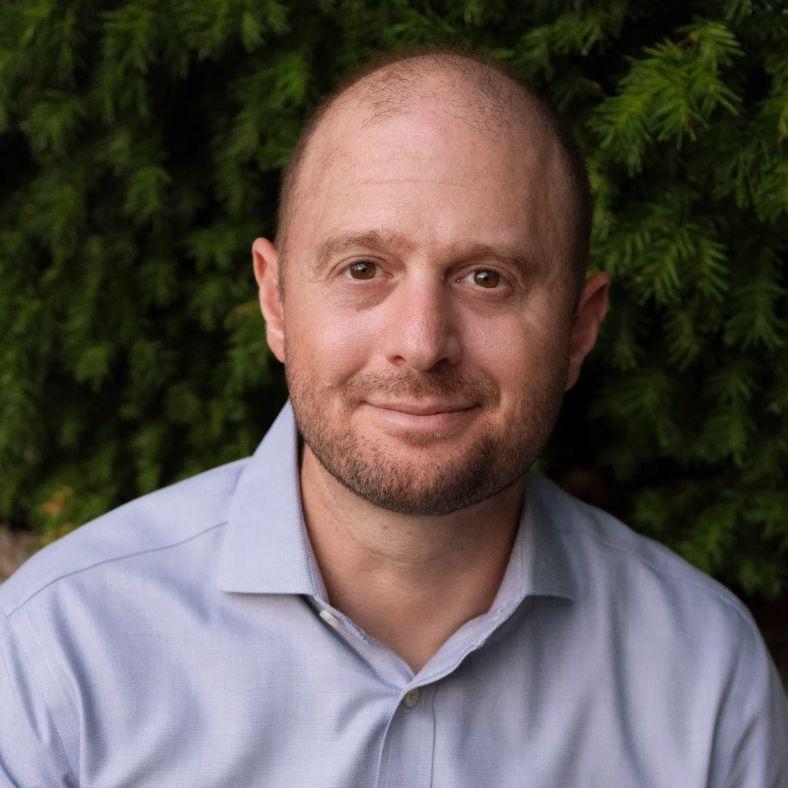
Full Transcript 0:00 you should do some level of investigation of why this happened to you and look at your genetic code. 0:07 There are many cancers where we now know you were genetically predisposed to get it. 0:12 You should learn that. 0:14 And if that is the case, there are fundamental life changes you can make that can lower your risk of recurrence. 0:20 Welcome to the Belgiansky Cancer Talk Show where integrative science and holistic healing come together. 0:26 I am Sylvie Beljanski, and in each episode, we explore nutrition, lifestyle, mental health and research-backed approaches to support the whole person through 0:37 cancer and chronic diseases. 0:38 Hello and welcome to the Belzhansky Cancer Talk Show. 0:42 Today, my guest is Geoffrey Rogaud. 0:45 Geoffray Rogau is a newsroom executive, award-winning journalist and author of two decades of experience in financial journalism. 0:55 He currently serves as the executive editor of BBC Studios in New York after working at the Wall Street Journal for more than two decades. 1:05 Geoffrey is also a cancer survivor who runs the after-treatment newsletter and is the author of the upcoming book, I Am Alive Now What, 1:16 being published by Wiley in April. 1:20 Joffrey, welcome to the Belgianski Cancer Talk Show as we are going to speak today about survivorship, a very important subject and dear to my heart. 1:31 But before we start speaking in general about survivorship, I would like to hear about your own story. 1:40 How did your diagnosis affect your work and then led you to shift your focus from finance to cancer and now this new book to be released? 1:53 Sure. 1:53 So I was diagnosed with cancer actually two months after I got married. 1:58 I married in late 2012, actually it was the weekend of Hurricane Sandy. 2:03 been living in Sydney, Australia. 2:05 We moved back to the U.S., got married in the fall, and then come January, February of the following year, 2013, I started just getting more and more rundown. 2:14 Like a lot of cancer patients, you just think you're tired. 2:17 And doctors had prescribed a bunch of tests and nothing had figured out. 2:20 Eventually, i went to hospital for a blood clot. 2:23 Blood clot revealed a mass. 2:25 Mass was biopsied and I had a primary metastinal non-hot skin lymphoma. 2:30 I went through six, five to six months of treatments, chemotherapy. 2:36 At that point, the protocol was a significantly higher dose of chemo than they would put in the past because the thought was, 2:44 let's do whatever it takes not to have radiation because my mass was next to my heart. 2:49 So if we were radiating the mass, we're going to radiate my hear, which would have led to heart disease earlier in life. 2:54 And with the treatment and I think like a lot of cancer survivors, I spent the next decade running away from it, trying to pretend like it never happened. 3:05 I wanted to have the success in my career, success my personal life.I wanted a buy a home, have a family, raise kids, do those things and pretend cancer 3:16 almost happened to somebody else. 3:18 And what has happened is every year I have faced a big reminder that my life as a survivor is different than my live would have been otherwise. 3:30 Some years that reminder was being rejected for life insurance. 3:35 Some years the reminder was an autoimmune disorder that emerged that clearly was connected to my cancer and so For a decade I ran away and then about two 3:46 or three years ago when I was actually spending a lot of time in a cancer ward because a family member of mine was sick and Talking with people about cancer 3:53 And talking with People about Cancer in their own lives. 3:56 It occurred to me that But there's no escaping cancer, and there are not enough resources for that last decade of my life in survivorship. 4:08 And that led me to figure out, okay, what are the things that as survivors we all agree on that we need more of? 4:16 And I spent several months trying to find out what that was. 4:19 The end result is the book, but the books sort of was created off of these 10 pillars where I feel that survivors really just need more help. 4:30 And so those pillars are your money, your career, physical health, mental health genetics, advice, whether that's a lawyer or a financial advisor or the 4:41 rise of cancer sherpas. 4:43 There's a chapter about caregiving, there's chapter of family planning, and the end is purpose, because there are so many survivors who have fully changed 4:52 their purpose in life. 4:53 And there aren't those survivors that have it, neither is the right answer, but you should have some protocol to sort of say, 5:00 use this moment to really evaluate who you want to be and what you wanna do. 5:05 If I hear you, you expected that going back to your life as usual, let's say, there would not be no difference after cancer in your after-cancer and before-life. 5:19 Then you had to learn to live differently. 5:25 Yeah, you have to learned to look differently, yes. 5:28 Every time What surprised me is every time I had to learn that it was shocking. 5:35 It was not, these were not learnings that happened like over a period of time. 5:41 And you said, Oh, what did I learn there? 5:43 No, it's like I hit roadblocks. 5:45 I have stop signs. 5:47 wanted to do something. 5:49 No. 5:50 You can't do that. 5:52 to become an entrepreneur. 5:55 And in essence, I could not do that because healthcare in America is tied to your employer. 6:01 And I couldn't as a survivor go even a minute without real healthcare. 6:04 I wanted to buy and wanted have a family. 6:06 One of the backbones of financial planning is to by life insurance. 6:11 Met with several brokers. 6:13 Wasn't even that it was too expensive. 6:15 Nobody would even price me a policy. 6:17 So I had these moments of the thing I wanted to accomplish was impossible to accomplished and I needed to build a new plan. 6:28 What surprised you the most in this experience? 6:33 I mean what surprised me the more isn't actually my experience as much as Over the last year, I've spoken with 250 to 300 survivors. 6:41 We all have five stories of this. 6:49 this idea that the life you want, it's not better or worse. 6:53 Not all of these things are worse, It's just different. 6:56 And how many of this exists across your life, that shocked me. 7:01 I expected a little bit here or there, effect a lil bit of surprise. 7:04 It was like, no, everyone's got their own different story about how cancer has dramatically changed it. 7:10 and I think the only two things survivors agree on is they have a different tolerance or relationship with time, just the idea of time. 7:19 And they have a lower tolerance for BS. 7:21 So if everyone has, I mean, the different story beyond those, less tolerance, what are the big similarities that you find in all the survivors. 7:38 And how many do you have interviewed so far for the book? 7:43 So yeah, so I mean, the threads are people coming to cancer at similar moments in their life. 7:52 A lot of the Survivorship journey is actually determined by who you are going into the process. 8:01 So a good example I like to have is chapter two of my book is your career and it's built around three people and there's a woman named Lauren Gazal Lauren 8:12 was a in college when she got cancer and she was expecting to do to maybe go to medical school to really focus on you know, 8:20 care in the third world, and she had all these ideas. 8:23 She gets cancer, she realizes, I can't do years of treatment and then years in medical school. 8:29 And she pivots her life to, She's now a nurse. 8:33 she's a doctorate in nursing, And She really focuses on financial toxicity. 8:37 Financial toxicity is how your medical debt, your Medical bills and the cost of care changes your life in negative ways. 8:44 and She works to improve the resources for people like that. 8:49 So cancer came in a moment where then changed who she was and she embraced cancer as her purpose. 8:56 There's another woman in that chapter who got it at 40. And when she got, when Stacey got cancer, she already very successful in her career. 9:05 She was an insurance executive moving up the ranks. 9:08 she gets cancer and realizes, I don't want to work in insurance anymore. 9:14 I have always had this direct relationship with God and I want to examine that. 9:20 And so now she's actually a priest in Lancaster, Pennsylvania. 9:23 And so she embraced cancer to pivot her life, and her live is almost two different books. 9:29 She has sort of book one of her insurance life and now book as a priest, Episcopalian priest in Lancaster. 9:35 And the third person in this chapter is a guy named Jim Weber. 9:38 Jim was one the right-hand man of Warren Buffett of Berkshire Hathaway. 9:41 He had been the CEO of Brooks Running, famously at Rebuild Brooks. 9:49 He can't do that pivot. 9:51 If you're in survivorship, cancer in the treatment in your 60s may mean even for workaholics, you can keep working and you have to really evaluate what 10:02 you are going to be like at the end. 10:04 I don't think there's some similarities across them, but the bigger similarities are when I talk to people in their 20s who are survivors, 10:11 a lot of them really embrace cancer as a part of who they are and move into fields where it becomes a parts of it. 10:19 A lot people on their 40s use it as moment to shake up who their are, and reinvent themselves. 10:26 And a lots of people later in life use that as reason to move off of the sort of corporate wheel and change who they are and deepen their relationship 10:37 with their families. 10:38 And not everyone's the same, but I do see those similarities across ages. 10:42 Yes, whereas you have to embrace cancer and trying to find a new way of life where it makes sense, actually, rather than fighting. 10:53 I have seen, I mean, spoken also for the past three decades to a lot of people with cancer, and I noticed that those who stay in anger or stuck with why me, 11:10 they have much harder time healing and moving past the disease. 11:18 I feel that it is really, really important to understand what the diseases actually telling you and how to try to to find a new life that includes a message 11:35 coming from the disease if I may say so. 11:37 Yeah, I mean, it should bring up two interesting things in that. 11:40 So one is this I think it's human nature to think good things happen to good people and bad things happened to bad people. 11:49 And like, why did I get cancer if I live this good life? 11:52 Like why me? 11:53 And you have to get over that bridge. 11:56 You have get get that PTSD and everyone's different. 11:59 So for myself, I had a therapist and that was really helpful, but I've also spent long periods of time without that. 12:07 Some people really love group therapy, some people love reading and examining it from a theologian level. 12:14 So people hate group therapies. 12:16 You have to figure out within your own, the way that you live your life, what is best for you, But you can't ignore that, 12:23 you have get over that You are not going to move forward if you were still obsessed with the question of why did this happen to me? 12:30 The second thing though is you should do some level of investigation of why this happened to you and look at your genetic code. 12:38 There are a lot of people who haven't looked at the genetics of their cancer if they've got it 10 or 15 years ago. 12:43 It used to be a Supreme Court case 12 years that made genetic mapping much cheaper in America. 12:50 So a lot of people didn't get the genetic mapping of their cancer if they were treated 10 years ago. 12:54 You should go back and get it. 12:55 There are many cancers where we now know you were genetically predisposed to get. 13:00 It you should learn that. 13:02 And if that is the case, there are fundamental life changes you can make that can lower your risk of recurrence. 13:08 So on the one hand, you shouldn't just you you know, look at that question of why me in, in the, from the emotional state and move on from, 13:21 the actual physical state, you should examine that. 13:23 Question is you can learn stuff about your, your code and genetics that can help you lower your chance of remission. 13:29 So it's like, You've got to navigate it in both ways. 13:32 And what did you find to be the most difficult to, to turn around? 13:38 I think it. 13:41 For me, I got cancer at 30. I have found that each season of my life has provided a different, very hard moment. 13:51 So it'd be tougher for me to rank the moments, but for my in my mid-30s, it was some of the physical deterioration that happened because of cancer in the treatment. 14:05 It was a really tough moment for when I realized that physically I was different post-treatment and post cancer and coming to terms with that, 14:16 there was a moment where I started a family and the way that I think about my children, my relationship with them being very different than it would have 14:24 been otherwise and my own worries about mortality and then For me, professionally, leaving a job I'd had for a long period of time and reexamining purpose 14:40 was really difficult. 14:41 Those are three. 14:42 The other one that happens organically every couple years is somebody dies of cancer that I'm close to. 14:53 And it does a number on me mentally. 14:55 And I'm better at handling it than I was. 14:59 But it's been interesting. 14:59 I've had people close to me die of cancer. 15:01 That's done a lot. 15:02 Some celebrity deaths have really hit me hard. 15:06 For the lot of survivors, especially those like me who are trying to sort of move on, those deaths are tough to process sometimes. 15:16 They feel personal even when they're not. 15:20 And have you found anything that helps? 15:24 I mean, and speaking with other people, other survivors, have they shared with you some recipe to make it easier? 15:34 When you are facing cancer, the choices can feel overwhelming, conflicting advices, endless options, and very little clarity. 15:44 At Maison Belchanski, everything begins with science. 15:49 For decades, molecular biologist Dr. 15:52 Mirko Belzhansky studied how specific plant extracts interact with cancer cells, work that continues today through independent research and real-world use. 16:04 Maison Beljanski offers carefully formulated supplements inspired by that research, along with targeted support for immune health, 16:13 cellular resilience, digestion, detoxification and overall wellness. 16:19 You will also find educational books, organic teas, personalized health coaching and wellness programs designed to support the whole person, 16:28 not just the diagnosis. 16:30 This is not about quick fixes. 16:32 It's about informed choices, thoughtful formulations and supporting the body alongside conventional care. 16:41 Explore the products, the research and the resources at maisonbelchanski.com because when science leads, wellness follows. 16:52 Yeah, there's a couple of things I'll say, maybe not on deaths, but on life itself. 16:57 So one thing is every six months, I put it in my calendar, and I have a check-in. 17:05 And in that check in I make a list of the things in life that are working and the thing in the life are not. 17:12 For me, it takes a day to celebrate the day that I'm working. 17:18 I think it's important to celebrate your victories and to take a moment. 17:22 So I have a list together like, here are the things I love about what's happening. 17:25 Then I've a of things that I don't like. 17:28 Things that are moving off course. 17:30 And this could be, my daughter and I are yelling at each other a lot. 17:34 These could be, I'm falling down on this one project at work and like, it can be small and it could big. 17:41 And then I rank them and I don't tackle them all. 17:44 I tackle the one or two that are most pressing and make sure that they're not on the next quarter's check-in. 17:53 The second thing I do is I have a worksheet, in essence, or a one-page printout that I built during a calm time that take out when I'm stressed out about 18:05 my cancer. 18:05 So a lot of people have what's called scanxiety. 18:08 If you have cancer, you know you're having a CT scan. 18:11 in a week, and you're stressed out about the scan and the results, you start playing out, what's the worst thing that could happen? 18:19 What if it's back and he can't sleep? 18:22 And you are in negative spiral. 18:24 I built from a good time a sheet of like what to do when that happens. 18:28 That includes like, don't call my mom, love my mother. 18:32 She provides a level of stress in those situations that's not positive. 18:36 do call my wife. 18:38 I have a list of like television and movie shows that I really love that don't stress me out. 18:43 Watch these, watch these episodes. 18:46 There are books I love, I'll do that. 18:48 Last year there's a Museum of Modern Art here in New York. 18:53 there is a room I loved. 18:55 So actually when I was having trouble with some skin anxiety last year I went to this room and I spent an hour in that room one morning and just It was 19:04 the right thing to do. 19:04 I felt immediately better and, you know, try different things. 19:09 But when I have in that moment, You're not going to fix it in the moment unless you've built a plan and a calm moment for the crazy moment. 19:20 Yeah, absolutely. 19:22 During your exchanges with the doctor and when you were, I mean, with all this medical follow-up, did the doctors speak to you about cancer? 19:42 They did not. 19:43 They do not, it was not discussed, no. 19:46 And do you have an idea why? 19:50 I don't. 19:51 We had a lot of conversation with my father, who is a cancer survivor himself. 19:55 He's had some cell transplant and CAR T and so I had lengthy conversations with his with mine. 20:01 I have not. 20:04 And it may have just been where we were in the, you know, 12, 13 years ago, I was treated at a hospital here in New York and my, 20:12 my regiment, for lack of a better word, was was like a protocol was pretty clear at the time. 20:20 And so maybe that was part of it, but we did not go further down the rabbit hole. 20:27 Also, I was in, luckily, like I treated and then in remission in a sort of like black and white situation. 20:38 The Belgians who pursue research on cancer, although chemotherapy, radiotherapy does not inhibit the growth of cancer cells, 20:49 do not destroy them as they destroy mature cancer. 20:54 It turns out that there are a number of natural products. 20:59 which are able to inhibit those cancer cells. 21:02 We have pursued studies in vitro and in vivo in animals with great success. 21:11 I'm just curious to know if there was something that you have heard about during your research, medical oral treatment. 21:21 You said no. 21:23 Not for my treatment, but I've heard from many survivors. 21:29 Yes, I've heard plenty from other survivors. 21:31 It just wasn't in my own regimen. 21:35 Do you feel that the medical system is falling behind the survivorship? 21:43 In your view, what should be changed and what could be done? 21:48 When cancer enters your life, the questions don't stop at treatment. 21:53 You start asking, why? 21:55 What else? 21:55 And what more can I do to support my body? 21:58 At the Belzhansky Foundation, we believe cancer care deserves deeper answers. 22:04 Answers rooted in science, not in shortcuts. 22:07 For decades, groundbreaking molecular research by Dr. 22:11 Mirko Belzhansky explored how specific natural compounds selectively target cancer cells while spearing healthy ones. 22:20 That work continues today through independent research, education, and global collaboration. 22:28 At belgianski.org, you will find evidence-based resources, expert-led conferences, books and conversations that explore integrative approaches to cancer 22:40 and chronic disease alongside conventional care. 22:44 Whether you are a patient, a caregiver or practitioner, this is the place to learn, to question and to think more expansively about healing. 22:55 Visit belgianski.org to explore the research, attend upcoming events, and connect with the Belgiansky community. 23:02 Because informed choices begin with credible science. 23:07 I think it's about connection, in that I a lot of the resources survivors need exist it's hard to find. 23:17 So my hope would be that the medical community or the government or state legislatures create more touch points so that survivors can quickly find the 23:29 things they need. 23:29 They exist. 23:30 You mentioned stem cells, you mentioned for the DNAs of our body. 23:37 We're learning a lot about We're learning a lot about how our genetic makes up, you know, we talked about with your likelihood of getting cancer and your 23:46 risk for disease. 23:47 We don't do a great job of following, in a genetic test, You might say that you're positive for a generic problem, might get negative, 23:57 or you might Get a variant of unknown significance, which is we know your genes a little weird, but we don t know what actually makes your cancer risk 24:03 higher or lower. 24:03 Every month, By mapping, we learn more. 24:07 We learn that that variant of unknown significance last year might double your cancer risk because of something we learned this year. 24:14 But we don't actually communicate it that well to that person who might have taken that test a year ago or two years ago, 24:20 or 10 years. 24:21 And so there's stuff like that throughout. 24:24 There are wonderful financial resources in your backyard that can help if you're falling behind on medical debt. 24:31 I think of a place like Dollar 4. Dollar Four is based in Portland, Oregon. 24:34 They enable a lot of people to get charity care through their hospital. 24:38 Hospitals as being nonprofits have to give some level of the care for free out of their charter. 24:45 There's a bunch of cancer survivors who could qualify and don't apply because they don' know exist. 24:51 that needs to be built into the survivor's toolbox. 24:56 And so to me, it's not about as much about launching new crazy things. 25:03 I think a lot of this exists. 25:06 It's about building ways for the survivors to more easily understand and find the thing they need, whether that's $20,000 in help on medical bills and 25:18 not having to go the GoFundMe route, or just a ride. 25:20 A ride to hospital treatments. 25:23 All of this stuff actually does kind of exist. 25:27 It's just really hard to find. 25:29 And helping people find it is a great first step. 25:35 The second step is really thinking about within the hospital ecosystem, within education system, training primary care doctors to be cancer survivor primary-care doctors, 25:50 to understand the treatment of a survivor is different because of the way they need to monitor, the For me, my primary care doctor is really just a quarterback 26:02 of my coverage. 26:03 My ethical coverage really comes from a rheumatologist, a pulmonologist and a cardiologist because of cancer, because my treatment, 26:13 my immune system and my heart are at risk. 26:16 So those three really drive my care and see me, but I need a primary care doctor to make sure all of that's communicating. 26:24 There's not holes in that. 26:26 That's a different level of care than you would get if I hadn't had cancer. 26:29 And I think it leads to a little different of training for primary-care doctors. 26:34 My dream is that every primary would get some level of training on what it means to care for a survivor, because when you are in remission, 26:48 you're no longer the primary care of an oncologist. 26:52 You are shifting to a primary-care doctor, and we need to give that person the tools for your care. 26:58 Sounds, I mean, very rational. 27:01 Tell us more about your upcoming book and what kind of advice and support people can get by reading the book. 27:11 So I said there's those 10 chapters, your money, you career, physical health, mental health. 27:15 In each of the chapters, there is one or two people that I built the chapter around. 27:21 It's a survivor I've talked to. 27:23 You get to look through the hurdles that they went through, but how they navigate it. 27:27 What I don't want, I think there's lot of research on how your life is worse or different, this is really focused on giving you the tools to be your own 27:38 best advocate. 27:39 So when I say really hard to being an entrepreneur after cancer because you would lose healthcare, I walk through how to navigate that hurdle, 27:47 how others have navigated that hurtle. 27:49 When I talk through the single most important thing you can do after Cancer is improve your physical health. 27:57 I partner with Livestrong. 27:59 I, I partnered with, uh, Catherine Schmidt is sort of the godfather of physical, godmother of Physical Health after, after cancer and have a series of 28:07 workbooks and steps, whether you are a Olympic athlete or track coach or someone who's never been inside a gym. 28:18 to be physically healthier, to evaluate your environment, whether that had a factor to, evaluate the food you ate and nutrition. 28:27 And so my hope is in each of these chapters, I lay out the roadblocks in your way, but I also take real time to walk through in a very practical step. 28:37 What are these people doing and what are experts doing? 28:40 So when I, talk about careers as a woman named Michelle Woodward is in the book. 28:44 Her job is to work with CEOs who get cancer. 28:47 If you get a cancer, you call her up and she works with you on how to live your life during treatment, how the CEO after treatment. 28:54 When we talk you know, caregiving and relationship. 28:58 There are a lot of care giving experts that work with couples where one member of a couple has gone through treatment and the other was their huge support mechanism. 29:09 They get out of treatment, and that relationship is reset. 29:12 She works with couple to reset that. 29:14 And it does, like there are real implications for couples on changing dynamics, on sex, all these things that come up. 29:23 when someone has put their life on hold to help you through your treatment, and now you're moving on with your lives, but it's shifted, 29:33 you know? 29:33 And dealing with that shift. 29:35 And sometimes that's psychological, sometimes it is physical, it sometimes is just giving the other person more grace. 29:41 There are steps you can do to improve and reestablish your relationship with you caregiver, whether that is a spouse or a child or parent or whatever it Yeah. 29:52 So the name of the book is, I Am Alive, Now What?, and it's going to be published at Wiley. 29:59 Yeah, so it'll be publish April 6th of next year by Wile. 30:01 It's available both in Europe and the UK and in the United States. 30:05 it is now on Amazon and Target and Walmart. 30:08 You can pre-order right now. 30:10 And there will be an excerpt in The Wall Street Journal here in next couple of weeks, which will give you a real flavor of what the books live. 30:19 I'm pretty excited about that. 30:20 We hopefully have more coming. 30:23 And the hope is, as I said, there are 20 million survivors just in the United States. 30:26 Yeah. 30:27 and we are a surging group of people for good news, which is treatment has gotten so much better, and for bad news which are the rising rates of cancer. 30:37 You are not alone. 30:39 If you're a week into survivorship or 20 years into the survivorship, someone else has probably handled the hurdle you'll be dealing with. 30:48 And my hope is this book can help you deal with that. 30:52 The other thing is my expectation is you can read it cover to cover. 30:56 I'd love for you to read to it to be cover-to-cover. 30:58 But I also wrote it, each chapter is its own story. 31:02 So you might come to the book Because you have a money problem. 31:07 You might come to the book because you got out of treatment and your $30,000 in medical debt and you're like, how do I take this on? 31:13 We're going to help you. 31:15 Yeah. 31:27 I'm having problems at work. 31:29 I think there's discrimination. 31:31 Do I need legal advice? 31:32 We walk through all of those different scenarios. 31:35 And so my hope is there is a scenario in your life you're struggling with and maybe that's the way into the book and then there something else you'll learn 31:43 along the journey. 31:44 As I said, while it has workbook parts, it is narrative. 31:48 Each chapter is built off of I mentioned Jennifer Stacy and Jim like that's a chapter on the chapter. 31:54 The physical health chapters is based off this woman in Texas named Donna was like my favorite person. 32:00 She is a She was born with spina bifida, she's a paraplegic, and yet she has lived this spectacular life. 32:08 She's met Muhammad Ali, Lyndon Johnson, She went to the Brown Derby. 32:12 she had degrees from Baylor, ran a commercial bank, a community bank. 32:16 And she met her husband in this chat room, back when internet chat rooms were a thing. 32:21 Her husband was a quadriplegic in Orlando and she hired a bunch of Marines to pick him up and take him to Disney, which is where they had their first date. 32:32 And yet, Donna has, despite her disease, Despite spina bifida, she's lived this incredible life. 32:41 cancer did a number on her. 32:43 If someone who can beat through all of that has been taken by cancer, give yourself a little bit of forgiveness that it is such a disease no matter what it, 32:51 even the best of us get taken aback. 32:53 And we walk through how Donna rebuilt her own health and her confidence that she needed after cancer even though she'd already been through so much. 33:02 You would think she can handle the world. 33:06 It takes its toll. 33:09 Yeah, it's still a mountain to climb. 33:16 The work of surviving, the way we do that with grace, with charm, and you are helping other people in the process. 33:23 Congratulations and thank you for everything you're doing. 33:27 Thank you, for having me on, thank for you everything that you do as well. 33:30 Thank you for listening to the Belgianski Cancer Talk Show. 33:34 If this conversation supported or inspired you, please follow the podcast, share it with someone who may benefit, and leave a review to help us discover 33:43 these integrative perspectives. 33:45 For more resources and to see what we offer, visit Belganski.org.

Comments