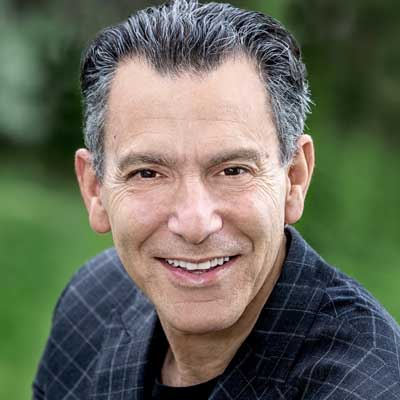
Full Transcript Introduction to Dr. Scott Stoll 0:00 Everybody, welcome back. 0:01 We got a really this is really an important episode. 0:04 Not only the person that I get a chance to chat with, who's 0:06 on the other side of the world right now and made time for this, 0:10 but the topic is great. 0:11 This is Doctor Scott Stoll. 0:13 Many of you already recognize that smiling face that great 0:17 representative for the health community, Doctor Stoll, happens 0:21 to be in Abu Dhabi today working on a new project for health. 0:25 And, he figured out the time change and was so appreciative. 0:28 He's an international leader and lifestyle medicine and whole food plant 0:32 based nutrition. So he's going to have a lot to say. 0:35 But really where we met 0:37 was because of his work co-founding the Planet Christian Project, 0:41 which we'll talk about a little bit later, and an annual conference, 0:44 international Plant based nutrition health care conference. 0:48 I think the best annual conference to go to and learn and speakers, 0:53 the International Journal of Disease Reversal and Prevention. 0:57 Amazing. I won't even go on with all of it. 1:00 For 16 years, 1:01 he served as chairman of the Department of Physical Medicine and Rehab. 1:05 It coordinated out. 1:06 So he's a medical doctor specializing and we call it in the field 1:10 and but physical medicine and rehab. 1:13 We're talking about rehabbing your heart. 1:15 But he can rehab pretty much any part of your body. 1:18 He's worked with Whole Foods I mentioned in playing Christian Project. 1:21 He's done immersions in Florida for a week called Total Health Immersion. 1:26 He's an author. 1:27 He's been in Doctor Oz. I mean, there's there's 1:30 just nothing but great things to say. 1:33 You're still in Franklin, Tennessee. 1:35 Yes, sir. 1:36 Living in Franklin, Tennessee, I didn't know that. 1:38 I, I didn't know that was your home roots. Franklin, Tennessee. 1:41 And he was finally a member of the 1994 Olympic bobsled team. 1:47 So, he's an athlete, is an author. 1:49 There's just so much good to say so. 1:51 Thank you, Doctor Stoll. Gerald, thank you. 1:54 And it's really an honor to be with you. 1:56 So we're talking. Thank you. That's kind of you. 1:58 We're talking reversing heart disease, naturally. 2:00 And I always tell people you can't reverse. 2:03 I mean, if you don't know, you have it. 2:04 And the problem with heart disease is, a whole lot of people, maybe 40 to 50% 2:10 of middle age adults are walking around and don't know they have atherosclerosis. 2:15 They feel good or they got some other complaints 2:18 they would never attribute to, atherosclerosis. 2:21 I'm using the fancy words, of course, blockages. 2:24 Cholesterol deposits in their arteries.
Back Pain and Atherosclerosis Connection 2:27 And I don't think anybody in the audience would connect the possibility 2:32 that low back pain, something you've dealt with, I'm sure 2:34 thousands of times as a physical medicine, a rehab doctor might be a clue. 2:39 Might get you to me. 2:41 You, doctor 2:41 still might get patients to me because, you know, and most people don't. 2:45 I've heard you electrons. 2:47 I just pulled up just for the fun of it. 2:50 A brand new article with just published. 2:52 And this is, you know, not the world's best science, but it's what you get 2:56 sometime, association 2:59 between high cholesterol and lumbar degenerative back disease. 3:03 A Medicare survey, the bottom line is people with high 3:06 cholesterol had a 34% 3:09 higher chance of complaining of serious low back pain. 3:13 Cholesterol, low back pain. Okay, I'm done talking. 3:15 Fill us in. 3:16 What, a really educated audience should know about this potential connection. 3:22 Yeah. 3:22 Thank you. It's very interesting. 3:24 And, you know, just for the audience, you know, I've spent 3:27 most of my entire career during sports, and, 3:29 and so I have seen tens of thousands of people with back pain. 3:32 And what's interesting, when you see people are back and they come in, 3:35 you know, the typical workup often involves either an X-ray or an MRI 3:40 and it's very common in the impression 3:43 from a radiologist to see degenerative this disease. 3:48 And on the pictures, either an X-ray or an MRI. 3:50 You see, you know that a normal disc would be a nice plump disc. 3:54 And you see on the x ray this kind of, emaciated, little disc 3:58 between the two bones and the assumption in medicine. 4:02 Right, is that this just happens as you get older. 4:05 Same thing with like, heart disease and other diseases. 4:08 These are the diseases of aging that just happen to us. 4:11 And it's inevitable. 4:12 Part of the consequences of aging. 4:16 But what's interesting is that, you know, like, you know, 4:18 you see people that come in that are in their 70s or 80s 4:21 and you get x rays, an MRI, and they have relatively normal discs. 4:26 So then you have to ask the question, well, 4:27 is it really aging or is it something else? 4:31 And for you all that's, you know, that are watching it's something else. 4:36 And, you know, one of the just to take one step back in medicine today. 4:41 And I'm sure as you've talked about that con, we have a idea called 4:45 reductionism and compartmentalization, where we have 4:48 broken the body down and diseases into small parts 4:52 and makes it easier to study the disease and to develop treatments for it. 4:58 But we forget as doctors that everything is connected in the entire human body. 5:02 There's not one thing that's not connected to something else. 5:06 And so one of the things that 5:08 is rarely thought about in back pain is the connection of the health 5:13 of your arteries and the health of that disc, 5:17 because the disc really does not have a very good blood supply. 5:20 You know, the back part of the disc has a very poor blood supply. 5:24 Blood supply actually comes from spinal arteries that originate off of the water. 5:29 So these little tiny arteries kind of pierce back towards the spine. 5:33 And then there's small arteries that wrap themselves around that disc. 5:38 And they supply blood flow to the disc. 5:41 And as your audience knows, after they've heard this, this 5:44 amazing lectures on them, on the importance of healthy blood vessels. 5:48 You know, the health of those little blood 5:50 vessels are critical because they not only bring oxygen 5:54 and, take away carbon dioxide to those tests, but they bring 5:57 all of the nutrition that's necessary to maintain the integrity of that disc. 6:02 You know, that disc that is bearing weight every single day as we sit and lift? 6:05 That disc is designed to be, spongy, filled with water and healthy and vibrant. 6:11 So as we're bending and moving, the disc is absorbing energy and rebounding. 6:17 But if that 6:18 disc becomes emaciated, if it becomes dehydrated, 6:22 if it's not getting the nutrients and the blood flow, 6:25 then the disc begins to slowly breakdown. 6:28 And as the back part of that disc, which does not have good 6:31 blood supply, begins to break down, it can start bulging 6:36 and you'll get small tears in the outer part of the back part of that disc. 6:40 They're called radial tears. 6:42 And the center of the disc, which is like a, 6:45 you know, we're not supposed to eat these, right, Joel? 6:47 Jelly donut. 6:48 So the center of the disc is like the jelly. 6:50 The outside of the donut is the back part of the disc. 6:53 You get a tear in that back part of the disc, and the jelly leaks out 6:57 and begins impinging on the nerves, causing this back pain. 7:01 And then and disc genic nerve pinched nerves in the back. 7:07 Wow. So 7:09 your discs, you know and again I order a lot of heart 7:13 calcium CT scans looking for silent atherosclerosis. 7:18 That's a topic we're going to talk about a number of other segments on this summit. 7:22 And a good radiologist gives me a whole report. 7:25 So I have a lot of people between 40 and 50 going for a heart checkup 7:29 and many over 50. 7:31 But I'm amazed how many 40 to 50. 7:33 The radiologist mentions degenerative joint disease 7:36 already in the thoracic spine, because that's the portion 7:39 you're most likely to see me. 7:40 You know very little of the neck and none of the lumbar area. 7:43 So it's common. 7:44 So that, blood flow issue could be a problem. 7:47 I mean, how strong is, you know, we talk about associations. 7:52 These are tough statistical terms and causation. 7:56 Do you feel confident enough, to say there could be a causation? 8:01 Smoking, diabetes, high cholesterol, high blood pressure, genetic factors 8:06 could cause degenerative joint disease and manifest as low back pain. 8:10 Before you're in my emergency room. 8:13 Yeah, absolutely. 8:15 And, you know, there's that back pain is multifactorial, just like, 8:18 you know, everything else in the body, you can, you know, have poor posture. 8:22 You can be, you know, have a slippage in the back. 8:26 There's other things that you're causing. 8:27 But when we look at some of the, cadaver studies, that look at those arteries 8:32 of the spinal arteries going to the disc, they are loaded with atherosclerosis. 8:38 And we know from, you know, population studies and heart disease 8:41 that this you said earlier, 40 to 50% of the population 8:45 will have severe heart disease. 8:48 And, and, you know, potentially have a heart attack and die from heart attack. 8:53 And so, you know, a large percent of the population then equally has 8:58 atherosclerosis of the spinal arteries that are feeding that disc. 9:03 And we can only imagine, you know, if you are supposed to have, 9:06 you know, they're they're actually very small arteries, 9:09 that are bringing blood supply to that disc that is, that is 9:12 bearing the weight of our body and daily, 9:15 if those tiny little arteries are occluded 9:19 to the same degree that we see in the heart where people are having heart 9:22 attacks, the disc is essentially having a disc attack, looks like a heart attack. 9:29 It's not getting enough blood supply. 9:32 And then on the day to day, you know, if somebody's athletic or working 9:36 or a truck driver and they're sitting and that disc is bearing weight, 9:40 not getting enough blood supply, it's inevitable 9:43 that over time it will break down 9:46 and, and contribute to significant back pain. 9:49 So there's a very strong correlation, especially based on the kind of Eric 9:53 or the evidence coming from autopsy studies on back then. 9:57 Yeah. 9:57 And I just was playing around for a minute. 10:00 I am, sadly a multitasker. 10:03 So I can listen to you and look around. 10:06 But if this hypothesis is true, we are ready. 10:10 I give a shout out a very recent article about high cholesterol and low back pain 10:14 being related. 10:15 Quit smoking. 10:16 Being related to low back pain. 10:18 I pulled up a 2016 article that found exactly that, and you know, 10:23 you'd have to create the hypothesis that we're talking about smoking, 10:26 atherosclerosis, spinal disc degeneration and low back pain. 10:31 And sure enough, I just quickly, without any real preparation 10:34 for an article between diabetes and low back pain. 10:37 And of course, the reality is, as you said, we're 10:40 talking about the whole patient. 10:42 I'm isolating out one disease condition. 10:44 And there's so many different factors that drive atherosclerosis. 10:47 So autopsy studies will show it. 10:50 Now we're not doing disc angiography. 10:54 There's no disc stenting. 10:55 There's no disc bypass. Correct. 10:59 That is correct. Yes. 11:00 We're doing disc replacements. 11:02 That's one of the things that we do now. 11:05 You're a lifestyle medicine expert, and since you view the body as a, 11:09 as a system, you're approaching, you know, cardiovascular disease is part of it. 11:14 Of course, it's a huge, important portion.
Lifestyle Medicine Case Study 11:16 Have you, well, 11:18 are you the Dean Ornish and the Caldwell associate dean of low back pain? 11:21 Can we institute a lifestyle program and actually, share a case 11:26 study or two or maybe more than that, that people actually might feel better? 11:31 Yeah, absolutely. 11:32 Yeah. 11:33 I mean, that's been so much of my career, and that's really where I 11:37 kind of, learned my wife's how medicine was applying nutrition and lifestyle 11:41 medicine to my patient population in the musculoskeletal arena. 11:46 I just want to take one quick step back and just highlight the fact that you were 11:50 mentioning, that, you know, when we look at the at the kind of Genesis 11:55 or the epicenter of the relationship between atherosclerosis, 12:00 smoking, diabetes and degenerative, this disease, 12:05 as your audience is, now learned from, you know, all of the amazing lectures 12:08 that you've done, it's the end of the ilium that's been injured, 12:12 that's really the epicenter of all of these contributing factors. 12:18 We know that, you know, sugar, injures the endothelium, 12:21 nicotine injures the endothelium. 12:24 Animal products injure the endothelium, stress 12:27 with elevated cortisol levels and adrenaline injures the endothelium. 12:31 You know, toxins from food injure the endothelium. 12:34 And so that's why we can, you know, begin to see all of these broad associations 12:40 from, you know, sugar in the diet to diabetes with elevated blood sugar 12:44 to tobacco to, unhealthy diet, obesity, stress, all contributing to this, 12:49 you know, strong association of, degenerative diseases coming from injury 12:55 to those spinal arteries that are supplying that disc. 12:59 You know, it's 13:00 it's really the health of the endothelium that leads to a health disc. 13:04 And, as your audience is learning the health of the endothelium 13:08 is a lifestyle intervention, 13:10 which is not only good for the disc, but it's good for the joints in the knees. 13:13 It's hard. 13:14 It's good for the brain. 13:15 It's good for the entire body. 13:18 Healthy whole food, plant based diets, 13:20 stress reduction, exercise, and a really good night's sleep. 13:23 Prepares the prepares the health of that disc. 13:26 And I can share with you many cases of, 13:30 people that, you know, we're able to, resolve their back pain, 13:34 their disc genic back pain through a lifestyle, intervention 13:37 that was multifactorial, you know, including stretching and strengthening. 13:42 But the the real power of 13:44 that is the anti-inflammatory component of the diet 13:48 potently reduces inflammation 13:51 and then increases the health of the in the field, results 13:55 in vasodilation with an increased production of nitric oxide. 13:59 So, I had a young man that actually came to see me with his mother. 14:04 He was 18 with back pain, which is really, 14:07 you know, quite a terrible thing to have be 18 with severe back pain 14:13 and somebody along the way, joined, started him on Vikatan, 14:16 which is an opioid medication which should never have been started, an 18 year old. 14:21 So he'd chronic back pain, taking 5 to 10. 14:24 His mother, had rheumatoid arthritis 14:28 and was in severe pain. 14:29 And, you know, 14:30 the psychosocial, part of this case really also made it very difficult because, 14:35 she was going through a very challenging divorce, was living in a camper, 14:39 had very few financial resources and, not very good health insurance. 14:44 And so, she couldn't really afford to take medications. 14:48 They didn't know how to, to manage this. 14:50 And so I shared with them the hope of a lifestyle medicine intervention. 14:54 Said, you know, food plant based diet will 14:57 dramatically reduce inflammation for you. 15:00 Is someone struggling with rheumatoid arthritis? 15:02 And for your son who has this, you know, kind of physical genic back, but, 15:07 it will increase blood supply to your joints 15:09 and will increase blood supply to his disc. 15:11 I really believe that in the next 4 to 6 weeks, 15:15 through the implementation of this lifestyle intervention, 15:18 we can get both of you off of your medications. 15:22 But one of the challenges was that she couldn't afford 15:25 to go out and buy a lot of fruits and vegetables. 15:28 But what I love is that when somebody sees a solution 15:32 and believes it's for them, there are no barriers. 15:35 They will find a way to make it happen. 15:38 And so she really believed that this was the solution for she and her son. 15:42 She did not want to take medications. 15:44 She did not want her son to be on Vicodin for the rest of his life. 15:48 And so, you know, that motivation inside said, this is what I need to do. 15:53 I've got to find a way. 15:55 And so wouldn't you know it sure that they went out 15:58 and they figured out that the one of these nice supermarkets in town 16:01 threw away their produce at 2:00 in the morning, 16:04 so they would wait by the dumpster, they would dumpster dive, and they would 16:08 show me the pictures of the produce they pulled out of the dumpster. 16:11 And it was beautiful, beautiful, organic produce. 16:14 And so they started making the meals and shared recipes with them. 16:18 And, I saw her back in about six weeks, and all of her 16:22 joint inflammation antivirus was completely gone, 16:26 and her son's back pain had resolved simply through dietary intervention. 16:31 We didn't do any physical therapy. 16:33 We didn't she didn't have, you know, any other, interventions. 16:36 It was just through diet will taper him off of his Vicodin. 16:41 She did not require any medications for her room to get arthritis. 16:45 They gained vibrancy and strength. 16:47 And, because they felt well enough, they were able to deal 16:50 with some of the other psychosocial issues in their family. 16:54 And so it's just a powerful example, I think, on a number of levels of one, 16:59 what a diet can do, when it's diet alone and reducing 17:03 inflammation, treating back pain and other musculoskeletal conditions. 17:08 But to when we 17:10 are passionate and we believe that we found a solution, 17:13 that there is always a way, there's always a way around barriers, 17:17 there's always a way to, you know, identify 17:21 and find the resources that we need to to bring health into our life. 17:26 Well, as a compelling case history. 17:28 And, also, the listeners don't need to go to the resort to resort 17:32 to dumpster diving, but, like you said, when you want to get healthy, 17:36 you get desperate and you do what you gotta do. 17:39 What you're giving a class to is, trainees 17:42 in minority university, and you're talking on low back pain. 17:47 Are you going to put in the slide or two and encourage them to work that patient 17:51 up for atherosclerotic risks, or at least get that patient referred 17:56 to somebody, useful, experience at atherosclerotic risk factors. 18:02 Yeah, absolutely. 18:03 You know, it's like, erectile dysfunction. Right. 18:05 That's kind of a they always say a canary in the coal mine for heart disease. 18:10 And, the same can be said of degenerative diseases 18:13 if we see, you know, extensive degenerative disease, 18:16 we can assume, based even on population statistics that they have 18:22 atherosclerotic heart disease and should be seen for an evaluation. 18:27 You know that, it's a value of valuable intervention. 18:30 You won't die from degenerative disease, but you certainly could die from heart 18:34 disease. And, you don't want to miss that one. 18:36 So it is a great opportunity
Plant-Based Project and Educational Resources 18:38 to educate them on that relationship and get a good evaluation. 18:41 Yeah. 18:42 As you know, such a powerful teaching point because, I mean, 18:47 what do you think the number would be if we just took a random sample 18:50 of the public age 50 to 70 and asked, do you have significant low back 18:55 pain issues in your life? 18:56 I don't know the answers. 18:58 What do you think the number would be? It's more than 1%. 19:00 Yeah, yeah. 19:01 No, I think it's at least half of the population. 19:03 Yeah. Has had the least half. 19:05 The population is silent. 19:07 Atherosclerosis is great. 19:09 New data out of Spain on that. 19:11 Even starting at age 40, you'll find it in about 40 to 45% of, asymptomatic adults. 19:16 So I'm unaware. 19:19 And I was playing around a little because it's such an important, easy study. 19:24 You know, we looked at a thousand people 19:25 that had great calcium scoring the simple CT scan. 19:29 There's more advanced scans, but that's a simple one. 19:32 And we did a questionnaire on low back pain. 19:35 And we identified, you know, the following findings. 19:37 I don't think that's been done yet. 19:39 I mean, after what you've just said, I would encourage listeners 19:43 who have low back pain there and are in that atherosclerotic age range. 19:47 I, I wouldn't order a coordinated calcium CT scan on the 18 year olds. 19:51 You're talking about. 19:52 Although it's so inexpensive, they probably could actually afford it, 19:55 but I it's just not the right test that age. 19:58 An ultrasound of the carotid might be an old term, like they've done 20:01 in some research projects on younger people, but, I think, your organization 20:06 plan, Tricia project. Where to do that? 20:07 I get a mobile CT scanner the next international meeting 20:11 and do a back pain survey, and that's, let's do that. 20:14 But somebody that that would be fine. 20:16 So let's do it. 20:17 I would love it. Yeah, I could actually arrange that. 20:19 There are mobile CT scanners, and, 20:21 maybe we can get a little grant from good old John McKay or something. 20:26 Supporter of. 20:27 I felt like a fun study. I'd love it. 20:29 We'd have to then pull it up to the carnivore conference and, 20:34 that's all part of atherosclerosis and the Cedars. 20:38 Atherosclerosis in general. Public. 20:41 All right, so we have learned there are many causes 20:44 of low back pain and inflammatory arthritic conditions. 20:48 But we're learning for many of us for the first time, 20:52 that put atherosclerosis on the list of considerations. 20:56 And we're talking to the doctors and therapists. 20:59 And I have patients that own 40 physical therapy clinics. 21:02 I gotta go ring them up and say, you know, you ought to be training your therapists 21:07 to at least bring up the topic and get that person back 21:09 with their primary care specialist and get screened. 21:13 And we have many other talks on how do you screen for asymptomatic, 21:17 you know, vascular disease during the summit. 21:19 So I won't pick, Doctor Stahl's brain, when he's on the other side of the world 21:23 today on that topic. 21:24 blew us away with, the conversation between back 21:27 pain risk factors and atherosclerosis of the discs. 21:31 But you are the co-founder of a significant and important organization. 21:36 The plan attrition project plan, attrition plan. 21:40 Try CIA and project org. 21:44 You've rolled out fairly recently. 21:46 Beautiful new logo. 21:48 And I couldn't believe how many little, boxes there are. 21:52 The different components take us back. 21:55 How long ago was it that you said we need an organization 21:59 to bring together science and plant based nutrition? 22:03 Yeah. 22:03 So in 2012, I was having dinner 22:07 with my partner in the attrition project, Tom Durham, 22:10 and I was just commenting on how long it took me 22:13 as a physician to really, you know, understand the science 22:16 and then actually learn how to apply it in my practice. 22:19 And I said at the time, at dinner, I said, you know, 22:21 we really should start a conference to educate health care providers 22:25 about the power of plant based nutrition to prevent suspended reverse disease. 22:30 And a time so great, as you know, he said, sure, let's do it. 22:33 And I have great ideas. 22:35 Tom's great at logistics. 22:36 And so that was two parts of a team. 22:40 And, then Susan Bennigan's, who's now the executive director at ACL, 22:44 an American College of lifestyle medicine, 22:46 joined us and brought the marketing piece, which was really essential. 22:49 So myself, Tom, Tom Dunham 22:53 and Susan Bennett just launched our first conference in 2013. 22:56 And Naples, Florida international plant based nutrition healthcare conference. 23:00 It was successful. 23:01 We really, broke even and we were able to wrap the conference 23:05 inside of a not for profit called the Plan Attrition Project. 23:09 Which was 23:09 really designed not just to provide a conference environment, 23:13 but also tools, resources, education 23:16 for all health care providers about the power plant based nutrition, 23:19 because as you know, in medical school, 40% 23:22 of school students receive no nutritional education. 23:26 The other 60% receive, on average, about 19 hours. 23:29 And none of it has to do with the nutrition that you're teaching. 23:34 Your audience actually knows more than medical school students, 23:37 and residents about nutrition and the link between heart disease 23:42 and other diseases. 23:43 And so we really wanted to create an organization 23:46 that would provide resources and tools and educational opportunities 23:49 and importantly, bring people together in community, 23:52 because community is where transformation occurs. 23:56 So on top of the conference, we launched a journal called the International 24:00 Journal of Disease Reversal and Prevention, which is a free journal. 24:03 We wanted to remove all barriers to access, 24:06 so there's no subscription fee for the journal IJA drp.org. 24:10 You can sign up, receive the journal, and follow the science. 24:13 We also wanted to remove the barrier that's often 24:16 present in publishing science. 24:18 For most journals, you have to pay to have your, as you know, 24:22 your articles reviewed. 24:24 And in some cases, like nature, you know, only 10% of the articles 24:28 get past that first step and it's thousands of dollars. 24:31 So we really wanted to remove all those barriers. 24:33 We made it free. 24:34 We've created a number of free resources, downloadable quickstart guides 24:38 in five different languages that people can download, a pediatric Quick 24:41 Start guide, transforming health care, quick start guide. 24:44 We have a quick start guide 24:46 coming out on gardening, which I'm really excited about. 24:49 And then this last year, we launched one of our really exciting initiatives 24:52 called Plantation University, recognizing 24:56 again that one of the roots of the problem 24:58 is education at the medical school student and college level. 25:03 So we created, again, a free platform learning management system 25:06 for every health care professional student in the world, from health coach 25:10 to physician and everything in between that, 25:13 any health care professional student can sign up for free 25:16 and go through an educational and ongoing educational process 25:20 to learn about the linkage between plant based nutrition and disease reversal. 25:25 So every month, we're adding new courses from amazing clinicians around the world. 25:29 We've uploaded all of our lectures from our, ten years of conferences. 25:34 And, we're going to also create a, a platform starting next year 25:38 to begin training the next generation of leaders, a mentoring platform, 25:43 because, as I see, you know, so many of the leaders, the amazing people, 25:47 the shoulders that we're standing on 25:48 today, like I and Colin Campbell and John McDougall and Jill Furman 25:53 and Doctor Joel Khan and Doctor Scott Stoll, we're over 50 now. 25:58 And so we need to really begin working on cultivating 26:02 that next generation that I believe will be the generation 26:06 that really ushers in the age of lifestyle medicine. 26:09 So I'm really excited about that platform. 26:11 And, you know, 26:12 so anybody that's interested if faculty or health care professional student, 26:16 if you know, a student in your life from college through medical school 26:19 and residency, just send them to Plantation University, dot com 26:24 or Plantation project.org and they can sign up today 26:27 and they can start their learning journey now. That's great. 26:30 I'm on your website and, you know, just your Quick Start Plant-Based 26:34 Nutrition Guides, which are free downloads, everybody. 26:38 I mean, rarely do you see free stuff and you can get it in Spanish. 26:42 You can get it in Chinese, Arabic, Japanese, 26:45 and I'm sure that it'll expand, but the one that I know 26:47 will be a hot, I don't want to call a seller 26:50 because they're free, but you have one for children. 26:52 A pediatric plant based nutrition quick start guide, which 26:56 I think is a common, common, topic that comes up 26:59 and there isn't necessarily a plant based pediatrician in every community. 27:02 So at least you can get a first step, through all this great, work you're doing. 27:07 And then go deeper by searching all these plant Christian University lectures. 27:12 And what about, one more? 27:14 Just throw edge of the culinary rocks. 27:16 What can people learn that are interested in improving their health through that 27:21 aspect of plant project? 27:24 That's right. 27:24 You know, one of the things that we began to see and you know, this well, that, 27:28 when you recommend patients to, you know, start cooking 27:31 plant based meals, they say things like, well, how do I make oatmeal? 27:35 Or how do I steam broccoli? 27:36 And so, you know, we've we've lost this culinary, 27:40 wisdom that was usually passed on generation to generation. 27:45 Now that we live in a fast food, atmosphere 27:47 and so we designed a kind of,
Clinical Practice and Closing Remarks 27:52 culinary education and plant based 27:54 education combination and, what's called the culinary. 27:58 We worked with a company called Ruby, 27:59 which is one of, it's the largest online cooking school. 28:03 They teach chefs all over the world 28:06 Michelin starred chefs how to prepare plant based food. 28:10 And so we partnered with them 28:11 to put together a beautiful, program called the culinary. 28:15 They teach basic knife skills, water sorting, 28:19 how to cook, you know, broccoli and other vegetables, and in combination, 28:24 some wonderful lectures from, many physicians in this space. 28:29 And, so it's it's a delightful, 12 week educational course. 28:32 It's very doable. 28:34 But it's a great foundation for anyone that's wanting to understand 28:37 some of the science, but also really 28:40 the basic, culinary education that chefs would learn. 28:44 Any at any of these, hotels or restaurants around the country. 28:48 So everybody go to a plantation project.org, 28:50 a really beautiful website, very, easy to search around, 28:54 spend some time if people want to find you. 28:57 Do you still have a brick and mortar office or you're at a higher level? 29:01 And I do, you know, you know, it's hard. 29:02 Like us doctors, we like seeing patients. 29:04 Right. 29:05 So I still do see some patients in Nashville, Tennessee, 29:09 at the Maxwell Clinic. 29:11 I, I'm delighted to see people there a couple days a week next. 29:14 Excellent. 29:15 I actually have, a license in Tennessee, so I have quite a few telemedicine 29:19 patients, and. 29:20 Oh, that's great. 29:21 Franklin and other communities right near. 29:23 Yeah. So, I'll try and get down there soon. 29:25 Well, thank you so much for taking your time. 29:27 I hope you get a good night's sleep. 29:28 You've really taught us a lot of interesting, innovative 29:32 canary in the coal mine. 29:34 That's, you know, it's it's not always you hear something 29:36 brand new you've never heard before in a, interview like this. 29:39 So thanks so much and good travels. 29:42 All right. Thank you. Joel.

Comments