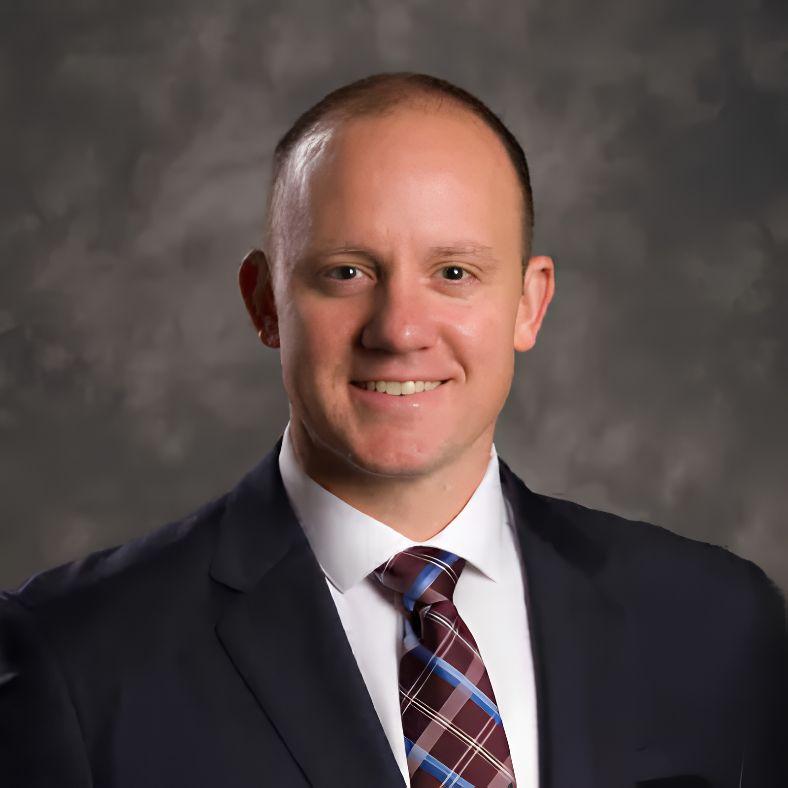
Full Transcript Podcast Introduction and Guest Overview 0:03 Welcome to Hotness, the podcast that brings you practical tools to balance your hormones and rekindle connection, confidence, 0:10 and desire in midlife and beyond. 0:13 I'm your host, Dr. 0:14 Liz Lister. 0:15 Hotiness is a safe space for honest conversations about menopause, sex, identity, love, loss, reinvention,and desire, because you can embrace your hotness 0:28 at every age. 0:30 Welcome to Hotness, the podcast where your hormones, confidence, and desire come back online. 0:37 My conversation today with Dr. 0:38 Mark Jankowski is very informative and full of useful information and tips and his amazing story. 0:47 He is a physician practicing in Park City, Utah. 0:52 He founded a practice called Enduro Medicine, specializing in active men ages 45 and up. 1:00 So he's really a counterpart to my women's health practice. 1:05 So I really have enjoyed getting to know him. 1:08 He has so many board certifications that I'm going to look at my notes to tell you he is board certified in internal medicine, 1:14 pediatrics, obesity medicine and longevity medicine. 1:19 One of the things we talk about is erectile dysfunction as a health warning for men. 1:26 So that's towards the end. 1:27 Listen up for that one. 1:28 But we also get to hear his story of how he lost and has kept off 100 pounds after his college days. 1:37 That's at the beginning. 1:38 Please enjoy my conversation with Dr. 1:41 Mark Jankowski. 1:42 Hi, Dr Mark. 1:45 Welcome to Hotness. 1:48 Hi, thank you so much for having me, Dr. 1:49 Liz. 1:51 This is very exciting and we're going to hear more about your practice because really you are a counterpart to what I do in women's health, 1:57 you do and men's Health.
Dr. Jankowskiu2019s Weight Loss and Health Identity 2:00 So we'll definitely talk about that, but I would like to. 2:03 Hear more. 2:03 About your own story, cause it's a pretty wild story and how that connected to you starting the incarnation of the practice that you have now. 2:13 But take us back to when you were in college. 2:15 Yes. 2:16 Yes. 2:16 So, thank you. 2:18 When I was in college, I focused on achievement. 2:21 I focus on having fun. 2:23 And I played football in my college and that was a meaningful part of my identity as being an athlete and also achieving and I wanted to go to medical school. 2:33 And after finishing sports, I continued to have some of the typical college habits and too much of bad things. 2:43 And I kept adding more calories but not as much exercise because I had stopped that. 2:49 I actually gained all the way up to 325 pounds. 2:51 People can't tell you're tall but still. 2:59 I'm about 230 pounds, six foot one. 3:01 So I have a large frame. 3:03 But at that time, so that happened and I wasn't expecting it. 3:07 And so, but I also still want to go to medical school. 3:10 As I was coming in the door to school, it occurred to me that how could I be somebody who could inspire others with a healthful life and take these health 3:19 recommendations and help them, help guide them and be so out of a helpful state myself. 3:24 So it became a mission and I was able to lose 100 pounds in that first year. 3:30 And I've been able keep it off for the past more than 20 years now. 3:34 But, you know, I have always had that tendency to gain weight. 3:38 So I had to learn what to do to manage that. 3:42 What are some of your maintenance? 3:44 tips, tools? 3:46 Well, the biggest one is anchoring to an identity, and there's a reason why I want to maintain health and vitality for all the things that I enjoy in my life. 3:55 And also, I have a lot of influence on the people around me and my family, my patients, focus health goals that we have. 4:08 I think anchoring to purpose is really the big unlock that lets us sort of have sustained improvement and progress in that way. 4:16 But specifically though, you know, maintaining enough protein, lots of fiber and resistance training and lots exercise. 4:24 And the exercise should be fun. 4:26 So cardiovascular activity in the form of skiing, hiking, tennis, mountain biking, cycling. 4:32 I've been through all different phases of different kinds of recreational pursuits, but doing something active with people is something that really keeps 4:40 you vital and it becomes like an afterthought, the exercise part. 4:45 It's really what you're doing for fun. 4:47 Yeah, that's beautiful. 4:48 That's great. 4:56 At the time, I thought it was a great idea, and it WAS a good idea. 4:59 I'm really glad I did it, but we'll have to talk about that another time. 5:03 If that even piques your interest, you should definitely go do it. 5:06 Because it's really like a very long hike. 5:09 It's done over several days. 5:11 My mother was very afraid. 5:12 She was picturing crampons on my ice scaling and ropes and things. 5:18 And it is not like that at all. 5:20 I think most of the ice is gone now, isn't it? 5:22 Well, that too. 5:23 That's at the very top. 5:25 But really, most to the rest of way, it's an inactive volcano. 5:30 It has other interesting features, but it is really beautiful and definitely worth doing. 5:34 I love that. 5:35 Thank you for giving us those tips. 5:37 Also, the way you started, which was the identity, who we identify as, I That's a big missing piece when people struggle with their weight and it's just 5:49 going up and you know they lose weight regain and lose and regain it and they haven't swapped in a new identity like I am a healthy fit person. 5:57 That right yeah that's awesome.
From Hospital Medicine to Preventive Menu2019s Health 6:00 A recent book that i read that is really helpful and sort of putting a fine point on on that thinking and applying that your life is by doctor benjamin 6:10 hardy it's called be your future self now i think it is a wonderful job highlighting exactly how to. 6:16 how we can anchor to a future state identity that we care about, that were meaningfully connected to. 6:21 And then once we do that, we fill in the pieces of how to get there. 6:25 But there's a reason why we're pursuing that. 6:26 Not for vanity, not just for aesthetic, but for all of the wonderful ways that are going to impact the world around us. 6:33 That's what we have to anchor too. 6:35 Well, you started out talking about fun and I want everybody to come to my 100th birthday party. 6:38 So that's part of my goal. 6:42 Now you went into internal medicine and hospital medicine, and you did that for a while. 6:50 And so just tell us a little, I mean, were seeing people with problems that were decades in the making. 6:56 Yeah. 6:57 That's right. 6:58 What prompted you to move on from that? 7:01 Well, after caring for hospitalized and ICU level patients for the past 15 years, and then more in residency and training, 7:10 I just kept seeing all these things that catch up with people, women and men both, things like heart disease, diabetes, obesity, 7:20 all of these are things we carry for a long time. 7:24 And eventually they lead us to have things, like, heart attacks and strokes, where you can become incapacitated with any number of neurological decline 7:34 conditions like Alzheimer's or Parkinson's. 7:37 And a lot of people don't fully realize that their metabolic health and these other health factors that we're discussing have a direct impact on how their 7:46 brain is aging. 7:48 And the decline that is common with our cognitive abilities is something that's related to that and is preventable. 7:55 We can defer that farther into the future. 7:57 But I kept caring for all these folks who were acutely ill with things, and we would help them. 8:03 And we have a great health care system for helping somebody who's acuetly ill. 8:07 but we don't have great system in place for effectively intervening and helping people at a much earlier stage upstream so that these things could be prevented. 8:17 We talk a lot about it, but the system doesn't have all the ways to support that. 8:21 And so in my role as a hospitalist doctor, I wasn't really having any ability to impact that process. 8:28 So I decided that for the rest of my medical career I want to help people upstream of these problems and hopefully either not get them at all or defer 8:37 them for decades down the road. 8:39 Yeah, you know, I just realized we're using the word hospitalist. 8:42 I know what that means. 8:43 But just give us a quick explanation. 8:45 A lot of people may not have heard that term. 8:46 Right. 8:47 So there are there a doctors who just practice in a hospital setting, and they don't have an office. 8:53 And they care for the patients who are admitted to the hospital. 8:59 ER doctor decides they need to stay, and that's when a hospitalist like myself and my colleagues would then admit them and care for them, 9:06 usually for one, two or three days, sometimes longer if they're really sick. 9:10 And then we would care them only in that hospital setting, discharge them with a plan with maybe some recommendations, say, 9:16 go see your primary care doctor and talk about these things and take these antibiotics or these new medicines that we, but there's no ongoing care. 9:26 So it's just that acute episode of care Yeah. 9:28 It's really a great service to patients and doctors because the old model prior to hospitalists was that the doctor had to leave their office, 9:38 go do rounds, and then they're in their offices seeing patients. 9:41 And if the hospitalized patient needed something, it was an interruption for everyone. 9:47 So it's just really huge benefit for people who are in the hospital and also for their primary doctor, as you said. 9:55 Yeah, it's, and there's also laborists. 9:57 So I'm an OBGYN and now they have, this is something since this was not in place when I first did my residency training over 30 years ago, 10:09 where now there are laborers who stay at the hospital. 10:11 There's always a doctor there. 10:14 That's really a good service as well for women in that setting. 10:19 Speaking of comparing men and women. 10:22 I get this all the time. 10:24 Women come to see me and they've been told their labs are normal. 10:28 And I always think air quotes when I hear that word. 10:32 I actually also kind of cringe a little bit. 10:34 So what's happening with men who are getting told that their levels are not normal? 10:38 I mean, good Lord, the range for testosterone is so huge and ugh. 10:42 They're being told they're labs or normal, they still feel terrible. 10:46 What are doctors missing and what should men be asking for? 10:49 Thank you. 10:50 You're right. 10:51 The same thing is happening to men. 10:53 And one of the other problems upstream of that is that first, we got to get the man to go to the doctor. 10:58 Women are so much better at going to doctor to speak in general terms. 11:02 But that's been my experience with talking to a lot of men, okay, so the men is there. 11:07 He's taken the steps and he's gotten some blood work. 11:10 but that bloodwork may not always be complete. 11:14 And it may be just checking something like a total testosterone or what's called a basic lipid panel or a basically thyroid panel. 11:23 And these are some common things that should be checked, but if we're going to check them, we should do it properly and just add a few more tests on to 11:31 each one of those types of tests. 11:32 So we can give a more comprehensive understanding and treatment guide for the client. 11:38 We're being told that Things are normal. 11:40 Oh, your total testosterone is fine. 11:42 You don't need that. 11:43 It might be bad for you. 11:45 Let's not take any risks. 11:47 So let's just not do it. 11:49 That's what's happening in traditional care. 11:51 I have so many examples. 11:53 Of course, it's mostly the vast majority of my patients are women, but a lot of the men have come to me because they are the husbands or the partners of
Hormone Testing, Testosterone, and Lifestyle Factors 12:05 one of So that's to your point earlier. 12:09 And then another that is coming to my mind right now is a friend of mine. 12:14 He's in his 50s, he's tired all the time, his blood sugar is off. 12:20 A lot of things are happening with him and they just won't check his testosterone level. 12:24 I can't really understand it. 12:26 It's just one test. 12:27 That's true. 12:29 it's true you know unfortunately we're in a situation right now where we have a generation of physicians who have had excellent training in general but 12:38 they have not been trained on how to approach and prescribe hormones and there's different causes for both that with the men and the women i'm sure you've 12:46 talked a lot about the reasons for that for the woman's hormones similar to men there there has been a in the past a concern that if we give too much testosterone, 12:56 we're going to cause prostate cancer or possibly even contribute to the development of heart disease. 13:01 And fortunately, with more recent data, those concerns are not well founded. 13:07 In fact, having adequate testosterone can help maintain heart health and there is not an association with prostate cancers for people who are Otherwise, 13:16 healthy people who don't have prostate cancer who are then given testosterone to an adequate level, a normal physiologic level that does not cause prostate. 13:25 And so these are some of the fears that doctors have had. 13:29 Unfortunately, there's more and more physicians are getting more advanced training now so that we can help people. 13:35 have sort of their life back because as I'm sure you support with the women clients you have, you know, for the men, this decline in testosterone really 13:46 impacts their identity, their energy, and it could be so multifactorial. 13:50 And there are so many things that can contribute to it as well, sometimes reversible. 13:54 Sometimes we can address this naturally. 13:56 We don't always have to go right to hormone therapy, but we have at least be considering it and doing the right tests. 14:02 Yeah, that's awesome. 14:03 What are some other things that men can do? 14:05 What do you recommend in addition? 14:09 I mean, I love hormone therapy. 14:11 I always say that upfront as my bias.I love replenishing hormones, not to the level of a 20-year-old. 14:21 but replenishing back to before we didn't feel good, right? 14:24 Like men lose testosterone every year and it's gradual, like women go through more noticeable, obvious fluctuations of their hormones, 14:36 at least it gets their attention, but for men it is more gradual. 14:39 So how do you invite men, yeah, two things. 14:44 I'm asking you about men advocating for themselves, but also what else could they do to keep testosterone levels in a good place? 14:52 Well, maintaining overall health in general helps support testosterone, being active, resistance training. 14:58 That doesn't mean killing it in the gym with free weights. 15:01 that can be something as little as at least one, preferably at two days a week, some sort of resistance train. 15:07 There's a lot of different ways, that stimulates the muscle and helps you make testosterone. 15:12 Maintaining a healthy body weight is helpful for that. 15:14 If we have too much adipose tissue, that can lead to hormone dysfunction and then not getting enough sleep. 15:21 That's probably one of the biggest levers that has so much impact on our health overall, but certainly in our hormonal health. 15:27 If we're chronically sleep-deprived, getting less than six and a half hours of quality sleep a night, ideally seven to eight, 15:34 but it can be hard. 15:35 But I say the minimum six-and-a-half, seven is really where you should be targeting. 15:39 If you're chronic getting that, that's going to tank your hormones as well. 15:44 Another thing that can happen is as we're gaining weight or as our metabolism is slowing down, hormones like our estradiol or our sex hormone binding globulin, 15:55 these things can start to become abnormal in ways that impact our testosterone and how we experience testosterone. 16:04 We might have an okay total level, but a lot of times the testosterone is bound up. 16:10 in one of these other proteins. 16:13 And so that impacts how we feel. 16:15 So maintaining healthy weight, healthy metabolism, sleeping well, and getting the right kinds of exercise, all these things support healthy hormone balance. 16:26 Another one my quotes that you're welcome to use is, I cannot out-hormone your lifestyle. 16:31 That's right. 16:32 That is great. 16:32 Thank you. 16:48 SHBG on the test is, one of my colleagues made this up. 16:51 She refers to it as the Uber that drives the hormones around the body. 16:55 And if there's too much, then there isn't enough of the hormone being dropped off. 16:59 It's all just being bound and carried around. 17:02 So that's the binding globulin. 17:04 I've been paying a lot more attention to that with my patients as well lately. 17:08 I like what you said about the Uber example. 17:10 I'll use that. 17:10 You know, one of the things that we also see is people who are aware that they may have a hormone issue. 17:16 And if they aren't able to get their answers from their doctor, they go online. 17:22 Dr. 17:23 Google. 17:25 That's right. 17:26 And there are a lot of services online that are ready to provide that testosterone. 17:32 One of the challenges that I've observed with clients who are working in that fashion is that they may get testosterone and then they kind of stay on the 17:42 same dose. 17:44 They aren't checking enough follow up tests to see is this the right dose. 17:48 And then, you know, in some cases, there could be sort of a rush to treat the person feels like that's what they need. 17:56 But there's a lot of lifestyle things first. 17:58 So I think really working with a trained provider that knows this, that likes to manage this in a way that's not incentivized to give as much hormone as possible, 18:10 but rather is incentivize to make the right connections and help somebody achieve health over time. 18:17 It's more of a relationship ongoing. 18:19 That's their incentive. 18:20 I think that sort of the way to engage around this topic. 18:23 Yeah, you mean that should be monitored? 18:24 Wow, what a concept. 18:27 Yes. 18:28 You know, I had a brief stint with one of the online health provider companies and it was good. 18:36 I'm glad I did it. 18:37 And I didn't do it for very long because it's so protocol driven. 18:40 It could not add one additional test. 18:44 Didn't matter what I thought they needed. 18:47 I was completely constrained with the panel that they order. 18:51 That's it. 18:52 Also the ways of prescribing different hormones, that type of thing. 18:58 It was their options and that was it, so it was really a little bit constrained.
Erectile Dysfunction as a Cardiovascular Warning Sign 19:04 So I think the problem is doctors who dismiss their patients. 19:09 You know, people don't feel good. 19:10 They want to feel better. 19:12 Oh, frustrates me that people have to go out looking for help because their doctors just aren't helping them. 19:22 And they're paying for their health insurance, going to their doctor's that take their insurance and oftentimes not getting the help that they need. 19:31 Well, we have we haven't such a We've incentivized such reactivity in our health system So that you know doctors are trained to find it a disease a diagnosis 19:41 make that diagnosis and then provide the right treatment for that Diagnosis. 19:44 Yeah, and and we've received excellent training to do just that and in the construct of a 15 to 20 minute office visit you Know the doctor is Trying to 19:53 quickly identify, okay, what's needed to be treated here? 19:55 What are the things? 19:56 Okay, if it's something lifestyle, a quick passing comment to go and take care of that on your own or find some help, but what can I treat today? 20:04 And if they aren't thinking that one of these hormones is the right thing to being treating with for a condition that they've formally diagnosed, 20:11 then it is not included. 20:14 Yeah. 20:16 Very frustrating. 20:17 So speaking of releasing ourselves from frustration, someone comes to see you. 20:23 You specialize in men. 20:24 I'm using the word in midlife. 20:26 How do you phrase it for your practice? 20:30 Men over a certain age, or we would say that, we say women of a certainly age. 20:34 Right. 20:34 But I think men are more like straightforward about their age Well, it's usually around mid 40s and up that men can start to experiencing some decline. 20:45 And I typically work with men who've considered themselves to be high performers in their life, but things are starting to not work the way they used to. 20:54 and they've started to lose their edge. 20:56 And that can be multifactorial. 20:58 It could be any number of physiologic problems that we can address, lifestyle problems, psychological problems. 21:04 Our mental health and our mindset is a huge part of how we feel. 21:11 We work closely together to do a comprehensive baseline evaluation to see what's going on, look at all the domains of health with enough labs and enough 21:19 time talking about and understanding what the issues are. 21:21 Then from there, we choose to work together. 21:24 Yeah, that's fantastic. 21:26 If someone wants to inquire about working with you, what would that look like? 21:32 What should that person do? 21:33 Well, first, I would invite them to go to EnduroMedicine.com. 21:37 You can see the website there. 21:39 From there, you can link to schedule a call with me and I can tell you about the services I provide and what that would look Awesome. 21:47 That's really great. 21:48 And we'll make sure that your website is linked in the show notes. 21:52 So that is fantastic. 21:54 Anything else you want to tell us related to the practice? 21:57 What is, I'd love to hear just a little bit more, like what inspired you? 22:01 You're in The Hospitalist. 22:03 I mean, you're seeing people, the comparison I shared with you, they're like at the bottom of the cliff, but you would like to be up higher with a guardrail 22:14 so they don't fall down the cliffs. 22:18 How did you learn how did u come to learn about this more expanded holistic view of health and want to pursue it. 22:28 Well, it was a progression over time of just seeing sort of the same things. 22:32 And then about six years ago, my family and I moved here to this wonderful place that is Park City, Utah. 22:38 It's an outdoor paradise, as I like to describe it, with all the things, and yeah, I enjoy doing all these activities as well. 22:46 But what I was seeing in my hospitalized patients was that there may be men who were here in their 60s, women as Well who are so glad that they're here, 22:56 but, and they enjoy doing all these things, but their bodies are starting to fail them. 23:01 And they aren't doing them as avidly. 23:03 They don't have quite as much energy to do all of these wonderful things. 23:06 This could be true at any part of the country. 23:08 What are all things? 23:09 We're finally getting close to retirement. 23:10 We finally have the kids off to college. 23:12 we have all this time and freedom of purpose and time, perhaps money as well. 23:21 But if our bodies were failing us, and we aren't able to go out and do these things in a sustained way, these that we used to love to do, 23:28 then that can be really a way on folks. 23:30 And so I kept seeing this happen with my hospitalized patients. 23:34 I see the trajectory of my life. 23:36 You know, I'm 47 and I want to keep doing all these wonderful things for many decades to come. 23:41 So I just want align all of professional interests and all the things that I care about with what I believe is important for my clients too. 23:49 And I want to work together with them to help them achieve that outcome of health and vitality in their surroundings. 23:55 Yeah, beautiful. 23:56 I love that. 23:57 And that conveys, you know, when I listen to you speak and got to meet you recently, that really comes across. 24:04 So that's, I loved that, super cool. 24:06 Now we are on the hotness podcast and so I talk a lot about vitality as we get older, sexual function and dysfunction and since I have you here, 24:16 let's talk for a moment about the health implications of erectile dysfunction in particular. 24:25 Obviously, there's a lot of different things we could talk about, but let's just talk quite an impact. 24:38 It sure does. 24:39 Well, there are many causes of erectile dysfunction, but one of the important ones that I want to highlight for you and for your listeners is that erectiles 24:53 dysfunction in a man at any age can be the harbinger of cardiovascular disease. 24:57 So if there are diseased arteries in the body that can affect how they allow blood to flow and how the constrict and that could impact the ability of a
Sauna, Connection, and Closing Remarks 25:09 men to have an erection and so Oftentimes that's sort of the first sign and there's a lot of things that we need to do really for all men and women over 40 25:18 and that is to Do a proper cardiovascular evaluation to see where they are But if they're having that problem then that certainly means we needed to take 25:27 a look The other common things I just want to mention are that you know as somebody's mental health or how they feel about themselves is trying to impact 25:36 them if their testosterone is going down, if they're not feeling as comfortable in their bodies because it by their body is different when they are 55 25:42 or 60 than it was when there are 25 or 30. That can also be impacting their ability to maintain interaction or even to be ready for intimacy and to be 25:54 open to knowing and relating to their wife or their partner because, you know, things are different for them and they may not have the words or the previous 26:05 experience to relate that in a way because things were changing for the men too. 26:09 And the thing is with men to remember is that it's a very gradual change. 26:12 So there's not this cliff where the hormones changed. 26:14 It's gradual and it is not clear to them if this is something they did. 26:18 Right. 26:19 So these are all important things for the woman to know to encourage the man in her life to seek a treatment and engagement with the doctor and just maybe 26:30 ask the question, you know, what can we do to take a look at things and make sure everything's working right? 26:34 Not just with their erectile function, but the rest of their health because the two go together. 26:40 Yeah, fantastic. 26:41 Talk about a band-aid medication. 26:43 I talk about that a lot with the women for sleep disruption and mood issues and whatnot, and they get given antidepressants and sleeping pills, 26:52 whereas really the cause underneath is hormonal imbalance. 26:57 So it's even possible for testosterone to be a Band-Aid when the man really needs, or the medicines for the ED, rather than Yeah, 27:08 the medicines for the ED would be more the band-aid. 27:10 The testosterone could possibly be like the underlying root cause and really help him feel better and like to your point the whole ecology of the relationship, 27:24 right? 27:24 We want the intimacy, we want to not just become roommates. 27:29 It's important not to presume that this is a natural thing that happens with aging. 27:34 With maintaining excellent health throughout your life, we can still have wonderful erectile function. 27:42 It may start to naturally change at some point, but we don't want to assume that without having looked elsewhere to make sure that there's not something 27:49 else going on too. 27:50 That's beautiful, that's fantastic. 27:52 Now I know you're in beautiful Park City with your wife and kids and so I want to wrap us up with another personal question that I ask each of my guests. 28:02 What is one thing that you do to connect yourself with you own hotness? 28:12 Well, I love to take a sauna and recently added one to our house. 28:18 And so that's something that I like to spend time with. 28:22 It helps me relax and gets me rid of the stress that it might be carrying into the evening hours. 28:30 I found that really helps be unwind to be open to connecting with my wife. 28:36 That is fabulous. 28:40 Thank you so, so much. 28:41 I look forward to further conversations. 28:44 And I will definitely make sure people have the website link to be able to reach out to you and really appreciate this conversation with you today. 28:53 Well, thank you for the invitation and for your time. 28:59 Thanks for listening to Hotness. 29:01 Help more women find these practical tools by liking, sharing and following the show as well as leaving a review. 29:09 As a gift for listing, go to drlizmd.com forward slash hotness for your free midlife guide filled with powerful support for you mind, 29:20 body and soul because you can embrace your hotnes at every age.

Comments