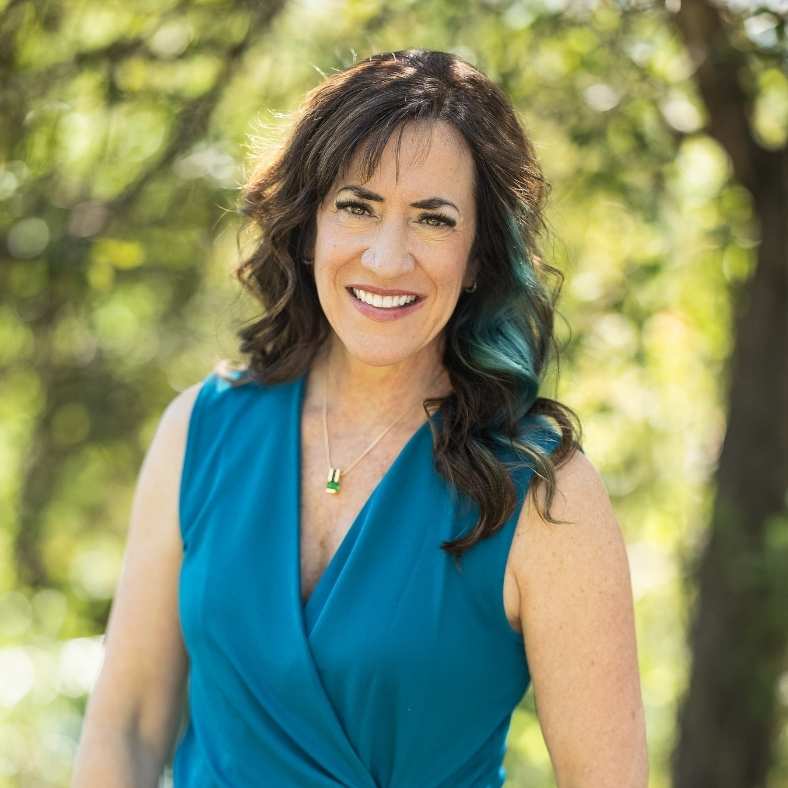
Full Transcript Introduction to Hotness and Midlife Plot Twist 0:03 Welcome to Hotness, the podcast that brings you practical tools to balance your hormones and rekindle connection, confidence, 0:10 and desire in midlife and beyond. 0:13 I'm your host, Dr. 0:14 Liz Lister. 0:15 Hotiness is a safe space for honest conversations about menopause, sex, identity, love, loss, reinvention,and desire, because you can embrace your hotness 0:28 at every age. 0:30 Welcome to the second installment in Midlife Plot Twist. 0:38 Have you ever had a moment where some small little trigger just set off a huge emotional reaction and you thought, what in the world? 0:48 Why am I still reacting to this? 0:57 We're going to take our next steps in how to set that baggage down and let it go. 1:05 Maybe you hear someone's name and your body reacts and tightens up or conversations replaying in your head. 1:11 It's not weakness.
Why Unprocessed Loss Matters in Midlife 1:14 it is unresolved emotional pain. 1:21 And the vast majority of us were never taught to actually process and let go of that pain. 1:31 Why are we talking about this on this podcast? 1:36 I mentioned this briefly in the first installment. 1:41 I talked about On a podcast about hormones and confidence and desire, why in the heck are we talking about loss and even talking Because by the time we 1:56 get to midlife, we have all experienced loss. 2:02 As well as some unresolved pain that resulted from those losses. 2:09 And it affects our vitality, it effects our aliveness. 2:13 It effects are nervous system, It impacts our relationships. 2:19 our energy level, our brain function, or ability to be open with the people we care about, even our ability experience joy and connection. 2:31 And I want that for you. 2:34 By midlife, many of us are carrying decades of emotional baggage that we were taught to minimize or suppress or even the dreaded, 2:45 just move on. 2:47 We're going to talk about how to actually accomplish that.
Myths About Grief and Emotional Pain 2:52 In the first installment, we talked about the definition of grief, which I'm applying to loss. 3:01 The definition grief is the normal and natural emotional response to laws. 3:08 It's normal. 3:09 Its natural. 3:13 We also talked about the very important fact that time alone does not heal. 3:20 We're taught time will heal all wounds, and it's simply not true. 3:26 What actually heals the pain from loss is taking the small, correct steps that help complete what was emotionally unfinished. 3:38 I want to talk today about the myths that we are taught. 3:41 So what are we taught? 3:42 If we're not taught the correct way to process this emotional pain, what our we thought? 3:47 We are actually taught really unhelpful ideas that sound helpful, but actually can lead to us feeling more isolated. 3:59 The first one, as I just said, time will heal all wounds. 4:02 Nope, it doesn't. 4:03 That's not the, just time alone. 4:07 will not heal. 4:08 Just like a flat tire, if I pull to the side of the road and sit and wait, that will NOT fix the flat tyre. 4:15 There are a series of correct steps that I have to take for that to happen. 4:20 So that's a myth. 4:20 It's is that grief has stages. 4:26 I love dispelling this one. 4:29 People have the idea of a timeline for when they should get over various losses or feelings of grief, and it just doesn't exist. 4:38 The whole notion of there being stages, for example, in the Kubler-Ross stages of dealing with death and dying. 4:48 She actually, at the end of her career, acknowledged that it wasn't correct. 4:54 So if you hadn't heard that, now you've heard them. 4:57 Other myths include, don't feel bad. 5:02 Literally, people told, Okay, so don't feel your feelings. 5:09 Very bad advice. 5:10 We'll say more about that in the moment. 5:13 Another myth is be strong. 5:15 This is a big one in my family. 5:16 I come from a long line of strong women. 5:18 Uh, I'll save more that that, in, uh, future installments. 5:23 But it's a myth. 5:24 It's myth about you just need to be stronger and basically not feel you feelings Another one is keep busy. 5:34 Now, I actually got people questioning me when I worked not very long after I lost my husband. 5:43 It was work, it was my work. 5:45 it Was an expression of myself, not an effort to not deal with the emotions. 5:51 So the myth is to just keep busy. 5:55 It's related to time will heal the wounds because if you keep busy, then the time we'll pass and that flat tire will fix itself. 6:05 Another related myth is grieve alone. 6:08 This goes along with be strong. 6:10 Because we're not really taught that grief is the normal and natural response to loss, we are literally taught it's unnatural and we shouldn't feel it.
STIRBs: Short-Term Energy-Releasing Behaviors 6:20 Don't fell bad. 6:21 You can see how these myths all feed and relate to each other. 6:25 So grieving alone is, in my mind, connected to be strong. 6:30 Don't share your emotions, especially if they're sad emotions. 6:36 And one more myth to talk about is replace the loss. 6:42 This is a really popular one when it comes to the lost of relationships. 6:46 Loss of a very important relationship, it could be a spouse, It could someone just in the past, doesn't have to be divorce. 6:56 It can be relationship that was important to you in past. 7:01 Now these myths come from a well intentioned place. 7:06 Right? 7:06 People are not wanting you to feel sad or bad, and so they're using these concepts that are going to bring you out of your heart center, 7:15 out your feelings, up to your head to try to help you. 7:19 However, you probably can see that what it does teach us instead is to disconnect from our feelings instead of processing them. 7:30 We don't even have a chance to consider the series of correct steps because we're taught that just having those sad or bad feelings or upset or angry feelings 7:42 is just something we shouldn't be doing. 7:44 Okay, so what that does instead is it leaves the emotions incomplete. 7:51 They do not go away, they don't disappear into thin air. 7:55 They actually get stored, stored in the body, and that's when it can really impact our health. 8:03 Not to mention our vitality and our feeling of aliveness and well-being, which is what I care about the most. 8:12 So what is our next correct step? 8:13 So we have a correct of identifying which myths are impacting us. 8:19 Which ones am I following rather than acknowledging my feelings and processing them? 8:27 The next step is what happens when those feelings do not get expressed and they get stored? 8:33 Where do they go? 8:35 They go into a storage place in our soul or our bodies or both, and they build up energy. 8:46 And that energy eventually has to be released in some way, shape, or form. 8:52 In the grief recovery method that this information is really based on, that really spoke to me, and that I'm so wanting to share with you, 9:02 they call them STIRBs. 9:03 I love this concept. 9:04 A STIREB is an acronym. 9:06 It stands for short-term energy releasing behavior. 9:10 And these are all kinds of things that we do to temporarily avoid the emotional pain. 9:18 all kinds of things and I'm going to name them and you're going realize, at least in other people, if not in yourself, it can be overeating, 9:29 overworking, doom scrolling or even trying to do happy scrolling, but to the detriment of our other life activities and needs, 9:41 drinking, alcohol, Shopping, we get kind of haha funny and call it retail therapy. 9:49 I've done that one myself. 9:51 It can lead to numbness, just numbing. 9:55 Another stirb is people pleasing, doing things for others. 9:59 Along with that could be just keeping busy in some way, shape, or form. 10:04 Emotionally shutting down, that goes along with the numbing. 10:08 Sex can be a stirb, a short-term energy-releasing behavior, and also angry outbursts. 10:18 That energy is going to get released in some way, shape, or form, so these are a lot of the common ways.
What a Feeling Is and How Pain Gets Stored 10:25 So take a second and think about when you've experienced loss, which of the myths that you may have gotten sucked into and what might've been some of disturbs 10:37 that may you have done. 10:40 Now, some of us become very high functioning in these stirbs and other people won't even notice it as what it is. 10:48 So what we're doing when we are doing an action that is actually a stirb, a short-term energy relieving behavior is we emotionally avoiding our lives. 11:00 And it's not because we were broken. 11:02 It's because weren't taught the steps to emotional completion. 11:06 I'm going to do one more definition in this segment today. 11:10 And that is the definition of a feeling. 11:14 What is a Feeling? 11:16 A Feeling is physical reaction to a thought. 11:20 Yes, it goes in that order, the thought first and then the feeling, and strong feelings can come from any kind of ending. 11:27 It doesn't have to be dramatic. 11:28 it doesn' have be a death or a divorce.It can be moving.it can your nest becoming empty. 11:37 the kid who left and gave you an empty nest coming back, where you lose the freedom that you experienced. 11:44 It could be really loss of any kind. 11:47 it can be an unexpected, shocking loss, or it could something that your aware of as a slow decline. 11:56 This is really, really common in relationships. 11:59 So we're having feelings even before the loss has really become complete. 12:06 Now, because we're taught to only express happy feelings, right? 12:11 And this is to be expected because the people who try to comfort us, they weren't taught how to process and resolve painful feelings. 12:23 That leads, as we were just saying, to stored feelings and when we don't know how the pain, that energy is going to leak out. 12:34 We're going experience some kind of relief of that, either in the form of a disturb or something along those lines. 12:43 And what this really is, is false emotional protection. 12:49 We feel if we feel angry or indignant or something like that, it's actually, we, feel like we're protecting ourselves emotionally. 12:58 But when we are not processing underneath, or not the pain, were actually hurting ourselves in the grand scheme. 13:05 And we really, really can be hurting our health. 13:08 We are definitely hurting your vitality. 13:11 So sometimes when somebody has a loss that they're not processing, they may develop a health problem. 13:19 This is really common and a lot of people talk about this now. 13:23 And then dealing with the health problems can become your STIRB. 13:26 Your energy relieving behavior can be all the things that you have to do, all of the activities and channeling your energy into addressing the heath problem Meanwhile, 13:36 you still have not looked and processed and resolved and completed what was happening underneath that caused that health issue in the first place. 13:47 In the next installment of Midlife Plot Twist, we will talk about the difference between getting over, for example, a relationship loss versus getting complete.
Getting Complete and Closing the Episode 14:02 When we experience these losses, And what are the correct steps coming next to let go of emotional baggage that you may have been carrying? 14:16 I want you to make room in your body and your soul. 14:22 I've done so much work in this area and the freedom that I have experienced has just been a gift and a joy and I wanted that for you. 14:33 I want you to make room in your body. 14:35 I you want to have vibrant health. 14:37 And yes, hotness. 14:39 Take care and see you again soon. 14:48 Thanks for listening to Hotness, help more women find these practical tools by liking, sharing, and following the show, as well as leaving a review. 15:00 As a gift for listening, go to drlizmd.com forward slash hotness for your free midlife guide filled with powerful support for you mind, 15:10 body and soul because you can embrace your hotnes at every age.
Comments