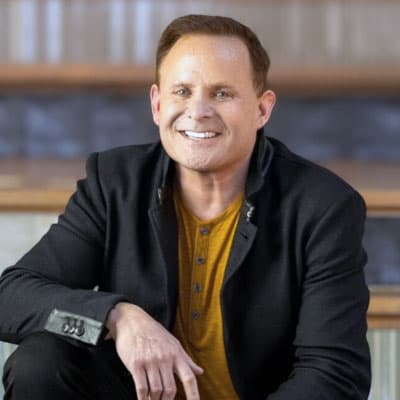
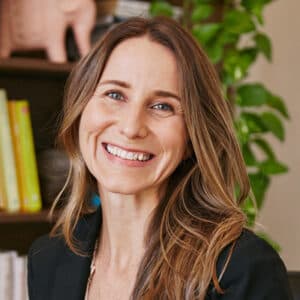
Full Transcript Introduction and guest background 0:00 And then, stress. 0:01 We, that there's very clear 0:03 literature that when we're under stress, we don't remember as much. 0:06 It's harder to make those actions and then infections. 0:10 There's a very, 0:14 I actually don't even know if someone 0:16 has connected this as a cause, but certainly correlated. 0:19 We see in an autopsy 0:20 reports, the brains of people with these degenerative diseases, 0:23 whether they're Lewy body or Alzheimer's or Parkinson's. 0:27 There are viruses and bacteria in these these tangles. 0:31 In the neurofibrillary tangles or in these plaques. 0:34 Welcome to Doctor Talks, the podcast where every episode leads to a healthier you. 0:40 Join us as we navigate the world of optimal health, 0:43 uncovering groundbreaking strategies to conquer chronic disease. 0:47 In each episode, we'll bring you the latest insights 0:50 from leading health experts, medical innovators, and wellness warriors. 0:54 If you're seeking to transform your health journey, or if you're looking 0:57 for answers to burning questions, you've come to the right place. 1:01 Get ready to unlock the secrets of lifelong health and vitality. 1:05 This is Doctor Talks, real talk from real doctors. 1:09 Only issues that matter to you most. 1:14 I they start 1:14 to can't hold talk with another episode today. 1:17 We are fortunate to have doctor Heather Sanderson. 1:21 With us. 1:23 And she's going to be talking about integrating peptides for optimal brain 1:28 optimization, or for comprehensive brain optimization. 1:32 That is not a double optimization there, but, very excited to speak with her. 1:37 She's well known. 1:39 So there are many conferences and she trains doctors 1:43 and speaks about, our unique topics. 1:47 And we'll get in. 1:48 I'm sure we're gonna learn a lot about how to fix some of the toughest 1:53 patients, especially the neurodegenerative and cognitive, problems 1:59 that are so prevalent and so poorly treated today. 2:03 She's a founder and the medical director of North County Natural Medicine 2:08 and, founder of, Brahma, 2:12 which is a residential, facility, 2:16 which I imagine takes up a lot of time and is, tough to run. 2:20 She specializes in, again, neurocognitive medicine and neuro hacking. 2:24 I love that term. 2:25 She has brain to specifically address imbalances that affect the brain, 2:29 including autism, ADHD, ADHD, 2:32 depression, anxiety, and Alzheimer's. 2:35 She has trained with some of the top, top names in the country, around the world. 2:41 Dale. Benderson. 2:44 Doctor Neil Nathan, doctor Bill Walsh, and Richie Shoemaker. 2:51 Is a little tough to work with. 2:53 In addition to regular attending and speaking, integrative 2:57 medicine conferences, 2:59 across the country and throughout the year, 3:01 we're going to possibly centers around taking deep dives into treating the cause 3:06 of the imbalance in the body, including toxic burden, 3:09 nutrient balance, stress management, structural integration, infection 3:14 resolutions, or really looks at the whole body, which I think is key 3:19 with so many illnesses now, she believes power the body, heal itself. 3:24 Doctor Sanderson's passion, to guide and support patients as they co-create 3:30 strong foundations for optimal health through sustainable lifestyle changes 3:35 and the best medical interventions to support balance of the body. 3:39 Yeah. 3:39 I think the patient has to be an active participant or it just doesn't work. 3:43 She's dedicated to learning, all there is to know about brain health 3:48 and considers her amazing, patients and, and CNM, 3:53 and residents at, the Aurora, residential center. 3:58 Some of our very best teachers. 4:00 Very interesting. Sounds very humble. 4:02 And, you can learn a lot if you listen to your patients. 4:07 She's been awarded a research grant, which are very tough to get. 4:11 Study the effects of individual interventions 4:14 and patients struggling with cognitive decline.
Why neurodegenerative disease is rising 4:17 At her center. 4:19 She's earned her naturopathic, 4:22 doctorate at the steer in Seattle. 4:26 And she currently serves, the medical advisory board, 4:29 neuro hacker collective collective, 4:32 and is a regular host of the Collective Insights podcast. 4:39 So, doctor Heather, thank you so much for for being on. 4:43 I'm looking forward to hearing all the things you're doing for 4:46 some of these toughest patients with, you know, neuro 4:50 cognitive degeneration and all the other cognitive dysfunction. 4:55 What seems like so many people are diagnosed with nowadays, 5:00 and so many people have a problem. 5:03 Let me ask you, what do you think is the cause of the rise 5:06 of all these problems? 5:08 That I don't think we had 20, 30 years ago? 5:12 Yeah. Thanks so much for having me. 5:13 First of all, I, you know, it's such a fascinating conversation, right? 5:17 As a lot of people suggest that in the case of autism or Alzheimer's, 5:22 that maybe it's that we have improved diagnoses, right? 5:25 That we see more doctors, we have more doctors, 5:27 that there's more people in the world. 5:29 So of course there's going to be more patients. 5:31 However, I would disagree with that. 5:33 I don't think that fully explains the rise in incidence. 5:37 So the number of patients per day, 100, 5:40 in the population that are being diagnosed 5:43 with diseases, these long term chronic neurodegenerative diseases, 5:47 and I, I believe that toxicity plays a huge role. 5:51 Now I actually you listed as you read my bio who has time for all that. 5:56 But you listed the five things that basically I believe 6:01 contribute that can be causal really, not just contribute, 6:05 but can be actually causal when it comes to complex chronic disease. 6:08 And that's toxicity, which has definitely exponentially risen 6:13 over the course of the last generation or so, the last 80 years. 6:17 So certainly hitting our baby boomers very hard. 6:21 The other thing is nutrient balance, right? 6:23 Remember the 80s when we were told that fats were bad? 6:25 Well, our brains need fats. 6:28 They use fats actually most efficiently for fuel. 6:31 So things like ketones. 6:32 We found that one of the best diets for a neurodegenerative brain 6:37 is a ketogenic diet. 6:38 Because the brain so efficiently uses ketones for fuel. 6:41 And you get rid of the detriment of high levels 6:45 of both insulin and blood sugar in the brain. 6:48 So toxins, nutrient balance, structural integrity. 6:52 Right. You've got to have the way a chiropractor would think about it. 6:54 You've got to have blood flowing to your brain. 6:57 You've got to have the toxins able to get out through the venous system, 7:00 through the lymphatic system. 7:02 We've learned more 7:02 and more over the last few years about how that that lymphatic system 7:06 in the brain is so integral, and how a lot of that happens at night. 7:10 If we're not flushing the system, then those toxins can build up 7:13 and certainly cause that degeneration at the cellular level. 7:18 So that structural integrity of of the head and neck 7:22 particularly, also, 7:24 you know, if you've been hit over the head with a baseball bat, 7:26 clearly traumatic brain injuries can cause neurodegeneration. 7:30 We see that and then, stress we of that there's very clear 7:34 literature that when we're under stress, we don't remember as much. 7:38 It's harder to make those actions and then infections. 7:41 There's a very, 7:45 I actually don't even know if 7:47 someone has connected this as a cause, but certainly correlated it. 7:50 We see in an autopsy reports, the brains of people 7:53 with these degenerative diseases, whether they're Lewy body or Alzheimer's 7:56 or Parkinson's, there are viruses and bacteria in these, 8:01 these tangles, in the neurofibrillary tangles 8:04 or in these plaques, in what you can see histologically under a microscope. 8:09 You can find some of these bugs in there. 8:11 And so it suggests that there's a contributing factor when it comes 8:15 to infections. 8:15 And dental infections in particular can be a trigger there. 8:21 So I believe that the reason 8:24 there's a higher incidence is because all of these things are more off balance. 8:27 We're more stressed. We don't eat as well. 8:29 We don't exercise. So I structure is off. 8:31 We spend all day sitting at computers or sitting in the car commuting. 8:35 And then, there's more toxins in the environment. 8:38 So that is what I would say is driving the rise in incidence. 8:42 All right. 8:42 So you're diving deep into peptides and longevity on this podcast. 8:46 And we're right there with you. 8:47 Integrative peptide stands out trusted by over 8:50 10,000 doctors to deliver real results for their patients. 8:54 These premium peptides are your key to unlocking 8:57 vitality recovery and a longer, stronger life. 9:01 Visit Integrative peptides.com and use the code 9:04 Pod life for 10% off your first order. 9:07 Again, integrative peptides.com. 9:09 Use the code powered live for 10% off. 9:13 It's time to elevate your journey starting now, 9:17 I think I completely agree and, well, 9:21 what do you think of McDonald's work where you found basically 9:24 all of you head of Harvard Brain Bank and biopsy 9:28 the Alzheimer's patients and found line, you know, and all of them 9:33 and, you know, I'm just thinking that everything's infectious. 9:37 But I also think, let's say, you know, we call Lyme disease or, you know, 9:41 which I think is a lot of things, but I think if someone just says Lyme, 9:45 they're going to be fine. 9:47 It's all these other things, you know? 9:49 And I had it myself and emotional stress. 9:53 I went through a special divorce just killed me. 9:56 And when I lecture, I show how stress even makes. 9:58 It lowers immunity. 9:59 No, it modulates. 10:00 It lowers the good part because all this inflammation 10:05 and, and I had it since I was born, and I have the worst memory 10:09 of anyone I can remember medical stuff, but that's about it. 10:12 But. And, and just all growing up, like one people was bigger 10:17 and all this stuff, but then just two weeks ago, I broke my nose. 10:21 Concussion for our army that, time 10:24 and, Yeah, all the all the toxins. 10:27 Like, I'm scared to take an Alzheimer's test 10:29 because I don't know if I pass, you know? 10:32 So, so generally, do you, 10:35 Well, what where do you start? 10:39 Let's say 80. 10:40 So you also do, like, 80 patients? 10:43 Let's just start with their like. 10:45 And someone has a mental kind 10:49 of the things that come up as, as children are growing.
Testing toxins and heavy metals 10:53 So what I, what I do is really a comprehensive approach. 10:56 I, I like to play in this area of cause I know 11:01 that a lot of people will say, well, why don't you just add more magnesium? 11:05 Or why not put them on on this or try that, and instead of 11:09 doing this sort of federal deficiency and Adderall deficiency. 11:12 Right. 11:13 And instead of doing this sort of let's pick from the tree and choose 11:17 these things that are most interesting this week, I really like to get the data. 11:21 And and patients need to be on board. 11:24 I'm a data person. 11:25 It's it's part of who I am as a provider. 11:27 And so I really encourage patients like let's let's fill in the model. 11:32 Let's figure out how many toxins you have. 11:35 Are they there. 11:35 And kids unfortunately can be exposed to toxins. 11:38 It's an umbilical cord blood right. 11:40 So they can get it from mom particularly first born rate mom is downloading 11:44 a lot of her toxins through breast milk or through that cord blood. 11:47 And so, it's not like kids come out 11:50 totally a blank slate when it comes to toxic burden. 11:54 So we do look in kids. 11:56 Of course, we're careful about how we pull that out 11:59 so that we don't cause more cellular damage than we're trying to 12:02 to prevent or restore. 12:05 But I, I do, I just go straight to the model. 12:09 Right? All of these things are potentially causal. 12:11 Let's measure them. Let's figure out 12:13 which are the ones contributing to the imbalance in your system. 12:17 And then let's fix it. 12:18 Let's let's create balance there so that every cell, every mitochondria, 12:23 every piece in your body 12:25 can function more efficiently and better and create more balance. 12:29 And this should resolve itself, I believe, with all of my being, my my religion, 12:34 my truth with a capital T is that the body is divinely designed to heal itself. 12:39 And what we need to do is get the gunk out of the way. 12:42 That's that's screwing that up. 12:44 And we need to add good nutrients and and we need to add meditation. 12:48 And you know, this, 12:49 these stress management strategies because we can't eliminate 12:52 eliminate that completely. 12:53 And also some stress is good for us. 12:54 It's about balance. Yeah. 12:57 That really I start we have I use an hour and a half 13:01 to two hours for initial consults because I treat complex medicine. 13:05 Usually there's quite a bit of history to take. 13:07 And then we are going to plug people 13:08 into this model, 13:09 and I don't want to leave any of it out because it can all be contributing. 13:14 So you're probably researching like like me, it's it's like, 13:18 I everyone's like, got a problem. 13:21 You just I keep reading more, I'm going to find that. 13:25 Yeah. 13:26 Maybe like basically the, the golden, you know, trick and just. 13:31 Yeah, you know and so like, well, let me ask you what, 13:36 what is your history like for, the tests you like 13:39 for measuring toxins, heavy metals and what are the treatments? 13:43 So I follow and the only thing, pretty closely 13:46 when it comes to mycotoxins, illness, mold and mycotoxins, water damage, buildings. 13:51 And I, you know, we see great results with that. 13:54 And it is a new science. 13:56 So we're constantly learning more. 13:58 I really appreciate the support of my, my peers, my colleagues, where 14:02 we're always, you know, we're all collecting data, 14:04 we're all getting information, we're 14:05 all collecting experience, and we share that regularly. 14:08 That's right. Yeah. With Doctor Nathan. 14:09 Really spearheading that. 14:10 So that makes me, that makes me feel much more confident in the process. 14:15 Especially because it can be challenging. 14:18 It can take a long time, but I see people get better. 14:21 So the testing that I'm doing there now is through real time. 14:25 We do recommend some sort of provocation. 14:27 So either a hot shower and sweating the night before 14:30 and then collecting the first morning void of urine. 14:32 It's a urinary, like a micro toxin test. 14:35 So, either heat or glutathione known to provoke that. 14:40 We do feel like we get we get results that more match 14:43 with the patient's experience and potential exposure is when we do that. 14:46 I know there is argument in the field about whether or not your 14:49 you should do that, but I, I do support that. 14:52 And then for heavy metals right now I've shifted to using Chris 14:55 Shade's work almost exclusively the Quicksilver work. 15:00 So I do like his hands down. 15:02 The mercury testing through Quicksilver is the best, I believe, out there. 15:06 And then, sometimes I'll use some doctor's data. 15:09 Provoked urine testing, particularly if there's lead showing up. 15:12 I think using some EDTA as a provocation agent can be helpful. 15:17 And then 15:18 for the chemical toxins, I use great planes. 15:21 They have a good toxin panel includes glyphosate. 15:24 And typically with that, you know, some people have 1 or 2 of those elevated. 15:28 But I'm looking for patterns like is everything elevated or is there 15:33 one thing that maybe is pointing in the direction of 15:37 I had a patient, for instance. 15:38 There's always good stories around this, but I had a patient who, 15:41 you know, she amazing woman and she grew a lot of her own food, 15:46 definitely bought everything organic, was very conscious of like clean 15:50 cleaning products and not having toxins in her home and everything. 15:53 Like, I did everything right? Right. Yeah. 15:57 And then we ran this testing and all of her organophosphates. 16:01 The glyphosate was one of the higher ones I'd ever seen. 16:04 And it turns out she did what her hobby was. 16:08 Japanese flower reading, ikebana. 16:10 And so she was doing this, like this, and kind of a human. 16:12 She was doing this to donate the flower arrangements 16:15 to, like, low income families and family members in a hospital. 16:19 She it just is an incredible human being. 16:21 But we didn't I would never have thought to ask her like, it's ikebana, your hobby. 16:26 She was up to your elbows 16:28 like two days a week. 16:29 And the worst pesticides and herbicides, like the stuff that they won't even 16:33 spray on, food that people would consume, right? 16:35 They leave the the the worst ones to the flowers. 16:39 So she was getting a ton, you know that. 16:42 And yeah, we never would have known if we hadn't run this test. 16:47 So that Great Plains test has tipped me off. 16:49 It's sitting in my bathroom waiting eight months for it. 16:54 Yeah, it doesn't always. 16:55 You know, we don't always get a slam dunk like that. 16:57 Like, okay, you've got a you've got to wear gloves or or change hobbies. 17:01 But we, we often do run into things where we can mitigate 17:05 that exposure or change the exposure and bring that down generally. 17:09 Is that the main thing? 17:10 Is there any chelating type thing or trying to increase detox? 17:15 You know, some people 17:16 under the terms of glyphosate, some people do talk about there 17:19 being specific things like glycine, that can help to pull that out 17:23 a little quicker, certainly include a thigh bone. 17:25 I my approach is very natural empathic when when it comes to toxicity, 17:29 I really like to open up the among trees or that's a fancy word 17:32 we use for the organs of elimination. So get people breathing. 17:35 We forget that the lungs are an organ of detox, get people sweating. 17:38 A lot of us have spent a lot of our lives, 17:40 you know, in 73 degree air conditioned rooms and cars. 17:44 And we don't we haven't been sweating regularly. 17:47 And so we've sort of lost that reflex plus 17:50 or putting on deodorants and things like that. 17:51 So getting people breathing, getting them sweating, drinking 17:56 more water, making sure there's regular daily bowel movements. 17:59 I can't tell you how many times I've had a patient say, 18:01 oh yeah, I have a regular bowel movement. 18:03 I'm like, okay, well how often? Daily? 18:04 Oh no, just think once a week. 18:06 But that's and they consider that normal. 18:08 That's not normal. 18:09 It's not. You're going to build up toxicity. 18:11 Unfortunately we live in a world where there 18:13 there is a relatively high toxic burden on the planet right now. 18:17 And so we need to make sure that we have these organs open. 18:21 So what do we say? 18:22 I think kidneys, liver, lymph, bowels and lungs, we need to open all of that. 18:28 And I think of it as like the river mouth. 18:29 So we want to have that river mouth open before we start adding things 18:33 like glutathione or other fossil choline is another one that we might use
Detox support and elimination pathways 18:38 to get the cells mobilizing toxins that are stored there. 18:41 But before we jump to that, 18:43 we've got to make sure those organs of elimination are open. 18:47 Yeah. 18:47 And if the cells don't have energy, 18:49 we can't get rid of these heavy metals, you know, nicely. 18:53 Yeah, yeah. And this is a it's a vicious cycle. Right. 18:56 It's really is so and sometimes are starting in multiple places. 18:59 But you know this is a really great place for, for peptides. 19:03 I actually really stress that people should be identifying 19:08 at least identifying infections and exposures before considering peptides. 19:14 A lot of my reasoning behind that is that the body, 19:18 the neurological system, is sending a message to our cells. 19:22 Right? 19:22 And oftentimes I see a lot of mold illness. 19:25 And what's happening is that as 19:28 people are exposed longer and longer, they're more and more reactive. 19:31 And sometimes that can mean an autoimmune reaction. 19:34 Sometimes it can mean histamine responses. 19:36 So things like food intolerances or hives or just feeling awful every day 19:42 feeling terrible after even just drinking water, people become more 19:46 and more and more sensitive. 19:47 And part of that is that the neurological system is sending our body's a symptom, 19:52 and it wants us to pay attention to get out of that toxic environment. 19:56 And so if we then add a peptide, say 19:59 like BPC, I, you and I both have BPC 157 20:04 but if we add something like BPC to try to get a patient 20:07 to be more tolerant of things, then we're sort of overriding that signal, right? 20:12 A BP, BPC essentially is a cell signaling peptide that sends this message 20:17 that the gut cells should behave like they're healthy, right? 20:21 To to break it down. 20:23 And if it does block the effects of toxin. 20:26 But yeah, but you still have the toxins. 20:28 But if the toxins are still there, then do we really want to override that message? 20:33 I think that when as providers, it's important to have an order of operations, 20:38 like what are we going to do first so that we don't make the patient sicker? 20:41 And I think there a lot of times there's a message if we down regulate, 20:47 if I if our brain is down regulating the signals 20:49 that tell us to have more growth hormone, sometimes there's a reason for that. 20:53 Sometimes our energy, like you mentioned, cell energy. 20:56 We need enough of it. 20:57 We our energy shouldn't be going towards finding a mate or getting laid, right. 21:02 If we are sick, it might be going towards healing. 21:06 And so maybe there's not that much testosterone in the body driving libido. 21:10 And if we just add more testosterone, do we really solve the problem 21:15 or do we just put a bandaid on it even though functional medicine 21:18 that and I find two and it's like, you know, 21:22 like how people in the same household and one person is this 21:27 they're all in full mold and you know, and the other people aren't. 21:31 It's really interesting. 21:32 And I use that line whatever makes I'm able to detox it or whatever it may be. 21:36 They're much more sensitive to it, even with my own situation. 21:41 So my girlfriend has just developed 21:44 terrible, demographic, you know? 21:48 Where are you? 21:48 Basically, rub it makes me. 21:51 Well, so very mast cell. 21:52 And you got this cough, and, she has mold, and I. 21:57 I'm negative. 21:59 And, we had a mole guy come out. 22:02 Not a lot, you know? 22:04 So I don't know if she's getting it here or food, 22:08 you know, vegetarian or or what, 22:11 but, it's it's interesting the different tolerances to 22:15 and which part of genetics combined with everything else too. 22:18 Yeah. So we've talked about structure briefly. 22:20 I talked about it more on the macro level. 22:22 But at the molecular level certainly we see this with neurocognitive function, 22:25 the ability for genetics and the AP genetics. 22:28 There's there's a handful 22:29 that really influence whether or not someone is susceptible to Alzheimer's. 22:33 So you can have a lot of toxicity. 22:36 That doesn't necessarily mean you're going to end up with Alzheimer's. 22:39 But if the right constellation of things, 22:41 the right, the perfect form come together, then it could be there. 22:45 If you have that susceptibility for other people,
How peptides fit into treatment 22:48 it may end up being an autoimmune condition for other people, you know. 22:51 Yeah, I don't think that's what everything. 22:53 Oh I might have a diabetic gene, but you have to eat crappy. 22:57 But it'd be great. 22:59 We'll get it. 23:00 And epigenetic and I think even, you know, in the womb 23:03 that even is transferred not in your kids, but your kids. 23:07 Kids, you know, and which I think is a reason why, you know, obesity is there. 23:12 Kids are exposed to all this stress hormones in the, 23:16 in the womb and toxins and like to showing autism. 23:21 Maybe the number one thing even over the vaccines is Tylenol. 23:26 So I want to get that out. 23:28 Tons of studies. I'm like, why don't we ever hear about this? 23:30 You know, it's it's crazy the toxins that we have. 23:36 So with that, so you're getting good results. 23:39 So just detoxifying these kids. 23:42 Well, it certainly it covers it just because it's it's not an easy thing. 23:47 It's part of the approach. Right. 23:50 So I wouldn't say that there's any one thing that's the magic answer. 23:54 I there's so often that I wish I could talk to a patient 23:57 and they've shared their, 23:58 you know, this horrible story and how much they're suffering. 24:01 And I want to give them the magic pill. 24:03 I wish I had that. 24:05 And unfortunately it's just not it's not like, yeah, yeah. 24:10 And so it's it's about supporting the system. 24:13 And certainly I think toxins are a great place to start. 24:17 Great, great. 24:18 Let's I know we're we're short on time. 24:20 But are there peptides. Yes. Yeah. 24:23 So we had had a quick conversation about how I really love the ones 24:27 that I can get Ahold of. 24:28 That's a big problem right now. 24:30 The issue being able to get Ahold of them peptides, I would say, since I finished 24:35 school ten years ago or whatever it was now eight years ago along, not that old. 24:39 But since then I've added 24:43 a couple of things that have really profoundly changed my practice. 24:46 So Bill Walsh's work was one early on. 24:49 And then training with Doctor Bredesen was another training with doctor. 24:52 Neil Nathan is another. 24:54 And then peptides, I would say, are like one of the profound things 24:59 that I have added to my practice since, you know, starting naturopathic 25:03 this career and saved my day, saved my life, and practice. 25:08 Yeah. They're incredible. 25:10 And the sort of the, the philosophy around them 25:14 that what we're doing is we're looking for what's missing in a, 25:18 in a dysregulated state and what's actually there in a healthy state. 25:21 So instead of focusing all our our energy on figuring out what's wrong with this 25:26 disease person, we're saying, okay, well, what can we add that 25:29 brings more health and as a natural path, you know, of course I love that. 25:32 But then to watch the results, to watch people's lives completely transform 25:37 with adding just peptides, with that being the only thing to watch 25:41 and is the anti, you know, the antinuclear antibodies, the markers 25:45 for autoimmune disease to watch them go to normal after 25:49 years of treatment is just I mean it patient probably loves that too. 25:53 You know seeing it on paper. 25:54 Oh yeah. Seen it on paper. Getting good sleep. 25:57 Finally after years of insomnia, you know, having more energy. 26:01 There are so many things. 26:02 I had a patient who's Crohn's disease completely resolved. 26:06 I mean, just. 26:07 Oh, we've had so many patients, nine year old go and get a collect me 26:12 and a little BPC and, TV for free. 26:18 And then we ended up later adding TPV and totally fine. 26:21 And she would have had 26:23 a whole life of think collectively, you know, people scheduled for surgery, 26:28 with the, 26:31 getting the GHQ. 26:33 That has been amazing. 26:35 And I just there's so many things as well. 26:38 Yeah, yeah, yeah. 26:40 So it's a copper peptide used a lot for cosmetics. 26:44 Yep. I use it every day on my forehead for my wrinkles. 26:46 You know. 26:47 Hey, you got great skin. 26:48 So you're a walking billboard for it. 26:51 And, you said you haven't used really the dye hex. 26:54 Which there's a lot of studies, 26:58 clinical trials on that in the 5 to 1 MQ mitochondrial boosters. 27:02 They're just so hard to get. 27:04 But we are, again, probably more coming out with the 5 to 1 27:08 MQ, which boosts mitochondrial function, which is a another theory of even aging. 27:14 You know, we just mitochondria stopped working in a vicious cycle. 27:18 You can't, you know, the cells don't work. 27:20 And then, you know, it just affects every, every since the body, the detox and 27:25 everything gets worse. 27:27 Yeah. 27:28 PPC also helps mitochondria as well. 27:31 But, what else have you found that. 27:33 Yeah, I think in terms of integrating the peptides, I, 27:36 I tend to use them after we've gotten rid of the toxicity. 27:39 And then when we've fortified with nutrients. Right. 27:42 Because the mitochondria, if you're going to, 27:46 you know, increase mitochondrial numbers per cell or something, if you want 27:51 more mitochondrial function, you have to still have the building blocks, right? 27:54 We can send all the signals we want. 27:56 But if if the nutrients aren't there to support that, 28:00 then the peptides are going to be able to it. 28:02 That signaling isn't going to have any. 28:03 Yeah. What what's the use. Yeah. 28:04 Yeah. What's the use. 28:06 Like you need it with love nad right. 28:09 So NAD is so important and it's one of those co-factors right. 28:13 That makes all of this possible. 28:15 So we have to have all of the pieces. 28:17 Right. Again it's, it's there's no magic pill. 28:20 Peptides are the closest thing to that. 28:21 Well magic. And just say you make sense. 28:24 You make sense. 28:25 But we've got to have other pieces. 28:27 That's rare in medicine. 28:29 Do it because that's what I learned. 28:31 You know, 28:32 the other thing, is it really getting a hold of that, that stress management. 28:36 Right. So we talked about some of this 28:37 neurological signaling that becoming a pattern. 28:39 So what I've noticed in my practice 28:41 is sometimes we can get rid of all the mold we can. 28:43 You can move out of the mold, the environment. 28:45 You can even divorce the toxic partner. 28:48 And then that signaling is still there. 28:51 It's sort of like this learned programing. 28:53 So limbic retraining is a big part of what I suggest people do. 28:57 And whether it's with Joe Dispenza or Annie Hopper, 28:59 there's a lot of great people. 29:00 There's a Gupta out there as well. 29:03 How long does that take and how often do they do it? 29:06 So people do it daily. 29:07 And I have patients who feel better in three days. 29:10 You know, it is their. 29:12 And that's the limbic system world of fear and. 29:15 Yeah. Yeah. 29:16 And it makes sense. 29:17 And I think of it kind of like a feral cat where 29:21 if you immediately bring in a feral cat, it's going to be like a regular cat. 29:24 But if you if it's got its wiring environment 29:28 for a month, you try to break that cat in no matter what you do. 29:32 You know, it's so difficult. 29:34 So, man, you've just made some people's lives.
Limbic retraining and stress recovery 29:38 Is so much better. 29:39 I certainly hope so. 29:41 I, you know, there's 29:42 the world needs problem solvers and that and their family members. 29:46 My gosh. 29:46 Yeah, yeah. 29:48 We need we need these people to show up 29:49 to be part of our communities, to be engaged in their families 29:53 and, and, you know, help the world make it a better place. 29:56 Right? 29:56 Like, it sounds so cheesy, 29:57 but that's really why I do what I do when I watch, you know, these families 30:02 who, who have loved ones who are sick and or ailing and they're not able to engage 30:07 with them, they become more of a liability than an asset to the community. 30:11 I just think that dynamics change. 30:14 I'm just it's so, oh, you've just made so many lives better. 30:18 I, I can just tell you how long I hate this question because it may not be. 30:24 It's, like, how long does it usually take, 30:27 let's say for an adaptation or Alzheimer's patient. 30:31 That's on how bad, I guess, you know, and what's what's the success rate. 30:35 Yeah, in some cases. Well, thank you for asking. 30:37 So that's what we're doing at the clinic, right now. 30:39 We are currently recruiting for this study where we are trying to answer 30:43 exactly that question. What's the success rate? 30:45 If I spend the time, take spend the money, spend the time and do 30:49 commit to this program, change my diet, get the toxins out, do all the testing. 30:53 How likely is it that myself or my loved one will get better? 30:56 We don't have the answer to that question right now, 30:58 so Doctor Bateson has published case studies. 31:00 I've certainly seen it in my clinic that this is absolutely reversible 31:06 in some cases. 31:07 And it's it's scary how, you know, no one funds these things. 31:12 If they want one pill, one, you know, 31:16 basically one outcome that's that's not how the world works. 31:20 Yeah. Hopefully we're contributing work 31:23 and hopefully we're contributing to that paradigm shift. 31:26 That's awesome. Yeah. 31:27 There was a study that they're just rehashing these same old jokes. 31:31 It's like $47 million of taxpayer dollars. 31:34 Went back into studying one of these, 31:35 one of these drugs that's sort of already been proven not to be effective. 31:39 And yet people keep talking about the Edison protocol like there's 31:43 no scientific evidence saying that it works. 31:45 I think we have all the same evidence. 31:47 It's quackery. 31:48 Yeah. It's okay. 31:49 And and you look at the studies on these drugs and the lines are like 31:54 they do little things to manipulate the data. 31:57 And it's barely better than placebo and billions of dollars. 32:03 They make. 32:04 And with all the side effects we've I had. 32:06 So my first reticent patient, I was not feeling overly confident, 32:11 because I, you know, I was still under that assumption 32:14 that there was nothing that we could really do. 32:15 I'd heard reticent talk, but I'd never done it myself. 32:18 And I had a patient, my first patient come in and she had a Moca of two. 32:22 We sent her home. They were really excited about it. 32:24 Her husband was very, very supportive, really wanted to be doing this program. 32:28 Got all of it. Started right away. 32:30 She was better three weeks later. 32:32 It was unbelievable. 32:33 It literally I was moved to tears, I was sobbing, I could not believe it. 32:37 Wow. And you know, not everyone of course gets that kind of results. 32:42 The easiest patient to treat is to prevent right. 32:46 Like it because adage it's way easier. 32:48 It's way less expensive. 32:49 It's way less heartbreaking 32:50 to prevent this kind of disease rather than try to go in and reverse it. 32:55 It does take a while. 32:56 The analogy Doctor Bateson uses is like this 32:58 great big tanker ship going through the ocean at full speed. 33:01 We've got to first slow it down, and then we have to slowly turn it around, 33:05 and then we've got to get going in the other direction. 33:07 So what? 33:08 I ask patients to give me a minimum of six months commitment. 33:12 That's nothing. 33:13 No, it's nothing compared to 33:16 oh my gosh, a progressive illness like that. 33:19 And it can go on for years and years and drain 33:24 the family of income and and just be so difficult. 33:28 They're not the same person. 33:29 You know, it's a challenging program to implement. 33:32 And if patients can do it then I am they have to be full on board. 33:38 They have to be fully on board. 33:39 And that's challenging when there's cognitive decline. 33:42 And so that is why I opened Marama, the residential care facility. 33:45 It's an immersive experience in this protocol because the challenging 33:51 I saw so many families suffering and they were 33:54 they were asking me, where do I send my loved one? 33:55 I want them to be able to do this, but I can't, I can't, 33:59 I can't be the I've got to go to work so I can't keep them 34:02 from like walking down the street and I'd be like, the future model. 34:05 How many beds are there? 34:06 Just there's 12 beds currently. Certainly. 34:10 We hope my Michael, it's really that we we shift the entire industry, 34:14 so I, I suspect we will if you hear the outcomes and saves money, 34:19 you know, it may be huge selling stock. 34:24 Well we hope to expand. 34:25 You know, we I literally opened a nursing home, 34:28 March 1st of 2020 and then Covid hit. 34:33 So that has been an interesting it's, wild ride this year. 34:37 But I worry about all the regulations and, you know. 34:40 Oh, yeah, we we wade through all of it. 34:43 But our first resident moved in, the first week of March. 34:46 And so she's been there now six months.
Measuring outcomes and residential care 34:48 We're recording this in September, and her Moca score went from a 19 to a 24. 34:52 So our first resident is already better. 34:56 Immeasurably better. 34:57 Our second residents, they moved in about 12 weeks later. 35:00 And they are already doing better. 35:03 We're not quite measuring it yet, but talking and paragraphs 35:08 rather than one word answers, engaging at a totally different level. 35:12 And so and also mood. 35:14 It just the mood changes sleep sleeping that alone 35:17 because like they can be with their loved one and the loved ones. 35:22 Not because of that. And you know. 35:24 Exactly. Exactly. 35:26 I hope I hope 35:27 there is a trend to funding these things and, and changing that because what 35:31 what do they get when they go to neurologist six minutes 35:34 and take this and this SPI and meds that don't work. 35:38 They don't. 35:41 Oh hey, you're doing wonderful work. 35:44 Obviously you're very caring and I don't know when you sleep, but, 35:49 I'm very impressed with with all that. 35:54 And I just wish you the best of luck for, 35:57 for the country and the world. 36:00 I think you're just doing some amazing cutting edge things. 36:04 And, I hope it catches on. 36:07 Yeah. Thank you. Thank you for your support. 36:10 Thank you for helping me share, what we're up to and that this is possible. 36:15 You know, doctor Bateson says that Alzheimer's should be a rare disease. 36:19 This is preventable. 36:20 It's also treatable if you start early, we have more confidence. 36:24 So go out there and get the testing. Get it? 36:27 He calls it a cognate Skippy. 36:29 Right? Like, just like people get a colonoscopy. 36:32 We should regularly be regularly be checking all of these parameters 36:36 that influence our cognitive function so we can maintain it. 36:39 Yeah. Just just real quick. 36:40 I know we have the but, do you genetics you do like testing. 36:45 You do. 36:46 So like I described sort of with all of the, the, 36:50 the elements that I feel influence, our, our cognitive health. 36:55 Right. 36:55 So we do all of the labs that we talked about for toxicity. 36:58 So mycotoxins, heavy metals and chemical toxicity, we do a full panel. 37:04 So we're looking for hormones. 37:05 I often read a Dutch panel because I like getting that for point cortisol. 37:09 And then the breakdown of metabolites of estrogens. 37:12 And then we run usually I run like a 6 or 812 which has an infectious panel. 37:18 I always do a GI panel, whether or not people are complaining about GI issues, 37:22 because sometimes we find things, their brain access is huge. 37:26 Absolutely. What else is on that list? 37:28 Oh, wash the wash work of course. 37:30 So I'm looking at thinking copper ratios, urine, crypto pyros, 37:34 histamine levels and and how that affects methylation. 37:38 So certainly detox capacity mood there's Alzheimer's. 37:44 The things that come up with 37:45 the wash ratios and metrics there. 37:48 So at least that list and then depending on the patient, 37:53 we may add other things that might be relevant. 37:56 And then ApoE4 status of course. 37:59 Yeah. 37:59 I think that's that's that's good to know. Yeah. 38:02 So how do people find you if they want to find you. 38:05 Yeah. 38:05 So North County natural medicine.com is the clinic Marama Experience 38:10 and Marama Marama experience is the residential care facility for the elderly. 38:15 And, I also host the podcast at Neuro hacker Collective Insights. So. 38:20 So how do we how do we find that neuro hacker? 38:23 So like. 38:24 Yeah, collective insights is the name of the podcast 38:26 and it's available where all podcasts are 38:30 nice. You do that once a week. 38:32 You know I, I host it I don't really own it. 38:35 It's, it's through narrative through neuro hacker who I they're 38:38 the makers of qualia and I love and support the crew there 38:43 and so show up as a host and dig in deep to the people. 38:46 I guess it's it's tough. 38:48 I mean, you have to be prepared and, you know, you have to know your stuff. 38:51 That's that's great. I love to check that out, too. 38:53 Yeah. But I'm going to send you some products too. 38:56 I'd love for you to evaluate and give me your, opinion on that. 39:00 Yeah. 39:01 Once there's conferences happening again, I know that I'm going to be running into 39:04 you in person more and more. Yeah, yeah. 39:07 If we can get through this virtual conference thing. 39:11 Yeah. 39:12 So, hey, thank you so much for for being on. 39:16 This has been a great conversation and just learned so much. 39:21 So, thank you. 39:23 And again, the best of luck to you. 39:26 And, you're just doing great things. Thank you. 39:28 Thank you for getting the peptides out there. 39:30 People need a great thanks so much, IBM. 39:33 Have a good one. 39:34 You too. Bye bye. 39:35 Thank you for tuning in to Doctor Talks. 39:37 We hope today's episode has enlightened 39:39 and inspired you on your path to optimal health. 39:42 Each day is a new opportunity to make choices that empower your well-being. 39:47 For more insights and strategies, subscribe to our podcast 39:50 and visit our website w ww di doctor Talksport.com. 39:56 Stay connected, stay healthy and join us next time on Doctor Talks. 40:01 Real talks from real doctors on the issues that matter to you most.
Comments