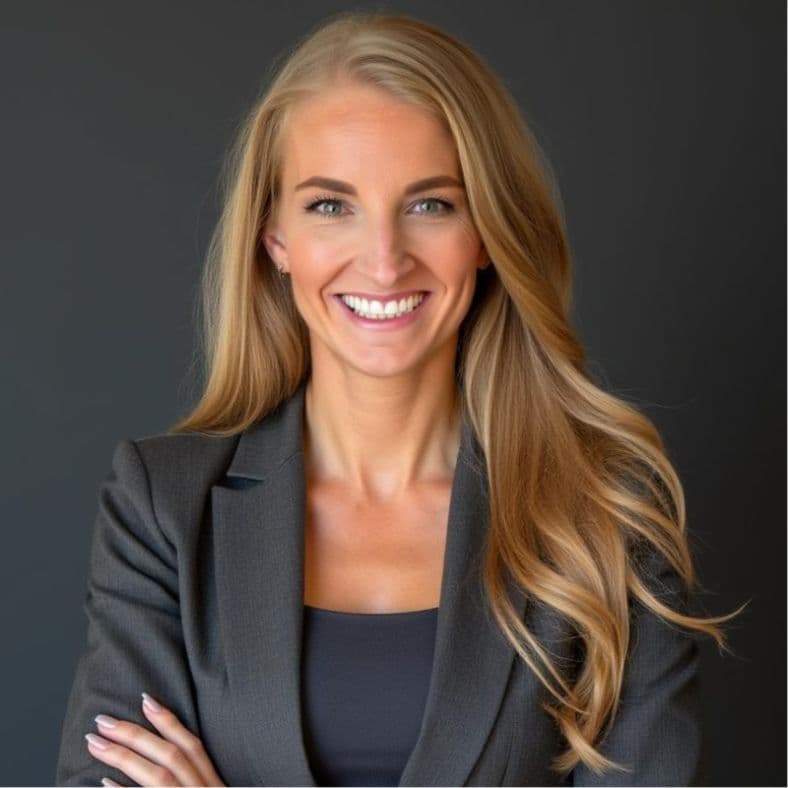
Full Transcript Introduction to Dr. Daniella Dennis 0:01 Welcome to the Startup Physicians podcast where we explore how doctors 0:06 lead healthcare innovation. Please like and follow our show to join our 0:10 community of physicians contributing to meaningful change. 0:15 Hi everyone, welcome back to the Startup Physicians podcast. This is your host 0:19 Dr. Allison Kerman and I am joined today by Dr. Daniela Dennis. Daniela is 0:26 actually in her residency training still, but is a very inspiring story of 0:32 a physician founder who's getting started even early in her training uh 0:36 building out her own startup. So Daniela, thank you so much for joining 0:40 me today. >> Thank you so much for having me. I'm 0:42 excited. So, I know we're kindred spirits in emergency medicine and I know 0:47 you are still in your residency training so early in your career, but I'd love if 0:51 you could share a little bit about your journey so far in like your your 0:56 training and what what triggered you to actually decide to start start a startup 1:01 during your intern year. Most people don't think to do that. 1:04 >> Yeah. >> Um and kind of where that's led. 1:06 >> Absolutely. Once again, thank you so much for having me on the podcast. To 1:09 all the listeners, I'm Daniela, born and raised in Connecticut. been here my 1:12 entire life. As you mentioned, I'm in my intern year of emergency medicine 1:16 residency here at the University of Connecticut. And just when I thought 1:19 things couldn't be busier enough, I decided to start a business called 1:21 Paycope MD where I'm using AI to hopefully make physician contracts a 1:25 little bit easier for people to understand, really identify key terms, 1:28 red flags, and also build out some salary benchmarking tools for 1:31 physicians. And it's been an interesting journey to this point to be honest. Like 1:34 it actually happened after match day. I was like, "Oh my god, I made it." Like I 1:37 accepted my number one program. I'm staying. And then I went through this 1:40 whole rabbit hole of like thinking about the future of like, okay, I'm gonna get 1:43 that big paycheck one day. Like residency, I'm gonna be making money. 1:46 I'm happy, but I'm like, I want that big paycheck one day. And I kind of just 1:49 went through like a whole nerdy like YouTube uh, you know, rabbit hole of 1:54 like learning more about physician contracts. And I realized like this is 1:56 actually very complex. And then I had a couple friends who were ahead of me who 1:59 were um, finishing up residency training and they're actually talking about like
The Idea Behind Payscope MD 2:02 how difficult it actually was in terms of reviewing contracts, negotiating, and 2:06 maybe not even fully understanding what their contracts were. And then I also 2:09 heard about some of the complications in terms of like even seeking out legal 2:12 advice, how expensive it can be. And so I kind of felt like this was like an 2:16 interesting kind of concept where you know once again this is supposed to be 2:19 like the biggest moment of your life signing your big contract but you're 2:22 still having all these hurdles and I just started thinking a little bit more 2:24 about the AI tools that are out there. We have chat GBT now cla so many other 2:28 tools where I'm like maybe using AI in a sense like this can maybe bridge the gap 2:32 and that's where the idea of paycope MD came about of like using AI to be more 2:35 of a tool not a replacement of course legal advice but more of a tool for 2:39 people to use to really have some type of element to review their contracts and 2:42 also have some salary benchmarking tools because I think another problem is in 2:46 terms of salary transparency of like how much should you be getting paid and 2:49 things of that nature. So that's what uh Pacecope MD is all about and that's what 2:53 I've been building. >> Absolutely. I think and obviously so 2:55 much has changed with AI even in the past few weeks like they have claude 2:59 coowork now and it's got like legal tools and there's all sorts of things 3:03 that are are really advancing but what you're talking about is also coupling 3:08 that with like a data set of like validated data of like how much should 3:14 the market be demanding and and how much should um you be um asking for with your 3:20 with your contract negotiation. I think that negotiation is something that like 3:24 a lot of doctors don't feel comfortable with and um I think some of it comes 3:29 down to um sometimes imposttor syndrome or just feeling like um you don't have 3:37 like a a a step up or like that you're 3:41 negotiating a lot of times you're negotiating against like a large 3:44 hospital system or someone and they're like nope this is just standard that's 3:46 just what we do. Um, and so I think that what you're doing is very much like it's 3:52 advocacy for doctors. It's a way to help empower them to feel like they they know 3:58 what sort of clauses they should be looking for and they know what they mean 4:01 and they know no I I shouldn't include that or I maybe I should ask for more. 4:05 But I am very curious like how the journey like so you start you said you 4:10 went down a YouTube rabbit hole. Is that all it took? 4:13 >> Yeah, a little bit. Yeah, it was just like I just started just googling. I 4:16 just Googled physician contracts and then to be honest when you Google 4:19 physician contracts it actually talks more about on the results page of like 4:22 things to look out for in contracts what people are missing and I realized like 4:25 there's so many articles talking about what's like wrong or things to miss that 4:28 I said oh this is actually a big problem and then I started using YouTube as a 4:32 supplement and there's so many tons of videos of people posting talking about 4:36 the difficulties navigating this world so I think that's what kind of sparked 4:39 the idea in my mind and I think what really confirmed it is when talking to 4:42 my friends who are kind of going through the phase of like yeah like I'ming out 4:46 to an attorney, but they're charging me $4,000 to review it or hey, like I still 4:50 don't understand what I what I'm signing or I don't even know who to go to if I 4:53 want to seek legally good advice cuz like I don't even like even for myself, 4:56 I wouldn't know necessarily off the top of my head of like oh yeah, this is the 4:59 person you would go to. So I think that kind of confirmed those things and just 5:02 made me kind of spark the idea a little bit more. And then from that standpoint, 5:06 it was just more of me kind of figuring out how to create this into like a type 5:09 of platform because as mentioned before, I don't really have a technical or a
Building an AI Startup Without a Technical Background 5:12 business background. And so that's when I started really leaning into of like, 5:15 okay, what do I need to learn about to even turn this into some form of a 5:17 prototype. >> I hear this a lot from physician 5:21 founders who are non-technical. Um, and by that I mean someone who's never coded 5:26 before or been part of a development team. I certainly would have placed 5:30 myself in that camp a few years ago, but now that I've been on, you know, 5:35 multiple different tech development projects, I I've seen how these teams 5:39 work. I've seen kind of the the processes and and a very very different 5:43 mindset about work product because in the tech space we really want to put out 5:48 not A+ work but like MVP which is your minimum viable product like what is the 5:54 first thing I can get out there into the world to be like testing and getting 5:58 feedback so that I don't go build some A+ product that's solving the wrong 6:03 problem or won't generate revenue or isn't what the market needs. So a very 6:07 very agile approach. But a lot of doctors I talk to they they have an idea 6:11 of of you know they have the same journey as you that they like see a 6:15 problem they can envision a potential solution and then they think oh but I 6:21 don't know what to do from there. Do I raise money because building tech is 6:25 expensive do I find a technical co-founder? Do I try and you know build 6:29 something on my own or make a prototype? I don't even know what to do about the 6:33 technical side of things. How did you approach that? 6:36 >> Yeah, so I ended up leveraging um AI tools and focused on no cold tools. As 6:41 you mentioned, the MVP is minimal. So really trying to focus on just trying to 6:45 get something out there. And to be honest, like even though I technically 6:48 built out this MVP, one of my biggest regret is not putting it out there 6:50 earlier. As you mentioned, I think it was a type A personality of like, well, 6:53 I need this to be perfect. I need this feature, but at the end of the day, it's 6:56 not about me. It's about what the users want. So like, you can think that 6:59 something's nice, but if they don't like it, then that's there's no point of 7:02 doing it. So once again, I think it's important to get it out there. But um to 7:05 answer your question directly, I use Lovable as a tool, which is actually 7:08 really great in terms of you taking an idea and you kind of write out your 7:11 prompts of what you wanted to do and you can be even more technical of different 7:15 things and elements that you wanted to build and it takes your idea in your 7:18 brain and puts it out there into an actual tangible product that people can 7:22 download, use, search, you can create websites off of it. And I know it's not 7:26 just lovable, there's so many other ones that are out there similar to that. So 7:29 where you can use to create platforms and products from so that's the approach 7:32 that I particularly use in that sense. And um I think that the interesting part 7:38 is that you you know the tools are adapting on such 7:43 a rapid manner that you're also um building different approaches within 7:49 your business model of like okay well if AI is going to like all of a sudden turn 7:52 something on overnight that can do a lot of the functionality that I thought I 7:56 was building well how am I still going to make it that my product is the 7:59 business model is very valuable and I think that's where it comes down to IP 8:04 and data and how you're actually pulling these things together. But that that was 8:09 one of my thoughts when you were when you were talking. 8:12 >> No, absolutely. I totally agree too. And I think it also once again like you just 8:14 mentioned like once again continue to iterate based upon user feedback, right? 8:18 This is the importance of like having a prototype out there because what you 8:21 have envisioned in mind may not be what the consumer actually wants. And so you 8:24 might need to go back to the drawing board and be like, "Okay, this is not 8:27 working. I need to add this or maybe this is working. How can I leverage this 8:30 a little bit more?" Um, so I think you have to be very open-minded to feedback 8:33 and criticism, especially at the MVP stage, especially as you're talking 8:36 about like potentially raising money and so forth. Like there's no point of 8:38 raising money if you don't even know where you're going to be using it for
Why MVPs and Feedback Matter in Startups 8:41 and where the elements you should be kind of focusing your time on. So I 8:44 think that's the important aspect of just having something out there to be 8:47 used. >> I feel like when I was in training, I 8:50 was like the word feedback like just like terrified me. I was like, "Oh my 8:54 god, I don't want feedback. like somebody's going to, you know, tell me 8:58 I'm doing a bad job or tell me they don't like my personality or tell me 9:01 that I'm too loud or, you know, they're just going to criticize me. And that's 9:06 how I viewed feedback. And then now in the now granted, I think I did have some 9:10 less than ideal ways of like having feedback delivered to me. So, I'm sure 9:15 we've all been there. But when it comes to the startup space, it's like that's 9:19 like what you thrive on. You have to get feedback from everyone possible that 9:23 could have an opinion on your product. And obviously you want to do it in a way 9:27 that's you know if you have some sort of IP you obviously need to have like an 9:31 NDA in place but if if it's actually like user feedback product feedback you 9:36 know if I build you know models for clinical models or whatever like you 9:40 need all the different people that could have a opinion on it to say if they 9:44 think it would work or not because that's your likelihood of success. It's 9:47 are you going to actually be able to see the blind spots? And the more people you 9:52 ask for feedback, the more blind spots you're going to be aware of. 9:55 >> Absolutely. Totally agree. I mean, honestly, even when creating the idea, 9:58 the first thing I did is email uh doctors that I knew. So, like I said, I 10:02 was lucky enough to train at the same place I did medical school at. And I 10:06 actually did a lot of research in a lot of different specialties. And so, I 10:08 leveraged that. I was like, "Hey, I knew a neurosurgeon, so I got his perspective 10:12 on it." Um, because he actually has an MBA and also does stuff in the startup 10:15 world. So, I kind of got his perspective. I talked to my program 10:18 director who's been super supportive of me and pretty much handles a lot of our 10:22 um chiefs and senior contracts and reviews them for them. So, I kind of got 10:25 his perspective and so I once again just continued to email people and kind of 10:28 get their perspective as well there too. Just once again keep getting feedback of 10:31 what would be good, what would not be good and just once again just trying to 10:34 get better every single time. in that iterative process of what you're 10:38 describing of like putting an MVP out in the market and getting feedback and 10:42 pivoting. I mean, sometimes you end up uh creating value in an area that you 10:48 weren't expecting or like the actual product morphs into something that is 10:52 more or different than what you were originally aiming for. I think a story 10:56 that I heard recently that demonstrates this is I don't know if you're familiar 11:00 with Slack. I'm sure you are. It's a messaging platform and it's very very 11:05 highly used in the um in the startup space. But when that I heard that when 11:11 that was developed, it was actually they were building a video game and they 11:16 needed like a way to message back and forth about the coding and they they 11:20 built this like kind of side thing app as a way to message and stay in touch 11:25 and and integrate APIs and stuff to be able to message about the video game 11:29 they were building. And that thing became the big valuable product. Like 11:35 that became the platform that ended up being the thing that took off and became 11:39 this multi-billion dollar business. I don't even know if they ever built the 11:42 video game like the first thing that they were trying to build. 11:45 >> I mean, especially at that point, you you you found your your money maker at 11:48 that point. So, you didn't need to have to focus on other stuff. But I totally 11:51 agree. You have to like sometimes be able to realize like, oh, like maybe 11:54 this is what I need to focus more of my attention on that you weren't originally 11:57 thinking. I think the other question that I wanted to ask you is that I get a 12:02 lot of questions from doctors that say either well I'm I'm near the end of my 12:08 career. I'm retired. Would there be a space for me in this in 12:12 this field or I'm at the beginning of my career. I'm not experienced. Is there 12:18 space for me in this field? Um, I think that that's um probably some limiting 12:24 beliefs and particularly when it comes to being a trainee and the idea of like
Why Early Career Physicians Should Build in Health Tech 12:30 are you experienced enough to be giving your putting your work out into the 12:35 world. I think that that's very much a limiting belief that can be imposed on 12:39 us when we're early in our training. And I'm curious to hear your thoughts on 12:43 like what you think about early career physicians doing this sort of work. 12:47 >> I think it's well needed. I think that even though yes we're very early on our 12:51 career you still see a lot of things and I think you still as a physician in 12:54 general whether you're early middle late stage you just have so much to really 12:58 give into the field I think the reason that we end up going to the field of 13:02 medicine and particularly in healthcare is because we see a problem like we want 13:05 to help people we want to take care of patients we want to address a problem 13:07 this is the reason we also pick the specialty that we want to go into to 13:11 attack certain issues right like you're in pediatric emergency medicine I'm in 13:14 more general emergency medicine at this time see so many things and this is kind 13:17 of like what sometimes leverage you to create some ideas and I think it's so 13:21 important and I don't want like limitations like well I'm too young or 13:25 oh I don't have the time to like limit me from doing those things because I 13:28 think there's a lot that you can really provide and I think now stepping into 13:31 like more of this health tech space you realize like a lot of the skills that 13:34 you have a physician trans uh translate really well into business right like we 13:38 know about time management we know about have to be efficient we know how to lead 13:42 teams right at the daily basis of a physician you're talking to nurses techs 13:46 respiratory whatever the case may and you start to realize like wait a minute 13:49 like a lot of this is pretty similar to what I do on a daily basis and I always 13:54 say this all the time is like business is not too complicated it's just 13:58 learning the language right it's just like how in medicine we say certain 14:01 jargon and words that to the everyday people won't make any sense but to us 14:05 would make sense and same thing with business when you get into the 14:07 terminology of cap tables and pivot charts and pitch decks these are just 14:12 terminologies that are used but once you got to learn the language and kind of 14:15 immerse yourself becomes second nature and I think That's just once again 14:18 everything just requires a learning curve and I think that's appropriate. 14:21 But yeah, I don't think like using your age, your time, how early or late you're 14:24 in your career should kind of um stop you from getting into what you want to 14:27 get into. And the other thing is that people in 14:31 industry are just people. Like I remember times that in my like early in 14:37 whether it was like with um what was it called when you had like fake patients 14:41 like practice standardized patients? Yes. Oh my gosh, I'd be so nervous. 14:46 Like, oh my gosh, I'm gonna sit down. I'm gonna like practice my history 14:49 taking or even like in my training, there would be times that I would be 14:54 nervous about going in and talking to people about something because it was 14:58 like kind of different and I didn't know the answers. And but then now that I've 15:03 been practicing for a while, it's just like, oh well, it's just, you know, just 15:06 a patient, like just a parent. And I think that when it comes to the space 15:10 with like tech vendors and a venture capitalists and you know people who you 15:16 fund raise for and like all of these different types of people that we just 15:20 as doctors maybe don't have a lot of experience talking to people like that. 15:25 It can be very intimidating and doctors could be like oh my gosh I wouldn't have 15:29 I wouldn't know how to talk to a venture capitalist. And like I mean it's just 15:32 like talking to a human cuz that's what they are. And then I'll bring them with 15:36 me to like a health tech conference. they'll be like, "Oh my god, there's so 15:39 many people that are all looking for doctors as adviserss like and they're 15:43 just nice, friendly people." I don't know. That's just something that's 15:47 struck me as I've talked to different physicians who are maybe hesitant to 15:53 enter this space is it feels really foreign. 15:57 >> Yeah. I think everything you start is going to be pretty scary. Like even for 15:59 myself, like I'm more introverted at nature and I realize in business you 16:02 can't always be that introverted. You're going to have to put yourself out there. 16:05 But when you do put yourself out there, you will be very surprised of like the 16:08 feedback and the support that you get. So for me, in terms of like how I've 16:12 been kind of navigating this space to know people is actually through Tik Tok 16:15 um and put myself out there, I made one Tik Tok video talking about Pacecope MD 16:18 and the amount of physicians that I actually ended up connecting with who 16:21 are now like business mentors for me, people I reach out to in terms of tips 16:24 and advice all because of one video or one LinkedIn post that I made and people 16:28 tagged me into certain things and now I go to different events that people um 16:32 recommended me to. And so once again, you'll be surprised by if you don't put 16:34 yourself out there, you never know what you'll be able to get. 16:38 >> I think people think of it as like, oh my gosh, they're probably like really 16:41 they're like sharks and all this stuff. And it's like everybody's just like, 16:45 >> in my experience, just a pretty optimistic and supportive. Like there's 16:49 really no one more optimistic than founders because you're like, "Oh yeah, 16:52 I'm going to risk this thing and do this thing because I have this creative idea 16:56 that is definitely going to work. I think it's going to work." And I think 16:59 that there is a space for that that optimism and that creativity that we 17:04 just don't get that in our day-to-day clinical work. It's not that know we're 17:08 not optimistic in our day-to-day. It's just it's kind of a more routine. The 17:12 practice of medicine is not inherently creative, which is which is fine. I 17:18 mean, I think we train to be really highly skilled in delivering healthcare. 17:23 But I think there's something more for people who, you know, we all have ideas. 17:28 It's just a matter of whether or not we're going to we're going to pursue 17:30 those and chase those down. >> 100% agree. Yeah. I I think all of us 17:34 are creative in our own ways. I think it's just finding the mediums and spaces 17:38 to be able to unlock that and just having the space and opportunity to do 17:41 that. And I think that's the really the key driver. It's just feeling as though 17:44 you have the space to really kind of tap into your more creativity. 17:47 >> Yeah. Um well what advice would you have for other physicians whether they're
Advice for Doctors Who Want to Start Something 17:53 early career or any phase in their career who are considering something 17:57 like this? I would say just get started whatever the case may be whether it's 18:01 just doing your own research on a topic like let's say you have the idea you 18:04 know in business you hear about the whole idea of like market research like 18:06 figuring out like okay what is my competition has anything been built like 18:10 this before if so what can I do differently so even just starting little 18:14 by little um it was funny I was actually talking to my program director about 18:16 this like hindsight is 2020 but I'm like I wish I came up with a business idea as 18:20 a medical student like as medical students especially like in my fourth 18:23 year like you're just so scrappy you know like some of my my friends were 18:27 like doing tutoring ing services, you know, whether it was doing like cleaning 18:31 services, whatever the case, you're just so scrappy. You just come up with so 18:34 many ideas on the fly to like save money or make money that I'm like, "Wow, like 18:38 I wonder if I would have like tapped into more creativity as a medical 18:41 student. That would have been really cool." And like now the new wave of 18:44 social media and content to where that's becoming a business within itself. Now 18:48 you have the whole term of like med influencers and and it's the reason it's 18:52 because like I said you can leverage these things nowadays where I'm like 18:54 yeah like I really wish like I would even got in started earlier and I know 18:57 I'm still early into getting involved into this process. So I love it. Um but 19:01 I think definitely in general like I think just get started and don't let 19:04 like your thoughts or anything kind of impede you from there. 19:08 >> One of the things that I encourage people who are like I have this idea I 19:11 want to pursue it but it's like you're not quitting your job to do this right 19:15 now. I mean, you're like making a Google doc. Like, it's just like it's so low 19:19 risk. It's like there's nothing that could h and maybe you're reaching out on 19:22 LinkedIn and the worst thing that can happen is somebody just like ignores 19:25 your message. >> Yeah. 19:27 >> But the other thing about early career physicians that I think is so great is 19:31 that you're not like seeped in the bureaucracy of like the way things have 19:36 always been. Like you can have this fresh perspective of like coming in and 19:41 be like, why would we why would we do it that way? Like it's just kind of so 19:45 obvious with fresh eyes that like maybe there's a better way to do this and a 19:49 lot of what we've maybe done forever is archaic and it's it's built into the 19:55 system. It's a systemic thing and sometimes it does take that fresh 19:59 perspective or that brand new perspective to be able to say like hey 20:03 like we could totally do this differently. Yeah, I totally agree and I 20:06 think I I feel like as physicians you hear that statement all the time of like 20:09 why do we do it this way or they get frustrated by the way that they do stuff 20:12 but we never change it because I think we just become so complacent and we kind 20:16 of work within certain protocols certain metrics and we just follow it and 20:20 sometimes don't even question it and I think that's where the creativity taps 20:22 in of like okay like step you know take a step back and be like okay can we do 20:26 this thing better more efficient is there an alternative that we could 20:30 really approach um and I think that's where the best ideas really come from is 20:33 really start to question why things are the way that they are instead of just 20:37 kind of just doing the status quo like you mentioned. 20:40 >> My funny training story is that like I remember being really disillusioned with 20:45 the emergency department as a fellow and I was like we have to do better. Like 20:51 there are all these kids that are not having access to the care that they 20:54 need. there's all these social determinants that are, you know, 20:56 preventing them from getting the care that they need and then they end up here 20:59 in the ER, which is like the worst place to get care for like chronic conditions 21:04 or, you know, preventative care stuff. It's just and I remember when I somebody 21:08 in my program who asked me to share some of my thoughts on like what sort of 21:14 research project I would want to do, I said, you know, I'm really interested in 21:17 more population health. um you know, how can we help or even measure or do some 21:22 sort of a study to identify like what are the reasons that kids come into the 21:27 ER for non-emergent reasons like because it's clearly an access problem. Um and 21:31 whether that would be like a you know just like a study approach or you know 21:36 trying to get more information as a first step he looked at me and said you 21:41 are never going to be able to solve that problem. This is a given in our field 21:46 that you will always have a waiting room full of kids that do not need to be here 21:51 and I'm afraid you're gonna burn out if you put yourself in a place where you 21:56 want to change that cuz it's just never going to change. And I was like, okay. 22:02 He's like, so you really should not be doing research on that because it's just 22:06 literally never going to change. And and quite honestly, like that's ridiculous, 22:11 right? Like I did build a company that like one of our biggest metrics is that 22:16 we have decreased emergency department visits by this like drastic amount 22:20 because we're going way upstream. We're giving more resources to families. We're 22:24 making sure they have what they need to keep their child healthy. And it's a 22:28 systemic thing. It's a population health thing. But I just want to encourage 22:33 physicians who are earlier in their career who have big ideas to change 22:37 something or that you think the system should be differently. Like don't let 22:40 anyone tell you that there's no way you're ever going to change that cuz 22:44 everything is changing. Everything is changing constantly. 22:48 >> Absolutely. All the times everything is changing. I mean on a day-to-day basis 22:51 like even how we think about AI, the way that we think about where we're getting 22:55 our information from just changes drastically on a day-to-day basis. So I 22:58 think once again it's another prime example to like just get started. 23:02 >> Yeah, absolutely. Well, I would love to encourage anyone listening to check out 23:09 the website. It's www.get-paycope.com 23:14 if you are interested in trying out Daniela's uh product and we will also 23:20 link to her podcast in her LinkedIn in the show notes. But if this was 23:25 inspiring to any of you, if you're thinking about getting involved in an 23:29 advisory capacity or even as a founder, I would really encourage you to check 23:34 out our website at startupphysicians.com. 23:38 We have a number of free resources on there and also a number of programs. So 23:42 we have our foundational launchpad program which is a how you can build 23:46 your advisory practice in 90 days or less. That is a great way to get started 23:50 and get involved and you could get involved in a lot of different concepts 23:54 that way. And for founders, people who have an idea and say like I really think 23:58 I could do something with this. We have an incubator program that we'll be 24:02 launching this spring to really put a ton of support and guidance and 24:07 resources around physician founders to help you get your product to market. I 24:12 just want to thank you so much Daniela for joining me and I am really excited 24:17 to have people check out your product. >> Thank you so much. I appreciate your 24:21 time for having me on the podcast. >> All right everyone, we'll see you next 24:25 time. Thanks for listening to the Startup Physicians podcast. This 24:29 community was built for doctors who want to contribute to the future of 24:32 healthcare. We offer support for physicians who are ready to make the 24:36 next step towards building the career they've dreamed of. Visit 24:40 startupfysicians.com to learn more. And if this episode 24:45 resonated with you, share it with another friend who needs to hear it. 24:49 Let's change the future of healthcare together.
Comments