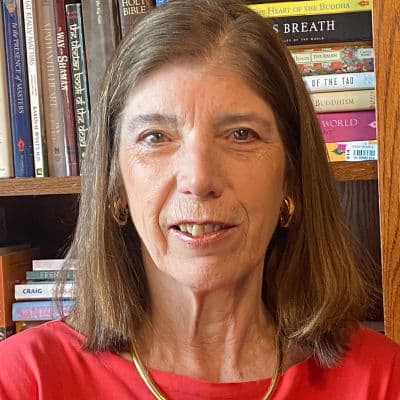
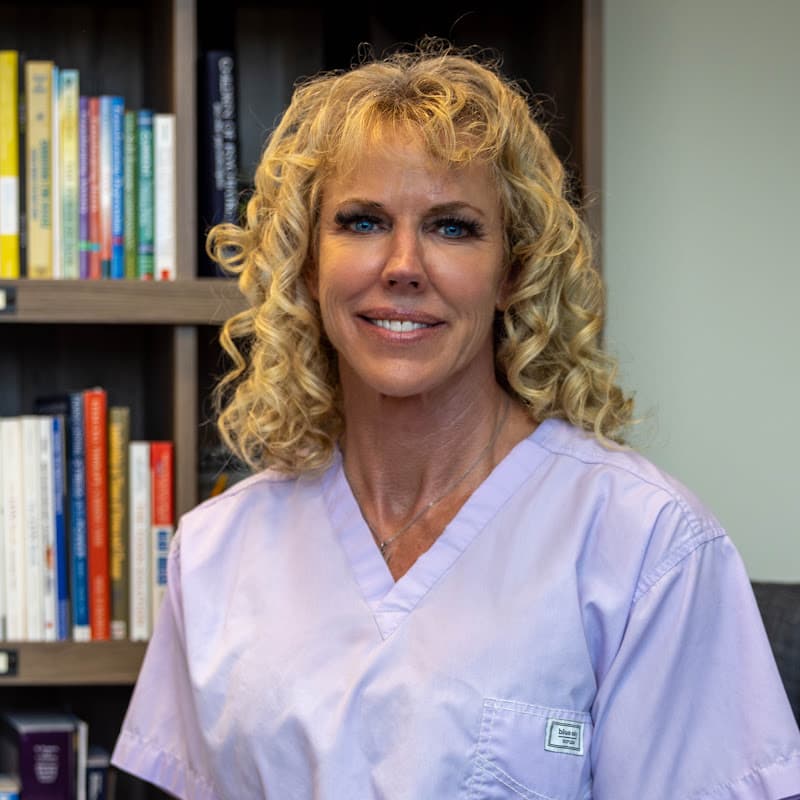
Full Transcript Introduction to Women's HealthSpan Voices 0:00 It's all about kind of reducing your everyday toxic burden, because we're just surrounded by so much toxins in the environment, 0:08 whether that's food, air, water. 0:11 It's just being a little more aware of where the risks are and how to reduce that. 0:17 So I do have a five-part series. 0:20 in the podcasts that talk about how to reduce this. 0:24 Have you made it past menopause or are you going through it now? 0:27 I'm Dr. 0:28 Pat McShane and on the Women's Health Span Voices podcast, I'll guide you through the health challenges of the menopausal years and beyond. 0:37 Guiding the way to thriving in this powerful era of your womanhood. 0:41 Hello and welcome. 0:43 I'm Dr. 0:43 Pat McShane and this is Women's HealthSpan Voices and today I have a very special voice with me Dr. 0:51 Julia Ward who has a background as a physician and she's going to tell us a little bit about her path and how she got into more of a functional medicine 1:05 holistic practice via a couple of spots along the way and was practicing primary care when she experienced the fact that many of her patients were coming
Dr. Julia Ward's Medical Journey 1:16 in with very similar issues and weren't getting helped by the kinds of conventional medicine approaches that she had been trained in. 1:25 And then Dr. 1:26 Julia, maybe you could tell us a little bit about how you transitioned. 1:30 You can give us more on that background and then how you transitioned into functional medicine. 1:37 Yeah, absolutely. 1:38 Thank you so much for having me. 1:40 So sort of a non-traditional background. 1:43 I started off in OB-GYN. 1:45 I was in the Navy. 1:47 They paid for medical school. 1:48 And then at the time we would go out in the field after internships. 1:52 and do some time in the field and then come back and do a residency. 1:57 I ended up not doing the residency for OB-GYN. 2:02 I transitioned to anesthesia, but then from there did more primary care. 2:08 So I was doing mainly primary care work for the bulk of before I started functional medicine. 2:15 By the time I was like 45 or 46, I was getting a bit burnt out with feeling like I wasn't making much of a difference, just seeing some of the same things 2:24 over and over again, just prescribing the medications for the symptoms, and it just seemed to not get much resolution. 2:33 But when I started feeling some changes of hormonal transition myself, and I never really had hot flashes or night sweats, 2:44 my main symptom was fatigue. 2:46 And it was just really debilitating fatigue where I would be falling asleep, driving to work in the morning like this. 2:53 And then this is after a good night's sleep or what I thought was a good night's sleep. 2:56 And when I started looking for answers in how I was trained or when I went to my GYN, I just wasn't finding any answers for that. 3:05 And so I started researching and exploring bioidentical hormone replacement. 3:09 And through that, I found functional medicine. 3:14 And you're still a big vicinity for bioidentical hormones for many, if not most of your patients, I would say, based on our conversations. 3:23 Yeah. 3:24 It's been a total game changer for myself. 3:27 Once I got on to the correct form of bioidentical hormone, it made all the difference.
From Burnout to Functional Medicine 3:32 Like I felt like myself again, I wasn't falling asleep in the middle of the day or in the morning. 3:38 I felt like I had regular, you know, my energy and my mental clarity back. 3:42 So it was for me a huge change. 3:46 And so that's, you know, I started off mainly doing bioidentical hormones and The more I learned about different aspects in functional medicine, 3:57 there's just so many little avenues that you can go down with functional medicine. 4:02 I think that's the exciting thing. 4:03 There's always new stuff to learn. 4:05 Learning about gut health and detoxification, all that was huge as well. 4:12 And we're going to come back and talk about the toxicity of our everyday life in a couple minutes, but I wanted to just pursue the concept of hormone replacement, 4:23 bioidentical hormones for a little bit. 4:25 Is there an age cutoff after which you would tell a woman who is well into her menopausal years that she should no longer be on hormone replacement therapy? 4:37 Or do we not really know the answer to that? 4:41 would you say? 4:42 So I treat my patients like I would want to be treated, like I want to treat my family members. 4:48 And I don't ever want to say, OK, you've hit this birthday, and so now we have to cut you off. 4:55 So now the aging process is really going to accelerate. 4:58 And so I don't have a cutoff. 5:01 I feel that women should stay on bioidentical hormones until they decide it's time to stop. 5:07 But I think there are just so many health benefits to being on them that I wouldn't want to cut that off for myself, and so I don't require my patients 5:15 to do that. 5:17 Yeah, I think that the data is coming in more and more, although it's going to be a while till we know this, I think, confidently, 5:26 but that there's no automatic cutoff time, and there's even the conditions that we used to consider to be contraindications to certain kinds of hormone replacement. 5:39 such as vaginal, such as breast cancer, are going away as reasons to not have somebody on the hormone replacement for their vaginal symptoms often need 5:54 support for. 5:55 What other kinds of things would you say in your practice have you seen with most or many post-menopausal women that you feel like you could help out with? 6:09 what kinds of complaints or medical issues. 6:12 Certainly with, you know, women who are hormonally balanced, have a lot more energy, they're sleeping better, they have less joint pain, 6:21 they have clearer thinking, they just, they have more sex drive, they just feel better all around. 6:28 Memory is better, everything.
Bioidentical Hormones and Menopause Care 6:32 That's good to hear. 6:34 Do you have a lot of women in your practice who have the kind of very conventional medical issues of high blood pressure, 6:43 cholesterol, diabetes and obesity, which I guess are kind of the big four? 6:48 Yeah. 6:51 I do have some, certainly, and I like to work on those issues more from a root cause perspective. 7:01 If they have diabetes, let's look at the diet, let's clean up their diet and get them on some natural supplements that help regulate blood sugar. 7:11 get them moving, you know, that's an important part too. 7:14 Like, what are you doing with your exercise? 7:17 And high blood pressure, you know, same thing. 7:20 You really have to kind of take a holistic viewpoint. 7:24 It's not just, here's your prescription for a blood pressure medicine. 7:28 It's like, let's look and see why your blood pressure is elevated. 7:33 We have a special scan in our office called the glyco check. 7:37 which is a non-invasive probe that goes under the tongue. 7:41 It's like a high-powered video microscope. 7:44 And it looks at the health of the microvasculature, the tiny capillaries that are supplying your tissue, your organs, everything else. 7:54 And it's looking at how many of those tiny capillaries are functioning in a square area under your tongue. 8:00 But it's also looking at the lining that coats the inside of all of our blood vessels called the glycocalyx. 8:07 And so these two components, it's amazing the technology of this that it can measure all this, but it puts everything into an overall microvascular health 8:17 score that we can then, you know, obviously we're measuring and then we can put you on a natural supplement that will help regrow that glycocalyx lining. 8:27 And then you can remeasure that, retest that a few months later and see a difference. 8:32 But just improving somebody's microvascular health score can help normalize their blood pressure. 8:38 It can help improve their kidney function. 8:41 It can help clear up brain fog. 8:43 So just by increasing, and it makes sense, you increase the blood perfusion everywhere, you're going to get better results and better health. 8:51 Absolutely. 8:52 Yes. 8:53 And people will feel much better. 8:56 Yeah. 8:56 Yeah. 8:57 Yeah. 8:57 How people feel. 8:59 So that's one way that you would address the issue of trying to find the root cause of things. 9:05 And I imagine another one is just a lot of talking to people about what's going on in their life. 9:12 Maybe you could tell us a little bit more about that. 9:15 Yeah, it's important to get a really detailed health history about what's going on. 9:21 Everybody has different stressors and different levels of kind of toxic load, if you will. 9:27 Here, I'm in the Houston area, and we're in a very humid environment. 9:32 There's a lot of flooding that goes on, and so consequently, I do see a lot of mold and mycotoxin illness. 9:38 and that can really have a major impact on people's health and the issues that they're dealing with.
Root-Cause Approaches to Chronic Conditions 9:46 What kind of symptoms are typically associated with the mold exposure? 9:51 The mold, they can have things like chronic fatigue, brain fog, they can have this mast cell activation syndrome where they're getting a lot of hives and 10:00 skin rashes that get triggered from a variety of different things that maybe they're chemically sensitive. 10:06 So there's just a wide variety of mold illness symptoms like that. 10:12 We have an extensive health questionnaire specifically for that. 10:17 We always start with the mold questionnaire that was developed by Dr. 10:22 Jill Christa and Dr. 10:24 Neil Nathan. 10:28 Can people see you remotely or do they have to travel to the Houston area to see you? 10:34 As long as they're in the state of Texas, I can see them. 10:38 Okay. 10:39 There's a lot of people in the state of Texas. 10:41 I don't know about our audience. 10:45 Let's move over and talk about toxicity and the toxic environment and, you know, that seems to be at the root of a lot of non-specific symptoms that people have. 10:58 And you yourself in the Doctor Talks series, and I imagine in your Spotify and iHeart radio iPods or podcasts as well have a series of talks on the toxicity, 11:12 so people can look into that if they want to go in depth. 11:16 But maybe give us kind of the brief, the elevator speech on toxic burden for older people, especially older women. 11:25 Yeah, it's all about kind of reducing your everyday toxic burden because we're just surrounded by so much toxins in the environment, 11:34 whether that's food, air, water. 11:38 It's just being a little more aware of where the risks are and how to reduce that. 11:43 So I do have a five-part series in the podcast that talk about how to reduce this. 11:50 So, you know, it's things like making sure that you're drinking filtered water, eating clean organic food, and it doesn't have to all be organic. 11:59 You know, we have, there's a list of the clean 15, the dirty dozen, that type of a thing that you can do. 12:05 It's getting rid of plastics in the kitchen. 12:08 You know, we used to do a lot of food storage in plastics and now, you know, we've kind of replaced the plastics in our kitchen with either glass. 12:17 or wood, but something that's not going to leach microplastics into the food. 12:24 And air purifiers, are you a big advocate? 12:27 Air purifiers, yeah, in the home too. 12:29 That can make a huge difference. 12:32 And yeah, we don't realize how much time we actually spend indoors and the indoor air can actually be worse air quality than what's outside. 12:40 So air purifiers are really helpful. 12:43 Yeah. 12:44 And if we buy a new mattress or bedding or things that are off-gassing chemicals, you know, again, if you're going to do that, 12:54 you might look online and see how you can prevent some of that exposure as much as possible.
Mold, Toxic Burden, and Detox Support 13:01 Yeah. 13:03 Well, I encourage our audience to pursue that because it's probably very important. 13:10 I think right now we don't really have good data about the impact of all of this, but I'm sure anecdotally you've had patients who have felt much better 13:21 when they did something about their toxic burden. 13:23 Maybe you could give us a little story about that if you have one on the top of your head. 13:30 Yes but most of our patients who go through like we have a very gentle kind of detox program that's kind of a modified elimination diet but then also taking 13:40 some supplements that are helping to open up their detox pathways in the body generally are feeling much better even after just a couple of weeks of being 13:49 on this. 13:49 Yeah that it definitely makes a big difference. 13:52 I can tell you you know one One lady told me that even just shampooing her carpet and getting the dust out of the carpet made a huge difference with her 14:03 sinus congestion issues and her allergies. 14:06 Yep, we don't think about things like that, but yeah, could make a big difference. 14:12 And you're not going to find that out with the average medical appointment of 20 minutes, you know. 14:17 No, yeah. 14:19 But if you're in your practice, you probably push people to give you those answers or at least to explore them themselves. 14:27 So that's good. 14:28 Yeah, absolutely. 14:31 Well, what advice would you have for menopausal women to avoid some of the issues that they come into your office with? 14:42 I would say if you're experiencing hot flashes and night sweats, it is important to get your hormones measured, see where they are, 14:50 and look into some bioidentical hormone treatment, whether that's cream therapy or pellet therapy, just something to get those balanced. 14:59 But you can also get rid of hot flashes and night sweats just by lowering the sugar in your diet. 15:06 I had one patient who just went absolutely sugar-free. 15:11 and said she completely eliminated her hot flashes and night sweats. 15:16 Wow. 15:17 Yeah. 15:18 So making sure that your diet is, you know, avoiding sugar is really important. 15:24 Exercise or movement is really important as well. 15:27 I feel like the human body was just meant to move. 15:31 And the minute we stop moving, things just start shutting down, you know? 15:37 You really need that movement to keep everything going. 15:41 Yep. 15:41 That's how we evolved genetically. 15:43 We weren't evolved to be sitting in front of our computers or our phones all day long or driving around in our automobiles. 15:52 So I totally agree with you. 15:55 That's kind of the secret sauce to being healthy and to a lot of other pieces of it. 16:01 It helps our sleep. 16:02 It helps our stay in the right weight range, et cetera. 16:07 So. 16:07 Yeah, I think I just heard of a recent study where they showed that walking is just as effective as taking like an SSRI. 16:15 So, you know, why wouldn't you, you know, do something natural like walking because that's going to benefit you physically as well as mentally. 16:25 Yeah, and grab a friend on the way out the door if possible. 16:29 Yeah, being together. 16:31 Yeah. 16:32 Yeah, absolutely. 16:35 Anything else you would like to say to our menopausal audience besides bioidentical hormone at the first sign of issues or getting checked and then consider hormones? 16:48 Yeah, we definitely recommend checking out bioidentical hormones. 16:52 I know that for a lot of women, they think of hormones in a negative connotation like, oh, don't those cause cancer?
Lifestyle Tips for Menopause Health 16:59 And I think there's been a lot of misinformation in the past about Traditional hormones which are synthetic coming from, 17:07 you know, horse urine versus bioidentical, which are chemically identical to what your body produces. 17:15 So they're completely different. 17:17 And the synthetic, you know, horse urine estrogen is, has been shown to be significantly more dangerous. 17:25 And I think that's where hormones in general get their bad reputation. 17:30 And taking something by mouth is a totally different experience for your body than some kind of application on your skin or vaginal, 17:39 etc. 17:40 So that's another piece of that whole puzzle, and I agree with you that we've been through. 17:47 decades of basically poor treatment for women based on what turns out to have been faulty information to some extent. 17:56 And also just that what was available for, for hormone replacement at the time is not what we have now. 18:03 So times have moved on and I totally agree with you. 18:07 Yeah. 18:07 Yeah, even in years past, when you think about the birth control, when the birth control pill first came out back in whatever decade that was, 18:16 it was significantly higher amount of synthetic estrogen in there. 18:20 Taking estrogen in a pill form causes a lot of liver inflammation, which then leads to a lot of side effects. 18:27 Fortunately, they decreased the dosage over the years, but I think it's still not ideal to be taking estrogen in a pill form. 18:37 Yeah, if you have other alternatives that are good. 18:41 Yeah, yeah, absolutely. 18:43 Yeah, yeah, excellent. 18:46 Well, Dr. 18:47 Julia, this has been wonderful information. 18:50 Thank you for filling out pieces of the story for women who are going through menopause and in their menopausal years.
Closing Remarks and Contact Information 18:59 And if people would like to get in touch with you, how should they do that? 19:05 My website is drjuliaward.com. 19:09 Okay. 19:09 Great. 19:09 Yeah. 19:10 Great. 19:11 And if you find this kind of information useful, please like and subscribe and tell your friends and give us a review and that will help us to have better 19:22 recognition in the marketplace out there. 19:24 So thank you so much for being with us today and we hope to see you again soon. 19:29 Thank you. 19:29 Thank you. 19:30 Thank you very much. 19:31 Thanks for listening to the Women's Health Span Voices podcast. 19:35 If today's episode spoke to you, follow the show and share it with a friend ready to take charge of her health and please leave a review. 19:44 It helps more women find us.
Comments