Shot, Stonewalled, Still Standing: The Inventor Who Turned His Diagnosis Into a Mission

The Deeper Healing Podcast
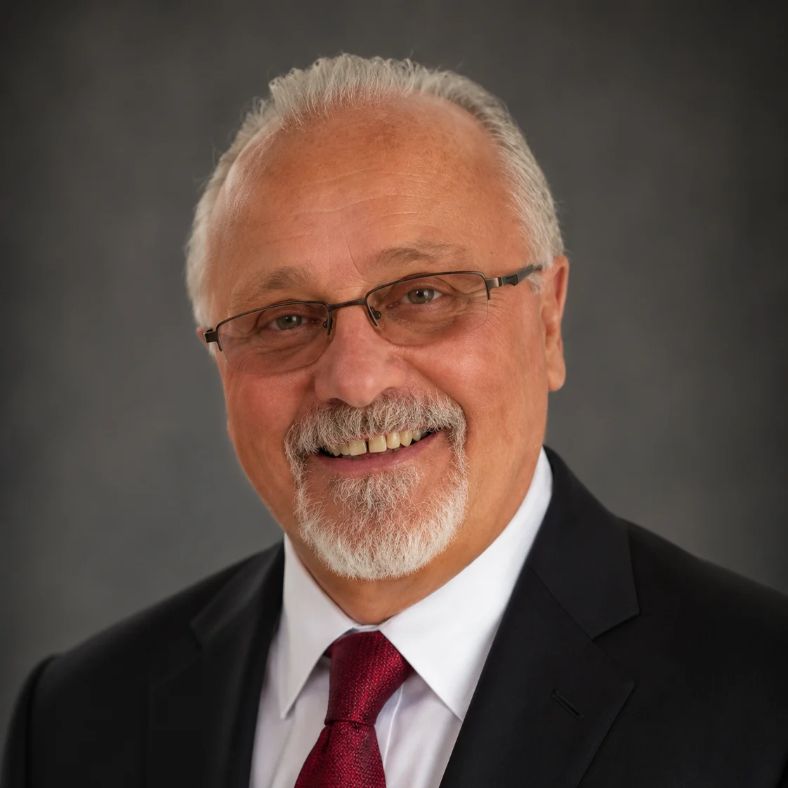
Inventor & Founder of ValAsta
Sam Sheperd survived a shooting.
He went toe to toe with government agencies.
He fought years of legal battles over his own inventions.
None of that was the hardest problem he ever faced.
The hardest one showed up in his own bloodwork.
Sam is an engineer, and for decades he solved problems most of us never think about. He is the named inventor on numerous U.S. patents, spanning natural gas processing, wastewater and sludge treatment, algae cultivation and harvesting, and astaxanthin compositions. Then a diagnosis of polycythemia vera, a rare blood disorder, turned all of that brilliance inward. The question was no longer how to fix a system. It was how to understand his own.
Sam says his doctors told him his disease was terminal and that there was nothing more they could do. He found himself in the darkest corner of his life, and he is honest that he thought about ending it. Instead, he did what a brilliant engineer and physicist does. He pointed everything he knew at the one problem he couldn’t walk away from.
So he did what engineers do. He started researching.
That question led him to astaxanthin, a deep-red carotenoid made by the microalga Haematococcus pluvialis and one of the most widely researched antioxidant compounds in nature. It also led to ValAsta, the astaxanthin product he went on to invent and develop.
In this conversation, Danielle Howley sits down with Sam to hear the whole story, in his own words: the engineering career, the diagnosis, the years of research, how he describes the thinking behind his formulation, and his views on oxidative stress, free radicals and inflammation. Sam also opens up about the harder chapters, including the patent battles, his dealings with government agencies, the 2019 shooting, and a chance meeting with a cardiologist, and about the faith that kept him putting one foot in front of the other.
It is a story about curiosity, stubbornness and what one person will do when the answers aren’t handed to him.
Deeper Healing now carries ValAsta. Ask your Deeper Healing provider whether it may be a fit for you, or find it in our ONLINE STORE.
EPISODE DISCLOSURE
Sam Sheperd is an inventor and engineer and the founder of ValAsta. The views, experiences and product descriptions he shares in this episode are his own. Sam was not compensated for appearing. Deeper Healing™ carries ValAsta in our clinic and online store and may earn revenue from its sale.
This episode is educational and is not medical advice. Sam’s personal health story reflects his own experience; individual experiences vary, and one person’s experience is not evidence that a product works for anyone else. Statements about dietary supplements have not been evaluated by the Food and Drug Administration. ValAsta, astaxanthin and the other products discussed are not intended to diagnose, treat, cure or prevent any disease. A patent is a legal grant for an invention; it is not FDA approval or clinical evidence of safety or effectiveness.
If you are living with cancer, polycythemia vera or any other medical condition, please do not start, stop or change any treatment based on this episode. Talk with your own qualified medical provider before adding any supplement, especially if you take prescription medication.
This episode includes a brief mention of suicidal thoughts. If you or someone you love is struggling, call or text 988 to reach the 988 Suicide & Crisis Lifeline (U.S.), available 24/7.
Full Transcript
So in 2019, I was asked to go to Washington and testify in front of a bunch of senators and congressmen. And he said, no, you just need to away. They're going to put this in the closet and we're never going see it again.
I'm in my front yard hanging Christmas lights around my tent. Well, the moment I reached back, my fence exploded. That's what my chest would have looked like.
The bullet went underneath my armpit, missed me by four inches. You had an attempted assassination. I've got 17 cases just like yours. He said you're my only survivor.
These guys are shot in the head, ruled as suicides, and they're finding them in hotel rooms with bullet holes in their brain. Sam, I'm in shock. And I said, how do you stop this?
He said there's only one way. You have to go public with everything you know. Welcome to the Deeper Healing Podcast. I'm your host, Danielle Howley. This is for everyone who's been dismissed, misdiagnosed or told to just live with it and refuse to accept that answer.
you're going to hear amazing patient recovery stories, raw and real in their own words. People who found answers after everything had failed them. You're going to hear from medical experts we trust that are pioneering new approaches to healing the body because we deeply know we're designed to heal.
Let's dig in. Everybody, I am so excited about today's guest. We have Sam Sheppard here. He is just one of those. brilliant, curious people that is just persistent.
So he is the brilliant inventor and founder of Velasta. He's a brainiac, a physicist, an engineer, researcher. His work spans chemistry, environmental science, and biomedical engineering.
All of this came together in 2003 when he faced a rare bone marrow cancer himself and he turned all of his brain power and his scientific mind toward his own health and developed a patented form of, can I say it?
Thank you. And today we're going to dive into his incredible origin story and how Velasta can help all of us. So, and it fits so beautifully in with what we do at Deeper Healing.
Sam, tell us how you got here. Well, it's been a journey and you pick up something along the way, I guess. But I was a researcher. I worked in the petrochemical industry for a number of years in polymer kinetics and in production of polystyrene, polyethylene, PVC.
And so I did that for, for number years. Then some of the more difficult projects. I was asked to take a peek at, with the Department of Defense, some of the EPA problems with dealing with sewage sludge and trying to mitigate the infectious disease associated with land application of sewaged sludge coming out of wastewater treatment plants.
So I had done that in the late 80s, early 90s. There were 23 of us that were asked, to join what's called the Lunar Outpost Commission. to figure out how we could go from Earth to Mars.
And we did it via Earth-to-Moon, Moon- to-Mars, successful. I had two projects during that period of time. One was to find out to generate electricity on the Moon with no moving parts and only use the natural resources of the moon.
And the second one was how to engineer controlled directional detonation to make troughs in the regolith or the moon's lunar surface so that we could drop in laboratories and habitats, cover them up and protect the astronauts from radiation exposure.
So we put all those programs together. Everyone had different projects from materials to design to medical. Well, the medical department was the last one.
We had a three-day symposium and the Medical Department made a final presentation and determined that no one would survive the radiation exposure going to Mars.
So the project ended. It was codenamed Artemis. And I think that's what Elon Musk actually picked up those same volumes of information that we generated during that period.
But after that project, then I worked on the development of electromagnetic pulse weapons, auditory weapons. I became a class. Class III certified in Homeland Security on weapons of mass destruction under what's called COBRA, Chemical Ordinance Biological and Radiological Armaments.
And I may have gotten a little too close to something. And I was having some difficulty maintaining my blood pressure in the normal range. We tried medications first, failed miserably.
It was as if it had no effect. They thought I had heart disease. So I went in for all the coronary testing and it all came back negative. And then I received a phone call late on a Sunday evening that the doctor wanted to see me at 730 Monday morning.
So he wheeled up with his little chair with wheels on it and put his hands on my knees and said, I got some really bad news. And I said what's that? He said you've got polycythemia vera.
And I didn't have a clue really as to what type of cancer that or what it was. And, I said, what is it? And he said it's an incurable bone cancer. Your stem cells in your bone marrow are completely out of control.
You're generating too many red blood cells. Typically, we would produce three to six million every day. I was doing 30 to 70 million everyday. It was out of control.
So my blood was like ketchup. My heart was pounding, my pressure was high trying to pump blood through my arteries. And the only temporary solution we had was through phlebotomies.
I asked him about chemo and radiation and he just shook his head no. That was a little disheartening and it hit me pretty hard. I can only imagine. So you're getting told your terminal, there's no treatment for you.
And you are doing a temporary measure that's not lasting. So I was phlebotomized every month and that was just to keep it under control. My fear was I'm going to throw a clot to my brain or my heart or lung.
That probably would have been terminal or it would've damaged my brains a lot if I stroked out. But my blood pressure was typically 280 over 160. I pegged the blood, blood-pressure cuff.
So if anybody knows how high can a blood presser cuff record, it's 300 millimeters. And I peg four of them. They couldn't believe it. they thought there were four malfunctioning blood pressured devices.
It's amazing. You survived this time. Without a doubt. But my blood pressure was so high. I thought my eyes were going to come out of my sockets. You know, I felt like I wanted to hold them in and I'd lay down at night and my heart would just pound in my neck.
Oh my gosh. And I didn't know whether I would make it through the night or not. Take deep breaths, you know. Try the Lamaze breathing exercises and it was difficult.
It was dark. Yeah, so I did that every month for four years. And at that four year period, I knew I was losing the battle because the time between the uncontrollable episodes of my blood pressure were becoming more frequent.
And I would go in and they would knock me down, sedate me to get everything back down so I wouldn't stroke. That was the biggest fear is that I'd blow a cork or something in my head.
I had come out of that and those were coming more frequently. I woke up one morning, pretty dark, about four o'clock in the morning. Got a cup of coffee and had a Bible on one end, and I loaded 38 on the other.
And trying to decide, because if I had to stroke, I have some experience with a family member who had stroke. It was my grandmother. We took care of her for three years.
She was blind, couldn't move, had one eye at work, And for 3 years, she lied down. That's what I envisioned me. And I wasn't going to have that because I was still young enough.
I could live 20 years like that. That was in my fifties at the time. So God and I got close. This is your dark night of the soul night where you're like, am I calling it right now or what?
Wow. Wow, Sam, I'm feeling it. Okay. was one of those moments where I just needed, it's hard for me to imagine somebody not believing in God, because who do you give this to?
I know. Yeah, so I, I Just kept asking, you know, there's got to be some answer to this. I can't be the only one that goes through this, and I thought for the longest time, that I had all the tools in the toolbox.
If anybody could figure this out, And it, I sort of answered, answered it came in my head as an answer to that question was there's got to be some animals or plants or something on this planet that doesn't get cancer.
And so wherever that answer came from, and they always tell you, you know, if you ask a question and then you answer the question, You're insane. Well, not so sure I was insane, but that answers sort of came to me that just go find those answers.
I mean, those dark nights of the soul, that's when you get your God on downloads, so. And here you're already an engineering researcher, problem solver.
So you were like, wait a minute. I have these skills. Yeah. At that time I was working on a project in San Diego for DARPA and Scripps Oceanographic was there.
And we had access to a database called ProQuest that contained all the information of the known universe in it. Was this the original AI? Yeah, I still think this is the AI.
But I had access to it and I queried that computer and asked for all the animals that have no recorded cases of cancer. And the answer came out, there were five, salmon, pink flamingos, sharks, elephants, and naked mole rats.
So I went to Scripps and I said, can you do tissue samples of these animals and find the molecule in it that shouldn't be in any of those animals, and yet is found in all five of the different species?
Smart. And they took about four months, they came back and they said, we found one. Well, I thought there'd have been more than one, but they, found that one that matched all five.
And, They told me it was astaxanthin. That's the molecule that they found in those animals. I asked them where that astoxanthan came from. They said it came form an algae.
called hematococcus pluvialis. You don't have to take notes, there won't be a test. Don't put me in a spelling bee today, okay? I'm not spelling any of these words.
We'll just have a green algae, a slime on a pond. Okay. I went to the University of Texas, I got that algae strain, and I began growing it in what I call hillbilly hot tubs, but those insects blow up hottubs that you get at Walmart.
Oh my God. So I put a plastic cover over it and it worked perfectly because it recirculated, it had a heater on it. I could control the temperature. It could add nutrients to it, and the algae went prolific, that species.
So, I learned a green algae into a red algae to make it produce astaxanthin at about 3.8 of its weight. Okay. And then… I'm afraid what happens next.
So then experimenting on yourself. That's exactly right. So, so then I would air blow it. You know, the bubbler that's on the hot tub. I could float in train the algae to the surface and I.
Would skim it off. Put it in a dehydrator. And I began eating it, I knew it was 3.8% astaxanthin. And so depending on my dose, and I started at about five milligrams a day, I could calculate how much of that algae biomass I had to eat to give me that dose level.
Okay. So I did that for several months and my phlebotomies, instead of being once a month, went to be about once every two months. After about six months of that, my red blood cells would climb out over that 30 day period, but they wouldn't climb as fast if I was on five milligrams a day.
And you know this because you're testing yourself every day, so you had gotten into the habit of knowing exactly what your numbers were. So you were like, okay, I'm buying more time.
So then I can see you're like, I love the dose. Yeah. And I started out in a low dose because I didn't know if it was a poison or not. I did not know it's going to kill my kidneys or my liver.
Usually things in nature that are red are toxic. So as a warning, well, I began to test my blood numbers were good. Probably pre-diabetic, I had an A1c in the 6.2 range, but I noticed that it dropped down to 5.8. And I didn't change anything in my diet.
I just did that and I felt much better. So there were some… Early signs are showing, okay, we're tracking in their right direction. But I still wasn't quite there.
So when I realized it wasn' killing me, I just tripled the dose and said, okay, there's gotta be a dose response type of a relationship. Right. I trippled the dos to 15 milligrams a day and my phlebotomies got pushed out to once every four months.
Amazing. Statistically, that was significant. Now, I had three slopes of the curve. I have the control, five milligrams, and I've had 15 milligrams. So now I could draw an equation.
And I can plot that and develop a pharmaceutical equation that says, how much do I need to take so that I'm never phlebotomized for the next 50 years of my life?
and it came out to be 96 milligrams. I started taking the equivalent of the biomass at 100 milligrams a day, and my phlebotomies ended. Amazing. What else happened?
I had no arthritis. My skin improved, my overall energy level improved. But I didn't know why it worked. I was wondering that. You know if your blood's improving, everything's going to improve.
Your blood pressure goes down, your diabetes goes away, but is it the bloods getting better or is just an anti-inflammatory? Well, I didn't really know.
So I had family and friends who were stage four cancers and they had two to four months, three to six months to live. They signed up to experiment on themselves?
Yeah. Well they found out that I was working on this and I. Was invited to go from Texas to North Charleston in South Carolina. And that's how I got to South.
Carolina Okay. And we were in a secure building at the Navy yard and we built the reactors and artificially lit them. We were pretty good at growing it.
I began then with inflammatory breast cancer, colon cancer. I didn't have any glioblastomas at that time, but prostate, colorectal, inflammatory breast, esophageal cancers, we began to give them pretty high doses of this, and their cancers went away.
from Eastern Ohio and a small town, a bunch of small towns, but I grew up there. So I begin, that's where my family was from. so an oncologist from Ohio Valley Medical Hospital called me and she said, Mr.
Sheppard, she says, introduced herself and said I've got eight patients that are home with hospice and they don't know each other. but their cancers have reversed.
And she said, I'm really confused. She said I've never seen anything like this. When I interviewed them, they all ate, independent of each other, said that they're all on this Velasta.
She says, can you explain to me what this is? And I, so I did, and she, she said, I've got another reason for calling you. And her husband had stage four prostate cancer.
Wow. Then I said her first name's Trish. I say, Tris, you're an oncologist. You have all these options. You can do C's, you can surgery, do chemo." And her comment rattled me.
She said, nobody in my family is doing chemoe and that rattles me and I said do you know what you just said? She says, I know perfectly well. And she said I don't have an explanation why these eight people are now showing no signs of cancer.
and they were removed from hospice. And as far as I know, they're still alive. This was in 2013. Wow. At this point, did you already have it patented and you were selling it?
No. How were they even getting access to it. I was producing it from the facility there in North Charleston and I just giving it to them. There was no fees, there was nothing.
So did somebody know it was just some, some personal connection through somebody, through. Yeah, I, these were people I knew or friends of friends that knew that I was working on this project.
I actually went to a class reunion and they asked me what I. And I told him, and I said, it's sort of proprietary, but I'm working. An anti-cancer, an anti inflammatory.
supplement. Well, they got very interested. So whenever somebody's in trouble and they've lost hope, there's no other option. Yeah. You're throwing darts at the board.
I've done it myself. And you're like, I'm going to take a chance over here. Yep. Okay. Now you are getting a bunch of results. And is it just cancer at this point?
Are there other people? No, we found that their arthritis went away. That was the next thing that when we gave it to them for cancer, they no longer had stiff fingers.
They said, you know, my elbows don't hurt. My knees don' hurt and their Arthritis went way. So we ended up giving it people for arthritis. And within three to seven days, this is not something you wait on.
This happens very quickly. My wife and I are coming back from Washington DC in a car. I take this phone call from a lady up in Hershey, Pennsylvania, and we had prescribed it to her.
She was 82 years old, severe arthritis. And she called me on the phone and she said, I want you to know that this product is really is working. No longer have arthritis, And I thought that was pretty amazing, but she says something else I need to tell you.
is that you didn't know that I had severe Parkinson's. She said I couldn't hold food on a fork. I would throw it off of the fork, I shook so bad. So she said all my Parkinson tremors have gone away.
she went into Hershey Medical and they were shocked. They called it a miraculous remission. It happened with Parkinson. Well, man, the light bulb went off at that point.
I'm going, this is pre-radical chemistry. This is, I now understand because we give animals a drug called hydroxy dopamine and hydroxydopamine is what causes Parkinson's.
It's not a lack of dopamine. It's hydroxy dopamine. Hydroxydopamine, well, the only way chemically in reverse you can get hydroxydopamine is taking the dopamine that's produced by the brain and it reacts with the hydroxo-free radical.
And the product of that is hydroxide dopamine, and that what's causing Parkinson's. Is that from an environmental toxin? It can be, but there's the hydroxyl free radical.
Turns out there are four that I found. There's superoxide, singlet oxygen, the peroxil, and hydroxy free-radical. Make sure you know those, those will be on the test.
Hydroxyl free radical is the one that's causing most of the problem. Okay. Well, hydroxy free-radical is produced in the mitochondrial. So that why sugar and fructose are really sort of.
The bad actors in this. Right. Now when we're young, we can do a lot of stupid things and get away with it because we produce three intracellular antioxidants, glutathione, catalase and superoxide dismutase.
So you don't hear a young people getting these age onset type diseases because they're normally in pretty good shape with their antioxidant levels. But at an average age of 50, about 80% of your ability to produce glutathione drops off.
It's nature's way of taking us out. And we get these age onset diseases and for the next 30 years, we were slowly dying from a inflammatory accumulation of these free radicals.
So I finally was able to find it and this is textbook. That's why there's no clinical studies needed for this. These are things that are taught in the existing biochemistry textbooks.
I've got a few back over here. This is fundamental chemistry. And when we look at the inflammatory cycles, like the Krebs cycle, if you interrupt any one of those steps, the Kreb cycle stops.
Oh, my gosh. I'm laughing so hard because Dr. B talks about the Krebs cycle all the time. And it's a joke. It's actually a joking the office. Oh no, here comes the Kreb cycle.
Everybody sort of knows that in the type two diabetic issue where you get into insulin resistance. Let me give you an example. One of the things that happens, we produce insulin.
Insulin goes down and it locks onto an insulin receptor on the cell surface. And it sends an electric charge down the sell membrane to the glucose channels.
The glucose channel are normally closed. These are what allows glucose to go from your bloodstream into the cells. So it's normally close. But when it gets that electric pulse, it opens up.
Now sugar can freely flow from the bloodstream in as the cell needs it. Well, when insulin is produced, it's usually just a long chain of molecules, proteins stuck together.
So a peptide is that same thing. This is what insulin looks like. went when it's first made. And then what happens is the van der Waals forces begin to fold it and it folds perfectly each and every time until finally you end up with a glob of protein perfectly folded with the reactive end on it.
This is insulin floating around in your bloodstream. Well, that perfect end fits perfectly into the receptor of the insulin receptor, perfectly. And when it's bound, it sends an electric charge, and that's what allows sugar to flow.
When this comes into contact with the hydroxyl-free radical, That hydroxy free radical will steal an electron No matter what it touches, it's that reactive.
It will steal an electron. When it does, It changes the electronic configuration of the protein and the insulin does this. it misfolds. Now, when the Insulin comes down to this receptor, what's the probability of it finding that point when it is mis-folded?
It can't. That's called insulin resistance. Your insulin is now no longer functional. These protein misfoldings have been studied since the sixties and seventies.
And it turns out it's a lot worse than we ever imagined. But what causes the mis-folding is those free radicals. Now, the way that the Velasta works is it has what's called conjugated double bonds.
It has double-bonds all the down its backbone. Those double bond in free radical chemistry will open up when a free-radical, let's say this is a nasty little free radical looking for something, it will attack this double bound and open it up and stick.
and bond this way. This is now an active site looking for another free radical to stick to it. So each double bond would give me two free radicles. And there's 12 of these double bonds down in an astaxanthin molecule.
One molecule of astoxanthan can neutralize 24 free-radicals. It's so efficient. Wow. And when we ran what's called ORAC scores, turmeric, for example, is a great anti-inflammatory.
So is dark chocolate, it's a pretty good inflammatory. It's fine of choice. Yeah. We would run O-RACs scores. O RAC scores are oxygen radical adsorption coefficients.
How reactive are those antioxidants in scavenging those free radicals? Well, turmeric, which is a very good one, has an ORAC score of about 127,000. That's relatively high.
Dark chocolate is about 20, 000. So when we tested astaxanthin on the Velasta, we got an ORAC score 2.2 million. 20 times more potent than turmeric as its ability to scavenge these free radicals.
And cancer cells generate a huge concentration because it consumes so much sugar. It uses 16 times, more sugar than a normal cell just to stay alive. All of those hydroxyls hanging off of a sugar molecule now become free-radicals, and that's what causes the damage.
Those free radicles destroy neighboring cells, It makes room for the cancer to grow. It will destroy organ tissue. So it's those free radicals that's causing this problem.
Now, I always think of free radicles as the rust. You know, it's the rust. It's rust in the body. And you know when something starts to rust, you, know it spreads and all of a sudden the rest was over here, but now the rush is over year.
Now the rusted over hear. No, this rust is getting a lot bigger and now it getting weaker and it falling apart. Like in my mind, that's a great analogy.
Think about free radicals. I just think about it as the last of my body, It is. And the other thing that we looked at for a long time was what's the causes of these free radicals?
And there's a lot of them. There's UV exposure, there are chemo drugs, fructose, alcohol, smoking cigarettes, physiological stress. For example, in the fight or flight reflex, we generate epinephrine, norepinephrin, cortisol.
Well, they are all processed in a liver. to get rid of them. Well, in that process, you generate these free radicals. Well, let's not even talk about, I have to say, all the environmental toxins.
I mean, look at all that crap in our water, in food, and in air. Better living through chemistry. The 70s was when our grandparents were cleaning with vodka and vinegar and then my mom went to Pledge and Lysol.
And then we know what's happened since then. It's just exploded. But it's that intermediate in that cycle. So down in the roots of this tree, you have all of these things.
You've got pesticides, UV, chemicals, things in air. That's the root of the big giant oak tree. But they all focus into the trunk of that tree and the tree is only those four free radicals.
Wow. Superoxide, singlet oxygen, the peroxyl and hydroxl, and then there's a nitrogen-based one too, what's called an RNS, reactive nitrogen species, but that one's little different.
But these four here, so in the trunk of the tree, you have these active things all generated from those things in their roots. Now the three goes up and it's got all these branches.
Each branch represents a different disease based on your genetics presents with a difference type of a disease. Some people just get arthritis. some people get heart disease, some get irritable bowel, Hashimoto's, diverticulitis, gut inflammation.
They're all coming from the accumulation of those four free radicals. Oh my God, I just hear Dr. Bowerschmidt right now because he always says people get very attached to the names of their disease.
Yes. And their diagnosis is not their diseases. That's right. You're literally saying it in a different way. Because when people call, you know, I've done the calls for, for years, they call and they say, hi, i'm calling with my Hashimoto's.
I'm, calling, with the name, right. And you, know half the time people will call let's say they, call with Epstein bar. And then seven minutes later, I get a call from a Long COVID.
And when I tell you their symptom list is exactly the same. So I'm like, do you have Long Covid? Or do have Epstein-Barr reactivated? Well, who cares, right?
And that's the thing that you're saying. It's an inflammatory disease. That's correct. And as you attack the inflammation, I mean, dear Lord, we're saying the exact same things.
We're seeing the exactly same thing. You've come to the same point. Yes. Doctors named them because they wanted specialties. Well, doctors only stand on the ground and treat the tips of the branches.
Correct. Whatever the name is. I keep telling people, stop naming it. It's those four free radicals. It's that fundamental chemistry. If you let it get to the point that you name it, you're in trouble.
Let's chop the tree off at the trunk. And that's what molastic does. Wow. What's so interesting too is so many people when patients call, they'll talk to me about, listen, I'll just take their biggest pain point.
Their biggest point is their horrendous rash. Right? And they only want to talk about their rash, can you help with my rash? And I'm like, okay, duly noted, I got the rash, got it down.
I want to hear about the other things. And they'll end up going. Well, yeah, oh yeah. I don't sleep. Oh, this, Oh that the joint, the pain here, my memory loss, I can't think of the word hamburger.
Then all the things start coming out. Now the list is getting longer and longer. And I've noticed this over and over again. People tend to focus on the thing that's driving them the craziest, right?
That's right. But I'm like, well, so this is the deal. Unlike all the other doctors out there that are like, I'm an eye doctor. I am a skin doctor, a heart doctor and a thyroid doctor at Deeper Healing.
We're looking at the whole system. And we're not only going to go after the rash, we are going after everything else too. That's exactly what you're saying.
You are saying as you bring the inflammation down. And everything comes down. Everything improves. Correct. And now we have a blood test that we can use called an HSCRP, a high sensitivity C-reactive protein test.
That's a measure of your inventory of these free radicals. Okay. And what we strive for is to stop the progression of cancer, heart disease. I don't care what you name it, but to decrease the inventory of those free radicals, that's what the Velasta does.
And we want to get that number under three milligrams per liter. Then your disease progression will stop. You're just taking the rust away. Just taking their rust.
Cleaning it up now with rust be gone. Yeah, exactly. Does it repair? Because one thing Dr. B always talks about, especially with the Parkinson's patients, you know, we, so many of the neurological diseases are directly toxin related.
And when you end up talking to them like, oh yeah, I used to ride behind the DDT truck or, Oh, golfed all the time, or I sprayed this or worked in this industry.
I was a pilot. You know, inevitably it comes out. I had a guy yesterday, he's a pilot, He worked in the military. He had tons of vaccinations all at one time.
But it's not toxins. The toxins, it is your response to that toxin that's causing the disease. It's that quick inflammatory, oh my golly, here's a poison.
I may kill you. Your immune system may Kill you trying to get rid of the cyanide in your bloodstream. You fall outside the living envelope, the life envelope.
But your immune system will respond with that kind of power. And when it does, it generates this huge concentration of free radicals. Yeah. That's why people didn't die.
No one died from COVID. They died for the inflammation generated by the virus. So your lungs fill up with fluid. The solution to pollution is dilution.
Whenever you get inflammation in the lungs, one of the quickest responses is to pump fluid into your lung to try to dilute the toxins away. And your long fill-up with the fluid and you die.
COVID, yeah, you got the virus. You have it for the rest of your life. but it's the inflammatory response that your immune system has to that virus. It's never seen it before, it truly was manmade and your body has never it seen before.
So the response of your system is going to be life threatening. Yeah. Just to get rid of it. Overactive and that's why we saw the people with obesity issues who had other Inflamed bodies, other reasons for being already inflamed.
We saw crash and burn. In biochemistry, they're called interleukins. There are certain chemokines that cause certain things to happen, like interlucin-1, interlukein 6, are inflammatory.
They're the first molecules secreted by T-cells, white blood cells, acetophils. So interloukin six is activated. Interleucan 10 are the breaks. Interleukin-10 will react with interleucin 6 and dampen the response so that that inter leucan 6 response won't kill organs or your brain cells, neurological disease.
The problem is if your immune system is generating inter leukin six faster, then it's generating interleukin 10, the breaks. To break it. You're going to get sick and you're gonna die because that's what takes you all the way to the very edge of life just to keep trying to fix the problem.
I mean, it's just astonishing. I talk about this all the time. Every disease category is on a ramp up. Everyone. And it literally in a generation. Even to the children, 30% of third graders are on amphetamines.
Like, what the hell is going on? And, you know, we are a drugged society. Our food is awful. People are stressed. I liked when you said the fight or flight thing.
The fight-or-flight thing is real. It's real! You want to cause stress in your body and rust to explode in you body in a constant state of stress. Yeah, in the Bible it says, why worry?
It doesn't want you to shorten your life. That's why, even back then, 2000 years ago or 3000 years, they knew that stress, physiological stress will shorten your life because it generates these inflammatory responses that eventually lead to disease.
You're amazing. Sam, you are amazing! I mean, this story of like, I made algae in the tub. I started eating it and tested my blood. This is how the pioneering things happen.
It does. And this has been going on since About 2004, in 2019, I had given it to some congressmen that had cancer. So I got an invite to go to Washington and their cancer went away in 30 days, no chemo.
And they were shocked. Stops melanoma, basal cell, and squamous. So they invited me up. I do want to come back to that. So are you patented yet? Are you still just giving it away?
Yeah, there's two patents. And this really flipped out the FDA because the title of the patent is a method for the process of using astaxanthin for treatment which is a word you're not allowed to use in the FDA, for the treatment of inflammatory disease, particularly for treatment for cancer.
And now I have to report that when I report the patent. I'm required for that title to be reported. The FDA says you can't provide any labeling that indicates that this product can be used to cure, treat, or diagnose any illness.
So now I got two government agencies going, no, but they ended up giving me that patent. And then we filed for another one when we were giving it to people.
that were in radiation treatments and there were no radiation burns, secondary burns from the radiation. So we began to look at that and the UV, the free radicals that are generated from UV exposure can now be mitigated so that you don't get the secondary inflammatory response from UV exposure.
And we've been doing it now with hyperbaric oxygen treatments where The guy takes you down pretty far. The problem is when your oxygen level goes up in your bloodstream, the probability is you're gonna generate more free radicals and superoxide is one that you generate.
Well, if you are on Velasta, you don't generate those free radicles. They get neutralized very quickly. So you get the effects of the oxygen without the secondary side effects.
Okay, so you did get approved for the treatment of cancer. You are patented. And I can give you the patent number. That's amazing. So in 2019, I was asked to go to Washington and testify in front of a bunch of senators and congressmen.
The five majors were there, John Hopkins, Sloan Kettering, M. D. Anderson, Mayo, and the Cleveland Clinic. They were shocked. It was supposed to going for an hour, went on for two hours.
After the director of oncology for John Hopkins come up to me, everyone else sort of filing out. And he said, you have this figured out? I said yeah, I know why 92% of all disease, we now know what's causing it.
He said, I tell you what, he said I'm the gatekeeper for money that moves from Congress into the National Institute of Health by project. He says I am going to allocate funding to further push the research that I had.
And he asked if I would give him all the information I did. I said tell ya what I'll volunteer to come help. You don't have to pay me. No, you just need to go away.
That's exactly the words he used. And I looked at him and I smiled and said, I understand. As a scientist, you've got to be careful how you bias things and his objective and a scientific objective is to prove me wrong.
Right. Okay. So I, understand all that and that was fine with it. I turned around, shook his hand, thank him for coming. A walk out to my wife and they're gonna put this in the closet and we're never gonna see it again.
And I left that meeting. Well, I keep watching and Googling NIH research papers. So I began to see all of these research paper start to pop up proving that my research was correct.
Now there's over a thousand of these periods. You don't even have to believe anything I've just said to you. All you do is you Google NIH and astaxanthin and whatever the disease, cancer, heart disease arthritis, Hashimoto's.
And they've now have all the research showing exactly why it works and how it. Wow. So I testified in April of 2019. In July of 2019, I get sued by the state of Oregon for practicing medicine without a license.
And I'm not a prescribing doctor, i'm a research. So I operate under the first amendment of the constitution and they tried to sue me and I ended up winning it under first Amendment.
so they lost and i threatened the director of public health that i was going to Sue her personally and she got very defensive. because it states in the first amendment, no government official or employee can violate my right to a free press, to publish research.
And she dropped the case in about three days after our conversation. Well, everything was fine until the end of November of 2019. And I show you pictures here.
I'm in my front yard hanging Christmas lights around my fence and my lights blinked and I just reached over where the cord was. Cause I think I'd just pulled on it.
So the moment I reached back, my friends exploded. Chest high, I got hit with wood chips. And then I heard the shot and I jumped behind a truck and yelled up, stop shooting.
And I took off from the house, called the sheriff. He came out and he walked up in the woods and saw where just across the street from my house in a pile of leaves.
A man had been hiding, laying in those leaves, and he shot a.223 round, a high explosive round. Came through my fence. That's my offense. that's the inlet, the entrance hole.
And that what my chest would have looked like. I was standing right there. Oh my God. The bullet went underneath my armpit, missed me by four inches. and here is a pretty good shot of it.
So here's the hole, the cop put a wire in there and it pointed right up in here. Well, right in up here, he had piled up a big pile of leaves and he'd been laying in those leaves for up to two hours, is what the cops said.
waiting for me to come out the door. You had an attempted assassination. Yeah. In November of 2019. This is post. Testify in Washington. And post… Lawson.
The National Health Institute proving that what your research. Well, they were in the process. They were process of doing that. So the research papers came out in 2020, 2021. I'm so naive.
I am like, why would you do it after all that has been accomplished? Because none of the information had been verified yet. It was only a testimony on my part.
But the patent had already been honored. No, it's still in patent pending mode at that point. So the pattern wasn't granted until July of 2021. Okay. And then the other patent was granted in November of 2023. Okay.
So this was all, if you went away, this went way at this point. Correct. And I've got 42 patents, but none of my patent applications are published. Nobody knew that I had filed this patent.
So they figured I testified in Washington. I'm the holder of all the information. So the Lexington County cops here in South Carolina contacted the FBI.
The FBI called me and we had a very long discussion. And he said, I've got 17 cases just like yours. He said you're my only survivor. Oh my God. He said, these guys are shot in the head, ruled as suicides, and this agent is investigating all of those.
These guys were coming up with pharmacological solutions to type two diabetes, to cancer, heart disease. And they're finding them in hotel rooms with bullet holes in their brain.
I said how do you stop this? He says there's only one way. You have to go public with everything you know. So in December, all through Christmas of 2019 and then into January of 2020, I did about 50 YouTube videos.
So you can go onto YouTube and Google Velasta and Sam Shepard and they'll all pop up. You'll see them all. And I haven't had a single episode or problem since then.
Wow. The protection was just getting it out. And this FBI agent told me, he said, Mr. Shepard, don't be taking this personal. This has nothing to do with you personally.
It has to with him wanting to stop this information from getting out. And it's pretty hard not to take it personal, but- Sam, I'm in shock. I am literally in shocked.
You know, that these things happen. Like, it is not that I know they happen, Well, you know a real life guy that survived it. I can't even believe. By the grace of God, go you.
It was shocking, to put it mildly. Yeah. Now you survive cancer, you do all this work, You start saving people and then you get almost home. You know, Danielle, I honestly believe I'm not the first one to know that there's a cure.
I think that because this is textbook type stuff. And it just so happens I put together in a tactical form, not in strategic form. I got down into the nuts and bolts, highly focused, and as an engineer, that's what you're trained to do.
You're down in the weeds really tight and not many people can get that focused. I mean, Sam, let's just say it, you are such a rare bird to even Who else would even have ever gotten to where you got to?
You had to have, not only did you have to, have all the background that you had, you, had the access to the government AI back in the day when it didn't exist anywhere else.
And you. Had to. Have the ability to think through the molecular similarity and then go down the road of literally eating algae, experimenting on yourself and not caring if you poisoned yourself.
Yeah. It was a situation where one step in front of the other and why, you know, I've questioned it my whole. life now. My family used to get so upset with me because I would go solve the difficult problems.
I didn't have a career. Had one in the petrochemical industry, but that didn's suit me very well. So I jumped to these really special projects, really intense, hard projects that I enjoyed solving those problems, and one was lunar outposts.
The other one, was I helped build the wastewater treatment plants in China for the 2008 Olympics. Talk about a jump around God had gifted me with such an understanding at the most primitive fundamental level of chemistry and physics and math and kinetics and thermodynamics.
I could solve just about any problem in my mind, but when I came up against a problem, I come up a wall and there was no one giving me any solutions. as best I could up over that wall and figure it out.
And I was still alive. You know, that was the point that I'm still breathing. I am still waking up every morning alive." And you didn't even see the points in the way you were living.
So it was almost like, what did you have to lose? The worst case scenario was you poisoned yourself. But you are already sitting with a 38. I was already a dead man walking.
You were dead-man walking, so you had nothing to lose. Yep. And to this day, there's no fear in my life. That got erased. The only guardrail that I have is my wife who says, maybe you shouldn't go there.
She's the only one that Well, there's no more fear. And I try to explain it to people. That's just faith, that's God. You're on a God journey. So that is the only answer.
I don't try and explain anymore. One of the world-renowned cardiologists, his name is Dr. Keiss, he's number four ranked here in the United States. He is an inventor of a very first stent they put into a human being in 70s.
My wife and I are in Italy and our flight was canceled. So we had to get to the Rome airport for a six o'clock flight. That's when we were rescheduled from the day before.
We run through security, we get the airplane, and we're in our business class seat. My wife, that seat has a bulkhead in front of it. It's like the first row.
And she didn't like to bulk it, she liked to put her bags underneath the seat. So I switched seats with her. I'm sitting at the bulk head and there's this gentleman sitting next to me, about my age.
We struck up a conversation and he asked me what I do. At that point, I had just finished the paper and sent it to Trey Gowdy and Lindsey Graham and eventually made it Trump on the COVID virus being manmade.
I had analyzed that and so I told him, I'm just coming off of that. And so he started asking me questions, the genetic makeup of the Covid virus. So I started to explain it him.
He said he was a doctor and I couldn't understand it. He said, it's just the first thing that you've worked on. I said oh no, I've got another product called Velasta.
So he started asking me about that. And I say, what stops most inflammatory diseases? And he says, What kind of diseases. Well, works best on arthritis and skin cancer.
He says arthritis. Yeah. What type of arthritis? And I said, all three, osteo, rheumatoid, and a psoriatic. And he says, psoriotic arthritis. I say, yeah.
He takes and rolls his sleeve up and here he's got psariasis on both forearms from radiation exposure, doing catheterizations, working with the radionucleotides.
Was this Dr. Keiss that was sitting next to you? Yes. Oh my God. And he had missed his flight. No way. Oh, my god. Means he's been in that seat together.
I love the way the world works sometimes. Serendipity is alive. So he showed me that. He said, well, how long will it take for that product to work on this?
I said I'd give it about seven days. And he threw his head back, he said, seven days. He said Siam, and he's Polish. So he has got this Eastern European accent.
Yeah, so he goes, Sium, I'm a medical doctor. I've had this for 42 years and now I have taken every medication known to man on this planet. And I still have it.
And he said, no, I'm sitting next to the guy who's telling me you'd make that go away in seven days. I said well, that's a pretty severe case. It might take 10. He just threw his head up, he started laughing.
and I turned around to Tommy, my wife, and said you have a bottle. You're like, yeah, give me a bottle. Well, so she pulled it out of her purse and I gave it to him and then I dosed him.
And I said, he was going on to Poland. He runs the Heart Institute in Krakow, Poland and he has the heart Institute. In San Antonio, He has two of them.
Okay. So we part company and, and. he goes on. Six days later, that following Saturday, yeah, two o'clock in the morning, my phone rings and I pick it up.
He says, Sam, he said, what the fuck is this? And I said who is it? What's going on? He said right now, you tell me what is. And, I thought he was having a bad reaction.
Right. I say, is is Kais? and he says yeah. Where are you? I'm in Poland. Oh my gosh. He said, what is this? I said what's going on? He says, Sam, he said first time in 42 years I woke up with no psoriasis.
He say, does the world know about this. And I say I don't know whether the word knows about it or not. Well, they will. And he got on a plane, flew back to the United States, and we've been friends ever since.
This is incredible. Art, I want to circle back just something. I just love you. We could talk for the rest of the day. You're amazing. Amazing story. But also I want to talk about the skin cancer thing because myself and my father have had a long battle with skin, cancer, and I have come to literally hate Moe's surgery.
And I stopped, I had many scars on my body from my very first treatment was at 21 years old. and i'm just a very, i'd like to say I'm a fair skinned Irish girl and, And i stopped cutting years ago, because I was going to have, I literally going have scars everywhere.
My face, my nose, chest, and my arms. And so I've been treating myself ever since and I have tried it all, but one of the products that I used is Velesta and you know, it's very staining.
You're not kidding when you say about the red. So what I'm doing is I been doing it topically. I've been using the paste and it has been successful, but I do have to be very careful because I will ruin all my clothes.
You sure will. And Dawn works okay to get it out of your clothes, that's one of the downsides. I want to show you something here. This is a gentleman that had basal cell carcinoma, I don't know if you see that or not.
Okay. And I can get these photos, we can pop them into the podcast. Okay, yeah, that looks pretty severe and vague. The white is his skull. That's how deep it had eaten into his scull.
Wow. So he contacted me. He let that go a long time. a long time. Yeah, it's so slow growing. He said they want to do a mow surgery and they wanna remove that whole side of my forehead all the way down to the bone and then go in for plastic surgery.
And he said, somebody told me that you had this product and I said yeah. and he says, will it work on this? I say it will but I Why did you wait so long?
Yeah, that was my question. He said, I got this when I was 78. And he says, now I'm 84. I didn't know I'd live this long. Geez. Yeah. That's no excuse.
Well, we began to put it on topically and it killed the cancer. It ended up turning necrotic and falling out and fell, scraped completely off, just like a burn.
Oh my gosh. I'll show you how it ended up. He still has a pretty nasty scar there. I bet. That's what it, I don't know if you can see that. Yeah, that's when it finally ended with.
Well, That was the last picture he sent me. Okay. And the scab just kept falling off and he kept peeling it off. and it completely went away. Wow. So you feel like it's self selective.
There are certain characteristics that all cancers have. The first one is all cancer's are anaerobic. 100% of all cancers operate like a fungus or a yeast.
They ferment sugar. they truly behave like that. the second thing is, is that they have to survive in an acidic environment. Warburg was right. And the moment that you change that pH from an acid to an alkaline, the cancer dies.
It can't survive like that. But there's so many things going on. The cancer has a preference for the sugar. That's why the Velasta is different than astaxanthin because we put the glucose molecule chemically attached to the astoxanthan.
that's what the patent is. Okay. So when the cancer sees that, that sugar molecule is called a Trojan horse. And I did it in bio weapons development too, to target and change the absorption coefficient to get it into the body on a time relative.
So somebody could rub somebody's arm and in three days he's going to die of a heart attack. But the operator has time to a plane ticket and get out of the country.
Those, those weapons exist. So it's sort of the same type of glucosidic. It's called a glucocitic chemistry. So I put the glucose onto the astaxanthin.
The cancer sees that sugar and says, I need that for fuel. Okay. Takes it inside the cell right through the Glucose channel and it drags the Astaxantin with it.
it is called atrogen horse. okay. Makes sense. Once inside, the cancer breaks the sugar off and uses it for fuel. Now the astaxanthin is intracellular.
It's inside the cell. And that's how it does it? And it works quite well. About one third of all breast cancers are men. Very few people know that. I did not know.
That I talk about breast cancer a lot. Yeah. Here's a man with stage four breast cancer. It had eaten all the weight into his chest, into a sternum. You can see all way around here, it's all cancers.
Right there is his nipple. That's it. Well, he called me up, they gave him colespers two to four months to live, and we began to put it on topically and orally.
And in 42 days, it had killed it. Was he just doing it topical? And orally. And Orally, okay, I was wondering that. Interesting. Yeah, and he survived.
You see the scarring from his own body healed him. That's one of the problems with chemo. All we have really is our immune system to heal us. Chemo and radiation destroy your immune systems, that's what leads to the secondary cancers coming from chemos and from radiation.
Or the parasite you got from the lettuce or whatever. Once you destroy your senophils, your basophiles, and chemo does that, by the way, you're senofils eat the parasites, kill the parasites.
Basophil will kill bacteria. Neutrophiles will neutralize viruses and bacteria, But if you don't have the ability to produce those three immune cells, you're in trouble.
The parasites are gonna get out of control. the bacteria infections, the inflammation from those things is what's gonna kill you. You know, I noticed this at night.
I laugh about it a lot, but it's actually really sad. The commercials at nights for the psoriasis eczema category, which is, you know smiling puppies and sunshine, and I just want to deal with my rash.
And they're always some form of a biologic that's just completely suppressing your immune system. and all different beautiful names and the side effect list, side-effect death, and it goes on and on.
And it's literally like, I just wanted to get rid of my rash. It's like unbelievable. Gotta deal with death. My husband and I like we die because it must be I don't know what the numbers are, but we must have an epidemic of psoriasis and eczema because the commercials are nonstop in America every night.
It's just non-stop talking about your clear skin and it's always someone who's like 30, 40, it is young people. And I always look at those commercials and I think, okay, so everybody who's dealing with these skin conditions is going to their doctor and getting on a biologic and suppressing their immune system and their rash is gone away and they're like, yay, I hit the easy button, my rash went away.
But now they've suppressed their system. And they are 40 years old. There's going be something else. So what are we doing? And when I say that out loud, to people who may have this problem, they go, oh yeah, it's a major, what next?
What is next. You didn't actually fix anything. No, you've just treated the symptom. And what you treated, the symptoms with causes another inflammatory…
A whole cascade of other problems. Doctors know this, by the way. I know they do. That's what offended the people. When I gave the presentation is that if we can prevent these diseases from ever happening, simply by keeping your HSCRP under three milligrams per liter, The probability of you getting a terminal inflammatory disease is less than 8% over your entire life.
So 92 of all disease can now be prevented. There's no money in prevention. No, there's not. And that's the kicker. Are we doing it for money or are we trying to make people's health better?
What's funny, deeper healing, one of the things we talk about all the time is helping the sick but preventing everyone else from becoming sick. How do you prevent yourself from becoming sick?
And the founder always says, it's clean air, clean water, and clean food. It's back to the basics. That's the root level of the big tree. So if you can stop those things, you reduce the trunk of a tree, that inflammatory response.
You have the cause. You have the response and then you have a presentation of the disease. That's what disease is. It makes so much sense. So simple to understand.
You know, I had a podcast I did last week was with the head of The Alliance for Natural Health, Robert Verkerk, who is fighting the battle with lawsuits internationally.
And he said something so powerful that really inspired me. He said, you know there was a big trend of studying blue zones. And everyone was like, I got to move to a blue zone.
He said, we've continued to study the blue Zones and the Blue Zone are being polluted as well. It's not about finding the stronger law out there, the special place.
it's about creating the blues zone where you are. Correct. With your daily choices. That's right. Yes! I was like, that is so empowering because people are always looking outside of themselves.
And the reality is, and you said it earlier and it's worth repeating as a good close, we were perfectly divinely made to heal if we have what we need in this world to heel as human beings.
That's correct. So that led you in your dark night of the soul where you're sitting in a chair with a 38 to say, wait a minute, What if something in nature, what in the nature doesn't get cancer?
Doesn't create rogue cells? Lives long lives. What is there something magical in there that I can replicate? I mean, that's literally what drove you to where you are today.
That's exactly right. But keep in mind, you don't know that at the time you're making those decisions. I know. And it is a risk. The only way that I could have done that was this blanket of fear and apprehension was removed.
Yeah. You weren't afraid to die. No. There was no longer anymore fear. And most people aren't, people are going to worry and have fear that they're not going have enough food.
They're going not have to have gasoline to put in their car. There's a lot of things to fear, but who was it Roosevelt said, the only thing we have the fear is fear itself.
Fear is what's getting people killed. I know. We're making decisions out of fear or emotion and not, not critical thinking. And fortunately my entire career.
And I wasn't always a critical thinker. I was one of those young guys that are racing around and doing things. But as a trained engineer, you get to the point where if you want to make something work, You've got to be able to get down to most fundamental level and understand how that is.
There can't be anything subjective. And that was the one the problems I had when I sick was people would come up and say, well, try this gum root from the Amazon and they'd say, well, it really works on these kinds of cancers.
And I said, Well, how does it work? I don't know how it works. Well I run away from those as fast as I can because if you don' know, something works, I'm not playing that game.
Well, you know, I say it now all the time because so many innovations are suppressed. People have lost trust in institutions, thanks to COVID, that now people have turned to the TikTok shop and their local dry cleaner for medical advice.
That's right. And it's like the Wild Wild West out there. AI is going to change a lot. I know, we're in a brave new world. We really are. But I will say this, I've seen, and I do a lot of writing and AI compliance, of course.
And I'm speaking for my medical practitioners here. I am not one. we are not allowed to diagnose, treat, prevent or cure anything. You can't make any claims, which is insane because that's literally what our job is supposed to be.
But this is the weird world we live in, right? So one thing that I find very interesting is how AI, I have seen it suppressing good information that, that know is good.
And I'm like, okay, so this has been corrupted too. It's not, it's, not open that. I know already it, is not an open knowledge source. Like people think.
No, but. In some cases, I've experienced the same thing. Well, at the end of the day, we're going to have to continue to use our human intuition and common sense and critical thinking.
Yep. AI is not scaring me. I think it's going to be an extremely powerful tool. No doubt. It can think in multiple variables. For example, when we do a lot of experiments, it would be one variable on or variable off, just to make it simple.
Because the human mind can, you know, they talk about walking and chewing gum. I flew airplanes for 33 years and driving a car where you're worried about forward and back and left and right, that's two-dimensional thinking.
The moment you get in an airplane and you add that third dimension of down, you've got this going on. It gets very complicated. And when you had a fourth or fifth variable or a sixth variable, it becomes virtually impossible for the human mind to look at those effects.
AI looks at all of those. Yeah. It is incredible. It's an incredible tool, especially for people like you and engineer or physicist to bring all the knowledge together.
Yeah. In closing, I want to say this, this is super exciting and we are recording this in the fall of 2026. National Geographic is making a film. And Aaron's Space, yeah, Aaron Space also.
I mean, this is just incredible. Air and Space and National Geographic are coming together to make a film about Sam's journey. And I am dying to see it.
This is going to be incredible! I definitely want to do some filming here at Deeper Healing with you. I can't believe you're not even that far away from us.
No. Stay tuned because the time is right for this story. People are really open. They're really opened to this kind of story It needs to be told. I'm not going to live forever.
You're not gonna live for ever. Correct. And this is the information that needs go out for other people. to pick up the ball and run with it. And run.
Yes. Sam, you're just amazing. You're a pioneer. you've used your God given talents and you have put it towards good and You have helped so many people.
and as the word gets more and more out there and this movie is going to be a big part of that. I know that you are going help so We're going to drop a lot of resources down in the show notes and we have talked a very long time, but it is so good.
It's so, so many gems in here for our audience. And thank you, Sam so much. And a lot of the information from the NIH is on the website at Velasta.net.
If you go onto that website, we pick them up as they are published. And there's over a thousand of these papers now supporting the same findings. So it's just not me rattling off here.
I think we have it figured out. It's amazing. It is incredible. Thank you so much. And here it was always in nature. Everything is always found in Nature.
Let's talk about this. In closing, we have spent trillions of dollars in trying to develop a man-made cure for cancer, cure, and a preventative. Trillions And we find it in the lowliest creature of God's creation, a single cell organism, green slime in a pond.
The lowliest form of god's, creation. And I lay in bed at night and I think, you know, You have to almost look out the corner of your eye. Like, how great art thou?
Seriously. If that doesn't rattle your soul. There's not much that will because man has failed miserably in treating human disease. And in my mind I'm looking and God says, okay, I've given you guys enough rope.
Yeah. There's just too much suffering. Yeah, there's too suffering happening. And I am very happy the assassin failed and you got to keep your life. I'm so glad that you persisted and have just created something so incredible that has been patented to treat cancer.
Correct. We can say that. That's amazing. We were very skeptical, but it did go through. That's amazing. Thank you, Danielle. All right. We hope this episode inspired you.
Here's how to go deeper. Visit deeperhealing.com to become a patient. Online, we have loads of courses and a free toxin quiz. Subscribe and please, please share this with someone who needs it.
It's always that one-on-one support that really gets people to find deeper healing. Remember, this is educational content, not medical advice. The information shared here should be discussed with your own personal healthcare provider.
If you're excited by listening to the medical experts or the personal recovery stories on here and you want to start your deeper healing journey, go to deeperhealing.com and start the process.
Comments