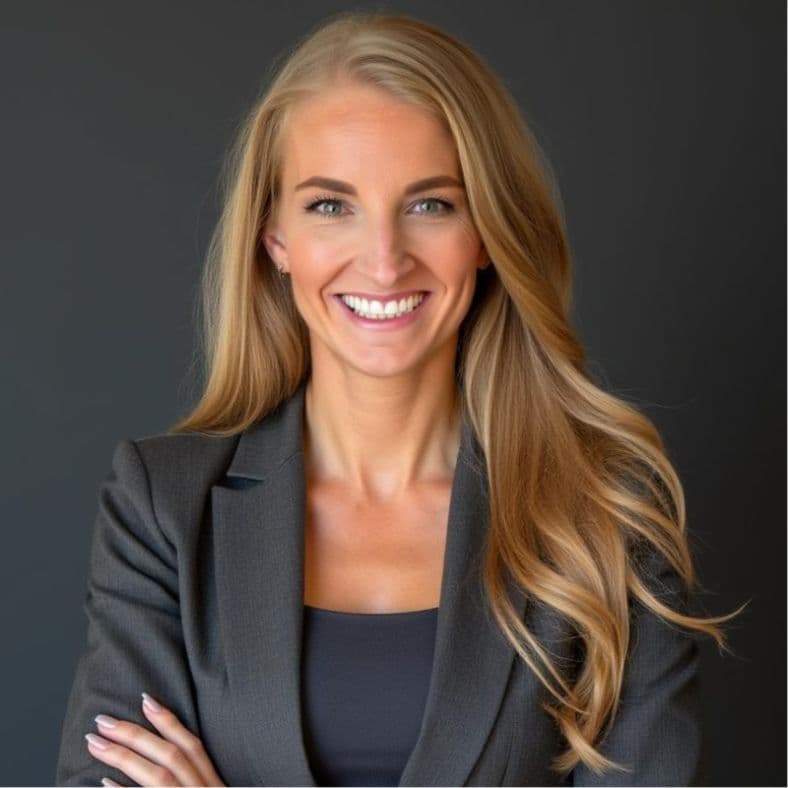
Full Transcript Overcoming Mental Barriers in Medicine 0:01 Welcome to the Startup Physicians podcast where we explore how doctors 0:06 lead healthcare innovation. Please like and follow our show to join our 0:10 community of physicians contributing to meaningful change. 0:15 Hi everyone and welcome back to the Startup Physicians podcast. I'm your 0:20 host Dr. Allison Kerman and I am excited to have you here with me today. Today I 0:26 want to take some time to discuss the feedback that I'm getting from other 0:30 physicians about this sort of work and identify some of the top mental barriers 0:35 that I'm hearing all the time. And I want to walk through how we can address 0:40 those barriers. I think it's really clear that we can create a roadmap to 0:46 grow in these areas and and overcome some of these mental barriers. I 0:50 recognize there are a lot of physicians that are very interested in this work. I 0:55 think one of the things that I say that resonates the most with physicians is 0:59 the fact that it's an opportunity to use your creativity and use your clinical 1:07 knowledge in a new way. We don't really use creativity in our day-to-day 1:11 clinical work because you don't really want to be creative with how you treat a 1:16 condition like shock. you used protocols and you used evidence-based practice, 1:21 but we're very used to working in an environment where our pathway is very 1:28 very linear, meaning we go from one step from med school to residency to 1:34 fellowship. It's very clear what the next step is. There's not a multitude of 1:39 other options of pathways that we see in our training. And at the 1:45 same time, we don't really consider ourselves really an expert in anything 1:49 until we've been doing it for like 10 years. And that's pretty unique to the 1:54 field of medicine. I think that, you know, when I was intern or a med 1:58 student, I thought, "Oh, I'm just a med student." Then you do residency and 2:02 fellowship and then you become an attending. For me, that was 10 years 2:05 later and I still felt like I was just an early attending. 2:10 And so I think that we need to actually give ourselves more credit for how much 2:15 we do know. I am hearing from people that say that they want to do something 2:21 more on the side. They'd like to be more creative. They'd like to create 2:24 additional income streams, but a lot of them are hitting the same roadblocks. So
Identifying Unique Offerings and Skills 2:30 we're going to talk about these. So, here are five things that I hear from 2:34 doctors all the time and they use as their reasoning for why they probably 2:38 can't work with startups. The first one is I don't have anything unique to 2:45 offer. That in and of itself is a belief. It's something that we all feel 2:51 sometimes. I feel that sometimes that I don't really know how I'm going to be 2:54 able to help this company or I don't really know who needs my expertise. Um, 3:00 but the truth is you really do have unique ideas to offer. You've just never 3:06 had to articulate it before. And that is a skill. And that's one of the things I 3:12 teach people is to really dig into your own experience, your background, your 3:17 skills. When I did this exercise, there were skills that I didn't even know were 3:21 skills. So, I actually was working with someone to help me write my resume a 3:26 long time ago, and there were things she was pulling out that are true marketable 3:30 skills that I I didn't even know were skills. So, that is something that I 3:36 really teach people is to understand your own background and identify 3:42 things that you are compelled by. Love when people are really pulled to this 3:47 field by an idea or by something that they want to impact. as opposed to I'm 3:53 just so burnt out. I have to get away from this. I need a new path. And so I 3:58 think it's a lot more successful when you're running towards something than 4:01 away from something. So when you say I don't have anything unique to offer, 4:05 that's first off not a true statement and it's a belief and it's something 4:09 that your brain does to sort of protect yourself. I did have an email exchange 4:14 with someone this week that said that they were really interested in in 4:17 knowing more about the course that I have and I gave her some information. 4:21 She said, "Oh, okay. Well, I don't really have any ideas right now, so 4:24 maybe maybe I'll try again in a year." And I thought that was an interesting 4:28 response because I can't imagine not having any ideas. Every time I've ever 4:33 asked any physician, "Do you have any ideas of problems in healthcare that 4:36 affect your patients?" They they all say yes. and they all have some idea of how 4:41 it could be better. So I think that understanding your own story, your own 4:47 narrative and what's unique about what you have to offer is the very first 4:53 step. Another thing that really makes you unique is if you are out reaching 4:58 out. So I I had someone in my course the last time who ended up following the
Building a Network and Strategic Connections 5:04 frameworks that I shared and she ended up setting up time with a venture firm 5:08 and she lives in the Bay Area and met with them in person and the thing that 5:13 they found was so unique about her was the fact that she reached out to them. 5:17 So I think that you have a lot to offer and if you're feeling like you don't 5:23 have anything unique to offer then that's a mindset you need to work on. 5:26 The second objection that I hear is that I don't have a network. I'm not 5:32 involved. I don't know who to talk to. And that is completely true right now, 5:37 but it is also a solvable problem. So that is the whole point of what we're 5:42 doing together is really strategic networking. I teach people how to really 5:48 dig in on those problems that they're identifying and their areas of expertise 5:53 that they're identifying to strategically find firms and companies 5:58 that are trying to address those things. And so when you start doing some of this 6:04 lead prospecting of really trying to find like who's doing work in this 6:08 space, it's stuff you can do online. You can do it by clicking around and reading 6:12 about companies and firms and it's very low risk to actually connect with 6:18 someone on LinkedIn, send them a little message, ask if they'd like to chat. 6:23 It's it's very low risk. And so I don't want people to think throughout what I'm 6:30 teaching them that the end goal is that at the end you're going to go make some 6:35 connections and you're going to immediately get hired as an adviser. The 6:39 point is learning how to speak this way, learning how to connect with people, 6:44 learning how to uh really start to understand the ecosystem. And when I 6:50 frame it like that, that what you want to get out of this interaction is a 6:54 connection, it's so much lower of a risk or a fear than if you're trying to, oh, 7:02 I'm pitching them my services. And I will say that if you have enough of 7:06 these discovery calls, almost every one will probably lead to a great 7:10 conversation, another connection, or maybe an opportunity to be an adviser. 7:15 Or I have definitely had people that say, "That's awesome. I'd love to 7:20 connect you to a founder that I know who really needs your services." So the 7:25 networking is really important. And I I hate the word like, oh, let's work on 7:29 networking, but it's really all about your connections and learning how to 7:33 strategically find the right people to connect with is a really important 7:38 skill. The next and third objection that I hear from people is that I don't know 7:44 how to talk about myself without sounding salesy. Now, I struggle with
Communicating Value Without Being Salesy 7:49 this a lot because what I'm doing right now, even with startup physicians, is to 7:54 try to spread the word, try and spread the vision and try and get people 7:58 excited about this work. I do feel self-conscious sometimes about like, oh 8:02 my gosh, am I posting or emailing and I sound like a saleserson? And that's 8:07 fine. It's it's not inherently bad. I find that when I'm doing my consulting 8:12 and advising work, I use a lot of language that doesn't sound like I'm 8:19 trying to sell them something. I say things like, "I'm so excited about the 8:24 concept you're building. I would love to know if there's any way I can support 8:28 you." Um, and you know, let's let's keep in touch about what you're building. I'd 8:33 love to um get involved. Um or or even just directly saying like, "Hey, I've 8:39 done X, Y, or Z before. I think I see a pretty big opportunity for your company 8:44 if you wanted to talk about working together." So, there's ways to say say 8:50 things that don't sound salesy. And I I do teach people a very structured 8:55 framework for an introduction call or a discovery call where you're using it, 9:01 you know, only 30 minutes so that you're not wasting a lot of time meeting with 9:06 one person over and over and over again. 30 minutes how to structure it to really 9:10 get to the bottom of what they're trying to solve, where their problems are, how 9:13 and introducing yourself and your services and then asking like, "Hey, 9:17 would you be interested in working together or is there any way I can 9:20 support your work?" So, it's not about selling, it's about being clear and 9:24 helpful and really aligned with impact. So much of the conversations that we 9:29 have are going to be aligned around mission. So, what is the mission? If you 9:34 identify with their mission and what they're trying to build and do, um, then 9:39 supporting that work is not salesy. What you're trying to sell is a um an 9:45 outcome. So you're trying to help these companies to be clinically aligned and 9:50 to have best practices ingrained in their model. And so it's not about 9:56 selling. I know it feels uncomfortable, but again, when I tell people that the 10:00 purpose of these connection calls is to learn the ecosystem and make make 10:05 connections, it's a lot less intimidating. I hear other people say, 10:11 "Don't have time to do this right now," or, "I don't have time to start my own 10:16 company." And that's totally fine. Not everybody wants to do that. I I do have 10:22 thoughts for people that do want to start their own company, but you don't 10:25 have to. The thing that's so nice about consulting and advising is there is such 10:30 a low barrier to entry. You can start very small. You don't have to have an 10:36 LLC. You don't have to have anything. You really just have to have time to set
Time Management and Flexibility in Consulting 10:41 aside to really put some work into it and you don't have to put capital into 10:46 it. It's different than other um you know times that you're you're trying to 10:51 develop investment strategies and maybe you're trying to come up with a down 10:55 payment to buy a rental property to implement some of these things to to 11:00 create income streams. This is very different. You don't need any of that. 11:04 You need a LinkedIn profile. You need a phone number and an email and a way for 11:08 people to get a hold of you. And then you need some way for people to book on 11:11 your calendar, whether that's please email me a list of times or getting 11:16 something simple like calendarly set up. So you don't have to have a lot of time. 11:21 I think that this could be a a gradient approach for people. They can really 11:26 just try it out and start to meet other people that are doing this work and 11:31 learn more before they start actually devoting a lot of time to it. Other 11:35 people really want to go like full on like I have had people who are so 11:41 interested in building their business development pipeline and I am going to 11:45 go out and I'm going to get all these leads and every one of those leads I'm 11:49 going to get more leads and I'm going to structure it in a way that I am rapidly 11:54 expanding my network finding opportunities getting good at asking 11:59 people if I can support their work and having a pipeline of constant projects 12:05 or advisory roles rolling in. And I tell people you can kind of dial up and down 12:10 how much you want to do this. There's been times that I've been working with 12:14 so many clients that I I'm working a lot and then there's times that I I kind of 12:19 turn some things down because I I wanted to spend some time developing this 12:23 podcast and my course. Um, and it's very flexible. And then you can kind of also 12:27 decide like do you want to you know up or reduce your clinical FTE in relation 12:34 to this. The last mindset shift that I talk to people about the barrier that 12:40 they have is um that I am just a doctor and I don't know business. So I know 12:47 that feeling um I don't think you need an MBA 12:52 to be an adviser. You really need a framework. You need a basic 12:57 understanding of how things work. I know we are so eager as doctors to get even 13:02 more educated. The answer to everything is to get another degree or maybe I need 13:07 to do this. And that is that expert mentality speaking where you feel like 13:12 you really need to have like some credentialed letters after your name to
Understanding Business Fundamentals for Physicians 13:18 actually be an expert. And that's just not true in this space. 13:23 You do need to know a little bit about the world you're entering. I think it's 13:29 very important to know the difference between venture and private equity. 13:34 What's an accelerator or an incubator or a venture studio? How those are 13:38 different because that would affect, you know, some of the portfolio companies 13:42 you're trying to work with. And when I say portfolio companies, I mean if 13:48 there's a venture firm that is supporting, you know, a bunch of 13:52 different startups that are early stage, those are considered their portfolio. 13:56 And so you need to know how the life cycle of an early stage company works 14:02 and the fundraising so that you can price your services appropriately. And 14:07 so we go through all that sort of a framework so that people can know the 14:11 basics of the business, but they're not actually looking for you because they 14:16 think you have great business skills. They're looking for you because you have 14:21 great clinical skills. You need to know how to operate in this environment. But 14:26 you don't need to be the expert on finance or marketing or other healthcare 14:33 economics. They have people for that. you're the expert in the clinical side 14:38 of things. So, I'm going to tell you a little bit about my framework for how I 14:43 walk people through this process and understanding how to overcome those 14:50 feelings of inadequacy or feeling like this is maybe not something you can do. 14:54 First, we start by really unlocking your expertise. So, I help people to try to 15:01 articulate their narrative. Every single person has a story. what makes you 15:06 credible, what makes you valuable. If you can't come up with that, then it 15:11 would be hard to sell your services. But you all have it. And sometimes somebody 15:16 needs to pull it out of you. And I have been there. I honestly when I did this 15:22 exercise with a um a coach, I literally felt like, "Oh, I'm such a failure. I 15:28 don't know who would ever want me to to do this work." Because in my mind, for 15:34 those of you who listened to the first episode, I had designed this program for 15:39 complex kids at a nonprofit hospital system. It had great clinical outcomes, 15:44 but it was not the right place to scale it. It wasn't making money in fee for 15:49 service. And so, it ended up shutting down. And so, at that point, I again, I 15:54 just felt like, oops, I'm like a fail. All I've done is build a failed program. 15:59 But that program was actually my stepping stone to get into this world 16:03 because you know we had published the results and that's what led me to then 16:07 work with this firm and move to Nashville. So my narrative was really 16:11 negative at that time like oh I'm a I'm a doctor who created a failed program. 16:16 That's really not going to get you opportunities. So working with someone
Crafting Your Narrative and Value Proposition 16:20 who really could help pull it out of me where all the skills were, where all the 16:24 impact was and what made me credible and valuable, it was really meaningful to 16:28 me. And now that's what I work on with other people. And I have seen all of 16:33 these doctors come with this hesitancy about their expertise that well, I don't 16:40 really know that anyone cares about this. We can really pull that out and 16:43 articulate it and turn it into a story. You're going to be telling the story a 16:48 lot. You're going to be introducing yourself on calls. You're going to be 16:53 introducing yourself at conferences. You're going to put your LinkedIn out 16:57 there. And it's it's going to be aligned with your story of what you want to 17:01 contribute. Teach people how to make this a a bio, an elevator pitch, how to 17:06 say it, how to put it in LinkedIn, how to make it all sync. And if we start 17:10 with that as the foundation, it makes the rest of this easier cuz then you 17:14 know where you're coming from. The next thing we go through to really get all 17:18 the nuts and bolts are really business foundations about what tools you may 17:23 need to get started. A lot of them are free. And then kind of the whole 17:28 spectrum of like when do you need a an actual entity versus when can you just 17:33 kind of dabble in this on your own? That is a personal decision. Do you need 17:37 insurance? What sort of software do you use for scheduling? all of that sort of 17:42 stuff for what are the foundations of what you would need to get started. And 17:46 then we talk about the third section is your value proposition. So now you've 17:52 already started to own your narrative and your story and your background. And 17:57 then we start to actually form these into services. What are the services 18:02 that you can actually offer? Who would be the target companies? How do you 18:07 price these services? and how can you start to find leads and decide where you 18:12 fit. Next, we spend our fourth core session talking about design thinking. 18:19 This is something that is very challenging for physicians. We are used 18:23 to uh doing things the way they've been do 18:27 done for a very long time and it is ingrained in us that that is because of 18:33 quality. We do this because this is what makes it safe. when really there are 18:38 some deep influences on everything we do in healthcare that really are tied to 18:42 payment or billing or some other thing that set what the standard is. And so I 18:47 encourage people to understand kind of the language and frameworks to
Design Thinking and Innovation in Healthcare 18:52 contribute to conversations around clinical product or clinical modeling 18:58 and identify ways to challenge yourself to think differently. The fifth core 19:04 thing that we do is to have some topics related to private equity, venture 19:11 capital, startup life cycles, what the funding world looks like so that you can 19:16 both speak their language, understand where you can add value and understand 19:21 what they'd be looking for. And this helps you to refine your pricing 19:25 strategy. And then the last exercise we go through is building your business 19:29 development pipeline. This is the, you know, list of all the connection calls 19:34 trying to identify the right companies and venture firms and startups that may 19:39 be interesting to you to just get to know and how to pitch yourself, how to 19:45 uh, you know, use that story that we and that narrative that we developed in the 19:48 first section to really share that in a in a way that resonates with industry 19:54 and how to actually offer a proposal and how to actually get started working with 20:00 a client. And so this is meant to create a repeatable process, a foundational 20:05 knowledge about how to operate in this world and it's not going to answer all 20:11 the questions. You're going to have some sort of situation where you say like I 20:15 don't know what to do about this contract or this term. Um and you can 20:19 get feedback from other people that are doing this. So altogether you don't need 20:26 a lot of things to get started in this and most of what you need you already 20:30 have. It's a question of understanding your own value, your own skills and 20:36 expertise and really knowing what you can contribute. And it's okay if you 20:41 feel like you don't know what you can contribute because that is one of the 20:45 biggest barriers to get over. For those of you that are interested, I do have a 20:50 download on my website that says uh 50 things that physicians can do with 20:56 startups. I made that because of how much I was getting this feedback that 21:00 people said, I don't know what I could do with startup. And I think that um you 21:04 know, when I list them all out and put a description of either things that I've 21:09 been paid for or colleagues that I know have been paid for, you'll start to 21:13 realize that like, oh, I know that thing. Maybe I don't know all 50 of 21:16 these things, but I know this and I know this. Yeah, I could absolutely talk 21:21 about my, you know, patients journey through the system and where the 21:25 barriers are. You know, a lot of things that you don't realize is is true 21:30 knowledge that these firms don't have. So, you really need clarity, confidence,
The Path Forward: Joining the Startup Ecosystem 21:35 and a structure to build from. And then once you do, this work is incredibly 21:40 meaningful. So, if this resonates with you, um, I invite you to join our next 21:47 cohort of the startup Physicians Launchpad or reach out if you want to 21:52 learn more. Keep listening to this podcast. I'm going to be sharing more 21:55 stories of physicians who have taken interesting paths into industry. And one 22:00 of the next things that we're really going to start getting into is bringing 22:03 on some guests from the venture world to really weigh in on how they evaluate 22:09 companies where they see a need for physicians and so that you can hear it 22:15 directly from them because I have been trying to pressure test this idea for a 22:19 while both with physicians trying to understand are there people that would 22:24 be interested in this work interested in finding a pathway and I think I've 22:28 gotten a resounding Yes, there are a lot of people that find this to be very 22:32 interesting. And then at the same time, I've been really meeting with a lot of 22:36 people in Venture who are friends and colleagues of mine and trying to get to 22:41 the bottom of like do you see there being a lot of value in well-trained 22:46 physician adviserss or am is that just like my opinion? And I'm getting a ton 22:51 of feedback from them as well that they are really interested in having more of 22:57 you cross over and join this path and find ways to contribute in a creative 23:03 and meaningful way to industry and to developing companies. Please feel free 23:07 to reach out, comment on the episode, follow the podcast, connect on LinkedIn. 23:12 You can go download the 50 ways physicians can contribute um and that is 23:17 on startupphysicians.com and I am so excited to work with you all 23:22 more and thank you so much for tuning in. Thanks for listening to the Startup 23:26 Physicians podcast. This community was built for doctors who want to contribute 23:31 to the future of healthcare. We offer support for physicians who are ready to 23:35 make the next step towards building the career they've dreamed of. Visit 23:40 startupfysicians.com to learn more. And if this episode 23:44 resonated with you, share it with another friend who needs to hear it. 23:48 Let's change the future of healthcare together.
Comments