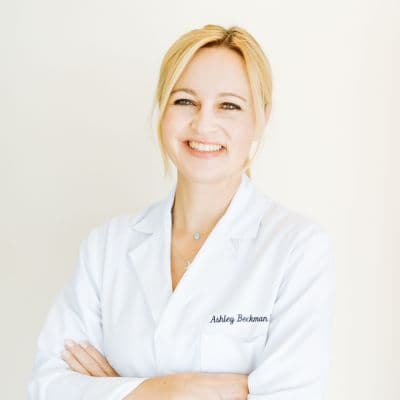
Full Transcript Intro to the Resiliency Method 0:00 This all culminates into where we're getting into some of that deeper level of brain and nervous system detoxification. 0:06 And so phase three actually does have a part of it that's detoxification. 0:10 But it's where the encapsulations of toxins have been held deep inside the body. 0:16 And that's where a lot of us are missing that because I didn't understand why. 0:18 When I've done all this cleansing and such, why am I still showing high-level markers on heavy metal tuffs and things? 0:26 Welcome to the resiliency method, the truth about healing. 0:29 I'm Dr. 0:29 Erica and we are here to uncover the root causes keeping you stuck. 0:33 Together we'll restore your energy, your focus and your resiliency so you can finally heal, regenerate and feel truly alive again. 0:46 This episode is a special one. 0:48 I was interviewed on the Longevity Leaders podcast where we dive deep into key conversations around health and longevity. 0:57 I'm excited to share it with you here. 0:59 In this episode, I share a story of being so sensitive to gluten that an accidental restaurant slip-up left me choking and scrambling for emergency treatment. 1:10 Today, My body can handle environmental exposures without breaking down. 1:15 I'm Dr. 1:15 Erica. 1:16 And in this episode of the resiliency method, the truth about healing podcast, Dr. 1:20 Beashley Beckham and I are revealing why true healing isn't about more restriction. 1:26 It's about building and increasing adaptability. 1:29 We're exposing the material left behind by parasites that keep you food sensitive forever. 1:34 Why your C-section scar is disrupting your body's electrical system. 1:38 and the detox phase that actually reverses reactivity. 1:43 So if you're tired of being fragile, this episode is for you. 1:47 Let's dive in. 1:49 Welcome to the Longevity Leaders podcast. 1:51 I am Dr. 1:52 Ashley Beckman, and I'm here with Dr. 1:54 Erica. 1:55 How are you doing today? 1:55 I'm doing great. 1:56 Thank you, Ashley. 1:58 So tell us a little bit about your signature process. 2:03 The resiliency method. 2:04 Yes. 2:05 Yes. 2:05 Yeah. 2:06 So the resiliency method is something that I came up with out of my own personal experience and my own personal health journey. 2:14 I had been on for probably over 10 years. 2:17 Started when I got to grad school. 2:19 You know, you can appreciate the training for, and we're both trained in Chinese medicine, acupuncture. 2:27 It started there when I left a corporate career, went back to school, Chinese medicine, acupuncture, saw four long years ahead of me and my health went 2:37 into the tank. 2:38 And I knew that I needed to do something. 2:42 I've been feeling the inclinations that as I was getting into my mid thirties and I was time to take my health a little more seriously than I had. 2:51 And I knew that I wasn't going to make it through that rest of the program if I didn't do something.
Dr. Ericau2019s Health Journey and Origins 2:57 So it tanked the first year. 2:59 I heard of a practitioner who was doing some nutritional testing, clinical quantum applied kinesiology-based testing, which otherwise sometimes is known 3:15 as muscle testing. 3:16 She was using a particular method of it. 3:18 It was really getting to a root cause level for a lot of people and in a very specific way. 3:24 So it started with that and experiencing that, it was like a miracle, quite frankly. 3:29 I went from thinking I wasn't going to make it through the rest of that program to being inspired to learn everything that I could about nutrition. 3:38 So I was fortunate enough to be in a town in Austin, Texas. 3:43 where there was also a training center for a whole food-based supplement company called Standard Process. 3:51 And that's where I went and learned everything I could. 3:54 I washed dishes while they piped in the education. 3:57 So I went from not thinking I was going to make it through to being so inspired that I had to learn everything about functional medicine, 4:03 functional nutrition, and that's where it started. 4:05 So by the time I was, I think, a year into that learning process, I learned the the method that my practitioner was using on me. 4:15 And I started to practice while I was still in grad school doing nutrition, nutritional testing. 4:19 Yeah, so that was a good start. 4:23 Saw great results with that for a long time. 4:27 But having been injured as a child, I had stepped on a rusty nail in my backyard. 4:35 I got a tetanus shot and within a year I had shingles on my face. 4:42 They were taking pictures of me for medical books because I was 10 years old. 4:47 And then within a year of that I had my first grand mal seizure. 4:51 And it was kind of like set off the pattern, which I was genetically predisposition to, but still, you know, allowed my body that level of exposure and 5:03 toxicity kind of was the straw that broke the camel's back and, you know, set off this immune, what I call is really an autoimmune process of the brain 5:11 and the nervous system. 5:14 The more that I did work on my health over time, I started to see some of the things like diet and exercise and doing some of those things that were like 5:24 parasite cleansing and even heavy metal detox were all helpful for a bit of time. 5:29 But I also started to see that I needed to go a little bit further. 5:32 And that really set off really what became the resiliency method. 5:37 Yeah, it's amazing. 5:38 So actually, one of my friends had a similar story, and he created a documentary called Trace Amounts. 5:45 So Eric is a good friend of mine. 5:47 Yep. 5:47 And he had that similar experience as a 30-year-old male, right, with the tennis shot. 5:54 So, again, the heavy metals can be a big piece, right? 6:00 So, it sounds like you look at genetics as well? 6:03 Well, actually, it's interesting because we do a clinical application of an assessment, right? 6:08 So, what we can do is we can identify where a toxin might be stored in an organ, tissue, or gland. 6:14 So, we'll do the blood tests. 6:16 We'll do some of those great functional medical lab, we have tests that we can run out there. 6:22 And certainly those things give our patients a big and broad perspective on what's really going on for them, and it's a great place to start. 6:30 What we do though is a little bit different in that we will use supplementation. 6:34 Once we see that, we'll get the lay of the land, but we'll use supplementation for what we call facilitating a healing response in the body. 6:41 So what we're doing is we're going after, well, really starting with the premise that the body's perfect in design. 6:49 And it knows how to heal itself. 6:51 It's just that when you are talking about multiple generations of toxin exposure, and then where you've had now this period of time with multiple generations 7:03 of those people coming together and breeding, and then having children, and then it's kind of this multiplying compounding effect. 7:12 And here we are today with some of the highest autoimmune rates and increasing neurological diseases, neurocognitive decline diseases and disorders as 7:22 we get older. 7:24 And those disorders, you cannot wait until you're 70 to 80 to start working on. 7:28 You got to get your brain healthy today. 7:31 to offset that. 7:32 So if that's in your genetic picture. 7:34 So yes, we look at genetics, but we see it more in terms of we take into account what is it that is in your family. 7:40 But also when we're going through our process, we'll start to see how they're testing what's there. 7:45 So I'll actually say to a patient, you have this in your family. 7:50 Who has this in your family? 7:51 Because I can see where the toxin is being stored or the stealth pathogen is hanging out. 7:57 And I know that's their weakest link. 7:59 And that's where all of these show up, right? 8:02 So there is a genetic component and that's inside of that. 8:06 And they're like, how did you know? 8:08 And it's like, because you've got this showing up there and that's something that we need to go work on next.
Genetics, TCM, and Pattern Recognition 8:14 So for us, it'll start with them coming in because of their symptoms. 8:17 And then what it ends up being is, Oh, let's look at the things that you're going to age into as well. 8:23 So something you mentioned that we both share in common is the Chinese medicine. 8:28 So one thing that's also, I think, very fascinating and what I love about it is how we see constitutions or looking at an organ and looking at the emotions associated. 8:40 So that helps us a bit. 8:42 uncover possibly some stored trauma or stored emotions when we're seeing, for example, they keep, let's just say even with Lyme, 8:54 for example, and it keeps attacking the joints. 8:57 then we look to the liver, right? 8:59 And so it's one thing I think that's probably drew both of us to the Chinese medicine theory is how we can apply it today. 9:08 Absolutely. 9:09 Because these stealth pathogens, they attack or love to hide or live in certain organs, and it's always interesting of what it chooses, 9:20 right? 9:21 We have people that always have gut issues or always have headaches or always get joint issues or brain fog. 9:29 But it's through our TCM lens that I think gives us extra insight. 9:35 Absolutely. 9:36 Yeah. 9:36 And those things usually do add up to the genetics. 9:39 I think we're still learning. 9:41 I think it'll be interesting to take genetics and actually put into the context you're talking about in terms of patterns of illness. 9:47 And that's really where we come from too. 9:49 And we look at our patient is, We're not just seeing an organ or a part of the body. 9:54 Our training is in how everything is connected to everything else. 9:59 And I don't know about you, but it always drives me crazy when you hear people talk about Chinese medicine and it's like almost in this way. 10:05 And we were kind of taught this too, like almost in this way that like, you know, it's you got to take on a whole new paradigm or way of looking at the 10:13 body in order to like even conceive of it. 10:15 Like it's this like strange esoteric separate thing. 10:19 And I always boil it down for people. 10:20 I'm like, It's really just the study of how everything is connected to everything else. 10:26 Like the Chinese were meticulous about opening up and dissecting human bodies and mapping where every blood vessel, vein, 10:36 artery, and that is what becomes the channels, the fascia planes, the channels, the meridians. 10:43 It's that little roadmap. 10:44 Yeah, and it's kind of interesting how things are spoken about now as the fascia and the lymph and all these things, and we have an organ for it. 10:54 We have a whole process and a whole system for looking at that. 10:58 Yeah, so again, I think it's really interesting though and shapes a lot of, I think, the way we both practice and look at things. 11:10 What I was saying is I think that it's really interesting, too, because we are all connected as well to other people, but then even within our own system, 11:20 you know, you can't just work on one area without looking at the paired organ. 11:24 And we often see these patterns that are very much connected. 11:29 And a lot of it just goes back to nature, too. 11:31 Absolutely. 11:32 With the seasons, eating foods in season, but again, people get sick more in the current season and especially if it might be your weaker organ system. 11:42 Right, true. 11:44 Yeah, and I also see as well that like if the terrain and the body itself isn't optimized then, and that's why I called it the resiliency method, 11:53 is because I started to see that, you know, you could plateau in your health journey. 11:59 Right. 11:59 And when you got to that point, I started also, this is really around 2020, and a lot of healthcare practitioners I was hanging out with, 12:08 I started to look around and I realized, you know, talk about a time when, you know, fear is being like mongered at you. 12:15 And, but I also saw that we were kind of creating that inside the space of getting healthy. 12:21 In other words, what I mean is, is there's a lot of restriction, constriction, control, you know, colleagues bringing extra suitcases into the hotel rooms 12:30 so just so they could sleep in another room and get a good night's sleep and having to do all these extra things. 12:37 The opposite of resilience. 12:38 Yeah and I thought you know maybe we should be playing a different game. 12:42 Maybe we should be playing the game of let's get this as healthy so I don't have to worry about what our government's doing or what the next thing is that's 12:50 coming down the pike. 12:51 Like, let's just put our attention here. 12:54 Optimize that as much as we can to the extent that we can. 12:58 Share knowledge on how we're doing that. 13:00 Let's create a community of bodies that it doesn't matter what we're up against. 13:05 We're going to be the strongest and we're going to undo the last century of what's been done to us and our bodies. 13:14 And we're going to get in the driver's seat. 13:17 And I think that's the thing, too. 13:18 There's so much fear about specific pathogens, toxins, food. 13:24 And while a lot of it's completely valid, because we see this all the time with labs, right?
Resilience Over Restriction 13:30 Some people, it's just off the charts. 13:31 They're storing a ton of toxins in our bodies. 13:34 Yeah. 13:35 And then, again, you still have someone that just a little bit of gluten will throw them very much off. 13:41 So it's not that we're saying, like, I'm not a big 80-20 rule fan, but at the same time, we don't want to be fearful of everything. 13:50 And this is something I think we both see, but like with mold, for example, people are afraid to travel, worried if they've gotten exposed, 13:59 right? 13:59 And then that heightens our nervous system so that there's so much perceived threat over all these things that we come in contact with. 14:07 Are you tied to treatments, protocols, and gurus who promise results but don't deliver? 14:11 You're not alone. 14:13 For years, I struggled with my own long-term illness and I know how frustrating it feels when nothing seems to work. 14:19 That's why I developed the resiliency method. 14:21 It's a science-backed approach to combine the best of Western and ancient medicines to restore your body's natural intelligence. 14:29 Patient after patient has discovered what's possible, living stronger, brighter, and more spiritually connected than ever before. 14:37 Whether you're facing autoimmune issues, hormonal imbalances, weight struggles, or just feeling stuck, you don't need another quick fix. 14:44 You need a clear path forward. 14:46 Take the first step with a discovery call at drericaonline.com forward slash discovery. 14:52 That's D-R-E-R-I-K-A online.com forward slash discovery. 14:58 Or dive deeper with a full initial consultation at drericaonline.com dot com board slash initial dash consultation because your health, 15:09 your clarity and your freedom cannot wait. 15:27 And I know nervous system work and just focus is important. 15:33 Do you want to go into a little bit how you do that? 15:35 Yeah, sure. 15:35 Yeah, absolutely. 15:36 Well, I mean, that's kind of always explained to patients. 15:38 I'm like, you know, if your body is the castle, the nervous system is the knight standing at the castle door. 15:45 We got to make friends with the nervous system because that's how we get to get into the body in more depth. 15:51 And yeah, and the topic of mold and food sensitivities, I'm glad you brought those up too because what we saw and for many years I was, 15:59 I got to the point where I was anaphylactic gluten sensitive. 16:02 You know, I had accidentally served a bun at a restaurant, a gluten-free bun that was glutenless. 16:08 And I was, like, choking up. 16:10 And my friend, you know, we went out to the park across the street. 16:13 I didn't have a red laser on me, so I was able to treat it. 16:16 So I didn't have to go to the hospital. 16:18 But I was like, whoo, I really am not resilient. 16:22 I'm not very resilient, like, you know, reacting. 16:24 And it really didn't occur too much to me at the time, but I just kind of figured that was just where my body was at. 16:31 But as we had to, you know, I mentioned the plateau that I was on myself. 16:37 I started to do a little bit more exploration for my own health, and then I started to see that there were things that all of us were encountering, 16:44 parasites, probably some of them you talked about, ropeworm, that's definitely a big one, right? 16:49 And we started doing more work in that area, and that helped a lot. 16:55 But then I was also seeing, and you'll appreciate this too, the endless merry-go-round of parasite detoxes and heavy metal cleanses. 17:03 And you know herbs, I know herbs. 17:05 We study, as part of our training, we study the temperature of herbs. 17:08 Yeah, exactly. 17:09 And food. 17:10 Yeah, and food. 17:11 And we study temperature and we study patterns of excess and deficiency. 17:16 And one of the things I realized is, oh my gosh, I keep on taking these cold, harsh herbs into this system and it never ends. 17:25 Right. 17:26 And so I started to inquire more on that perspective.
Food Sensitivities, Parasites, and Mold 17:30 And what I started to see was there was this material being left from behind by a lot of those things. 17:35 And if you cleared that out, then when we started to do that in our second phase of our program, we actually saw that people's food sensitivities were reversing. 17:44 including my own. 17:45 Oh, you know what, when I do parasite cleansing regularly, I can eat gluten again, which, or dairy, sorry. 17:51 Dairy, yeah. 17:52 Quite the gluten. 17:53 Yeah, well, there is a piece in our process that takes it to the next level. 17:56 So then, one, you get off the repeating endless cycle of parasite cleansing. 18:00 And then if you clear this material out and think of it from your perspective as phlegm, there is a phlegm material, there's a specific way we can clear 18:08 that out. 18:08 Clear out that phlegm, that residual that's left behind where all the eggs are stored and such. 18:14 And if you do that work, then oftentimes that brings up the nervous system and the immune system enough. 18:19 to where not that you want to eat necessarily gluten all the time, but that you could and you wouldn't be taken out. 18:25 And that's a sign of better adaptability and better resiliency, right? 18:29 If you don't react to your environment as much, right? 18:31 And your food, you're not supposed to react to your food. 18:33 That's the bottom line, right? 18:36 And with that too, it's like a lot of the times what happens is almost like the cleaner we are, right? 18:41 And the more your lifestyle is, we find and patients find this that they're more reactive. 18:47 And so Ideally, though, we should be able to handle, you know, someone with perfume walking by or things like that, or an accidental gluten at a restaurant. 18:57 Like, your body should be able to handle those things. 19:01 And so it's a tricky place, right? 19:04 Absolutely. 19:05 And then on the mold topic we started to see, too, was if we did a little bit more cellular detox of mold. 19:14 at the cellular level from our ancestors that lived in moldy conditions, we actually started to see people tolerate their environmental mold a little bit 19:23 more effectively too, which is kind of cool to see that start to happen for people because that's a real trigger for a lot of people. 19:30 It is for sure. 19:32 And so do you have in your process? 19:37 Do you want to explain a little bit? 19:39 Is it a six-month program? 19:41 Is it customized? 19:42 How does it work when someone's coming to go through it? 19:44 It's three phases. 19:45 You know, the first phase is what I call like similar to maybe what a lot of other foundational nutritionists or practitioners might be doing. 19:52 Some functional medicine doctors are getting into the parasite cleansing, heavy metal detox. 19:58 Not all, but a good portion of them at this point. 20:02 So we do something similar in that respect. 20:04 We'll identify if there's food sensitivities, take them out for a period of time. 20:08 We'll actually assess for if there's any interference from scar issue. 20:12 And we, as TCM practitioners, this is a big thing, right? 20:17 Can we talk about that? 20:17 Because I know a lot of people. 20:19 Sure. 20:19 That C-section, one of the biggest ones that cuts through most of the meridians, right? 20:26 On the front of the body, it cuts through multiple. 20:29 It's at least six, right? 20:30 Seven. 20:34 disrupts the chi flow in your body permanently since you've had the surgery. 20:39 And so we have therapies. 20:41 Do you do them in person? 20:44 We use like red light scar therapy and then we'll use a combination of like a pure source of vitamin E oil or sesame oil if they're great and sensitive 20:53 at that point. 20:55 And then we've seen even the tares, because the terror, the episiotomies are right along the central meridians as well. 21:03 And treating those sometimes are helpful, because that's the nervous system dysregulation. 21:07 Because when you're talking about meridian, she not going through, basically she's saying the electrical energy is not flowing. 21:15 And I like to describe it as like, you know, if you have a river, right? 21:18 And you've got the rivers running a certain way, and then all of a sudden a beaver comes in and builds a dam. 21:24 Now the river is going to flow a little differently. 21:27 The water is going to flow a little differently in the river. 21:30 But eventually, that scar actually will start to send off. 21:33 So it goes from a lack of communication to then the scar will actually act like its own electrical capacitor and actually start to send its own electrical 21:42 signals off. 21:42 And then you've got lack of communication to miscommunication. 21:46 And that can really interfere with the nervous system. 21:48 And then a lot of toxins build up the scars too. 21:51 Yeah, just like they would in a dam or a river that was getting polluted. 21:57 Huge one. 21:58 So yeah, so we assess for those things. 22:01 Lyme, you know, mold, fungus, bacteria, all the stealth pathogens and such. 22:07 I do find when we handle the rogue worm, if we do it correctly, it will oftentimes take care of a lot of those co-infections. 22:15 I see bacteria and fungus a little bit differently now. 22:19 they really are allowed to peripherate when there's even a deeper stress going on. 22:25 And then as soon as we take that out, then they recover finally. 22:29 And then with the heavy metals, getting that down too helps obviously with recovering from candida and mold and fungal diseases and disorders.
Scar Therapy and Phase-Based Healing 22:40 But then phases two and three are kind of like where we go. 22:43 And I tell my patients with this state, I'm like, okay, this is where you almost have to shut down Instagram because all the advice that you're hearing 22:49 out there is not going to fly to you anymore. 22:52 We're in a new terrain. 22:54 And this is where we're going to take your body to another depth of healing. 22:58 So phase two is really, I call it this insurance policy where we'll ensure that the parasite infections don't come back. 23:04 The second part of phase two is getting into that cellular mold where we're holding a lot of those toxins. 23:11 But we've earned the right to do that. 23:13 We didn't get to just start phase two. 23:14 We had to do phase one. 23:16 It was really important because you can't go to that depth of healing. 23:19 And that's the thing people don't realize is... 23:20 And that's when they get very sick and hurts and they tried something too fast, too quick, too Or on the wrong order. 23:27 Yeah. 23:27 In the wrong order. 23:28 In the wrong order, at the wrong time, in the wrong amount. 23:30 It's not customized. 23:31 And that's where we specialize. 23:32 It's like, there are a certain population that will respond beautifully to protocol approaches. 23:37 And where our expertise is, is in the non-responders or the people that are like, you know, I don't really have time or don't want to get started. 23:45 Like high performers are like, I don't have time, it hurts. 23:48 That's where we can really come in and customize it enough to where they can get that more organized and less variable. 23:57 approach but phase three is where it's like that's our our area where okay now there's been all this damage right yeah or we're back to the castle yes 24:08 and we can't just get the keys to the castle and just go in and start putting up new wallpaper and paint colors like we know we have to rent a dumpster 24:17 and fill it up for a while right But then in phase three is where we are picking out the paint colors and things and everything's tidied up. 24:24 But there has been some level of deficiency that's been created by all the excess of all these things that we cleaned up. 24:33 It's time to build and rebuild. 24:35 So we'll use a lot of PMGs, protomorphogens at that point, whole foods. 24:40 They're accepting whole food nutrition supplements way better than they did in earlier phases. 24:45 We'll use herbs, homeopathy in the earlier phases, typically, because that's sometimes what only a body can do is homeopathy. 24:54 But at the third phase, they're really accepting a lot of the whole food nutrition, which is how we were designed, right? 24:59 We were supposed to eat to heal. 25:02 And they're not as sensitive to their diet or they're not sensitive at all at that point. 25:07 And we start to rebuild those organs, tissues, and glands that were really beat up. 25:13 And we find that more natural, innate ability to be resilient and adaptable. 25:20 And then that's where we're seeing like, this is a longevity. 25:25 So we'll give the body a really great source of liquid bioavailable collagen that we'll use as its source for increasing stem cell supply. 25:34 We'll also use a lot of times mitochondrial support to help because we're such a depth of the body and with a lot of these areas at this point that we 25:44 need to boost the mitochondrial function for a bit. 25:47 And then we just keep reiteratively like cycling through that. 25:51 And then this is the crazy part, you ready? 25:54 This all culminates into... 25:57 where we're getting into some of that deeper level of brain and nervous system detoxification. 26:03 And so phase three actually does have a part of it that's detoxification. 26:07 But it's where the encapsulations of toxins have been held deep inside the body. 26:12 And that's where a lot of us are missing that because I didn't understand why. 26:16 done all this cleansing and such, why am I still showing high-level markers on heavy metal tuffs and things? 26:22 And I started to see it was because there's actually encapsulations of these toxins deep down inside the body. 26:29 And most of these toxins we were exposed to very early, either in utero or for a lifetime. 26:36 And the body's smart. 26:37 It says a toxin like that and it goes, I'm putting that in bed. 26:41 Yeah, and that most of that's done in the nervous system in the brain and the adipose of the body. 26:45 Yes. 26:46 Right. 26:47 So this is what has unlocked a lot of weight issues, especially for females that are middle aged.
Deep Detox, Encapsulation, and Rebuilding 26:54 Yeah, they get that white perimenopause like the body is actually doing that because there is a certain level of toxicity in your body by 40. 50 that your 27:03 body is like, yeah, if I don't put it in the fat cells, then eventually, and I've seen this too, where you know how we go through that phase during perimenopause, 27:13 but then ultimately, if we don't take those toxins out there, it can go right into their bones and their skin. 27:18 So that's one of the reasons we see the osteoporosis and the skin cancer rates as they're aging. 27:24 Intensely. 27:25 Yeah, it's not the Sun. 27:26 It's the toxins inside your body Yeah, you know react that create is creating a damp heat toxin environment, right? 27:32 Yeah, so phase three you'll appreciate this actually is blood stasis and damp heat toxin Yep, because the blood stasis patterns. 27:39 That's the senescence the, you know, senescence patterns that we're dealing with the zombie cells that have accumulated over time from so much of the Life, 27:49 exposure, trauma, yeah, all the things. 27:54 So yeah, we start to move those out. 27:57 Body starts to heal even more depth and more foundationally, and then that earns us the right. 28:02 The body will eventually go, oh, it's safe enough around here now. 28:05 I'll start to open up some of these encapsulations where I've held these real deep, and I'll start to eliminate that from their brain. 28:13 And the biggest one is the aluminum we're finding there. 28:15 And what do we know about Alzheimer's and the plaques that are accumulating in the body? 28:20 And that's phlegm. 28:22 That is the body's intelligence at play saying, there is toxicity here, and I want to put a blanket over it. 28:30 And then that happens year after year. 28:31 You got more and more accumulation. 28:32 You got plaque. 28:33 You've got encapsulation, lipomas. 28:37 You got these little pockets everywhere. 28:39 Fibroids. 28:40 Fibroids, yeah, cysts, tumor nodules. 28:46 And then what happens when you have those encapsulations over time? 28:49 Well, you have a lack of fresh blood with all the nutrients and the healing properties that is not available to those areas of the body. 28:56 And now you're talking about more serious diagnoses and such, right? 29:02 Well, it sounds like your program really hits a lot of layers. 29:05 It does. 29:05 Yes. 29:06 It's a very in-depth process. 29:07 It usually takes some time. 29:09 Yeah, of course. 29:10 You don't do that overnight. 29:11 No. 29:12 Or in a three month. 29:13 We don't do it in three months, sadly. 29:16 If we did, I'd probably be retired on the island. 29:21 Yeah. 29:22 Well, thank you so much for joining us. 29:24 It's always fun, especially to, again, chat with somebody who loves toxins, TCM, homeopathy, and functional medicine. 29:34 Thank you for sharing this time with me. 29:36 Yes, of course. 29:38 It's a pleasure. 29:39 Likewise. 29:40 Thanks for tuning into the resiliency method, the truth about healing podcasts. 29:45 If this episode spoke to you, follow, share, and leave us a review. 29:49 Are you ready to go deeper? 29:51 Book your discovery called now at drericaonline.com forward slash discovery and take your first step today.

Comments