Full Transcript Introduction to Vitamin B12 and Whole Food Supplements 0:00 Everybody knows vitamin B12. 0:02 Got to get my B12 shot or go to the grocery store and get some vitamin B. 0:07 Where those in a synthetic can be almost dangerous. 0:12 If you look at the forms of vitamin D12 that are on your supplement, you're going to see names like methylcobalamin, which is better. 0:20 That's methylated. 0:21 It's a step in the right direction. 0:23 But again, it's missing the rest of the aspects of that B-suite or the B complex that exist in nature synergistically in those plants. 0:32 and animal tissues. 0:33 Even more so is the cheaper option, which a lot of supplement companies put in their bottles, but don't necessarily tell you, 0:41 that are sourced from places with chemical names such as cyanocobalamin, right? 0:47 Which is a name you might recognize from a poison known as Cyanide. 0:54 And some of them come from actual coal tar byproducts, is what some have historically been made from, for sure. 1:02 So we're talking about chemical derivatives and by products of industrial and vitamin E petroleum, right? 1:09 It's sort of industry standard and pharmaceuticals and it's used a lot of nutraceuticals as well. 1:14 Welcome to the resiliency method, the truth about healing. 1:17 I'm Dr. 1:17 Erica and we are here to uncover the root causes, keeping you stuck together. 1:21 We'll restore your energy, your focus and your resiliency so you can finally heal, regenerate and feel truly alive again. 1:34 Whole food supplements are essentially the nutrients you don't want to put on your plate, but your body actually needs them the most. 1:43 We're talking about the organ and glandular nutrition, adrenal tissue, liver, thyroid, the more nutrient dense parts of animals that earlier generations 1:52 regularly ate, that most people avoid today. 1:55 Welcome to the Resiliency Method, The Truth About Healing podcast. 1:57 I'm Dr. 1:58 Erica. 1:59 and today I'm joined by Philip Schneider joining me for this conversation. 2:02 Now the better question we're asking today is really this, what makes whole food supplements different and does it actually matter?
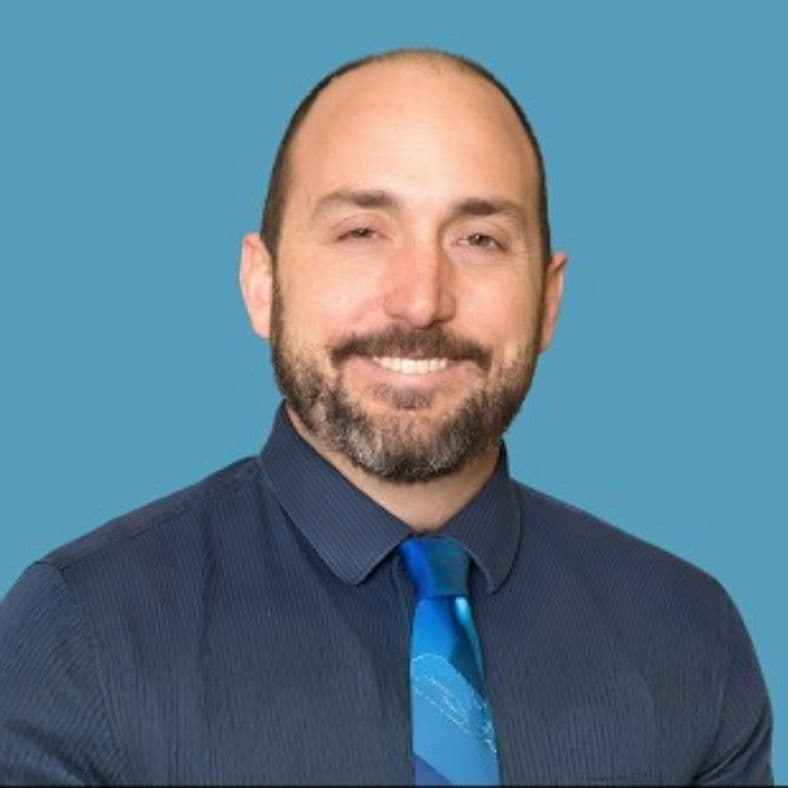
Podcast Welcome and Episode Overview 2:10 Together we are breaking down why the muscle meat most of us eat now is actually the least nutrient dense part of the animal and why organs like the adrenal 2:20 glands are naturally rich in nutrients like vitamin C. 2:22 We'll also explore how whole food concentrates can deliver organ nutrition in a simple tablet form without needing to actually put a fork and a knife into it. 2:32 And we're unpacking the difference between synthetic vitamins made from petroleum or coal tar versus nutrients that come from real food sources designed 2:41 by nature. 2:42 If you've ever thought all vitamins are basically the same, This episode is going to challenge that idea. 2:48 If you're enjoying the Resiliency Method podcast, we'd be so grateful if you would take a moment to leave a quick five-star review for us on Apple podcasts. 2:58 Your support helps more people discover the show. 3:02 and join this important conversation. 3:04 Thank you so much for your support. 3:05 Welcome back everyone. 3:07 I'm Dr. 3:07 Erica Schultz to the Resiliency Method, the Truth About Healing podcast. 3:12 i am joined today with Phil Schneider. 3:15 He is a licensed acupuncturist with almost 20 years of experience and a profound commitment to natural health. 3:22 he brings a wealth of clinical expertise to us today and educational passion and his role as a district manager in the Rocky Mountain states of Colorado 3:32 and other surrounding states for standard process. 3:35 And his career is defined by a deep-seated enthusiasm for whole food nutrition and the therapeutic power of medicinal herbs, 3:43 foundational pillars that he utilizes to empower healthcare practitioners in their own practices. 3:49 Philip's unique background bridges the gap between traditional wisdom and modern nutritional science, making him a compelling voice for practitioners seeking 3:58 to integrate effective nature-based solutions into patient care. 4:02 And as an educator, he's dedicated to providing high-level clinical insights and inspires fellow professionals to elevate their health outcomes through 4:10 the transformative potential of whole food philosophy.
Guest Introduction and Whole Food Supplement Basics 4:15 Welcome, Philip. 4:16 Great to have you here. 4:17 I'm going to start off just playing off of your bio there in terms of talking about whole food. 4:24 One of the things I've noticed is that when I talk to people about using whole foods for healing, oftentimes they kind of get this picture of what's on 4:34 their plate because I think we've had a lot of discussion with the Whole30 diet and the importance of coming back to dietary day-to-day food consumption, 4:43 meal planning that's based on using Whole Foods, which is awesome, right? 4:48 But today, we're talking about Wholefoods from a standpoint of supplementation. 4:52 I'm gonna kick you off there and making the distinction of what we mean that differs from what's on our plate, WholeFoods, 4:59 to what were talking supplement-wise. 5:03 And in terms of supplements, right? 5:04 The standard process is truly the original and I think most well-refuted, most efficacious brand for whole food nutrition. 5:16 And yeah, very different than the food that goes on your plate, which is obviously crucially important. 5:20 Yes. 5:21 But we make whole food concentrated supplements, right? 5:25 In a world where there are so many options for vitamins and supplements made synthetically in a lab, isolated to a specific molecule. 5:35 Whole foods, by our definition, is actually utilizing the power, nature, the wisdom of our planet to feed people's bodies in a way that they can react 5:49 to and absorb nutrients the way Mother Nature intended compared to how they were built in the lab. 5:54 Absolutely. 5:55 And one of the things I like to say about Whole Foods is these Whole Food supplements are the thing that you actually don't want to put on your plate, 6:02 but are still necessary for your body. 6:05 By that, what we're specifically talking about is most of us are getting our nutrition from the muscle. 6:13 of animals, right? 6:14 We eat mostly the muscle or the fattier areas. 6:17 Those are the least nutrient-dense regions of the body. 6:22 And oftentimes what we're talking about when we talk about whole food supplements is organs, glands, things that for most of human history were on the menu. 6:32 But let's face it, in our modern world, organ meats are not necessarily coming back on Yeah, our grandparents ate them. 6:40 I know that, mine did at least. 6:41 But I got to tell you, I'm going to be honest, the thought of it repulses me sometimes when I think about putting a fork in a knife into whole food, 6:48 but I love the ability to have it in tablet that I can just throw back with a little bit of water. 6:55 And I knew I was getting that nutrient, that density that in terms of why my body really thrives on and uses for the healing process. 7:04 And it's looking for, but it not getting it, right? 7:07 That the human diet in the last hundred years has constricted substantial. 7:12 And to your point, muscles, which is what we eat most of the time when we go out to dinner, animal muscles from steaks and fillets are really the least 7:22 nutrient dense part of animals. 7:24 You think to indigenous cultures, even to this day, where adrenal glands are even for vitamin C, That's one example of many. 7:33 One of the best sources for vitamin C. 7:35 Absolutely. 7:35 Right. 7:36 And one of reasons that is, I know is because when you're eating it in that form, you are getting all the necessary cofactors that are needed for your 7:44 body to actually intake use that nutrient or what we call, I like to call the cousins. 7:50 So we've got our cousins, we are taking in that vitamin C in the form. 7:54 We've all the necessary things that are needed to actually use it along with it. 7:59 The first cousins rather than the distant cousins Big happy family. 8:03 Yeah, right. 8:05 So I know that we want to talk a little bit too about the distinctions. 8:08 That's a good intro into Whole Foods, what we mean by that. 8:12 But I think one of the biggest values that people can get from understanding whole food nutrition is in the context of synthetic nutritional supplements. 8:23 What do you think are the things that make those things unique?
Synthetic vs Whole Food Nutrients 8:29 I mean, I think, you know, all of us are conditioned now because we all have vitamins in our pantry somewhere, right? 8:36 And I, think we're all conditioned to see the label of those products from the lens of a synthetic product, right? 8:44 How many milligrams? 8:46 What's the percentage of my RDA, and then you see those yields. 8:50 Oh, hey, this product has 5,000. I use the vitamin D3. 8:55 This one's got 100, 000. That must be better, correct? 8:58 I love that bigger is better mentality, but really it's a single molecule that's missing all to your point, those necessary coenzymes and cofactors that 9:07 exist in nature, the complexity of nature that our bodies need to put those specific nutrients that we might be working for to work in the body. 9:16 So when you make a synthetic molecule in a lab, you know, the, body isn't built to absorb that, right? 9:25 So you need incredibly strong yields of these molecules to get the to do anything with it. 9:33 And, You know that's why we, we have the sort of joke in our side of the supplement world that You know, synthetics give you very expensive Pete. 9:45 Yeah, that's true. 9:47 And sometimes dark color. 9:51 That's how you know. 9:52 Right? 9:52 Tell, tell, sigh. 9:53 Now we were talking about 5M and C, so let's go there for just a second, because I know that that is an instrument most people are familiar with. 10:01 And we talked about one of the greatest sources of that being from, for example, you know, adrenal tissue, right? 10:08 And, we know also that one and the most important cofactors to make vitamin C effective and used by the body is in coming along with vitamin A. 10:19 Okay. 10:21 Right? 10:23 Let's talk about that though in context of like ascorbic acid, which is the vitamin c that most people are taking in a synthetic form. 10:30 To use that and drive that point you just made home, we're talking about a single nutrient or aspect of vitamin C. 10:38 How would you describe that a little bit further in terms of the uses of ascorbic acid or the vitamin that most people are buying off the shelf in the supermarket? 10:46 Yeah, again, here's a molecule, ascorbic, acid that's synthesized in a lab that, most of us think of as, oh, that is vitamin c, 10:55 right? 10:56 That's how conditioned we all are to look at these molecules as. 11:00 you know, what our body needs, right? 11:02 Where in reality, vitamin C exists in nature almost as an entire complex, and not just of one type of vitamin, but again, 11:11 you think of like your B vitamins, like how many of them there are to make up that vitamin B complex. 11:17 And vitamin c in a whole food form has a wide array of those additional what we call coenzymes and things like bioflavonoids, 11:27 that help really turn vitamin C into a powerful antioxidant that helps support the immune system, helps with the collagen elasticity, 11:39 gives your body those building blocks that it uses to stay strong. 11:43 And in a synthetically derived single molecule form, you can take as much ascorbic acid as you want, and you're not really going to give your the results 11:53 that is looking for from, say, those dietary components that you are not eating. 11:57 I don't know when the last time you had an adrenal gland, for lunch was. 12:01 Yeah, never and will be never. 12:04 Exactly. 12:04 Me too, by the way. 12:07 Awesome. 12:08 Then let's take another example. 12:09 Let's talk about vitamin B as in boy. 12:12 And let us look at that one in particular because I think there are some pretty good distinctions to drive home around the use of vitamins B in the form 12:20 of a whole food versus the used of vitamin D from a synthetic form. 12:25 Yeah, I mean, especially with vitamin Bs, that's a good one to go down. 12:29 I appreciate that. 12:29 Thank you. 12:30 Is, you know, say your B12, right? 12:34 Everybody knows vitamin D12.
Vitamin C, Cofactors, and Whole Food Complexity 12:36 Got to get my B12 shot or go to the grocery store and get some vitamin B, where those in a synthetic can be almost dangerous. 12:47 If you look at the forms of vitamin D12 that are on your supplement, you're going to see names like methylcobalamin, which is better. 12:55 That's methylated. 12:56 It's a step in the right direction. 12:58 But again, it's missing the rest of the aspects of B-suite or the B complex that exist in nature synergistically in those plants. 13:07 animal tissues. 13:09 Even more so is the cheaper option, which a lot of supplement companies put in their bottles but don't necessarily tell you, 13:17 that are sourced from places with chemical names such as cyanocobalamin, right? 13:25 Which is a name you might recognize from a poison known as Cyanide. 13:32 And some of them come from actual coal tar byproducts is what some of them have, I think historically have been made from for sure. 13:40 So we're talking about chemical derivatives and by products of industrial. 13:45 And in vitamin E petroleum, right? 13:47 It's sort of industry standard and pharmaceuticals and it's used a lot in nutraceuticals as well. 13:51 Not enjoying the thought of eating a petroleum product. 13:56 Yeah. 13:58 I get you on that one. 13:59 never really thought I really consumed Vaseline internally either. 14:04 Don't use it any longer topically, although I once did unknowingly. 14:10 Yeah, so let's talk about that even a little bit. 14:12 One of the reasons I invited you specifically on here was because we wanted to talk this conversation of whole food supplements. 14:18 And you are a representative of one of you know, industry leaders, I would call you, the Cadillac of whole food supplementation. 14:29 I grew up as a daughter of a chiropractor. 14:33 So I actually was introduced to your products when I was probably like four years old, a long time ago now. 14:40 You're a standard baby. 14:42 But now I know through my education and even the resiliency method, best ways to utilize your product. 14:51 And so I want to hear from you specifically on what the history is of this amazing company, how it came to be, and why in the mind eye of a practitioner 15:01 like myself, why I would call you one of the best of best in terms of Whole Foods supplementation. 15:07 All right. 15:08 Well, I will do my best to give you this short version, but you know, standard process today, right? 15:13 We grow. 15:15 about 80% of everything that goes into our products on an organic regenerative farm located in Wisconsin, Lake Country, Wisconsin. 15:25 I've been to that farm. 15:26 It's a beautiful place. 15:27 An amazing place, it's an Organic farm, right, but it is also regenerated. 15:31 So it really the best of both worlds and thus really in a league of its own where we really invest in soil health year over year without any pesticides 15:43 or fertilizers, you know, not just synthetic, but fertilisers in general. 15:47 All we use to put back into our soils is the parts of the plants that don't go into products. 15:51 Yeah, and let's make that clarification too, because we started tying our animal product in your product itself, but you equally as use phytonutrients 16:02 inside your products and many of those are actually grown right on your farm. 16:05 Are you tied to treatments, protocols and gurus who promise results but don't deliver? 16:09 You're not alone. 16:11 For years, I struggled with my own long-term illness and I know how frustrating it feels when nothing seems to work. 16:17 That's why I developed the resiliency method. 16:19 It's a science-backed approach to combine the best of Western and ancient medicines to restore your body's natural intelligence. 16:26 Patient after patient has discovered what's possible, living stronger, brighter, and more spiritually connected than ever before. 16:35 Whether you're facing autoimmune issues, hormonal imbalances, weight struggles, or just feeling stuck, you don't need another quick fix. 16:41 You need a clear path forward. 16:44 Take the first step with a discovery call at drericaonline.com forward slash discovery.
Vitamin B12 Forms and Synthetic Concerns 16:49 That's D-R-E- R-I-K-A online. 16:54 com forward, slash, discovery, or dive deeper with the full initial consultation at Dr. 16:59 Erica online dot com, forward slashed initial dash consultation, because your health, your clarity, and your freedom cannot wait. 17:24 Yeah. 17:24 We have, again, about 20 different crops that we grow. 17:27 And we don't have any livestock on the farm, right? 17:30 We do use USDA-approved certified sources for those. 17:35 Yeah, most of the crops, that, we, grow are the bulk of what we're growing in front of. 17:40 What's one of a few of, the biggest ones? 17:44 Spanish black radish? 17:45 About a third of our organic farm are about 300 of almost 900 acres is Excuse me, buckwheat. 17:55 Which is the source of what? 17:57 So much more than a little rascal. 17:59 Buckwheats is a super food. 18:01 It's amazing. 18:03 We don't think of it as much, although humans have been eating it for thousands of years. 18:06 If you think food products like kasha, right? 18:10 Buckweed and soba noodles from Japan, and worldwide buckweed has grown. 18:14 But today, most of the buck wheat is sourced from like about 95% of Russia and China. 18:19 Wow. 18:22 whereas we grow ours on our organic regenerative farm in Wisconsin. 18:26 But buckwheat is a multi-mineral in itself, abundant in magnesium, potassium, has the perfect zinc to copper ratio. 18:37 Additionally, vitamin C with those bioflavonoids and antioxidants, specifically cursitin and rutin. 18:45 And it's a wonderfully dense source of rutine because rutins are hard a phytochemical nutrient to find in nature. 18:54 But if you look, the research scientifically on rootin is incredibly compelling. 18:59 All kinds of data being not just around longevity, but protection against a lot of those big scary diseases that we have common in our lives. 19:12 You know, additionally, yeah, almost a full B complex vitamin in there, mixed naturally occurring of soluble fibers and insoluble fiber. 19:19 So it's going to help with those cravings in between meals and that feeling of satiety. 19:24 You think about all these medications now that are making billions of dollars to do just that. 19:29 And, you know obviously it is one piece of that pie. 19:33 But yeah. 19:34 It's a wonderfully rich superfood good for all kinds of things. 19:38 Awesome. 19:41 lines and areas of brilliance. 19:43 And I feel like we should, as we talk about this particular type of product, we probably should go back to also even some of the history of standard process 19:52 because I think this is one of things that makes your product line the most beneficial to modern day diseases. 19:58 So we're going to talk and throw a big word out to the listeners right now, something called protomorphogens. 20:05 We call them PMGs for short. 20:08 Do you know how many off the top of your head are in that line? 20:11 say probably around what 20 to 30. Okay and this is where we get into things like where are we bringing up the adrenals again we'll call it adranotrophin 20:21 or you've got one for the liver, hepatrophen, you got 1 for that thyroid, thytrophine, PMG and I always tell my patients this this your your golden key 20:31 and especially when you're talking about longevity You know, we approach longevity slightly different from a lot of practitioners out there in that we're 20:40 going after the performance and improvement and healing every organ tissue and gland in the body because we see that if we optimize that and create the 20:51 necessary healing in those areas that were going to actually have a longevity ahead of us because we cleaned up enough of the toxicity and we've really
Standard Process History and Farm-Based Nutrition 21:01 allowed the body to heal and unleash that intelligence. 21:05 So, PMG, the cortomorphogen, really is the answer to a lot of autoimmune situations we're dealing with. 21:12 We're talking about cancers, that we are talking things that when you really facilitate and open up that design, an incredible result. 21:21 And Dr. 21:22 Royal Lee, who's the founder of Standard Process, I mean, this was his brilliance. 21:27 I feel like this, was like way ahead of time. 21:31 So many ways to talk about it ahead this time, and you read it in his writing, you know, he's talking about concepts that haven't even been named yet. 21:39 Even the word vitamin was not in the dictionary when Standard process started selling full-food concentrated supplements. 21:46 But yeah, tautomorphogens are sort of crown jewel in our line. 21:53 a really wonderful way to add specificity to your supplement protocol that, uh, you know, it's, one thing to say, there's dietary gaps that we can fill 22:03 in with whole food concentrates, things that you're not eating anymore. 22:06 Or, no, I think Dr. 22:08 Lee saw the writing on the wall very early in his career was that humans were eating enough calories, but still suffering from malnutrition, 22:16 right? 22:17 Because science was already starting to denature foods and to bleach and enrich flowers. 22:22 things of that nature, and you could see already the health ramifications that came from doing those things. 22:29 Take us back in history for a second. 22:30 What, around what time period was Dr. 22:34 Royal Lee really writing about this? 22:36 And I want to mention too that at your farm, I think it's so cool that you've all preserved this history by actually having a library of his original writings. 22:46 You can actually walk through the library, see some of the original tools he used, some that have been created. 22:52 Yeah, yeah. 22:53 So tell us a little bit more about him as a man when he was in the prime, when was he doing this, and give us little more of that right now. 23:00 Yeah. 23:01 Fascinating individual, Dr. 23:03 Lee. 23:04 Both made millionaire early in his life in 1920s, which, you know, millionaire in 1920s was a pretty amazing accomplishment. 23:11 And originally a dentist. 23:13 Correct. 23:14 A dentist and engineer. 23:17 Dr. 23:17 Lee actually is credited with inventing the constant speed governor, which was used to create the world's first dental drill. 23:27 So every time you hear a dental, drill was in a way and every dentist office on the road, you can think back to Dr Lee. 23:33 But he also had patents for the U S military, the space program. 23:38 He died with about 80 patents to his name. 23:40 It's really brilliant. 23:42 Nutrition was his great love. 23:44 And I think he again saw that. 23:47 you know, as, industry really started to get involved with processing food that again, there was a price to be paid for the health of humans. 23:55 And that was his great passion. 23:56 That's what's. 23:58 He was living in his prime was about a century ago. 24:00 Uh, correct. 24:01 Yeah. 24:01 The, yeah, he passed away in the 1960s. 24:04 So standard process was founded, uh, in 1929, almost 98 years old. 24:13 Again, selling vitamins before vitamin was word in dictionary. 24:16 Yeah, protomorphogens, cellular cytosols, I mean, and then of course all the whole food concentrates, animal tissues as well, 24:27 everything the body needs in one product. 24:30 Yeah. 24:31 Amazing. 24:31 Why do you think many healthcare practitioners choose whole foods supplements as a part of their approach to supporting patient health? 24:40 What would you say about that? 24:41 Simple answer is they give results. 24:44 And again, it's, our bodies are designed to absorb food, right? 24:49 Our bodies, are not designed. 24:51 To absorb synthetic molecules. 24:54 And I think, you know, results obviously keep the patients coming back and also help other patients refer to their, their friends and network to you as practitioners. 25:07 You know results refer as one of my mentors would say. 25:11 But additionally, we've spent a lot of time and effort and resources to marry those clinical outcomes that have been enjoyed for decades with a gold standard
Protomorphogens and Clinical Applications 25:23 clinical science now as well. 25:25 So we actually own, sure, our own research facility called the Nutrition Innovation Center, or NIC for short, that's embedded in the Whole Food Science 25:37 Research Suite in Kannapolis, North Carolina. 25:40 You can look it up. 25:42 It's pretty cool. 25:43 The Dole Pineapple founder, when he died at a trust that he wanted, you know, research done on old foods. 25:51 So we actually bought our own wing of this facility where we can now do clinical trials on patients, our R&D formula, and on our formulations and ingredients. 26:01 And we're really diving into why we get such phenomenal results with our products. 26:09 Awesome. 26:09 Yeah, I love it. 26:10 And there's a lot of noise out there in terms of the supplement industry. 26:14 What we hear a lotta times too, the latest and greatest is some peptides and, and or, you know, we've always got, seems like some kind of supplements gonna 26:23 be the answer to everything and everyone's problem. 26:29 what are your thoughts in term of, how does whole food supplementation, which is, fairly in some respects, very classical. 26:39 in nature, but you know, I also know you're trained in Chinese medicine, what have you seen in terms of understanding the difference between how whole 26:47 food nutrition plays inside the body against even some of these things? 26:51 What do you think are the biggest things that are falling into why people make the choices they're making? 26:57 You know a lot of it's I think really effective marketing. 27:01 and compelling speakers, that there's always a speaker or representative for different products that get you on board. 27:13 And every brand's got a reason why their product is the best. 27:17 You notice a lot of those brands and things, they come and go and they cycle through like most fads in our culture. 27:24 A lot of dietary fads, a lot, especially in the healthcare field, there's always some kind of hack or some product or something we all do. 27:34 And then you don't hear about it a year or two later. 27:38 I've noticed that too, that the latest thing is we've got the research and I know you guys research too and that's very relevant. 27:46 One of the things that I remind people of too when it comes to research is you really want to see not just six weeks out, 27:52 or even six months out, you really want to know how that person's doing with their response to that particular magic product or magic hat, 28:01 a year or two later. 28:03 Is it still working for them? 28:05 Are they still seeing the same result? 28:06 Because we can get an immediate result from some of these things. 28:10 There's a little bit truth in everything, right? 28:12 But long-term, sometimes we're not seeing that sustainable result, which is what we're going for with the resiliency method for people. 28:20 So we heal that, that tissue organ or gland. 28:23 We know they're gonna get a sustainable, long-term result. 28:26 Right. 28:27 Yeah. 28:28 How have you seen supplement industry evolve in terms of whole food nutrition and where do you think it's headed in the future? 28:34 Especially with all this other noise. 28:36 It's really exciting and yeah, a lot there to unpack, but yeah. 28:40 You know, I think fads come and go, you know? 28:44 I You know, the miracle solution for weight loss now for almost a few generations, right? 28:53 From Atkins to Paleo to Keto and now it's GLP1s and peptides are coming in for a while now as well. 29:02 And, you know you see the anti seems to be getting upped each time that innovation happens. 29:08 The side effects and the long-term outlook is getting more and more severe. 29:16 You know, to me, it makes it a really compelling case for Whole Foods, right? 29:20 Because, you know through the rise and fall of all these different, uh, You, know crazes and fads, our products, Whole Food products have basically stayed
Research, Industry Trends, and Long-Term Health 29:29 the same. 29:29 And we've had to learn how to adjust our way of reacting to these influences, but not changing our product. 29:37 The products stayed, stayed same and the way that we educate has to adapt. 29:43 But the products themselves have changed very little. 29:46 since the time they've been created, many of them going back way to the early days. 29:50 Awesome. 29:51 Right. 29:52 What do you think, wrapping this conversation up for today, what do we think is a better question that you would recommend that listeners ask themselves 29:58 about their health in general? 30:00 And as particular as it applies to this particular topic. 30:03 Absolutely. 30:04 Well, speaking of supplements, I would like everyone to think about The supplements that you have in your home, the supplements you put in you body, 30:12 where do the individual ingredients come from? 30:15 Do you know where they're sourced, how they are made, and really what is the long-term goal of that company? 30:25 Many supplement companies now, it's a multi-billion dollar a year industry just in the United States, around 25 to 30 in 2026. There's a lot of marketing 30:37 involved and people are making a lotta money. 30:38 And is that what's gonna drive your health? 30:42 So you know, the company likes standard process. 30:45 We are. 30:46 still in family hands, right? 30:48 We haven't been bought by private equity or pharmaceutical companies or... 30:53 Pfizer? 30:55 Yeah. 30:55 Well, we're actually going to buy Pfizer. 30:58 There was a rumor, yeah, years ago. 31:00 The healthcare practitioner is still not in the know or being corrected on that. 31:03 They were not bought my Pfizer... 31:05 Or Nestle, or Nestlé. 31:07 I know. 31:08 We're, actually, the company is, still held by the descendants of Dr. 31:12 Royal Lee and future generations of the family are, you know, in active training and education right now, experientially, 31:21 to carry our company forward for the next hundred years in family hands, which I think is really cool. 31:27 Awesome. 31:28 And that's so, like, not sneering very much, but yeah, I've actually met these people. 31:32 I have met the owner of The Current Owner, who has an interesting story about, we won't get into today, about how he even acquired the company. 31:41 A very good story, but you have genuine people and a father who is training his children to take on and continue on the legacy of standard process, 31:53 which is quite frankly amazing. 31:55 So yeah, to have these tools and again, our process really integrates whole food nutrition into it because we see the value of using these. 32:04 What nature intended to really produce a healing response and it's the best way to do it. 32:08 You know, we use other types of products, herbs and homeopathy, but we always use it as what they, and even some nutraceuticals. 32:15 We're not just banging up on nutriceuticals today. 32:18 But we used all those things in their own brilliance for shorter times and really with the goal of getting the body to fully accept and utilize in the 32:27 end what nature intended, which was our bodies are intended to heal. 32:31 with whole food supplementation. 32:33 So awesome to have you here today, Bill. 32:37 And we will have your back again for future episodes and thanks for coming. 32:41 All right. 32:41 Thanks again, Doc.

Comments