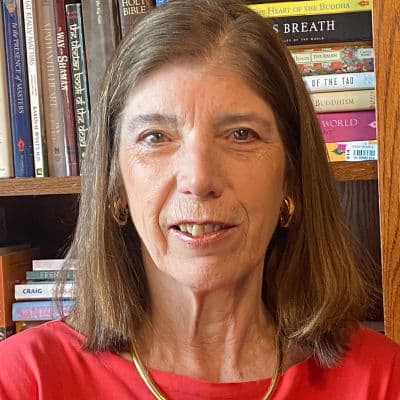
Full Transcript Introduction to Menopause and the Podcast 0:00 eat outside, try to put your toes on the ground and try to catch a sunset so that you can get that circadian rhythm. 0:06 Those are easy, but yet still challenging things to do. 0:10 They're free, they're available all the time, but those are challenging and really guarding your sleep. 0:16 I really work, Pat, with people guarding their sleep for that really long health span, right? 0:22 Because if you don't sleep, you don't heal. 0:23 Have you made it past menopause, or are you going through it now? 0:27 I'm Dr. 0:28 Pat McShane, and on the Women's Health Span Voices podcast, I'll guide you through the health challenges of the menopausal years and beyond, 0:37 guiding the way to thriving in this powerful era of your womanhood. 0:41 Hello and welcome. 0:43 I'm delighted today to have Laurie Hammer with us, and she will be talking about a lot of issues that go on in our menopausal brains, 0:52 including mood and brain fog and a few other things. 0:56 Laurie is a functional nutritional therapist by training, although her practice is quite a bit broader than that at this point, 1:04 I would say. 1:05 And she is a podcast host herself, Take Back My Brain is the name of her series. 1:12 And I would invite you to appreciate a lot of the material that she has recorded in those podcasts, various podcasts with a lot of different experts, 1:21 and then her own perspective, of course, as well.
Functional Nutrition and Root-Cause Care 1:25 So, Laurie, if you would tell us what a functional nutritional therapist does and a little bit about how you got on the path that you're currently on. 1:36 Yeah, I would love to. 1:37 Well, thank you, Pat, for having me. 1:38 I love your mission with HealthSpan and everything that you're doing, so I really appreciate you having me on. 1:43 Thank you. 1:45 So a functional nutrition is basically using food as medicine, for one. 1:51 And how does that affect your body head to toe? 1:53 And so I really work on changing the diet, doing basic supplementation. 1:57 Then we say, hey, what's leftover? 1:59 What still needs to be worked on? 2:00 Is there some glucose regulation that hasn't been fixed yet? 2:03 Are there some adrenal issues, thyroid issues, those kinds of things? 2:06 And then we implement some lab testing and dive a little bit deeper. 2:10 And then we try to find the root causes for people. 2:12 And so that they can overcome those things without medication, without a lot of medical intervention. 2:19 you know, as much as possible. 2:20 And so that's really, really fun. 2:21 It's kind of, you know, it's like Christmas to me all the time trying to help people decide, you know, figure out what's going on with them and finding 2:29 the best diet and everything for them. 2:31 Uh-huh. 2:32 I mean, the basic aspect of functional medicine is finding the root cause, not just treating the symptoms. 2:40 Not just masking the symptoms, yeah. 2:42 Yeah. 2:42 And a lot of people I'm sure find you after they have failed the typical medical approaches, which is typically or usually kind of fixing the symptoms 2:52 on the top of the problem, not the underlying cause. 2:55 Although it can be pretty, it can be pretty hard to get people, even if you know that they need to make some lifestyle changes. 3:02 So my goal in having this conversation or one of them is to deal with a lot of the changes that people report as they are undergoing menopause, 3:14 brain fog, depression, sense of lack of identity, just huge issues as our lives change from having monthly cycles and estrogen rise, 3:26 progesterone and so on, to having very low levels of estrogen and progesterone and The average woman gains weight during her menopausal transition and 3:41 she's at greater risk for a lot of metabolic conditions, diabetes and blood pressure, heart disease. 3:47 And we've started to kind of learn more about this, but it seems to me that the brain stuff and the mood stuff has been sort of put aside. 3:56 I mean, the cardiovascular issues are more, I guess, compelling or obvious, but you probably see people in your practice who feel quite discombobulated 4:09 after their menopause, and maybe you could tell us a little more about your experience with that situation.
Brain Fog, Mood, and Inflammation 4:16 Yeah, discombobulated is a really good word, Pat. 4:20 Yeah, I have a lot of women that come in and so they feel like they've lost their brain. 4:25 You know, my mantra is let's take back your brain, take back my brain. 4:28 And so they feel like they've lost their brain. 4:30 There's a lot of brain fog. 4:32 They're more emotional. 4:33 They're not sleeping well. 4:34 They feel disconnected kind of to the world around them. 4:38 Maybe they just don't even enjoy being around people anymore. 4:40 They're more isolated. 4:42 So a lot of different things going on and a lot of them come to me on SSRIs or other mood medications and a lot of it's just because nobody really, 4:51 really listened to them. 4:52 So they're working on their heart, you know, those kinds of things. 4:56 They're like, oh, it's just part of aging. 4:58 Just, you know, you're just going to have to learn to navigate it. 5:01 And it doesn't have to be that challenging. 5:04 So I really work on people. 5:07 A lot of it has to do with inflammation. 5:09 So how can we reduce that inflammation? 5:11 You know, we're working on changing the diet, kind of look at maybe the medications they're on are causing inflammation. 5:16 So I have a lot of people that come to me like on a statin or different blood pressure medications. 5:21 And when you change the diet and those types of things, you don't need those meds anymore. 5:25 And then you take them off the meds. 5:27 I don't take them off. 5:27 Their doctor takes them off. 5:29 But all of a sudden, you know, the restless leg goes away because statins can contribute to restless leg and those kind of things. 5:35 But my main goal, Pat, when they first come to see me is to really calm the neurology down, to balance the brain down and fix those deficiencies first. 5:45 Because when we balance that brain first and everything below the neck and just the lifestyle changes, all those things are a lot easier for people to 5:55 deal with. 5:55 And then the body has a better opportunity to heal when the neurology is calmer in the body. 6:00 The estrogen per se has a lot of impact on our brain functioning and on our mood. 6:06 Are most of your women patients on estrogen replacement therapy of some type? 6:12 And if so, could you comment on that? 6:15 Yeah. 6:15 Well, some of them come on it. 6:16 Some of them come to me because they don't want to be on estrogen replacement therapy. 6:20 So I have a lot more people in that realm than people who are actually on that estrogen replacement, it can be amazingly helpful. 6:28 But it does come with risks, right? 6:30 But having low estrogen also comes with risks, so you kind of have to weigh those things out. 6:34 But there's definitely things we can do nutritionally and with specific herbs, and I do some specific testing to see Is your body even using the estrogen 6:44 that you're making? 6:45 And if it's not, then we can work on your pituitary gland or we can, you know, target some other things for people and then help to raise that estrogen 6:52 a little bit because you still can, even in those later years, you can, you know, take some different burdens off the body, 6:58 maybe with some detox or just making lifestyle changes and dietary changes to reduce inflammation and that can have a profound effect on your hormonal profile. 7:08 Any hints about lifestyle changes?
Hormones, Estrogen, and Lifestyle Changes 7:11 I mean, dietary changes are huge, difficult for most people, and I'm sure you can't just say, oh, you need to do... 7:20 and have that workout for people. 7:22 Any hints that you could give me and our potential patients on the podcast? 7:29 Yeah, absolutely. 7:30 So lifestyle changes would be, you and I talked about this on the podcast I had with you, movement. 7:36 Movement is so key. 7:38 So, you know, getting everybody out and moving, moving, moving, you know, 30 minutes a day, get out and walk, do some stretching, 7:45 maybe try some Pilates, maybe, you know, depending on what your ability is. 7:49 So there's lots of different options out there. 7:51 I think you know, some light weight training or body weight exercises are key to everything as well, maintaining your brain health because if you're able to, 8:00 you know, get up off the floor, do some squats, do those kind of things, that really triggers, you know, activity in the brain and that's what we really 8:07 want to keep going. 8:08 Getting out in that morning sunshine is really important. 8:12 I really work with people try to get out, you know, right away in the morning and then get out at noon. 8:17 So don't eat inside your lunch, you know, eat outside, try to put your toes on the ground and try to catch a sunset so that you can get that circadian rhythm. 8:27 Those are easy, but yet still challenging things to do. 8:30 They're free, they're available all the time, but those are challenging and really guarding your sleep. 8:36 I really work, Pat, with people guarding their sleep for that really long health span, right? 8:42 Because if you don't sleep, you don't heal. 8:44 If you're not sleeping, your brain isn't working very well and then you're gonna have more brain fog, you're gonna have more anxiety, 8:49 more depression because you're not having any of that rejuvenation time, any of that detox time. 8:55 Your brain really only detoxes while you're sleeping. 8:58 That glymphatic system in our brain just drains while we sleep. 9:02 So if we're not sleeping, you know, that has a profound impact on our brain health. 9:08 Yeah, I think some people with sleep issues are very well aware of them, but not everyone is. 9:15 Some people just feel tired or confused or, you know, fatigued during the day, especially. 9:21 Do you recommend that people do testing for sleep apnea on a frequent basis or does that come up from time to time in your practice? 9:30 Yeah, absolutely does come up from time to time. 9:33 And I have a number of clients who do have some sleep devices that really help them. 9:38 And then I've helped a lot of people not need them anymore. 9:41 So there's lots of factors. 9:43 It could be that your palate is too small or your throat collapses. 9:48 And there's definitely some dental things you can adjust. 9:51 You don't always have to be on a sleeping machine. 9:53 So yeah, there's lots of options out there. 9:55 So we try to explore everything so that people are getting the best sleep that they possibly can have. 10:01 No, that's huge. 10:03 And again, no side effects to getting a lot of good sleep. 10:08 And I think too, Pat, that as we age, well, you know, and I think it's getting younger and younger. 10:13 I always ask people, okay, tell me about your sleep, you know, and then we'll dive into it. 10:16 And like, oh, I sleep really, really well. 10:19 Like, so you never wake up at night?
Sleep, Circadian Rhythm, and Sleep Apnea 10:21 Oh, maybe once or twice, but I go right back to sleep. 10:24 That's not good sleep, right? 10:26 If you have to get up to pee three times, that's common, but it's not normal and our body shouldn't need to do that. 10:32 We should be able to sleep all night long. 10:34 We were created to be able to sleep without peeing during the night. 10:37 And hormones, of course, do play a role in that. 10:40 You know, if your estrogen is low, you tend to have to pee a little more often, I think. 10:43 So, you know, just because we don't have the solid structure, you could probably speak a little better to that being a fertility doctor than I can. 10:51 The gynecologist, yeah. 10:53 Before that, yeah. 10:54 Yeah, exactly. 10:55 So there's lots of factors in there, but the goal is to really work on that sleep. 10:59 Yeah. 11:00 Tell me a little bit about the gut microbiome from your perspective. 11:05 That's gotten a lot of press in the medical literature and a little bit less in the popular literature, but it's kind of out there too. 11:14 And that is at the core of a lot of the issues that people have. 11:19 So how do you learn about somebody's gut microbiome? 11:23 Well, if they come to me with any of the things we've been talking about, the brain fog, the sleepless nights, the anxiety, 11:30 the depression, you just know that their microbiome is off. 11:33 So you don't really even need to test it. 11:35 So anybody who has an autoimmune condition or has any of the things that we've been chatting about or even other things, 11:40 our world and our food system is such that most people's microbiome is pretty pathetic. 11:45 So I just assume I'm going to work with everybody's microbiome. 11:49 I mean, there is testing that we can do if we need to, but I don't often feel that you just don't really need to spend that money on that microbiome testing, 11:57 that we can make a profound change in the gut without it. 12:00 So I do a lot of probiotic, prebiotic rotations. 12:05 We never want to stay on the same probiotic all the time because then that doesn't really help our gut. 12:09 It'll help in the beginning, but we don't want to stay on the same one because we want to constantly reintroduce different bacteria and we want to make 12:16 sure we're feeding those bacteria well. 12:18 And then we want to make sure that we're like supporting the lining of our intestines. 12:23 So we do some different herbals and you know, some like fulvic and humic acid and butyric supplements and butyrate to really help that microbiome establish 12:32 and grow and have a specific protocol that I rotate through to help people shift. 12:38 I mean, it takes a good year to really change your microbiome. 12:41 So, you know, people who start doing it need to know that You're not going to change it in three months. 12:46 You can make some good changes, but if you really want to work on your gut, you need to be committed for a whole year. 12:52 One of the things you just mentioned was the medications that people may come to you on. 12:57 And I recently did a podcast on that I entitled too many medications, which is the average person over 60 ish is on five plus medications in the U S and 13:12 many of those medications have some of the side effects that we've been talking about and brain fog and confusion and just poor mood are some of those. 13:22 So. 13:22 just again, working with people to get to the root cause of the reason that they're on those medicines, which may be very valid, 13:30 but if you can lower their blood pressure by dietary intervention or weight loss and back out some of those anti-hypertensives, 13:38 blood pressure medicines and so on, you may find that you're in a different space with that woman. 13:44 So that's a good thing. 13:46 Yeah, yeah. 13:47 I'm sure a lot of your clients and patients are on many fewer medicines after they've been working with you for a little while. 13:56 Yeah. 13:57 That is always the goal. 13:58 Even my own dad. 13:59 I mean, there's like nothing wrong with this guy except he has... 14:03 you know, high blood pressure and he is on five medications for his high blood pressure. 14:07 And I'm like, damn, you know, and he's having all these like weird like side effects with his skin and heart palpitations.
Gut Health and the Microbiome 14:15 And I'm like, it's from the meds because most doctors don't put people on nutritional supplementation or guide them on their diet to fix the deficiencies 14:24 that the medication causes, right? 14:26 So we've been working on that. 14:28 And so he only has two left now. 14:30 So we're working on those last two. 14:32 And his blood pressure is lower off of the medications. 14:36 And he doesn't have those issues anymore. 14:38 So it's like everything was compounded. 14:40 And I'm like, I think it's the meds that are causing these issues because he has no other risk factors, zero. 14:44 Like they've tested everything. 14:46 So anyway, Good case in point, yeah. 14:53 Changing subjects a little bit, I recently came across a reference to menorexia, which is anorexia in a postmenopausal age range. 15:04 And again, it's something that we tend to associate anorexia with very young women, and obviously it can be a very serious condition in those people. 15:13 But we're not home free when we go through menopause, and sometimes something will trigger maybe that lack of identity and, 15:23 you know, loss of roles that may occur as we go through menopause. 15:28 So if you want to just say a few words about that. 15:32 Yeah, I think that's a topic that really needs to be talked about, Pat, because it's definitely valid. 15:38 That's where my amino acid therapy comes in because it helps women of all ages. 15:42 So when the menorexia happens to people, Again, it's probably identity, you know, like we've been talking about, you know, 15:51 you feel lonely, not heard anymore. 15:53 You're kind of in that stage of life. 15:55 You're not really sure what your purpose is anymore. 15:57 So there's a piece of that. 15:58 There's also the decline in the hormones, decline in other nutritional things. 16:03 So probably things that have, you know, really accumulated over the years, you know, higher toxicity levels, those kind of things that just trigger the 16:13 brain and then you don't have the proper neurotransmitter production, you know, enough serotonin, enough dopamine, GABA, 16:19 all of those things. 16:21 And so not everybody is going to experience this, but people who that would be their bent, you know, then they stop eating, 16:27 right? 16:28 And so when we come in with that amino acid therapy, we start rebuilding the brain and we fix those deficiencies going on there. 16:35 Then all of a sudden, you know, people actually have an appetite again because their anxiety lifts, the depression lifts, 16:41 you know, their endorphins, their dopamine, but that drive is back again, right? 16:46 And so you can make a profound difference just by fixing some really key nutrient deficiencies in the menorexia challenge that's going on right now for sure.
Medication Side Effects and Reducing Dependence 16:58 Uh-huh. 16:58 And the testing that you do to determine which amino acids might be required for an individual person, what kind of testing is that? 17:07 Is that blood or urine or? 17:09 It's actually neither one of those. 17:11 I use a questionnaire that was developed, you know, probably three, four decades ago, and it divides it into five different categories. 17:20 So five different neurotransmitter categories that really affect our mood. 17:24 So serotonin, GABA, catecholamines, your endorphins, and then glucose regulation. 17:30 And there's amino acids that correlate with all five of those areas. 17:34 So I actually send all of my clients a kit because I do a lot of virtual. 17:39 And with that kit, the amino acids are in there. 17:42 We meet on a Zoom call just like this, Pat. 17:44 And then we actually open up the capsules, put the powder under the tongue, stare at each other for a couple of minutes and just wait and see what happens. 17:52 Yeah, it's pretty exciting because you get really profound changes within like two to five minutes with the amino acids and then you know what your body's 17:59 going to respond to and you'll actually feel the depression lift or you'll be like, oh, I feel more focused or I don't feel the noise around me anymore or, 18:09 you know, everything looks brighter. 18:10 I can see better. 18:11 I had a woman say the other day, she goes, oh my goodness, I can read the supplement bottle. 18:17 Like you couldn't read it before. 18:18 Like it really changed her eye focus. 18:21 So it could be a number of different things, but the amino acids have a profound effect and you need those because those are the building blocks to everything. 18:29 So if you want a good... 18:29 All of our proteins. 18:30 Yep. 18:31 Yep. 18:32 One of that good health and you have to have the foundations. 18:35 Well, good. 18:36 That's good to know. 18:36 Thank you for that. 18:38 Any other topics that you think would be good for our listeners that pertain to the brain health in menopause?
Menorexia and Amino Acid Therapy 18:47 That is such a great question because we've talked about movement is key, sleep is key, just getting in the right amount of protein and the right amount 18:58 of healthy fats for your body to function, for your brain to function. 19:02 We've been lied to all these years about our nutrition, eat low protein, eat low fat, don't have saturated fat, when in fact, 19:12 our cell membranes, our brains really need the cholesterol. 19:15 They really need the saturated fat to have that long health span, to have that vibrant aging experience. 19:23 So that's always my goal when I'm working with women who are postmenopausal, you know, going into menopause, whatever it might be, 19:29 just to age well. 19:31 We weren't meant to have sickness and disease. 19:33 We weren't meant to be, you know, non-mobile and all those kind of things. 19:38 So I always want people to know that there is an option, there is a way out. 19:42 I mean, you have to decide whose report you're going to listen to. 19:46 If you know that your body, if we remove the interferences, and we give the body what it needs, it can function well. 19:54 It can function really well. 19:56 So, you know, to make the decision like, okay, let's try this. 20:00 Let's try some nutritional supplementation. 20:02 Let's try a little more protein. 20:03 Let's try a little more fat. 20:05 I think I'll walk an extra two blocks today, right? 20:07 The power of one more block, the power of one more ounce of protein. 20:12 Like those things make profound differences in any stage of life, but especially, you know, as we're aging and as we're aging women, 20:21 because most of the time we're going to outlive our spouses. 20:24 And so we need to live well and we need to be strong in that process. 20:30 And nutrition is such a key. 20:32 Amino acids are such a key to this whole aging process.
Protein, Healthy Fats, and Aging Well 20:37 Well, that's great information. 20:39 Yeah, the protein piece people don't realize, but that whatever might have been adequate at age 40 probably won't be at age 60 because our bodies build 20:50 up a resistance to the protein that we intake. 20:55 Yeah. 20:55 And if we're, you know, have been a little bit neglectful of our muscle mass and now we're working a little bit harder to build muscle, 21:04 you absolutely need protein to do that. 21:07 So that's a good point. 21:09 Yeah. 21:10 Well, this has been fantastic information. 21:14 I value your experience and your insights tremendously, Laurie. 21:18 Thank you so much. 21:18 Thank you for having me. 21:20 It's been a pleasure. 21:21 Yeah. 21:22 If this information is interesting and useful for you listeners, please like and share and pass it on to someone whom you care about and love. 21:31 Thank you very much and take care. 21:33 Bye bye. 21:34 Thank you. 21:35 God bless. 21:36 Thanks for listening to the Women's Health Span Voices podcast. 21:40 If today's episode spoke to you, follow the show and share it with a friend ready to take charge of her health. 21:47 And please leave a review. 21:49 It helps more women find us.
Comments