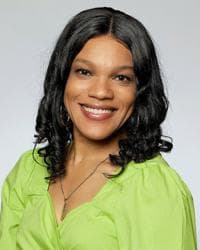
Full Transcript Introduction and Guest Welcome 0:00 Welcome to the coalition. 0:02 This is a talk show dedicated to discussing health, wellness 0:06 and inspiration. 0:07 I'm your host, Doctor Shani Belgrave. 0:11 Hello, everyone. 0:13 Welcome to the coalition. 0:15 I'm your host, Doctor Shani Belgrave. 0:17 I am a bariatric and minimally invasive surgeon in Atlanta, Georgia. 0:22 You can get connected with me at that doctor Shani belgrave.com. 0:27 I am excited to welcome to the show today Doctor Jarrett. 0:31 Doctor Jarrett is a dentist with a specialty in cosmetic dentistry 0:37 that joins the show to share her expertise. 0:41 Doctor Jarrett, thank you so much for joining the coalition. 0:45 Thank you so much for having me. 0:48 This is going to be exciting. 0:49 It is. 0:50 And the thing is that people have contacted me saying you should 0:53 interview a dentist and it's going to be a highly anticipated episode. 0:56 So please tell us who you are and what you do. Yes. 1:01 Well hello everyone. 1:02 I am Doctor Jared Manning, affectionately known as Doctor Jarrett. 1:06 I'm a comprehensive cosmetic and implant dentist located in Atlanta, Georgia. 1:12 I have two offices. 1:14 I'm the smile creator at J limb Dental Studios, one office 1:18 located in Smyrna, Georgia, with another office located in East Point. 1:22 Listen, I've just I love creating healthy, beautiful smiles. 1:26 Dentistry is truly my passion. 1:28 You know, I think dentistry is, like, where you merge science and art. 1:34 Because we really, truly are creating art when we are transforming smiles. 1:39 So that's a little bit about me in a nutshell. 1:43 Absolutely. 1:44 Congratulations again. 1:46 Cheers to 15 Years 1:49 Dental Studios. 1:50 Yes. Thank you so much. Awesome.
Dr. Jarrett's Background and Dental Practice 1:53 So to jump right into it, what are some common misconceptions 1:58 that people have about general dentistry and also about cosmetic dentistry? 2:04 You know, I think the most common misconception 2:07 that people have about general dentistry is that it is costly. 2:12 I think that 2:16 general dentistry, preventive dentistry 2:18 is probably the cheapest thing out there, right? 2:22 And when we talk about preventative dentistry, 2:24 we're talking about seeing your dentist regularly. 2:27 Which for some people that's twice a year. 2:29 Some people that's three times a year. 2:31 Some people that's four times a year. 2:33 Because the industry is not a cookie cutter, field. 2:38 It's tailored and cater to you. 2:40 But I think the common misconception is that everything costs so much. 2:44 But if you're seeing your dentist 2:46 regularly, we're able to catch things before they get out of hand. 2:50 Right. 2:50 If you are one of those people that wait until something hurts, 2:56 then yes, pain probably means 2:58 that something greater is going on. 3:02 But if you're catching it and seeing the dentist regularly, 3:05 we're able to catch so much. 3:06 You know, I talk about this a lot. 3:09 Systemic diseases. 3:10 Dentists are the first line of defense in catching systemic diseases. 3:14 No, I'm not a medical doctor, but I can tell 3:17 if a patient has an autoimmune disease. 3:19 I can tell the patient has diabetes. 3:21 I can direct them to the proper specialist to go to, to have the blood work, 3:25 to determine whether they have those diseases or not. 3:30 And so that is why we are key 3:33 in the overall health of a patient. 3:35 Right? 3:36 Because we catch things before, you know, other 3:40 doctors may be able to catch them because we're more intimate in the mouth. 3:45 One misconception about cosmetic dentistry, 3:48 I think, there's so many, 3:53 there's so many things that are seen on the internet 3:56 that is just absolutely, tawdry and unattractive. 4:03 And I think that, people tend to base their thoughts on 4:09 what, let's say, veneers look like because they see a celebrity
Misconceptions About General and Cosmetic Dentistry 4:13 that has veneers or some other person that has veneers on social media. 4:19 And I do feel like some of the things A is presented on 4:23 social media is not ideal. 4:26 I think that some of the things that are presented on social media 4:29 is not actually done by a licensed, practical practicing dentist. 4:35 And so I think there are some misconceptions out there about what 4:39 true veneers and great esthetics actually look like. 4:43 And I think it's social media driven. 4:47 A follow up questions. 4:48 Have you seen celebrities where you don't think they've gotten 4:51 a good esthetic result. Absolutely. 4:54 Yeah. A lot and yes. 4:56 So it's important to go 4:58 though to the right person to get something that looks good. 5:01 The other thing when you said that not everyone is going with a licensed dentist. 5:06 Is that legal or do you have to be a licensed dentist to do cosmetic dentistry? 5:11 Yeah, you have to be a licensed dentist to do cosmetic industry. 5:14 It is unfortunate that there are 5:18 some individuals out there that one pretend to be dentist. 5:21 And two, that pretend 5:24 to present a certification, 5:28 or present themselves as qualified. 5:31 There's nobody out there that is qualified to do cosmetic dentistry 5:35 other than a licensed dentist. 5:38 And there's so many. 5:39 Number one, there's so many ways to find out if the person 5:42 that you're you're going to see is a licensed dentist. 5:46 There's number one, the board of dentistry in whatever state 5:49 you are having the dental work for formed. 5:52 We are it's public record that I'm a dentist, 5:56 that I'm licensed, that, up to date, with my licensing, 6:00 that my license is not suspended or expired. 6:04 It is public record in all states. 6:06 And so these are the things that you absolutely have to look for 6:10 if you're looking to enhance your, your smile cosmetically. 6:15 Another thing that I would also encourage is, seeking out, 6:20 providers and dentists that truly know what they're doing. 6:24 How do you know that? They know what they're doing? 6:27 You really go to them for a consultation. 6:29 Is really like interviewing them. 6:31 So you can interview them to get a good feel. 6:34 And not just look at the work online or on social media. 6:38 And then another reason is word of mouth. 6:40 Like I'm going to seek out providers that, I know that my friends 6:44 and family member have had, have had great experiences with. 6:48 So I think those are all ways to determine whether it is truly a licensed dentist. 6:54 Absolutely. 6:55 I have heard some horror stories of people going, 6:59 to someone's home to have dental work done. 7:02 That's a red flag. 7:03 Yeah. 7:04 So I would say definitely to, 7:06 go through the standardized channels 7:10 or the, the individual, the licensed dentist. 7:14 When you talk about being able to detect systemic illnesses in the mouth, 7:19 I kind of wanted to talk about the other side of that coin, 7:22 which is how good oral health is important for systemic health, 7:27 because there's certain things that can start in the mouth 7:29 and then become a systemic problem. 7:31 So can you give some education on some of those things? 7:34 Yeah, it's it's really important. 7:36 Whatever happens and goes on in the mouth affects the rest of the body. 7:39 I am, a dentist. 7:42 I'm a total body health dentist. 7:44 So if I have a patient that comes to me, 7:47 the number one thing that we're doing is checking blood pressure. 7:51 And we have standards. 7:52 If blood pressure is super high, we are not doing anything
Oral Health and Systemic Health Connections 7:56 to that patient at that particular appointment. 7:59 We want to make sure the patient is 8:00 educated on the importance of having a great blood pressure. 8:04 A blood pressure within normal range. 8:06 And also patients that come to us that have 8:10 those systemic diseases are at higher risk 8:13 because there's a correlation between systemic diseases like diabetes. 8:17 Oh. Got high blood pressure. 8:20 So many, even low birth weight in babies. 8:24 We found that mothers that have babies with low birth 8:28 weight also, there's a correlation with their gum health. 8:32 So there's so many reasons to see a dentist. 8:36 And we want to make sure that your gum health in check is in check. 8:40 The bacteria that is found in, 8:44 gum disease has also been found in the arter 8:48 and in the arteries and blood vessels of, patients that have heart issues. 8:53 So it is so much bigger than just eat. 8:57 We are really preaching total body health. 9:02 That's wonderful 9:03 information because there's two parts of it. 9:06 One, a 9:07 beautiful smile can help with confidence, but it's more than just the esthetics. 9:11 If you had a lot of problems 9:12 with your gums and your teeth, it can actually impact your total health. 9:16 So it's good for people to to understand that as well. 9:19 Absolutely. 9:21 Thank you so much. 9:22 So what is your typical process for designing a smile for a patient? 9:28 Yeah. 9:28 So when we design smiles 9:30 we it really is, a detailed conversation with the patient. 9:34 We want to find out what the patient is looking for. 9:38 And then 9:39 everything is done digitally nowadays. 9:42 We sit down, we take a digital scan of the patient's mouth, 9:46 and then we create, 9:49 what we can produce for the patient. 9:53 So we sit, look at all the things that the patient is looking to improve upon. 9:57 Right. 9:58 We make suggestions on what we think 10:01 the patient should look forward to, because there are some things 10:05 that a patient may not see that we are trained to see. 10:08 And we also have to consider so many different features, 10:11 facial features, everything is about balance and harmony. 10:15 As long as along with enhancing the shape of the smile, 10:21 and and enhancing the teeth, the gum structure, all the surrounding structures. 10:26 So it is not just about, you know, having a white smile. 10:29 We have to factor in making sure everything looks natural. 10:33 We should not be able to detect that you actually have had work done. 10:37 And so we really sit down and discuss 10:41 what the before and after would be. 10:44 And so we come up with a true game plan and we don't start anything 10:49 unless the patient approves of the game plan. 10:53 The actual after smile. 10:55 And so sometimes we have a patient try on their new smile 10:59 before actually performing the work.
Designing a Smile and Available Procedures 11:01 That's a possibility as well. 11:04 So we spoke a little bit about veneers. 11:07 What are some of the other procedures that you offer? 11:10 Yes, I do everything related to dentistry. 11:15 I do Invisalign, which is aligning our realigning teeth 11:19 to help improve, the overall health and improve the smile. 11:23 I place implants, and that is the art of replacing missing teeth. 11:30 And I do general dentistry 11:32 in the form of basic fillings, crowns and bridges. 11:37 I also perform Botox and fillers, because keep in mind, 11:42 dentistry, is a head and neck situation, right? 11:47 I think of any provider. 11:50 We are well educated 11:53 on all things above the neck, right from the neck up. 11:56 So structure is muscles in the face. 12:00 Anything related to those things? 12:02 We are aware of the anatomy. 12:06 And so we also do Botox, fillers. 12:09 We do PRP, fillers, microneedling. 12:13 All those are like cosmetic things, but we also perform, 12:18 the necessary things, the preventative things, 12:22 in the form of fillings, you know, root canals, all that good stuff. 12:29 And so I'm just curious, 12:31 with your dental implant now, does that work? 12:35 Like, is there a certain number that you can do at one sitting? 12:39 Like, what is it like from the patient's experience coming in 12:42 and having it done as a procedure in terms of anesthesia and all that? 12:46 Yeah, absolutely. 12:47 If you are missing one tooth, you know, we can do a single implant. 12:52 If you are missing, let's say a whole arch of teeth, 12:56 then we can do what we call our next 13:00 or a full arch replacement of your teeth in one appointment. 13:04 Now that 13:06 all varies as far as anesthesia is concerned. 13:09 So a lot of times with one tooth, we don't have to, 13:13 it's just local anesthetic, like you would get for a filling. 13:16 But, if you if we're getting into more detail 13:21 and we're doing a full arch replacement of teeth through implants, 13:24 then a lot of times in that case, we do like to do 13:27 more than just, simple local anesthetic. 13:30 We may get involved with doing general sedation in that, in that, instance. 13:38 And what about drinking and eating after. 13:41 Yeah. 13:41 So, it just depends on the scenario. 13:46 If it's, drinking and eating after, if it's, you know, 13:50 a simple implant should not really be a problem. 13:53 We always tell patients if you are having a procedure, 13:57 no matter what procedure it is, it would probably be best 14:00 to wait until the numbness wears off before you start to. 14:04 You know, chomp down on a ribeye or start to eat or drink. 14:09 But if you're doing something surgical or oral surgery procedure, a lot of times 14:14 it is super important 14:15 that you hold off on eating things hard, sticky, chewy, crunchy. 14:19 You're basically going to be on a soft diet 14:22 when it comes to, replacing missing teeth. 14:26 However, I will say this though, a lot of people think there's 14:29 a lot of discomfort involved, and in generally it's not. 14:35 So when can people go back to work? 14:37 You can go right back to work in most instances. 14:40 So, say for instance, if you have a procedure done on a Friday 14:45 and you're off on the weekend, you're back to work on Monday or Tuesday,
Implants, Recovery, and Dental Anxiety 14:49 okay. 14:50 If it's a single implant, you're back to work the next day. 14:54 So for single implants, it doesn't require you to take off work. 14:58 If it's a single implant, you are coming in, let's say, during a morning 15:03 appointment or an afternoon appointment, and you're therefore hour 15:07 and you go home, relax, and you're just taking it easy. 15:11 No surgery was activities, and you're back to work the next day. 15:16 Awesome. 15:17 How do you help patients overcome fear or anxiety concerning dental visit? 15:24 I completely understand that fear and anxiety is a real thing. 15:29 It is a trigger for a lot of patients because some people 15:32 have had some horrible experiences. 15:35 And so I take the approach of getting to know 15:39 the person first, because like I said, not everybody. 15:44 You can't treat every patient the same. 15:47 So I get to know the patient. 15:50 First we get to know you know, what experiences you've had beforehand. 15:55 So that helps us tailor, 15:58 your treatment needs. 16:01 And so there are most of our patients. 16:05 All they need if we're doing a procedure is local anesthetic. 16:08 Some patients don't even need that. 16:10 Some patients, we may perform, 16:13 give them sedatives, which we can do pill sedation. 16:17 We can also do, nitrous oxide to help relax. 16:21 And then there are rare occasions where some patients need a little bit more. 16:25 If there are patients that are having, wisdom teeth extracted or remove 16:30 those patients, we generally would recommend that they are 16:33 being completely sedated for for those procedures 16:38 so they can have their procedure done in comfort. Yes. 16:41 And then on the other side of that, I've had that done 16:45 both ways, not being sedated and being sedated. 16:49 And I highly recommend sedation for a procedure like, 16:53 having for wisdom teeth removal. 16:55 Yes, I agree. Hear, hear. 16:59 What advice would 17:01 you give to someone considering cosmetic dentistry? 17:05 But they're unsure where to start? 17:06 Yeah, I would advise highly advise an individual 17:12 that's considering cosmetic dentistry to do their due diligence. 17:16 When you do your due 17:19 diligence, you are leaving no stone unturned. 17:22 Ask friends and family members who they've seen for the dental work. 17:27 Do your research on that particular patient. 17:30 I'm sorry, on that particular doctor. 17:32 Do your research. 17:33 Have a thorough sit down 17:37 conversation, with that doctor, 17:40 and make sure before you get started 17:43 that all of your questions are answered. 17:47 I want to make sure 17:48 that you're feeling comfortable before you go into any procedure. 17:52 Like cosmetic dentistry that's elective, that you're spending extra money for. 17:57 So it is important that you understand everything that the procedures entail.
Advice for Cosmetic Dentistry and Closing Remarks 18:04 Absolutely. 18:06 Well, Doctor Jarrett, this has been a very enlightening conversation. 18:10 What is the best way for people watching to connect with you? 18:14 Yeah, you can connect with me on social media. 18:17 At Doctor Jarrett, underscore DDS, that's, 18:21 DRG correct 18:24 underscore DVS I'm on Instagram, tick. 18:28 Facebook, all of the things that are out there, I'm there. 18:32 My website, my office website is 18:35 dot j l m dental studio.com. 18:41 You can connect with me there if you want to make an appointment. 18:44 You can do that online. 18:46 And my office phone number is (770) 433-1515. 18:51 Thank you. 18:52 So much, Doctor Jarrett, for helping people learn about 18:55 smile creation and a confident smile. 18:58 You have an open invitation to come back to the coalition any time. 19:02 I would love to. Thank you for having me. 19:04 Thank you. 19:07 Wow, everybody, thank you so 19:09 much for tuning in to another impactful episode of The Coalition. 19:13 I'm your host, Doctor Shiny Belgrave. 19:15 I am a bariatric and minimally invasive surgeon in Atlanta, Georgia. 19:19 You can get connected with me at 19:22 Doctor Shiny belgrade.com. 19:24 Very special thank you to Doctor Jarrett for sharing her expertise 19:29 on dentistry as well as cosmetic dentistry. 19:33 You can connect with Doctor Jarrett on social media 19:36 or by giving our office a call. 19:38 Make sure you share this episode with friends and family 19:41 so people get good information about dental health. 19:44 Thanks for watching and I'll see y'all next time.
Comments