Full Transcript Introduction to Graves and Hashimoto's 0:00 And so you have very low amounts of TSH, very low amounts of thyroid 0:03 stimulating hormone. 0:05 And so that's the main difference between hypo and hyper. 0:10 And then with Graves and Hashimoto's you have different auto antibodies. 0:13 So like you said most cases of hypothyroidism are caused by Hashimoto's 0:18 where you have the immune system damaging the thyroid gland. 0:22 And typically the antibodies associate with Hashimoto's. 0:25 You have globulin antibodies 0:27 and then you have TPO or thyroid peroxidase antibodies. 0:31 And with graves you have the immune system stimulating the TSH receptors 0:37 of the thyroid gland, which leads to the excess production going on. 0:40 And what graves you have forward stimulating integral 0:44 which is a type of tissue sector antibody. 0:47 And it's also important to mention that people could have more than one antibody. 0:51 So you. 0:52 Welcome to Doctor Talks the podcast where every episode leads to a healthier you. 0:58 Join us as we navigate the world of optimal health, 1:01 uncovering groundbreaking strategies to conquer chronic disease.
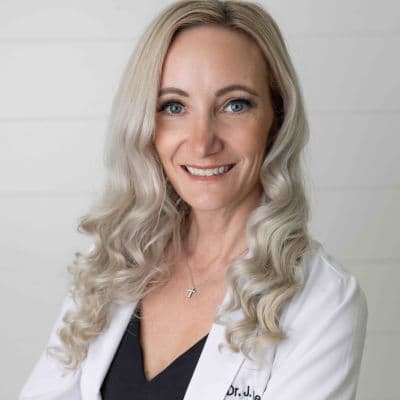
Doctor Eric's Graves Diagnosis and Recovery 1:04 In each episode, we'll bring you the latest insights 1:07 from leading health experts, medical innovators, and wellness warriors. 1:11 If you're seeking to transform your health journey, or if you're looking 1:15 for answers to burning questions, you've come to the right place. 1:19 Get ready to unlock the secrets of lifelong health and vitality. 1:23 This is Doctor Talks, 1:25 real talk from real doctors on the issues that matter to you most. 1:31 Hi everyone, it's Doctor Jen 1:33 and welcome back to the Integrative Health Podcast with Doctor Jen. 1:36 Today we're going to be talking all about Graves disease with Doctor Eric Ozanne. 1:42 He is a chiropractor, clinical nutritionist 1:45 and a certified functional medicine practitioner who has over 20 years 1:49 of experience in health and wellness and has been helping people 1:52 with thyroid and autoimmune thyroid conditions since 2009. 1:56 He's the author of the books Natural Treatment Solutions 2:00 for Hypothyroidism and Graves Disease, The Hypothyroid Healing Diet, 2:04 and Hashimoto's Triggers, and is the host of the Save My Thyroid podcast. 2:09 Doctor who's anti was personally diagnosed in 22,028 2:14 with graves disease, and after seeing how well a natural treatment approach 2:18 helped with his condition, he began helping others 2:21 with different types of thyroid and autoimmune conditions, 2:24 including hypothyroidism and graves disease 2:27 and hypothyroidism, and Hashimoto's thyroiditis. 2:31 Welcome, doctor. 2:31 Eric, how are you today? 2:33 Pretty good, doctor Jen, how are you? 2:35 Thank you for having me. 2:37 Yes, yes, I'm on my treadmill. 2:39 So I'm like, who might get a little winded? Notice? 2:43 So I, I love when doctors 2:48 become passionate about a certain disease because they've went through it. 2:52 Because when you really you are with their, 2:55 with your patients, you're like, I know how you feel. 2:59 So tell us a little bit about your diagnosis 3:03 with Graves disease in 2008. 3:07 Yeah. So 3:09 what was happening is I was a little bit overweight at the time. 3:14 So I was dieting, I was working out 3:16 and and it was helping was I was losing weight. 3:20 And eventually the weight loss became extreme, 3:24 which honestly, I just thought maybe it was related to what I was doing. 3:28 I wasn't honestly concerned. 3:30 But one day 3:30 I was walking in our retail store, specifically at Sam's Club, and they have 3:35 those automated blood pressure machines, and I took my blood pressure, 3:38 which was normal, but my resting heart rate was elevate. 3:42 It was 90, which was high for anybody and definitely for me. 3:46 So the next few days I would just manually measure my heart rate 3:51 and it was anywhere between 90 and 110, and then just kind of put in the pieces 3:55 together, with the weight loss and increased appetite again, 4:00 which I attributed to dieting and detoxifying. 4:03 But eventually I did see a doctor, had some blood test run was diagnosed 4:08 that hypothyroidism initially, then once an endocrinologist and was diagnosed. 4:13 So graves and I was new to hypothyroidism 4:17 at the time, I didn't have any experience, but I did attend 4:20 some functional endocrinology conferences. 4:23 Prior to that, I just set nutritional seminars 4:26 where they focused on thyroid health, essentially, and, and they very briefly 4:31 spoke about hypothyroidism, but most of it focus on hypothyroidism, Hashimoto's. 4:36 But they did speak a little bit about hypothyroidism. 4:38 So I knew that there was a potential to address this naturally. 4:43 And so, long story short, I decided I was going to take that
Hypothyroidism vs Hyperthyroidism and Antibodies 4:47 natural treatment approach, and it helped me get into remission. 4:51 And so far, knock on wood, hopefully continue to stay in remission. 4:55 Since 2009 and since then, I've been helping others 4:59 with hypothyroidism, as well as those with Hashimoto's. 5:03 That is super awesome. 5:05 And how how were the doctors 5:09 when you told them that you were not going to take, you know, radioactive iodine 5:13 and you weren't going to go on massive muscle? 5:15 Like, how did that go? 5:17 What did they say to you? 5:19 Well, they didn't say anything because I didn't give them the chance. 5:23 I mean, I pretty much, went to my primary care doctor. 5:26 Just got diagnosed at hypothyroidism. 5:29 He did write a prescription, I think, just for a beta blocker. 5:33 I think it wasn't until I got once the and of chronologies, 5:37 that she recommended the anti-air meds. 5:39 So I didn't take the beta blocker, but I didn't say that I wasn't going to take it. 5:43 I just just listened to what the doctor had to say. 5:46 And then what? The endocrinologist. 5:47 I just had a single appointment. 5:49 She actually didn't recommend. 5:51 Right. Active I had on her surgery. 5:52 She was actually a little bit more conservative 5:54 than the average endocrinologist, so she just recommended them as all, 5:58 which is the most commonly prescribed into thyroid medication. 6:02 I didn't tell her I wasn't going to take it. 6:04 And again, just just to let people know 6:07 I work with people who do take the anti-air medications. 6:10 I'm not saying there's 6:10 not a time and place for it, but there are natural approaches. 6:14 And I figured I'd give 6:15 the natural approach a try, but I knew there was only going to be 6:18 one appointment with the endocrinologist, in all likelihood. 6:22 So I just figured, you know, what's the use of telling her 6:25 I didn't even tell her my background. 6:27 I just got the diagnosis, and and I did ask her for an ultrasound, 6:31 got an ultrasound, a thyroid ultrasound 6:34 during the appointment, but that was the only time I ever saw her. 6:38 Yeah, sometimes I go incognito. 6:40 Also. 6:42 Yeah, it's hard though. 6:43 It's really hard. 6:44 But. And I hate it when like when you go to a doctor 6:48 and it says what's your occupation? 6:49 And I'm like, no, I want to be incognito. 6:53 I'm just kidding. Yeah. 6:55 So what what is the difference between hypothyroidism usually caused 7:01 by Hashimoto's and hypothyroidism, usually caused by graves disease? 7:07 Yes. Great question. 7:08 So hypothyroidism. 7:11 Excuse me. 7:11 Hypothyroidism is one. 7:13 You have low thyroid hormone. 7:16 So you have T3, T4, the main hormones, at least the ones that could be measured. 7:21 There's also t1, t2, which I still don't know a lot about 7:25 even though there are now T2 supplements. 7:27 But typically where we're measuring T3, T4. 7:30 So if someone has overt hypothyroidism and what I mean by that is some people 7:35 are subclinical where the thyroid hormones actually are normal. 7:39 But TSH is high. 7:41 So TSH thyroid stimulating hormone, that's a pituitary hormone. 7:47 And that when the case of hypothyroidism 7:51 we got elevated csh, low t3, T4. 7:55 And the reason why TSH is elevate is because it's trying to signal 7:58 to the thyroid gland to produce more thyroid hormone. 8:01 Hypothyroidism is the opposite. 8:03 You have elevated T3, elevated T4, and because of this the the 8:08 the pituitary gland is trying to signal to the thyroid gland 8:11 not to produce any thyroid hormone. 8:13 And so you have very low amounts of TSH, very low amounts of thyroid 8:17 stimulating hormone. 8:19 And so that's the main difference between hypo and hyper. 8:23 And then with Graves and Hashimoto's you have different autoantibodies. 8:27 So like you said most cases of hypothyroidism are caused by Hashimoto's 8:31 where you have the immune system damaging the thyroid gland. 8:36 And typically the antibodies associate with Hashimoto's. 8:39 You have thyroid globulin antibodies 8:41 and then you have TPO or thyroid peroxidase antibodies. 8:44 And with graves you have the immune system stimulating the TSH receptors of the 8:50 thyroid gland, which leads to the excess production of thyroid hormone. 8:54 And what graves you have, thyroid stimulating 8:56 immunoglobulins, which is a type of CSH receptor antibody. 9:00 And it's also important to mention that people could have more than one antibody. 9:05 So you people could have all three antibodies. 9:08 There are people I see you have the TSC, the thyroid stimulating immunoglobulins 9:12 that starts with graves, 9:13 but then also have thyroid procs and or thyroid globulin antibodies. 9:19 Yeah, it's really 9:20 fun when they all are positive and you're like But I mean it can happen 9:24 and they can swing between hyper and hypo and 9:28 and they'll let you know, I mean, the patients will let you know. 9:31 They, they know they know their body, which is great. 9:34 So what are some common symptoms with graves disease? 9:38 You mentioned the really excessive weight loss can be one of them. 9:42 And the heart rate and how do they differ from a Hashimoto's. 9:47 Yeah. 9:47 So yeah, as as you mentioned and as I mentioned. 9:50 So weight loss is more common with hypothyroidism. 9:55 Increased appetite, increased resting heart rate, 9:58 heart palpitations, tremors. 10:02 Anxiety is pretty common with hypothyroidism. 10:05 Insomnia, hair loss. 10:08 So again, a lot of different symptoms, loose stools even. 10:13 So what hypothyroidism you get that or is what hypothyroidism 10:16 you get that increased metabolism.
Symptoms and Thyroid Lab Testing 10:18 What hypothyroidism you have the opposite a slowing of the metabolism. 10:21 So typically you'll get fatigue. 10:24 You'll get weight gain instead of weight loss. 10:26 You might get brain fog. You'll get coldness. 10:29 That's pretty common. 10:30 And brittle hair is pretty common. 10:33 So, constipation, where as I mentioned, what hypothyroidism. 10:37 A lot of times 10:38 you'll get the loose stools, increased frequency of bowel movements. 10:42 So. And I mean, sometimes the symptoms aren't 10:46 consistent with the condition, meaning that sometimes 10:48 I'll have people with hypothyroidism who are gaining weight. 10:52 And, and again, there are numerous reasons for that, 10:55 but so most of the time you could go by symptoms 10:58 and then obviously what hypothyroidism, Hashimoto's. 11:02 There are other factors that could cause weight gain. 11:04 There are other factors that can cause fatigue. 11:06 So, just because you have fatigue and, and other symptoms 11:10 associated with hypothyroidism doesn't mean I'm 11:12 it could be adrenal problem, could be something else. 11:15 But but yeah, those are typically the difference 11:18 in the symptoms between hyper and hypothyroidism. 11:22 Yeah. 11:22 And never forget this one patient. 11:24 She just had back pain and weight loss. 11:30 Now she was kind of not sad about the weight loss. 11:34 But she was like worried because it was very excessive. 11:36 And she had low back pain. 11:37 So she reached out to me and I told the thyroid labs and I'm like, 11:43 you have hypothyroidism. 11:45 And it was interesting because hers was induced by if I had the Covid. 11:49 So she had the virus and she had that 11:53 reactive thyroiditis which caused her to be hyper. 11:57 And I treated her, you know, with a low dose naltrexone ivermectin. 12:01 And we watched, sometimes steroids are used with these, 12:05 but we were coming down the inflammation with some botanicals instead. 12:10 So, and her thyroid recovered. 12:12 It did fine, but lots of little nuances. 12:17 So yes, rapid weight loss it. 12:21 Well some people well with the semi blue tide 12:26 now we see that a lot. 12:27 But you really have to make sure that you're really dialing down 12:31 on your symptoms. 12:32 And certain things can can trigger this like a virus like gut health. 12:37 So you know, you really have to make sure you're listening to your body. 12:40 And then going to a functional or integrative doctor, 12:45 because conventional medicine will sometimes miss this. 12:48 They'll miss the autoimmunity because they'll just be ordering a TSH. 12:54 So let's dive in a little bit more to the thyroid labs 12:58 because when we ask for a thyroid panel, what is the doctor? 13:04 You know, you usually order just a TSH. 13:07 And that's not good enough, right? 13:08 So Doctor Eric, let us know what we should be getting. 13:12 Yeah, sure. 13:13 So yeah, definitely want to do more than just TSH. 13:16 Which again, is a pituitary hormone. 13:19 We want to look at the thyroid hormones. 13:21 So there's the free hormones and there's the total hormones. 13:25 I think what? 13:26 Hypothyroidism. 13:27 It's okay to just look at the free hormones. 13:30 Free T3, free T4, for hypothyroidism, 13:34 there's an argument to do both, that many don't do both. 13:40 And I think even if you just do free T3, free T4 for hypothyroidism, 13:44 Hashimoto's, there's value. 13:45 But but the total T4, most of the most of the thyroid hormone 13:49 is actually bound to a protein only a small percentage is free. 13:52 So when dealing with hypothyroidism and damage to the thyroid gland, 13:57 sometimes it can be beneficial to look at the total output of thyroid hormone. 14:01 But with our gland and look at the total T4 and total T3. 14:05 And then there's also reverse T3. 14:08 So reverse T3, so well let's cover what T3 is. 14:12 So T3 is the active form of thyroid hormones. 14:15 Most of T3 is produced by the conversion of T4 into T3. 14:20 And you have what's called reverse T3 which is the inactive form of T4. 14:26 So whereas again free T3 is the active form of thyroid hormone. 14:31 And so it kind of looks to slow things down. 14:34 So if you and if you have like a conversion problem, problems 14:38 converting T4 to T3, you might see that elevated reverse T3. 14:42 Now I will say what hypothyroidism I do not test reverse T3 14:47 because reverse T3 is almost always elevated in hypothyroidism. 14:51 So it's really not giving me any information that's helpful. 14:56 So and those what hypothyroidism? 14:58 Hashimoto's I think reverse C3 can be helpful. 15:01 Not as much with hypothyroidism. 15:04 And then there's those antibodies that that we mentioned. 15:06 So you're right there are some doctors 15:09 that don't do anything when it comes to testing for the antibodies. 15:13 And especially what type of ours I'm Hashimoto's. 15:16 Part of the reason is because their treatment will differ 15:19 pretty much thyroid hormone replacement will be 15:22 the recommendation regardless of whether someone has the antibodies. 15:26 But yeah, you're right. 15:27 You're absolutely right. 15:28 We want to know is there an autoimmune component? 15:31 Because from a functional medicine perspective, we want to do things 15:34 to find, remove triggers, heal the gut, correct underlying imbalances. 15:39 So we want to look at those antibodies, those Tara globulin antibodies 15:43 I mentioned earlier those TPO or thyroid peroxidase antibodies. 15:47 And then in the case of graves there's those 15:51 thyroid stimulating immunoglobulins. 15:53 And I will say more times than not in 15:57 hypothyroidism they will look at the antibodies. 16:01 Just because you mentioned before like an example of of thyroiditis, 16:05 like there's subacute thyroiditis caused by viruses. 16:08 And so many times 16:09 they we'll look at antibodies to see if there is that autoimmune component 16:13 or if it's just going to be transient due to, thyroiditis. 16:17 But then sometimes I'll do what's called the rate active iodine uptake test, 16:22 where they will give a small amount or radioactive iodine. 16:25 And then if the value is really high, if the thyroid up 16:29 takes a lot of that radioactive iodine, 16:32 then that could be diagnostic of graves disease. 16:36 I can't say I love that test. 16:37 I mean, if someone does the antibodies and it's positive, 16:42 then there's really not 16:43 much of a need to do that test, even though they will say to look at nodules. 16:46 But you could do a thyroid ultrasound that also will tell if there's nodules 16:52 and give characteristics to see if it's potentially malignant or not. 16:57 But but yeah. 16:58 So you want to look at the TSH, thyroid hormone, c3, T4. 17:03 Some cases reverse T3 17:06 and definitely want to look at those antibodies. 17:09 And then obviously there's other tests not just a thyroid, 17:11 but I think you just wanted to focus on the the thyroid panels. 17:15 And antibodies I hear. Right. 17:17 Yeah absolutely. 17:18 And they can 17:19 write all those down and be like I want to complete thyroid panel. Yes.
Root Causes of Thyroid Autoimmunity 17:24 Because it's complete means different things depending on the training. 17:29 So you want to be very specific and write it all down and, 17:33 and hand it to your doctor. 17:35 And if your doctor won't order them now there's a lot of different 17:39 online lab places that you can order labs yourself. 17:42 You just won't get insurance coverage on it. 17:45 So. Exactly. 17:46 Yeah. 17:46 Well, what exactly causes thyroid autoimmunity? 17:50 I feel like we are seeing so much more autoimmune disease. 17:56 Yeah, that is true. 17:58 And there's numerous factors for that. 18:00 I mean, you mentioned, covet a few years ago. 18:03 So we saw not only thyroiditis, but it actually did increase 18:06 the incidence of graves and in some cases Hashimoto's as well. 18:10 But yeah, let's talk about some of the causes. 18:12 So there's what's called the triad of autoimmunity. 18:15 Also known as a three legged stool of autoimmunity. 18:18 And according to this triad, 18:20 there are three components necessary for autoimmunity to develop. 18:24 Now, the first one is a genetic predispose physician. 18:27 And unfortunately 18:28 we can't change our genes, but we can modify the expression of our genes. 18:32 And sometimes we don't know of family history. 18:35 Like I dealt with graves, but there was nobody 18:38 I know of in my family who had a history of graves disease. 18:41 So it does seem like there is a genetic component. 18:44 But again, that doesn't mean 18:45 that there'll be an obvious genetic of obvious family history. 18:49 But there is a genetics that's second component of the triad 18:53 of autoimmunity is one or more environmental triggers. 18:57 And different examples of triggers could be certain foods such as gluten, 19:02 stress even could be a trigger. 19:05 Environmental toxins, and arguably environmental toxins 19:09 are a big reason for the increased prevalence of autoimmunity. 19:13 Just, that's unfortunately getting worse and worse. 19:16 And then, in certain infections. 19:18 So we mentioned viruses, but you could have gut infections as well. 19:23 So you could have stealth infections, such as Lyme disease. 19:27 And and then the third component of the triad of autoimmunity is 19:32 that increase in intestinal permeability, which is also known as a leaky gut. 19:36 And so most of the immune system cells are located in the gut. 19:39 So you need a healthy gut to have a healthy immune system. 19:43 And so the good news is that we could address the triggers. 19:48 We could find or remove those triggers. 19:50 We could do things to heal the gut 19:53 and by fine removing triggers, healing the gut. 19:58 We could reverse that autoimmune component. 20:00 Now is it a cure? 20:02 I mean, that's debatable. 20:04 I mean, because there's that genetic component. 20:07 I don't like using the word cure, even though, honestly, 20:09 I feel like I've been cured, like 15 years have gone by since I dealt with graves. 20:14 I've had scares where I thought I might relapse, like, I did have chronic Lyme 20:19 disease in 2018 and was thought that might lead to a relapse. 20:24 And thankfully it didn't. 20:25 But yeah, I mean, definitely it's, 20:29 it is possible to fine remove the triggers, heal the gut. 20:33 And by doing that, get those, balance the thyroid hormones, 20:37 get those antibodies to a healthy level, to a normal level. 20:42 And, and that's what I strive to do. 20:44 And that's what, of course, you do as well with your autoimmune patients. 20:49 Yeah. 20:49 And I always tell my patients or anyone that will listen, 20:53 if you have one autoimmune disease and you're not fixing the root cause, 20:57 something else, whether it's another autoimmune disease 21:00 or an imbalance, cancer or something else is going to sprout up like like weeds, 21:06 you know, like you got to get to the root cause 21:08 or they're going to grow back or something else will grow. 21:11 So it's very it's very important to look for those root causes 21:15 and not just do what conventional medicine does is Band-Aid it. 21:19 Unfortunately. 21:21 Agree. Yeah. 21:22 It's it's can be frustrating. 21:24 So what are what diet 21:27 do you recommend to those with Graves and Hashimoto's. 21:32 Yeah I mean it's a great question. 21:33 I mean, I think we both probably would agree 21:35 that there's not a single diet that perfectly fits everyone. 21:40 I do like Autoimmune Paleo 21:43 as well as I like regular paleo to regular paleo is a pretty healthy diet. 21:47 So I do usually recommend an IP or autoimmune paleo 21:51 diet to my Graves and Hashimoto's patients if they are willing to follow it. 21:56 If they're 21:58 if because, again, we don't want someone to be stressed out about the diet. 22:02 So if they're, used to eating fast food and refined foods and sugars, 22:06 you might just have to start with, 22:08 let's just eat whole healthy foods, try to incorporate more vegetables. 22:12 So it really does depend on the person. 22:14 But I do 22:15 if someone's willing to follow a chip diet for, 22:19 I mean, ideally I would say a few months, but even if it's 30 days, 22:23 sometimes it's a mental game. A lot of times it's a mental game. 22:26 Let's start with 30 days, and let's start with a week or two and see how you do. 22:30 And and many times I'll do fine. 22:32 And again, if they're struggling, maybe a regular paleo diet, 22:35 for example, is a better fit or a modified paleo diet. 22:39 So so again, the type of diet differs even though it like I said, I think of AP 22:44 diet as a good starting point, because it's a type of elimination diet.
Diet and Lifestyle for Autoimmune Thyroid Disease 22:49 But the most important things 22:50 whole healthy foods try to eat organic whenever you can. 22:54 Try to minimize refined foods and sugars. 22:57 Ideally, cut that out at least while healing. 23:00 Definitely avoid things like gluten, and I do recommend avoiding dairy and, 23:05 so, so yeah, just, again, as we both know, 23:09 if you have ten different practitioners, we'll all have different perspectives 23:13 when it comes to diet, but I think we all would agree. 23:17 Let's avoid the refined foods. 23:19 Let's avoid, the sugars. 23:21 Let's avoid the unhealthy oils. 23:24 Let's try to avoid the GMOs. 23:27 So if you get ten functional medicine practitioners, we'll all agree on some of 23:31 at least some of the basics and agree that a whole healthy diet is important. 23:36 And what's crazy? 23:38 And you know this as well. 23:39 Most medical doctors will dismiss diet. 23:42 You go I mean, I don't know how many times I've heard or a patient 23:45 brought up a diet to their medical doctor or endocrinologist. 23:49 And the endocrinologist, for example, is like, no diet has no impact on 23:55 whether it's Graves or Hashimoto's or other autoimmune conditions. 23:59 And, thankfully those people are working with me. 24:02 So they know better. 24:04 But unfortunately, there are a lot of other people 24:06 who don't know better, 24:07 and they probably take the word of their doctor and figure, hey, you know, 24:11 that's not going to make a big deal, so I'll just eat whatever I want. 24:14 But yeah, definitely, definitely can have a great impact on 24:17 one's health and recovery. 24:20 Yes it can. 24:20 And there are studies out there showing that diet can influence 24:24 in a positive way Hashimoto's. 24:26 Because I did a lecture 24:28 on it for two conventional doctors on Hashimoto's, an integrative treatment. 24:33 And I dug in and I found all those studies and I'm like, you can't refuse this. 24:39 Like you just can't because the studies are there. 24:42 So it is frustrating. It's 24:45 I don't know I don't know if they just stop reading 24:48 or they just don't have time to talk about nutrition, 24:51 but definitely it's the cornerstone to healing autoimmune disease. 24:55 So what are some of these different treatments for graves? 25:01 And tell us about what you personally did and 2008. 25:06 Sure. 25:07 So again, as I mentioned, dance, I thyroid medication was given 25:12 to me as an option and I wasn't completely opposed to taking it. 25:16 If I absolutely needed to, I would. 25:19 But I took a I took a couple of herbs. 25:21 So one herb is called bugle weed 25:24 and that's an herb with anti thyroid properties. 25:27 And so I started with the bugle weed. 25:31 And and it worked wonderfully within a few weeks of taking it 25:35 I noticed my heart rate was decreasing. 25:38 Even before doing blood tests. 25:40 That's how I knew it was working. 25:41 I was still having some heart palpitations. 25:43 And so I added another herb called Mother Wart, 25:47 which, focuses more on the cardiovascular system. 25:49 I think of it more as a natural beta blocker. 25:52 You know, of course, the mechanism's not exactly the same, but but. 25:56 So I was on bugle weed. 25:57 I was on, the mother ward. 26:00 There's some people on lemon balm, which I did not take at the time, but 26:03 just because I wasn't familiar with it. 26:05 But lemon balm is also an herb, and that has a calming effect. 26:10 And, not it's not the same as bugle weed, but, 26:14 but again, a lot of people, it could help with anxiety, 26:17 could help with their having issues with sleep 26:19 depending on the course of the sleep issue and. 26:23 L-carnitine. 26:23 So, L-Carnitine, there's a few studies showing l-carnitine tartrate 26:27 in higher doses, between 26:31 2000 and 4000mg per day 26:35 can block the entry of thyroid hormone into the cell. 26:39 So that also could be beneficial in some cases. 26:43 So from a symptomatic management perspective, those are some of the 26:49 the natural agents that someone could 26:51 potentially take instead of anti-air medication. 26:54 I'll say that the one 26:57 I mean, there's a few potential downsides, obviously. 27:00 I mean, well, a downside of the medication is that a lot of people 27:04 react to them with them as well. 27:06 Like with them as well. 27:07 Very commonly will cause side effects, 27:11 and including elevated liver enzymes and sometimes depressed the 27:15 white blood cells and then other times, just not just the labs. 27:19 It's just how someone feels on my quads, rashes and my quads dizziness. 27:23 That being said, some people could react to the herbs. 27:26 It's not as common, but you could always have a negative, 27:29 like a just, an allergic, an allergy to like an herb, for example. 27:33 And, so there's that. 27:35 But also they don't work. 27:37 I mean, honestly, the anti-terror medication definitely works better. 27:42 Like it's it's more effective. 27:43 But again, it's risk versus benefits. 27:45 Also, studies have shown that 27:47 both of them is on to you can affect intestinal barrier. 27:51 So pretty much potentially caused a leaky gut effect 27:54 cause dysbiosis imbalances of the gut flora. 27:58 But the problem is the ant, the natural agents don't always work. 28:03 So, like, in my situation, I wasn't taking anything. 28:07 So, and if someone is working with me 28:10 and they're also not taking anything and it's like, okay, let's try the herbs. 28:13 It's a more challenging situation if someone is already taking the ants 28:17 at their medication. 28:18 First of all, since I don't prescribe, 28:22 I can't tell someone to stop them at them at all. 28:25 But even if I could, it's a it would be a tough situation 28:28 because that might they might not respond to the bigger weed.
Natural and Conventional Graves Treatments 28:31 So some people will actually take 28:33 the bulgogi, the mother ward, maybe even the l-carnitine. 28:37 At the same time they're taking antithrombin location. 28:40 And then if they start becoming hypo, then they could go back 28:44 to the prescribing doctor and get, whatever they're taking with them 28:49 is all P2. 28:50 The dosage, decreased of that. 28:53 But that. 28:54 Yeah. 28:54 So that's 28:55 pretty much the symptom management aspect when it comes to hypothyroidism. 28:59 Graves. 29:00 And then as far as other treatment options 29:03 really depends on the functional medicine testing. 29:06 What what we see with, the testing we do, whether we do an adrenal saliva test 29:10 or a dried urine test like the Dutch test, a comprehensive stool 29:14 test and organic acid test. 29:16 I'm not saying everybody needs all those tests, 29:18 but that's part of the health history that we all do, is just to kind of 29:22 get an idea of what testing someone will need. 29:25 And then based on the findings of the test, we use those 29:28 to try to find the triggers, underlying imbalances 29:32 and then base our treatment off of those. 29:36 Yeah. 29:36 And what you were saying is sometimes the patients are on the medication 29:40 and then you put the herbs in. 29:42 And I've had 29:43 a few cases where we had to do that, and then we would just drop down 29:46 on the medication as we were working on the root cause, you know, whether it's 29:51 infection, parasites, leaky gut and then they could come off of it. 29:55 So it's, it's it's you have to tell the patient, you know, 30:00 if you start feeling hypo thyroid symptoms, 30:04 you know, decreased energy gaining weight, constipation, 30:09 you know, we can get more blood work right away and check that. 30:12 But also, 30:13 you know, be aware, we don't want you to swing back the other way. 30:16 If they're on that medication. 30:18 The herbs in general, although it's not going to like 30:21 force things as much as the medication that exactly I've seen. 30:25 Yeah. 30:25 And we see that because, you know, God gave us botanicals and herbs and, 30:31 you know, medication is beautiful when needed. But 30:35 botanicals are a little bit better because they're working with your body 30:39 as opposed to that medication that kind of forces its way in there. 30:42 Right. 30:43 So, that's I think that's great 30:46 that you were able to manage all your symptoms 30:50 with just the botanicals and herbs while you were working on your root cause. 30:56 Yeah. 30:56 And there's also it's worth mentioning, I mean, there's 30:58 no magic supplements out there that works for everybody. 31:02 And usually you got to do more than take supplements. 31:04 But there are some great supplements, like selenium, 31:07 very helpful for both Graves and Hashimoto's. 31:10 And there are numerous studies showing that selenium can help with our 31:14 antibodies. 31:15 Now, again, if you just take selenium and don't do anything to address 31:19 the underlying cause, it's probably going to have minimal effect. 31:21 But it can help to decrease oxidative stress. 31:25 We know both know how important vitamin D is, 31:27 which is more of a pro hormone than a vitamin. 31:30 But still, you could easily test for vitamin D and the blood. 31:34 And then if you're deficient, I mean obviously try to get as much sun 31:37 as you can with I mean safely get as much sun as you can. 31:40 And then, just also might need to supplement the vitamin D, 31:45 which I need to do, because quite frankly, 31:47 I don't get as much sun as I probably should be getting. 31:51 And then even if you get regular sunlight, I mean, I, 31:54 I mean, I people in Arizona and Florida 31:57 and sunny areas who are low in vitamin D. 32:00 Now, part of that might be because if you're in Arizona, for example, 32:03 and if it's in the summer, you're probably not outside because it's so hot. 32:07 And even in Florida, that could be the case too. 32:10 But so even if you're 32:11 living in a sunny area or even if you're living in a sunny area 32:15 where it's not that hot 32:16 but you're getting regular sun exposure, you might still be deficient. 32:19 Or maybe you're within the lab range, but less than optimal. 32:24 I mean, that happened recently with my wife. 32:25 She got vitamin D, and, she she was taking it for a while. 32:31 She, for whatever reason, stopped taking it. 32:33 She had a blood test on her. 32:35 Vitamin D was in the 30s, and the doctor was like, oh, you know, that's fine. 32:40 Everything's fine. 32:41 And I'm like, no, you really want it above 50? 32:43 Some will say even between 32:44 like 60 and 80, but I don't like to see it lower than 50. 32:48 So the medical doctors still are recommending the lab ranges. 32:53 Or at least many of them are less. 32:54 They have a functional medicine background, but, but yeah. 32:58 So vitamin D, selenium, omega three fatty acids, I can't say I have everybody 33:04 do a fatty acid panel, but I I'll if someone does a fatty acid panel 33:10 and if they're not taking a fish oil and they're not eating fish regularly, 33:14 they're almost definitely going to be deficient in omega threes. 33:18 So yeah, those are some of the I mean, there's 33:20 definitely I mean, all the nutrients are important. 33:21 Of course, but those are three that I wanted to mention here 33:25 that are really important. 33:28 Yeah, absolutely. 33:29 And with regards to the omega three 33:32 we have an abundance of like seed oils in omega six. 33:36 Like that sneak in to the diet. 33:39 So you really want that omega three level to be adequate to balance that out. 33:43 And and that can be different. Exactly. 33:46 Yeah. 33:46 Even if you just eat out occasionally, 33:48 it's like, there's probably a seed oils in it. 33:51 And I'm like, anyway, what did you find out 33:56 was your trigger when you were diagnosed in 2008? 34:01 Did you find that out? 34:04 I mean, definitely, stress was a major factor and major trigger. 34:08 One thing I didn't mention, though, with the stress, 34:11 I mean, emotional stressors were big. 34:13 My adrenals at that time, I did a adrenal saliva test. 34:16 I don't even I don't even know if such was available then, but, 34:20 my adrenals, everything was low. 34:21 Cortisol was low, DHEA was low. 34:24 Secretary IGA was measured on that test. 34:26 That was low. 34:27 But I was also overtraining. 34:30 So what I was when I mentioned I was dieting 34:33 and exercising, I was definitely overdoing it. 34:36 I didn't realize at the time, even though I should have 34:38 what my background, but still I wasn't listening to my body. 34:42 And I'm sure that also played a role in how bad my adrenals looked. 34:47 And then also what's interesting 34:50 is when I was taking a natural treatment approach, 34:54 there was no autoimmune protocol back then, no IP diet back in 2008. 34:59 So I was just following, for the most part, a regular paleo diet. 35:02 I wasn't eating eggs just because, at least back then I wasn't a big egg person, 35:06 but I was eating nuts, nuts, and seeds on a regular basis, 35:10 and I kind of hit a roadblock in my recovery, 35:13 and I didn't know if was the nuts and seeds. 35:15 But I decided to take 35:16 a break for a few months, and then maybe it was a coincidence. 35:19 But after eliminating the nuts or taking a break because I do with them 35:23 these days, it's not like I don't eat them. 35:25 But back then I took a break and things I started to progress. 35:30 And I mean, they definitely have health benefits. 35:33 It just could be a little bit harsh on that gut while healing. 35:36 And we spoke about the importance of having a healthy gut. 35:38 So that I think also, was a factor. 35:41 But in my case, definitely stress, if I had to say 35:45 was like the number one trigger that I would probably point to that.
Triggers, Nutrients, and Iodine Caution 35:50 Yeah, I love it. 35:51 Well, it's interesting about the nuts and people get confused 35:55 about food sensitivities. 35:56 And will I never be able to eat that again? 35:59 Well, if you take it out 36:02 and let the gut heal, sometimes you can add things back in. 36:06 And that's where these food sensitivity tests, it's not like set in stone. 36:11 This is what you can't eat forever. 36:13 It's kind of like this is what you need to remove right now. 36:17 Work on healing your gut and reintroduce it. 36:19 You know, possibly later. 36:21 That was me and nightshades a couple of years ago, 36:24 and I just noticed that they were bothering me 36:28 and I would just have them, you know, every once. 36:29 And then I eliminated them for two months, and then now I can eat nightshades. 36:35 And not that I go crazy with them because I try to do 36:37 more animal based at this point of my life. 36:41 But, that was kind of cool how you saw that, you know, drawing back on it. 36:47 And then bringing it back in. 36:49 And that's hard because when, when we have these patients 36:54 with autoimmune diseases, a lot of times, yes, gluten free, 36:57 which I want all my Hashimoto's and Graves patients 37:00 just to be gluten free, but the dairy free, 37:04 because if you're dairy free and gluten free together, what are you having? 37:08 Tons of nut products like nut milks and point. 37:12 Yeah, yeah, 37:13 because I did a food sensitivity test on myself when I was still a little bit 37:17 more dairy free. 37:18 Now I do a lot of raw dairy and raw cheeses, organic, and I'm fine with it. 37:23 But back then it, peanuts and almonds I reacted to 37:28 and I'm like, oh, because I'm having so much of them. 37:31 Almond cookie and you know what I mean? 37:34 Yeah. 37:34 So, very, very interesting. 37:38 So I would love to hear your thoughts on iodine, iron and thyroid health 37:43 and similar to what you were saying about diet 37:47 and different, you know, functional and integrative practitioners. 37:50 Iodine is one of those, subjects that we all differ on. 37:56 Yeah. 37:56 I mean, you're absolutely right. 37:58 Iodine is very controversial, especially in the world of thyroid health. 38:02 I mean, like any mineral, we need iodine. 38:04 Iodine is actually important for the formation of thyroid hormone. 38:09 But too much or too little iodine can be problematic. 38:13 And there's resources out there that recommend 38:15 for people to take high dose iodine. 38:18 And, and then there are other resources that say you should stay away from iodine. 38:23 So, you know, I will say that my experience with iodine 38:28 personally in the past was positive because when I was prior 38:33 to my Graves's diagnosis, I mentioned I used to attend, 38:38 and still do attend nutritional conferences, 38:41 as part of my continuing education credits. 38:44 And then even beyond that. 38:46 But back then, here again, this is even before I was diagnosed. 38:51 So before 2008, there were sources saying that you should take high dose iodine. 38:57 And so I've, you know, I can't say I haven't smoked 39:00 or because I have tinkered myself with high dose iodine and I did fine, I didn't. 39:04 I did like a urinary iodine loading test, which did show a deficiency. 39:09 But I guess once I was dealing with graves, I was recommending iodine. 39:14 And then I saw, some people didn't do well. 39:18 What? I mean, again, not as some people did. Fine. 39:20 But then I became more cautious over the years. 39:23 Just because you just don't know how someone's going to respond. 39:26 And so I can't say that I have people these days, 39:30 you know, do the iodine testing and then supplements if they're deficient. 39:34 When it comes to 39:35 food sources, even that I'm a little bit cautious, you know, like, 39:39 for as far as, like, see, vegetables that are really high, like kelp. 39:44 I would recommend maybe not eating that 39:48 while healing, even though, again, some people are able to. 39:51 And I talk about this in my book, The Hypothyroid Healing Diet. 39:54 I also talk a little bit about iodine in my book Hashimoto's Triggers. 39:58 So again, if you read those, you'll see that I'm not anti iodine. 40:01 I'm just cautious about iodine. 40:04 But then like I'm not concerned usually if someone's taking a multivitamin 40:09 with some iodine or again if they're getting iodine 40:11 from other sources like eggs are a source of iodine. 40:14 And I mean, so I might extreme where some people are 40:18 pretty extreme, especially with hypothyroidism 40:21 where they'll say you need to avoid, like all sources of iodine. 40:24 So I think in moderation. 40:25 And for most people it's okay. 40:28 But as far as like taking separate iodine supplements 40:32 to that or doing urinary tests, and then if it's deficient, 40:36 taking high dose iodine, WhatsApp supplements that I would say 40:40 be cautious about because, I'm not saying there's never a time and place, 40:45 but it can in some cases cause problems. 40:48 Yeah, absolutely. 40:50 It's it's a difficult subject. 40:52 And this is where you kind of brought the point. 40:55 Once again, it's personalized. Right. 40:56 It's not like everyone needs to follow this. 40:59 We need to look at the individual patient. 41:02 So exactly. Yeah. Oh awesome. 41:05 Well Doctor Eric, thank you so much for sharing 41:08 your personal history of graves and so many good pearls today. 41:14 For those that think they might be struggling with an autoimmune 41:17 thyroid disease, and especially those that are dealing with graves
Where to Find Doctor Eric Ozanne 41:21 because there isn't as much like information out there, right? 41:25 Because it is. It isn't as common as Hashimoto's. 41:28 So sometimes graves patients, they just kind of get swept to the side. 41:33 So this was such a great, informative conversation. 41:36 How can everyone listening out there, how can they find you? 41:41 Yeah. 41:41 Thanks, doctor. 41:42 Jen, it's it's been a great end of this conversation. 41:45 And, yeah, people could find me on, Well, 41:49 my podcast, which you've been a guest on, so it's called Save My Thyroid. 41:53 And they could, visit their fame, their favorite podcast platform 41:57 or just visit, say, my com and click on podcast. 42:01 I actually have another website. 42:03 So say my a.com is like three and a half years old. 42:06 My original website from 2010, natural Endocrine solutions.com 42:11 has hundreds of articles and, blog posts. 42:15 But when I came out with the same with our podcast, I'm like, you know, say 42:18 my thyroid is so much easier to remember, so I need to have a say my direct 42:22 com website too. 42:23 So I have two websites and then the books, as you mentioned, 42:27 three thyroid health related books that they could find on Amazon and, and 42:31 yeah, those I mean, I have a YouTube channel as well called Natural Thyroid 42:35 Doctor and so, so yeah, those are some of the main places people could find me. 42:42 Awesome. 42:43 Well, thank you so much. 42:44 It was great talking to you today. 42:46 Thank you. 42:46 Thank you so much, doctor Jen, thank you for tuning in to Doctor Talks. 42:51 We hope today's episode has enlightened 42:52 and inspired you on your path to optimal health. 42:56 Each day is a new opportunity to make choices that empower your well-being. 43:00 For more insights and strategies, subscribe to our podcast 43:04 and visit our website. 43:05 W w w di doctor Talksport.com. 43:09 Stay connected, stay healthy and join us next time on Doctor Talks. 43:14 Real talks from real doctors on the issues that matter to you most.

Comments