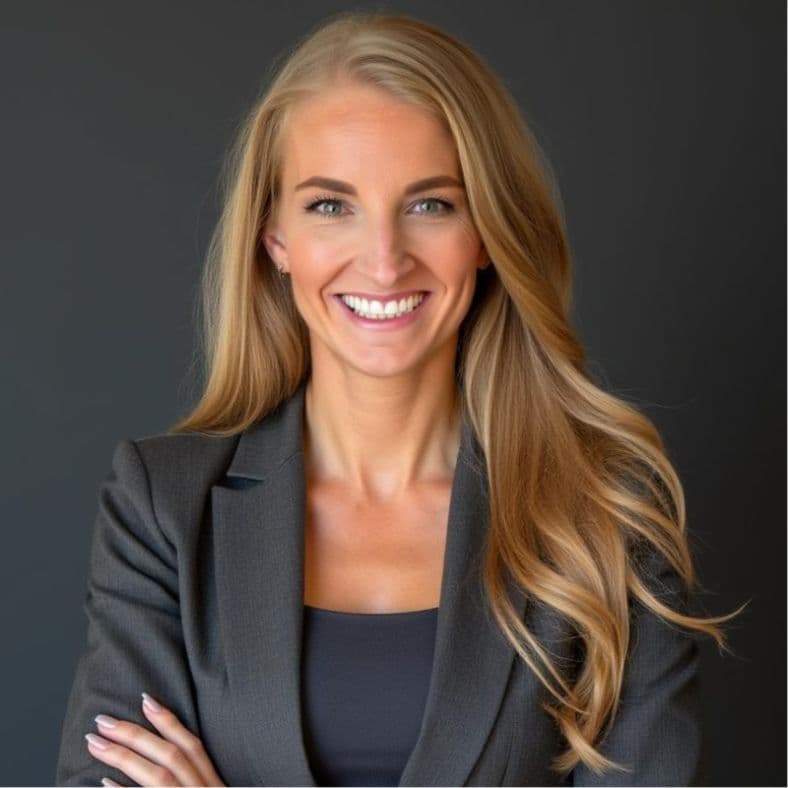
Full Transcript Meet Dr. Sarah Matt 0:01 Welcome to the Startup Physicians podcast, where we explore how doctors 0:06 lead healthcare innovation. Please like and follow our show to join our 0:10 community of physicians contributing to meaningful change. 0:16 Hi everyone, welcome back to the Startup Physicians podcast. This is your host, 0:20 Dr. Allison Kerfin, and I'm joined by a very special guest today, Dr. Sarah 0:26 Matt, who um I I was really excited to connect 0:30 with you, Sarah. I have actually been following a lot of your thought 0:33 leadership on LinkedIn for quite some time. So, first things first, if anyone 0:37 is on LinkedIn, go go follow Sarah Matt cuz she says some pretty incredible 0:42 stuff. But, Sarah has this incredible journey from being a practicing burn 0:47 physician all the way through multiple startups, a ton of different industry 0:51 experience, um and and just a lot of perspective on 0:55 strategy. So, Sarah, thank you so much for joining me today. 1:00 >> Well, I'm excited to be able to give a little bit back to the physician 1:03 community cuz I know that my journey was not particularly straight, and I think 1:08 that people think it should be easy, but maybe it's not, but totally worth it.
From burn surgery to business strategy 1:12 >> Yes, it is totally worth it. Well, I'd love if you could start by telling us a 1:17 little bit about your serpentine journey with maybe some little rabbit holes here 1:22 and there, but um what where did you start with your 1:25 medical practice and what led you to where you are today? 1:28 >> Yeah, so I trained as a surgeon, my fellowships in burns, and during my burn 1:32 fellowship, it was half clinical, half research, and I was doing all this crazy 1:36 stuff that never done before. Asking for money for grants, I was doing all this 1:39 complex experimentation, and everyone around me just they complained, and I 1:43 was like, "Hold on, but I'm getting money. This is great." And I realized 1:46 that this was business cases, and this was operations and project management, 1:50 and I was actually pretty good at it. And at the same time, in trauma surgery, 1:55 as a burn surgeon, it's a rough life and you can only take 1:59 care of one person at a time, maybe 20, 40 in a day if you're lucky and I felt 2:04 kind of confined. So, I was thinking about how I can make the most impact and 2:09 I felt I could do something bigger. Wasn't quite sure what, but I thought I 2:12 could do something bigger. And so, I decided to take the jump. I went to go 2:16 get my MBA at UT Austin and kind of made the journey from there. Now, I'll tell 2:20 you through my whole career, I've always had some kind of clinical practice. So, 2:25 when I first started out, I had a Medicare house call practice. 2:28 A lot of social work, a lot of homebound Medicare patients, which was, you know, 2:32 tough, complex individuals. I did urgent care, I've done charity 2:36 care and I still do charity internal medicine here in upstate New York. So, 2:40 that's always been a piece of what I've done and I actually think it's been a 2:44 huge differentiator for me through business startups, etc. 2:49 So, to ramble a little bit more, I ended up 2:53 at NextGen, mid-tier. I was at little places and startups. I had some really 2:57 cool exits. I went to Oracle, built out their clouds for healthcare and life 3:01 sciences around the world and then I got to help them acquire Cerner. So, I was 3:05 just about the only doctor at Oracle until we acquired 26,000 new best 3:09 friends. So, pretty crazy, really amazing scale, huge global impact. 3:15 What does one do after that? Well, I went back to startups. So, I was the 3:18 chief strategy officer at Sabanto, focused on remote robotic surgery and 3:22 then last year, I decided to go out and do independent consultancy and 3:26 fractional C-suite for my own independent practice because I was 3:31 launching my book, The Borderless Healthcare Revolution, which was a 3:33 national bestseller last year. >> Okay. 3:36 Wait, now you have to say it a little slower. What is your book called? Oh, 3:40 you even have a >> course I do. Of course I do. The 3:42 Borderless Healthcare Revolution. >> Tell me about it. 3:45 >> Absolutely. So, it's all about healthcare access, which is what I'm the 3:49 most passionate about and how technology can decrease barriers to care. 3:53 So, it was really exciting to work with Wiley Publishing to bring it to the 3:57 world and it's been interesting to kind of be able to speak to providers and 4:04 tech companies about how they can work together to make things better. 4:09 >> That's such an exciting journey and I think in our kind of conversation right 4:13 before this, I think we both really conveyed how much we enjoy working with 4:18 product and and strategy in general, but >> Absolutely.
Why physicians belong in startup strategy 4:22 >> I think that physicians bring a really unique lens to product development. What 4:27 have you seen there? >> So, first, 4:31 doctors could run the world, absolutely. We are just kind of in our own way. So, 4:36 we have so much to give right now. So, whether you want to run a business or 4:40 not, your knowledge can be utilized in so many ways by tech companies in the 4:46 space. They always need KOLs, key opinion leaders, people on their 4:50 advisory board, folks to take a look and see what they're up to because 4:55 most of the people building today have not practiced in hospitals or 4:59 offices. So, we know the problems and when we see things, we can tell them 5:04 it's not the solution really easily. >> Yeah, and it's not even just the 5:08 problems. I've worked with a lot of development teams and they say like, 5:11 well, we could code anything. Like, we could make anything, but we don't know 5:17 what all the edge cases are on on a scenario. I remember even when I was 5:22 working at my firm and some of the early like product road mapping we were doing, 5:28 a lot of what I was bringing to the table was describing how patients moved 5:32 through the system. So, like the core population that we were 5:35 targeting. Like, who are they? What What How do we define them? Where do we find 5:40 them? Um and and how do they move through the system? What makes them end 5:44 up in the ER? What makes them end up in the hospital? What are all these failure 5:48 points along the way that we know this like the back of our hand? We live it 5:53 every day. We have hundreds, if not thousands, of patient 5:58 stories on our mind that is, you know, defining our viewpoint on it and can 6:04 really help with designing the strategic solution. 6:09 >> Agreed. I think, you know, one of the things that is most important is that 6:14 clinicians need to be at the table. So, I think it's important for us to be at 6:18 the table even at the earliest stages when you are designing something, when 6:22 you are ideating. And it doesn't mean you have to know much 6:25 about business or startups or tech because again, it's about giving your 6:30 actual opinion based on your expertise, which you have. And that's valuable. 6:34 >> One of the things I hear from doctors is, is there an opportunity for me in 6:40 blank field? An opportunity. >> So, yes. Yes. 6:43 >> It's The answer is yes. >> Yes. 6:45 >> And I think that we need to learn how to create our own opportunities. So, is 6:49 there a job board that you can go sign up on that says, I am looking for 6:54 I have a perfectly developed position for an infectious disease physician. I 6:59 mean, maybe there's there's Yeah, there's all 7:02 sorts of ways you can work at startups. But the real opportunities, I feel like, 7:07 come from developing your network in in the direction of of like the problems 7:13 you feel like are worth solving and getting to know the other people in 7:16 industry who are aiming to solve those problems, building those relationships. 7:20 And the answer is yes, your concepts and your clinical expertise are valuable. 7:27 You have to have those relationships, and those blossom into opportunities.
The nonlinear physician career path 7:31 >> That's true. So, I think it's interesting, you know, for me, I have 7:35 never been a chief medical officer on purpose. I actually don't do clinical 7:40 first, business second. I've actually transitioned into business first, 7:44 clinician second. And so, for me, some of those kind of I won't say job 7:50 boards, cuz that's not where I'm working these days, but, you know, ultimately, 7:54 I'm running product development groups or strategy groups or things like that. 7:57 So, I've taken a function of a tech company, and I actually run those, which 8:01 is different than being a chief medical officer, where you're really focused on 8:05 quality, risk, clinical efficacy. And those are things that it's a really 8:10 reasonable way for people who are practicing full-time to come in in small 8:15 ways or big ways to do it. So, I think it depends. If you're looking for a 8:20 total revamp and are looking to run a function within a company or run your 8:24 own company, that's one thing. If you want to advise or work on the clinical 8:29 aspects of it, absolutely. But, you don't have to do both. You can choose. 8:34 >> And I think what's interesting is how a lot of the doctors that I know that are 8:37 like you, who have evolved in their career into so many different ventures, 8:43 I guarantee you you're advising on clinical things that are not burn 8:46 surgery, right? >> Absolutely. 8:48 >> You are going You start with You You have a foundational clinical identity 8:54 that might be based on your residency and fellowship training, but so much of 8:58 that is translatable to other other areas. So, I'd love to hear a little bit 9:03 about like how you feel like you've brought your clinical mind into this 9:07 product work that you do and strategy work. 9:09 >> So, everyone's going to be a patient 9:12 sometime in their life. And so, if you have an engineering team left to their 9:16 own devices, they'll assume that their experience is the experience of 9:19 everyone. We know that's not true, because we see 9:22 hundreds, thousands, etc., patients every year. 9:26 So, when someone asks us about a population, we actually have a very 9:30 different viewpoint. So, from a clinical perspective, first, 9:35 I can't stress this enough, I have practiced in some way my entire career 9:39 and I really think that's important because I get new stories every day. I 9:45 go to the clinic and I still put hands on patients. 9:48 And when I do that today in 26, it's a lot different than in 2004. 9:54 So, I feel like it's kept me into what the 9:58 experience is and how it's different. But what I'd say is that 10:04 ultimately, the teams that are designing these things, they're very smart, but 10:09 they don't have our expertise. And so, when we think about what it's actually 10:14 like in a healthcare system, where the posted notes are, where people are 10:18 yelling down the hall, where a patient is confused, it's hard to find places 10:22 where that's written down, but we know about it. 10:25 >> Yeah, I I'll give an example. I remember when I was working with the health 10:29 economics team trying to map out like the trajectories of different cohorts of 10:33 patients and we had a cohort of transplant patients and I had to tell 10:37 them there was a very big difference between cardiac transplant and corneal 10:41 transplant. I was like, "Corneal transplant, they're probably going to be 10:44 fine like by Friday and cardiac transplant, it's 10:47 going to be like a lifelong immunosuppressive, all these other 10:50 things. So, those are going to have different journeys." 10:53 >> They are, absolutely. >> And most people would be like, "Oh, 10:57 isn't that obvious?" And it's like, "Not necessarily." 11:00 >> So, I'm actually working with a small surgical device company right now and 11:04 they could be for anyone, right? And I think that's the trick is that they 11:07 could, but which surgeons would it benefit the most? Which procedures would 11:12 it benefit the most? And that expertise is stuff you need to talk to surgeons 11:18 about. And so, sometimes surgeons want to talk to surgeons. And I'll tell you 11:23 from a tech perspective as an MD, I can talk the talk with different 11:29 leaders in a different capacity than engineer number 27 because I have walked 11:35 the same walk as these individuals and so we can have a great discussion and I 11:39 can find some of those things out. >> I think a couple of the things you said
Doctors as connectors in healthcare innovation 11:43 are really core to my identity as well. I I too practice medicine. I feel like 11:49 as long as I'm going to be innovating in medicine, I need to be in it. I need to 11:52 be seeing patients. I need to be caring for families cuz you're right. It is 11:57 changing and we have to have our sensors out. You know, we have to know what's 12:02 happening in our fields. So I think that's really really lovely that you're 12:07 you're still practicing clinically and I think it is kind of a superpower, right? 12:10 It gives you this unbelievable perspective that you bring to your other 12:14 work. And then the point about doctors talking to doctors, I I've created 12:20 um a list of like archetypes of types of 12:24 consulting you can do or advising you can do and one of them is the connector 12:28 because if you imagine like a tech person reaching out to 24 surgeons 12:34 offices to be like I have this idea. I really want to talk to the surgeon about 12:38 it. They would get probably zero responses. 12:42 >> Probably. >> You reaching out even cold outreach to a 12:46 surgery office where it's like, "Hey, my name's Dr. Matt. I'm a burn surgeon. I I 12:51 you know, give your I give your background and you automatically have 12:54 credibility and say I'd love to talk to Dr. So-and-so because I'm looking at a 12:58 new concept. Would you be interested in?" 13:00 And a huge majority of those people will be like, "Oh, yeah. Oh, another doctor. 13:05 Yeah, I I'll talk to another doctor." >> Exactly. 13:09 >> Startups live or die on the feedback they get in 13:13 the early stages. And sometimes they can't even get to the right people. So I 13:17 think there's such a role for doctors to be those connectors. 13:20 >> And I think we don't recognize how big our networks are because 13:26 I can literally reach out to anyone I've worked with for the last several decades 13:30 and they're like, "Oh, I remember working with Sarah. Of course I'll take 13:32 her call." >> You're like, "I went to residency with 13:34 you 20 years ago." >> Exactly. And they're like, "Oh my 13:36 goodness, yes." I actually have someone I have a call I think tomorrow with 13:40 someone I went to residency with because we're catching up. It's hilarious, but 13:45 it's that instant credibility. And again, you know, I have a lot of 13:48 work out there in social media and things like that from a communication 13:52 perspective. My brand has always been authentic in thought leadership and 13:56 credible. And I think that you're not going to see 14:00 me slipping on bananas in anything out there, but you're going to see things 14:04 that are credible. And I think that's important for physician leaders, 14:07 especially if they're going to be working in these different areas. What 14:10 is your personal brand? Is it that credibility brand? In that case, you're 14:13 going to be able to go in lots of different places. 14:16 >> I I think that those two words like probably cause people's stomachs to 14:21 clench like authentic and credible. What? Personal 14:24 brand? I don't want to do that. Like even I don't want to do that, but I 14:27 realized that my impact is greater if my message gets further. 14:31 >> Absolutely. And I think for me writing my first book last year with with Wiley, 14:37 as a non-fiction author, you're essentially launching yourself. Because 14:42 all the ideas in your book are from you. And so I really dug deep from a personal 14:47 brand perspective. I think it's actually helped me a lot because it's helped me 14:51 recognize where I don't want to be and which places I can say no to and feel 14:57 good about. Because especially when there's so many different opportunities, 15:01 which ones are really going to be not just impactful, but impactful and you're 15:06 going to enjoy doing it and it's going to make you feel great.
Impact, money, and sustainable business models 15:09 >> Yeah, I mean, I think we are all driven all the doctors I've worked with are 15:14 more driven by like impact and meaning than anything else. And if if anything, 15:20 they're like little squeamish about the financial side. 15:23 Um >> be squeamish. People got to eat. It's 15:25 true. >> Yeah, like like talking about money, 15:27 talking about how to make a business model make money. It's like ooh, I mean, 15:30 I'm so used to just being the one like treating the patient. And from my 15:34 perspective, I built something that was wonderful for patients and didn't make 15:38 money. And in the model it was started and and it got shut down and we took it 15:43 away and it got taken away from kids that needed it and 15:46 >> Mhm. >> And then when we had the opportunity to 15:49 build this in a venture-backed capacity and it was like if I can make this model 15:55 that's serving all these kids be profitable, be sustainable, be like 16:00 so positive that it nobody can stop it, right? Like it it will reach so many 16:06 more kids if I'm not fighting tooth and nail to justify our our team's budget on 16:12 as a line item. >> Well, I think that's interesting because 16:16 when we consider health care today from a system perspective, the CFO is very 16:21 much involved in these decisions because the margins in the health care delivery 16:24 are so small. So whether you're trying to bring a new device into a health care 16:28 system or a new way of, you know, risk, etc., it has to make sense for a 16:34 hospital to do it. Unfortunately, charity is not necessarily consistent 16:40 with the business of health care. And so impact can be very profitable. Impact 16:46 can also not be profitable. It's a lot easier to make great impact when you 16:50 make it a win-win for patients and the health systems that are going to be 16:54 deploying it. >> And we have to think about different 16:58 ways to do things. I think that in health care 17:02 we are trained in a very linear path and a very hierarchical path and sometimes a 17:08 very bureaucratic way um and and we get this mindset that like 17:13 this is the way we do things because it's the way we've always done things. I 17:16 find that most people that I work with who have kind of stepped into 17:21 the startup space feel this unbelievable like 17:24 it's so refreshing. You know, it's just so inspiring to spend time with founders 17:29 who have optimistic ideas about how things could be instead of just 17:34 complaining about the status quo. >> And I think that's part of the reason 17:39 I've kept one foot in delivery myself, but also not because if you're doing the 17:44 daily grind and seeing patients every single day, I admit I'm a terrible 17:49 doctor 7 days a week, but when I can go in and do a shift every week, I am the 17:52 best doctor in the world. I have great ideas. We can innovate. We can be 17:56 creative. But when I was slogging all week long, I couldn't think past the 18:01 sticky note that was on my desk. Like it was just a lot. And you get kind of 18:05 inundated with the problems, the negativity, the pain and suffering 18:11 that's occurring day-to-day because there's plenty of things that aren't 18:14 going great, being able to kind of lift out of that 18:17 and take some time to really consider what we can do. I'm very optimistic 18:22 about health care. No matter what's going on right now, I think we can make 18:25 huge strides at small levels, at a hospital level, nationally, you name it. 18:30 But at the same time, convincing people that there's reason 18:35 for hope and optimism can be tricky because they're working so hard. 18:40 >> It's true. Things used to get to me a lot more when I was full-time clinical 18:45 and now when I'm there a lot less, I mean, when things 18:49 go wrong and the system breaks and things are annoying, it's like I realize 18:53 like I'm I'm here to serve patients. I'm here to help these parents and you know, 18:58 it's going to be messy, but it doesn't get to me as much. 19:01 >> Exactly. Exactly. >> What advice would you have for doctors
Advice for physicians with early ideas 19:06 who are in a phase where you know, I think a lot of people listen 19:09 to this and think I I always ask this to doctors. I say, "What are the problems 19:13 in health care that affect your patients?" And they all can come up with 19:16 something that's like a negative an idea of like something that they wish was 19:20 better, and they think they have an idea of how it could be better. Um and a lot 19:24 of them is it is still just a a small thought in their mind. What would you 19:29 say to doctors who are starting to get maybe some internal momentum and maybe 19:35 some internal personal beliefs that like maybe I could make something Maybe I 19:40 could take a concept and I could make it happen. What advice would you have for 19:44 them? >> So, first, decide what you want to do 19:47 with it. So, if you're excited about ideas, great. Join some advisory groups, 19:53 etc. Share your ideas. If you think you actually want to produce something and 19:57 run a business, even if there's an inkling, surround yourself with people 20:00 who know what they're doing. So, Allison, I know you do work with 20:03 incubators. Early early, I do work with a little bit more mature organizations, 20:08 especially with commercialization go-to-market. Surround yourself with 20:11 people who understand you and people who are willing to teach you and help 20:15 connect you to the next level. Because you're not going to be able to do it 20:19 alone. I know we're the smartest people, but we're the dumbest smart people 20:22 you'll ever meet cuz we're doctors, right? So, surround yourself with people 20:26 who are smarter than you in these aspects, so that you can decide if it's 20:30 worthwhile or not to actually take that idea and go forward with it. 20:34 >> A lot of ideas don't actually take capital investment to start developing. 20:38 >> Exactly. Exactly. >> So, you can I've been known to use an 8 20:43 and 1/2 by 11 sheet of paper as my first step. Just a blank sheet of paper. Just 20:49 map it out. Throw it away afterwards if you want to. Like there's there's just 20:52 so little risk. And even as we've been opening applications to our incubator 20:56 program and I've started to have people starting to apply. I've had people tell 21:01 me they made more progress in the past 2 weeks just knowing they 21:05 were applying to something >> Yep. 21:07 >> and writing their ideas down and actually being asked to to thoughtfully 21:11 say like what who would be the buyer for this? What would be the the way you 21:16 would grow this? And they're like, I made more progress in the past 2 weeks 21:20 just by like writing it down than I have in the past year that it's been banging 21:25 around in the back of my head. >> So, if you've written a note in your 21:28 life, you know if it's not in the note, it didn't happen. If you didn't write it 21:31 down, it didn't happen with a patient. Nothing is different for a business or a 21:36 product. You got to write it down, otherwise it's not real. And 21:40 there's nothing you could put on that paper that's wrong. It's just an 21:43 assumption that can be changed or a decision that can be changed. I 21:46 literally had a discussion with a founder today. 21:49 And at the end I said, "Hey, you're so early in this. 21:53 Really consider what your core competencies are between you and your 21:55 team. Is this what you really want to work on 21:58 or are there other places you could make a bigger impact? 22:02 It's early. Now's a great time to think about it." 22:04 >> And pivot. >> Exactly, cuz you can.
AI and the solo physician founder 22:08 >> Well, I think it's never been a better time to be a founder. Um especially solo 22:14 founders. Like I think um I think about all the resources that I 22:18 had around me when I built my first startup and 22:22 so many bodies, so many people, so many Now granted we had a guided process and 22:27 that was great, but like I really needed like a whole bunch of finance people to 22:32 help build our model and we needed a like a 22:34 ton of developers to help build our product. 22:38 As there's more and more AI tools that we can use in this initial stage to get 22:43 what we call our minimum viable product. Like especially like you said with the 22:47 right guidance, with the right people around you who can give you the road map 22:51 and connect you with the right people to to take the next step and to get those 22:56 network connections. I think that you can get really far by yourself. I I 23:02 mean, it's just so amazing what tools are available to us today that it's just 23:06 like so drastically different from when I incubated Imagine in 2020. 23:11 >> Absolutely. Well, I think the other thing, too, is that we are, as docs, 23:14 notoriously curious, notoriously skeptical. And 23:19 one of the things that we have now is there's lots of new technologies and AI 23:22 coming into our practices and seeing patients. And of course, we are 23:26 risk-averse because it's our patients, right? But in your personal life and 23:30 hey, should I make a business? Use every tool you got. Try them all. Figure out 23:35 what works for you because AI is not going to replace doctors. It's going to 23:39 replace doctors who don't use AI very well, by doctors that do. So, you got to 23:44 dig in and figure it out for yourself. Use it for simple things. Use it for 23:48 working on competitive intelligence. Whatever it is, dig in and think about 23:52 what it can do for you today. >> Yeah. And I think that um 23:57 AI can optimize overly burdened workflows, and you can 24:03 create tools to do all sorts of things, but that physicians are still uniquely 24:07 qualified to do the thing. So, you might say, "Here's this process that's 24:13 totally a mess today, and and you could create a tech-enabled care delivery 24:18 model that you could actually get off the ground pretty quickly. You could do 24:24 an initial pilot like tomorrow." >> Exactly. 24:27 >> And it might be more manual and more messy. I do say that like when we 24:31 launched Imagine, I was on call 24/7 for 4 months because 24:35 >> a minimal viable product. >> It wasn't strong enough. I we didn't 24:39 have all the pieces, we didn't have all the people, people weren't trained, 24:41 people weren't licensed. I was the only one credentialed. It was just like, 24:45 "Okay, I guess I'm going to talk to any patient that calls in for the next until 24:49 we got to a point where it was like, 'Okay, now this is stable, this is safe, 24:53 everything works, all the T's are crossed, I's are dotted.'" And it was a 24:56 lot more manual and it's not the plan for the long term, but you can actually
Iteration, validation, and stakeholder feedback 25:03 do a lot with just your clinical talent and and then building tools around you 25:08 and frankly, you shouldn't be automating anything that you haven't done manually 25:12 a bunch of times first. >> I think the other thing that you just 25:15 mentioned that's really important is that 25:17 sometimes in medicine we feel like perfection is necessary, but when it 25:21 comes especially to tech-enabled services, anything we're going to build 25:25 as a startup iterative processes are the most 25:29 important. You are going to do something, you're going to learn from it 25:31 and you're going to change it. So, whatever you put out today is going to 25:35 be 10 times better in a day, a week, a month. And so, you got to put out the 25:39 first thing though so that you can get the feedback you need to make it better 25:43 and better. >> I've seen people build 25:46 huge tech builds that like never ever got released. 25:50 >> Exactly. Exactly. >> figures and it's like, oh man, you put a 25:54 lot of bells and whistles on that and you never validated it and never got it 25:57 out into the market to like actually get user feedback. Um 26:02 so, we don't want to end up there. >> No, and I think this is actually can go 26:05 back to personal brand, too. I remember doing my first podcast 26:09 and it was terrible. I remember putting out my first newsletter, it was 26:13 terrible. But if I hadn't done it, I wouldn't have gotten feedback to say, 26:18 all right, Sarah, get this thing together. This is horrible. Instead, I 26:22 went with it and I iterated and things are much, much better now. But you have 26:26 to start. And if that's I have an idea and now you're going to start talking to 26:30 trusted people, great. But if you don't do that, then you haven't started. You 26:35 got to just start. >> Yeah. Part of what we are supporting in 26:39 our program is really defining the early messaging cuz 26:42 people are like, I have this idea and it's like and then they spit out this 26:44 like super vague thing. It's like, no one's going to be able to give you 26:47 feedback on that. So, let's get it really clear, maybe it's get it in a 26:50 one-pager, or let's get it your earliest messaging and your earliest 26:54 stakeholders. And so, these are the lower stake people that is other 26:59 doctors, this is talking to patients. I did a ton of work talking to parents and 27:05 and getting their feedback. And then as you're iterating your model, your 27:08 products, and your messaging, you're getting to something more and more 27:12 formed, and then you're going to actually try to 27:16 pre-sell what you're you're like actually going to the people that you 27:19 think are going to be willing buyers, and they're going to tell you all the 27:22 reasons why they won't buy what you have. Like all the reasons why Nope, 27:26 that doesn't solve this problem, or this just adds work for me. And then every 27:30 single conversation you have is like gold. It's information. It's all of 27:36 what you need to find the right >> I agree. So, next week I'm actually 27:40 joining a client at a big conference to gather product design research 27:45 information. And so, we're literally going to ask people at the conference 27:48 what they think of the product. Hey, is this feature important to you? What use 27:51 case are you most interested in? Or hey, are you actually the buyer or someone 27:56 else in your organization? And it seems so simple, but when you get real 28:01 information from real people, you can act on it. Otherwise, you're making 28:05 assumptions, which can be difficult and can be expensive. 28:08 >> Very expensive. Yes. So, I I think that your perspective and and your experience 28:14 across so many different types of companies and mergers and acquisitions 28:18 and industry in general, and then you're being so grounded in medicine, you're 28:23 just such a great example for doctors, and I I really want to thank you for 28:26 your work and for for joining me today. >> Of course. 28:30 >> What's the best way for people to find you? 28:33 >> So, LinkedIn is my main platform. Connect with me, send me a message. You 28:37 can go to my website, drsarahmatt.com. And of course, check out the book. I 28:41 think it's a good one, but I'd love your feedback on it so I can do better. 28:46 >> Yes, cuz I'm sure you'll write another book. 28:49 >> I am. I just signed a book deal last week for my startup. 28:51 >> Congratulations. Well, you're such an inspiration for other physicians. For 28:55 people listening, I want you to realize that there is no There's no difference 28:59 between me and Sarah and you. We're all doctors who went into this to take care 29:04 of patients. Some people will say >> med school loans as you and we still did 29:09 it. We did it. >> Yes, I I think I did an episode recently 29:12 on like what it takes to quit your job. Cuz that's a scary thing. I get it. I 29:18 get it. But I do think that you know, we all went into this for the same reason. 29:24 We all wanted to help patients and there's types of people that look at the 29:27 problems and complain about them and there's people that look at the problems 29:30 and think like what if that was different. And so even if you don't have 29:33 the pathway or the the network yet to take that path, to explore something, 29:38 acknowledge yourself as one of the ones who says 29:42 maybe I could make something. Maybe we could do it different and not 29:45 going along with the status quo. So for people who are interested in exploring 29:50 more about startups, um I I support a lot of early-stage 29:54 founders. We have our incubator program and applications are going to be open 29:58 for a little while longer for doctors who are in that real concept to launch 30:02 phase. If you're a doctor who's already building something and really could use 30:06 some additional support with more of like your strategy and go-to-market, 30:10 maybe a little bit more developed. >> So anything A and below is really my 30:15 sweet spot. >> Awesome. Well, Sarah will be a great 30:18 resource for anyone who is um really wanting that additional expertise and 30:22 support. Um we just want to encourage you. We 30:25 want to inspire you. We want you to be empowered to take these pathways of your 30:28 own. So thank you everyone for your time and 30:31 for listening and we will see you next time. 30:35 Thanks for listening to the Startup Physicians podcast. This community was 30:39 built for doctors who want to contribute to the future of health care. We offer 30:43 support for physicians who are ready to make the next step towards building the 30:47 career they've dreamed of. Visit startupphysicians.com 30:52 to learn more. And if this episode resonated with you, 30:55 share it with another friend who needs to hear it. Let's change the future of 30:59 health care together.
Comments