Why Your Symptoms Keep Coming Back

Founder, True Healing Strategies
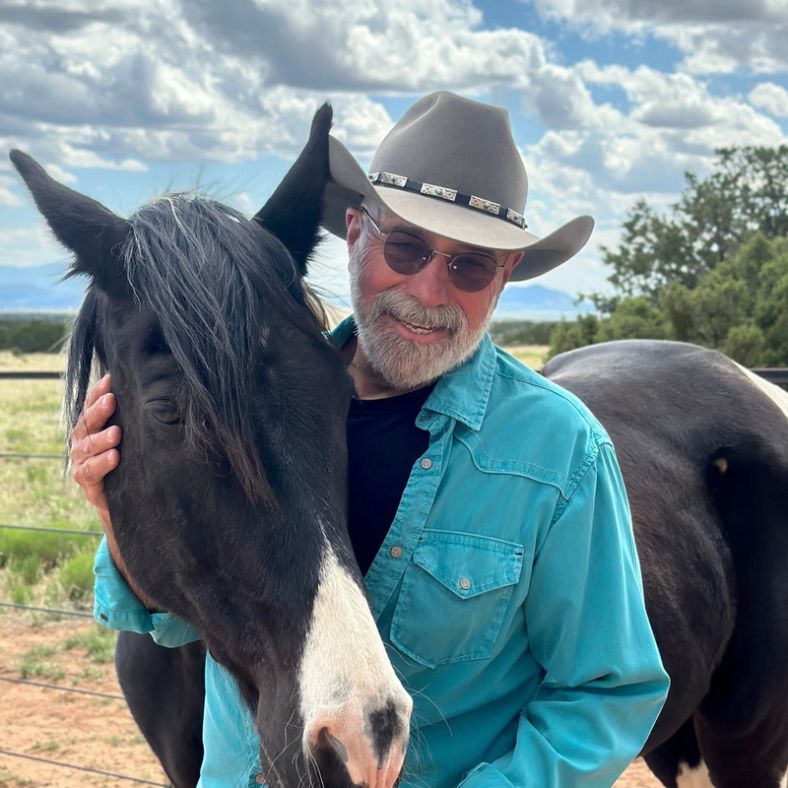
Founder of Dr. Garber’s Natural Solutions
Why do your symptoms keep coming back, even when you do everything “right”?
Most of us reach for something the second a symptom shows up: coffee for the afternoon crash, a pill for the headache, an antacid after dinner. But the opposite approach has a problem too. Many people now track every heartbeat and worry about every twinge.
In this episode, Dr. Jaban Moore talks with Dr. Stuart Garber, D.C., Ph.D., a chiropractor and homeopath who has been in practice since 1981. He ran one of Los Angeles’s first integrative health clinics and served as chiropractor to Cirque du Soleil performers. Together they talk about how to have a real conversation with your body.
In this episode, you’ll learn:
→ The everyday “mute buttons” most people don’t realize they’re pressing
→ What one study found when healthy people stopped taking a common heartburn medication
→ Why symptoms can seem to move around the body, from skin to gut to mood
→ How to tell the difference between listening to your body and being afraid of it
→ Why taking a supplement for every symptom can be a mute button too
→ The first questions to ask yourself before reaching for anything
If you’ve ever felt like a symptom keeps returning no matter what you try, this conversation is for you.
This episode is for educational purposes only and is not medical advice. Talk with your healthcare provider before making any changes to your medications.
Full Transcript
People always say, oh, it's nothing but water. Just to be honest, I mean, there's a homeopathic remedy that's made from gonorrhea pus. You know, a substance that would cause a set of symptoms in an otherwise healthy person is the same substance you can use to treat a patient who has those symptoms.
And I chose a remedy for him. I gave it to him and his sciatica went away. Homeopathy was the major type of medicine that was practiced in this country.
There were homeopathic medical schools. When you create the standard, it's hard for other options to thrive. And she said, I don't even care about the psoriasis anymore because the treatment that we've done, the homeopathic remedies have completely changed my life.
Health is not just the absence of symptoms, it's a state of well-being. If you're overwhelmed with chronic health symptoms and still don't have answers, you are not alone.
I'm Dr. Javan and on redefining wellness with Dr Javin, we'll be exploring root causes like Lyme disease, mold and parasites, and I'll guide you with simple and practical steps towards real healing.
Welcome back to another episode of Redefining Wellness Center podcast. I'm your host Dr. Jayvon Moore. And today I have a unique opportunity to talk to Dr Stuart Garber.
He is the first PhD in homeopathy, but he was chiropractor before that. Then even after both of those went back and got his chriopractic veterinary certification.
and training. So he's a man of a lot of knowledge, a lotta perspective, and a lata learning. I'm excited to be able to talk with him about that unique perspective as it relates to health and how we can take from that and just learn what his 45 years of information is to apply to how go day to day.
Stuart, thank you so much for joining today. Yeah, Thank you for having me. You know, I was asking a lot of questions when I doing research just like, man, a chiropractor, homeopath, doing veterinary, you've got your own supplement line.
And what was it that really motivated you to have this career? Like, why are you doing this? Interesting. You know, even when I was in high school, I had a subscription to Prevention magazine, of all things.
When the first health food store opened in my town, um,… I got a job there right away. So there was always something in me that wanted to be involved with health care.
And there's nothing in that family that was pushing me in the direction. It was just something I think very innate in who I am. and who I am. So that was, I guess, where my motivation was.
But when I started in college, um, i was studying, you know, biology and chemistry and everything you would need for pre-med. I wasn't thinking about being a human doctor.
At that time I wanted to become a veterinarian until One day a friend came flying into the apartment, very up, saying, oh, you got to check out this chiropractor I just saw.
And I was like, a what? Because I literally had never heard that word before. It was new to me. I said, okay, let's go check him out. Met this doctor.
He was a very cool guy. doing a lot of very interesting work and presented to me basically a career path that I hadn't never considered before. That just got me really turned on.
So I went to chiropractic school. That's what got me started there, the homeopathy. I was practicing in California. California has a very broad scope of practice, and you have chiropractors who basically just do adjusting back pain, whatever, to the other end of the spectrum of doctors, chiopractor who had a holistic medicine practice basically doing everything and anything.
So I doing supplements and I using homeopathic back then, but mainly more like a supplement, this for that, I'm not really understanding the whole concept of homeopathy at the time.
But I was doing a lot of lecturing around the world and the groups that I lectured to were mixed groups of chiropractors, acupuncturists, dentists holistic medical doctors, energy workers.
working in alternative medicine. And the people who I had most affinity for who really got me interested in what they were doing were the homeopaths. So I decided to do a more deeper dive into homeopathy, and I was taking courses.
At that time, I'd decided take a sabbatical from practice. Right at that same time this new program had come about, which was the first program to ever get state accreditation to give advanced degrees in homeopathy.
So between my chiropractic training and whatever knowledge I had about homeapathy, I was able to transfer credits, challenge some coursework. And within two years, had my PhD in Homeopsy and was the first one in the United States to get that.
I mean, I think a lot of people, at least a lotta people that listen to me often know what chiropractic is, so I'm kinda gonna move past that one. But homeopathy is a topic that doesn't get enough news.
It doesn' have enough information. So, can you tell me just about an experience you've had within homeapathy that'll help people understand why they should even care about what homepathy?
Wow. Okay, that's a big one! One thing I loved about home apathy, it's that it a comprehensive system, but it's also a very elegant system. It looks at the whole body in a way that I don't think any other system of medicine does.
So a story that'll tell you something, you know, as a chiropractor, it is a hands-on technique. And when I finished my PhD and sent the letter out to all my old patients that was going back into practice after my sabbatical, the very first patient who came to see me was one of my old patients who had sciatica.
So, you know, that's a bread and butter thing for a chiropractor to treat. And normally I would just have adjusted him. But instead, I had this new tool in my toolbox, and I kind of literally had to sit on my hands and not adjust him because I wanted to see how homeopathy works.
which means I asked him not just about his physical symptoms, but everything else that was going on in his life because this is how we understand the totality of what's going to be able to select the right remedy to treat that patient.
And I chose a remedy for him, I gave it to him. and his sciatica went away. And that was a real aha moment for me because it showed me that there's a lot of different ways to access the healing power of the body and there is not any one way.
In fact, that's one of principles I've always worked with patients. is that I want to work with a patient from where they're coming from and not what I wanna do.
So these people who are very dogmatic, my way or the highway kind of thing, I don't prescribe to that because we have to meet our patients where their at and work them.
What I ended up as I was back in practice a little bit longer and longer was I had all of these different tools. I did do chiropractic with patients and I didn't do homeopathy with the patients, and nutritional therapy and work with them with diet and exercise and everything else.
So, you know, that's kind of where I went with that. But the main focus I always think in terms of homeopathy when I'm working with any patient. And what is homeopathy?
Because, you know, this is, when I look at the bottles and I do homeapathy a little bit, I'm not a PhD in it, but I've found some significant power from the formulas that I have used.
It looks like it's just water in a bottle. What is Homeopat? Yeah, you said there's not enough news about homeopathy. And I think there is probably too much bad news and not good news because people don't really understand how it works.
When we look at homeapathy from a very mechanistic standpoint, it doesn't make sense. But people always say, oh, its nothing but water. Well, all homeopathic remedies start out with some material substance.
A lot of those substances are toxic. But so you want to attenuate that toxicity until you can bring out the medicinal properties. So the basic tenet in homeopathy is that a substance that would cause a set of symptoms in an otherwise healthy person is the same substance you could use to treat a patient who has those symptoms.
And there's examples of that in medicine, too, that's pretty easy to understand. Take people with heart arrhythmias. They treat it with a drug called digitalis.
But if you gave digitalus to a person with normal heart rhythm, it would cause an arrhythmia. But if you give them a minute dose to someone who has an arrhythmia, it gives them an normal heart rhythm.
So that's just an easy way to understand. I don't like people use a vaccine analogy for homeopathy because it's not really the same thing. this substance and you do a series of dilutions.
In that diluting process, you also do something called secusion, which is basically adding kinetic energy into this liquid substance that raises its energetic effect on the body because we are energetic beings anyway.
Every homeopathic remedy has an array of symptoms that it can treat. The homeopathy's job is to determine which remedy and the symptoms they treat best match the totality of Jabanism, if I will.
That's the diagnosis. It's not diabetes, it's no hypertension, its stewardism. Jabanism that's how I look at it. Somnopathy allows for a practitioner or requires a practitioners to actually pay attention to the person, make unique formulations for the, person for a unique length of time and strength so that you can actually get the result you're looking for.
Cause it's not a one size fit all for, for anything within. homeopathy it sounds like if you're doing it so specifically for, as you said, Jabanism, which kind of makes me laugh.
But yeah, I think you set it better than I may have ever heard it with. You take it down to where you can get the medicinal response out of whatever that substance is that was in the homeopathy.
I mean, water at some level is toxic. the water at a normal level. We kind of require it as here I am with my drink to have during my podcast. So that helps people to make it make sense.
Now I'm going to say it improperly, but it's the tarantula, venom, homeopathy, we use that in my office because that alone at a micro dosing, right? So homeopathy is always a really tiny dose.
We give that for restless leg syndrome. And it has changed people's lives by taking this, what seemingly looks like water. And the restless leg goes away.
Right. Because, you know, my mentor is like, yeah, what do you think a tarantula looks like? He's always doing this. So you give them a little bit of like treats like and there it goes.
I've seen Sina help with people with GI issues. And I have seen Belladonna help the bacterial issues, so there's a lot of good homeopathy when you learn how to actually put it together.
Honestly, when I'm looking today at like the long COVID, And like the spike protein issues that we've run into here over the last five years or so. I've been using this EPST kit from Desbio for viruses.
And I mean, that thing has just changed the game for some of these people. It's been incredible seeing what homeopathy can do. Herbs weren't doing it.
They'd been to a lot of people before me if meds weren' doing. So I love homeopathy, um, to intertwine within everything else we're doing so with, with your career, you've been a homeopath for years and you built your own formulas and.
You've worked with I'm sure a lotta different conditions. Are there things that you find homeapathy to be really effective for where you're like, man, this, This is like the game that home apathy should be.
Really focused on or, or maybe it's just your specialty. I don't think there's anything that homeopathy can't address. There are some things that are maybe life-threatening and should be addressed with more of an emergency type of protocol before homeopathies introduced or maybe during that same thing.
In fact, I just came across a book that I ordered And it's the use of homeopathy in the emergency room. And I was like, wow, OK, I can see that, and I would love to see it.
But no, honestly, there's anything that homeapathy can't address. It's not any one thing that Homeopathy is more applicable to than anything else. You know, people, you mentioned COVID.
Of course, I had a lot of patients that I worked with during that time. Happy to say not one of them ended up in the hospital, which is what we want to try and prevent from happening.
Viruses are, to me, easy to work with, and it doesn't matter what the kind of virus it is. There's actually a class of homeopathic remedies called nosodes, which are made from sometimes infective substances or disease substances that you can very effectively work I know you have a special interest in Lyme disease.
There are homeopathic remedies that address that. And there's some regular homeopathy remedies to help address the symptoms of it and then others that help the cause of.
I don't think there is anything that it won't address. Now, the formulas that I did, I made those specifically for individual patients in my practice where I wasn't seeing a good result and I didn't like what was out there.
That's a whole different class of homeopathic remedies that most people aren't familiar with, that was using for many, many years. There's actually a patient who challenged me to do something with them, but we can talk about that if you'd like to, So I mean, I've got your site up and the things that you've developed and built.
And I'm curious, because we've talked mostly about humans, right? Treating different people and our practices that we run into and work with. My whole practice is humans.
Darn, a lot of people have dogs and animals these days. And the concept of homeopathy is rare enough just for human use, at least anymore, although it used to be one of the major practices.
What about animal use? Is there things that you should watch out for? Do you have some stories? I mean, I love testimonials, stories, experiences, so people can just connect to it.
But what have you seen with animals and homeapathy? I have so many of those, including with my own animals. I mean, I've five dogs and three horses, so I'm constantly working with them, chiropractically and homeopathically.
But our very first horse came from a commercial barn where they were well taken care of, but they're locked in at night in their stalls. And, you know, they're breathing in dust, their breathing and urine soaked hay and, shavings and it's not the healthiest environment for any horse.
And when we brought this horse home, we keep the barn doors open 24 seven. They can go and come as they please. But the horse had been so long in that environment had developed basically equine asthma.
So I put together a combination of homeopathic remedies that I use for him. And he would just lick it right out of my hand. Usually if he was having some kind of respiratory issue that you could hear difficulty breathing, within 10 minutes he'd be doing just fine, just find.
He lived many, many years after that without any kind respiratory problems. I work one day a week in a an animal cancer clinic, small animals, dogs, cats, and use homeopathy with them for a lot of things.
For pain, for post-operative discomfort, anxiety, which a lots of animals get. The horses also, a lotta horses are very spooky and you can use homoeopothy to help calm them down when they're getting ready to compete or perform or even just go out for trail ride.
I use it all the time for my animals and for the animals I see in the clinic. A lot of it. So is there any risk? I mean, that's what people are always saying about this.
It's uncomfortable because it's new. Is there a risk for, well, humans or animals within homeopathy? Use properly, no risk. I mean, you can't hurt somebody with homeopathy.
One of the things that people say, oh, can never do any harm. Well, if you are trying to self-prescribe and you take a remedy that's not the right remedy for you, but you think it is, and keep taking it repeatedly and repeatedly, repeatedly.
You can develop symptoms from that remedy, from taking that wrong remedy. The good news is that if stop, those symptoms will go away. So there's nothing permanent that'll happen.
But most people won't take a remedy that long that they've self prescribed for themselves if they're not getting the results that their looking for anyway and they'll switch to another remedy.
And that's a problem people remedy hop. You say it's new and maybe it is new to a lot of people, but homeopathy has been around for a couple of hundred years.
Almost. At the turn of the 20th century, early 1900s, Homeopathy was the major type of medicine that was practiced in this country. There were homeopathic medical schools.
It was a big thing. A big controversy that happened with Rockefeller. We can go into that. That had a lot to do with the oil industry and pharmaceuticals being made from from that kind of material, that wiped out the whole homeopathy presence in this country, and it had its real resurgence in the 1970s.
So maybe that's relatively new, but all through the 1800s, homeapathy was very big in some of the epidemics that happened, like the yellow fever epidemic that we had right after the Civil War.
you know, homeopathy really shined and the medical treatments did not work very well. And we've seen that repeatedly around the globe. So yeah, I mean, always love a good story and understanding of what happened.
What did happen with the Rockefellers? Well, that's basically it. Rockefeller was standard oil. A lot of drugs were being made from petrochemicals in the lab.
And another way to use this material as a combination, the way, and get off topic a little bit, but the reason the road system, highway system flourished at the expense of the railroad was a Rockefeller, you know, partnering with Firestone to make tires, which were also made out of petrochemicals.
So then you needed to have more roads for more cars. And basically, that whole machine just rolled over everything. A report called the Flexner Report, this guy Flexer was hired basically by Rockefeller but through the government to do an analysis of medical education in the United States and had certain criteria that by the nature of homeopathy they couldn't meet.
So the medical oriented medical schools as opposed to the homeopathic oriented Medical schools, they were the ones that got the certification to stay open and most of the Homeopathics schools closed.
And that turned the whole tide away from homeopathy, which had been going strong for a long time. Even Lincoln had a homeopath that attended to him. When you create the standard, it's hard for other options to thrive.
When Rockefellers create this standard only their type of medicine will stand in, which is still that same way today. I mean, the double blind placebo types of studies only work well for single chemical compound options.
And even they fail often, but still get passed through. Right. So then physical therapy, chiropractic, massage therapy homeopathic. I mean, even most of your bio hacks because you can't double blind placebo.
A adjustment. You can double-blind placebo doing physical, therapy exercises because there's. too much change. So if you're saying, well, everybody has a shoulder injury on the right side should be doing an exercise, you do the exercise you did the wrong one, but both are you moving your arm, it can't be double blind placebo because both they're doing something.
You can replace it with sugar that you cannot tell any difference on. I mean, even through everything that happened on all of these meds, med just get pushed through.
And then, oops, sorry, something messed up. So the standards are, are wonky. The corruption in the money is no fun. And that's why we have one of the worst health ratings in history here toward, uh, you know, 2020. Yeah.
All right, doc. Well. With your formulations, I know you formulated a lot of things. I'm looking at them, and you've got animal formulation. We talked about homeopathy.
Honestly, the lack of risk, which I also see. Do I see some people have some healing journeys through homeopathics? Yes, but it's not risky. It's just they feel something.
They're changing. I'm actually intrigued a little bit with no sodes because I've had clients come in and they brought them in. I can't say that I am educated far enough to know a lot of the differences.
What is a no-sode and why is that different than regular standard homeopathy formulas? Well, it's not really different. It's just a separate classification in that it is made from, as I mentioned before, from diseased tissue.
I mean, there's a homeopathic remedy that's made They're made from diseased tissue or disease secretions, diseas products. But you've attenuated them and everything has medicinal properties.
So some people use noso, it's almost in a, instead of a like cures like it as a same cure same. some which work, you know, can work a lot. I mentioned that when we mentioned Lyme before.
So, I mean, there are nosodes made from homeopathic remedies made for ticks. Well, actually, all the different ones are available now. Those are what nosones are, and they can be very powerful to either get breakthrough a stubborn illness that you can't break through.
Some people use it as a finishing to finish off a series of treatments. But it's not that they're different, they still made the same way. They just have this separate class, just like there's a separate of homeopathic remedies called SAR codes.
which are made from healthy organ tissue and glandular tissue. So it's like glandula therapy, but that's been potentized, energetically enhanced the way homeopathic remedies are.
And then even all the other, quote unquote, regular homeopathy remedies still get broken down into plant-based remedies and animal- based remedies, and mineral- base remedies.
But they're all home apathetic remedies It's just interesting. Like I said, although I've taken training in home opathy, I'm always interested in just more because I've seen the power that it generates and changing the physical condition for someone, allowing for somebody to feel better.
And that's what we're really looking for long-term. I don't care what tool I have to use, as long as it's a positive impact for their health and gets us to the goal without the negative long term impact.
I'm happy. So I have to tell you a story then as long as you brought that up because one patient who was a patient of mine for a long time and her case always stays with me.
And I've talked about it many times because she came to me with really bad case of psoriasis and I treated her homeopathically. and never was able to affect the skin lesions, the actual psoriasis.
Yet she told me one day we sat down and she said, I don't even care about the psoriasis anymore because the treatment that we've done, homeopathic remedies have completely changed my life.
and I am a different person now, and now the skin doesn't even bother me, where that was what she came in for originally. So when you talk about someone becoming healthy, it's never with the absence of symptoms, we know that.
Health is not just the absense of the symptoms. It's a state of well-being, which is what we created with her. I wish we had gotten rid of this psoriasis too, but you know, she was happy, I've seen that a lot of working with people.
They come in for one reason, you fix seven others. And eventually you fixed the one that they're dealing with oftentimes. We're like, hey, I didn't even know this was a problem, but it's gone.
Right. I was like awesome. Or I don't tell you about this, But I lost this this and that off my symptom lesson. All right. Heck yeah. Let's go. So it's doc.
Well, I feel like I've gotten an education in homeopathy. It actually makes me want to go do a little bit more research and dive into it a bit. As we're closing out here, we talked about your formulas quite a.
Do you want tell people where they can find you and your. Online, drgarbers.com, just D-R-G-A- R-B-E-S, plural, no apostrophe, they don't allow those, Drgarberz.
com. And on that website, you can learn more about me than you'll ever want to know, but a lot about homeopathy, a little bit about the special kind of ingredients I use in my formulas.
It's a very educational experience, and then they can try the formulas too. All right, Doug. Well, I really appreciate your time. your education, your passion for homeopathy, and thank you so much.
Thank you for having me. I really enjoyed it.
Comments