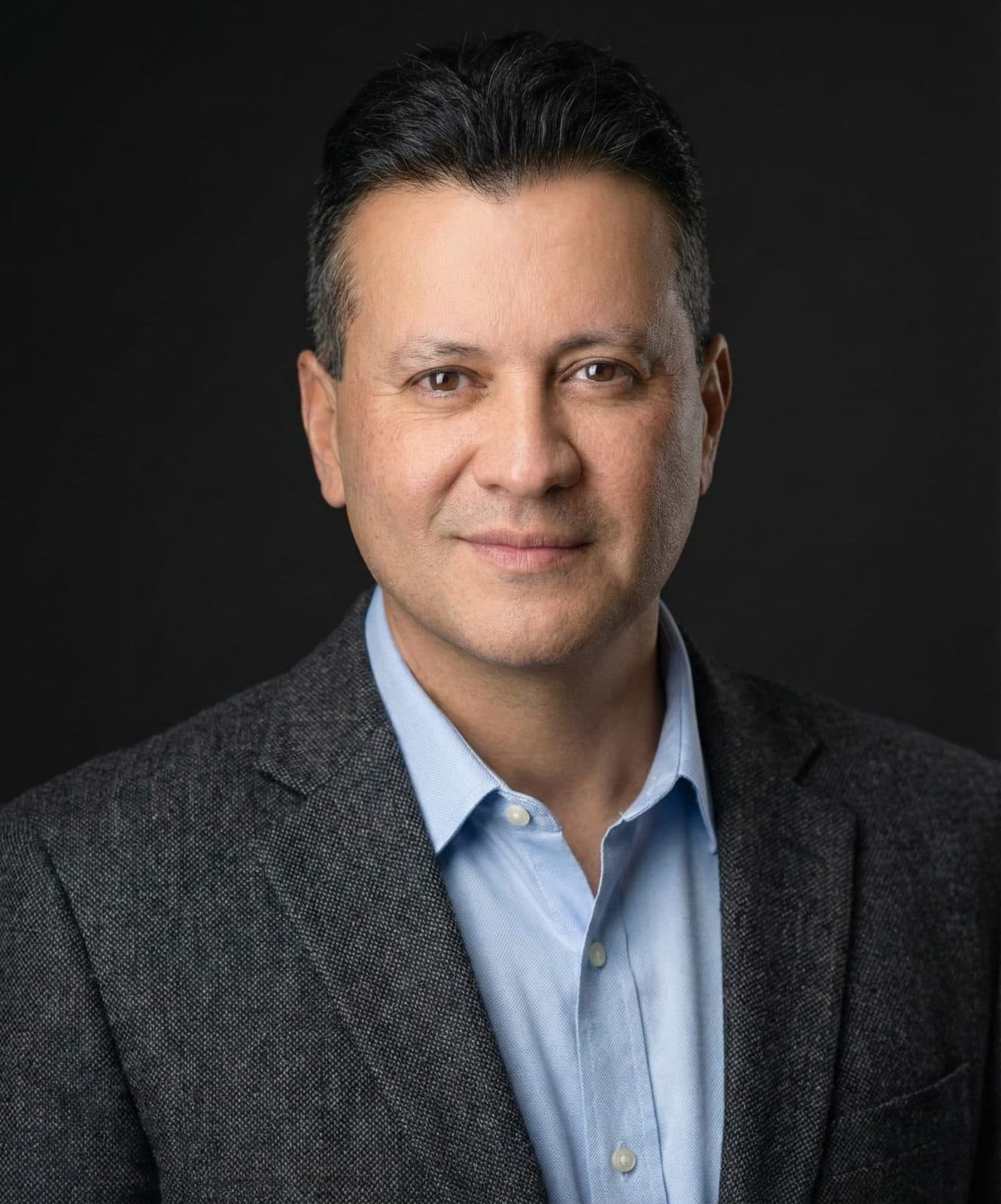
Full Transcript 0:00 I will now move to our guest speaker today and bring him up on stage to formally introduce him. 0:10 Sorry, there you go. 0:13 My name is Dr. 0:14 Harvey Castro and I'm the CEO of Medical Intelligence Ops. 0:19 Yes, thank you so much, Dr. 0:20 Harvey Castro for being here. 0:22 We're excited to hear what you have to say. 0:25 And I just want to give a background on Dr Harvey Castro. 0:30 Growing up in New York City, he was raised by a single teenage mother. 0:35 This experience instilled in him a determination to break the cycle of living paycheck to paycheck. 0:42 He set a goal for himself to think outside the box and work hard to become a physician, a decision that would ultimately shape the trajectory of his life. 0:52 And with over two decades of experience as a physician, entrepreneur and former CEO of a healthcare system, he's expanded his influence into healthcare management, 1:02 working with physicians and integrating healthcare and management into modern practices. 1:08 His commitment to revolutionizing healthcare through AI has led him to serve as strategic advisor for ChatGTP Let me go back and say that chat GPT don't 1:20 say too fast and healthcare. 1:23 I aim to create a seamless symbiosis between healthcare professionals, AI developers and innovative AI solutions. 1:31 He states his role encompasses orchestrating AI adoption plans bridging the technology healthcare divide. 1:40 working with physicians, and as an author and public speaker, he endeavors to foster awareness and spur action on AI's transformative potential in healthcare, 1:50 sharing insights from his unique intersection of experiences in health care, working within physicians and healthcare management. 1:58 He asked that we join him on this exciting journey where we innovate, inspire, the future of healthcare. 2:06 Together, we can create a healthier, more intelligent world. 2:10 His book, AI Doctor, From Bedside to Bite, A New Era of Healing. 2:17 Without any further ado, I welcome Dr. 2:20 Harvey Castro. 2:22 The stage is yours. 2:23 Thank you, thank you. 2:25 Well, appreciate everybody. 2:26 thank so much for having me. 2:27 It's an honor to be here. 2:29 And then if you want to load my slides, We'll get started. 2:33 All right. 2:34 Well, first of all, this is basically my focus today. 2:38 We're going to be talking about chat GPT-4 vision. 2:41 I know a lot of you guys have played with it, but I want you to look at it from a physician's point of view or no pun intended from the physician eyes. 2:49 Next slide. 2:53 OK, so why am I so excited about ChatGPT? 2:57 Honestly, for me personally, it's been just such an amazing tool. 3:02 I want to give you a quick back story. 3:05 Literally, over a year ago now, I was playing with Chat GPT. 3:11 Thought it was amazing. 3:12 And I think I landed on it on the first day. 3:15 And I thought, holy cow, this is going to help medicine. 3:18 This is gonna help my patients, my colleagues. 3:22 And got to the point where I got obsessed, to a point when I literally started writing the first book on CHAT GPT and healthcare. 3:29 I remember I was in this office writing a book, and my wife came in and was like, what is CHT GP T? 3:35 What are you doing? 3:36 And, I'm like well, it's this thing that I think is gong to health care. 3:40 So much so that, that wrote the book first on it, published about a year ago today. 3:45 And so, just to drive that point, you know, this is one of my favorite slides. 3:50 Basically, it was about a young boy. 3:52 He was having leg pain, and he had been going to about 17 physicians over a three-year span. 3:59 And he kept telling his mom, my leg is killing me, mom. 4:03 Unfortunately, many doctors thought it with psychiatric issues. 4:08 They thought, the kid was making it up. 4:10 And finally, what I thought was amazing was the mom put all that information, all the medical notes, All the MRIs, put it into ChatGPT and said, 4:20 hey, What's wrong with my child? 4:23 And believe it or not, it gave this diagnosis called tethered core syndrome. 4:28 And the Mom went back to the neurosurgeon and Said, Hey, take a look at this Diagnosis. 4:33 What do you think? 4:34 Well, neurosurgent obviously went Back and looked at the M.R.I. 4:36 with careful eyes looking for tethers core Syndrome. 4:39 and actually found it. 4:41 And so this just explains to me like, wow, here's a powerful tool, and if it's used correctly, you know, this is great. 4:49 So next slide. 4:54 So why I'm so excited is this extra slide here. 4:59 You know, the average person, if you look at this chart, has an IQ between 90 and 100. So that's the general population. 5:06 As you can see, it's a bell curve, so we have people in the 50 range, and we people above 140. Well, what's crazy to me is when you at chat GPT, 5:14 according to Scientific America, this article that came out March of last year, The IQ of ChatGPT was about 155 is what they quoted. 5:25 And I thought, holy cow, if my IQ is anything below that, and I need help in X and Y, then I can leverage the power of AI, 5:34 leverage that IQ, to help me do things that maybe I couldn't do before. 5:39 And that really excites me because I feel like now it's helping all of us, not just in certain individuals or those that can afford it right now for 20 5:47 bucks a month or less, depending on how you set it up, you're able to get this technology. 5:51 Next slide. 5:55 And so one of the other things I was gonna say about that last slide, and don't change it, just keep it on this slide is, 6:00 you know, we have the bell curve. 6:02 We have people that are like Albert Einstein and it's a 155 or above, or, I think he's around 165. And we had Elon Musk that's the same 154. So we an amazing tool. 6:15 What I keep telling people is if you had a best friend that was a genius that you could ask him or her anything 24 seven, 6:23 why not leverage that? 6:25 My example to people is, chat GPT is like the best person you can talk to. 6:30 Unfortunately, it will always tell you stuff and sometimes it tells you things that are not correct. 6:35 And so I'll challenge you guys that as you start using the output to make sure you're verifying it, make you are asking the experts. 6:43 With that said, I think with the hallucination effects, depending on which generation you using, It could go down to as little as 5%. Yes, 6:50 in healthcare that's too much, but For many things that we're doing daily that need help on, I think that is acceptable and to the point where we can still 7:00 verify all that information. 7:02 Now, 2023 has been a crazy year. 7:06 If you look at all these models that I'm showing you right now, It's showing you all the big, big models that are out there. 7:12 Everybody's heard of ChatGPT 4, but there's others out. 7:15 Think of it as other flavors. 7:17 Now, size, depending on what you do, may matter, that may not. 7:21 And so on here, I have some smaller models like Llama. 7:25 That model is quite interesting in the sense that it's open source. 7:28 Literally, everyone that's listening to it right now can use this model for free. 7:33 Obviously, there's some stuff that you need to do on the back end. 7:36 But for the most part, There's not much that You have to Do. 7:40 If you know technology, you can create your own model. 7:42 You can literally, I have this model on my Mac computer, and I'll go over stuff That you could do with it. 7:48 but the skinny is, look at all the models that are out there. 7:51 See how big chat GPT-4 is. 7:53 And in the future, we have other models That are coming that Are going to be through Google DeepMind. 7:58 Gemini, when I talk about that a little later. 8:00 Anthropic Cloud. 8:02 And next year we should be, or actually this year now, we shouldn't be seeing chat GPT-5. 8:07 Next slide. 8:11 So, you know, I like this slide, and I made up the slide and the skinny is this, it's called Amara's Law. 8:17 And all it is, is everybody's really excited about AI saying, oh my gosh, this is gonna cure cancer, It's gonna do all these things. 8:24 and we're overestimating what AI can actually do on the short term. 8:29 Long-term, we're saying, no, AI cannot do any of this stuff. 8:33 Everybody's totally wrong. 8:34 And my point with this slide is I feel like we are somewhere in the middle. 8:37 Depending on what vertical we talk about, different parts of healthcare, are we talking about business, this will apply in a sense that some of the things 8:46 that AI can do is amazing and I think ahead of its curve, but there are some things we can't really guess. 8:52 So a big picture of Let's just watch how AI is moving forward. 8:58 Let us be cautious of overestimating what it can do, but then let us make sure we are not short-cutting it, saying, oh, it is never going to do that. 9:05 I think somewhere in the middle we will find what AI will be doing and different verticals, like I said, will apply differently. 9:12 Next slide. 9:17 So I know a lot of naysayers out there are like, hey, AI is going to take my job. 9:22 AI's horrible. 9:23 And I get it. 9:25 I when I speak and teach doctors on AI and different health care professionals, they fight me on this. 9:31 They tell me, Hey, I have like 40 years of hospital experience. 9:38 I'm better than AI and I've had some doctors tell me, hey, if AI gets into the hospital, then I am retiring early. 9:46 And I understand. 9:47 But my challenge that I want people to really understand is like that other slide that i mentioned. 9:52 We have an IQ of 155 plus the human and i think it's going to be way better. 9:57 So basically AI plus human is going be better then just human, and that human it better that the AI. 10:03 And I really want us to think about that statement because if we can leverage AI to make us better, if I'm weak at certain things and I add AI, 10:11 then I'll be better than not using AI. 10:13 And as a doctor, I mean, an ER doctor if it's two, three in the morning and am exhausted and haven't slept in 24 hours, you know, 10:22 am not at my best. 10:23 I am a human and yes, have to be always at best and have give my all. 10:27 But at the end of the day, unfortunately, my body will give out at some point. 10:31 And so my point is this, why not use AI to enter those symptoms, say, Hey, what is the different possible diseases of my patient? 10:40 And use it as not as a clutch, but just as an extra reference where I can say okay, I know this person's probably having a heart attack, 10:47 But what are the diagnosis should I be thinking of? 10:49 and it's two, three in the morning, maybe I would have thought of it right on my first hour of work, 12 hour, I may not be as sharp. 10:57 And so again, we need something to help us. 10:59 Now, believe it or not, medical knowledge doubles every 30 days, which is unreal. 11:05 Just to give you reference, back in the 1950s, Medical knowledge would double every 50 years. 11:11 So in theory, if it was the 1950s today, I could literally take a 10-year vacation, come back, and I really wouldn't be missing much. 11:18 Now if I did 10 years and came back into medicine, i feel like I'd have to go back to medical school. 11:23 And so we need something like AI to help us give us access of the latest information, keep us up to date. 11:30 Next slide. 11:34 And so I want you to look at this slide. 11:36 I won't go too much into it, but the skinny is this. 11:39 The little red, they did a study and these are the, this is the one of the coolest graphs that they. 11:45 And basically they ask individuals a question and those people were just regular ordinary people and they rank the quality of that, 11:53 that answer. 11:54 And so that little red dot between one and two, that was what their response was. 11:59 Then they took that same topic and asked a human expert in that field. 12:04 And you can see the quality went from three to six is way better and it's more intense. 12:09 But then this is the coolest part. 12:11 They asked that question to ChatGPT and then they ranked the results and the quantity of that answer and look how much better it did than the human experts. 12:20 But here's the coolest part. 12:23 They went back to the regular person, they used that regular-person plus GPT, and look how much better we're getting the results now, 12:32 look at how intense. 12:34 So to me, that just shows the power of GPTs, how can we leverage, augment our minds and do more for what we are doing. 12:43 Next slide. 12:48 So in healthcare, why am I so stoked? 12:51 I really think we're gonna be able to better communicate with our patients and back and forth with out doctors. 12:57 How many times have you gone to see a doctor and you are either short on time and don't feel like you can explain or ask the question, 13:05 or you may be timid. 13:07 Maybe you don' know medicine but you wanna feel you know the medicine and wanna ask a question because you think it's not a smart question. 13:14 But at the end of the day, we need a tool that helps us better communicate. 13:18 So I think using VAR, ChatGPT, Cloud AI, Pi, Bing Chat, these tools, again, have to be careful with HIPAA and not violating that, 13:27 but asking the questions in such a way that it could be a generic question to help us get more out of our patient visit. 13:34 Believe it or not, when we see our doctors in the United States, were only getting about 13 minutes, and those 13 I feel like there's so much other stuff 13:42 that's going on during those 13 minutes that it's really less than that. 13:45 And so my point is this, if you have hypertension, high cholesterol, and you know all these things are going with you, why not ask CHAT GPT or one of these 13:54 AI models to help you with the best questions to ask your doctor, follow up questions as your Dr. 14:00 and then next slide, I'll show you another cool thing. 14:05 When you're in front of the doctor, I'm telling my patients, bring your computer. 14:09 I am fine with us having a conversation with ChachiPT and working together because here's the difference. 14:15 When we speak to AI, doctors speak sometimes the medical lingo and they try their best to break it down, but to me, AI can do a really good job, 14:24 not only in breaking it, down but it can actually explain it in your culture. 14:28 And so let me give you an example. 14:30 If a doctor is explaining something really complex and you say to chat GPT explain this as if you were talking to a sixth grader, 14:37 it's going to break it down in really basic terms. 14:40 And I feel like the patient is going be more satisfied because they understand the issue better. 14:44 The other part to this is Let's think about it this way. 14:49 If you're from another country and you say, I'm in Dallas, Texas, and talking to a small-town doctor, or you are from a different country, 14:58 why not speak to that person in their language? 15:03 Talk to them in examples. 15:05 So if I'm here in Dallas, Texas, the big thing here is the Dallas Cowboys are going to the playoffs. 15:10 But for the rest of the world, they may not be into football. 15:13 And football being in the United States, it's not soccer. 15:16 Because again, when I say football, people outside the US will say, oh, that's soccer, and my point is this. 15:22 If we use CHAT GPT to help us leverage what kind of examples we used, we change the way we speak, now we can really identify with our patients that are 15:31 from all over the word and really work together in explaining things. 15:34 Next slide. 15:39 So postpatient, you know, this is how I broke it up. 15:43 I think doctors can go back on their websites, fix their discharge instructions, and fix any medical information that's out there and use AI. 15:54 And I'm saying, don't let your office manager do this. 15:58 I am saying the doctors or the health care professionals that do all the time, go in and look at the subject, put it into ChatGPT, 16:06 help it translate or help fix the way it's supposed to be said, and then have a doctor verify. 16:12 Not just saying let AI go on its own, no, let the doctor go through, make sure it looks good, but make this information amazing. 16:19 Next slide. 16:24 I don't see why we should do discharge instructions the same. 16:28 I think we need to leverage AI. 16:30 This is one of my favorite examples. 16:31 Basically, this was out of England. 16:35 They had this discharge instruction from a pediatric patient. 16:39 And as a child, what they did was amazing. 16:41 Sorry, there's a little buzzing in the background. 16:42 It'll end in two seconds. 16:45 What they did was the following, they took the child's discharge instructions. 16:49 The child had asthma. 16:50 They entered that asthma information into a chat GPT and said, let's convert this and use the words that we would use for a five year old. 16:58 But then the best part is as a doctor, for example, on asthma, we want to make sure that they take their medicine, that that would take the medicine correctly, 17:15 And now what I think is amazing is instead of giving them these pieces of paper would just print, now they're giving the child coloring book where now 17:23 the parents can talk to the children. 17:24 Now the doctors can draw with the Child and nurses can drive with a child and now that child can really go through and really take that information to 17:33 another level. 17:33 And guess what? 17:34 They haven't done this study yet, but I bet you anything that the compliance will be higher, a child will less likely to come to the doctor again, 17:42 more likely take its medications, and understand the disease. 17:46 So I'm thinking in the pediatric world, to give you a quick example, why not use this type of technology to help us? 17:51 Next slide. 17:55 So general categories, everybody's, you've heard of the pre-authorization letter that ChatGBT can kind of create and help you for insurance purposes. 18:05 Everybody's heard Epic creating a summarization, Epic's electronic medical record here in the United States that helps you create multiple summaries of 18:14 what you're seeing when you patient. 18:16 But I'm pushing for my healthcare providers and professionals out there, why not teach them empathy using AI? 18:23 A lot of times we talk to our patients, but we have a hard time communicating. 18:27 So why not have AI teach me what words should I use? 18:32 How should sit? 18:34 What words show more empathy? 18:36 If I'm an oncologist and all I see is patients with cancer and I have to tell them about their chemotherapy, what word should use, 18:44 how can I be more sensitive? 18:46 And I really think AI can help me get there. 18:48 Next slide. 18:51 So big picture, LLMs are amazing in drug discovery development. 18:57 Believe it or not, some companies have taken this to another level. 19:02 They're using something called Alpha Fold by Google. 19:05 Basically, they mapped out all the different proteins and figure out this whole key lock effect where If this is what the protein looks like and I'm trying 19:15 to discover a drug that will affect this, then that key, those proteins go on top of it. 19:21 The skinny is this. 19:22 They're able to use this technology or like this type of technology to basically take it to the next level. 19:30 Instead of spending 100 million, well, it's more like a billion dollars, they can now spend a hundred million dollars on developing the drug. 19:37 And I know that's still a lot, but if you're looking at a million versus a 100, that million That 10x factor of decrease in cost will help us how drug 19:48 companies are going to start developing things that maybe some diseases are not worth it in their minds. 19:53 And I know everything as a doctor is worth, but in there minds, they are now going look at it and say, wow, there's some rare disorders that didn't make 20:00 financial sense. 20:01 But because my cost to make this drug costs 10 times less, now it actually will make a profit. 20:07 And I know that sounds horrible, but big picture of the way I see it is we're actually starting to help humanity. 20:12 AI, I think, will help us take us to another level when it comes to precision care, precision medicine, using our DNA to come up with different drugs. 20:24 Just a quick example would be Say they haven't developed the cyst, but just work with the science behind me here. 20:33 Say you are a diabetic patient and you need insulin. 20:36 Well, if we knew your chemical makeup and we know how your body works, there's a way that possibly we may not be able to use all that insulin, 20:44 we maybe will have to less amount because it's working more with your and it is more exact. 20:50 And my point is this. 20:52 There are so many doses out there that if you give the patient too much, if they're able to precision make that medicine exactly for them, 20:58 you're going to give them less side effects and more output and they'll have a better outcome. 21:03 So I really think AI is going take us there. 21:05 Next slide. 21:09 So what is the feature and this will be the last part of my talk is this chat GPT vision. 21:15 Basically, you'll be able to take a picture of a disease process if you're a doctor or patient and then upload it and AI will interpret it. 21:24 I have a prop right here, I'm going to wear it. 21:26 These are the new meta glasses. 21:28 They just turned on, and I can hear it in the back of my ear here. 21:32 I could connect this to ChatGPT, so I literally could have conversation with Chat GPT and hear. 21:38 If we were doing an interview, in theory, they could listen to your questions and answer it and you would know, but I would be able to hear and tell you. 21:46 The reason I like these glasses is these lenses turn dark when I go outside, but the really cool part is I can take a picture. 21:54 So right there, I just took a photo of the screen and this camera. 21:57 And then let's first pretend I was seeing a certain disease or skin ailment. 22:01 I could take the picture, it would look at it. 22:04 it would interpret that image and then tell me, yes, this is cancerous mole, or this X, Y, Z. 22:12 And so this type of technology is basically here now, and we're able to use it. 22:17 Now, granted, is just the beta just starting. 22:21 There's a lot of pros and cons to this. 22:22 But the point is the principles are there. 22:24 In 2024 this year, we are going to start seeing so many of these applications. 22:29 As a reminder, as an ER doctor, When I look at a patient, sometimes patients come in, the ambulance will bring in that are overdosed and I can't speak 22:38 to the patient. 22:39 I have no idea. 22:40 And some of these patients are overdose. 22:42 Literally what the Ambulance does is grab whatever pills they find by the bed or wherever they found the patients, they literally put it on my desk. 22:49 It's a challenge for me to look those pills and be like, what did this patient took? 22:53 But now I could take a picture of that. 22:57 pill or I could use my glasses to take a picture and then have the AI analyze and say, oh, this is a tunnel overdose and guess what? 23:06 That's linked to my electronic medical record and now the pharmacist can say oh he needs the antidote for tunnel overdoses and ship it to me and within 23:14 minutes I would have that. 23:15 Currently if I have a I may have an app and I have to go through and try to tell the way it looks and trying to figure out what it is. 23:24 Other things I can do is call poison control and have the wait online and find an expert and go though that. 23:29 And these are the process that the ER doctors are doing. 23:32 So again, this kind of technology can really leap us forward. 23:35 Next slide. 23:39 So how does this thing work? 23:41 You know, there's so many things that it can do. 23:43 It can analyze horrible doctor handwriting like I have, it could help analyze certain EKGs and products. 23:51 That vision is going to be huge. 23:53 And I'm going show you some fun slides coming up next. 23:55 So next slide. 24:01 Yeah, so I'll be able to use it for medical x-rays, MRI, CTs, really complex pattern recognition. 24:09 Just on the side, I was at a meeting with some, they were showing all these financial slides and I couldn't really see the slides that well, 24:19 So I took my camera out, took a picture of the slide and then I uploaded it to chat GPT and said, hey, interpret this slide for me. 24:26 And then it gave me all the points that the speaker was making about that slide, which was pretty cool. 24:30 So things like that we'll be able to do. 24:33 Next slide. 24:38 So this is another interesting picture that I made or slide basically is this. 24:43 We all know in healthcare we're using evidence-based medicine and you see that's that blue dot and it's getting us ahead of where we are today. 24:51 But what if I could use intelligence- based medicine? 24:54 See how much faster I'm getting in my knowledge, how quicker I am getting to that point and see how big that gap is becoming. 25:01 So my point is, as we continue to use AI and leverage AI, we're going to start getting places faster. 25:07 That example that I already gave you with the medications, look how many things we are able to do now and discover new medicine. 25:12 And I really think that that AlphaFold project that they did, I think advanced medicine by the decades, not just a couple of years, 25:19 decades. 25:20 Next slide. 25:24 So I mentioned Gemini, and we're almost to the end of the talk. 25:28 But Gemani basically is, think of it as another Chat GPT. 25:31 It's instead of by OpenAI, this one's by Google. 25:34 I'm really stoked about what they're saying it could do. 25:37 They're claiming that it'll be 10 times better than ChatGPT, it will have multimodality. 25:43 We will be able to do so much on this. 25:45 And next slide, I'll show you some of their features that they announced. 25:50 So on December 6, 2023, they had this cool video. 25:53 If people haven't checked it out, check it. 25:56 Now, I'm going to caution you and say, when you watch the video, you're thinking, holy cow, it's way advanced. 26:01 But in reality, and I think they cheated in the sense that they asked a question and it looks like Google Gemini responded right away. 26:11 In reality they were taking still shots, uploading it, and then having the output and going back and putting it into the video, 26:19 but it looks like the videos really flew, in reality it took longer than it did. 26:23 But the proof of concept is still there. 26:28 The first slide just shows the stars, Saturn and Earth, and it said, is this in the correct order? 26:34 And then it was able to correct it and say, no, this is the right order. 26:38 They uploaded four different images of the sky with the scene and it's a famous scene from the Matrix and they was able to say this is the matrix. 26:46 Now, other things, it had pictures of a coin and then they were moving it around and said under which cup is it. 26:55 And then it was able to create different games. 26:57 Big picture, I think this is promising. 27:00 I don't think, if people are asking, where do I that I this at. 27:04 In the pecking order, we have a chat GPT four and a half at the top, then we ChatGPT and then 3.5 Chat GPT. 27:12 I think Gemini is somewhere between 3 point 5 and Chat GP T4. 27:15 So I they're getting there. 27:17 They haven't released their top model. 27:19 And I that personally may trump ChatgpT four and a half. 27:23 But I whenever my prediction is whenever that comes out, Chat gpt five will come out. 27:27 Next slide. 27:30 All right. 27:31 Here's some of the images. 27:32 Don't try this at home. 27:33 Only if you're a doctor or health care professional. 27:41 And so this was fun. 27:42 Now this image here, I found it on Google. 27:46 It doesn't have any copyright or anything. 27:48 Take a patient's information and just take a picture and upload it for you guys to see. 27:53 This was actually an image out there. 27:54 And I asked ChatGPT, there's this person that came in, he took this tick off, and then all of a sudden this rash appeared, 28:01 this is what the rash looks like. 28:03 correctly, chat GPT said, oh, this is bull's eye. 28:07 This is actually Lyme's disease. 28:09 And then it had asked a little more and said hey, what is the treatment? 28:11 It would have given it to me correctly. 28:13 Next slide. 28:17 So I took four different medications and I take a picture of it. 28:23 And of the four medications, one of them, it got correct. 28:27 The other three, of four, wanted the correct, the other one it hallucinated. 28:32 It said it was some other drug that it really wasn't. 28:34 Then the last two, I had no idea. 28:36 Now I know I just said how amazing this is. 28:38 Again, this just the beginning. 28:39 All we need to do is upload the database which is already out there of these drugs and this will be 10 times better. 28:47 Next slide. 28:50 In x-ray world, we're taught as a medical student to read it a certain format. 28:55 And I was shocked when I took an x ray. 28:57 Again, this was xray that was on the internet. 28:59 That was public domain that anybody could download. 29:02 But on right, there's a little blob outside of the heart, and you'll see that that's actually pneumonia. 29:07 Then I said, hey, I'm a radiologist. 29:10 And I have a 30-year-old male with cough. 29:12 Can you give me the different possibilities of what this thing could be? 29:15 And the first one it lists is a pneumonia and it gets through all the differential diagnosis, which it did perfectly. 29:20 Next slide. 29:24 So on analyzing, again, it gave it to me exactly. 29:27 Here are the lungs, here's what's going on, and here is the heart. 29:29 And here what I see. 29:30 It did it exactly like a textbook. 29:32 This is exactly how we're taught in med school. 29:34 I was shocked to see that it read it just like medical student. 29:41 The other thing, as an ER doctor, I had to throw an EKG. 29:43 So again, found an ekg, public domain. 29:46 I uploaded it. 29:47 And this one is something called ventricular tachycardia. 29:50 But the skinny is this. 29:51 It was able to look at the EKg and interpret it and then tell me correctly that this is VTAC, which I was shocked. 29:59 Next slide. 30:03 And so, again, when I probed it, it read the EKG just like a medical student is supposed to go through all the different leads and not just jump to the diagnosis. 30:12 And that's how we're taught, and that is how it's read. 30:14 So, good job, ChatGPT. 30:16 Next slide. 30:19 Here we get, I just wanted to see how it would do with different rashes. 30:25 And I uploaded a rash and kind of give a little tiny vignette and it actually gave me the correct diagnosis, which is tinnia. 30:33 What was cool is I also said, hey, want to prevent this kind fungus on my skin. 30:39 How can I prevent it and what are some treatments? 30:41 And then it went through the prevention and the treatment and I went though it, and got it correctly. 30:46 So good job. 30:47 Next slide. 30:51 And so then I put my doctor handwriting. 30:54 I wrote a script, and I uploaded it to ChatGPT to see how it did. 30:58 Um, I tried my best to kind of write better, but it didn't see my sevens. 31:04 It interpreted them as twos. 31:07 But the actual medication, it got correct. 31:09 The quantity of days, they got it incorrect. 31:13 So I think to fix this problem, what I would have to do is I will have upload my own handwriting and give it a key. 31:21 And then with time, it would learn how I write, and then it with know my scribbles. 31:27 Next slide. 31:30 So this is the really coolest part here of the talk. 31:33 Basically, can AI read your mind? 31:35 And go to the next slide? 31:38 So, this blew me away. 31:40 All the pictures on your left is an actual picture of input, meaning of what the patient actually saw. 31:48 Then everything on the right of the picture that you see on, the left is exactly what the AI predicted of what your eyes are seeing, 31:57 which I thought is unreal. 31:58 I mean, look at this. 31:59 You see a picture of a zebra. 32:00 It's not quite exactly, but you this lighthouse. 32:03 it's a lighthouse in a boat. 32:06 You see this plane, you see the other plane. 32:08 I mean, look at the amazing detail and what they did is they studied all the way pictures and then the brain patterns of your brain. 32:16 And then they able to create this algorithm. 32:18 Now they're able predict what you're seeing. 32:21 When I saw this, this was crazy. 32:22 This is through meta. 32:23 Next slide. 32:27 And so what is the future? 32:29 I really think the feature is this multimodality. 32:31 We'll be able to take pictures and look at videos and texts. 32:34 And I strongly think that we will see a robot this year that has the eyes of CHAT GPT-4, meaning this robot can go in and the eye will be to see the patient's 32:46 blood pressure, hemoglobin A1c is an average sugar, just with the ice. 32:51 The eyes as well will be paired with the ears of the robot and your voice. 32:55 It will able to tell if you're depressed, have early dementia, believe it or not, just with your voices. 33:00 And we have a big nursing shortage out there. 33:03 So I really think in the near future, we're going to start seeing these robots in healthcare, obviously in other industries. 33:09 But I think the eyes of a robot is going have all these things that I just showed you and it's going learn from its mistakes. 33:16 Maybe the robot on day one may not be the best, but I can almost guarantee you that by day five, it's going to be 10 times better because it is going be 33:23 using the vision, learning from its mistakes, and going into the next level. 33:26 Next slide. 33:29 So as an aside, if you have any questions and you want to learn more about AI and healthcare, I have my own e-course out there that I worked on. 33:37 It's over 65 lectures. 33:38 That's got a ton and ton of information on there, ranging from ethics to starting. 33:45 And I'm encouraging anyone to take a look at it. 33:47 Next slide. 33:50 The other thing is I have these free cheat sheets, feel free to, I them on my LinkedIn, but basically it's how to use ChatGPT in healthcare. 33:57 What things can I use in GPT world and healthcare? 34:00 And then I go through Chrome extension websites, prompt engineering, different plugins that are out there. 34:07 So take a look at those sheets. 34:08 Next slide. 34:11 And then if you're more advanced, then I made some more advance slides on for medical students and CMEs and how to get the most out of it just at another level. 34:20 And next slide. 34:23 And then the last thing I want to say is really have fun with AI. 34:27 I know it's kind of scary. 34:28 Take it to the next level. 34:33 It's called The GPT Podcast. 34:34 Now that you heard my voice, I actually cloned my Voice. 34:37 And what I did was take it the the Next Level. 34:45 I put it into chat GPT. 34:46 I have the software that I made and it converts the article into a fake conversation between my business partner and I. 34:53 Then we use our clone voices. 34:54 And then under five minutes, it makes the picture of our podcast. 34:58 It makes LinkedIn posts. 35:03 then for the file to go up to Spotify or this website, and then it's out there. 35:09 The only reason I share that is why not use this for our patients? 35:12 Why not give us discharge instructions where I can do something similar? 35:16 So if you have any questions, I'm on LinkedIn, YouTube, all that stuff under HarveyCastroMD. 35:21 And then just feel free to hit me up. 35:23 So thank you, everybody, And I look forward to your questions. 35:32 So thank you so much, Dr Castro for such an informative and loaded information session. 35:39 You know, I think what I got from your talk here, among many other things is the ability to create that human aspect. 35:47 If you will, you talked about compassion and empathy, and I that can go a long way, particularly when in conjunction with cultural barriers and language 35:55 that needs to be overcome in a medical setting. 35:58 So that's really, I think, a big key part of being able to dial into this type of technology. 36:04 We're going to take some questions from the audience here, if you don't mind. 36:09 How can AI chat GPT feel diagnostic gaps. 36:17 You mentioned about the case of tethered cord syndrome for Courtney. 36:22 So how can that feel that that particular gap in addition to what you explained earlier? 36:28 A lot of it is education. 36:32 I think it can fill the gap by explaining how I talk to you. 36:36 You know, I'm like a nutty professor. 36:38 Sometimes I really think a certain way and I I say it. 36:41 My wife's like, you didn't say that. 36:43 And I know I did. 36:44 And so why not use AI to help me with these things, you know? 36:48 Help me bridge that gap between my patients and myself. 36:53 And I think that's one. 36:53 The second, I already mentioned differential diagnosis, but I want to really stress like, man, this is a tool that can really help you think of all the 37:01 different possibilities. 37:02 You know, unfortunately, 20 years plus out of medical school, and yes, There's always these new diseases. 37:09 How nice would it be to have an AI start telling me, Hey, did you consider X, Y, Z? 37:14 And if I never heard of it, because I mean, there are some rare diseases that maybe there's 10 people in the world with it and that's it. 37:20 You know, I may not know it or I have never seen that patient, but if chat GPT or GP T equivalent has been trained on this and says, 37:27 hey, have you thought of this disease? 37:28 I'm like, Oh, no, what that is. 37:30 And then I start reading and be like Holy cow. 37:31 I didn't even know this existed. 37:33 My patient actually may have this. 37:35 Then now I started doing more tests. 37:38 Awesome. 37:38 Yeah, it's like AI and humans working together. 37:41 And I think some of the pushback maybe is the fear of not knowing as with any new thing. 37:49 But as you point out, education is a key part of, you know, allowing people to feel like, oh, this can help me. 37:57 So, yeah, we've got another question here. 38:01 You mentioned about medical data, and I agree, being a former biotech pharmaceutical executive, data is really increasing at an astronomical rate. 38:13 And so with that data doubling every 30 days, how can GPT technologies assist healthcare professionals in staying up to date? 38:22 You know, there's so much data coming at us and there is this website called Up Today and I joke that it's not really up to date. 38:29 We need something like AI in the background and so how can it help? 38:33 I'm working with some startup companies to basically create AI where, say I am an ER doctor, it is going into all their journals, 38:40 grabbing the data that just came out this week and then putting it in either my email or website that has all the bullets of what just come out and when 38:47 I want to learn more about that particular article then I just click and it takes me there. 38:51 And so I think these are the things, the tools that we need, and we really need to use them. 38:55 Information is growing so fast that it's really hard for all of us to keep up. 38:59 And that's why doctors specialize. 39:01 That's what we do, you know, dermatology, pediatrics and whatnot. 39:04 But even in that world, it is another world. 39:06 So that is why sometimes people sub-specialize because there is so much information. 39:10 Yeah. 39:11 Yeah, and being that I've done some work with the Texas Medical Center, medical schools, that's exactly what I'm hearing. 39:19 And in addition to the compassion and the empathy, obviously, there's that part where, like you said, the specialization really is something that, 39:27 I think, based on this technology, can improve the ability to improve health outcomes. 39:33 So we've got another question here, how safe Is it in terms of saving data in GTPT and storing everything in email, private info, 39:46 IP address, all search data? 39:50 No, that's a good point. 39:52 Honestly, if you want to be super, super safe, then I would suggest the following. 40:03 I suggest, depending on what you're using, you can get away with using a small model like Llama. 40:09 I literally have it on my Mac computer that Mac Computer has no access to the Internet. 40:14 And what I can do is I could ask it any questions. 40:16 I know it's not being stored. 40:18 It's being pushed to Internet it all on that laptop. 40:27 I don't leave that laptop outside of the house. 40:30 And I make sure that that's secure. 40:32 That's my way of making sure certain data that I'm using or consulting or working with other companies that they don' want that data out. 40:39 I am only putting it on that device. 40:42 Now, when it comes to ChatGPT, it becomes a handshake deal. 40:46 On the settings on the Chat GPT you can say, do not use this to be trained. 40:52 Then it's a trust factor that you're saying, okay, they're not using this data. 40:57 I don't know. 40:58 If you're really worried about XYZ, I know if you won't even take that chance that they may not, because there's always breaches. 41:04 Yeah. 41:05 And that's a known fact. 41:07 You've got to be cognizant of the fact that things can happen, and risk is always there. 41:13 So something to being mindful of. 41:16 The next question is, how can we prevent malicious actors from using chat GPT to spread false or harmful information in various domains? 41:26 That's a great question. 41:27 Here in the United States, it's an election year, so there's already so many deep fakes going on with the different presidential candidates saying X, 41:34 Y, Z, and it is going both ways. 41:36 Some of them, they actually said some of these things and then they're saying, no, that was AI that said that. 41:40 How do we safeguard this? 41:42 Well, We have to verify everything, unfortunately. 41:45 As much as I say, yeah, use it, I'm also saying we must verify. 41:49 And then when it comes to prevention, there's things that the manufacturing companies are doing, like Sony has a camera out that every time it takes a picture, 41:58 it puts a blockchain code on it. 42:00 So that way, you know that that picture is authentic. 42:03 Other things that they're doing is the algorithms. 42:07 Right now, you and I, I could tell your blood pressure just using this camera. 42:11 I can use this app and it'll tell me roughly what it is. 42:14 But what if I was using AI to animate myself and make it look like I'm real but in reality it's wrong? 42:20 One of the algorithm that are out there is looking for blood flow underneath my skin. 42:25 And so obviously if this is a computer generated, that blood flow is not there now. 42:29 Maybe somebody will figure out a way of making it look like that, but for now that's way. 42:33 So I feel like there's companies out there that are really pushing for this kind of stuff to stop these kinds of deep fakes. 42:39 Good question. 42:40 Yeah, it's again always something that needs to be addressed, particularly with something very new like this and very innovative. 42:49 So the next question is, how can the use of chat GPT be regulated to ensure adherence to ethical standards, laws, regulations, 43:00 preventing its misuse? 43:01 And I think you kind of touched on that, but this might be a little more pointed here. 43:05 No, no, this is a great question. 43:06 So to me, I see two safeguards already out there. 43:10 We have the GDPR in Europe and we have HIPAA here in the United States that are any tools that out that there are definitely no healthcare needs to make 43:18 sure that they're HEPA compliant. 43:19 If they are not, the other part to this, is the FDA. 43:23 The FDA, if somebody puts a tool out there that is not adhering to certain standards or law regulations, then the FDA will pull it saying this is now allowed. 43:32 To give you a quick example of how people are doing this, there are some startups using API claiming to be like an AI doctor and they're going out, 43:40 they are selling. 43:41 Once the FDAC sees stuff like this like, whoa, this hasn't been FDA approved. 43:45 This is a medical device. 43:46 and we're pulling you and now you're under lawsuit. 43:48 So these are things. 43:50 Now, I'll say the last thing is I feel like Europe is really strict on these things, the United States, not as much. 43:57 And so you going to start seeing different flavors where maybe if you are in Europe, you like, why can they, my friend in the united states do this, 44:03 but I'm here in europe and I can't. 44:04 and that's why, because these AI models are already changing so that when it's talking to people in europe, it is giving them the european edition and here, 44:13 in United states, there is different laws, so then it has given them US edition. 44:17 Right? 44:17 Right. 44:18 Yeah, that's a key factor there. 44:20 It's the differentiator. 44:23 So, we got another question here. 44:24 Can you elaborate on the various applications of large language models in healthcare, particularly in drug discovery and development? 44:33 And you talked about that a little bit in your talk. 44:38 Yeah, so this is really cool. 44:40 For example, I saw this algorithm that's working for clinical trials. 44:45 And what it's doing is this large language model is able to, you could put in all this information and then it is to extract what is the data it needs 44:55 for the clinical trial and get us there quicker. 44:58 The other versions of stuff that I've seen is sometimes imagine doing all of this research and it may take months to years to get to a certain point, 45:05 now using the power of large-language model to take this large amount of information and make summaries or start looking at the data and saying, 45:13 here, what patterns are you noticing? 45:15 And then let's extract those patterns and put it into our clinical trial. 45:19 These kind of things are helping us. 45:20 Instead of it taking months, it may take weeks now. 45:24 And so these are ways that we can leapfrog in our development of drugs. 45:28 Yeah, boy, that would have come in handy for a cobit, maybe. 45:31 Of course, we got we did great. 45:35 I think according to the standards of getting a drug to market, if you will. 45:40 So this next question is, how do you see specifically large language models transforming personalized medicine by analyzing patient data for tailored treatment options? 45:52 Yeah, this is exciting to me. 45:55 As I look at my Apple Watch, there's all these APIs that are coming from our information and I can use the data that's in here. 46:02 And if you start looking carefully at what's being done already, they're looking at your data. 46:07 One of the simple stuff is if I'm sitting in this office all day, it'll ring on here and say, hey, get up, start walking. 46:14 So how can this help us? 46:15 Well, having these types of information, knowing if my patient is not walking around much, then that information can be sent to me as a doctor and I can 46:24 turn around and say, okay, we need some more activity. 46:26 I noticed that you only walk on Monday and Thursdays at four to five. 46:30 Let's see how we can change that. 46:32 Now I could personalize this to you. 46:37 Everybody here in the United States has heard of Instacart. 46:41 Let's pretend I have a diabetic patient and their hemoglobin A1c is the average of the last three months and say their sugar is really high, 46:47 say a number like 10, where it should be under six or under seven, depending on their medical conditions. 46:54 But here's the thing, I can use ChachiPT. 46:57 I'm going to put them on a keto diet. 47:00 My patient hates nuts, really doesn't like fish. 47:04 and give me the grocery list. 47:06 So then it'll make the Monday through Friday list, grocery lists, the actual recipes, and then I can take all of that, put it in my patient's Instacart, 47:14 then we can go through it together and they like it, they hit send. 47:19 By the time my patients home, their groceries are there waiting to eat correctly. 47:22 Wow, wow, awesome. 47:24 Man, that is innovation at its best there, no doubt. 47:29 So thank you so much. 47:31 It looks like we've covered all the questions here. 47:34 And again, I just want to thank for wanting to be a part of this summit. 47:39 Your information, your expertise is invaluable and we're looking forward to, as I've stated to the other guest speakers, 47:47 collaborating in the future and continue to make big things happen. 47:51 I'm now going to give the closing remarks for our summit here and if you would stay backstage.
Comments