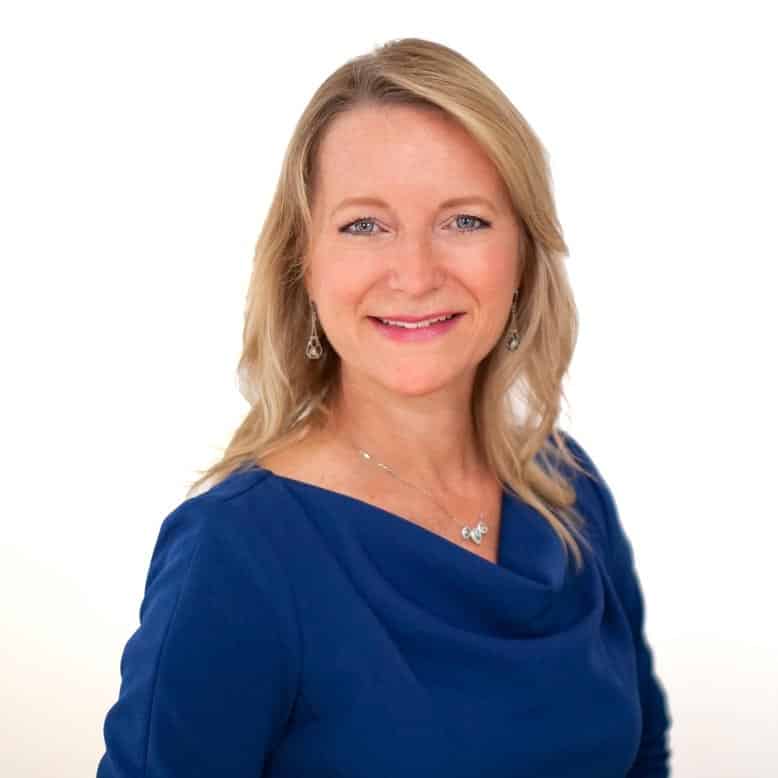
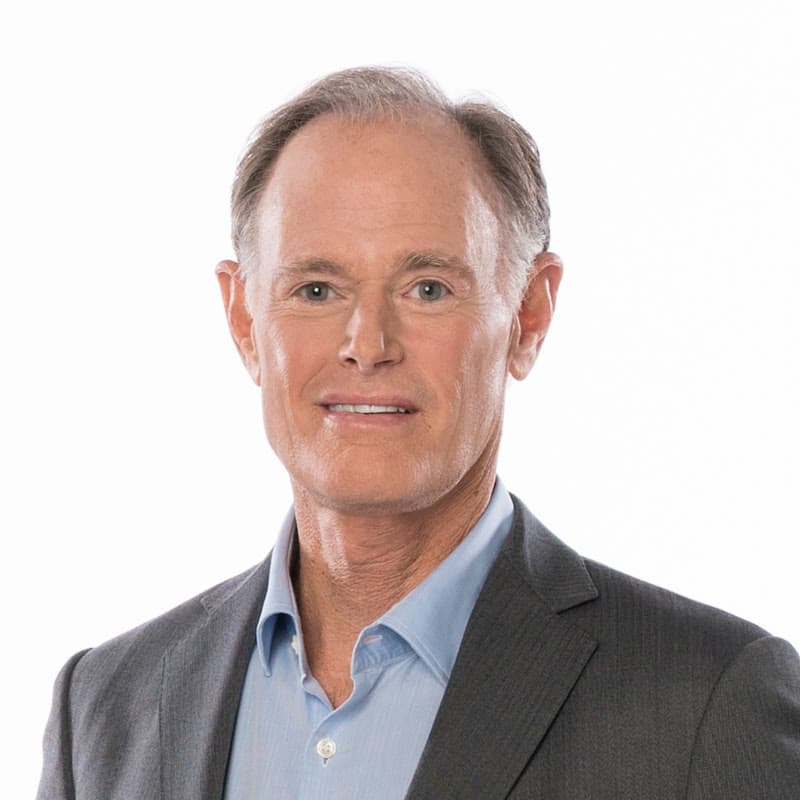
Full Transcript Summit Introduction and Guest Welcome 0:00 Hello and welcome to a very special interview for the Reversing 0:03 Alzheimer's Summit. 0:04 I am your summit co-host, Doctor Kristine Burke. 0:06 Over the last decade, I helped many patients 0:09 reverse their cognitive decline, and that is why I have co-founded True 0:13 Neuro, a brain health software company, to help patients and practitioners 0:17 be extraordinarily successful in this work. 0:21 In this summit, I'm bringing you interviews 0:22 with thought leaders who can help you understand the pillars of brain health 0:26 and the root causes of cognitive decline, because I want you 0:29 to learn what you need to know to prevent and reverse cognitive decline 0:33 and Alzheimer's disease for yourself and your loved ones. 0:36 I am extremely honored today to introduce you to one of my teachers 0:40 and a leading voice in brain health, Doctor David Perlmutter. 0:43 Doctor Perlmutter is a bestselling author, speaker, and researcher, 0:47 a renowned neurologist, a five time New York Times bestselling author, 0:52 and a thought leader in the field of brain health and functional medicine. 0:56 With decades of clinical experience, Doctor Perlmutter has dedicated his career 1:00 to uncovering how lifestyle choices and environmental factors 1:03 impact our brain health and our overall well-being. 1:06 His groundbreaking books, including Green Brain and Brain Maker, 1:10 which I have on my shelf, have transformed the way we think about the connection 1:15 between our diet, our microbiome, and the health of our brains. 1:19 Through his pioneering work and bestselling books. 1:21 Doctor Perlmutter has empowered millions of people to take charge 1:25 of their cognitive health and reduce their risk of neurodegenerative diseases. 1:30 Today, he joins us to share his expert insights 1:33 and practical strategies for protecting and restoring brain health. 1:36 Please join me in giving a warm welcome to Doctor David Perlmutter. 1:41 Well, Doctor Burke, thank you for having me. 1:43 Absolutely. 1:44 I would love to start our discussion with what you and 1:48 I were talking about earlier today, how the misunderstanding of the cause of this 1:53 disease has led us down the wrong paths for treatment. 1:58 Well, let's begin with 1:59 just how disease is sort of looked upon in modern Western world. 2:03 And that is really through one lens. 2:05 If we can figure out what's causing a disease through the notion 2:10 of what's called monotherapy, then we can develop a single drug 2:14 and that single drug can be a homerun and will solve the problem. 2:18 And I definitely want to make sure that your audience does. 2:22 I put solve the problem in quotes because certainly it does not. 2:25 And so the idea of creating, let's say, monotherapy for Alzheimer's 2:29 disease would be great if in fact, there was one cause of Alzheimer's. 2:33 But there isn't this whole notion that beta amyloid 2:36 is the cause of Alzheimer's is preposterous. 2:40 I think the research that went into that development 2:43 of the so-called amyloid hypothesis was highly flawed.
Why Alzheimer's Is Multifactorial 2:47 And we know that 2:49 there are certainly plenty of people who have lots of amyloid in their brains 2:53 and are cognitively quite intact, and others 2:57 who are fully diagnosed with Alzheimer's, who have none or 3:00 very little of that sticky protein, beta amyloid, to begin with. 3:04 You know, the idea that we could create a monotherapy creates a paradigm 3:08 that sets the stage for a blockbuster drug and also makes 3:11 the deliverance of health care very easy. 3:16 You say you have X and I have a prescription to fix it. 3:19 You say you have high blood pressure. 3:21 Here's your nervous. 3:22 You say you have diabetes. Here's your metformin. 3:24 You have Alzheimer's. Here's a drug. 3:26 We don't exist in that world. 3:29 I think, as Doctor Bateson has made very clear for many years 3:33 that Alzheimer's is multifactorial. 3:37 And I think that primarily the biggest issue 3:40 that underlies what's going on in the brains 3:43 of Alzheimer's and other Alzheimer's related dementias 3:47 is really in the area of what we call immuno metabolism. 3:50 It deals with the effects of our profoundly dysregulated metabolism 3:57 these days on the immune system, hence the term immuno metabolism. 4:02 And in the brain, we're talking about a specific population of cells called 4:05 the micro glial cells, that are involved in determining whether the brain 4:11 is going to be functional and persistent in allowing us 4:14 to enjoy life or not. So 4:17 I think what I've just said sets the stage for our further conversation, that 4:23 metabolism is really key here. 4:25 And the good news is that we, in our day to day lifestyle choices, 4:30 can really determine how effective 4:34 and healthy our metabolism really is. 4:37 And that influences directly 4:40 the immune function of the brain, which plays a central role 4:44 in the development of things like Alzheimer's or not. 4:48 Yeah, there's really a really interesting connection between what happens 4:52 when our metabolism goes awry and then the whole the entire inflammatory cascade. 4:57 That's a part of this process. 4:59 And I know you're a strong advocate for the ketogenic diet and blood 5:02 sugar control in promoting brain health. 5:05 Can you maybe explain to the viewers how this diet 5:08 impacts the brain, why it might be particularly beneficial 5:11 for those at risk for Alzheimer's or other neurodegenerative conditions? 5:16 Sure. 5:17 Well, you know, the ketogenic diet is certainly popular. 5:20 People talk about it for weight loss, along with various other things 5:23 that have become popular today for weight loss, including the use 5:27 of certain types of drugs that we call GLP one agonists. 5:30 Perhaps more familiar term would be ozempic 5:33 and these are all ways of targeting metabolism. 5:39 And to get a little bit into the weeds, specifically as it relates 5:43 to Alzheimer's targeting the metabolism of the brain's immune cells. 5:47 So we are quickly right back to this notion of immuno metabolism. 5:53 Ketogenic diet and GLP one agonist drugs 5:56 favor mitochondrial function, 5:59 allowing those energy producing organelles within the neurons 6:03 but also within the immune cells in the brain, called the micro glial cells 6:07 allow these immune cells to function more appropriately 6:12 and to be nurturing, as opposed to being threatening the micro glial cells 6:17 within the brain, making up about 10% of the cells of the brain. 6:22 The really 6:22 important players of the brain's innate immune system 6:26 can exist in a multitude of configurations. 6:30 But for our discussion, we'll just choose two. 6:33 Friend and foe. 6:35 Friend being called M2 and foe being called M1. 6:39 And it turns out that these micro glial cells can shift back and forth 6:43 between being friend, nurturing our brain cells, causing us to grow new brain 6:48 cells, nurturing our synapses, repairing the blood brain barrier or foe. 6:53 And, one configuration 6:55 where they threaten synapses, they actually digest away synapses. 6:59 They threaten the growth of new brain cells.
Ketogenic Diet, GLP-1s, and Brain Metabolism 7:01 They destroy the blood brain barrier 7:04 influenced by their metabolism, in other words, influenced 7:09 by their mitochondrial health and function, which is strongly 7:14 influenced by our dietary choices, 7:17 like a ketogenic diet, 7:20 also influenced by the use of GLP one agonist drugs, there are receptors 7:24 for GLP one on the surface of these immune cells, 7:28 but more indirectly, we know that drugs like Ozempic semaglutide 7:33 have a very, very low ability to make their way into the brain. 7:36 But it doesn't matter, because what influences the brain is systemic 7:42 levels of things that threaten brain cell metabolism and microglial metabolism, 7:48 like systemic insulin resistance 7:51 and systemic inflammation. 7:54 So that's why we favor things that nurture mitochondrial function, 7:59 like ketogenic diet, because it favors metabolism 8:04 and it favors appropriate function of the brain's immune cells, 8:07 which play a key and central role in determining 8:11 whether the brain will be fit or the brain will succumb to Alzheimer's. 8:15 And I think two, maybe it's important for people to understand that 8:19 because of the type, transporters that move glucose or sugar 8:23 from the blood into the brain, the brain doesn't have an ability 8:27 to modulate the amount of, of glucose that comes in. 8:31 And so that whether you have a nice normal amount of glucose in your blood 8:35 or you have an elevated amount of blood that directly impacts the 8:39 the way the brain receives that and receives that message in terms 8:42 of how it turns on or off certain parts of the metabolism. 8:47 That's right. 8:48 And there, you know, there are a lot of interesting factors 8:50 that play into what you just said, 8:52 including the functionality, for example, of insulin. 8:56 We're all aware that as we live a less 9:00 salubrious lifestyle, our blood sugars go up and more insulin is required. 9:04 Ultimately, insulin becomes less functional. 9:06 Everyone's familiar with that, 9:07 but I think to look at insulin functionality 9:10 through another lens for a moment would be really important. 9:12 And that is that 9:15 for insulin to do its job, 9:17 we have to have adequate amounts of a gas present called nitric oxide. 9:21 Who knew that this nitric oxide is really important for a number of things 9:27 related to brain health, including blood supply, delivering blood to the brain, 9:31 but also this functionality of insulin that is required in many important parts 9:37 of the brain to deliver that life supportive glucose, such 9:41 that the mitochondria can do their work and as such, 9:45 keep the microglia in a supportive role as opposed to a threatening role. 9:50 So it helps us understand then, 9:53 a variety of relationships to Alzheimer's. 9:56 For example, we know that poor dental health, periodontal disease 10:01 is related, to increased risk for Alzheimer's disease. 10:04 And a lot of research has focused 10:06 on the presence of a particular bacterium called poor from honest gingival. 10:10 But I want to take a step back and just try to connect some dots here to overall 10:16 health of the oral 10:17 microbiome and the function of insulin. 10:22 Now, that may seem like a long way away, but bear with me for just a moment. 10:26 It turns out that the bacteria living within the mouth 10:30 play an important role in converting dietary, 10:34 to giving us the raw materials in terms of nitrogen 10:38 to allow our bodies to make nitric oxide. 10:42 What I just alluded to as being very important for insulin function 10:46 and for delivery of blood throughout the body. 10:49 So this is yet another indication that we've got to maintain 10:54 good oral health because of the conversion of dietary nitrate and nitrite 10:59 and the conversion of that into the form that can be used for the body, 11:03 then to make nitric oxide to allow insulin to do its job, to allow 11:07 microglia cells to undergo good metabolism and to keep our brain healthy. 11:12 So there are a lot of interesting connections 11:15 that through the lens of immuno metabolism, begin to make sense. 11:21 So that's how we can understand oral health and Alzheimer's risk. 11:26 What about the relationship between obesity and Alzheimer's risk? 11:30 We know that people who are obese 11:32 or even overweight in midlife have an increased risk for Alzheimer's. 11:37 Well, that's understandable through the lens of immuno metabolism, 11:42 because when we are significantly overweight or obese, 11:45 several things happen. 11:47 We compromise this function further, as we just talked about, of insulin, 11:52 and we create higher levels of inflammation in the body. 11:57 Those chemical mediators of inflammation 12:00 called cytokines make their way into the brain. 12:03 And guess what? 12:05 They help shift those micro glial cells 12:08 away from being friend to being foe. 12:11 So just the presence of obesity 12:15 through the notion of immuno metabolism 12:18 ultimately leads to things like digestion 12:21 of our brain synapses, so that cells can't communicate with each other, 12:25 a reduction of the growth of new brain cells 12:28 and the destabilization of the blood brain barrier. 12:32 And let me expand just a moment. 12:35 The just how important this immuno metabolism concept is,
Insulin, Nitric Oxide, and Oral Health 12:41 because fundamentally, when we get our arms 12:43 around the fact that it's metabolism 12:47 that's regulating the brain's immunity 12:50 and that the immune function of these micro glial cells 12:54 is really fundamental across all neurodegenerative conditions, 12:58 it really makes us understand that we're in charge, 13:01 we're in charge of our metabolism based on our lifestyle choices. 13:04 And as such, we're in charge of the brain's immune function. 13:08 And as such, we are determining we're the architects of our brains destiny. 13:12 So whether we look at blood 13:16 sugar and insulin functionality or obesity or hypertension 13:19 or any number of factors that play 13:22 into even those three levers, we realize that, 13:26 you know, this idea of living until we have a problem 13:29 and then hoping that there's a cure is one way of looking at it. 13:32 But I think more and more people 13:34 are realizing that it's really up to each and every one of us, 13:38 you know, to me, to architect our health, destiny and, 13:41 you know, that's what having tools to improve our metabolism is all about. 13:46 And, and really the most important tools for metabolic health are lifestyle choices 13:50 like exercise, sleep, diet, stress mitigation, etc.. 13:54 Absolutely. 13:55 And I think, you know, earlier you were talking about the GDP one 13:59 agonist. 13:59 And I think, you know, one thing that people often forget 14:03 is that these are naturally occurring peptides in a healthy metabolism. 14:08 We're already making these. 14:10 And that's that's how it's supposed to work. 14:12 It isn't that we all suddenly have a deficiency in these peptides. 14:17 It's that the choices that we've made that have led through the immuno modulation 14:21 that you've just talked about, have led to a change in the way 14:25 our metabolism function alters that production, just like it alters 14:29 the production of many other cytokines or cell signaling messages, messengers 14:33 that we have. 14:35 That's right. 14:35 And when we see studies published as one recently was, 14:41 that demonstrates, for example, a 70% risk reduction for the development 14:45 of Alzheimer's over a three year period of time in diabetics 14:49 who are using semaglutide or ozempic in comparison to other drugs. 14:54 Some of them GLP ones, 14:55 but other sulfonylurea type drugs, metformin or even insulin. The. 14:59 The most dramatic comparison was in comparison to those receiving insulin. 15:04 Wonder why I bring up these studies? 15:08 Not because, I am necessarily in favor of people 15:11 jumping on taken ozempic because it's good for your brain. 15:14 It's not what I'm saying. 15:16 I mean, when I write about them and blog about them, etc. 15:20 and then I get accused of being on the payroll by the pharmaceutical payroll. 15:23 I'm not I doing this because it further exemplifies 15:28 the central role of metabolism in brain health and disease. 15:32 Here is a class of drugs that aggressively 15:36 and positively affects cellular metabolism, 15:41 including metabolism, systemically and to some degree in the brain. 15:46 And it is simply a case in point 15:49 to, again, further support the notion 15:52 that when metabolism is in the right place, the brain is happy. 15:57 So again, Doctor Perlmutter is not saying 16:00 on this summit right now, zip it for one and all, you'll have a great brain. 16:04 But I am saying that because of the data coming out with respect 16:08 to GLP one agonists, in terms of Alzheimer's, in terms of Parkinson's, 16:12 that it's an indication that metabolism is important. 16:17 That's all. 16:17 And therefore, let's look at what 16:19 we should be choosing to do with respect to our lifestyle choices, 16:23 to enhance our metabolism in terms of day to day activities. 16:29 Yeah. 16:29 Having that normal communication of normal metabolism is key to brain health. 16:34 You know, one of the other things 16:36 that you were interviewed about recently that is also on 16:40 the inflammation side was the two studies, that suggested that the shingles vaccine 16:46 may help to slow the development of dementia. 16:49 I think it's interesting on the other side, like, what are the other routes 16:55 that can lead to this final common denominator of inflammation 16:59 and the change, the changes in the way the microglia respond? 17:03 I think that is kind of a segue 17:05 then to the whole notion of infectious agents 17:09 and their possible relationship to the development of Alzheimer's disease. 17:13 I mean, we've known for quite some time that infection with herpes 17:18 simplex virus type one has been demonstrated to Co localize 17:22 with activated microglia around beta amyloid in the brain.
Obesity, Inflammation, and Microglial Polarization 17:28 In the brain, a work originally done by Doctor Ruth Itsuki in England. 17:32 And subsequently we've seen similar findings related to chlamydia, pneumonia. 17:36 But I think now there are a variety of other types of infections, 17:41 including Epstein-Barr virus, cytomegalovirus, SARS-CoV-2 virus 17:46 for a modest gingival as a bacterium, and even for certain types 17:50 of fungal infections that have been found to be associated with increased risk. 17:55 Grasshoppers disease. 17:56 And I think that when we again look at the immune cells in the brain 18:01 and recognize that the micro glial cells can bind those infectious agents, 18:07 that we begin to understand 18:09 what may be going on here, 18:10 that activation of pathways and activation of what is called 18:15 the NLRB inflammasome in other words, 18:18 a series of cascades within that micro glial cell 18:22 culminates in down regulating mitochondrial activity. 18:26 In other words, metabolism, 18:28 and causes that micro glial cells to start doing bad things in the brain. 18:32 So all of these inroads 18:35 and even things like, for example, BRCA and, and, 18:40 and syphilis act similarly in the brain that all of these inroads 18:44 through their effects on what we call 18:47 micro glial polarization, meaning shifting the microglia 18:51 away from being trend to being pho really becomes like a funnel. 18:55 Then for us to understand what the relationship is between 18:59 these infectious agents and the production of downstream consequences 19:05 in the brain that ultimately succumbs to Alzheimer's and it. 19:08 All right, let's get let's get back to your question. 19:11 Therefore, the idea of reducing viral infection, be it through a vaccine, as to, 19:17 you know, as you were mentioning with respect to shingles vaccination 19:21 or even the use of antiviral medications, I think is something that we should be 19:25 thinking about. 19:26 There has been, a talk for quite some time getting back to the work of Doctor Ruth. 19:30 Attack of keeping people, especially the ApoE4 group, away 19:35 from higher risk for herpes simplex type one infection. 19:39 We know that being ApoE e4 heterozygous or homozygous 19:44 and having higher levels of herpes simplex virus type one 19:48 antibodies, as one might see in people who get cold sores. 19:52 That combination is particularly related to increased risk for Alzheimer's. 19:57 So they're playing upon each other, and it's no surprise because ApoE e4, 20:02 one of the things that it does is it sets the stage 20:04 to activate those microglial cells. 20:07 When you add HSV one infection to that, it makes a situation even worse, 20:12 as we have seen, for example, in the combination of diabetes 20:16 with ApoE e4 and obesity with ApoE e4. 20:21 Yeah, that ApoE4 just 20:22 accelerates your inflammatory response in a sense. 20:26 And so everything becomes amplified. 20:28 Every exposure becomes amplified in that group 20:31 whether they have one copy and then worse if they have two copies. 20:35 So when I'm hearing from you 20:39 in a sense, is that the more we investigate 20:43 the things that turn on or off that polarization of the microglia, 20:49 then the better understanding we will have of the true root 20:53 causes of Alzheimer's and other neurodegenerative conditions. 20:58 That's right. 20:58 It explains an awful lot. 21:01 It explains why we see elevation of beta amyloid, for example, in some people 21:05 who have Alzheimer's, but not all because these microglial cells are really 21:12 happy to digest away 21:13 beta amyloid that might become present when they're in their M2. 21:17 Good constructive supported phenotype. 21:20 They lose that ability when they're in the M1 phenotype, 21:23 such that then a beta amyloid can accumulate and the accumulation of beta 21:27 amyloid within the brain increases the production of these inflammatory 21:33 mediators called cytokines, which does what it further polarizes. 21:37 Those micro glia away from being our friend to being foe. 21:41 So it does tend to explain a quite a bit. 21:44 I mean, we've seen we've known for quite some time 21:48 that markers for 21:51 activated or polarized or M1 microglia are higher 21:56 in postmortem analysis of brain tissue. 22:00 Now, there's autopsy specimens of brain tissue in looking at the Alzheimer's 22:04 brain in comparison to the non afflicted individual. 22:08 And even more exciting is the fact that in living people 22:11 now we can image activated microglia 22:14 using a tracer called well it's a that would bind to something called TSB. 22:19 So a transporter protein located on the surface of microglia cells. 22:23 So the activation of TSB is a marker of microglial activation. 22:28 So you can image micro glial activation in living people. 22:34 And you see activation of microglia in depression and schizophrenia, 22:39 Parkinson's even macular degeneration, retinitis 22:42 pigmentosa and certainly Alzheimer's disease as well, and autism. 22:46 So it really allows us to characterize activation of microglia 22:51 as being a really central 22:54 focus for what's going on, to make a good brain 22:57 go bad across various types of pathologies.
Infections, ApoE4, and Dementia Risk 23:01 Now, is that something that's going to be clinically available, 23:05 or is that only available in the research setting? 23:07 Right now? 23:08 You can't get a bio scan of your brain right now. 23:11 But, you know, one of the things that, as we've talked about, shifts microglia 23:15 from being friend to being foe is changes in brain 23:19 metabolism, specifically how the brain utilizes glucose. 23:22 And that type of scan is available. 23:25 It's called a, Flora deoxy glucose, Pet scan. 23:30 And that is a scan that not only indicates decreased brain metabolism 23:35 as relates to glucose setting the stage for microglial activation, 23:39 but predicts Alzheimer's as much as two decades ahead of time. 23:43 So what happens 23:44 long before you forget the Wi-Fi code in your grandchildren's names, 23:48 is that there are changes in your brain's metabolism brought on by your lifestyle, 23:53 and this can be imaged now using these glucose Pet scans, 23:58 if you will, that mark and charge brain metabolism. 24:02 Yes, it's a research tool, but it is something that's available. 24:06 And beyond that, I'm aware of research now that's looking at modification 24:10 of MRI scan availability 24:14 to actually mark brain metabolism. 24:16 And as non-invasively as you can be, I mean, a Pet scan is a bit invasive. 24:21 You're giving a radioactive tracer. 24:23 And yet if MRI can be utilized as I think it will be 24:27 when software becomes more widely available 24:30 to image brain metabolism, not only will that be useful 24:34 to determine who's at risk and who's not at risk, 24:37 but also, more importantly, to follow how effective 24:40 an interventional program is in terms of improving brain metabolism. 24:45 And that's the home run. That's where it's at. 24:47 Yeah, that really is the home run. 24:49 There's so many new tools that are coming out the 24:53 the brain biomarkers that we have access to now for earlier detection 24:57 of some of the pathological changes that are occurring in the brain 25:00 and this that you're, that you're speaking about. 25:03 And then the ability to start, you know, in the future. 25:06 Not ready now, but measuring the actual mitochondrial function. 25:11 All of these things are going to give us so much understanding about 25:14 where the system is failing, so that the the clinicians can then help intervene. 25:21 I agree, and and what's very exciting is, 25:24 so many of these things are now being coming available without a prescription. 25:29 And at a doctor having to be involved. 25:32 It's so empowering that 25:33 people can look at neuro filament light or whatever it may be. 25:36 Forms of phosphorylated tau available without a prescription 25:40 and even ways of measuring in real time biometrics like blood sugar 25:44 with a continuous glucose monitor to measure your sleep quality 25:48 using a tracker of one sort or another. 25:50 It's very, very exciting that people are becoming empowered 25:53 with these tools, and I've always wondered, why not? 25:56 I mean, you're allowed to buy a bathroom scale and know how much you weigh. 26:00 Why shouldn't you know your blood sugar? 26:02 Why shouldn't you know 26:03 your cognitive performance and be allowed to take a cognitive test online? 26:07 You are. 26:08 And to know the, levels of things like the brain scan report, 26:12 where you're able to look at these unique proteins and determine where you are 26:16 on the scale of risk, on the continuum of brain degeneration or not. 26:21 And then to be given tools to intervene that are non-pharmaceutical, 26:26 by and large, is pretty, it's it's very exciting. 26:31 It is really exciting. 26:32 And I think two, we're at a time where it's, you know, 26:36 maybe a decade ago, it would have been terrifying 26:39 to have these tools that tell us that the process is coming. 26:42 Right. 26:42 And the light at the end of the tunnel looks like a train coming your way. 26:45 But now we have so many tools and so much more 26:49 understanding about the drivers of brain degeneration. 26:53 And much of that is in the control of the patient 26:56 through their lifestyle choices. 26:58 Yes. And, you know, many, many years ago, when we first 27:01 were able to get genomic data on our patients 27:05 and we knew that ApoE e4 that we talked about earlier 27:09 was a risk factor for Alzheimer's, it was called the Alzheimer's gene. 27:14 That was really aggressive 27:16 and I thought ill suited for the clinic, that's for sure. 27:19 You know, the empowering part of that is people say, 27:21 well, gosh, nobody wants to know if they carry that gene. 27:24 I think that's exactly wrong. 27:26 I think people really want to know what their risk is. 27:29 And, you know, as it relates to, because they can make changes 27:32 after, let's say, ApoE4. 27:34 How wrong was the idea that, you know, 27:38 this was an Alzheimer's gene and sort of charted your destiny? 27:41 Nothing could be further from the truth. 27:43 We can absolutely offset pretty much 27:46 all of the risk imparted by ApoE4 now. 27:50 And so the idea that people had learned it, that they were appealing for positive 27:55 and felt that they were destined to Alzheimer's was so wrong, as we know now. 28:00 I mean, there are ApoE e4 four homozygous patients 28:04 who've gone through, for example, Doctor Breton's protocol 28:07 who have shown improvement in cognitive function 28:10 and that absolutely rewrites the book in terms of the 28:13 the general teaching on Alzheimer's and what is an individual's destiny. 28:19 Yeah, it really does. 28:21 And it informs the patient that they have a bigger job to do. 28:26 They need to be vigilant 28:27 to all of these things that we've talked about in their metabolism 28:31 and their dietary and lifestyle choices and their inflammatory exposures. 28:35 All of those things are really what confer their risk.
Brain Imaging, Biomarkers, and Early Detection 28:39 The gene is just their vulnerability. 28:42 It's true. 28:43 By and large, I mean more than 95% chance that Alzheimer's, in 28:49 an individual is not caused by genes, it's caused by other variables. 28:55 The good news is, if it's not genetic, it's environmental, i.e. 28:58 it's a it's a variable over which we can exercise strong control, 29:04 like diet, like exercise 29:07 or lack thereof, and quality of sleep and stress, 29:10 toxins, exposures, many things that, 29:14 you know, we've got to be able to get out there and tell people about 29:17 because the common messaging is live your life come what may, and we'll fix it 29:23 when you get a problem that's not working as it relates to Alzheimer's. 29:27 Never did before that amyloid targeted drugs that are not working. 29:32 We were told to use cholinesterase 29:35 inhibiting drugs like aricept donepezil, because it was 29:39 found that the brains of the Alzheimer's patients were low in acetylcholine. 29:43 If we can raise acetylcholine, problem solved. 29:46 And these drugs were developed to do just that. 29:49 Well, and it turns out that when you look at large meta analyzes, 29:53 evaluation of the efficacy of these studies in terms of 29:58 how people 29:59 proceed down the continuum of cognitive function, those taking the cholinesterase 30:04 inhibitor drugs actually 30:07 decline cognitively more rapidly 30:10 than those who did not take the drug for Alzheimer's disease. 30:14 Wow. You know, that directly violates the notion of premium. 30:18 Not no, sir. Above all, do no harm. 30:20 And so we live and learn. 30:22 And I think the lesson here is that when we as clinicians, 30:26 are being fed advertisements to tell us how we should treat patients, 30:31 we need to take a deep breath, and take a step back, because, 30:35 you know, certainly as it relates to Alzheimer's, 30:37 there's nothing meaningful available to us. 30:40 As you and I have this conversation right now. 30:43 Yeah, it's really important. 30:45 Well, maybe we could wrap up with some practical steps for prevention. 30:50 You've mentioned quite a few over the course of our conversation, 30:53 but for viewers who may feel overwhelmed by what they need to do to try 30:57 to prevent Alzheimer's, what would you say are the first three actionable steps 31:02 that they could take today to start protecting their brain health? 31:08 Well, I will answer that question, but first, 31:09 I would like to say to all the viewers that if you live in be age 85, 31:13 and that's the most rapidly growing segment of our population, 31:17 your risk for this disease is at least doubled. 31:20 I mean, at least going to be 50%, meaning that if you live to be age 31:25 85, your risk of having Alzheimer's is a flip of a coin. 31:29 That, you know, this is a disease affecting now some 7 million Americans. 31:33 And those numbers are only going to get 31:35 significantly greater as we move forward in time. 31:38 The number one risk factor for Alzheimer's is a metric over 31:42 which we have no control. 31:43 And that is our age. 31:45 Okay, we get it. 31:47 But the other factors we do have control over, 31:51 and that's the empowerment part of why we're together today. 31:55 So to answer the question, the top three, 31:58 I would say, exercise, exercise. 32:01 And the third would be exercise. 32:03 And it's so important, I think, that, you know, we've seen literature lately 32:07 suggesting that you can get exercise two days a week and still lower your risk 32:11 for a variety. 32:12 I think it was 60 different, disease states. 32:15 I think people should exercise every day 32:18 and should 32:18 alternate between resistance training and aerobic training. 32:23 Muscles are an, endocrine gland. 32:25 They are secreting chemicals that are really good for the brain
Practical Prevention Strategies and Closing Remarks 32:28 and really good for immuno metabolism, 32:31 good for metabolism, therefore good for immuno metabolism. 32:35 So exercise is really very important. 32:37 Number two I know the top three were excellent. 32:39 But number two would be a diet that controls your blood sugar. 32:43 So that may be Mediterranean. 32:44 That may be ketogenic, that may be eating foods 32:47 that start with a particular letter or end with a vowel. 32:50 I don't care, I just want to be sure that the diets 32:53 people are gravitating to are diets that control their blood sugar. 32:58 How do you know? 32:59 You know, by doing things like wearing a continuous glucose monitor, 33:04 following your A1 c and most importantly, 33:08 following your fasting insulin level. 33:10 That should be between, let's say, two and five. 33:13 Keep it really low because your blood sugar may actually 33:16 be normal, but the insulin is telling you where you are 33:20 as it relates to insulin resistance. 33:23 That will ultimately lead to a situation where the blood sugar is not 33:26 normal anymore. 33:28 So number one and number two, exercise 33:30 and a diet that's good for your blood sugar. 33:34 What is number three. Not sure. 33:36 I'm really not sure what I would put third on the list. 33:39 I think paying attention to, organisms in and on your body is important, 33:44 i.e the microbiome, in your gut microbiome in your mouth. 33:48 Really very important because it plays a role in inflammation. 33:51 We could be talking about getting obesity and blood sugar 33:55 control and, amount of inflammatory chemicals in our bodies. 33:58 So I think I to have a tough time coming up with number three, 34:01 because there are a lot of things out there. But 34:04 I think if 34:05 people can learn what to eat 34:08 and can exercise every day, 34:11 it's going to go a long way 34:13 to actually preventing this global pandemic 34:17 of Alzheimer's and dementia type diseases that we are seeing now. 34:21 That's wonderful. 34:23 Well, Doctor Perlmutter, this has been really an amazing 34:27 discussion, and I so appreciate that you're providing 34:30 this really important information with everyone on the summit today. 34:34 I know that you have already written at least six 34:37 books, and I hear maybe one more on the way. 34:40 So people have a lot of access to learn from you. 34:43 So where can people find out more about your work 34:47 and, and access all of that great information that you've created it? 34:51 Well, my website is, oddly enough drperlmutter.com, Doctor 34:55 perlmutter.com and Instagram I think is David Perlmutter. 34:58 Facebook I think is David Perlmutter. 35:01 And my new book is called Brain Wars that focuses, oddly 35:04 enough, on the war between, the M1 and M2 microglia. 35:08 That'll be my 16th book. 35:10 There have been there have been a few over the years. 35:12 I appreciate the opportunity to spend time with you and to get in formation. 35:16 On the aging. 35:18 In the fourth century BCE, the Yellow Emperor said that prevention 35:22 is the ultimate principle of wisdom. 35:24 To cure a disease after it has manifests is like digging a well 35:28 when one feels thirsty or forging weapons when the war has already begun. 35:32 So we really have to emphasize prevention, and the tools are very straightforward. 35:37 It's all about keeping our metabolism in check. 35:41 Thank you so much for joining us today. 35:45 Thank you for having me. It was a pleasure. 35:46 My pleasure as well.
Comments