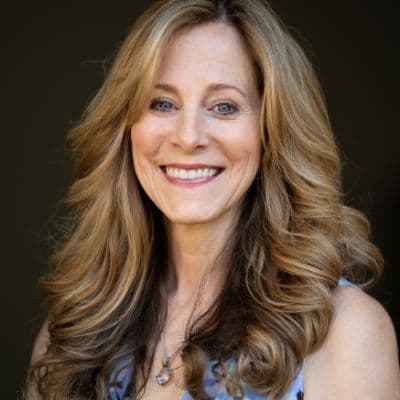
Full Transcript Introduction and Welcome 0:00 Well, Jennifer O;Brien Payeur your dear friend. 0:03 And you're such a special individual. 0:05 And I'm so honored to have you here on this event. 0:09 So thank you, Jennifer, for being with me. 0:11 Thank you so much for having me. 0:13 I love spending time with you. 0:14 And you're just a a walking encyclopedia 0:18 of wisdom and information. 0:21 And I love your mission. So thank you. 0:24 Well thank you. Ditto. Ditto. 0:26 Tell. Yeah. 0:27 Let the audience know a little bit. 0:28 Kind of where you're coming from because you started in finance 0:32 and here you are, you know, spreading the word about ancient plant wisdom 0:38 to the world and really bringing healing 0:41 to the world versus your prior profession. 0:44 So how? Yeah. Talk to me a little bit about that. 0:49 Yeah. 0:49 You know, I'm the what I would call the classic pain to purpose story. 0:53 Worked in banking 29 years. 0:56 I had two health crises. 0:57 Luckily, I had them in a good order. 0:59 The first one led me deep into the natural healing world. 1:04 I grew up in a very traditional classic West, Middle West, 1:08 you know, grew up in Ohio in a family of military family, 1:12 Catholic, like all of the structure and rigor. 1:15 And you were meant to follow the authority. 1:19 And so that authority within never really developed in me. 1:22 I never thought to question it. 1:25 And so here I am in this corporate job, 1:28 and something was stirring in me, and I knew it, but I kept ignoring it. 1:32 And I think that's important to state because we often get these
From Banking to Plant Healing 1:35 stirring inside, you know, and we push it aside and push it down. 1:39 And so luckily, I went deep into the natural healing world 1:43 with the first health crisis and the second one, which was stage four. 1:46 Cancer is what really allowed me to or invited me 1:50 to step out of the corporate world and come into something else. 1:54 And that's something else. 1:55 Took about a year for me to sit in this nothingness 1:59 to figure out who am I, what lights me up? 2:02 How do I connect to that part of me that lights me up? 2:05 And that's where I found the plant world. 2:08 Yeah, I love that. 2:09 And just for the audience to know these 2:11 these are products that I use in my clinic, and I. 2:14 And I love them. 2:15 You know, I've been there with Jennifer up in, you know, in Italy where, 2:19 where they're manufactured and picked. 2:21 And I mean, the process is just phenomenal. 2:24 So what made you fall in love with these kind of stem cell plant stem cells? 2:30 Essentially. Right. Right. 2:32 You know, before a tree becomes a tree, everything that it will ever become. 2:37 So all of its intention and potential sits in the bud of a tree or shrub. 2:43 And for me, I always joke and say that the plants found me 2:47 because my cancer markers were rising, and that was pretty indicative 2:51 of a recurrence. 2:53 And I, you know, I was at a friend's house 2:56 and her husband, who's a doctor, came out with a bottle of this tincture. 3:00 And very casually, I asked him, what is it? 3:03 And he told me, and I had no intention of connecting it to my experience 3:08 or my health, but I just got overwhelmed 3:11 with this energy of what this was. 3:14 And so what we're talking about is the buds, young shoots 3:19 and rootlets of plants in their growth phase 3:22 carry compounds that disappear when those plants become adults. 3:27 And so plant stem cells reside 3:30 in that new growth on the plants in the springtime. 3:33 And what's fascinating is the research is now showing 3:38 that these these buds and rootlets and young shoots carry exosomes 3:42 that have micro RNA, which gives a pathway through 3:46 which the plant can influence our gene expression. 3:49 So they are affecting our epigenetics. 3:52 How cool is that? 3:54 And then the other thing is that they contain secondary metabolites. 3:59 Hey, I said it. 4:00 All right. 4:00 Lactones which can help target cancer stem cells. 4:04 And so what made me fall in love with these plants was watching my own labs 4:09 change as a result of working with these plants. 4:13 And that that's when I said, wait a minute, nothing else I've done. 4:16 And I did a lot had changed that aspect of my health. 4:20 And so I still kind of had that very haggard look, 4:23 which when I go back now, I know I still had toxins in my body, 4:27 even though I was doing a lot of the soreness 4:30 and the high dose vitamin C and a lot of the things, 4:33 nothing was getting me over the goal line until I found these plants. 4:37 And so here you have you used the word exosomes. 4:41 And then you said that these exosomes actually can go in and we have your DNA.
Discovering Plant Stem Cells 4:47 And then you have, you know, which genes are turned on and turned off. 4:50 And, and that cannot tells the behavior of that cell. 4:54 And obviously cancer cells, 4:57 the epigenetic structure of that 5:00 is to drive a cancer behavior within that cell. 5:04 So these exosomes can actually go in then and help to correct a lot of that 5:10 epigenetic genes turned on, turn off for the benefit of the cells 5:15 so that it may not need to be expressing that cancer behavior anymore. 5:20 Yeah, absolutely. 5:22 And for sure, I just passed my 11th year. 5:25 I have not had a recurrence. 5:27 And my labs continue to support, you know, my health, which is amazing. 5:32 And that, I believe, is because of what you just mentioned, Doctor Carr felt. 5:38 And then, you know, this part of being able to work 5:41 with these micro RNAs that are in certain plants 5:45 that can survive digestion, that's a question I get often is, well, 5:48 doesn't the, you know, acid in the stomach destroy these know? 5:51 And some 5:52 ants actually get stronger with that acid, which is a whole nother discussion. 5:57 But these microRNAs these exosomes are absolutely influencing 6:02 gene expression. 6:03 So they are turning on and turning off genes that are going to support our health. 6:09 Because that's phenomenal. 6:11 We talk about like the the p53 6:14 aspect, you know, which is a protector of the genome. 6:18 And we know in cancer cells, you know, these are then mutated. 6:22 And so if we are then able to then instead of 6:26 just kind of killing things, to be able then to adjust to 6:31 then actually bring intelligence to those cells and kind of shift 6:34 the behavior so that those cells instead of, you know, being cancers. 6:39 Now they we can move them by bringing that intelligence from these plants 6:44 that have these exosomes to shift that cell to healthy, versus 6:49 just thinking that this is a fold that we got to go after and killed. 6:53 We're bringing intelligence to it, so knows how to operate. 6:57 Yeah, exactly. 6:58 And it part of the the process is changing our mindset 7:02 because we've been taught you've got to kill it. 7:04 You're at war right. 7:06 It's all these very masculine terms, 7:09 when in fact, what we really want to do 7:13 is work with the intelligence of our body, with the intelligence of these plants. 7:19 So now we're in a relationship and we've got this collaborative healing 7:23 effect going on versus blocking a pathway, shutting something down. 7:27 You're actually, you know, kind of driving toward healing with a partner. 7:32 You know, I call these allies because now and it helps 7:36 change your mindset of I am empowered in my healing process. 7:40 I don't have to have something happening to me. 7:43 I don't have to block something or push something through. 7:46 I actually get to do it in a gentle, slow way 7:49 with the intelligence of my body, 7:52 because that is kind of the normal pathway of the the medical, 7:56 the pharmaceutical mindset is that I'm going to give you something 8:00 that is going over ride your natural innate intelligence, which is phenomenal. 8:05 I mean, we have the best doctors that exists within here, 8:09 the amount of intelligence to be able to coordinate 8:12 the 30 some trillion cells that we have 8:16 with a million reactions every second in each cell. 8:20 That's a lot of intelligence and that's a lot of coordination. 8:23 So pharmaceutical model is that skip that intelligence. 8:26 We're going to take over. 8:28 And obviously that always comes with repercussion. 8:31 So how much more 8:33 beautiful and 8:35 you know restorative and regenerative and healing to work alongside 8:39 with the innate intelligence and bring then that energy that exists 8:44 within those plants that usually as, as we have evolved here on, on Earth. 8:49 Yeah. So have the plants save about with us. 8:52 And so we, we carry that that kind of cross 8:55 intelligence and what we can support each other. 8:59 Absolutely. 9:00 And we often refer to 9:02 this as alternative medicine when in fact plants have been here. 9:06 Thousands and thousands and thousands of eons before humans even. 9:10 Right. 9:10 So plants really are our original medicine. 9:14 And so it's, you know, having so it's in our DNA too, right? 9:19 We were evolved as human beings with plants. 9:23 And there's always there was a show called The Last of Us, 9:26 and one of the things they showed in there is if humans disappeared, plants 9:30 would flourish. 9:32 If plants disappeared, humans wouldn't exist anymore.
How Exosomes Influence Gene Expression 9:35 So that is that symbiotic relationship that we have with plants. 9:40 So they really are, you know, partners in our healing, 9:43 not, you know, not fighting against anything. 9:47 And you talked about that regular mature 9:50 herbs, they do not carry these, these exosomes. 9:54 So what is the process of making sure that we have these exosomes 10:00 and as high of the quantity as we would like. 10:02 Because I would assume 10:03 that becomes really important since they do all this, this amazing work. 10:08 Yeah. 10:08 There are all these plants come from the Italian Alps. 10:12 And, you know, 10:12 we had the joy of having you and your beautiful wife there with us last year. 10:17 You know, you saw the process. 10:19 There is intentionality. 10:21 And I would even say a sacredness with every aspect of these plants. 10:26 They are hand-picked. 10:27 Those buds are hand-picked, the young shoots are hand-picked. 10:30 So everything is hand-picked. 10:32 And this is where the art comes in, because they have to be picked at 10:36 just the right time, where the bud hasn't opened up fully or it's not too tight. 10:42 And so that process in and of itself just checking. 10:45 Okay. Are they ready? Are they ready? 10:47 They're ready now. 10:48 Hand-picked then they're macerated. 10:51 At that point, 10:52 we need to know how much water is in each bud, and each plant will be different. 10:56 And the water in the buds is actually cellular water. 11:01 Well, guess what we have in our bodies? 11:03 Cellular water. 11:04 And so they are weighed 11:07 so they can see how much water is in and then macerated for 21 days minimum. 11:12 Some take a little bit longer. 11:14 And then the plant material that has been soaking 11:17 is pulled out and that is sent to doctor Canelo. 11:21 And doctor Canelo then will take it and he will use the process. 11:28 And spigot is where they take that plant material, they press it, they burn it. 11:33 And I just I just found this out this year. 11:36 You'll be maybe interested in this. 11:38 It's not just one temperature. 11:39 So he burns it at a 400 and an 800 degree temperature. 11:44 That's Celsius. 11:45 So that tells you how hot it is. 11:47 And then he gets that crystallized ash left. 11:51 Then it's clean with distilled water and then put back into the tincture. 11:55 And what that's doing is it's essentially bringing light. 11:59 This is where those carbon nano dots that he found a couple of years ago 12:03 in his lab started to appear on the slide when he looked under the microscope. 12:09 And so that tells me, you know, just as a somebody who's interested 12:13 in energy is they're literally bringing light into the body. 12:17 And then once the process is completed, 12:21 then it's spirals naturally, like nature is. 12:25 So it's a condensation process 12:26 that's just constantly going at a very, very low temperature. 12:30 And then it's bottled. 12:31 So really, I've never seen a process 12:35 as intentional and sacred as what I've experienced in Italy. 12:39 Yeah. 12:39 And I like to mention I get to experience that whole process and it's phenomenal. 12:44 You have individuals that this is what they've done for many, many years. 12:49 They're up there in the Alps and they they look at they check the trees, 12:54 check the plans to make sure that it is just the right time to pick. 12:58 And then they're picking that. 13:00 And like you said, it can't be too tight. 13:02 It can't be too open. 13:03 And so is that that optimum time where they're picking. 13:07 So there are no machines involved or. No. 13:10 It's literally people up in the Alps, no toxicity. 13:15 You know, it's clean environment as you possibly can obviously completely, 13:20 you know, organic because there's there's no pesticides up there. 13:24 There's everything's just growing in the wild. 13:26 So it's phenomenal. 13:28 And then the brilliance and a professor and Doctor Neeley, 13:32 in regards to how he has developed this process 13:37 to really optimize the energetic quality
Plant Intelligence and Healing Philosophy 13:41 and the, you know, the like the exosomes and then the, 13:46 you know, the different mineral ash and the carbon docs 13:49 and all these components, you know, that then come along with the product, 13:54 you know, so when people think that, well, these are just different herbs 13:57 and I'm taking and then, you know, why can I take this herb versus that herb. 14:02 This is a completely different ball game. 14:04 Yeah completely different. 14:06 And one of the uniqueness, one of the pieces of uniqueness 14:10 of these buds is that they contain something called juvenile phyto hormones. 14:15 Fido means light, and they are really four 14:18 main ones that tell that plant what to do. 14:22 So for example, axons are the grow and repair signal. 14:26 And so they're helping and signaling tissue to rebuild in the body. 14:31 So it's the renovation crew. 14:33 And you have plants like walnut or mountain pine 14:35 or fig that have a lot of oxidase in them. 14:39 And then gill billions. 14:41 That's the wake up and expand. 14:42 So that is going to help with sluggish organs and our metabolism. 14:46 Plants like sweet chestnut for the lymphatic system. 14:49 Artichoke for the liver beech for the kidney. 14:52 Cytokines is the third one. 14:54 And that's the keep everything young. 14:56 So that's going to slow the aging process at a cellular level. 15:00 And one of my favorite plants there is cedar of Lebanon. 15:03 Maidenhair tree for the brain crabapple for digestion. 15:07 And then the last one is a psychic acid which is the balance. 15:11 Or that's the regulator that tells when growth should start and stop. 15:15 And that will be your purple cone flowers, which is your echinacea, that will be 15:19 maize, which helps with the heart LA campaign, which helps with the lungs. 15:23 So no adult plants have these phyto hormones in them. 15:29 Does that mean adult plants are bad? Nope, not at all. 15:31 Adult plants work quickly and they work on our biochemistry. 15:36 The plant buds are working on communication. 15:39 They're working on regulating our hormones. 15:41 They're regulating those genetic signals in our body. 15:45 So they just have a different way of supporting the body. 15:50 So you can just say that these are bio. 15:54 Yeah. 15:54 Because I know that that is kind of a a hot topic nowadays. 15:58 You know. 15:58 So these are like almost the original bio regulators that that God created. 16:04 Yeah 1,000%. 16:06 And you know Doctor Canelo and his brilliance 16:10 really came up with a main word that each one of these do. 16:14 And so he calls the adult herbs. 16:16 There are the specialists right. 16:17 Fast targeted. 16:19 They have a biochemical reaction in the body. 16:22 And then he calls the the gems or the plant stem cells the original blueprint. 16:27 So it's telling tissue how they're supposed 16:30 to work at a cellular level in the body as well as the organs. 16:33 And I really like that. 16:34 So you've got the architect and the specialist. 16:38 I love that. 16:38 And you were mentioning something about earlier in our discussion 16:42 that these also go after cancer stem cells, as did I hear that? 16:48 Correct? You sure did. 16:50 So that is because of those Turpin lactones, 16:53 that is secondary metabolites in certain plants. 16:57 For example wormwood. Right. 16:59 Artemisia, better acid 17:02 concentrate have an abundance of those. 17:05 And what they do is they will induce a pop ptosis of the cancer stem cells. 17:09 So they will get rid of those cells. 17:12 And your odds of a recurrence are either 17:15 completely averted or radically reduced 17:19 because of that, because of that impact on the cancer stem cells. 17:22 And of course, there are other plants like mistletoe that we know. 17:25 What's interesting is, 17:27 you know, in in conventional treatment, turmeric is used a lot. 17:31 But we know turmeric is not very bioavailable. 17:33 And same thing with fever. Few. 17:35 And so we do have a nano version of that that contains Parthenon Light. 17:41 And Parthenon Light 17:42 is known to basically go after cancer cells and cancer stem cells. 17:46 And we also talked about artemisinin or on the wormwood. 17:51 You have that ptosis process now where you are then 17:55 going after we know in cancer cells we have excessive, you know, iron. 17:59 And then we can utilize that by bringing in tools 18:03 like artemisinin or the product that you mentioned from fever view, 18:08 to actually trigger oxidation of those iron components 18:12 to, you know, put oxidative stress on the cancer to support its demise. 18:18 Absolutely. 18:20 And that's what we need. 18:21 And when I look back at how I went through my process, I didn't know any of that. 18:26 Right. 18:26 Nobody talked to me about targeting cancer stem cells, 18:29 hence why I was on the way to a recurrence.
Harvesting and Processing in the Italian Alps 18:34 And and so the the challenge is 18:36 you have these individuals to go through diagnosed with cancer. 18:40 And they they may opt for some of the traditional oncology care 18:44 like chemo surgery, radiation therapy, etc. 18:48 but none of these like I mentioned a number of times 18:51 during these interviews, none of these go after cancer stem cells. 18:56 So here you're shrinking tumor. 18:58 You're cutting it out, you're radiating it, you know, and 19:02 or you may even kind of make it more visible with immunotherapy. 19:06 So the immune system can see it better. 19:08 But you are still not targeting the cancer stem cells. 19:12 And so the issue them becomes yes, I shrunk the tumor. 19:16 And yes it's no evidence of disease. 19:18 I can't see it. 19:19 But then you have all these cancer stem cells that are kind of 19:23 hanging out there and waiting for the the right opportunity 19:27 and then start to then develop and regenerate 19:30 the tissue that they are specialized in, which is creating cancer tissue. 19:34 So, you know, bringing these type of tools on board 19:38 alongside with, you know, seems to me to be the appropriate thing to do. 19:43 Yeah. 19:43 And one of the things I love about the plant stem cells is they don't 19:47 have contraindications. Right. 19:49 You can utilize them with traditional therapies 19:52 if you're choosing to go that route. 19:54 And you can use them with other supplements. 19:56 So there's not that interference that you can get with adult plants sometimes. 20:01 And I love that about again, going back to their gentle, 20:05 I've worked with, you know, two month old six month old babies, 20:08 95 year olds and even animals, right. 20:11 That's how gentle they are. 20:13 And one of the things I really love about them is we are living in this toxic time. 20:19 And, you know, we're seeing chronic illness 20:21 younger and younger and younger and bigger and bigger and bigger, right? 20:26 It's not just one chronic issue. 20:28 It's 5 or 6. 20:29 And what I love is because these have that intelligence, 20:32 they know where to go in the body to work with the healing process, 20:36 to help you come back to a state of that wholeness and health. 20:42 And so like you're talking about toxicity, 20:45 we think of metals, chemicals and all these and we we all know that 20:50 if we toxic too fast and you have, you know, 20:53 maybe these healing crisis and you feel horrible, you have headache and, you know, 20:58 maybe body pain because you're trying to move all these chemicals out. 21:02 So from my understanding, when you utilize them, these plant stem 21:07 cells, it is a much more gentle and almost a deeper process 21:12 where it can get kind of deeper into the tissue 21:15 and to pull it out, you know, from where it's at. 21:19 And then depending on which plant you're using, 21:22 each plant then has a little bit more of a target organ. 21:27 So to say that some plants are more targeted towards lungs 21:30 and then liver and pancreas, or depending on which which organ you have. 21:35 Can you talk a little bit about that? 21:37 Yeah. 21:37 We know in the adult world that plants have an affinity for organs. 21:41 It's been studied for eons. 21:43 It's the same with these plants. 21:45 So they just have this different 21:47 mechanism of action because of the juvenile Fido hormones 21:51 and these exosomes and the micro RNA that the body is working with. 21:55 But all of the plants have an affinity for an organ system 22:00 or a system like the circulatory system in the body. 22:03 And so that's, you know, 22:04 that's why I wrote the book because there's not a lot of data out there. 22:08 And, you know, I've been fortunate enough to have Doctor Canelo as my mentor 22:12 and people like you where I just, you know, I like to keep learning 22:16 and evolving my understanding of how the body's healing. 22:20 But for sure these plants are gentle. 22:23 They are targeted in that that intelligence that Bud 22:28 has, all this information is going right to that organ that needs the support. 22:33 And so, you know, it's a drainage remedy. 22:36 It's a little bit different than detox because the intelligence says 22:40 if the liver is congested and there's a problem with the liver, 22:44 oh, I'm going to go to the next monetary organ to try to find a way out. 22:48 So you're not recycling the toxins in your body 22:51 like you could do if you were doing just a basic detox. 22:55 Yeah. 22:55 And the beauty with this is that, you know, it is gentle, 22:59 it works with the body, and it kind of goes, goes deeper into the tissue. 23:05 And then obviously, I mean, I look up on cancer like a the body's 23:10 attempt to collect a lot of junk in one location and isolated there. 23:14 And so if we can start to kind of move and clean up the terrain 23:19 and start clean up that organ, let's say you have tumors in, in your liver. 23:24 If we can start to kind of drain the junk that's in the liver 23:28 so that the body does start to feel, I feel secure enough to be able to kind of 23:33 open up that shell a little bit and start to kind of ease up the pressures.
Juvenile Phytohormones and Organ Support 23:37 Kind of like you have a big balloon, you know, and you want to let out the air. 23:41 You know, you can just kind of let it out a little bit at a time. 23:44 And as the body is able to handle whatever is let out 23:48 now, we can then gradually shrink that tumor instead of just radiating it, 23:54 then to the blast all those components throughout all of the body, 23:58 or using chemo to try to do the same, just kind of attack that. 24:03 But now we're adding more toxicity load in the body 24:06 and adding more stress and suppressing immune system 24:09 and causing more inflammation and activating the cancer stem cells. 24:14 If we can just kind of let out that those little toxins 24:18 in that area, I mean, that's phenomenal. 24:20 And yes, it does take time. 24:23 I mean, it's not like you take this 24:25 and everything is going to disappear immediately. 24:27 You just have to be a little patient and and then just ask, you feel better? 24:32 Yeah. 24:32 And also the labs look better and then, you know, you're on the right way. 24:38 Yeah. It is a former cancer patient. 24:40 It's it's fascinating because we know cancer doesn't just happen overnight. 24:45 And yet you get that diagnosis and it's like, hey, on Monday 24:48 you're scheduled for surgery, right. 24:50 So it's all of a sudden it's urgent. 24:52 And I think that's a misnomer. 24:54 That's information that we've been given that you do have time. 24:58 And when you're working with the body, the body will respond. 25:02 It's almost like you're waking up. 25:03 Aspects of the body that have gone to sleep 25:06 or the signaling has been broken for some reason. 25:09 And you're slowly bringing that back online. 25:12 And now your body can start to fight or address what you're 25:16 what you're dealing with. 25:18 I mean, it's kind of like when you're cleaning a house 25:20 and you have a bunch of, you know, junk in your closet. 25:23 And I kind of look upon all that giant gas as the tumor. 25:27 You know, you don't start to, you know, immediately, 25:30 just kind of rip everything out of the closet. 25:32 You want to make sure that your living space is able to handle that first 25:36 and then appropriately start to kind of offload things out of that closet. 25:41 And so and that tends to be what I see 25:45 should take place in the body, is that you need to strengthen the, 25:49 the whole of the individual and clean that up. 25:52 And then utilizing the, the body's intelligence to start kind of shift 25:56 and move those toxins or infectious agents or whatever that's in there, 26:00 or store trauma or whatever it may be, and start to move that out 26:05 in a very organized fashion without sacrificing the, the individual. 26:10 Yeah. 26:10 And that's where these plants stem cells excel, right? 26:13 Is they have that very gentle approach of, 26:17 you know, working with certain plants for certain organs, for certain systems 26:22 in the body you're going to be working with, not against. 26:26 And, you know, it's not the napalm. 26:29 Let's just bomb everything and hope for the best. 26:32 And it's unfortunate that, you know, as a society, 26:36 we we go through that and we think, oh, no evidence of disease. 26:39 But we haven't addressed we've added more toxicity. 26:42 We haven't addressed the cancer stem cells and some of the other things 26:46 that can recycle and come back in a different way. 26:49 And that's what I love about using the SCS is I know 26:53 based on my own experience and based on folks that I've worked with, 26:57 that they are literally cleaning up 27:01 the body in the slow, gentle way. 27:04 Yes, it's not a race. 27:05 It's a a slow. 27:06 It's an evolution, not a revolution. 27:10 Yeah. 27:10 And when you do it gradually and intelligently, 27:14 yes it is, it is a little bit slower, but it's an intelligent unraveling of a yarn. 27:19 And instead of 27:20 just cutting it all up and destroying it, we're just kind of unraveling it. 27:24 And and it's in a process. 27:25 And yes, it may take a little time, but you are going to be so much stronger 27:29 and so much better after 27:31 because you haven't gone through all that destructive force 27:35 that it would have been if you hit it hard with destructive type of tools. 27:40 Not saying that sometimes they're not needed now, sometimes 27:43 they are, and then the benefit of bringing them all together.
Cancer Stem Cells and Targeted Plant Compounds 27:48 But I would say, you know, why be so destructive immediately 27:52 if there are other ways to go about it 27:55 that is much more gentle and restorative or regenerative. 27:59 And that's what I love with these plant stem 28:00 cells, brings that intelligence and brings that regenerative aspect. 28:05 And then, you know, like you're talking about the exosome aspect, 28:09 where it helps to then actually correct the inappropriate epigenetic signaling. 28:14 And then also 28:16 that word that you 28:17 said that works on the cancer stem cells. 28:20 So I'm not going to try that. 28:24 Yeah exactly. 28:25 That one card. 28:28 Yeah. 28:29 So and then we have the aspect and we talked a little bit about that. 28:32 The the carbon dots I mean I love light and I think that we are being some light. 28:37 We know our mitochondria is driven by light. 28:41 And we know light, you know, has that fourth face of water 28:45 with separation of water to create that, 28:48 you know, that that battery fact that also produces energy in the South. 28:52 So there's so many components of light. 28:55 And we know light also helps with communication between cells 28:59 and helps us to communicate to our surrounding and gain information 29:03 from our surroundings to help to kind of shift physiology within ourselves. 29:08 So to me, light is so crucial. 29:11 And here and I've seen these under the microscope with, you know, in Italy. 29:16 And it was just fascinating to see that radiant light from these carbon dots. 29:22 I mean, these are phenomenal. 29:24 Can you share a little bit more about the carbon dots and what we know about them. 29:28 Yeah. 29:29 You know, and and this was, you know, in acts a great accident that happened 29:33 where Doctor Canelo was walking by in his lab 29:36 with two test tubes and he had the blue light on. 29:39 And all of a sudden he looked over 29:40 and one of the lights was this fluorescent blue. 29:43 And he said, what is this? 29:45 And so he put it under the microscope and he saw 29:48 what looked like little soccer balls, so dodecahedron in shape, 29:52 and he saw literally these sparks of light coming off of those. 29:56 And so he started studying them. 29:58 And what he found is that those carbon nano dots 30:03 are truly bringing light into the body, and they're helping 30:08 to connect the signaling system, right, that extracellular matrix. 30:12 And one of the things he talked about this year, doctor felt, is that it's the 30:16 stiffening of our collagen of our tissues that allow illness to set in. 30:22 And these carbon nanobots don't allow that process to happen 30:25 because they're constantly moving and emitting light. 30:29 So light outside and light inside when you're utilizing 30:33 these as a pretty good combination that that I think works so well. 30:38 And the other thing about these carbon nano dots is that is what helps 30:42 pull the heavy metals out of the organs and the tissue. 30:45 And if you go back to our inception as an egg and as a sperm, 30:50 when those fuze light gets emitted, 30:54 and so you're literally creating life in the body, you're emitting light 31:00 and you're pulling things out that aren't supposed to be there, 31:03 or maybe shining the lights so that the body can recognize it and say, 31:07 oh, wait a minute, that's toxic. 31:08 I want that out. 31:10 And to me, that's incredible what he's been able to discover. 31:13 And he now has a PhD student that is now trying to further 31:18 this research for him, which is amazing. 31:21 Yeah. It's truly is that. 31:23 Yeah. 31:24 Be the light. 31:25 You know, you shine, shine the light. 31:28 And then darkness cannot exist where we're light is shown. 31:31 And so here we are able then to ingest something that's 31:35 bringing light inside into our cellular structure, to bring 31:39 light there, to get rid of the darkness that exists within the South. 31:43 Absolutely. 31:45 Yes. It's incredible. 31:46 And and that that's the thing is that, 31:49 I mean, we think we're so technologically advanced nowadays. 31:52 And here we have things that have I mean,
Carbon Dots, Light, and Cellular Communication 31:56 the incredible creation of these plants and the wisdom, 32:00 like you're saying, ancient plant wisdom, which is the name of your book. 32:03 I mean, it's it's been around and for obviously forever. 32:07 It was before us. 32:09 It's going to be after us, you know, and they and I mean, it's mind boggling 32:14 then it exists, you know, within it then not taking advantage of that. 32:18 What a disservice that would be. Hunter. 32:20 Yeah 100%. 32:22 And I want to give you a plug because we just one our sixth film festival award. 32:27 We want another one for episode two which you are featured in. 32:32 You're one of the keynotes in that which tells more about the science 32:37 and how these work in the body and why they work. 32:39 And so that's super exciting. 32:42 So thank you. 32:43 What an honor and privilege to have you in that. 32:46 Well, I mean, it was such a 32:48 it was such an amazing experience that we got to film that and my section. 32:53 Yeah. Sweden. 32:54 Sweden. Yes, I loved it. 32:57 It's a beautiful lake behind us, you know, and just coming back really quickly. 33:01 You know, plants live by photosynthesis, right? 33:04 That is light. 33:06 They are converting lights. 33:08 And so when you're getting these 33:10 plant buds at that new growth before they have developed 33:14 into what they're meant to develop into, you're getting pure light 33:19 and then kind of expanding on that. 33:21 When we look in our bodies, you know, our DNA, I mean, they're like 33:25 these coils that can then vibrate depending on the frequency. 33:29 And then also they people almost look upon them as, as antennas, 33:33 you know, where we can then draw light into the cell and we have the 33:37 like the microtubule and inside the cell, which we initially thought 33:41 were just kind of a structure there to hold up a fiscal structure. 33:46 But we know now that they also transmit light. 33:49 And it's you have these kind of collapse to create new reality, 33:54 sort of say a micro collapses. 33:55 And there's so much fascinating physics that comes along with 33:59 that is we're just exploring and understanding 34:03 with some of the Nobel Prize winners out there and, and physics, 34:07 and there's so much to it that we're still learning. 34:10 And, and that's the thing. 34:11 Just because we don't understand every aspect of what these plants do 34:15 doesn't mean that those aspects aren't taking place. 34:18 And so just benefiting them and benefiting 34:21 from them, knowing, you know, the incredible tools that they are. 34:25 And yeah, it's incredible. 34:27 And and I want the audience to know. 34:29 So you've done two documentaries and both of them are phenomenal. 34:35 So in addition to your book, Ancient Plant Wisdom 34:38 and that is also I have it on my shelf right, right there. 34:41 And so for everyone, you should check out the documentaries,
Books, Documentaries, and Closing Remarks 34:46 not just because I'm in the second one, but just because they're phenomenal. 34:49 So where can people go for that? 34:52 They can go to health. 34:53 Dot nature provides.com. 34:55 And there's a button that says connects. 34:57 And you can see the down drop down menu and you can see watch the documentary. 35:02 Oh love it. 35:03 Well Jennifer, thank you so much for this mission that you're on. 35:07 I mean, we 35:08 the world would have been so much less if you would have stuck stayed in finance. 35:13 Yes, yes, I definitely am lit up by my purpose. 35:16 And at a time where I read a statistic a few weeks ago 35:19 that we are spending 90% of our time indoors, 90%. 35:24 And if you go back 100 years, you would flip that 90% outside. 35:28 And so, you know, as a population, a society who's living indoors, 35:33 light matters. 35:35 Intelligence of our bodies matter. 35:37 So many things matter. 35:38 And I'm so grateful that these plants came into my sphere 35:42 and that I get to be their steward and share 35:45 just how incredible they are to the healing process in each of us. 35:49 So thank you, thank you, thank you. 35:51 Well, thank you. And I see you and Justin. 35:53 You're literally ingesting light. 35:55 So just think of that when you're inside and you know, 35:58 think I don't have to be out. 35:59 Have time to be outside. I got to work. 36:01 Then you take a dropper 36:03 and you just infused yourself with carbon dots and light. 36:05 So thank you. 36:07 Thank you so much. Jennifer. Thank you doctor Karlfeldt.

Comments