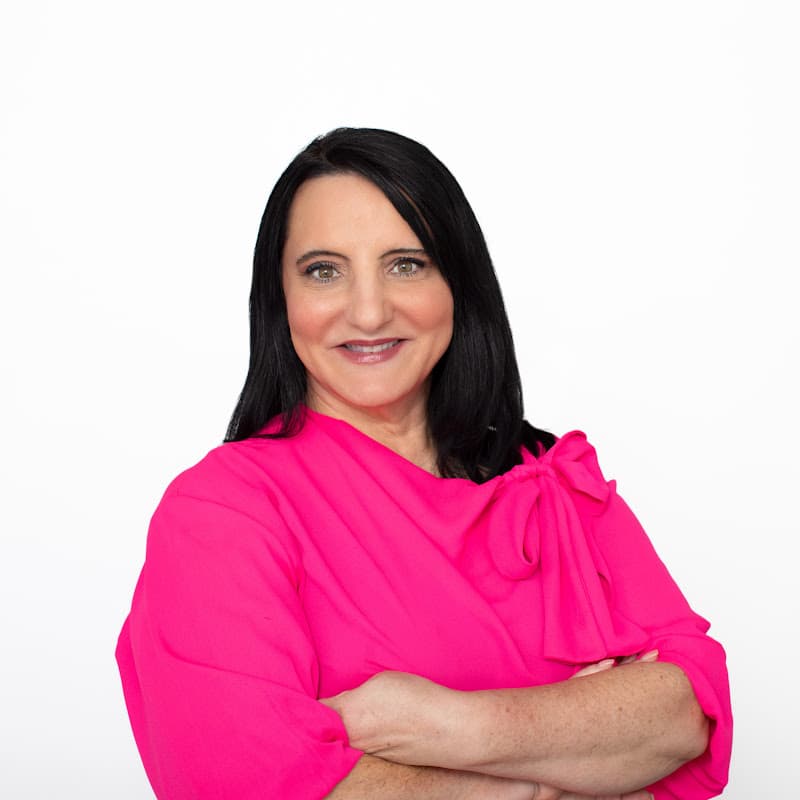
Full Transcript Introduction and guest background 0:00 Hello and welcome to 0:03 the Cancer Breakthrough Summit. 0:06 Today my guest is Doctor Roseann Capanna-Hodge. 0:10 Doctor RRoseann Capanna-Hodge is a leader in system regulation 0:16 and its impact on children's emotional and behavioral health. 0:21 With more than three decades of clinical experience 0:24 as a licensed therapist and certified school psychologist, 0:29 she has helped families address emotional dysregulation, 0:34 anxiety, ADHD, and behavioral challenges using practical, 0:39 science backed strategies that built 0:42 lasting self-regulation skills. 0:46 As a creator of regulation first 0:48 parenting and the camps protocol. 0:51 Doctor Roseanne equips parents, educators, 0:55 clinicians with tools to identify triggers, 0:59 reduce reactive cycles, and foster long term regulation in children. 1:05 The report focuses on addressing both under stimulated 1:09 and overstimulated nervous system responses, while helping adults 1:15 who regulate effectively with children, leading to stronger emotional resilience, 1:20 improved coping skills, and healthier family dynamics. 1:25 Doctor Roseanne is a three time bestselling author, 1:29 host of the top 1% podcast 1:32 Dysregulated Kids, with over 2 million downloads 1:37 and a trusted voice in children's mental health. 1:41 Per a book, The Dysregulated Kid 1:44 expands on a groundbreaking work, and families understand 1:49 behaviors with the lens of nervous system regulation. 1:53 Her work has been featured in The New York Times, Forbes, 1:58 and Parent Magazine, and she is known for 2:01 delivering compassionate, practical talks that empower audiences 2:06 to calm the brain first and create lasting change. 2:10 Welcome, doctor, and absolutely 2:13 delighted having you today, the summit. 2:16 And I mean, I asked you you did not grow up 2:20 thinking I'm going to become a psychologist in nervous 2:24 system, specialized in nervous system for kids. 2:28 What was your journey? 2:29 What is the story behind you becoming an expert in such a field? 2:33 Yeah, well, thank you for the lovely introduction. 2:36 I sort of did grow up wanting to do this and. 2:39 Yeah. 2:40 And so I remember the moment like it was a moment 2:43 and it really was a calling when I was five years old. 2:47 My mom, my parents are immigrants from Italy, which meant 2:50 all their friends were Italian and would speak. 2:53 I mean, my my dad spoke five languages. 2:55 You know, the Europeans, they speak a lot of languages, 2:58 but they had friends that spoke in and out of different languages. 3:01 And so my mom's friend Angela asked me, what did I want to be when I grew up? 3:06 And literally out of my mouth popped the word psychiatrist, and I have no idea why. 3:12 And I remember her looking at me like, what is this kid been exposed to, right? 3:17 Because culturally, in a different time in the 70s? 3:20 Yeah. 3:20 And as I got older, I realized I don't want to be a psychiatrist. 3:23 I want to actually help people with problem solving, not Medicaid them. 3:27 And so it was just something that I knew that I always wanted to do.
Early calling and clinical journey 3:32 And sort of along the way, I was that friend that people came 3:36 when they needed a fix. 3:37 I was like a fixer, like, you know, what's what's going on? 3:40 Okay, here's what we're going to do, right? 3:42 And so then I didn't know I wanted to work with kids, 3:44 but the moment I started working with kids and families, 3:48 I said, this is what I want because it really had the biggest impact. 3:53 Right. 3:53 We often think adults are are we want to help adults. 3:57 They want change. 3:58 But people a lot of times get stuck and they get overwhelmed 4:01 wouldn't regardless, regardless of what it's going on in their lives. 4:05 But kids don't know they can't get better. 4:08 If you say to a kid, hey, here's what's going to happen, 4:10 they're going to trust that adult and their brain is going to believe it. 4:14 And so what then happened is I was very traditionally trained. 4:19 We all are in whatever professional field. 4:22 But I had neurodivergent kids. 4:24 I had very, very complex cases. 4:27 My cases at the end of my career, every one of them had very severe 4:31 medical problems as well as mental health problems, and they were layered. 4:36 It wasn't like they had one medical problem. 4:38 They had problem after problem after problem. 4:40 They'd gone to a lot of providers. 4:43 And so right out of the gate, while I was in graduate school, 4:47 I said to myself, 4:49 this traditional things of medication and talk therapy literally don't stick. 4:54 They don't work. 4:55 And so I went to at the time when you looked at research, 5:00 you had to go in the belly of the basement and look at microfiche. 5:03 And so I went and looked at microfiche. 5:05 And really quickly I learned about things like nutrition 5:08 and supplements in different ways to reset the nervous system. 5:12 And thankfully, I was in a graduate program 5:14 where my professors were were like, of course these things are important. 5:19 And I thought to myself, well, why are we not teaching it? 5:21 We're not really exactly teaching it today either, 5:23 because I just had my last intern and she didn't get one ounce of this. 5:27 And even though every student in her program was hungry for it 5:31 and was jealous that she was getting it from me. 5:33 So I believe that regardless of what is going 5:38 on, the people can improve and they can get better. 5:41 And that has been my standard of care, which is very unusual 5:45 to find a provider of any kind. 5:47 I have a small group of friends where we believe that 5:50 and people have to believe it enough, right? 5:53 A 1% belief that I can get better changes everything. 5:57 But where does it start? 5:58 Starts with the nervous system. 6:00 So over time I realize, wow, I had people with great medical treatment 6:04 or psychiatric care, whatever was going on with them, 6:07 but there was this missing ingredient 6:09 if they weren't regulated somewhat, I just couldn't get people unstuck. 6:15 And so that was where I really started to shift things. 6:19 And that's where 6:20 with the thousands of people that I worked with and over 10,000 brain maps, 6:25 which are essentially brain scans, were we really created change. 6:29 I am very fortunate that this started very early in my career 6:34 because, again, I wasn't accepting the standard of care. 6:37 I went to the science and and the science tells us 6:40 exactly what we should do to improve our attention, to help our immune system 6:45 improve our hormones, but yet we're always going to something else. 6:50 So that's where I am. 6:52 That's how I got there. 6:54 That's absolutely, absolutely fascinating. 6:57 And indeed, I mean, we are we are both body and mind. 7:02 It is completely ridiculous to try to divide into everything 7:06 and just address locally tumor or disease 7:10 without trying to understand what is going on it. 7:14 Whereas, and I love the titles that you have chosen 7:18 for the good your nervous system be holding back healing. 7:22 Because here we are speaking all about healing 7:26 and and very seldom are 7:29 we addressed the issue of the of the nervous system. 7:34 So why? 7:36 Why is the body cannot heal 7:39 when your brain thinks that there is a dangerous somewhere? 7:43 That is. 7:44 I know more about some very often 7:47 a perceived danger than a real one, because we we are not. 7:53 I mean, at least in New York City, we are. 7:56 We are not chased by tigers on a daily basis. 7:59 These are the dangerous. 8:01 That's right. 8:02 But not not the proverbial tigers 8:05 that induce a flight or fight a reaction. 8:10 Yeah. 8:11 There's so many reasons why today we are living 8:15 when in a in a place where it feels dangerous and chaotic. 8:19 And as you beautifully just said, we don't need tigers chasing us. 8:23 What has happened in not just America, but across the globe, 8:27 is that we've accepted chronic stress as part of our life. 8:33 And not only we hit accepted it, 8:35 we don't understand how to mitigate it, we don't know how to change it. 8:39 And so we 8:41 we have to go back to the science of the nervous system to understand 8:45 why is it so important in dealing with tumors and cancer 8:49 or infectious disease or anything 8:52 that is happening that is keeping you stuck and not getting better? 8:56 So when we talk about the autonomic nervous system and s, 8:59 it is the part of our body that manages stress responses
Why nervous system regulation matters for healing 9:03 and we are supposed to have stress responses. 9:06 So a tiger chases us or a mugger 9:09 in New York City our body is like shooting up cortisol. 9:12 Our dreams kick in our frontal lobes, which is our thinking brain. 9:16 Go offline. 9:17 Your hormones, your immune system, 9:20 everything activates to support the stress response. 9:24 So the stress passes, right? 9:27 And then your nervous system gets out of a sympathetic dominant state, 9:31 which is fight, flight, freeze, 9:32 or fawn then goes back into a relaxed parasympathetic state. 9:36 If it knows what calm is, that's what the state is. 9:40 You hear, rest and digest or vagus nerve activation. 9:44 That's all parasympathetic. 9:45 But what we're not realizing about the nervous system 9:49 and and we've simple solutions for this. 9:51 So whatever I talk about I make it practical. 9:54 We always talk about the science. 9:56 But we have to take action. 9:57 We can't just have conversations with little elbow grease around it. 10:01 And so what is happening is right there not understanding standing. 10:05 Our nervous system doesn't have unlimited capacity. 10:09 So I talk about the nervous system as a stress cup. 10:12 So we have different things that filter cup right here are people 10:16 either loving people with cancer or people who have had cancer or have it actively. 10:21 Maybe they have financial issues, maybe their spouse is not being supportive. 10:25 Maybe they have a really rude doctor. 10:27 Maybe they're having a lot of side effects. 10:29 All these things are happening, and your nervous system knows 10:34 no difference between a real stressor like we talked about. 10:38 And imagine stressor, right? 10:40 Worry things that are causing us to feel stuck. 10:44 And it knows no difference between good and bad stress. 10:47 It doesn't know if you're excited about a marriage or you're sad about a divorce. 10:52 We know the difference. 10:53 And of course, we want good stressors. 10:55 And somebody who has. 10:56 I'm in the middle of a book launch and I'm super excited about it. 11:00 I got stressors every day and most of them are good, thankfully, 11:04 but my nervous system is still activating. 11:07 So when we keep putting stressors and they drop into the cup, 11:11 what happens when we put too much stuff in a cup? 11:15 It overflows. 11:17 And so we're not understanding the connection 11:20 between the chronic little stressors that add up. 11:24 We think, and this is out in the world, we think a trauma has to happen. 11:28 The trauma of cancer, the trauma of a love person, somebody you love having 11:32 that, the trauma of maybe abuse or having an accident, all these things, 11:36 these are actually things that do activate your nervous system. 11:40 But we're also not understanding 11:43 being late or 11:45 having lights or a snarky colleague. 11:48 These things constantly activate our nervous system 11:51 and cause our nervous system to be stuck in a threat mode. 11:55 And when your body's in a threat mode, 11:58 it's going to perceive every single thing as a stressor. 12:03 So your socks are too tight. Stressor. 12:06 Your wife is tired because she's in perimenopause 12:09 and now having to manage everything. 12:11 She her voice doesn't sound the same stressor. 12:14 And you don't have to have conscious awareness of these things. 12:17 Your nervous system starts activating and then starts being in a sympathetic 12:21 dominant state. 12:22 And people say, I don't feel good, I'm not sleeping. 12:26 You have this cascade of things around it, and at its base is regulation. 12:31 Because if we don't regulate the nervous system first, 12:35 your systems aren't going to come back online. 12:38 That means your hormones, that means your gut. 12:40 That means your immune system. 12:41 That means you're thinking brain, that frontal lobe. 12:44 And so we're not making this connection. 12:47 And this is what I did for 30 years, is I made this connection 12:50 with people with mental health and medical problems. 12:53 And what happened? 12:55 We regulated the nervous system. 12:57 We didn't do a lot of other things at first, right. 13:00 There wasn't a lot of other interventions going on. 13:02 It was like, let's just take a step back. 13:04 But everything else in the parking lot and can't we can't do that with cancer. 13:07 We're not telling you not to do treatment. 13:09 And there were many people we had to do things at the same time. 13:11 But I was like, let's give that body the chance to do its work 13:17 because it's using all its resources to figure out 13:20 what this, this tiger is, that we don't know what it is. 13:23 And so it wasn't never, wasn't a single event. 13:27 It was the culmination of constant stress and people not understanding. 13:31 Wait. 13:32 Not only do I got to regulate first, I actually have to regulate all the time 13:36 throughout the day. And how do I do that? 13:39 So how do you do that? 13:41 Yeah, yeah. So there's so many. 13:44 The great part is there's so many ways, Sylvie, like there's so many simple, 13:48 easy ways to bring regulation into your life. 13:52 And I like to talk about micro, micro moments 13:56 of regulation in the same way that we brush our teeth. 13:59 Right. So why do we brush our teeth, right? 14:02 We brush our teeth to avoid cavities, 14:06 bad breath, abscesses, gum disease. 14:09 And we do it on autopilot, I hope. 14:11 Right, we're brushing your teeth a couple times a day. 14:14 Maybe we floss. We? 14:16 I carry those fosters around, and I'm doing all the right things 14:19 to prevent something that we don't want to have happen. 14:22 And so when we talk about how to reset our nervous system. 14:26 Yes, I love the idea of big things a bath every night, 14:30 a massage, a yoga class, a PML device. 14:34 I have one on right now. 14:35 All these big things, you're doing it. 14:37 God bless. Keep doing it. It's good for you. 14:39 But what we're not talking about is how do we build capacity 14:44 in our nervous system all day long so that we can get our body back online 14:49 to fight the physical fight of cancer, but also the mental exhaustion, 14:54 the worry, all those pieces that turn on which are which are normal, right? 14:59 That's just part of part of what happens. 15:01 And we can have sadness and worry over this. 15:04 And we can also do things to support that. 15:08 And each one is important, but we don't want to be stuck in something 15:12 where it keeps us down. 15:13 So when we regulate in micro moments, what does that look like? 15:18 And first of all, we have to be very intentional 15:21 and we have to actually make sure we're doing it multiple times a day. 15:26 So the number one thing I teach and is the most effective
Micro-moments and breathing practices 15:30 and all the things I talk about are free. 15:32 So and and so this doesn't cost you anything and you can do it anywhere 15:35 is what we call diaphragmatic or belly breathing. 15:38 And if you say to me, doctor row, I hate belly breathing, 15:43 let me tell you, son, you're just regulating 15:45 because you don't like that feeling of regulation, 15:49 because it might feel unsafe, especially if you have a trauma 15:51 background, a early developmental trauma background. 15:54 Don't worry about it. 15:55 We got alternatives. 15:56 But why do we do belly breath? 15:59 Why do we do breathing that puts air deeply in our diaphragm? 16:03 Because it is the single quickest way to go into a parasympathetic state. 16:09 And so we I like a four, seven, eight breath. 16:12 There's all kinds of breaths. 16:14 But the key is and most people breathe incorrectly for stress relief. 16:19 And that is to fill your rally up like a balloon. 16:23 Breathe in. 16:24 So I like to breathe in for four seconds, hold 16:28 for seven and exhale for eight. 16:31 Why do we have a longer exhalation? 16:34 One it's activating our vagus nerve, our parasympathetic state, 16:38 and we want to do this ideally for three rounds. 16:41 You want to do it more go for it. 16:44 But it's actually the the amount of times and the days that you're doing it. 16:49 So I tell people do it before your you get up for your feet, touch the floor, 16:54 do it at night and set your timer for three more times during the day, 16:58 because the magic of the nervous system 17:02 and the curse is this the more you regulate, 17:06 the more your nervous system will automatically regulate. 17:10 The more you dysregulated, 17:12 the more your nervous system will automatically deregulate. 17:15 And so when people tell me. 17:17 Oh, I've done these things and they don't work, it's 17:19 because they're not doing enough repetition 17:22 to get the nervous system to unlearn that unhealthy response. 17:26 And we know the stress stress is connected to everything. 17:30 And if we stay in that state, it does not serve us in healing, 17:34 healing mentally, spiritually, emotionally, physically. 17:38 This all starts with the nervous system. 17:40 You have to have capacity to do the harder things. 17:43 So that's why it's so important to pull yourself into a regulated state. 17:49 And there are many other things. Somatic techniques. 17:51 Hi Kai, there's so many ways to do it. 17:55 I always start with breath because it's the easiest. 17:58 And I always see so many people. 18:01 There are this cancer. 18:02 That's the field I am, I am in. 18:05 The underlying condition is always inflammation 18:08 or depleted immune function. 18:11 The city of the nervous system to this space 18:16 you give to allow the nervous system 18:19 to heal is absolutely parameter. 18:22 I assume you see people at every stage of the disease. 18:27 I mean people who have not been diagnosed with any cancer 18:32 or any auto immune disease, but also people 18:35 who have been already diagnosed with those kind of disease. 18:41 Is there a difference in the approach that you have, 18:45 depending on the stage of the dysphagia, 18:49 and how long they have been in that stage? 18:53 Yeah. 18:53 So when it comes to how we approach dysregulation, 18:58 your nervous system doesn't know your history, right? 19:02 But what it does experience is that the longer you've had an issue, 19:08 the more intense it is, the more elbow grease you're going to need around it. 19:12 So the same techniques work regardless of what you brought to the table. 19:17 So you're, you know, you and I are you're I'm outside 19:20 New York City, you're in New York City. 19:21 I've been working so long that I worked with nine, 11 survivors. 19:25 I was one of the nine approved providers for the Sandy hook tragedy. 19:29 I've worked with people for three decades with unbelievably sad trauma, and I and 19:35 I always apologize to those people who experienced horrible trauma 19:39 because it should never be. 19:40 We all deserve safety in our nervous system. 19:42 So when the nervous system is in an extreme threat mode, 19:47 it is going to take more work. 19:49 And I think people don't realize that. 19:52 You just have to keep going. 19:54 Instead, they reach for something, a psychiatric medication, something that 20:00 they believe because of what it's been told to them is a solution. 20:03 Not to say that that isn't always necessary, but at the same time, 20:08 we're not teaching people those simple techniques 20:11 that actually have a way bigger bang for your buck. 20:14 So given that I worked with people in extreme 20:18 distress, extreme situations, this always worked 20:24 as long as there was sort of a minimal level of effort. 20:27 Obviously it's not going to work 20:29 if you're not doing the things right, and it's really easy. 20:33 And like, I understand it so much in that, you know, 20:37 both my parents had cancer three times. 20:39 My sisters are breast cancer survivor. I've had a lot. 20:42 We all have people who have been touched by cancer. 20:44 My oldest friend in the whole world has a brain tumor, 20:48 and I understand what happens on that family level, on that heart level. 20:53 And it's heavy and it's a lot. 20:55 But when people have a sense that this is what I can do, I can reset myself. 21:01 Why is it that one person can get through something very different 21:05 in a different way, in the same issue, like, how is that? 21:09 And we don't always understand that when we look at trauma survivors, but 21:13 they have a belief, number one, that they can get better, 21:16 but two, they actually do things, whether it's knowingly 21:20 because I'm asking you 21:21 to make an intentional decision or unknowingly they regulate more. 21:26 And when you regulate more, you have that capacity to do harder things. 21:32 We're not talking about avoiding stress. 21:34 We're talking about becoming stress slayers 21:38 in a way where your nervous system isn't activating 21:41 because we need every ounce of you to fight this. 21:45 And the science tells us that stress is behind a lot of diseases. 21:51 I mean, you mentioned inflammation, and because I did brain maps, 21:55 100% of the people who came to me had amounts of brain inflammation
Regulation across trauma and illness 22:00 and disruption in their microbiome, which all these systems are connected. 22:04 You start off by saying, 22:06 I'm so glad that you're talking about we can't look at things in isolation. 22:10 And that's what functional practitioners do. 22:12 They don't look in isolation. 22:14 They realize what's the web here? 22:16 And for me, it's not to say we're not doing these other interventions. 22:19 What I'm saying is the order matters. 22:22 We must regulate our nervous system before we do these other things. 22:27 It doesn't need to be perfectly. 22:29 We just need to create capacity. 22:31 So it's not going into sympathetic dominance. 22:34 Yeah. 22:35 Now when I give a, you know, lectures about the research that we are doing 22:38 as the key foundation and the plant extracts 22:42 we are working with, I keep saying those, those plant extracts are going 22:47 to give you support at the cellular level, and that will give you time. 22:51 Now the big question is what do you do with this time? 22:55 Because that's where the real healing is happening. 22:58 It is with the time and the conscious 23:02 will to heal, and to take a number of steps 23:05 to put yourself in a place where your body and your mind can heal. 23:11 This is absolutely I see that all the time. 23:15 And the people who are 23:17 holding on the garage, and 23:20 we will absolutely love actually being in that state 23:24 of of sentiment, of sadness, because that has become entity. 23:29 They cannot heal, they just cannot know. 23:32 And and we put so much on willpower. Right? 23:35 Just like you said. 23:37 And people don't realize fight, flight, freeze, 23:42 freeze is what happens when people are overwhelmed. 23:46 And we live in such a culture, 23:47 particularly in America, where if it's not 100%, it's nothing. 23:52 Especially in the age of like everything being out in social media 23:55 and it looks like everybody's living a perfect life. 23:58 I'm a mental health provider. 23:59 I'm telling you, people aren't living perfect lives. 24:01 They may look like it and just puts another level of stress, 24:05 but we have to just take one little micro step. 24:09 So maybe today you're like, frozen. 24:11 I'm not doing five breaths today. 24:13 Okay, well, what can you do? 24:15 But let's also make sure your expectations are real. 24:18 Because if we're not putting we're not doing some repetition. 24:21 You're actually not going to create capacity in your nervous system. 24:24 So I'm saying take a couple minutes here and there throughout the day. 24:29 What I do all day, I didn't even realize 24:32 how much I'm actually doing diaphragmatic breathing. 24:35 I did my audiobook and they said to me, why are you doing these double breaths? 24:40 I'm like, what are you talking about? 24:42 And they were like, every time you get to an end of a paragraph, 24:45 you actually go into a double breath. Are you anxious? 24:48 And I was like, do I look anxious? 24:50 And they were like, no, not that you can always see it. 24:52 And I said, it's just the way I do it. 24:55 I'm constantly regulating myself in such an automatic level, 24:59 which honestly makes me, I am so great, stressful situations. 25:04 I'm not saying I like it, but I am literally like, you want me there 25:08 when the ship's going down because I am like, go into the zone. 25:13 And I've been like that my whole life. 25:15 I've been in so many situations because we're greater New York City 25:19 that have been unsafe for me or others, 25:22 and I literally was the only person who sprung into action. 25:26 And it's just because I am so regulated. 25:29 I was also raised by very, very loving set of parents 25:33 who were very empowering for me. 25:36 So I didn't know that I couldn't do everything. 25:39 My parents were like, yeah, and and they weren't those people 25:42 that were fluffy. They were like, okay, you want to be president of United States? 25:45 How's that going to happen? What are you going to do? Okay, I got it. 25:48 They didn't say, no, you can't do it. 25:50 They were like, all right, let's make a plan. 25:52 So it was it was great. 25:54 So I know my nervous system, new safety 25:57 and and if yours didn't, that's okay. 26:00 It's not okay, but it doesn't mean it can't find it. 26:03 You just have to put a little more work. 26:05 Around now to learn how to get to that. 26:07 And that's going to make a night and that difference in your life. 26:11 Absolutely. Yeah. 26:13 So if someone listening want to start supporting their immune system today, 26:18 what are the first three things that they should do in your view? 26:22 Yeah. 26:22 So I think the first thing is to honestly believe in that. 26:28 It's possible. 26:29 Okay. 26:30 And and also believe that it doesn't have to be perfect for it. 26:34 This to work for you, right. 26:36 And just 1% believe. Right? 26:38 I knew if I had somebody when I was treating them that if they said 26:42 it's just not possible at all, this is 100% not going to work. 26:46 I would be like, why are you here? 26:47 So if I had somebody who said that and I said, could 1% of you believe that? 26:51 And they said, yes. 26:52 I said, well, it's going to work. 26:53 And it did. It always did. 26:55 So let's activate that belief system, even if it's hard for you. 27:00 And I know that we're talking very serious stuff, right? 27:03 We're talking about cancer, which feels very scary for people. 27:07 And and so many people in my life are survivors of of this. 27:11 And the road is not very fun, but we have to actually believe. 27:15 Right. 27:16 So then the next thing we do is we have to actually do the things. 27:20 So what what are you going to do now? 27:22 I often one of the things I love to do is something called the love pause. 27:27 And the love pause is about it's a three step process.
Belief, gratitude, and daily self-regulation 27:30 It's really simple is that you pause, you breathe or regulate, 27:35 and then you respond to whatever stressful situation you have. 27:39 And it sounds so silly. Simple. 27:41 But when you pause before you respond, either 27:46 on behalf of a child or to a difficult practitioner or bad news, 27:50 you're actually giving yourself that few moments needed. 27:55 It's not going to fix it, but it's a way of getting 27:58 your nervous system to regulate before you destabilize. 28:02 So that is critical in that. 28:05 And then within the larger scope of things, 28:07 what are you doing in those five times a day or more? 28:11 Like me, I don't even know how many times I do it. 28:13 It's got to be 20 or 30 or 40 times a day. 28:16 I'm not thinking about it anymore. 28:18 We have to practice regulating ourselves outside of dysregulated moments 28:23 so that our nervous system just snaps in, right? 28:26 The same way, when you drive home every day, you're not thinking about it. 28:30 Somehow you get home. 28:32 When we do that with a nervous system, it just starts operating 28:36 and purring in that nice parasympathetic state. 28:39 It also can handle stress. 28:42 It can serve you. 28:43 And you're also much clearer about threats in whatever situation. 28:48 You are right to me. 28:49 I have lights on right now. 28:51 It's a threat to my nervous system. 28:52 I know these lights will dysregulated me, and I actually have to 28:56 do other things later to get myself back online. 28:59 And then lastly, write what you know. 29:01 So are you picking the breathwork? 29:03 Are you doing a somatic technique like a heart hug or a butterfly tap or humming? 29:08 Are you praying for ten minutes or more a day? 29:12 But you're also praying in a way where it's very positive, right? 29:16 Are you using internal mantras? 29:19 Are you reading a book that's a real book and not an online book? 29:25 Because ten minutes of reading and a real book resets your nervous system. 29:30 How cool is that, right? So what are you picking? 29:32 I suggest picking one thing. 29:34 And then lastly, what are you actually, how many times a day? 29:38 Are you committing? 29:39 So can you do that five times a day? 29:42 What can you do to actually reset yourself? 29:45 And that's why I love breathwork 29:47 or things like a heart hug, because you can do it at your desk. 29:51 I do it in the airport bathroom. 29:53 I do things all the time and just stick with it. 29:57 Stick with it for seven day minimum 30 day 30:00 ideally and have grace for yourself. 30:04 Look at what are the changes you're seeing 30:07 in intensity, frequency, duration. 30:10 Wouldn't it be great if something got eliminated after 30 days? 30:13 But don't expect that, 30:15 because when we expect that, that's another threat to our system. 30:18 That's another reason to pull back in on that willpower as you. 30:23 So as we call often call it. 30:25 But your nervous system is shutting down. So 30:29 believe it, right? 30:31 Pick what you're going to do to regulate 30:33 and actually do it multiple times a day in micro moments, 30:37 and do it for at least 30 days before you say that didn't work. 30:41 Yeah, yeah. 30:42 Now, one thing I like a lot is take a few minutes to just talk to it. 30:48 For what? What what is it? 30:51 And I think it's a way to to shift totally the energy very fast. 30:57 And you can do that again and again, quietly, 31:00 without alerting everybody around you that you are doing it. 31:04 And the benefit also is people are sending you 31:07 benefit of your renewed approach of 31:11 and look on life when you are full of gratitude and love. 31:15 Yeah, I think it makes such a difference to have gratitude, 31:19 and it may feel really hard to have 31:21 gratitude when you are dysregulated and know you're not a bad person. 31:25 Give yourself some slack. 31:26 It's just your nervous system is in threat mode. 31:29 So you're a warrior right now and you're just not seeing the positive, right? 31:32 Our brain can see a negative within a quarter of a second, 31:36 but it takes upwards of 20s to see a positive. 31:39 Yeah. 31:40 That's right. 31:42 Yeah. And so we're wired for the threat. 31:44 But we can see the positive two if we just put a little 31:48 I mean it's like anything else. 31:49 Like you have a terrible night of sleep. 31:51 Your hormones are a mock. 31:53 You got in a fight with your partner. 31:55 What kind of. 31:56 You're not going to wake up in sunny way, right. 31:59 And the reverse.
The Dysregulated Kid book and resources 32:00 You have a great night of sleep. 32:02 Somebody told you something lovely. 32:04 Your kitty cat sits on your lap. 32:06 You have much more capacity for everything. 32:09 So every day doesn't have to be sunny. 32:11 But when you look at people who can really handle hard things, it's an inside job. 32:17 They're doing something in the inside, 32:19 and it really starts with the nervous system. 32:20 It becomes the pathway for so many other things. 32:24 And that's what I saw with thousands of people over all these years, 32:28 regardless of whatever medical or clinical issue they had. 32:32 And that's really important for people to hear that because they'll say, not me. 32:36 My problem is too big. 32:37 No, that's a belief. 32:39 Don't believe that. 32:41 Yeah, absolutely. 32:42 So tell us a little bit more about your book 32:45 and also where people can find you if they want to, to work. 32:48 Yeah. 32:48 Well, you can find me anywhere as Doctor Roseanne ROSEANN spelled right here. 32:54 And you can just google that. 32:55 But I have this beautiful resource called the Dysregulated Kid. 32:58 This isn't just a book for parents, 33:02 and it's not just a book about kids, right? 33:05 It's really my kid was a dysregulated kid, and that's really my story. 33:10 It's about how to do exactly what we talk about in the easiest way possible, 33:16 and understanding the science behind it is one part of it, and 33:20 I certainly give you that, but it's really your playbook on how to reset yourself. 33:25 So there's action plan for adults. 33:27 There's action plan for an adult who's trying to help a kid find calm. 33:33 There's even a bonus chapter for schools. 33:35 And this book is really leading to a very simple certification. 33:41 That is, I have personal level, I've professional level. 33:44 And then I have this dream, Sylvie, where this is going to be brought 33:48 into the schools. 33:49 This is brought into companies because we have a dysregulation crisis. 33:53 And I needed to bring and what worked for all these people to everybody else 33:59 in the easiest possible way, because we are drowning in stress. 34:03 And it is it is harming us more than people realize. 34:07 And I hate to see that, because it's much more simple 34:11 than the solution is much more simple. 34:13 And I've laid it out really easily and also in a fun, charming way too. 34:18 And it's not. 34:19 It's not expensive. 34:20 It's not expensive treatment and other expensive treatments. 34:24 It's not about taking more medication. 34:27 It's just by being empowering yourself and your your life. 34:31 And that's why. Yeah, yeah. 34:33 You know, for 2195 you get the keys to 34:37 to what I did for 30 years and the quickest, easiest way possible. 34:41 And and I don't mean to understate that people came with the hardest problems 34:45 you possibly could imagine seeing dozens of provider, dozens of providers. 34:51 And I was able to for those people that believed 34:54 and actually did the work, they got better. 34:57 And so that's a really powerful message because it's hard. 35:02 And I've been stuck. Right. 35:04 My kid is the dysregulated kid. 35:06 I know what that's like to be afraid and what fear does to the nervous system 35:10 so we can experience fear or we can let it keep us stuck. 35:15 And so let's pull that out and change that narrative. 35:18 So that's the power and resetting your nervous system. 35:22 I love it. Thank you so much. 35:25 Thank you. 35:26 That was absolutely empowering. 35:28 I'm sure for all our listeners. 35:31 My pleasure. Thank you.

Comments