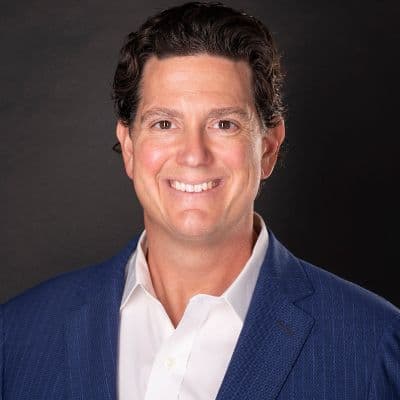
Full Transcript Introduction to RGCC and Its Mission 0:00 Hello and welcome to the Cancer 0:04 Breakthrough Summit. 0:05 It is my pleasure today to welcome Michael Newton. 0:10 Michael Newton is a biotech executive 0:13 with more than 20 years of experience across oncology, 0:17 genetics, infectious disease and women's health. 0:21 He has worked closely with medical providers 0:25 and clinical teams to support education, consultation 0:30 and adoption of emerging technologies in patient care. 0:34 Today 0:36 is representing and Head of Commercial 0:39 for CC, a company 0:42 whose mission is nothing less than cancer revolution. 0:47 So that's really, really impressive. 0:50 And I would like to ask you, 0:53 what is CC and how did you come up with the search. 0:58 And on this this mission for a company cancer resolution. 1:02 Come on. Absolutely. 1:04 So we are actually stands for Research Genetics Cancer Center. 1:08 We were founded by a medical oncologist and hematologist 1:11 who essentially got tired of losing patients by only offering 1:15 conventional care options and said, there's 1:17 so many more things that we could be doing and should be doing to make sure 1:21 that we are properly taking care of patients. 1:23 His vision from the beginning was that there's no one tool or one method 1:28 that should be right for everyone, because none of us are the same. 1:31 We're all very different. 1:32 And so there's applications and options should be applied in different ways 1:36 based on the individual patient. And that's how we got started. 1:39 You know I'd love to take credit for that. 1:40 But Doctor Yannis Papa is our founder. 1:42 He's still the one that runs the organization and guides our mission 1:45 to, as you said, try to resolve cancer. 1:48 And looking forward to talking more about that today. 1:52 Yeah, sure. 1:53 So what exactly is a company is doing and how do you get there? 1:58 I mean, cancer resolution. Absolutely. 2:01 So it starts with us really with testing. 2:03 We began began as a testing lab focused on cancer specifically, but really 2:07 cancer focused more in the integrative and functional medicine space. 2:11 The reason is, again, when you go to conventional care, they've got their, 2:15 you know, recommendations and their guidelines 2:17 that they must follow, but they're essentially treating patients, 2:20 you know, kind of as silos versus treating them as individuals. 2:23 And so what our testing does is allow providers in our network 2:27 who are physicians all across North America 2:29 and the world, for that matter, to essentially use our testing 2:32 to, first of all, uncover circulating tumor cells. 2:35 And then once they uncover those circulating 2:37 tumor cells, there's a number of things that we can 2:39 do, whether it be simply analysis to understand the behavior of a cancer, 2:43 or even sensitivity testing that allows us to determine what particular 2:46 natural substances, chemotherapies, repurposed drugs will work.
How RGCC Testing Works 2:51 Patient by patient. 2:52 It's true personalized medicine. 2:54 We also have a number 2:55 of autologous infusions that are essentially novel products meant 2:59 to support the treatment of cancer, in addition to Lyme disease and virus. 3:03 So quite a number of things that we're working on and definitely more to come. 3:07 So for example, we have somebody listening to to to us 3:12 today as just being diagnosed with cancer, 3:16 what he or she should do to, 3:19 I mean, to get the benefit of those testing is going to be 3:24 just something that can speak about with his doctor at any hospital. 3:29 How does it work? 3:30 Absolutely. Help the patient. Definitely. 3:33 We actually have a network of physicians that have gone through a training process 3:36 and essentially have met, you know, certain requirements 3:39 to become part of our care network, if you will. 3:41 And those providers are the way that patients access our testing. 3:44 So ultimately, if a patient was just diagnosed with cancer, for that matter, 3:48 if they're looking for cancer screening or if they've been given 3:51 kind of an all clear by conventional medicine, 3:53 and they want to make sure that they're not at risk of recurrence, all of those 3:57 are use cases for them seeking out these physicians in our network. 4:00 And ultimately they can get in touch with us as a company. 4:03 We can connect them with that network of physicians 4:06 and make multiple recommendations, at which point they can decide 4:10 which of those people is the right person to be a part of their care team. 4:13 And at that point, you know, again, we can talk about kind of what the tests 4:17 do, where they applied, but ultimately, obviously, 4:19 they're going to be relying on their physician 4:21 to determine what the right solutions are, what the right options are, 4:24 and give them those choices in, in their journey. 4:27 So when you say they can get in contact with you and have access 4:31 to your network of doctors, how do they get access with you 4:35 and how vast is your network of doctors? 4:39 Absolutely. 4:40 We at this point have probably close to about 2000 providers 4:43 just in North America, and then again, many thousands more outside of the US. 4:48 The way that they access this is they go to our website. 4:51 It's called my.com. 4:53 So just yrgcc.com there's a contact form where, 4:58 whether it be a physician that wants to know more about what we do 5:01 or whether it be a patient that wants to understand 5:03 what it is that we do, and then how do they get access to that. 5:06 That website essentially gives a form that's, you know, just a few blanks long 5:10 that allows them to essentially get in contact with us 5:12 so that we can reach back out and provide them that information. 5:15 So how does it happen? 5:17 I mean, again, I go back to the patient's experience. 5:23 He has been diagnosed 5:24 or she has been diagnosed with cancer, is hearing about RG skills. 5:29 And maybe that's something I mean, I should do learn more about my cancer. 5:35 What kind of treatment would be beneficial for me. 5:39 What does it test look like? 5:41 Is it I mean a blood test? 5:43 Is it as do the patients have to travel 5:46 to some remote place to be subjected to some painful testing? 5:51 How does it work? 5:52 Absolutely no. 5:53 Our providers are actually scattered all over the US and Canada. 5:58 From that standpoint, I definitely wouldn't say we have providers everywhere, 6:02 but we almost have providers everywhere in terms of that distribution network. 6:06 We also have a number of providers that work via telemedicine. 6:09 If patients don't have access to a doctor, that's close. 6:12 And essentially, as it relates to the testing, 6:13 there's really two main options 6:15 that most people will start with and then go from there. 6:18 The first is a test called trace. 6:21 Trace is actually what we call kind of the baseline and behavior test. 6:24 It looks at a few different things. 6:26 So it is a blood test. 6:28 Everything that we do is a blood test to answer that question. 6:30 So it's a simple blood draw. 6:32 And from that perspective makes it nice and easy. 6:35 Essentially liquid biopsy if you will. 6:37 And what we are looking for specifically is circulating tumor cells. 6:41 Now, circulating 6:42 tumor cells aren't fragments like a lot of commercial tests in the market. 6:46 They're actually whole cells that essentially are cancerous. 6:50 And these cells essentially it's being discovered, can be found in the body 6:54 as much as five, ten years prior to an actual tumor being present. 6:58 They're always present when an active tumor is there, 7:00 unless it's encapsulated or inside the blood brain barrier, 7:03 and greater than 95% of the time those tumor cells remain 7:07 even after a patient is given the all clear by conventional medicine.
Trace and MixPlus Precision Medicine Testing 7:11 So from that perspective, 7:12 you know, they're the chief cause of recurrence as well. 7:15 So what we are doing when we find these cells is we're able to essentially 7:18 count them so we know what the concentration is, 7:21 which gives us a baseline number 7:23 to try and see decrease over time, showing progress. 7:27 We're also able to essentially determine where they came from. 7:29 So what cells in the body are these particular cancer 7:33 cells related to giving us an idea of location. 7:36 And then lastly we are actually able to look at and I know 7:39 this is actually a big research project right now at the Belgian Institute. 7:43 We're actually also looking at the stem cells of the cancer cells. 7:47 And by understanding those stem cells and which things are up or down, 7:50 regulated, activated or diminished, what have you that 7:54 determines the behavior of the cancer? 7:56 It tells us is it likely to metastasize? 7:58 Is it likely to resist treatment? 7:59 How aggressive is it going to be? 8:01 And also seeing those markers normalize over time is also progress. 8:06 So that's why that becomes kind of the baseline and behavior test. 8:10 It's also essentially a monitoring test that providers will use at some, 8:14 you know, interval on the back side of their treatment approach to determine, 8:17 are we making the kind of progress we are wanting to make, or 8:20 do we need to look at other treatment interventions to make that happen? 8:24 Yeah. 8:24 And I mean but it was really impressed with 8:28 the presentations that you gave in San Diego 8:32 at the integrative conference where you spoke 8:35 about your experience with with on cobble on cobble also shows up. 8:40 And we have been working with a large sec for for a long time now, 8:45 because you have this test also for treatments 8:49 that are actually effective on some people's cancer. 8:54 One of the problems that many patients have 8:58 when they go to the hospital is that they receive one 9:01 kind of fits all protocol, and it does is sick with chemotherapy 9:07 with the side effects, and then the cancer doesn't really go away. 9:12 And the doctor says, well, the chemotherapy failed you. 9:15 You are not 9:16 responding as we were hoping for. 9:18 And we are going to give you another and more aggressive chemotherapy 9:23 as the patients as I mean, got diminished 9:27 immune system and is exhausted, has already lost his or her hair. 9:32 I mean, with your test, you are able to avoid that and provide 9:37 this precision medicine that people are really looking for, 9:42 which is going to be an indication of what is going to 9:47 what treatment is really going to be appropriate for what cancer. 9:51 Can you tell us more about that? 9:53 Because this is really something people need to to hear more about. 9:58 Absolutely. 9:59 You know, that test, Sylvie, is one that makes such a big difference for people. 10:03 It's really kind of our differentiator and our bread and butter as an organization. 10:06 It's called Mix Plus. 10:08 And that test, as you said, is a precision medicine test that allows physicians 10:12 to understand what specifically is going to work for my actual patient. 10:16 Because just because two patients have the exact same type of cancer 10:20 and would be given the exact same treatments 10:22 in a conventional medicine setting, those patients aren't the same person. 10:25 They haven't lived the same lives, they haven't encountered the same things, 10:28 and genetically they're not the same people. 10:31 And so that's where really having a precision medicine 10:34 option that you can understand patient by patient, 10:36 what's going to make a difference for that person is really what's going to make 10:39 all the difference in the world. 10:41 You know, you know as well as I do 10:42 that you can go on the internet and read about 10:44 all the supplements available, and you can go and find out that, 10:47 you know, everything works for cancer, you know, 10:49 and there are a lot of things that work very well for cancer, 10:51 but it doesn't mean they work for everyone. 10:53 So what our test is on Mix Plus is it's a tool that allows you 10:57 to essentially drill down and define patient by patient 11:01 what's going to have the desired effect against their cancer cells. 11:04 So essentially what we do is it's kind of a sensitivity test. 11:09 We actually take the patient's blood same fashion. 11:12 From there we're able to isolate the circulating tumor cells. 11:15 We then to give just kind of a simple explanation put themselves 11:18 in a hundred different petri dishes, if you will, on a table. 11:21 And then we expose those cells to over 50 different chemotherapeutic agents 11:27 in addition to and most importantly, in terms of what we're talking about, 11:31 over 50 different natural substances and repurposed drugs. 11:34 And so what happens is providers get close to a 20 page report back 11:39 saying for your particular patient, here's exactly what we determined 11:44 based on what it is 11:45 we're able to measure, was effective against their cancer cells. 11:48 So it's really an amazing tool to help drill down I mean, like anything, right? 11:53 You can't build a house with one tool. 11:55 You also can't treat cancer with one tool, right? 11:57 So it's not this isn't saying our test is the end all be all because it isn't. 12:01 Nothing is. 12:02 At the same time, 12:03 it's a very good indicator to allow providers to really hone in on 12:07 what types of things are going to make a difference for that particular patient, 12:10 and then allow them to essentially develop treatment protocols 12:14 where every 4 to 8 weeks 12:15 they will use a certain number of substances to treat, 12:18 then they will rotate off of those and kind of go 12:20 into the next line of recommendations. 12:21 So by continuing to kind of cycle, 12:24 you know, the treatment and the things that they're throwing 12:26 at that cancer, it allows to continue to have the desired effect, 12:29 which is to reduce those cancer cells and make them go away 12:32 without giving them the time 12:33 or opportunity to develop resistance, which is such a big problem. 12:36 You know, you mentioned 12:37 kind of first line chemo failing and going to second line chemo 12:40 and conventional medicine. 12:41 With every round of that that fails, those cells become more 12:44 and more robust and harder to fight, harder to deal with. 12:48 And as you said, all it does 12:49 is, you know, essentially weaken us as people as we're going through that. 12:53 So this guidance really allows us 12:55 to be much more precise and pinpoint in terms of what's being used, 12:59 as opposed to taking a let's just throw the kitchen sink at it. 13:02 The other thing is people get pill fatigue and supplement fatigue. 13:05 So by knowing which things specifically can make a difference for people, 13:09 most providers will have kind of a baseline of things 13:11 that they'll put people on, and then they're allowed to just 13:14 kind of cycle through some of these things a couple at a time 13:17 without having to essentially say, hey, you need to take this litany of things 13:20 indefinitely, which point at some point becomes ineffective, and then also, again, 13:25 just wears people out, frankly. 13:27 So what this 13:28 actually what do people have to to reduce the test 13:33 to doing the cancer generally speaking of rotation of 7 to 8 weeks. 13:39 So they have to do that again and again and again. 13:43 No. Typically not what most people will do. 13:45 And this is going to vary provider by provider 13:48 because our providers and our network, our physicians are well trained in this. 13:52 They have experience doing this day out day in and day out. 13:55 So they're really going to be the ones that provide the ultimate guidance. 13:57 But from a corporate company perspective, typically if you can, 14:01 you're going to start with an echo trace and explosive. 14:04 So that gives you the baseline and behavior information 14:06 in addition to the sensitivity information, the precision medicine test. 14:11 And then from there, probably every 6 to 12 months, 14:14 you'll rerun the anchor trace just as kind of a checkpoint to see. 14:17 Are we making progress? 14:18 And then the six plus test.
Patient Access, Insurance, and Care Teams 14:20 Honestly, it can vary by patient situation. 14:24 And if a patient scenario or symptoms or presentation 14:27 of their cancer changes it might could be done more frequently. 14:30 But typically you're not going to do that until probably 24 months or so. 14:34 Again, providers kind of have their own thing, but typically in mix. 14:38 Plus, unless there's a drastic change in the situation, 14:41 is good for at least a couple of years from that perspective, you know, 14:45 because again, it gives you enough recommendations that the cycles you're 14:48 not just going to cycle the first options and then stop those, right. 14:52 You'll do kind of 2 or 3 rounds of different things. 14:55 And then you will essentially repeat. 14:57 So that really buys you quite a bit of runway in terms of, 15:00 you know, being able to measure 15:01 that progress and use different things over a long period of time. 15:04 When you have a doctor who is at the hospital 15:08 who is not using this test, what are the options of the patient? 15:13 For the patient? 15:14 I mean, he has to find another doctor 15:18 or is it something he can request? 15:20 It can be. 15:22 I assume it's not covered by insurance, is it? 15:26 No, it is not covered by insurance. 15:27 It is a cash based test. 15:29 Because at this point, insurance 15:30 can't really get their head around precision medicine 15:32 because it's hard to measure their financial impacts of that, 15:35 which is what drives decision making in terms of their adoption and coverage. 15:40 So from that perspective, it is cash. 15:42 You know, in the conventional medicine world, 15:43 I would say that we are seeing more providers 15:46 from kind of that background and that way of thinking, getting more 15:50 awareness around what we do, asking more questions, actually partnering more 15:54 and more with the providers in our network that do are actually doing our testing. 15:58 But typically you're not going to be able to access in that 16:01 in a strictly conventional medicine world. 16:03 Now, if someone is here and there, 16:05 either here for the first time because they're learning 16:06 or they're been around the Institute for some period of time, 16:11 what they're going to understand is, is that even with conventional care, 16:14 there's so much benefit from an immune perspective, from a support perspective, 16:19 to having a functional or integrative provider 16:22 that is a part of their care team, along with a conventional medicine doctor. 16:26 So most people essentially will have that care team, 16:29 and some cases they'll use their integrative work, 16:32 you know, functional medicine doctor, to essentially kind of drive that care. 16:35 In other cases, conventional medicine will be driving that care 16:38 for their particular circumstance. 16:40 And then they will have essentially kind of the integrative 16:43 or functional team on the other side that is working to try and counteract 16:46 the effects of that chemo, rebuild the immune system as it's being torn down. 16:50 Do the other types of things that aren't going to interfere conflict 16:53 with conventional medicine, but ultimately support our bodies in helping it 16:59 try and fight the fight on its own, which it wasn't able to do before. 17:02 So in most cases, they are going to have a team 17:05 that will can basically consist of both sides of that equation. 17:08 Generally, patients I mean do not have contact directly with use a lab. 17:14 They have contact with a doctor and the doctor as contact with you. 17:19 But you came to the Virgin Integrative Cancer Conference, 17:24 and I'm sure it was the opportunity for a lot of patients to hear 17:29 directly from you for the first time and maybe discover that 17:35 this opportunity of precision medicine was available to them. 17:41 What was your side of of the experience as an exhibit 17:46 or meeting with all those patients that came to your booth? 17:50 Absolutely. 17:51 It was fantastic. 17:52 I've again been doing this for 25 years now. 17:55 I've been in a lot of different spaces, and until I came to our GC 17:59 almost two years ago. 18:01 I've never had as much interaction with patients as I have here, 18:04 and that's even in offices. 18:06 We get introduced all the time to patients, 18:08 and it really drives home the importance of what it is that we do 18:11 because we get to hear from them how what we do 18:13 makes a difference in their lives and their care journey every single day. 18:16 And so being at the Belgian Integrative Cancer Conference 18:20 really almost kind of, you know, put that in hyperdrive, right. 18:23 Our ability to interact with patients, to help them understand what we do, 18:27 to be able to encourage them along their journeys, to be able to understand, 18:30 you know, both people that are, you know, maybe not faring as well in the battle 18:35 and those that have actually feel like they're kind of on the other side. 18:38 It really is just fuel for us as a commercial team to go out
Autologous Infusions and Supportive Therapies 18:42 and spread the word and do what we can to support our providers 18:45 and support patients through their journey and make sure that they, 18:48 you know, have an understanding of what the options are and what it is 18:51 they're able to do and how from that perspective, they can, 18:55 you know, do what they can to ideally live a better life, 18:59 live obviously, ideally a cancer free life, but even just live a longer life 19:03 if that happens to be the circumstance that they're in 19:05 by having better quality information. 19:07 So it was a fantastic chance to interact with those folks, in addition 19:11 to interacting with the providers that are caring for them. 19:14 In some cases, we were talking to groups of people 19:16 where it was their provider in addition to patients there. 19:19 And really, 19:20 we could just get into 19:21 a more in-depth conversation because of the presence of the provider. 19:24 So it was very, very rewarding. 19:25 I would say good. 19:27 And I'm pleased because a number of patients who are really, 19:32 I'm sure you made a difference in their life and their opportunity 19:37 to have access to to treatments that are going to be really effective, 19:41 including a number of treatments which are nontoxic. 19:44 And you are speaking of quality of life. 19:47 I mean, having the access to treatments, which are nontoxic and are deemed 19:53 based on your tests, to be effective, since that's really, really the goal 19:58 to indeed get better and and have a good quality of life. 20:02 Because if you, I mean, kills a cancer but kills a patient at the same time, 20:07 it is not really. 20:09 Yes. The goal. 20:11 I would like also to ask you, beside testing, 20:14 are you doing anything else at RCC? 20:17 We are. 20:18 We have another a number of essentially ivy infused 20:22 autologous products that are essentially made from a patient's own blood. 20:26 Can you explain autologous for this 20:31 autologous means it's actually from a patient. 20:34 So essentially that means it is essentially not only like 20:38 what comes from the human body. 20:39 These products actually come from the patients 20:42 they are intended to take care of. 20:45 And these products essentially support the other things that you're doing. 20:48 So I'll give you a couple of examples. 20:50 Right now, dendritic cells is something that was talked 20:52 about quite a bit at the conference. 20:54 There are a number of companies typically requiring you to travel 20:58 to Mexico and pay pretty large sums of money to get Excel treatments. 21:03 Cells actually are cells already in the body that are supposed 21:06 to train the immune system what it is it's supposed to look for to attack, right? 21:10 So in the case of cancer, 21:12 dendritic cells are supposed to say, hey, immune system, that's the cancer cell. 21:16 Go do your job right. 21:18 In a lot of cases 21:19 without a depressed immune system, the immune system might not be 21:22 fully functioning properly. 21:24 And so sometimes we need to increase the number of dendritic cells to help 21:28 the body know what to fight. 21:29 Now, it's important, in the case of a dendritic cell infusion 21:33 to make sure that testing is done prior to the infusion, 21:37 because you want to make sure the immune system is functioning properly. 21:40 If it isn't, then it's not going to do any good. 21:41 But there's dendritic cell treatments are very helpful to be used 21:45 essentially to support other things you're doing for cancer care. 21:48 All along the cancer journey, we've got another autologous infusion that 21:53 essentially is a combination of dendritic cells and natural killer cells. 21:58 That one is called clavis cure. 21:59 It is intended for essentially later stage patients kind of to be and after 22:04 because instead of being primer cells like a dendritic cell is, 22:08 these are actually activated cells that are going to go in and actively fight 22:11 the cancer. 22:12 And again, these aren't synthetics. 22:14 These aren't things that are created chemically. 22:17 This is just taking things 22:18 that are already in our own body and already in our blood, 22:21 that we're able to isolate by getting blood samples and essentially 22:25 kind of amplify, if you will, and put it right back in a patient. 22:28 So what's going in you is basically nothing 22:31 more than what came out of you, but amplified. 22:34 And then the last one, yes, me. 22:36 So it's kind of immunotherapy but based with your own cells. 22:41 So there is no side effects, and your immune system is not going to be 22:45 overridden by something else. 22:47 I mean, that's great if approach to immunotherapy 100%. 22:52 The other thing is the ones that we create actually are the differentiated cells. 22:58 So I say that because there are some other organizations 23:02 where they'll say, hey, this is a dendritic cell product. 23:05 The thing is it's actually dendritic cell precursors. 23:08 And they don't necessarily all turn into dendritic cells, which is what you want. 23:12 Right? 23:12 So that's the other thing is really understanding what is it that I'm getting. 23:16 Not what is it that ultimately it might turn into the last one, 23:20 which is probably the most frequently used autologous infusion that we have 23:24 is called Q restrain. 23:25 What Cuba strain does is it actually restricts 23:28 the target's ability to replicate. 23:30 So this one can be used in cancer. 23:33 It can also be used in Lyme disease and a lot of a number of viral co-infections. 23:37 In fact, 23:38 you know, 23:38 I think the number somewhere 23:39 in the neighborhood of 10% of cancers are actually virally driven, you know, 23:42 and there's usually viruses present, even if that's not necessarily 23:45 what's driving the cancer. 23:47 So this product can be used 23:48 on kind of a pathogen by pathogen basis, including cancer. 23:52 And again, it's meant to support whatever else it is you're doing to fight 23:56 these, you know, invaders, if you will, by stopping their growth. 24:00 Right. 24:00 If you think about fighting cancer, for instance, 24:03 if it's expanding while you're trying to knock it down, 24:06 progress is going to be more slow than if you can stop it from growing 24:11 and only fight its existence versus its expansion as well. 24:15 And so that that's definitely our most commonly used autologous 24:18 infusion on both the cancer and the line and virus side as well. 24:22 And so the infusions so people can receive them at the doctor's office, 24:26 they don't have to travel to some clinic where they have to stay for weeks. 24:31 And that's correct. 24:33 No airplanes required, no hotel stays, no weeks, weeks long programs. 24:38 Essentially, the same providers that can conduct the testing 24:42 can also do these infusions so that patients can, 24:46 you know, live their normal life, if you will, and then obviously go 24:49 and have this done based on the scheduling and kind of intervals 24:53 that it's supposed to happen and 24:54 but without having to essentially leave the country to make that happen. 24:58 Thank you for what you are doing. 25:00 Is it is there anything else I missed and you would like to to speak about today? 25:05 I think the most important thing that I would tell 25:07 all patients is something that I kind of touched on. 25:09 But all of these things are tools, right?
Conference Experience and Research Updates 25:12 And there's a number of tools available. 25:13 And, you know, one of the things that we kind of get into conversations 25:17 with other vendors, for instance, while we're at the conferences, 25:20 there are a number of products over 50 right now 25:24 that are included on the mix Plus, and an additional 300 25:27 that you can select from to test a patient's cancer cells against. 25:30 And sometimes those test results will come back. 25:33 And let's say, you know, I'll just use an example. 25:36 I'll just grab ivermectin because it's something that doesn't belong 25:39 to anyone necessarily. Right. 25:41 Sometimes ivermectin will come back as showing positive for having a type 25:45 cytotoxic or a killing effect on a person's cancer cells. 25:49 Sometimes ivermectin will come back 25:50 and it won't necessarily show as positive on our test. 25:55 I just want to reinforce that. 25:56 That doesn't mean that ivermectin isn't beneficial, right? 26:00 Because like all things, 26:01 some substances have very specific modes of action and interactions with the body. 26:06 Others act on multiple different pathways. 26:09 Right. 26:09 So sometimes there's patients that say, well, 26:11 I took your test and it said that this doesn't work. 26:14 I will always tell you, please default to following the guidance of your provider. 26:19 Right. 26:19 Because our test is a tool, it is a very helpful tool that can allow 26:22 you to really drill in and specify, like Anchored Pro for instance, 26:26 that Anchor Pro makes a difference for your particular cancer, right? 26:30 But there's also only a certain number of things that we can measure 26:33 and a certain number of ways that we can measure them in a laboratory. 26:36 So always follow the guidance of your integrative care provider, 26:40 because sometimes just because it doesn't show positive on our test 26:44 doesn't mean it won't make a difference in your battle in one way or another. 26:47 Yeah. 26:47 So that's one thing that I think is very important to reinforce. 26:50 And as you said, that means the test has to be redone 26:54 after a few months because things change and means the body. 26:58 Correct. 26:59 And then the cancer also evolves and absolutely diminishes and yuan 27:04 and the other place and sometimes some things 27:06 that was not showing as positive a few months before will show positive 27:12 a few months later, because you are 27:14 and a different stage of cancer 100%. 27:18 It's tricky, right? 27:19 And that's where having a team makes a difference. 27:21 That's where not just thinking that care is going to be your savior. 27:25 I mean, we ran into so many patients at the conference. 27:28 My mother was a cancer patient back in 2000 or scuse me, 2020, 27:33 and in 2025 was conventionally given the all clear, 27:36 even though she still has a number of circulating 27:38 tumor cells, which, again, are the leading cause of recurrence. 27:41 So we're working with supplements and things like that now to get her 27:44 cleaned up. So, you know, can't ever just rest, right? 27:47 Even though you're exhausted, 27:48 you got to keep going and got to keep doing 27:50 the things that are going to make 27:51 a difference to basically resolve the circulating tumor cells. 27:54 Because, you know, if they're there, then we can't get comfortable. 27:58 Yeah, absolutely. 28:00 And it is so fantastic that you are able to test her, 28:04 to test them and let people know actually when they are concerned free. 28:09 Because that's really also important because as at a time 28:13 where you can really start resting 28:17 and this time, I mean has to come, I mean, you have to close this door. 28:21 You have to to finally move on to something else and reclaim your life. 28:26 And the test is allowing you to do that. 28:29 Definitely. A couple other things that I'll add just here at the end. 28:32 When we first came to the US as an organization, it was as a distributorship. 28:35 And so by way of that, 28:37 there was a little bit of loss of fidelity from kind of the corporate philosophies, 28:41 and then having kind of an intermediary that represented us here in the US. 28:45 And so part of the reason that we're so excited and reenergized 28:48 and that people are hearing more about us and seeing more about us, is about three 28:51 and a half, 28:51 almost four years ago, we became a full branch of the organization, you know? 28:55 And with that came transparency, more kind of clinical data and support. 28:59 In 2024 and 25, we published in peer 29:03 reviewed journals about 11 different either clinical or scientific works. 29:07 And honestly, when you look at us as an organization, 29:10 we have five different research and development 29:12 facilities around the world in addition to our clinical lab. 29:16 And as you said, our goal is resolution of cancer and the majority of our revenues. 29:20 And when I say the majority, I will say north of 85% of our revenues, 29:24 the past two years have all gone right back into research and development. 29:27 So we're not just here to push a test. 29:30 We're here to answer questions. 29:32 We're here to provide education 29:33 and ultimately let the providers guide the patients on that care. 29:37 But doing what we can from an investment perspective 29:39 to try and give them better tools and better options. 29:42 Yeah. I'll, 29:44 is at the core, 29:45 I mean, a European company, but this is a no. 29:49 How's that? 29:50 The absolutely deserves to be known all around the world. 29:54 And absolutely. 29:55 You are a wonderful company and a wonderful company to work with. 29:59 Yes, ma'am. It's been a pleasure for sure. 30:01 Thank you so much. 30:03 And thank you so much for your all those explanations. 30:07 And we look forward to continue to work with you and also 30:11 have you as an exhibit at the other conferences. 30:16 Hundred percent will be there. 30:17 Thank you all for what you do and for giving us that platform for sure. 30:21 Thank you. Take care. Thank you. Sylvie.

Comments