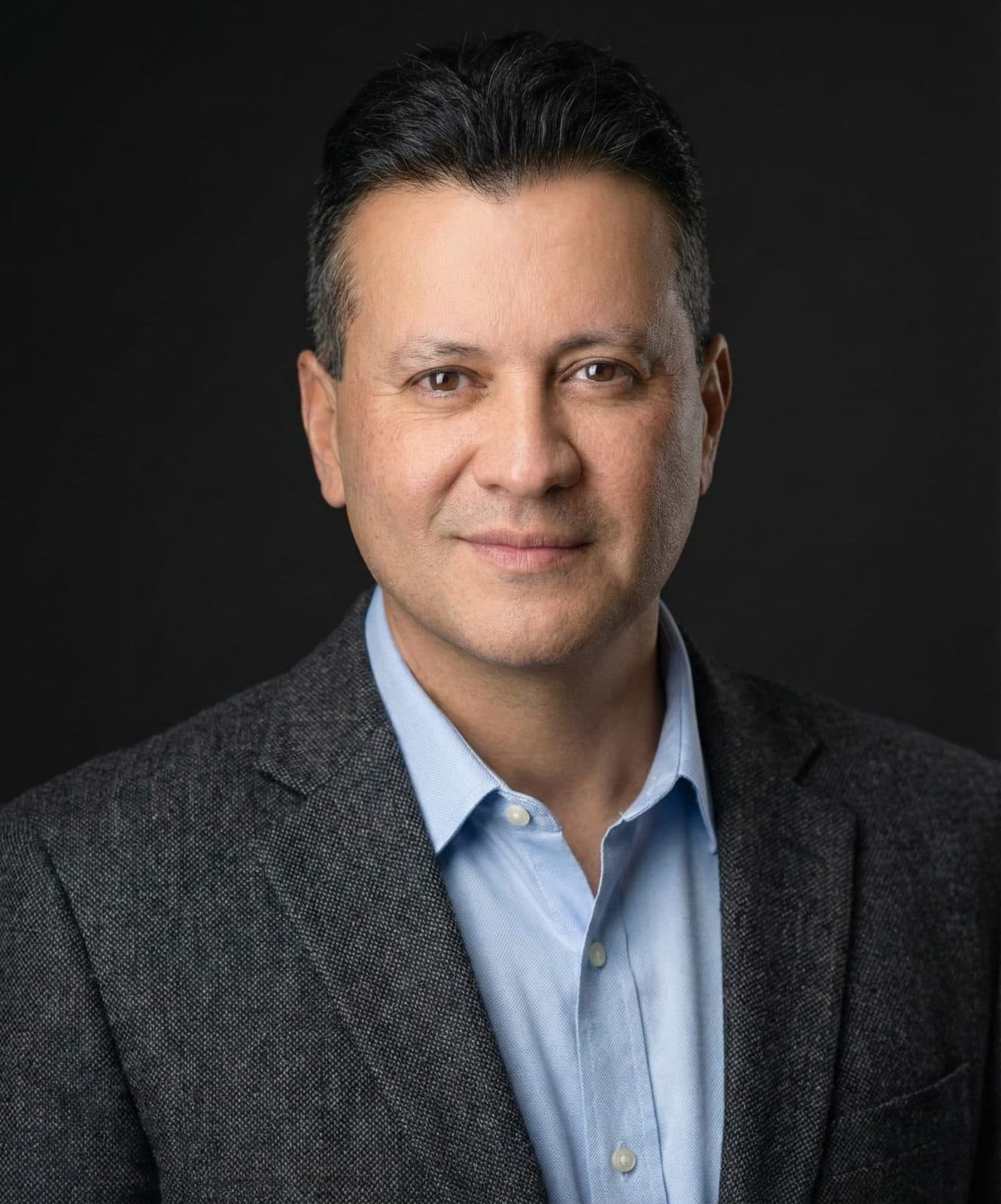
Full Transcript 0:14 Hello, and welcome to the American Journal of Healthcare Strategy. 0:17 I am your host, Saeed Siddiqui. 0:21 And I'm joined here today by a great member in AI. 0:27 Do you mind introducing yourself for the audience? 0:33 Yeah. 0:33 My name is Dr. 0:34 Harvey Castro. 0:41 I call myself the nutty professor in that I do a lot of stuff ranging from starting my own iPhone app company, having some vitamin company earlier in my 0:51 career to writing books during med school. 0:54 And then when the first iPhone came out, had my first IV meds application, and I made about 30 apps in the app store to the most recent now is I did the 1:06 book called Chat GPT and healthcare back in 2022. And so a little bit of a lot of stuff that I'm doing. 1:12 That's really, really cool. 1:14 You recently published a book. 1:15 Can you tell me a bit about that? 1:18 Yeah. 1:18 So I take pride in being a thought leader and a futurist. 1:25 I wasn't going to buy the Apple Vision Pro and I literally decided, you know what, two days in, I am just going ahead and get it. 1:31 And when I put it on, my mind just blew up. 1:34 Holy cow, what if I use this in medicine outside of surgery? 1:39 I did all these different things. 1:40 And then the best part is I love AI. 1:42 So I took AI, the Apple Vision Pro, put it together, and then obviously my healthcare and entrepreneur spirit and put all together and decided to write 1:50 a book. 1:51 The crazy part was within 10 days of the apple vision pro coming out, I had this book out in the market talking about how to use it in healthcare. 1:58 Oh, wow. 1:59 Yeah, that's a really fast turnaround. 2:02 How were you able to, I guess, manage going from this whole, the sensation of figuring this thing out, deciding to join AI and immediately coming out with 2:14 a book? 2:16 I call it the pain point. 2:18 We all have a pain-point in healthcare. 2:20 I'm really passionate about how can we use technology in health care and I am literally playing with it. 2:26 And I tend to be a very creative person in that space. 2:30 So I literally put on my doctor hat put on my CEO hat. 2:33 At one point, I forgot to mention, uh, created about eight emergency rooms here in Texas and sold them, had 350 employees. 2:41 And so I know what it is to run a hospital, run an ER, have, be in a C-suite in healthcare. 2:48 and I thought, man, if I owned an E R and then I was working in the front line. 2:53 What could I use? 2:55 What would I like to do? 2:56 So I literally put all these worlds together and started writing a book about different ideas. 3:01 Nothing that cannot be done today. 3:03 Honestly, some of the crazy ideas I came up with is just taking different technologies and putting them all into one. 3:08 And I really think that is going to be the future. 3:12 What were some other ideas that you sort of showcased in your book? 3:18 Yeah, so we talk about different platforms. 3:21 Obviously, the one that makes me most passionate as an ER doctor. 3:26 And I actually saw Epic, The Electronic Medical Record, showcase this, and I saw some slides. 3:32 But the skinniest is, imagine putting in the Apple Vision Pro. 3:36 Imagine you're my patient and being able to have the information when seconds count. 3:42 As an doctor, I may need your x-rays. 3:45 I need some blood work and results. 3:47 And so how nice if I had this thing on that I'd be able to see it and simultaneously take care of you. 3:53 And, so maybe you're unconscious or something's going on and I need that X-ray. 3:57 Being able have that immediately in my vision and being able see you and see maybe possible lacerations or trauma and then see what your labs are in real time. 4:08 Then the best part is, again, now this has been adding a little AI to it. 4:13 Imagine you spoke another language and I couldn't really understand other than using a phone call and having to do this conversation. 4:20 But what if I use the Apple vision pro and as that input started coming to me, it's translating in real time and i'm able to hear it. 4:27 And then as I'm speaking to you in English, its translating and then giving it to your language. 4:33 So I thought, man, how amazing. 4:35 This is something that would make a huge difference. 4:39 It's all about having information. 4:42 and being able to use it. 4:45 The other example real quick would be, again, using AI and the Vision Pro. 4:51 A lot of times, a patient will come in and say, you know what? 4:54 It's all in my medical record. 4:55 And so when I start going through the medical records, it's just volumes and volumes of information. 5:01 In the interest of time, I ask the patient, can you tell me XYZ? 5:05 And they're like, no, its in the record, well, imagine having AI, having this, being to speak to it, getting the record as I'm seeing you and being able 5:13 to look at it in real time and you don't see it because it's all virtual, but I've seen the screen. 5:18 And so these things in, in Real-Time would be amazing. 5:21 Now, obviously there's, uh, I don' know if you know this, But there are some neurosurgeons that are already doing neuros surgery with Apple vision pro, 5:28 and then there're some general surgeons that're using it. 5:30 So there is already a lot of people using this technology, which is amazing in healthcare. 5:36 Do you feel as if this is something that could be done within the next few months? 5:41 I know you mentioned some people are already using it. 5:43 Do think this can be something, that can spread, say, emergency medicine to different specialties or will just take, I guess, 5:51 more time, like another year or two or maybe even longer? 5:54 No, excellent question. 5:55 And unfortunately, The hospital system, there's always politics and within the hospital systems, those departments that are doing very well financially 6:06 and bringing in a lots of profit, i.e. 6:08 neurosurgeons, some specialties in surgery, they're able to tell the hospitals, hey, I want this toy or I this new gadget. 6:16 And they are able have it in their funds because it is in there budget. 6:20 Whereas some of the other parts of hospital literally lose money. 6:23 So those, uh, departments are less likely to get some this technology. 6:28 With that said, I truly believe as we start creating use cases and to the point where we're showing that this is saving lives or becoming more efficient, 6:39 the hospital system, ultimately, in some departments will end up funding it when normally they wouldn't. 6:47 What made you interested in AI? 6:51 I got to give this story. 6:52 I was coding a patient. 6:54 And I literally had just graduated residency. 6:57 Uh, it was literally the iPhone one was out and as I'm coding the patient, I gave the nurse an order to get a certain medication and, 7:06 and I was just amazed that she went and got a textbook out, started thumbing through it, found a page, verified the dose, 7:13 got the calculator out. 7:14 And I thought, oh my gosh, this is taking forever. 7:17 So a big picture, you know what, let me teach myself how to program. 7:21 Let me help and create a application that you just tap three times and it gives you the those. 7:26 And I literally did it and I created the first Ivy meds app in the world and it went viral. 7:32 And because of that moment that explains it fast forward, I'm playing with chat GPT it's 2022 and i'm going through it thinking, 7:40 oh my God, it was that iPhone moment. 7:41 That I had when I was making the apps. 7:43 I thought, Oh my god, this is going to change medicine. 7:45 This simple tool is gonna make just so many changes throughout healthcare. 7:50 and got so excited. 7:52 wrote a book on how to do this. 7:55 Fast forward, I was just fascinated because I'm thinking on so many levels, we need to help people out there, but then, you know, 8:03 finances or we don't have the tools. 8:05 I thought, man, this technology, if used correctly, We're going to start giving access to people in a different ways of healthcare. 8:12 We are going improve our healthcare system by using these types of tools and I though, Man, This is going be the future. 8:19 So, fast forward a couple of years later. 8:22 I'm starting to see big companies starting integrate this into the workflows. 8:26 I've started to hear different organizations saying they're spending money into AI to help improve patient care. 8:32 So big picture, I am really excited about AI in general, obviously. 8:36 It's something that I feel like it's just gonna help humanity and not just here in the United States. 8:41 In fact,I do a talk on this and I really think it is gonna to people outside of the US more than people in US because some countries, 8:50 especially the developing countries They don't have healthcare, they don' have health care in certain parts of their country. 8:56 And so I really think this technology is going to be used in a certain ways that we won't use here in the States because we have physicians and there's 9:02 a lot of lobbyist groups and whatnot. 9:04 But I'm really just excited to see where we go from here. 9:09 With many big corporations and organizations sort of integrating AI into healthcare. 9:15 Do you feel there are any aspects that, we as humanities should be careful of moving forward? 9:22 Yeah, that's a good question. 9:25 You know, obviously I'm more worried of non-physicians and individuals outside of the United States, ironically, and let me explain why. 9:35 Non-Physicists don't know medicine by definition, right? 9:40 And I am more worry that they're going to use a chat GPT like they use Dr. 9:45 Google. 9:45 That they'll just put in their symptoms and I worry some patients may decide, you know this is too expensive to go to the doctor. 9:53 I'm just going to ask CHAT GPT what's wrong with me, and if CHT GPTs says I am okay, then I will not go into the doctor. 9:58 Fast forward, if I was talking about patients that are outside of the United States where you literally can go to a pharmacy and pick up whatever drug, 10:05 I would be really worried that they would self-diagnose and go the pharmacy to pick some medicine that may end up hurting them. 10:12 And so I worry about this being used the wrong way. 10:16 And so right now I'm telling my patients, you know what, I am fine with you using ChachiPT, but whatever it says, please run it by me. 10:22 Please bring it to the office with questions because I don't want ChachipT to quote unquote hallucinate or give the wrong answer. 10:29 And then that you go through that and it's the right answer, even if the newer, their newer models are saying that they can get the error rate down to 4%. 10:38 To me, that's 4% too much because this is life or death. 10:41 These are situations with your health. 10:43 And so in my mind, like that, that we got to be very careful. 10:46 I, I actually, um, last year, it's been about a year now, wrote a book on, uh, chat GPT and empowering patients. 10:53 And I go through a whole algorithm explaining, okay, how can we use it in healthcare? 10:57 But basically it boils down to, we need to make sure we're having the experts verifying that information saying, yep, That is correct or not. 11:04 Do you feel as if there's any information where we can use AI or chat, GP T for that? 11:12 doesn't have to be run by a physician can sort of save time in that front. 11:17 You see, that's a tough one. 11:17 And as a medical legal issue and with healthcare, it's just really tough because I call it the bell curve, you know, You may be amazing at medicine and 11:26 you may know a lot, but there might be someone that doesn' and to give advice to two different individuals is still tough, 11:34 and what that said, there's medical students that can use ChachiPT and be fooled by ChachipT because again, they don't have the full training. 11:43 I think the sweet spot is going to be physicians in my mind that are somewhere five years plus out of residency that they've been seeing patients, 11:53 that have clinical gestalt to know that if AI is lying to them, saying things that aren't right, then they could tell the difference. 12:02 I'm on a mission to teach healthcare professionals around the world on how to use it, what it's doing right, and what is doing wrong. 12:10 What are the things we need to worry? 12:12 On the patient side, I really think we really need advocates for our patients. 12:16 We need signs in our clinics and our hospitals saying, hey, here are issues with CHI GPT or different AI. 12:23 With that said, if it is used right now together with the doctor and the patients, we're going to have great outputs. 12:31 I know that what ChachiPT is doing away with plugins in the next couple of weeks, but I think this would be a great use. 12:37 Example, say I have a diabetic patient and I their hemoglobin A1C is the average of their sugar, so it's really high. 12:43 And I that it is probably their diet. 12:46 Well, I can use ChachipT, tell it, hey, give me a keto diet, this person hates fish, they don't like fruit, and then it'll customize. 12:54 Then you're with me and can give you that output and take it down to a whole meal plan, but then the best part is with the plugins, 13:03 I can plug it into your Instacart. 13:05 And then by the time you go home, all the things that we talked about, they're in your house already ready for you. 13:10 I think that is the new way of using healthcare, using AI. 13:14 Verifying it, making sure it is correct. 13:17 Then I'm taking your data, putting it together, and then leveraging technology for us to give you a better outcome. 13:23 That's true. 13:24 Yeah, that's very, very interesting. 13:26 So I guess it sort of falls into the way we use AI rather than making everything all out there, you know? 13:35 What regulations do you think should be put in place so AI isn't misused in certain instances? 13:42 No, that's a good question. 13:43 You know, I, as a capitalist and I'm here in Texas, obviously I am hard against regulation. 13:51 It's the cash 22. I want to see this progress. 13:54 And I wanted to make sure that it's going forward. 13:57 To some degree, there's pseudo regulation in that in healthcare, we have HIPAA and in Europe, We have the GDPR, which is basically privacy rules and there 14:05 are all these laws that we'd have to stay confined to. 14:08 With that said, if I had to pick some laws or regulation against it, obviously I want to make sure we protect our privacy with our patients and that were 14:18 not using CHAT GPT to the point where OpenAI has all this information about my patients. 14:23 But the good thing is HIPAA already covers that. 14:25 So there's already regulations against that now. 14:28 If I had to pick one, I actually would, uh, like the concept of creating what I call food labels. 14:35 Let's create labels for AI. 14:37 And whenever anyone uses any AI, a doctor or patient, they can pick up that particular AI and say, okay, here's the positive, 14:44 hear the negatives, hears the training. 14:46 Here's why we do not encourage XYZ because it's got bias in the data set. 14:53 or this is how it should be used. 14:55 That way the average consumer can pick it up just like they buy, you know, like I have some yogurt here with the food label. 15:01 Well, grab my AI and it tells me these things. 15:03 And I think that kind of regulation would be good because it's not slowing down innovation, it is not hurting us, but it makes us as a consumer more aware 15:11 of what we are using. 15:14 I've heard many people talk about sort of risks involved with AI and utilizing it. 15:20 I know you mentioned earlier that it's a life or death situation. 15:24 So 4% is 4%, too many. 15:28 Where do you think this fear sort originates from? 15:31 And should we focus on, I guess, whatever the cause is for this sphere? 15:37 No, that's great question. 15:38 And yeah, you know, we, uh, agreed that we are afraid of the unknown. 15:43 Um, that's why I'm a big advocate of education. 15:45 Uh, I created my own AI healthcare course. 15:48 I literally going around the world, giving lectures on this topic because we don't know, but here's the thing. 15:55 If I can go into the C-suite, if I go to the hospital systems and explain how this works, then they have a better understanding. 16:02 Obviously AI, we call it this big, big black box. 16:04 We have no idea how the sing is getting output. 16:06 You don' know the data. 16:07 Like the average person has really no. 16:09 And it's kind of scary. 16:11 How does it know? 16:12 And then we have a distribution of physicians and healthcare professionals that vary in technology understanding. 16:19 And so we some people that really love technology and are early adopters and bring it into healthcare. 16:25 Then we had some late adopter and some skeptics that are saying to the point, hey, if AI comes into my hospital, I'm just going to retire. 16:32 So we got to make sure that we're educating these individuals and explaining the good, the bad, and the ugly, explaining to them how to take the fear out. 16:41 You know, one thing that has been talked about is when there's an outcome that you put in a question, some output comes out of ChatGPT, 16:49 why not create a knowledge graph? 16:52 And so then the doctor can say, okay, I see how you got from point A to B to C to D. 16:57 And these kinds of models would be able to do it. 17:00 The other thing is Chat GPT was not meant for healthcare, but people are using it, we need models that are trained with medical information. 17:08 that we're having physicians and healthcare professionals that are doing reinforced learning on these models to say, yeah, 17:13 this is correct and this wrong. 17:15 And then when we have these outputs, we need to start focusing on certain verticals. 17:19 For example, everybody's heard of radiology and how AI is helping it, but we to need start working on maybe diabetes and then really creating the right 17:28 large language models for that particular problem, making sure that were reinforced, learning, and that, were taking this to the next level. 17:34 So these are really key important things that need do as a society. 17:38 And so as we move forward, we need to make sure that we're educating, were teaching. 17:43 And then if you out there listening and you're getting better at this, then you turn around and teach others around you. 17:49 That's the only way that were going to start really being able to understand this AI and healthcare and really taking it to the next level. 17:56 It's true. 17:56 it's a domino effect. 17:57 We're all helping each other. 17:58 One final question. 18:03 I know you have a long history of entrepreneurship. 18:06 You were talking about your emergency medicine departments, which you created and sold, you've created a few companies as well, 18:14 written books. 18:16 What advice do you for those that are sort of interested in the entrepreneur side of healthcare? 18:22 Is it sort just finding a problem and thinking of a solution that goes with it, or is there more to it than that? 18:31 I'm obviously, I am passionate about healthcare and AI. 18:35 And I want to say that's the secret sauce. 18:38 I think you need to find something that you're very passionate. 18:41 Obviously, it's a pain point. 18:42 Let me give you two quick examples. 19:01 And so that pain point of not being able to give my all to patients really upset me. 19:07 And, so I took it to the next step. 19:09 I literally got a group of investors. 19:12 literally started creating emergency rooms and I started doing a different culture, a culture that was the opposite. 19:18 The more time you spend with patients, the better. 19:21 the more praise and more you were doing for the patient, The More praise you are getting from the company. 19:27 and so exactly that. 19:30 I took a pain point. 19:31 I take something that I was passionate about and I did something about it. 19:34 And I really think that's the secret sauce of entrepreneurship, having the passion, finding that pain, point, and then really thinking outside the box. 19:42 That's it, the third part. 19:44 You know, things that, I, would do and the solutions I would come up with sometimes seem radical to others because it had never been done, 19:51 but just because they wasn't done didn't mean it was wrong. 19:53 It just meant that was doing it a different way. 19:56 There's no reason to go from point A, B to C. 19:59 I could go to A to D if I had to, if it was the right situation. 20:02 And that's the part of AI. 20:04 Healthcare professionals are fighting against some of the old ways of doing things. 20:09 You know, I know some people don't know this, but hospitals still use fax machines. 20:13 Yeah, and you're thinking, what? 20:15 They're still using faxes machines? 20:16 Yes, a lot of hospitals are still I think it all comes down to progression and sort of adapting to the times and changing with it. 20:28 And that's why your work in AI is very important. 20:31 I'm very fortunate to have this discussion with you. 20:34 Thank you so much, Dr. 20:35 Harvey Castro.
Comments