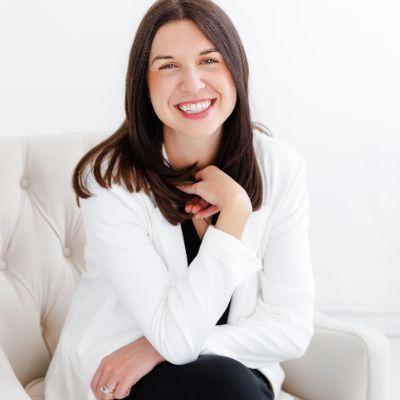
Full Transcript Introduction to Amber's Functional Medicine Journey 0:01 All right, well welcome to our next episode of our journey with Thriving and 0:04 we are here with Amber Fish who is one of our fabulous pharmacists on the 0:08 farm-to-table team from Texas and she is going to tell us all about her journey 0:14 to getting to a place of thriving um through functional medicine. So, thanks 0:19 so much for being with us Amber and just tell us a little bit about your journey 0:22 as a pharmacist and sort of what sparked your interest in functional medicine. 0:26 >> Well, thank you so much for having me and I'm just excited to tell my story 0:30 and I hope that it will relate to some patients um 0:36 on their journey. So, I pretty much got started with my functional medicine 0:40 journey back in 2019. However, my health journey started um several years prior 0:47 to that because I was diagnosed with rheumatoid arthritis and I went through 0:52 all the conventional providers. I was on some medication for RA and it just 0:59 wasn't working. I felt worse and I just felt like there was pieces of the puzzle 1:05 missing. So, I started doing my own research. I looked into the 1:09 Mediterranean diet. I went to a a dietitian slash chiropractor who helped 1:16 me start an elimination diet um and then I started listening to podcasts 1:24 and um Dr. Mark Hyman was one of the um the uh host of the podcast that I 1:30 listened to and that triggered my interest in functional medicine. I then 1:36 found a provider in Houston, Texas and started seeing her and that was my 1:42 start to my journey of health or healthy living and healing my body. 1:48 Um it it's a continuous journey, but um you 1:52 know, I am so much better off of conventional medications 1:56 um and so that was how I got started into
RA Diagnosis and Frustration with Conventional Treatment 2:00 functional medicine. >> Yeah, so what was like the conversation 2:05 like with So, I'm assuming you're going to a rheumatologist that was like, "Hey, 2:09 here is the treatment for RA. This is what you need to do." I mean, they 2:13 probably counselled you on side effects of medications. But as a pharmacist, 2:17 it's interesting because you people think that we're like pro-medication 2:20 just because we have that pharmacy hat on. 2:23 But I'm sure there's lots of things going through your mind of like So, take 2:26 us back to that. Like what went through your mind about like long-term side 2:29 effects of medications or even just like why the medication's needed in the first 2:33 place. >> Um well, I My my symptoms came out of 2:38 nowhere. I mean, I just one day woke up and I had excruciating pain in my arms 2:43 and my hands. Um so, I started with my primary care doctor. She ran multiple 2:49 tests. And at this time, like you know, I was all conventional medicine. Like as 2:54 a pharmacist and working in academia and teaching about medications, it was 3:00 conventional medicine. Okay, this is what you do. So, then she referred me to 3:04 a rheumatologist. I saw the rheumatologist and 3:07 um they put me on Plaquenil or hydroxychloroquine. And 3:13 um I do remember her telling me to exercise. 3:17 And she looked at me and she said, "You You need to exercise." And I'm like, 3:21 "Okay." But you know, I just I felt that there was no end. Like I felt that 3:28 Oh my gosh, this is going to be my life. I'm going to have RA. I'm going to have 3:32 um deformed joints. Um I taught a lecture in pharmacy school or when I was 3:39 assistant professor on rheumatoid arthritis, so I knew all of the 3:44 um devastating effects of the disease. And 3:48 you know, it just was sort of a Okay, well, let me just 3:54 figure out how to maneuver this through the conventional medicine and I had once 4:00 I started hydroxychloroquine, you know, I had to do eye exams and um 4:07 and I just felt like I wasn't getting any better. 4:10 Um also I had terrible migraines. I I remember I would be at work and I would 4:16 get a migraine and I would have to come home and I felt like I was just starting 4:20 to take more and more medications because of this and I felt like the 4:25 hydroxychloroquine was affecting it. Um also I had to go on 4:30 prednisone and I had a lot of weight increase because of the prednisone. 4:36 Um so, you know, it was I mean, I don't 4:39 want to say dread or doom, but that's sort of how I felt because when you go 4:44 to a rheumatologist and they do conventional medicine, 4:48 it's just like, oh, we can try this or, you know, we can try this medication or 4:52 we can try this medication and um you know, I remember her asking me if I 4:57 wanted to be on um methotrexate, but because of my age 5:01 and potential pregnancy down the road, that's one thing that I wasn't wanting 5:07 to be on just because of, you know, you have to be on birth control medication. 5:11 So, you know, it was just very 5:15 um depressing, I guess you could say. 5:19 >> Yeah, and ultimately you're left with your symptoms are still there, right? 5:24 And maybe a little lessened um so that you weren't in such excruciating pain, 5:30 but they weren't like going away, your body wasn't healing and you're just 5:34 frustrated. And I feel like that's so many times what our patients are 5:38 experiencing is that they're coming in, they're frustrated, they're being told 5:42 that the only path forward is a medication. And we're not saying that 5:46 all medications are terrible and you should never take a medication, right? 5:50 That's not what we're saying. There's a time and a place for treating things 5:53 with medication. And I feel like but when it comes to chronic conditions, 5:58 there's so much that can be done by diet, lifestyle, addressing some of 6:01 these causes. And certainly there's autoimmune conditions that do need some 6:05 of these medications we're talking about because of the extreme nature of them or 6:08 the disformities that they may cause. And so I don't want this to come across 6:12 that no one should take medications for RA because there are people that do need 6:16 them. Um but when you're at the beginning stages 6:20 like you are, there's so much that can be done as a starting place. And so talk 6:24 to us through what when you found functional medicine, what was your sort 6:28 of first step when that provider met with you for the first time? 6:31 >> Um I can I mean I was overwhelmed when I found functional medicine because there 6:37 were all of these um systems that I hadn't really thought 6:42 about as putting together. And I remember her saying like, "Okay, well, 6:47 I can test X, Y, and Z, but let's just start with your, you know, like a 6:56 a nutritional evaluation and then let's do a gut test. And so
Discovering Functional Medicine and Initial Testing 7:02 um after, you know, listening to podcast 7:05 about functional medicine and doing some research, it was like I really think 7:10 this is it because so before I found functional medicine in 7:15 the sense of functional medicine, I did look at like the Mediterranean diet and 7:20 I looked at research papers around diet and rheumatoid 7:25 rheumatoid arthritis. And so um 7:29 I did eliminate. So I eliminated um dairy out of my diet first. And 7:37 um or no, I'm sorry. I eliminated a first. 7:41 And I I did improve, but it would there were still pieces of 7:46 the puzzle missing. So, once I started seeing my functional medicine 7:51 practitioner, um 7:53 it made so much sense. But I remember the first I was super excited, but at 7:58 the same time I was overwhelmed because I just felt like there was so much to 8:04 learn and to take in as a patient and a pharmacist, um that, you know, I had to 8:11 just break it down step by step. Um >> Yeah. 8:16 >> So, >> I love what you said about like you were 8:19 like excited. So, you had this like new found hope that like all is not lost and 8:24 there's there's options beyond just being told to take these medications 8:28 that aren't really helping me, but at the same time you're overwhelmed cuz I 8:31 feel like so many people sit in that spot, right? Of like I am so thankful I 8:36 found this option that is is has promise and hope, but at the same time it's just 8:43 so overwhelming cuz there's so many different paths you can take, so many 8:46 different tests you can do, like and I think that speaks to why people need a 8:50 provider to help them navigate this because if you, even though you are a 8:54 healthcare professional, are trying to navigate it for yourself, like it's a 8:58 little bit one-sided and there's a lot of emotion that comes with it and things 9:02 like that. So, like having that other person to say, "Hey, this is what I 9:06 think you should do first based on my clinical experience with other patients 9:10 like you." is like such a game-changer, right? To like helping you go through 9:14 the path. Um so, what was the first type of testing um from a functional medicine 9:20 standpoint that you did? >> So, I did I did multiple tests. Um 9:25 I did a stool test to look at my gut. And I also did a breath test, a SIBO, a 9:32 small intestinal bacteria overgrowth test to um because my per the provider 9:38 thought that I had um, overgrowth depend because of my GI 9:42 symptoms. And um, I also did a micronutrient test 9:48 um, just looking at the cells at a, you 9:52 know, at a microscopic level pretty much to see how they were functioning, what 9:57 um, macro and micronutrients I was needing, 10:01 what vitamins I was needing. So, those were and along with blood work, so you 10:06 know, general blood work. Those were the the first um, three tests I did. And um, 10:13 and I think I also did maybe a mold test. Um, I know I did a mold test 10:18 because one of the first things my provider said 10:22 was a lot of times patients with RA have mold toxicity. 10:26 So, um, so and those were pretty much my my basic test in the beginning. 10:34 Um, and uh, and once those were completed, 10:39 then it was the saga of the supplements, which, you know, I think that like 10:45 supplements are important just like sometimes, you know, like prescription 10:49 medications are really needed. Um, and in functional medicine, I think that as 10:55 a patient experiencing this firsthand, 10:59 um, I was on a lot of supplements and I just it it that part was even more 11:05 overwhelming than my first visit and you you just sort of have to figure out a 11:11 um, a breakdown of how you're going to take your supplements. Um, 11:15 but also as a provider, it taught me a good and beneficial um, lesson because I 11:23 try not to overwhelm my patients with supplements because I think we can 11:27 become supplement happy. And through my educational journey of functional 11:33 medicine, I have discovered that, you know, supplements are a bridge and 11:38 that's what I tell my patients is that we're bridging to a healthier, better 11:44 life, right? So, it's the bridge to help your body overcome the diseases or the 11:51 illnesses that it has so that you can live a better life. And And granted, 11:56 there are some supplements that you're going to 11:59 probably take for the rest of your life. I mean, I'm still on supplements. 12:03 Um but it's just not that 12:07 laundry list of supplements that I'm on now. 12:10 >> And I think there's also like some people in the functional medicine space 12:14 that do it like crazy. Like I've had patients come to me from some of these 12:18 online practices that are getting like I mean, just like herbal concoctions 12:22 upon herbal concoctions and they have this list of like 65 steps of this like 12:27 protocol that they're doing. And I just think for a lot of people, that's not 12:32 like realistic, right? Like to do all of these different things and take things 12:37 five times a day. Um but with gut stuff, it is hard because 12:41 if we're adding like an antimicrobial to help address the balance of the good and 12:46 the bad bacteria or kill off some yeast or something like that. And then we're 12:50 adding digestive enzymes to break help down your food better. And then we're 12:54 adding something to heal the gut lining. And then we're adding a probiotic. And 12:58 so, there's four things right there that we're asking you to do. But the nice
Gut Healing as the Turning Point 13:02 thing is that generally a lot of that is just, you know, 2 months. Like give me 2 13:06 months of an antimicrobial, 2 months of a like a healing, a support. 13:12 Um but the probiotic and the digestive enzymes might stay on board for longer. 13:16 So, it's sort of what you're saying, you know, it's not It seems like a lot at 13:18 the beginning and trying to Even as a pharmacist, and we know like compliance 13:22 for medications, if you go from one time a day to two times a day, it drastically 13:25 drops off, right? And so, same thing with supplements, we have to be mindful 13:29 about, you know, what we're asking people to do because it's not like, oh, 13:34 just take all of these things and that all of a sudden happens at their end. 13:38 >> Right. And I think that, you know, in my case, I was 13:43 I I'm going to call myself sick. Like, I was pretty bad off when I first started 13:47 seeing um my functional medicine provider, but um 13:52 you know, as I changed my diet and because 13:57 the diet is like one of the most core foundation principles of functional 14:02 medicine, and we can get all of our nutrients through the diet, or the 14:07 majority of them. I wouldn't say all, but the majority. And I think that 14:11 learning that through my process was um at like very beneficial and very 14:18 educational. >> Yeah. 14:21 Yeah, I think I mean, certainly our N of 1 patient, we learn so many things. 14:25 Like, oh, this causes this side effect, or this does this. It like brings it 14:29 home for people to be able to counsel patients as well. I mean, the more I 14:34 think that's why patients gravitate towards people that have experience, you 14:38 know, with themselves for and whether that's an online influencer, provider, 14:42 whoever. They're like, oh, they know about me because they've they've been 14:45 this. I mean, the best endocrinologists are type 1 diabetics, right? And type 14:48 patients that have diabetes. Um because they live it every day just 14:52 like their patients. So, um 14:55 Awesome. Well, what else do you feel like was really impactful to you on your 14:59 journey? >> Um 15:02 the most impactful thing was healing my gut. 15:06 Because it was a night and day difference. Um and I mean, I 15:13 that was just one of the biggest eye-openers for me. 15:17 Um is that when I started on um healing my gut, 15:23 it was like my pain went away, my swelling went away. I, you know, I had 15:29 some brain fog and all of that just cleared up and even, um, I mean, it 15:36 reflected in my labs and, uh, like my HS-CRP became normal, my ANA, you know, 15:43 became normal and so the gut healing was 15:50 the game-changer for me and I feel like that is one area that I am very focused 15:55 in, especially for my patients, is because, um, you know, I mean, in 16:01 functional medicine everything starts in the gut and I think healing the gut 16:06 helps reduce so many symptoms. 16:11 Um, and it and and it helps patients feel better. 16:15 >> Yeah, absolutely. I mean, it's sort of, I mean, whole quote from Hippocrates 16:20 says all disease begins in the gut and I and I think that's true probably 70% of 16:24 the time. There's the times that like stress and, you know, other conditions 16:29 or viruses trigger things that might not necessarily be like an overgrowth or 16:34 gut, um, but there's normally something we can do, especially in our modern 16:38 world of pesticide exposure and stress and, you know, improper digestion 16:43 because we're eating so fast and all of those things. There's always a little 16:46 bit to do. Um, but talk to me about, I know we talk a lot about like the core 16:50 lifestyle things. Like how do you keep things at bay now that you've done all 16:54 of those, um, gut healing things at the beginning, but what do you do when 16:58 you're talking like movement and, um, I know we talk about, you know, stress 17:03 reduction a lot, we talk about, you know, maintaining gut health, but are 17:06 there sort of tips that you have for people that have autoimmunity once 17:09 they've sort of come out of the big, um, I guess, symptoms and now they're just 17:14 like, how do I prevent this from coming back? 17:17 >> So, um definitely, you know, the the core, the five core things. So, diet, 17:23 movement, stress management, sleep, and um 17:28 and relationships. Those are the the five core things that we focus on. And 17:32 And for me, I really try to um stick with no dairy. Um I can't say 17:40 I'm completely gluten-free now, but when I I'm very conscious of like if I do 17:47 have gluten that it's um wheat from like Europe or um 17:54 that, you know, I I guess I'm more aware of like what ingredients is are in
Lifestyle Habits for Managing Autoimmunity 18:00 products so that I'm not eating products with like a laundry list of ingredients, 18:07 that my products are clean or my food is clean. I really try to focus on fruits 18:12 and vegetables, um fats and protein and in my diet. So, 18:19 as long as I am consistent in that, um my inflammation and pain is um and 18:27 swelling is minimal. Um and then of course, it you know, it 18:32 just takes determination and motivation because I know how I was prior to this 18:38 journey and I don't want to go back there. So, that determination and 18:41 motivation helps me like, you know, I walk every day. Um I have two dogs, so 18:48 we go on three walks a day and I I try to go to the gym a couple times a week. 18:54 So, I just try you know, it's all a balance, right? So, 18:59 and then with stress, I definitely do prayer and I do breathing techniques. 19:04 So, if I get into a stressful situation, I'm 19:07 taking deep breaths and holding my breath and um releasing breath through 19:11 my nose and in through my mouth. So, that kind of stuff is how I manage my 19:17 stress. Um, and then I'm very mindful of sleep. Sleep is very important. I try to 19:22 get 7 to 8 hours of sleep a night. Um, and uh, I have relationships, you know, 19:29 I have to work at this. I work from home a lot. So, whenever I am working from 19:34 home, I'm making sure that I'm going out and talking to men my neighbors, meeting 19:38 a friend for exercise. So, um, and sometimes just combining some of these 19:44 core, um, 19:48 health pillars is um, is beneficial because, right? We're all all all on 19:53 time constraints and um, or restraints. So, um, and the other piece to eating is 20:00 that I have switched grocery stores. So, we have a, um, more of an organic 20:05 grocery store here in Corpus and so, I I try to get buy more of my produce and 20:12 everything there because I know it they're or it's organic and 20:16 um, but I I don't want to 20:20 make people think that I'm perfect because I'm not. I will indulge in in 20:26 different some foods and and then I do suffer the consequences the next day, 20:31 but I think that as long as you really try to maintain, 20:36 um, that that's the key is just and not beating yourself up. If you if you mess 20:42 up or if you get off the bandwagon, per se, you know, just realize, "Hey, I need 20:48 to get back on. I need to really clean up my diet for 6 weeks and um, 20:55 and get back on that, you know, the the health train if you want to go with 21:00 that. So, you know, it's just and it's an ongoing process. It's It's 21:05 you're never finished, right? Like you always have to 21:10 just maintain. >> Yeah. 21:12 Yeah, and I think that's I'm with most things in life. Like we don't just get 21:15 to scoot on, right? There's always something we have to work at and and 21:20 continue to do, whether it's you know, nutrition or just even I know 21:24 a lot of people with past trauma um struggle with some of the mental health 21:28 components of that, but like continual engagement with mental health resources 21:33 and for people that are introverted and not 21:35 as likely to be out in community and and doing all the things. Um 21:40 So, it is it's, you know, every day sort of putting one foot in front of another. 21:44 Um And it gets easier, I think, over time 21:47 as you start to build it into your lifestyle. Like you said, finding where 21:51 to shop is, you know, the best for you. I mean, we I feel like we go to like 21:55 three different grocery stores depending from like a feeding a family of four 21:58 plus a um, you know, cost savings of which place has the best prices for 22:03 what. Um but it is and it is and it that takes effort, right? Some people are 22:08 like, "I'm not doing that. I'm only going to one grocery store. I can't go 22:10 three different places." Um but with the avenues of 22:13 grocery ordering and all the things that COVID brought us in that space, it is 22:17 definitely a lot easier um to do maybe than it once was. Um but I 22:22 love, you know, summer's farmers markets and trying to we participate in a CSA 22:27 with a farm that's completely organic. So, I just go and pick up this box of 22:30 vegetables from a house, you know, in my community that they drop it off to and 22:35 So, there's lots of different ways, but it does take the effort, right? I have 22:37 to research that. I have to figure out like, is there a CSA in my community 22:41 that has these resources? And um it's not all just like I think so many people 22:46 want like the quick fix in our society. >> Right. 22:51 >> They want the supplement that's going to cure them or the this and that and it's 22:54 not that's not a thing, right? There's not one thing that's going to change the 22:58 world, right? When you were doing your gut health work, it was multiple things, 23:02 nutrition, lifestyle, plus some targeted supplements. Um And it takes time, and I 23:07 think that's another thing people don't realize. They're like, "Okay, I want to 23:10 feel better in a month. Like, I want this supplement this protocol to be like 23:13 game-changing right now." And that's also a little bit of a falsehood, right? 23:18 Like, for you, what how long would you say like I mean, I know that there was a 23:21 drastic reduction in your symptoms after the gut healing protocol, but 23:25 when you were sort of back to your like baseline or as close to your baseline as 23:29 you got, and like how long do you think that was? 23:33 >> I think that took a couple of years. I mean, I you know, I definitely 23:39 um it it wasn't, you know, like I was going 23:43 to see her at least 9 months, but probably before I started 23:49 I you know, I would improve a little every month or um at each appointment, 23:55 but this drastic turn was whenever I um 24:03 I started working on my gut. And um you know, there 24:08 So, and I and I still feel like that I can 24:12 always improve, right? So, even now, I'm like, "Okay, I need to go back on a gut 24:17 protocol for about 6 6 to 8 weeks, and um 24:23 get everything um 24:25 all like lined up again, but um but I I mean, I can function. I wake up 24:31 and I don't have pain. I um you know, it's 24:36 it's just it's amazing how you know, you take care of yourself, and 24:41 eat eat healthy, exercise, um sleep, and 24:47 get and you know, like doing the gut health stuff really really helps. 24:52 Um I do want to say that sometimes, you 24:56 know, I de- definitely felt a little stressed at some points along the
Closing Remarks and Where to Find Amber 25:01 journey just because it was a lot of information. 25:05 Um also, I had some mold toxicity and 25:10 you know, I live in South Texas, mold's everywhere. You walk into a restaurant, 25:14 you look at the AC vents and you you just like, "Oh my gosh, there's mold." 25:19 But, I mean, I live in a very humid environment and I think um 25:25 one of the things that I've had to come to terms with is that I'm not going to 25:29 be in a mold-free environment, but can I live with that? And um 25:35 and I, you know, in functional medicine, we talk talk about the total toxicity, 25:41 right? Like, how much how much toxicity your body can handle. And I think that 25:46 I've For me, I personally, I've um 25:51 my total toxicity isn't as high as it used to be. So, my body's able to 25:57 eliminate probably the mold that I still encounter, but um so that it's not 26:04 affecting me. >> Yeah. 26:06 >> Um so, I think sometimes we have to take a step back and just look at your 26:11 situation and and say, "Okay, how can you live with this? How can you You 26:18 can't get out of it." So, you know, you might not be 100% better, but what can 26:24 you live with? >> Right. Right. 26:27 Yeah, and that's I mean, I think it's just like a reminder that it's a daily 26:31 daily steps towards whatever your goal is. You know, it's going to be 26:36 slow and steady, but slow and steady wins the race, right? 26:39 >> Exactly. So. 26:41 >> Awesome. Well, thanks so much for joining us today and just sharing your 26:44 story. And where can everyone find you? >> So, I am at farmtotable.life. 26:52 And so, you can if you are interested in, um, 26:57 getting in touch with me, you can book a a 15-minute appointment through, um, 27:02 farm to table and, um, so that's pretty much my one and only 27:09 platform right now, but, um, >> And you're licensed in Colorado, North 27:14 Carolina, and Georgia, and Texas? >> Um, and let's see, and Wyoming. So 27:19 Wyoming, Colorado, Louisiana, Georgia, North Carolina, and Texas. So I 27:25 do see >> Right. I have a wide variety of, uh, 27:29 licensures. So if you are in any of those states, um, you can, um, 27:35 I would love to be one of your providers if you are interested in this journey of 27:40 functional medicine and, um, also I I do have a, um, 27:45 a little bio on the ifm.org website under the provider. So, um, 27:52 >> Yeah, well, >> Melanie, thanks for so much for having 27:55 me and let me tell my story. >> That's awesome. Well, thanks for your 27:58 time. Have a great day. >> You too.
Comments