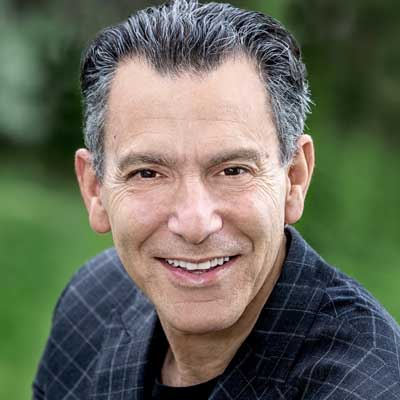
Full Transcript Introduction to Hyperbaric Oxygen Therapy 0:00 All right, everybody. Do not move. 0:02 We've got one of the best interactions that there's going to be 0:06 at this amazing summit. 0:07 Reverse Heart Disease Naturally. 0:09 Because sometimes we get the opportunity many times to bring the top dog, 0:15 the big kahuna, the scientist, the leading academic person. 0:20 And this is what we're going to talk about right now. 0:22 Hyperbaric oxygen therapy. 0:25 Everybody write down your notebook. 0:26 H b o t. 0:29 And you know we can talk to anybody locally. 0:31 There's so many good people in this area. 0:34 And we're going to relate 0:35 hyperbaric oxygen therapy to heart disease and other conditions. 0:38 But we're not bringing anybody. 0:39 We're bringing Amir Hadanny, M.D. 0:42 who, I was just speaking a little bit in my gibberish Hebrew to him, and I'm 0:47 going to speak in my gibberish hyperbaric oxygen therapy knowledge to him. 0:51 But this is like really a big bonus. 0:53 Everybody get excited. 0:54 Right now we've got the guy, Amir Hadanny MD, 0:58 PhD, a Harvard research fellow in the brain Modulation Lab. 1:02 In the last few years, 1:04 trained his 1:05 medical doctor in Tel Aviv, Ph.D. 1:08 in, bioinformatics and computational biology. 1:13 He can probably do really good at, word puzzles because this guy as a brain 1:17 is like a computer did neurosurgery training at a medical center 1:22 in Israel, joined a Vive scientific. 1:26 And we're going to learn right now about what is a VS scientific. 1:29 But it is a worldwide company. 1:31 I'm very familiar with. 1:33 I've had a wonderful time, in the past interviewing Chaya Frati, MD, 1:38 who, I think, Amir will tell us about 1:40 as a colleague and a leader in applying new technologies 1:45 to heart disease, brain disease, psychological disorders. 1:50 This is truly one of the most exciting topics. Okay. 1:52 Time for me to shut up and say hello. 1:55 Amir, Dr. Hadanny. Thank you. 1:59 Hi, I'm Joel Kahn. 2:00 Thank you for having me. Real honor. 2:03 Happy to join and tell you all about it. 2:06 Yeah. 2:06 And I just want you to know, I mean, this conversation for the next half an hour 2:11 will ultimately probably be reviewed by half a million people. 2:14 We're going to really reach a lot of people. 2:16 It could be more, we're all been, you know, for wonderful, wonderful reach. 2:20 And, a lot of them don't know what we're talking about. 2:23 So I already, like, spilled, the secret hyperbaric oxygen therapy. 2:29 And, you know, tell us about is, you know, for the public, I mean, what that means. 2:34 Okay, you're sitting in some kind of room and something's happening. 2:38 But tell us, you know, a little of the history of it, but really, 2023. 2:42 Whoa. This is exciting. 2:45 Awesome. 2:46 So, exactly like I said, HBO, the hyperbaric oxygen therapy, 2:50 basically what we're talking about is giving someone 2:55 to breathe 100% oxygen 2:59 in an environment where we raise the pressure more 3:02 than the regular atmospheric pressure, which is one atmosphere. 3:07 And when we do that, we actually harness
How HBOT Works and Its Origins 3:13 a nice physics law that people call Henry's law. 3:18 We are able to dissolve more oxygen 3:24 in the person's blood, 3:26 so we have much more oxygen 3:28 flowing in the blood flow, enriching the tissues. 3:33 And we talking about a lot more, almost 30 times more 3:37 than what you and I are right now breathing 3:41 well. 3:41 So in my very, very rudimentary understanding is 3:45 people all over the world during the pandemic bought an oximeter. 3:49 They put it on their finger and it shows that your red blood cells 3:52 are 98% saturated with oxygen. 3:56 Okay, maybe you can make it 3:57 99, making you make it 100, but you can't do much more than that. 4:01 If you're talking about driving oxygen into the plasma, 4:05 into the fluid of the blood, because the red blood 4:08 cells are already in good shape, and that carries a whole new stream 4:12 of oxygen to tissues, heart, brain, toes. 4:17 And, you know, how did this begin? 4:19 I mean, we're talking about diving accidents. 4:21 Is that, what, we go back 100 years or more? 4:26 Exactly. 4:26 So, first of all, I really like what you just explained 4:29 about the difference between the plasma and the red blood cells. 4:32 Definitely. 4:33 We're taking it to a whole different physiology, 4:36 something that we cannot achieve with just a normal oxygen mask. 4:40 We're super charging our blood with, oxygen. 4:45 And then, yeah, it all started about more 4:47 than 100 years ago with diving accidents, 4:51 people who were, diving and building bridges around the world, 4:55 that they didn't dive the proper way and had some accidents, 4:59 eventually had to go inside, special chambers. 5:03 They looked much different back in the days. 5:06 And, the idea was to supercharge them 5:09 with oxygen in order to remove, bubbles 5:14 that may occur due to what they called, then the bends 5:18 or decompression sickness, as we call it today, due to some issues with their diet. 5:24 A couple of years afterwards, they discovered that 5:27 they can utilize that technology to treat wounds, 5:32 and when we talk about wounds, we're talking about non healing wounds. 5:36 A lot of the times due to diabetic foot or diabetic feet. 5:41 But there are other, issues or diseases 5:45 that can cause non healing wounds that don't heal by themselves. 5:49 And they discovered we are able to treat those wounds 5:54 by hyperbaric oxygen therapy and help the body heal itself, 6:00 because otherwise the wound will not heal, will become the chronic. 6:04 And we'll probably have to amputate that limb. 6:09 Another, very common use of beauty 6:12 again for years and years now has been radiation injury, 6:17 meaning patients who underwent radiotherapy due 6:21 to different oncologic or, diseases 6:25 or cancer in different places and suffered from radiation injury, 6:30 meaning the radiation itself caused some issues. 6:34 We were able and are still able to help 6:37 that with with but and practically speaking, 6:41 what is the only treatment for radiation injury. 6:45 The only thing that we know, that can help that is moving forward down timeline. 6:52 We still had it for those two main, indications. 6:56 And I'm talking about chronic indications. 6:57 There are a couple of acute indications that probably we will not go into today. 7:02 And then we're talking about early 2000, like you mentioned, my colleague 7:07 and great mentor, Professor Shai Frati, who was, 7:12 nephrologist back in the days, 7:14 found out due to several case studies 7:18 that patients who had those diabetic food 7:22 that were treated with HBO, RTE, and concurrently 7:27 had a neurological disease such as a stroke 7:30 were actually improving 7:33 due to the HBO they were giving for the wound. 7:37 They were actually improving their stroke symptoms, 7:40 and that was phenomenal. 7:43 But again, when both Shai and myself 7:47 talked about it and reviewed these cases, 7:50 we were saying, okay, this is 7:53 this is nice, this is interesting, 7:56 but we need to validate this. 7:59 And eventually, Professor Friday initiated 8:03 a large randomized control trial on stroke patients 8:07 and proved using proper 8:11 empiric tools that HBO 8:13 can help stroke patients. 8:18 And that was the first of many studies that we've done 8:22 to study the effects of built in neurological diseases. 8:27 All right. 8:28 Well, that was incredible. 8:30 And I don't know if my memory is right, but prior to professor shy of Rodney, 8:36 in Tel Aviv, professor and nephrologist, 8:39 I think in the United States or about 13
Chamber Setup and Treatment Protocol 8:42 medical indications were hyperbaric 8:45 oxygen therapy was approved for insurance reimbursement. 8:49 There was enough scientific evidence. 8:51 You acutely lose your hearing. 8:53 You find a hyperbaric oxygen location, 8:57 and you could have the therapy paid for because of the scientific evidence. 9:02 But now we're talking the new era, 9:03 and the new era is exploding, including just recent. 9:07 As I, chatted with you before we even went on live 9:10 about young children with developmental disorders. 9:14 So tell us some people don't know a hyperbaric oxygen therapy, 9:18 you said right at the beginning, takes higher pressure than atmospheric pressure. 9:23 So we're talking about a chamber. 9:25 I know there's thin walled chambers. 9:28 I've had patients buy one for their home, but they can't really achieve 9:32 a high pressure. 9:33 You're sitting in the villages in Florida, a retirement community 9:38 that has one of the world's elite hyperbaric chambers. 9:42 But you have a thick walled, multipurpose kind of community, hyperbaric oxygen, 9:47 sort of like a sauna, but it's a sauna for, you know, 12 to 20 people. 9:52 But, I mean, it's a thick walled chamber. 9:54 And what atmospheres compared to, room, pressure. 9:59 So, just like you said, as you can see, probably in the background, 10:02 the virtual background I have behind me, that's how the chamber looks like. 10:06 It's kind of looked like a spaceship. 10:08 From the outside, you enter this door, you can see behind me, 10:12 and it is a thick walled and. 10:14 But in the inside of it, it actually looks like an airplane. 10:17 So each one of, each one of the client has, his own seat, comfortable seat, 10:22 like a more comfortable, I would say, than common commercial airlines, probably. 10:28 And the the door is closed, 10:31 and then air is being compressed inside the chamber, 10:35 leading to the pressure goes up. 10:38 Usually the therapeutic pressure we use is two atmospheres, which is equivalent 10:43 to diving underwater 10:46 more than ten meters below, the level of the sea. 10:50 So that's two atmospheres. 10:52 And just like you said, two atmosphere is very hard 10:56 to achieve in any of those. 10:59 Soft wall or different, sects you may find on the internet, 11:04 eBay or whatever, website you may look for. 11:08 You usually cannot, get to that pressure. 11:11 And also most of these, different products 11:14 cannot supply 100% oxygen, which is the other component. 11:20 And third part, I really want 11:22 to stress, we haven't touched yet, but specifically 11:26 what we have done in our studies and then implemented in our, company. 11:31 And we've clinics that you've mentioned, we use a specific 11:35 unique protocol, that 11:38 what we do is in addition 11:40 to the pressure and the oxygen that we're supplying, 11:44 we are also doing oxygen fluctuations, 11:48 meaning we're giving the patient 100% oxygen 11:52 with the mask and then removing the mask for a few minutes. 11:57 So then the oxygen level in the blood drops back down 12:01 almost to normal 21%. 12:03 Then we go back up to 100% 12:06 and then back to something like 21. 12:09 That unique fluctuations in oxygen 12:13 level is the whole trick. 12:16 We are tweaking the body to feel like 12:20 it's under stress, like it needs to repair itself. 12:24 This is a very unique concept 12:27 we call hyper oxygen hypoxic paradox. 12:31 Hypoxia is low level of oxygen. 12:33 Hypoxia is high level of oxygen. 12:36 Like doing those fluctuations 12:39 we causing the body to think 12:42 that it's under low level of oxygen 12:45 and induce several pathways of repair of brain 12:49 repair or heart repair of muscle repair. 12:53 But it's all being done 12:56 under normal or even high level of oxygen. 13:00 That's the trick harnessing those pathways 13:03 with a normal or high level of oxygen. 13:06 Wow, that was a lot to unpack, but 13:09 I'm going to I'm going to come to the Villages in Florida. 13:12 I'm going to travel to Tel Aviv or maybe go to Dubai, which to my knowledge 13:16 are the three places right now I'm going to sit in the thick walled, 13:21 hyperbaric oxygen tank for 60 minutes, I believe five days a week for 12 weeks. 13:27 Maybe I had a stroke. 13:28 Maybe I have cardiac concerns. 13:30 Maybe I have autism. Maybe I have PTSD. 13:35 And how 13:36 often am I going to fluctuate from 100% oxygen 13:39 back to room air to facilitate this stress on the body?
Hypoxia Signaling and Patient Selection 13:43 How often does that happen? 13:45 So usually the the the unique protocol 13:48 we use is usually at two hours, duration. 13:51 And we do the fluctuation every 20 minutes. 13:55 So you do five times during one time 13:59 you're going to fluctuate one dive. 14:01 Very good. 14:02 And, I don't 14:03 expect you to go too deep on this, but I think the Nobel Prize in medicine 14:07 was about a factor called hiff hypoxia inducible factor. 14:13 And you guys have at least a theory, but I think you actually have data 14:17 that alternating these oxygen levels 14:20 from 100% to room air stimulates the body to make a factor 14:25 that may be very repeat, repairing and healing. 14:28 Do I got that right? 14:29 I'm just a local clinical cardiologist, so this is a little tough for me. 14:34 You got it. Perfect. 14:35 Like I said, it's half one alpha or hypoxic induced, factor one alpha. 14:40 That's the factor that's being stimulated due to those fluctuation. 14:45 And that factor is usually induced by, 14:48 by hypoxia, just like the name says. 14:51 But we are able to induce it in normal or even high level of oxygen. 14:57 And that factor can cause 14:59 a lot of different therapeutic pathways. 15:03 For one, we'll give one example. 15:05 We call and your genesis, 15:08 which is the creation of new blood vessels, 15:12 meaning if you have high level of heath, one alpha being induced, 15:18 there are new blood vessels created, because of that. 15:23 But importantly, those new blood vessels are not created everywhere. 15:28 They are created where they're needed, 15:30 whereas there's actual lack of blood flow. 15:34 So you you won't be, like a Spiderman. 15:38 New blood vessels everywhere. 15:40 You have new blood vessels where you actually need it. 15:44 Wow, wow. 15:45 I mean, it sounds like some kind of vending machine. 15:49 I'll put $2 in it. 15:50 I want more blood vessels to my right leg. 15:53 I mean, it's crazy. 15:55 So you're of scientific and have you and know 15:58 and I know in Hebrew means spring. 16:00 It's part of the name of Tel-Aviv, the hill of spring, or the Spring Hill. 16:06 But you have, been involved with a company I know admirers of medical 16:10 that is really pioneering the delivery of hyperbaric oxygen 16:14 therapy in these specific protocols to people who can get to a center. 16:19 I mentioned Florida, Tel Aviv and Dubai, this wonderful Israeli 16:24 UAE relationship that's blossomed last couple of years. 16:28 Three years maybe. 16:30 So you mentioned, okay, unfortunate person had a stroke. 16:33 We're not putting him 16:34 in the hyperbaric oxygen chamber the day they have a stroke, right? 16:37 I mean, they can show up a month later and do a 12 week protocol. 16:43 Correct. 16:43 And I would even not recommend them to go in the first day. 16:48 We usually wait at least two weeks after the acute injury. 16:52 You want. 16:53 You don't want to, start the treatment too early. 16:56 And this also applies for other pathologies as well. 16:59 Again, not including the acute indications you mentioned those 13. 17:04 But on the neurological conditions, we usually wait 17:08 at least a couple of weeks after the acute injury. 17:12 And then we started the program. 17:15 However, and I think that's, that's the key 17:19 lesson of the day, and I, I can't stress this enough, 17:23 whether you had a stroke, whether you had a traumatic brain injury. 17:27 The first and key element of our program 17:31 is the assessment we assess. 17:35 Any patient is coming in cognitively motor function, 17:40 physical function and most importantly, brain imaging. 17:46 Once we have all 17:48 that data and we have very unique protocols of brain imaging correlated 17:53 with the motor and the cognitive or physical function, 17:57 we want to assess if this patient is suitable 18:02 for this program and will he benefit, 18:04 or will he or she benefit from the program? 18:08 Patient selection is the key 18:11 element of her beauty, and I cannot stress this enough 18:16 because I know, like you said, 500,000 people are listening to this. 18:21 Are going to Google HBO to next. To me. 18:24 That's the key thing. 18:25 If you will go to something like that, 18:28 you have to make sure they're doing patient selection. 18:33 Not everyone who had a stroke can go into beauty. 18:38 They may go, but not all of them will benefit from it. 18:41 You have to have professionals who are doing 18:44 the right assessments in order to predict 18:48 if this is going to benefit you at all, and this is really key. 18:52 Yeah. 18:53 And it's not an easy protocol. 18:54 One, it is expensive. 18:56 Most people are paying for this. 18:58 It's 12 weeks, five days a week for 1 to 2 hours. 19:03 So this is a serious commitment. 19:05 It's not a one shot wonder, how wonderful that would be. 19:09 But just, to close down on stroke the. 19:13 You know, the improvements can be functional. 19:15 You actually function better and walk better, speak better. 19:18 But MRI data, what do you see is a better blood 19:21 flow on MRI or better brain function in MRI. 19:26 Perfect. 19:26 So just to complete that so we can have either motor function, better quality 19:31 of life or actual cognitive function which is really, underdiagnosed. 19:37 Unfortunately today, but apparently more than 50% of stroke
Stroke Recovery and Brain Imaging 19:40 patients suffer from cognitive dysfunction. 19:43 So the cognitive function of stroke survivors is is really important 19:47 to discuss. 19:49 As for the brain MRI, imaging, we have two types that we usually do. 19:53 We have brain MRI that we can look at brain perfusion. 19:58 And there we are able to see 20:01 new or improved brain perfusion due to the new blood 20:05 vessels that we talked about earlier from the angiogenesis. 20:09 Another sequence of MRI we call DTI or diffuse tensor imaging. 20:14 Again, not getting too detailed here, but on DTI sequence 20:19 we are able to measure the microstructure of the nerve. 20:24 We actually can tell if the nerves are built properly or they're damaged. 20:30 And this is done on the microstructure, level. 20:33 That's on the brain MRI side. 20:36 Another imaging modality we use is brain Spect, 20:41 which measures measures the metabolism. 20:44 We can actually tell each part of the brain 20:48 is it functionally normal 20:51 metabolism or it's reduced metabolism. 20:54 And after treatment, I can tell if I improve metabolism 20:58 in this area, in those areas, I know if they're correlating 21:03 with the clinical improvement that may or may not have happened. 21:07 It says, I mean, you're saying this and I'm shaking my head 21:11 because this is so radical and so innovative and so important. 21:16 Anybody that knows and aunt and uncle, a grandparent, a relative, 21:20 a friend that had a stroke and just never improved. 21:24 And here we have something that might help. 21:27 I have to spend two minutes on cognitive function. 21:30 You know, of medical. 21:31 If you do scientific, your work, you know, got worldwide 21:36 headlines for people with early cognitive impairment. 21:39 The possibility of the spot is a supportive therapy 21:43 to avoid the full consequences of dementia. 21:47 So just give us a couple minutes of where you're at in that, 21:51 you know, cruel illness. 21:53 Perfect. 21:54 So exactly like like you said we had and I like to to divide those two populations. 22:00 We have the rehabilitation population that we mentioned stroke 22:04 patients, traumatic brain injury patients, PTSD patients, 22:08 chronic pain patient patients, where we focus on rehabilitation 22:14 of those either motor function or physical function, or cognitive function. 22:18 On the other side of this equation, 22:21 we have been handsome and population, and we have started a program 22:27 after a successful randomized controlled trial of healthy aging. 22:32 We all know that aging, some don't call it a disease, some do call it a disease. 22:38 The W.H.O. 22:38 actually, calls aging a disease. 22:41 But we all know that is associated with functional decline, 22:46 whether it's the cognitive decline, whether it's the physical decline 22:49 or any other organ decline. 22:51 So that led us to into to start that healthy aging program where we 22:58 try to enhance the cognitive function 23:02 or the physical function of an aging patient. 23:06 And this we're talking about, again, normal aging 23:10 that is caused just by the fact of time. 23:14 We're not talking about a specific pathology. 23:17 And we have shown very successfully that anyone 23:22 above a certain age and again, fitting our criteria of patient selection, 23:27 we are able to enhance cognitive function, physical function. 23:32 But more importantly, we are also have shown improvement 23:36 in aging biomarkers such as telomere length, such as senescent cells. 23:43 And again, not getting too much into the details. 23:46 These are biomarkers that show 23:49 we are actually affecting the aging process. 23:53 That's again, these are like literally pearls just coming out of your mouth. 23:59 They're so profound and they're all backed. 24:02 And you know, you're you're the scientific head of 24:06 I've read the papers and I mean, this is not a cancer. 24:09 This is work.
Healthy Aging and Cognitive Benefits 24:10 You're doing article by article, piece by piece. 24:13 So in the last few minutes, we have to just talk about the heart. 24:16 And I remember reading, I think, 2018, a paper 24:20 professor of frailty published 24:22 that hyperbaric oxygen therapy and people with heart impairment 24:26 can actually raise the ejection fraction, the measurement that cardiologists use, 24:31 that so many patients listen to this, which was higher, 24:35 you know, go in a hyperbaric oxygen chamber and enjoy a stronger heart. 24:39 I think you guys are continuing some cardiac studies 24:43 that aren't yet published, but maybe a couple minutes on hyperbaric 24:46 oxygen therapy for cardiac performance, cardiac strength, cardiac health. 24:52 Perfect. 24:52 So, yeah. 24:53 Well, we started this was part of the, the aging trial that I mentioned earlier 24:59 that we wanted to see how do we affect, the normal aging heart. 25:04 And we have shown that 25:07 we do improve certain parameters 25:11 in cardiac contractility, meaning we are able to improve cardiac function. 25:16 We also did it, like you said, on patients with chronic, cardiovascular disease 25:22 that cannot be further treated 25:25 with catheterization or other interventions. 25:29 We have shown we are able to increase 25:32 and improve cardiac function there. 25:35 And just recently this is still under, 25:39 review or the latest, data we have 25:42 in long Covid patients, that we have treated and we have published 25:48 about improving their cognitive function of long Covid patients. 25:53 But recently, we're about to publish that 25:58 we are improving their cardiac contractility as well. 26:02 And like like like we discussed earlier, 26:06 this all goes back to the heath one alpha. 26:10 And the fact that we are harnessing 26:13 the ability of our body to repair itself. 26:18 So I do not know the Hebrew word for switchblade. 26:21 You know what the switchblade is. Yeah, yeah. 26:23 So it sounds basically like hyperbaric oxygen therapy is a switchblade. 26:28 We can pull out stroke, we can pull out cognitive impairment. 26:31 We combined healthy aging. 26:33 We combined cardiac impairment. 26:35 We haven't had time to talk about PTSD. 26:38 Some amazing work you guys have done in the autism spectrum 26:42 and childhood developmental disorders and, probably not in long haul Covid. 26:47 All these have made headlines all over the world. 26:50 So, I mean, we got a lot of people interested right now. 26:52 Number one, they definitely think you're the cutest Israeli they've ever met. 26:56 So thank you for that. 26:58 Yeah, I know, 26:59 and you come out with the doctor, head down and calendar, you let us know. 27:03 But I mean, for people that want to know more, 27:05 if they want to know about a scientific, they got to go to PubMed. 27:09 But if they want to know about, you know, some people will say, 27:13 I'll travel to Florida and spend 12 weeks. 27:16 I'm concerned about my health. 27:18 How do they find more about, you know, the parent clinical company? 27:22 Perfect. 27:23 So we have a website of clinics.com, talking about both of our, clinics 27:28 and all the information how to contact docs.
Heart Function, Long COVID, and Other Uses 27:31 But more importantly, it also has a scientific, tab that you can 27:35 read all about the publications, both in layman term as well as going into, 27:40 the regular, publications and read the actual publications, 27:45 at your own level, and read all the data we have. 27:49 We really want everybody to know 27:53 about these studies and the data that's already accumulated. 27:57 And it is really pretty impressive. 27:59 And why this is, 28:02 evidence based medicine. 28:04 But we do I, 28:06 I just wanted to touch about the Swiss Blade 28:08 because this is a really great point. 28:11 And I'll tell you why. 28:13 It is a Swiss blade. 28:15 And the major thing we like to look at those diseases, 28:20 whether or not we have a wound 28:23 where they're like, just like we started to talk on diabetic wound. 28:27 We want to know if there is a brain wound or a cardiac wound 28:32 that in the heart of it has ischemia 28:36 or low metabolism. 28:39 That's the common denominator of all these diseases, 28:43 a wound that is harder to see because it's 28:47 not on the limb, it's on an internal organ that we cannot see. 28:50 But if we are able to prove that there is a wound, and again, 28:56 during different imaging that we are able to affect this wound, 29:01 that's why 29:02 we can affect it with age of Beauty. Wow. 29:06 Let me just ask for the guys out there that are listening. 29:08 I can't imagine this is anything but beneficial to erectile dysfunction 29:14 for all the same reasons you have shred shredded data, even an anecdote. 29:18 If you have a really happy man in Tel Aviv walking around with a smile. 29:24 We have done, a small pilot 29:26 on that, on erectile dysfunction, and we have published this, 29:29 and we have done actual MRI imaging on this, patient to, 29:33 to prove that we are improving perfusion there. 29:38 So definitely that is a valid point. 29:41 Okay. Interesting. 29:42 Because, you know, the body is a, network 29:46 of similar systems of pathophysiology. 29:49 So it should improve. Well, that's wonderful. 29:51 And I don't want to leave the women out. 29:53 But typically when we talk about sexual dysfunction 29:55 the conversation is the science of male issues. 29:58 But so thank you so much, Amir. 30:01 For anybody listening, he is married. 30:03 He has kids. Just leave him alone. 30:06 Even though he's just a wonderful, wonderful guest to, discuss with. 30:11 And he's got a scientific future that's so bright. 30:14 Do you want anybody to contact you or just have them go over to 30:17 the avivclinics.com? 30:19 So definitely, please visit our website, but
Clinic Access and Closing Remarks 30:23 my personal email Emirate of scientific.com. 30:27 If someone has a as a question want to reach out, I'll do my best 30:32 to answer it and direct you to the right, answer and help as much as I can. 30:37 Our our our goal in life, 30:41 at least mine is to do good. 30:43 And whoever I can help, I would love to do that. 30:46 Thank you. That's very kind of to share that. 30:48 And just in case anybody doesn't know the word, Aviv 30:51 Avivclinics.com, the Hebrew word for spring. 30:57 Hope, future promise. 30:59 All the things we're talking about in the medical world. 31:01 So I just got to give you a big shout out of gratitude. 31:05 And your mother must be very, very proud of you. 31:08 I'm very proud of you. 31:09 I'm old enough to be your father. 31:11 But anyways, thank you very much. 31:13 And we'll catch up soon. 31:14 Hopefully in Florida, Israel, maybe Dubai. 31:16 Okay. 31:18 Thank you so much for having me. They will.

Comments