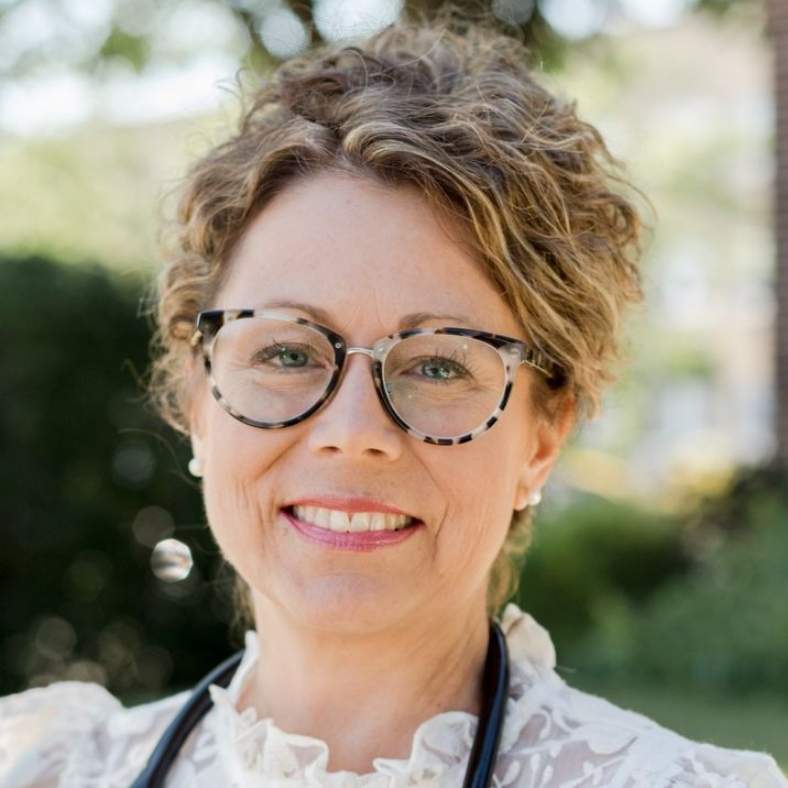
Full Transcript Introduction to Prolozone and Ozone Therapy 0:00 It stands for intraosseous therapy, and I don't think there are many people in the country doing it. 0:04 We had a physician from Russia come over to Miami one year for one of our master ozone groups, and he did a day of training for us, 0:10 and it was fascinating. 0:11 And, you know, he shared his own experience that this treatment was helping about 90% of back pain, whether it was low back pain, 0:18 SI joint, thoracic pain. 0:20 And the way that it works is there's this bastion's plexus, which is the vessels that surround the spine that help to feed the spine, 0:27 but also pull out toxins and inflammation. 0:31 And when that kind of plexus of arteries and veins gets a little clogged up with inflammation, that can really increase pain and make it hard for people 0:39 to heal. 0:41 Your health is shaped by more than symptoms. 0:44 Through real stories and expert insights, we explore how your genetics, environment, and daily choices affect your wellbeing. 0:53 We uncover root causes and share practical tools to help you find the healing you need. 0:58 Welcome to the Forum Health Integrative Medicine Podcast. 1:04 Welcome to the Forum Health Integrative Medicine podcast. 1:06 I'm your host, Amanda Grabeau. 1:09 I've been immersed in the functional and integrative medicine space for over a decade as a researcher, business consultant, 1:15 and certified coach. 1:16 I've been helping practitioners and patients decode the why behind chronic health patterns and how to unlock optimal health. 1:23 Today I'm joined by Dr. 1:24 Kristin Reynolds, a board certified physician with Forum Health serving the Wisconsin-Milwaukee area. 1:29 Dr. 1:30 Reynolds is known for her expertise in treating complex chronic conditions, including Lyme disease, mold illness, and chronic fatigue. 1:37 Using an integrative approach that blends advanced diagnostic with cutting edge therapies, her own family's health journey led her to explore ozone and 1:46 regenerative treatments, which she now uses to help patients restore function and vitality. 1:51 In this episode, we're talking about prolozone therapy, what it is, how it works, and when it can be a game changer for pain and recovery. 1:59 Let's jump into my conversation with Dr. 2:01 Reynolds. 2:02 Welcome back. 2:03 Thanks for joining us for this episode of the Integrative Medicine Podcast. 2:07 I'm Amanda, your host, and I'm joined with Dr. 2:09 Kristin Reynolds in our Milwaukee locations in Wisconsin. 2:13 Thank you so much for joining us today. 2:15 I'm so excited to have you on. 2:17 Today, we are talking about prolozone and ozone therapy. 2:21 I love this therapy and I love this topic, so I'm so excited to dive in. 2:25 Ozone is usually thought of as a toxic gas, but in medicine, carefully controlled ozone therapies are being used for chronic pain, 2:34 joint degeneration, infections, and even immune support. 2:37 Today, we'll dig into prolozone therapy, what it is, how it works, and when it may be worth considering. 2:44 So, Dr. 2:45 Reynolds, Let's talk about prolozone. 2:47 Sure. 2:48 What is it? 2:49 Okay, so prolozone is kind of a combination of two words.
What Prolozone Is and How Medical Ozone Works 2:53 Some people have heard of prolotherapy, which is injection of an inert substance into like a soft tissue. 2:58 And then Dr. 2:59 Schallenberger added the word ozone in there, so prolozone. 3:02 So it's basically a combination of an injection of a substance plus the ozone gas into a joint or a soft tissue for healing. 3:09 Awesome. 3:13 You know, a lot of people consider ozone as a pollutant, but we're talking about injecting this into the body right now. 3:19 So how is medical ozone different and safe when used clinically? 3:24 Yeah. 3:26 So ozone is a gas made of three oxygen molecules, and people think about it in the atmosphere on a bad air quality day. 3:33 And it's true, it's a marker for pollution, but when made medically and used appropriately, it has a lot of healing properties and it's very safe. 3:41 Ozone kills pathogens. 3:42 It kills bacteria, virus, fungus, yeast, mold, parasites. 3:45 It stimulates stem cell production and migration. 3:48 Obviously, stem cells can be very helpful for healing damaged tissue. 3:52 And ozone turns on detoxification pathways, so that can help to pull out inflammation from joints or tissues. 3:58 That's a lot of stuff. 3:59 That's a lot of stuff, yeah. 4:00 And there's more, but those are the big three. 4:03 Wow. 4:04 And in your practice, you do prozone injections into the joints in different areas, too. 4:10 You also use ozone therapy as an IV. 4:15 Yes. 4:16 What's the difference between prozone being injected versus being delivered through IV? 4:21 Yeah. 4:24 For intravenous, we're not injecting the gas directly into the vein. 4:28 We're actually taking blood out, ozonating the blood, and then putting it back in. 4:32 And ozone has a very short half-life. 4:33 It dissipates in about 10 to 20 seconds. 4:36 So it's not really ozone that goes back into the body in the vein. 4:40 You know, when we're doing intravenously, it's more the downstream products, which are called ozonides. 4:45 And those are what have the beneficial effects that I was talking about. 4:48 Yeah. 4:48 Yeah. 4:49 And so it's very safe and we certainly can talk about that if you'd like. 4:53 And then prolozone, when you're injecting it more into a localized area like a knee for arthritis, it's going to act a little bit more locally for healing 5:03 versus the systemic application is more for systemic illnesses like autoimmune conditions, persistent Lyme, tick-borne, those types of things. 5:12 I did check with my dad first. 5:15 My dad is actually a patient of Dr. 5:17 Reynolds and he does high dose ozone IV therapy with you and it has been such a huge change for him. 5:27 He had a lot of underlying systemic inflammation in his body and he's getting feeling back in his feet and he's walking.
Joint Pain, Arthritis, and Treatment Applications 5:37 It's fantastic. 5:38 It's been so, so powerful to see him, which is why I'm so excited to have you talking about this is because I've seen it in real life. 5:46 Really make an impact on my family personally. 5:50 So speaking of that, what kind of conditions or pain syndromes respond best to Prolizone? 5:56 So, I think the number one thing we're using Prozone for is joint pain. 6:02 And that could be, you know, knee, shoulder, hip, any joint really. 6:06 I mean, I do, you know, TMJ, the tougher my gibber joint, very small joints, but probably most commonly we're doing some of the bigger joints. 6:13 And usually that's arthritis or degenerative joint disease. 6:17 But it could be a, you know, partial meniscal tear. 6:19 You know, it could be other joint and cartilage issues. 6:22 but really, you know, accelerates the healing process and can be, you know, very helpful in those situations. 6:26 That's probably the most common thing that we use it for. 6:28 There are some situations where people, for instance, have like a chronic or persistent tick-borne illness, Bartonella, and some of these other bugs will 6:36 like to settle in a joint and so sometimes we will use it and people will get, in those situations, they'll get like swollen joints and we'll have to like 6:44 pull some fluid off and then we'll add a little bit of prolozonin and that can help. 6:49 At Forum Health, we uncover the why behind your symptoms. 6:54 With advanced lab testing, hormone optimization, and cutting-edge therapies, we help you heal and perform your best. 7:02 And now, through shopforumhealth.com, you can access physician-grade supplements trusted by our providers, supporting everything from adrenal health to 7:12 focus and longevity. 7:14 Learn more at forumhealth.com and explore supplements at shopforumhealth.com. 7:22 Wow. 7:23 Yeah. 7:23 So it can be used in that, but mostly it's like joint pain arthritis. 7:26 Okay. 7:26 Cool. 7:27 Awesome. 7:28 I did an interesting therapy with you in your office with ozone called IOT. 7:35 So a little bit different than pro-ozone, but you did. 7:39 I have a low chronic degenerative disc disease in my low back. 7:43 And so I had a little bit of a flare up one day. 7:45 And Dr. 7:47 Reynolds was wonderful to do a little bit of ozone directly into my back. 7:54 So I don't know exactly. 7:57 So you did IOT on me. 7:59 Yeah. 8:01 And I'll kind of explain it. 8:02 It stands for intraosseous therapy, and I don't think there are many people in the country doing it. 8:06 We had a physician from Russia come over to Miami one year for one of our master ozone groups, and he did a day of training for us, 8:13 and it was fascinating. 8:15 And he shared his own experience that this treatment was helping about 90% of back pain, whether it was low back pain, SI joint, 8:23 thoracic pain. 8:24 And the way that it works is there's this bastion's plexus, which is the vessels that surround the spine that help to feed the spine, 8:31 but also pull out toxins and inflammation. 8:35 And when that kind of plexus of arteries and veins gets a little clogged up with inflammation, That can really increase pain and make it hard for people 8:44 to heal. 8:46 And by doing this technique, and I'll give you my blog on it in a second, but IoT is basically putting a needle into the posterior superior iliac spine,
Intraosseous Therapy for Back and SI Joint Pain 8:57 which is that bone when you put your hands on your hips that, you know, your thumb rests on. 9:01 It's super easy to access. 9:03 I mean, you don't need, like, x-ray imaging. 9:05 It's right there. 9:07 And it's pretty painless. 9:09 You know, we numb it up with... 9:10 I can testify to that. 9:12 Yeah, I mean, you really didn't have any pain. 9:13 No, so easy. 9:14 I just laid on my back and I let it happen. 9:18 Yeah, yeah. 9:19 And so once the needle goes in there, it's almost like a pressure valve being released, and it helps to release that pressure in the bastion's plexus. 9:27 And then there's a couple other things we can add on to that. 9:29 We can do a little... 9:30 I always forget the name for the treatment. 9:33 I want to call it balayage, but that's a hair thing. 9:37 on my blog. 9:38 It was basically like we push in a solution a little bit and then kind of pull out a little bit of blood from that area mixed around, 9:45 push back in. 9:47 And that is also providing like some nutrients for the bastion's plexus. 9:52 And then the final thing, I think we did that on you, was we dripped in some ozone saline. 9:57 And that just really, you know, it's able, just by getting into that one little needle on that bone, it cleanses the whole spine. 10:05 It's so targeted. 10:06 I mean, it's the ozonated saline going into the spine and clearing out that clutter and helping get rid of... 10:13 Right. 10:13 And to clarify, not right into the spine, but into that vascular plexus that's bathing the spine. 10:20 And so it seems to provide, number one, a pressure release to pull out some inflammation, then number two, that cleansing. 10:28 I just did it on an 80-year-old male who had chronic SI joint pain that was really debilitating and keeping him from doing things, 10:35 and four months out he still tells me he's pain-free, and that was one. 10:40 I think that I was really sore when I was in, and I felt like getting up was, I felt it. 10:47 It felt better when you got up. 10:49 It was so great. 10:52 little bit of a sidetrack there, but it was so good. 10:55 And so if you just search like Forum Health, Reynolds IoT, that blog will pop up and that explains it. 11:01 It's a great blog. 11:03 Yes. 11:03 Find that if you're interested. 11:05 How does Prozone compare with like cortisone injections or even surgery in certain cases? 11:11 Yeah, so go and do a PubMed search of steroid or corticosteroid joint injection and then do a PubMed search of like prolozone or ozone therapy for arthritis 11:22 and you'll find more positive studies on prolozone injections for knee arthritis than you will for steroid injections. 11:30 That's incredible. 11:31 Yeah. 11:31 And, you know, steroids, we really have to be careful with steroids because they're chondrotoxic. 11:34 So they can be toxic to the cartilage and different, you know, the ligaments and in the joint, whereas the ozone has that healing effect. 11:43 So ozone is not only going to decrease inflammation and take away pain, but it's actually going to stimulate a healing response and steroids do not do that. 11:50 No, they just... 11:51 Yeah. 11:51 Masks, the inflammation. 11:52 Masks, the inflammation, yeah. 11:53 And then can have, there's risks associated with them. 11:57 And it doesn't always just stay local. 11:58 I mean, I've had patients who've come in after a local steroid injection and they've had systemic adverse effects. 12:04 So, you know, we have to be careful about that. 12:07 It seems pretty like that's the one you want to do first. 12:10 Well, yeah. 12:10 And so the other thing is it can delay the need for surgery. 12:14 So I have a lot of patients coming in saying, you know, my doctor wants me to get a knee replacement or, you know, whatever. 12:20 And I'm just not ready yet. 12:21 And I kind of want to, you know, punt that down the road a little bit. 12:24 And ProloZone can do that. 12:27 It can kind of push that need down the road, especially if we're catch it before people are bone on bone. 12:31 I mean, if I get people who are, you know, bone on bone arthritis and really at that point where they're needing. 12:36 There's not much there to say. 12:37 stimulate because you kind of need, what happens in those bone-on-bone cases is that you still, even with the ozone or even stem cells and exosomes, 12:45 because those are also adjunct, those are add-on therapies as well, but you need something there to at least stimulate the regenerative properties of these therapies. 12:56 It's a little harder with bone-on-bone, but we've had a lot of folks who we can really push surgery down the road and keep them pain-free. 13:04 So that's been really fun to see. 13:06 And then of course, you know, prolazone, you can add on the stem cells. 13:09 That was my next question. 13:11 Like peptides is a big one, PRP, stem cells, exosomes. 13:15 So we offer those and you offer those in your clinic. 13:19 So you do combine them. 13:20 Are there cases where you would... 13:22 would suggest adding those add-on therapies over other cases, or?
Comparing Prolozone to Steroids and Surgery 13:27 Yeah, that's a good question. 13:28 I mean, if I have somebody with, you know, more severe degenerative joint disease where they're really heading towards surgery, 13:34 I'm probably going to recommend the add-on stem cells plus PRP, and we use a lovely product from Vidipir that's umbilical cord-based, 13:42 not embryonic-based, and that means a lot to many of my patients. 13:47 and ethically sourced, and the FDA watching them really closely in a partnership. 13:52 And so those are great products and I think a lower price point than a lot of the stem cell products that are out there. 13:57 That's great. 13:58 And the options, I think that's just great to have the different options for different people, the different price points, 14:03 and also just the different need, person to person. 14:07 How many sessions does it typically take a patient before they see results? 14:12 So that's a great question. 14:13 As we know, healing depends on a person's age, a person's comorbidities, you know, what other chronic health problems do they have going on? 14:22 What's your diet like? 14:23 You know, all of the integrative and functional medicine foundational pieces. 14:27 So everybody's going to heal a little bit differently. 14:29 I do have people who are one and done. 14:31 They'll come in for like a knee injection and I don't see them again for years. 14:35 But those are usually the 20-somethings who tweak their knee on the soccer field. 14:39 They're young, they have a lot of healing capability. 14:42 And then if people are a little bit more mature and maybe struggling with other comorbidities, maybe the diet's not quite tuned in, 14:50 it sometimes can take a few more. 14:51 So I usually recommend I advise patients to try and wrap their mind around a series of three separate prolozone injections with me, 14:59 separated by about two to three weeks. 15:00 And so we do the first one, get them back and say, hey, you know, what did it feel like when you left here? 15:06 And almost always they have pain relief immediately. 15:08 Part of that's from the prokane, the numbing medication that we use. 15:12 But most of them will still have pain relief or some form of improvement for at least a week or two. 15:18 Sometimes in patients who have more going on, that's going to wear off. 15:22 By the time they get back to me to two or three weeks and they can be a little disappointed that that's worn off, but we add on that second one and it's cumulative. 15:29 Yes, it builds on the first. 15:31 It's a compound effect. 15:33 I think that was a really good point that you made, too. 15:37 There's the acute that this applies to, and then there's the chronic. 15:42 I would also offer up a third category of preventative, too, for those people who are not—I get to be more preventative because I am in this space and 15:57 I know a lot. 15:57 So I actually do preventative prolozone injections in my knees and in my shoulder once a year at least. 16:05 I do have some knee pain here and there and then I'll go and get my acute little need taken care of. 16:11 But for those who have chronic pain, we didn't get here overnight. 16:15 And so we're not going to correct things overnight either. 16:17 And so treatment series are a big component to the success of the long-term success because there is some, many people might feel that immediate relief, 16:28 but it's the treatment series that's going to give you the long-term benefits. 16:32 And so it would typically kind of stack two or three in a row. 16:35 Yeah. 16:36 And then also, if that person is not feeling like they're getting sustained relief by that second or third, that's when I would add on stem cells, 16:44 PRP, that type of thing. 16:47 So we've been talking about prolozone therapy, which is the joint injection form more so.
Treatment Series, Add-Ons, and Other Ozone Delivery Methods 16:54 We talked a little bit. 16:55 I didn't explain it totally, prolozone. 16:57 I mentioned the word was kind of created by Dr. 16:59 Schallberger. 17:00 Initial prolo part is a solution, a liquid solution with prokane for numbing, D vitamins, minerals from the ocean that help with healing, 17:08 and then the ozone gas comes after that. 17:10 Yeah. 17:10 That's how it works. 17:11 I love that. 17:12 And we touched a little bit on the IV ozone. 17:16 Are there other ways of ozone delivery that patients can consider? 17:20 Yes, just about. 17:21 Yeah, there are many. 17:23 My two favorite are ear and nasal, but there's also rectal and vaginal. 17:29 I mean, just about any orifice can put ozone in. 17:32 Oral. 17:33 Yes, yeah. 17:37 A lot of people now are using ozonated glycerin as a big thing that's starting, and that could be something that you swallow or that you do like a mouth rinse. 17:46 Some people do drink ozonated water. 17:48 I guess I have a little bit of concerns about the microbiome. 17:50 I just want to be a little bit careful about that with people. 17:54 Proceed with caution. 17:55 Yeah, or work with somebody. 17:58 Ask questions. 17:59 Yeah, and make sure you're supporting the microbiome and everything. 18:01 Ear ozone is one of my favorites, and that's where we put a stethoscope-like attachment in the ear, and we trickle ozone into the ear, 18:09 and it diffuses across the tympanic membrane and really can go into the inner ear. 18:15 I think of it as anything kind of head and neck. 18:17 So tinnitus and vertigo are two very difficult to treat conditions in mainstream medicine. 18:22 We don't have a lot for them, but we have about a 70% efficacy with aerosol for vertigo, which is dizziness, or tinnitus, 18:31 which is that loud ringing that people get in their ear, and it's very annoying. 18:34 It can be really debilitating for people, and so we have about a 70% success rate using aerosol for those two things. 18:39 And then anything head or neck, so if like you feel a cold coming on or you got some seasonal allergies, your ozone works very nice for that. 18:46 Very nice. 18:47 I love that. 18:48 And then I mentioned the nasal ozone. 18:50 I mean, the one thing you usually don't want to do with ozone is breathe it because it can be toxic to the lungs. 18:56 However, if you trickle ozone through olive oil, the polyphenols in the olive oil grab onto the toxic component of the ozone and make it safe to breathe. 19:05 We do the olive oil, nasal ozone at our clinic. 19:08 Who, if, why would I want nasal? 19:10 Or what would I... 19:10 Yeah, why would I want nasal? 19:11 Lung stuff, you know, cough, like a post-viral cough. 19:14 Got it. 19:14 Or, you know, if you're in the midst of a bronchitis or COVID infection, that can be helpful. 19:20 Okay, wonderful. 19:22 For patients listening who are curious, how can they find a qualified ozone provider? 19:26 It sounds like, you know, we're talking a lot about this and proceed with caution and stuff. 19:31 You want somebody who understands ozone and you as an individual patient as well. 19:38 So how can our listeners find a qualified ozone provider? 19:42 What are the trainings or certifications they should be on the lookout for? 19:46 Well, I mean, I think Forum Health in general has a lot of practitioners who've been doing this for many years who are skilled, 19:52 who know what they're doing. 19:53 There is an organization called AAOT, American Academy of Ozone Therapy, and that's Dr. 19:58 Schallenberger's group. 19:59 And he's got, I think, a certification program through there. 20:01 But I'm going to admit, I went to the training, but I never took the time to do the certification because who does time? 20:05 So you're not going to find me on there. 20:07 So I think just do your research. 20:09 And your experience speaks for itself. 20:11 Your results, your patients, it speaks for itself. 20:14 Yeah, I think so. 20:15 Wonderful. 20:16 I'm so happy that we had you on here today. 20:18 This is such a great therapy for patients. 20:21 I know I've seen it work for myself and other people of my family. 20:25 I've heard so many great testimonials from your patients. 20:28 I have the opportunity to be in your clinic on a regular basis, and it's incredible to see the journey that people are on with you. 20:37 Prozone is a form of regenerative injections that uses medical ozone to reduce pain and support healing in joints and tissues.
Finding a Qualified Ozone Provider and Closing Remarks 20:45 The early research shows promise, especially for arthritis and chronic pain, it's not the same as environmental ozone. 20:52 It's carefully dosed and administered by trained clinicians. 20:55 For patients, it may be an option when standard injections or medications aren't enough. 21:02 We offer this at our Milwaukee locations and in other locations across the country. 21:10 How can patients find you? 21:12 Oh, that's a great question. 21:14 Look at us first on our Forum Health website. 21:18 Find a provider and you can look for Dr. 21:21 Kristin Reynolds. 21:22 She is in our Mequon and our Brookfield locations. 21:25 Thank you for that. 21:25 You're welcome. 21:27 Have a great rest of your day and thank you so much for joining us. 21:30 I can't wait to have you back on the podcast for more. 21:32 Great. 21:33 Thank you. 21:33 Stay tuned for next week's episode. 21:37 Thank you for joining us on the Forum Health Integrative Medicine podcast. 21:42 Each episode, we help you understand your health from every angle and inspire your lifelong wellness journey. 21:49 Follow the show, share it with someone who needs hope, leave a review, and take the next step toward feeling your best at forumhealth.com.
Comments