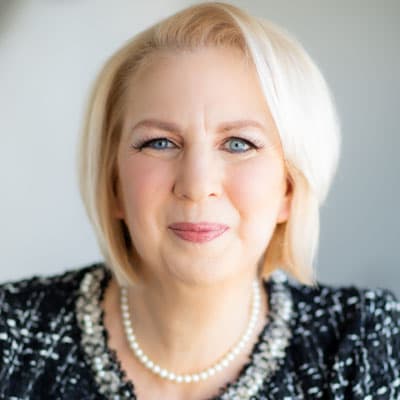
Full Transcript 0:03 Welcome everybody to this episode of Small Steps, Big Results. 0:08 Today we are joined by Dr. 0:10 Audrey Schnell. 0:12 Dr Audrey Schnell is a coach and a speaker who helps high achieving professionals stop getting in their own way and have health, 0:18 wealth, and happiness. 0:20 With a background in clinical psychology and research, Audrey brings a rare blend of rigorous science and practical insight into personal growth. 0:29 She and her husband homestead on a 117 acre farm in rural West Virginia. 0:35 Welcome Dr. 0:36 Audrey. 0:36 Thank you. 0:37 thank you so much for having me Monica. 0:40 I appreciate the wonderful introduction. 0:44 i'm so excited to have you here today to talk to our audience about you know how do you stop stopping yourself you're one of your specialties is stopping self-sabotage. 0:53 So I'm really looking forward to this conversation, especially when we're trying to get people back into movement so they can build this better life and 1:01 how we can get there. 1:02 So, you know, what is self-sabotage really? 1:08 Really self sabotage, oddly enough, should be titled self survival because what it really is Where it comes from is self-protection. 1:20 Any change, even if it's change we want, is scary. 1:28 is the unknown. 1:29 And so a part of us protects ourselves from any change which is seen as dangerous. 1:37 It's so counterintuitive, I know, because we can be like, but I want to grow, success, working out, eating healthier. 1:47 Why do I keep doing the exact opposite? 1:51 And once we understand that it's not You understand it's not a character flaw, it is not weakness, not pathology. 2:02 It's our primitive brain trying to keep us safe. 2:06 And we need to start with ways to almost sometimes trick ourselves. 2:14 into doing the things we actually want to do. 2:17 And it fits so beautifully with what you talk about because those small steps are much less threatening than, oh, I'm gonna run a 10K. 2:33 Sounds like, Oh my God, don't take me there. 2:37 But I just gonna walk around the block every day doesn't sound so scary. 2:44 And then we can build on it. 2:46 So it's exactly what you, I was almost going to say preach, but teach as well. 2:57 It's not about just what we know. 2:59 Let me give you a sort of a crazy example. 3:09 So if you say to, you know, your clients, people you want to work with, I want you to find time to exercise. 3:20 People will go, oh, well, that means at least 20, 30 minutes. 3:24 I don't have that. 3:26 And it just puts up this wall that keeps them from moving forward, keeps you from But if you, again, say, start small, I just want you to spend three minutes 3:39 standing on one leg every day to increase your balance, that's not so threatening. 3:45 That's so huge. 3:47 So when we talk in just generalities like exercise, it can be really intimidating. 3:56 But, if we're really specific, because, frankly, everybody can find three to do something, even if it's standing on one leg while you're cooking. 4:11 So I'll interject something funny so I don't sound so serious. 4:15 You know, we live on a farm as you said, so there's a lot of very physical work. 4:24 carrying five gallon jugs of gasoline or 50 pound bags of bird feed. 4:31 And so, you know, everybody talks about CrossFit. 4:35 So I've nicknamed this Farm Fit. 4:38 What I do is FarmFit, so really working in these things. 4:44 If it weren't for having had a strength routine all these years, I wouldn't be able to do the things that I'm able. 4:57 To do and and you know we just saw each other and I said it was because of. 5:05 of moving my body, listening to your advice about what to do, enabled me at, I'll say at 69, to a pretty challenging hiking and canoe trip with my husband. 5:19 So I can do the things I wanna do because I started small. 5:26 Yeah, I totally agree. 5:28 That's what so much of it is about, right? 5:30 Is building this life that we wanna build and being able to live the life the way we want. 5:34 You know, we might not wanna be a cross-fitter, a farm-fitter, but maybe we'd wanna get down on the ground and play with our grandkids, 5:41 chase them all around the park. 5:42 I was thinking about this yesterday, actually. 5:47 great grandma who unfortunately passed away before I was born. 5:51 She was like swimming in the ocean at like 90 or 89, whatever year it was that she passed way, she had been gone swimming the oceans. 6:01 So no one really expected that. 6:03 You know, you know she past away, but it is like, that's what I want. 6:07 Her daughter, so my grandma, and she's like oh, I haven't even walked out to the Ocean in years. 6:12 And she has like a property that I don't want that. 6:18 I want it to be like, oh, I got to go. 6:20 Maybe my swimming in the ocean isn't getting tumbled in waves like it normally is. 6:24 But to able to do those things and to live that life, it hit me all of a sudden that that's what I wanted. 6:33 And you're right about the like, it's so intimidating to think I have this big goal and to not, if you've never done it before, 6:42 especially, or if it has been years, It's really, really scary to try to like see those steps. 6:47 Cause you don't know what they are. 6:48 No. 6:48 Yeah. 6:50 And it was overwhelming. 6:52 It is so overwhelming, I remember working out with a trainer for a while and I would just be like shaking on my way to my sessions because the stuff he 7:03 was asking me to do was really really scary and hard and awful and I would like end half the sessions in tears and that's not what you want like so I stopped 7:12 going eventually it was like I can't do this anymore No, it's overwhelming when you don't know where to start. 7:17 There are so many options. 7:18 Even when I just look at like, what is it? 7:21 The silver sneakers program. 7:23 It's like there's 50 classes to choose from. 7:26 Where do you start? 7:28 And, you know, we know because it, all you have to do is pick up any magazine or news and know that our health determines our independence as we get older. 7:42 No joke. 7:43 You know? 7:44 Health is everything as you age and that sense of independence. 7:49 But it's also about having fun, about doing the things that you want to do. 7:56 If I want travel and walk around cities in Europe, I know I can walk. 8:04 I knew I could do that. 8:08 And it's obviously very fortunate, but it is also because I'm going to back up for a minute and just say something that I don't think is controversial. 8:23 Is that when we get busy, the first thing that goes out the window because it feels optional is self-care. 8:33 And exercise is self-care. 8:37 Taking care of your body is the essence of self care. 8:42 And so women, especially women but men too, need to learn that it's a non-negotiable to take care whatever that workout looks like, 9:02 whether it's just walking or yes, we should be doing some strength training. 9:07 Yes, our nutrition should good. 9:10 Human beings are at a disadvantage because we respond to immediate gratification. 9:19 And immediate let me eat the pint of Ben & Jerry's, which I think will make me feel better. 9:28 A salad is not going to make them feel bad. 9:31 But so we go for the Ben and Jerry, right? 9:34 Or we binge Netflix instead of going for a 20 minute hike. 9:39 Because that's how we're wired as humans, or that our first inclination. 9:45 So we have to really focus on what's the long term payout. 9:54 What will we lose? 9:57 Everybody talks about, well, just envision the body you want. 10:01 Envision the life you what. 10:03 No, envision a life that you don't want and realize that's the like you're effing going to get if you do not get off your ass. 10:14 It is, it's so much more motivating to me, at least like I think about this life that I don't want. 10:19 Like, like, I talked about my grandma, she honestly is doing very well for I, think she's 94, but she always like in her house, 10:29 just doing nothing. 10:30 And she said, Oh, had a busy day today. 10:31 I had to play bridge. 10:32 Well, her brain is like pretty good. 10:35 Just like. 10:36 Oh. 10:36 Wanna just think I I. 10:37 Don't think. 10:38 Want to be in my house all day. 10:39 Think I want to beat or atleast have the option to go out. 10:42 Right. 10:44 Maybe I wanna be in my house all day when I'm 94, but I want to look forward to having some options to be like, yeah, I did actually go on a walk today 10:51 or the great grandkids came and it wasn't a problem that they were like running all around. 10:57 I didn't just have to sit there. 11:00 The life I don't want is so much scarier than the life, the I mean, life is scary too, But scarrier in a like really motivating way of like I dont want that. 11:14 And so we have to use that knowledge. 11:16 So the first thing is to remember that to get around self-sabotage is, to understand that I'm a human being and this is what's going to happen if I don't 11:33 distract myself, if i don t do the things that get me to do, the thing I want. 11:39 It is small steps. 11:41 Don't start with an overwhelming goal. 11:44 Well, start with a goal, but your first step, literally, and I tell this to my clients all the time, your goal should be outside of your comfort zone, 11:55 or you won't take it. 11:56 And that's a big mistake that I see people make in almost any arena. 12:08 They set a big goal and then they set big scary first step. 12:12 99.9% of the time, that's not gonna work and your body will win. 12:20 You know, it's just like mother nature always wins with the weather. 12:25 Scary enough, your is going to win, try to hold your breath forever. 12:30 It doesn't work. 12:31 Your body's gonna win It's going make you breathe. 12:33 Is going try not to get you do the thing that scary. 12:38 So you have to make it kind of not scary and then build on it. 12:44 So that's number one. 12:45 Yeah, sorry, go ahead. 12:48 Number two, maybe I'll get to a number three too, we'll see. 12:52 But number two. 12:55 is, oh, my power just came back. 12:57 I don't know, it went off again. 12:58 We're having some power issues today, folks. 13:01 This is rural West Virginia. 13:03 Number two is self-care cannot be negotiable. 13:09 It has to be a non-negotiable and it has be defined. 13:14 Rest is not earned. 13:17 Rests and movement are not optional. 13:22 They're necessary. 13:25 And we have to build that in, more on that later. 13:30 But it just, and I'm guilty of this, I am preaching because I so guilty this. 13:37 We think that, oh, I can walk tomorrow, or I could do this next month when life calms down. 13:44 I know your audience, and I my audience. 13:47 Life is not going to calm down, that's not the life we have. 13:52 And it's the not life want. 13:53 We want excitement, we want fun, growth. 13:58 If you're going grow, you have to build rest, not just sleep. 14:04 but rest, movement, rest good nutrition has to be part of the equation or it's just gonna fall apart. 14:14 Yeah, it makes me think of, I don't know, there's like meme that goes around and it something like adulthood is just saying, 14:21 oh, things will calm down in two weeks and then they never do. 14:26 And then the other thing you said that was really interesting that I hadn't thought of in those words before is it has rest has be defined Yeah. 14:36 And that really hit me because I was talking to somebody this week who's been a personal trainer, is now in functional nutrition, 14:43 really, knows what to do, but hasn't done what she's wanting to in terms of lifting weights. 14:49 I wonder how much of it for her specifically is almost decision fatigue. 14:54 that she's got so many other things going on. 14:57 The idea of like putting together a plan in the moment is just really, really difficult. 15:03 So if you have that plan ahead of time, and you haven't written out so that you it's, you know, like the part of your brain that wants to do this, 15:12 makes a plan to accommodate the part of your brain that doesn't. 15:16 You know, whichever power you would think of that, obviously without the scientific terms, we're not going to get to that. 15:22 But you know some of it I think is decision fatigue. 15:26 Like I can't decide how to rest in the moment. 15:28 I'm all over the place. 15:30 No. 15:30 If I have a planned to like, oh okay, like this weekend my rest is going be reading a book on my front porch. 15:37 Yep. 15:38 It's built into your schedule as much as any other meeting. 15:43 And you know, you talked about decision fatigue, not personal growth, but childhood development, the psychology of childhood is we start with rules. 15:59 We don't tell kids well you know you only have to look both ways before you cross the street when you're on a main road. 16:07 No we say look, both, ways, before, you, cross, the, street, all the time. 16:13 It's the same sort of philosophy of why The guy from Apple had a uniform. 16:23 He always wore one color pair of pants and a black shirt or whatever it is. 16:28 Don't waste your time making decisions that can be made ahead of time and can mean rules. 16:36 It's just like when people talk about nutrition. 16:39 If you, in that moment, have to decide, is it the salad or the Ben and Jerry's, you're screwed. 16:47 If you wait till there's temptation, it's gonna win. 16:52 So the best thing to do is have rules, have structure. 16:58 And for those people who say, but I wanna be spontaneous, well, then structure the spontaneity as best you can. 17:07 We're not talking about rigidity, we're talking the easiest way to get started. 17:15 is to have rules and structure and then build on it from there. 17:24 But rules will help decrease the decision fatigue. 17:32 Yes. 17:34 So going back to something you said a little bit, we were talking a bit about staying motivated. 17:40 We talked about structure and rules, getting started. 17:43 So what is the best way to stay, what's the key to staying motivation, really? 17:47 The key is staying motivate is to know you can't stay motivated You can't. 17:55 Motivation is an emotion. 17:58 Emotions come and go. 18:00 The best way to stay motivated is to put the fear of God in you and know that whether you're motivated or not, you do the thing you said you were going 18:13 to do because of the long-term consequences if you don't, I don't know any athlete who is motivated all the time. 18:24 They treat it like a job and you do it now. 18:32 And yes, are there times we don' feel like doing it and we shouldn't? 18:37 I mean, this is gonna sound funny, but a simple rule is if you're sick, if got a fever, If you got bad cold, you know, just be Be, 18:50 use common sense. 18:52 If this is gonna hurt more than it's gonna help, don't do it. 18:56 But that's rarely gonna be the case. 18:59 if you don' feel like doing it is not a reason not to do. 19:04 Right. 19:05 That's like your 13 year old or 15 year-old kid going, I'm not in the mood to clean my room. 19:11 Well, no, you're never in a mood clean your room and we don''t wait till we're in wait till we're in the mood for other things, 19:20 but not for self-care and movement. 19:24 And that's why the structure is important to just say, well, you know, we don't tell people, brush your teeth Monday, Wednesday, 19:34 and Friday. 19:35 No, they brush their teeth every day. 19:37 That's easier to follow, easier, to build in than too much flexibility, especially in is going to hurt you. 19:47 The structure actually helps. 19:50 I'm going do this Monday, Wednesday, and Friday at 10 o'clock is a better strategy. 19:57 And here's why. 19:59 Another reason, not just decision fatigue, but it literally tells your brain what to do. 20:07 Think of your brain again, as we do, like a computer. 20:10 You don't give the computer vague instructions. 20:12 And if anybody has worked with AI, you know, giving it vague instruction does not work. 20:19 So when you give it very specific instructions, at 10 o'clock, Monday, Wednesday, Friday, and Saturday, I'm going to do 20 minutes of walking. 20:31 I've not even going decide where I am going walk. 20:37 at the park, your brain knows what to do. 20:41 There's no confusion. 20:43 Well, let me figure this out. 20:45 Or what did I mean by that? 20:47 It just increases the probability that you're gonna do it. 20:52 Yeah, that makes sense. 20:53 I have a tip I send to my audience. 20:58 It's called do first, feel later. 21:01 We know you are not gonna feel like it, right? 21:03 That's just the thing. 21:04 Every day there's something that's going on. 21:07 just give yourself, I call it a three minute test, like just start for three minutes. 21:11 Yeah. 21:12 And then at least you move for 3 minutes because you know, there's something in there. 21:17 If after three, you're like, well, this is not happening. 21:21 This, then you stopped, right? 21:23 Or you started and you stop and your like okay, got some information, but yeah, the do it. 21:28 It's so easy to get caught up in an all or nothing like well I didn't feel like doing something so I do nothing now. 21:36 Right. 21:36 And I've had to rewire my brain a lot for that. 21:39 Yeah. 21:41 You know, very much under the like, if it's worth doing, it is worth it doing well. 21:44 It's like okay, well, I don't want to do it badly then. 21:47 But at some point I had read an article that was like if It is Worth Doing, It Is Worth doing badly. 21:52 Yes, exactly. 21:53 I was applying to things like skincare and exercise, which was even if you only have 10 minutes, do it for those 10. And it was like, 22:02 that changed my whole perspective on, you know, I still want to do everything well, but like the well that I have is these 10 right? 22:10 It's like it's so different a perspective to know that that little bit you're allowing that a little to count. 22:18 It is so important to keep going because you've allowed, you've allowed it to keep going rather than like allowing yourself to stop because you couldn't 22:28 fulfill the major thing that you wanted. 22:30 Maybe it wasn't actually that of a plan. 22:33 I know people blame. 22:34 Well, if I love that, I'm going to steal that. 22:36 If something's worth doing is worth it. 22:41 Because there's not a problem with perfectionism. 22:45 The problem is people don't have a metric for it. 22:49 So if you only wanna do things, if can do it perfectly, but you don' know what perfectly means or is, then yes, you're gonna sabotage yourself. 23:02 Have a very low bar to start. 23:06 And I think my third tip which kind of actually fits in with everything we're talking about, is words are powerful. 23:14 So I always remember a client from several years ago who hated the word exercise. 23:21 And if we talked about exercise, every defense she had went up. 23:28 I don't like to exercise when we changed it to movement. 23:33 She was fine. 23:40 If exercise or movement or whatever word you've been using makes you want to like crawl back into bed, choose a different word. 23:50 Use a word that, well, do you like to dance, you know, or do like move or you do to have fun? 23:56 I mean, kids naturally want a play. 23:59 If the exercise doesn't work, how about play? 24:03 Does play work? 24:06 And squeezing things in. 24:09 You know, like, you know I can't remember I think with some model. 24:14 I cannot remember who it was I want to say Christie briefly, but it may not have been who said she does squats while she cooks and I thought, 24:20 oh yeah, we could do that. 24:23 You don't just all these little things do add up. 24:28 You know, the old adage about take the stairs, not the elevator park far away from the entrance. 24:34 All those little things do matter, but it's also important if you want to stay healthy to have a plan. 24:45 To have things built in that are really going to keep you agile. 24:53 Walk up the stairs, find a plan. 24:56 And that's why what you do is so brilliant, because people need help getting started. 25:02 Support. 25:06 The thing I have found is that, especially with women, you're carrying so much of, the big buzzword right now is mental load. 25:12 But you are carrying much so of that that the idea of having to add one more thing to all the things in your brain is almost too much. 25:23 So having, having that plan, and having someone help you with the plan. 25:27 I love having somebody help me with a plan love it. 25:31 It's so it's and I'm, you know, even doing what I do, I'd still rather have somebody helped me, with plans. 25:36 So I've not having to come up with it all myself. 25:38 That's right. 25:44 And if you can develop your plan yourself, awesome. 25:48 Really happy for you. 25:49 Don't do it in the moment. 25:50 Do it like, okay, this is my plan for the next week. 25:54 But it is so much better to have that help, whatever it that is helping you do that. 26:02 That's right. 26:03 And for most people, not everybody, but for accountability and support make a difference? 26:12 What do we know about weight loss? 26:15 Two factors that lead to hitting a goal and maintaining a weight-loss goal are support and accountability. 26:24 And most of us don't like to let other people down. 26:27 Mm-hmm. 26:29 So if we're meeting somebody or if announced to our friends, you know, this is my plan for the week, Most of the time that support and accountability helps 26:42 ensure we'll do the thing we said we will do. 26:45 And self-trust is so important. 26:51 When we say, I'm going to do this, walk for 30 minutes every other day, and then we don't do it, the cost isn't just our fitness, 27:07 is self trust. 27:10 And when self-trust starts to go down, it's not pretty. 27:16 It's a not a good thing. 27:17 The less we trust ourselves, the less, we keep our promises to ourselves. 27:24 Then the last we, keep, our, promises, to, ourselves the, less integrity we have, wealth we have, the less everything because we've lost the foundation 27:38 of that self-trust and self esteem. 27:43 We feel like, you know, we feel shitty when we don't keep our word to others and when you don t keep your word And you know, 27:53 that's actually so much of why I talk to people a lot about having like a minimum amount that you're going to do every day, 27:58 even if it's just a little tiny bit, two minutes, five minutes. 28:01 Whatever it is. 28:03 That way you can do that little and have kept your word to yourself. 28:07 Yes. 28:08 Yes, it's not your ideal plan. 28:10 We all know that, right? 28:11 We want to be doing more when we can, but there are days that's just not going to possible for whatever reason. 28:16 You're traveling cross country. 28:18 Your somebody's in the hospital. 28:19 And you're in hospital, you know, like there's so much that we put so pressure on ourselves to do it perfectly every day that having that little bit that 28:28 We can like build up that says, Oh, I did it. 28:31 I Did it again. 28:32 It did. 28:32 Again, again, and again it really that that was building up your self-trust. 28:38 And it's building in the familiarity, the consistency. 28:46 I am not crazy about the word habit, but it just maintains that, making things automatic. 28:57 Yeah, right. 29:00 And, it works. 29:02 It builds that discipline muscle. 29:07 which is, I heard somewhere many years ago that the Bible was misinterpreted. 29:16 It's not the meek who will inherit the earth, it's the disciplined. 29:20 And I thought that actually makes a lot of sense. 29:24 Self-discipline, It it it, very empowering and it gives us self-trust. 29:33 it gives us self-esteem. 29:34 When we do what we say we're gonna do for others and for ourselves, we feel better about ourselves which means we are gonna to do things that make us feel 29:43 that are. 29:45 It's like compound interest. 29:49 You're the expert at this, but it's well, I can't save $10 every day. 29:54 I'm not gonna it. 29:55 Well, what if you saved $1 every? 29:58 Over time, that compounds. 30:03 Yes it does. 30:05 And that's what we're going for is that compound interest. 30:09 Oh it's so true like everything builds on itself and the more you know if you can do more, you're gonna do, more but there are days you just can't but if, 30:19 if tell yourself okay every day I'm gonna, do at least this number and have that number be low enough that you, can not do it. 30:27 That's right. 30:28 Yeah I like I had to use that a few times this last week because I was I'm recovering from this horrible cold, right? 30:35 And that five minutes of walking that I do on my walking pad, it was the worst five minute. 30:47 Like, no, five Minutes is the minimum. 30:49 That's all I got to get through and it will be over and I can go back to bed. 30:52 Yeah. 30:54 It was great and so finally then yesterday I was able like was like, okay husband We're going on a walk and it was the slowest walk we have done in months, 31:04 I think. 31:05 It was like I got to get out of this house and do something other than this five minutes. 31:11 But it was, like, maybe five minute is all I'll be able to do. 31:15 That's right. 31:15 And then you turn around and go back if it hurts too much. 31:20 This isn't about hurting yourself. 31:23 Yes, sometimes it does hurt, but it's hurt in a way that leads to growth, not to injury. 31:34 Right, the discomfort versus the like pain necessary kind of. 31:39 Right. 31:39 You know, I had a very classic example of this. 31:43 I was having trouble with my shoulder and she had chiropractor work on me and you know she would do this really painful thing. 31:54 And she's like, now I've got to do for three seconds and I'm like God just get to one, please get one as fast as you can. 32:02 And it hurt, it hurts, but like my range of movement was so significantly increased when she was done. 32:11 I'm like, I'll do that again, i'll hurt for three seconds. 32:17 It was worth it. 32:20 And you don't have to hurt. 32:21 No pain, no gain is so not, is that 80s or 90s? 32:27 I remember it so maybe it doesn't hurt You know, that's not the only criteria. 32:34 Could it, or if you really want to build muscle, could it be strenuous and hard? 32:39 Yeah, but it doesn't have to be. 32:40 That's for everyone. 32:43 You get to choose what you want do, how you wanna feel, and whether you just wanna maintain where you're at or whatever the goal, 32:55 it's just to do it. 32:57 Yeah. 33:01 What is the was the Nike commercial just do it something. 33:05 It's true. 33:10 Yes, the hard truth of like whatever it is that you're trying to get you have to take the action to Get there. 33:15 You can't. 33:15 Yeah, it's not just going to come to you. 33:18 No. 33:18 And trust me, I wish it would come to me. 33:19 I would like to win the lottery. 33:21 Yes. 33:22 But I also don't play the lotteries. 33:24 No, it's not going to happen. 33:26 Not going happen? 33:27 I don' think I have any rich relatives who are about to die either. 33:31 You know, for a lot of, you know personal growth focuses on be the person you want to be. 33:40 Then you'll do the things you wanna do. 33:42 Yeah. 33:44 Have the I have a different philosophy most of the time. 33:50 Not that the B do have isn't important, but I think we often actually need to switch it. 33:59 I had a do B have model. 34:04 Do the things that reinforce who you wanna be to have the thing you want. 34:11 Human beings, we interpret behavior. 34:17 Yeah. 34:18 And so, if you do the things that you want to do, If you wanna be a person who works out, work out and then you'll be the person, 34:31 who will work it out. 34:33 Years ago, when I started practicing yoga, I distinctly remember my yoga teacher saying, We were like, oh, we're not yogis. 34:45 That's the guy in India, in a loin cloth. 34:48 And she's like if you practice yoga, you're a yogi. 34:53 It, and I thought, yeah, do the things. 34:56 If you run, your a runner. 35:00 Whatever it is, if read you are a reader. 35:03 You exercise, You're an exerciser. 35:08 And that builds the evidence that then reinforces the behavior, which then keeps you going. 35:16 Right. 35:17 So we're focusing on the action, like the actual behavior or the actions, the things that you're wanting to do before trying to change your mindset. 35:26 Am I interpreting that? 35:28 Yeah. 35:29 I'll give you a sort of an off the wall example. 35:32 If you've ever heard the phrase, just get your foot in the door, Yeah, it's it came from door to door salesman, and it has been around forever. 35:46 And here's the psychology behind it. 35:48 The guy knocks on your door, right? 35:51 You know it is going to be a salesmen. 35:53 Your initial thought is, oh, I don't want to talk to this guy. 35:56 But you open the door and you start talking to him and he and let him in. 36:03 because of something he said. 36:05 So he got his foot in the door. 36:07 Here's what happens. 36:10 Oh, I let him in. 36:11 I must have wanted to talk to him because we evaluate our behavior and our behaviour changes our mind or can change our minds. 36:25 When you do the thing, it reinforces that, yeah, this is who I am. 36:31 This is what I wanted So, you know, that, just go for three minutes is akin to just get your foot in the door. 36:42 Shit. 36:45 Yeah, I mean, it makes sense, right? 36:46 It's like, okay, want to be a runner, but, or I want be moving outside, for example. 36:54 Oh, so I went and walked around outside for 3 minutes. 36:56 Okay. 36:58 Great. 36:58 Like then, like yes, Yeah, that makes- It's identity. 37:05 It reinforces our identity of who we are. 37:10 And so the smallest things we can do that are in alignment with who want to be, because it's really hard to go, I'm a runner, 37:21 if you're not running. 37:22 Yeah. 37:24 Yep. 37:25 I work out, it is really to do if your not working out. 37:29 But if you can consistently or even inconsistently start to do the behavior, it reinforces the being piece, which then keeps that growth moving in the 37:43 right direction. 37:48 No, it makes so much sense. 37:49 Cause like, you know, part of this series, right, is helping build women, helping women build the life they want so that it can be fun and joyful again. 37:59 Right. 37:59 We're trying to go out and like live these lives, but it's hard to be doing those fun things if you're not doing fun, if that makes sense? 38:09 If you are tired, energy begets energy. 38:11 If we're tired. 38:13 Sometimes we need the movement to relax so that we do sleep, so we that do rest, we take care of ourselves. 38:24 Yeah, that was the reason I had to get out yesterday. 38:26 It was like, you're going to have to come with me, which normally he doesn't because we just do different things and that's fine, 38:32 but it was, like you have come in case something happens. 38:35 I can't make it back. 38:37 Right, it's like I don't know what this is going look like. 38:43 So it was, yeah, it, was good to like get out, but it like, Oh, and then I felt like I could feel things settle. 38:49 Yep. 38:50 So I was like okay, now I've like gotten some like energy into the right place so I can go and do some other things that I wanted to do. 38:58 Yeah. 38:58 It makes a huge difference once you're like doing it and just to start doing. 39:03 There's so many barriers. 39:05 Let's try to get as few in there as possible. 39:08 Because you're, it's just, so hard. 39:12 It's hard to change and that's okay. 39:14 That's why we're trying to like figure out how to do it in a way that like will allow you to. 39:18 And that what this is all about today. 39:23 Well, Dr. 39:24 Audrey, thank you so much for this. 39:26 This has been awesome. 39:27 You are welcome. 39:29 I understand you have a gift for our audience today? 39:32 Yes, I do. 39:34 It is a win every day PDF. 39:37 And it goes back to what I talked about earlier. 39:41 That's self-trust. 39:42 Self-Trust comes from having good boundaries, those internal boundaries. 39:49 So my win everyday is about 10 boundary practices to reinforce health, wealth, and happiness and having fun. 40:01 Awesome. 40:02 Well, we will be sure that will go out in the link at the bottom of the email that you got this email. 40:07 So I look forward to that. 40:08 And thank you again for joining me today. 40:11 It was great. 40:12 Thank you. 40:13 I was a privilege to be here. 40:15 Awesome. 40:16 Okay, everybody, that's it for this session of Small Steps, Big Results. 40:21 We will see you next time. 40:22 Make sure you get your link in it in email, thanks. 40:25 Bye.
Comments