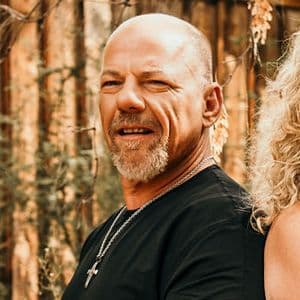
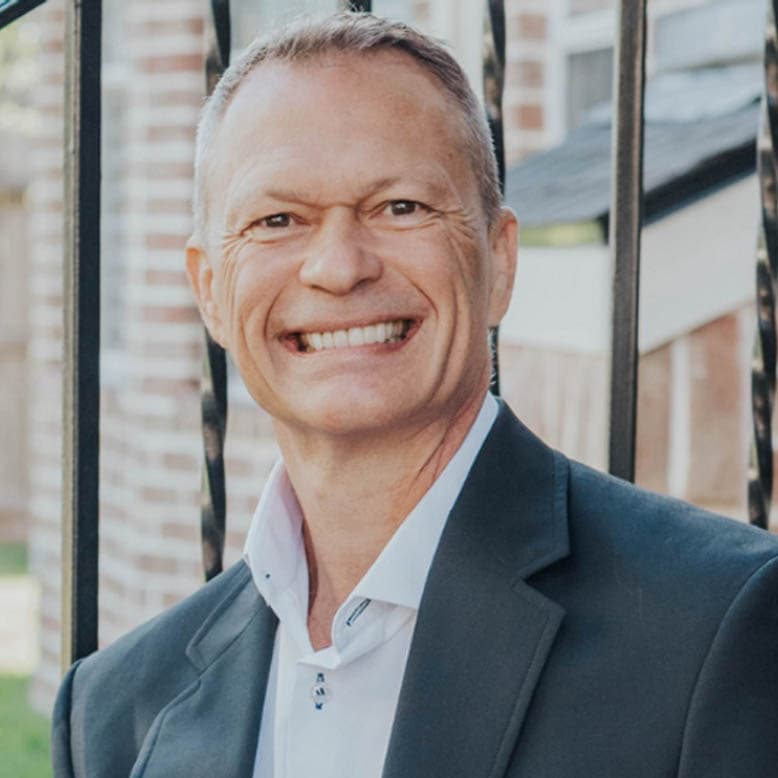
Full Transcript Podcast Introduction and Guest Welcome 0:00 I came to realize early on and I'll tell the evolution of this. 0:04 You know, when I was originally in clinical practice, I would ask myself the question, what is the one thing that I could do for this patient that would 0:11 get us the most bang for the buck? 0:13 You know, and then I had a mentor that sat me down and said, Bob, that's not a bad question, but let me rephrase it. 0:19 Aren't you really asking what is the least I can do for that patient to get the most? 0:25 He said, what if you asked, what's the most I could do? 0:28 And it changed everything for me, because instead of me thinking people wanted minimal, which they want minimal effort, they always wanted maximal results. 0:39 So what if we pushed them hard, realizing that bodies respond to frequency, duration, intensity, quality, and timing of stimuli with comprehensive nutrition 0:47 to support every hole in their chemistry that we can see? 0:52 Welcome to the Holistic Truth Podcast. 0:54 I'm Jamie Dorley, CEO of Nutritional Frontiers. 0:57 And I'm Christine Genovese, creator of the Soul Intelligence Method. 1:01 We're here to help you break through chronic disease and dysfunction physically, mentally, emotionally, and energetically. 1:08 with real proven strategies, protocols, and tools you can use in your practice today. 1:13 Hello, everyone, and welcome back. 1:15 We're live at the Holistic Truth, your number one podcast for wellness and natural healing. 1:21 I'm your host today, Jamie Dorley. 1:23 I'm CEO and owner of Nutritional Frontiers, where we're making the world healthy with my wonderful, beautiful, and talented co-host, 1:33 the one and only, our chief growth officer. 1:35 Welcome back, Christine Genovese. 1:38 Thank you so much, Jamie. 1:40 I am fired up today. 1:41 The person we have who is going to be with us today sharing is never short of energy. 1:48 He brings it every time and I am so fired up to actually have them all to ourselves on The Holistic Truth. 1:55 Me too. 1:55 He's not only a brand ambassador for Nutritional Frontiers, a mentor, a colleague, a friend. 2:02 This guy has been one of the most sought after international speakers. 2:06 I know he's trained over 10,000 natural healthcare professionals in the last 30 plus years. 2:12 I remember when I first saw him speak, he was doing the tour with Dr. 2:17 Jeff Bland, and they were doing an incredible job on their weekend tours for years. 2:22 He's been the featured keynote speaker for the Swiss Conference. 2:27 He's worked with the best of them in the field, including, as I mentioned, Dr. 2:31 Blam, but also one of my favorites is Charles Poliquin from Penn State. 2:36 So he's been big supporter of Nutritional Frontiers. 2:41 He's one of the top members of the Organo Organic Coffee and a wealth of not only knowledge, but generosity. 2:49 So by training, he's a diplomat. 2:55 and he does applied kinesiology, chiropractic. 2:59 He's done it all out there, CCN. 3:03 One of our most sought after speakers and he has such a huge following that we're really blessed to have him on the show today. 3:10 So let's welcome Dr. 3:11 Bob Rakowski. 3:13 How are we doing, Bob? 3:14 Well, thank you both. 3:15 I like to say that I'm epic and getting epic-er, so I'll even make up that word. 3:19 Life is so good. 3:22 It just keeps getting better. 3:23 And thank you for nourishing and cleaning the world like only, well, like only Nutritional Frontiers does.
SPMs and Inflammation Support 3:29 I don't know if you're the only one that can, but boy, you've got the highest quality standards, the best formulators, the best delivery system. 3:38 And it's really, really a no-brainer. 3:40 When people really see what you have and how you impact the world, it's easy to partner with you. 3:45 So I'm honored to be your friend, your ambassador, and now your guest on this podcast. 3:51 Well, thanks so much. 3:51 We're so excited to have you on today and you know, I was doing some prep for the show and you know, I simply have to show people is 34 seconds of Dr. 4:00 Bob at our professional training event in Tampa, Florida on the pirate ship where you kind of summed it all up and I like to share that with people because 4:10 it makes me feel so proud and it gets to the deeper level because what you tell everyone is Not only do you like our detox products, 4:20 right? 4:20 The Ultimate Shake and the Greens, but you mentioned like one of the biggest differentiators in the last 25 years has been the SPMs. 4:29 And then not to forget about, well, it's girls and guys, but you know, not to forget about our team with customer service because we take a lot of pride 4:37 in that. 4:37 I do a lot of traveling. 4:39 They've forgotten the customer in service at often on my travel. 4:45 So the fact that you acknowledge them is very exciting. 4:47 So maybe that's a great part because I know over the years you focus on these magnificent seven, right? 4:54 You know, everything from think right and poop right to sleep right to move right to think right to drink right and eat right. 5:04 And, you know, you always say detoxify in a healthy way every day and the body's solution to pollution is dilution. 5:11 Just tell us maybe a little about your practice now. 5:13 I know you've been practicing in Houston, Texas. 5:16 You moved into a new facility or in the process of moving. 5:19 So maybe you can share a little bit more light on that and then we can get some of your deeper research. 5:24 Yeah, well, 33 years now in enjoying every day of practice. 5:29 You know, it's rare that I have a hiccup. 5:31 I had a great high level patient in this morning and we were talking, we both love our careers. 5:36 And he says, you know, occasionally I'm taxed, but I never don't like what I do. 5:40 And that's true of me. 5:42 You know, I'm blessed with such a diverse patient base from world champions from every major professional sport to the critically ill. 5:50 You know, and I was, I was just saying, you know, I had a out of state fly in today. 5:55 that I had helped a family member beat cancer, you know, maybe a decade ago. 5:59 And this patient had brought another family member in that was, you know, polypharmacy, medical failure. 6:06 And they said, okay, you know, you helped this family member. 6:09 Maybe you can do the same. 6:10 Well, I like to let people know, and no, it's not me doing it. 6:13 It's God and God's pharmacy. 6:15 And you are amazing deliverers of that. 6:18 And I wanted to take a little tangent on the SPM because, you know, I'll talk about that all day, every day. 6:24 This was Nobel Prize nominated research when you start looking at the impact of specialized pro-resolvent mediators, which are downstream molecules from 6:34 essential fatty acids. 6:35 We used to think just omega-3, but there's omega-6 resolvents as well. 6:39 When people have those on board, whatever they're dealing with resolves better and faster. 6:45 And listen, you look at people that are out there in the field working with people, there's now a bunch of companies that offer them, 6:53 but yours seem to deliver the best results by far, and practitioners know it. 6:59 In fact, I had a consult with a friend the other day, and we were talking about protocols. 7:05 And I said, hey, you've got to use the SPMs. 7:07 And he said, no, I used those. 7:09 They didn't work. 7:10 I said, what do you mean they didn't work? 7:11 I've never heard of that. 7:12 He goes, no, they didn't work. 7:13 I said, well, what product did you use? 7:15 Well, it was a different company. 7:16 And I said, try this one. 7:19 He said, why? 7:19 You know, that was a good company. 7:21 I said, try this one. 7:23 Well, now it's a staple in his practice. 7:25 So quality matters. 7:27 And I would have thought high level nutraceutical companies offering SPMs, they'd all probably have a pretty good product, 7:34 but clearly some don't. 7:36 So thanks for leading the way in that category. 7:39 Absolutely. 7:40 What are some of the conditions you use the SPM for? 7:42 Because personally, I've used it for acute pain, you know, chronic, you know, rehab from different types of injuries. 7:51 What are some of the things that you recommended for and what are some of the results you've achieved? 7:55 Well, your listeners might not want the answer, but I use it for anybody that has a pulse. 8:01 Because here's what we know, healthier animals make more resolvins than sick animals. 8:07 And we know if you go by the weak medical model, they're saying that 87% of our population is metabolically unhealthy. 8:16 And Jamie, I'm going to go with, no, 87 is a weak estimate. 8:21 It's probably more like 97, 98. And who's ideal? 8:26 Nobody. 8:27 So when I use the SPMs on the critically ill, I have plenty of them that beat it. 8:32 When I use World Champions, they win more World Champions. 8:35 When I use it on chronic fatigue, chronic inflammation, autoimmunity, depression, cardiovascular, whatever. 8:44 The data is there. 8:46 If someone goes to PubMed.gov, types in resolvins in the condition, I'd be shocked if you didn't find direct evidence that it helps.
Omega Deficiency and Modern Diet Problems 8:53 But certainly if you understand physiology and the web of biochemistry, you put this magic bullet in there and literally the ripple effect will touch the 9:02 whole web in a beautiful way. 9:04 Dr. 9:04 Bob, why do you think this SPMs are the magic elixir? 9:08 Why does it work so well on so many conditions? 9:10 What is it about that ingredient? 9:12 Well, I'm going to tell you, first and foremost, I think that probably 97 plus percent of our population is omega-3 deficient. 9:20 You know, we go back to, you know, how they test this in hunter-gatherer days, I don't know, but they were saying that the ratio of omega-6 to omega-3 9:30 in the diet was about 1.8 to 1. and you look at healthy grass-fed beef, that's the ratio within it there as well. 9:39 And we know that omega-6 is an essential fat, but yet it is an essential fat that can become pro-inflammatory, whereas the omega-3s can become anti-inflammatory. 9:50 People are so deficient in omega-3, Michael Pollan called it the theory of everything. 9:55 He believes that that deficiency keeps the cells from responding ideally, reacting ideally, controlling the inflammatory process ideally, 10:04 so the body gets in a higher stress state. 10:06 Cortisol resistance happens, the body becomes less capable of toning down the inflammatory process, releases more cortisol, 10:14 beats up the brain and body, then even the gut starts getting affected and this poor diet, they're not even absorbing the nutrients. 10:22 Then you look at everything else that goes on and they make bad choices, feeding bad bugs, further intoxicate the system. 10:29 This is a major step on the road to recovery. 10:32 You know, I was at a nutrition lecture 35 years ago and a very elite researcher back then said he felt that there were three major nutritional deficiencies 35 10:42 years ago. 10:43 that were destroying the health of Western world. 10:46 One was omega-3, one was magnesium deficiency, and the third, he felt, was a balance of good microbiome or probiotics. 10:54 And guess what? 10:56 Three and a half decades later, did we fix it? 10:58 No, it's gotten exponentially worse. 11:02 Why? 11:02 Why has it gotten worse? 11:04 Tell me. 11:05 Because we're addicted to bad choices by design. 11:08 You know, listen, there's a reason that they don't let kids take drugs or smoke cigarettes or take alcohol because the developing brain is much more vulnerable 11:18 to addiction. 11:19 So they send these kids home with formula, baby formula, which we know is formula for disaster. 11:25 You know, it's probably responsible for more illness, that and other things they do to kids, which it's not politically correct, 11:31 but becoming more politically correct to talk about that, right? 11:34 We need to protect these babies and these pregnant moms. 11:37 But listen, a lot of times their first meal is not mom's beautiful mother's milk with colostrum, but some sugary formula that gives them a dopamine hit. 11:46 And when they start crying and screaming when that drops, they go, oh crap, I got to give it to them again. 11:52 So they are literally, in many cases, carbohydrate addicts shortly after the womb. 11:59 They keep doing that, getting that insulin spike, storing the fat, getting progressively inflamed, having the brain. 12:05 You know, one of the things with drugs, and Candice Perch said this years ago, She said that sugar is far more addictive than cocaine. 12:13 And if they tried to get it approved today, you know, it probably wouldn't be approved because of its major health risks. 12:20 And let's go to this, 94% of rats prefer processed sugar to cocaine. 12:24 So we look at processed food and now Casey Means, God bless her for being such a good voice, right? 12:29 Good Energy is her book. 12:32 And what she determined or exposed was that when big tobacco got hit by the government for causing cancer with cigarettes, 12:41 they bought up big food and used the same model. 12:44 They put stuff in the food to become addictive. 12:48 And I taught an obesity series 25 years ago. 12:50 Kelly Brownell, Yale University, used these words. 12:53 He said, food in this country is engineered to be addictive. 12:57 And what happens when you're addicted? 12:58 You do more of it. 13:00 And what do we see in the population? 13:02 By their standards, 87% metabolically unhealthy, over 40% obese, over 70% overweight. 13:11 How does this turn around? 13:13 By the way, and that all contributes to chronic disease and infertility, so maybe it corrects itself. 13:18 Maybe the sick die off. 13:19 Well, Dr. 13:20 Bob, you've got so many dynamic presentations that you've shared with us. 13:24 One of the images, as you were talking, that popped in my head was kind of looking at the progression of the TV series family. 13:32 from the 70s all the way up to today or more recent. 13:38 And it was just interesting because they went from very thin and fit to overweight and uncomfortable. 13:47 Well, and then by the way, that's normalized. 13:49 And then if you say something, hey, shouldn't you be more fit? 13:52 You're accused of fat shaming. 13:53 Listen, If we don't move people in a better direction, aren't we morally obligated to do that? 14:02 I mean, especially as a healthcare provider. 14:05 Looking at the number of doctors that are obese and don't talk to their patients about it, there's even doctors that smoke that don't talk to their patients 14:12 about it. 14:13 Day one, if you're smoking, I'm going to tell you you need to quit, because I take a good history. 14:17 Then I'm going to put you on a scale. 14:19 I'm going to measure your height. 14:20 I'm going to measure your weight. 14:21 Why? 14:21 Because most people claim an inch taller and 10 pounds lighter. 14:25 And then I'm going to do a body comp test. 14:27 And we're going to sit down, and we're going to say, OK, how do you feel in your body? 14:31 Where do you think you should be? 14:32 What's an ideal weight for you? 14:34 And believe it or not, I've had a woman come in, 5 foot 2, and morbidly obese. 14:39 And I'll say, what do you think is an ideal weight for you? 14:41 And she'd say, Yeah, I think about 200 pounds. 14:44 It's like, whoa. 14:46 Yeah, yeah. 14:48 This is a true story, Christine. 14:50 So, you know, when you're 265, hey, 200 looks a whole lot better. 14:54 I guess listen, I don't care if you are. 14:58 Serena Williams buff at 5'2", maybe you're going to go $1.35. That would be the strongest female athlete you'd see, and that might even be a little generous. 15:08 I'm afraid to ask, what would you say about 5'5"? 15:13 Yeah, exactly. 15:14 Well, when I would talk about the waist to height ratio, it's so fun because I remember lecturing in South Dakota and when I lecture, 15:24 I like to, at the end of an hour, call on people and say, tell me the most important thing you learned this hour. 15:29 And the guy made the statement from the back of the room. 15:32 He says, I just realized I'm two feet too short. 15:36 Well, here was the beautiful thing. 15:37 He actually got it when I showed how, you know, for many people, the very first visible sign of failing health to them is that extra pound on the scale 15:47 or the pants fit in a little tighter, especially when you gain it around the middle, it's a whole lot worse. 15:53 So I saw him a year later and he had to introduce himself to me because he had lost a hundred pounds. 15:59 He said, Bob, I realized that I wasn't walking the walk, even though I was trying to talk the talk, my credibility with my patients was horrible. 16:08 He says, now that I took control of my own health, I have more confidence. 16:12 encouraging patients to do the same. 16:14 Well, you said something that Jamie remembered, I think. 16:18 Sorry, Jamie, I was just thinking, I wonder if you're thinking about the same quote I'm thinking of, about the height to waist ratio. 16:24 big butt can cancel the big waist or waist to hip ratio? 16:27 I was reviewing your notes on my flight cross country yesterday, and that's one that's been in my head. 16:35 So you say an inch taller and 10 pounds lighter, right? 16:38 I get it. 16:40 So at 68 inches tall, my waist should be no more than 34 inches. 16:46 Now I do have a slightly bigger legs from all the workouts over the years. 16:51 So the jeans are anywhere between 34 and 36, but the waist is loose. 16:56 So I took that to heart when you presented that last month and I wrote that in my book. 17:01 So my goal for 2026 is get it below 34. and keep it there, right? 17:08 Even if the legs are bigger and have to get the waist a little bigger. 17:11 So that really stuck in my head. 17:13 And the other thing that stuck in my head from years ago was the Shake A Day program. 17:18 So I'm a big proponent of that, especially after I travel or do an event. 17:24 I'll do two shakes for that. 17:26 Like this week, I'll do two shakes a day just to kind of catch up.
Body Composition, Waist-to-Height, and Health Credibility 17:30 If you eat a little more on the road, even if the healthy choices you pick, they're going to be a little more rich and flavors and some of the other things 17:39 we don't want. 17:40 So I want you to comment on that. 17:43 little more on the shake a day and you know how do you recommend I know some of your research years ago for diabetes you'd put some people on three four 17:52 five shakes a day so can you tell us a little more because I think the average person out there may look at a smoothie, they may not realize that this 18:03 protein powder base is actually a meal, it's actually food that people can live on. 18:08 If you look back, and you were commenting on this a few minutes ago, this all goes back to the 70s, really two major things happened. 18:16 The introduction of high fructose corn syrup, and in the movie documentary Food, Inc. 18:21 they actually did that study where they give the rats choice between high fructose corn syrup and cocaine, most of them go for the sugar. 18:30 And part two of the study, which was fascinating, was that each time they took a bite of the sugar, the second part of the study, 18:38 they would zap them with electrical shock. 18:41 And they want to see how long they would do this for. 18:43 And they would do it almost until their bodies were cooking on the inside. 18:47 And I remember you said, hey, that's just like humans. 18:50 They're so inflamed on the inside. 18:52 They'll eat this food over and over and over and over. 18:54 So I guess the introduction of high fructose corn syrup and then the fats is a four-letter word from the late 70s, early 80s that really took the fat out 19:05 and infused high fructose corn syrup, artificial flavorings, and this fat-free diet. 19:11 So I really learned from you that whole You say, how does it happen when things are perfect, right? 19:19 Perfect storm, right? 19:19 When conditions are perfect. 19:21 How does a hurricane start when conditions are right? 19:23 How does a tornado start when conditions are right? 19:24 How does cancer start when conditions are right for cancer, right? 19:28 And by the way, since we're going through the shake a day, let's go about that. 19:30 But the conditions of cancer, low oxygen, low nutrients, high acid, chronic inflammation, immune suppression, secondary to chronic distress. 19:36 Can the shake a day address all those? 19:38 And the answer is yeah. 19:39 But where did I come up with the shake a day prior to shakes? 19:43 I came to realize early on, and I'll tell the evolution of this. 19:48 When I was originally in clinical practice, I would ask myself the question, what is the one thing that I could do for this patient that would get us the 19:56 most bang for the buck? 19:58 And then I had a mentor that sat me down and said, Bob, that's not a bad question, but let me rephrase it. 20:05 Aren't you really asking, what is the least I can do for that patient to get the most? 20:11 He said, what if you asked, what's the most I could do? 20:14 And it changed everything for me because instead of me thinking people wanted minimal, which they want minimal effort, they always wanted maximal results. 20:26 So what if we pushed them hard, realizing that bodies respond to frequency, duration, intensity, quality, and timing of stimuli with comprehensive nutrition 20:35 to support every hole in their chemistry that we can see? 20:40 And when you start looking at the idea of the shake a day, the ultimate shake, you start looking at liver support, you start looking at glutathione, 20:47 you start looking at your shakes. 20:49 One, congratulations on making it delicious. 20:52 Two, what about greens, purples, oranges, reds, right? 20:57 That makes every shake better. 20:59 And you can find out which one gives your palate what it enjoys. 21:04 And Tracy Stroop is so brilliant in so many ways, but I like what she said. 21:10 pick a color a day. 21:12 One day you're going to do greens, one day you're going to do reds, one day you're going to do oranges, one day you're going to do purple. 21:16 And what benefits then? 21:18 You get all that variety of phytonutrients. 21:22 And here's what we know about phytonutrient variety. 21:24 And let me share this story. 21:25 So there was a study that was very paradigm shifting for me. 21:29 When I would give a very intense detox, part of what I would do is give people only one organic vegetable per day. 21:37 Green vegetable, I remember. 21:39 Right, only one. 21:40 Non-starchy, green, preferred, but if they come up with a red, I'd be okay with that or a purple, but just not white. 21:47 And then there was a study and it was in one of the cancer journals where they gave people either, you know, three pounds of kale a day or two pounds of 21:59 a variety of 20 different plants, different colors, different textures, different growing conditions. 22:07 And they wanted to see how the bodies responded. 22:10 And with the variety and the synergy, and kale was considered the cream of the crop back then, the best of the best, the pinnacle of plant nutrients, 22:18 the people that got the variety did significantly better even on a lesser quantity. 22:23 So then you come to realize, when I put together my dietary recommendations, you know, I would go back a couple thousand years ago and, 22:31 you know, Hippocrates said, let thy food be thy medicine. 22:35 Lucretius said, one man's food's another man's poison. 22:39 I say, by the way, today most men's food is a poison for all humanity. 22:44 Jack Lillane said, if God made it, it's okay if man made it to stay away. 22:48 Michael Pollan, eat food, not too much, mostly plants. 22:52 And my summary of, well, I'm gonna call it nearly five decades of nutritional research because it became a help nut in my teens. 23:01 What I've come up with for dietary advice is eat real food, clean food, not too much, not too often, every color, every day, 23:08 in a way that honors your physiology, your genetics, your body goals, mostly plants. 23:12 Well, when you do your ultimate shake, put in whatever green, red, purple, orange, take an SPM, and then maybe a prozime, 23:20 which is probiotics and enzymes. 23:22 Hey, you've dotted the I's, crossed the T's. 23:25 Now, for some, probably a good idea to throw a D3K2 on top of that, right? 23:30 Because we know that, my God, a billion people are fully deficient. 23:34 And then after being at your epic conference and listening to Dr. 23:37 Silva, They take cancer patients and raise their blood level of vitamin D up to over 400. And why?
Shake-a-Day Nutrition Strategy 23:44 Because they do so much better. 23:46 You know, nutrition, you can't overdo it when it's quality nutrition, but you can certainly underdo quality and overdo bad choices. 23:56 Yeah, one of my favorite things you said was that the shakes taste so good. 24:00 So I want to hear what Christine, she's a big shake a day member of course, member of the club. 24:06 So I want to hear, cause she's very picky of course, Dr. 24:09 Bob. 24:10 I love to hear what her favorite flavor and her favorite shake a day is. 24:15 It's kind of interesting. 24:16 I switched it up today. 24:17 I did our ultimate shake chocolate with our proline greens chocolate and a little raspberry GI complete. 24:24 So I switched it up today. 24:26 It was really delicious. 24:28 Well, that's, that's chocolate raspberry. 24:30 You usually like the dreamsicle plan, right? 24:32 That's right. 24:33 You even know my favorite shake. 24:35 Well, because I love it too. 24:37 I hadn't thought about that blend until you said it, but oh, it's epic. 24:40 So share. 24:40 Yeah, absolutely. 24:42 So when I'm out on the tennis court in particular, my favorite is the Dreamsicle. 24:46 And that is our vanilla super shake with our pro oranges and our power fuel orange. 24:54 And that's because I get the colors like you've been talking about, which is the pro orange blend is all about energy, right? 25:01 Mitochondrial energy. 25:02 And then I throw in our power fuel, which is our electrolyte blend. 25:07 And man, I've got stamina for the third set. 25:10 People are passing out like flies. 25:12 It's kind of fun when I'm in the second set and I can see the other team getting gassed. 25:16 I'm like, oh yeah, we've got them in the third set. 25:18 We'll just keep running them side to side because I could go all day. 25:21 Well, and how beautiful, I won't give your age, but let's just say you've been on the planet for a little bit and you're playing nationally competitive 25:29 tennis in the hot sun of Florida. 25:32 And you know what, I've seen 20 year olds, in fact, it's probably the majority of 20 year olds that couldn't do it today, 25:38 right? 25:38 How sad. 25:39 But how wonderful that we can be past 20. Amen. 25:44 And do that so well. 25:45 Yeah, that's my favorite. 25:47 Now, Jamie, I know you have your favorite. 25:49 Why don't you share what your favorite is? 25:51 Well, I got a lot of favorites, of course, but I do like your new chocolate raspberry martini. 25:56 Reminds me of one of her cocktails too, Bob, of course. 26:00 So you have a couple of favorites. 26:01 I think I have to say my favorite of all time is the chocolate peanut butter cup blizzard, right? 26:08 Who doesn't like that? 26:09 That's the number one candy. 26:10 We just had Halloween. 26:12 Reese's peanut butter cup is always a treat. 26:15 So I do a, you know, you mentioned the word health nut, right? 26:18 We've been called health nuts for years. 26:21 And someone called me that recently and said, oh, you're such a health nut. 26:24 I said, it's better than you. 26:25 You're a sick nut, right? 26:29 So, you know, I've been called a health nut for a long time, but, you know, when I first got into this, I realized it was just about making a slightly 26:38 different choice. 26:39 It's not always eliminating everything, right? 26:42 It's just rather than that. 26:44 store-brand beef, get a grass-fed organic beef, right? 26:48 You know, rather than the fried veggies, you know, get some grilled veggies. 26:52 But what I did is, because I love the peanut butter cup blizzard growing up, of course, like everybody, so I take peanut butter cup, 27:00 the super shake peanut butter, and I combine it with the chocolate greens. 27:06 And I do two scoops of each, I'll use either unsweetened almond milk, but a lot of times I'll use water and ice and it tastes fantastic. 27:15 So about 16 ounces of fluid, cup of ice, two scoops of each, and I'm ready to go. 27:22 The great thing about it is it gives you all the nutrients you want without any other things you don't want. 27:28 I didn't mention calories, have I? 27:30 Nope. 27:31 Well, don't count calories, do count chemicals, right? 27:35 Yes. 27:35 And how many chemicals? 27:36 How many do you credit for that, Dr. 27:37 Bush? 27:38 The shake that you just described, both of you, how many chemicals are in there? 27:42 None. 27:43 Zero. 27:44 Oh, none, baby. 27:45 So you want pure and clean, you know where to get it. 27:49 Well, Dr. 27:49 Bob, what's your favorite shake today? 27:52 That's what I want to know. 27:53 Well, you know what? 27:54 Like you, I like a little bit of variety. 27:57 Jamie's the one that first introduced me to that chocolate peanut butter, which is a treat. 28:02 Your dreamsicle is a treat. 28:04 What I'll typically do is just take the ultimate shake and I want to get the right blend of ice and a little bit of water. 28:13 I like mine super thick. 28:15 And then typically I really like the oranges. 28:18 So again, but I do shift it up. 28:22 I was at your conference, you know, in October, your epic conference, right? 28:26 Sold out event and they keep getting better and stronger every time. 28:30 But a local doc, she said, what are you blending? 28:32 And I told her, she says, well, I like it. 28:34 I like that. 28:34 Can I have some? 28:35 And I gave it to her. 28:36 She says, my God, that's a lot better than I make it. 28:38 you know, putting in a little more of the powder, a little less of the water, a little more ice. 28:44 And on that particular shake, on that particular day, I put in just a splash of almond milk, not all, not a total replacement from water. 28:51 But I'll tell you what, you thicken that up just a little bit. 28:54 whether it's ice, more powder, or a thicker milk, and people love it. 29:00 Just find out, let them play with it. 29:03 When we give them a recipe, the recipe is the starting point. 29:07 Now let's fine tune it to you. 29:08 Let's have some fun like a chef. 29:10 Let's mix it up and play with them. 29:12 And by the way, when I put people on a 10-day protocol and they're doing three shakes a day your size, maybe two to three, 29:19 four, maybe five Jamie's size a day, I let them know, figure out how to make that so wonderful that you look forward to your next one. 29:28 And you know what? 29:29 One, it starts out pretty good, but as they realize they have permission to be a little bit creative, as long as it doesn't put anything that we don't want, 29:37 right? 29:38 And by the way, can people add blueberries? 29:39 Sure. 29:40 Can they add honey? 29:41 Sure. 29:41 Can they add a little real peanut butter? 29:43 They can. 29:44 Could they put flax? 29:45 Could they put chia? 29:46 You know, all these things, if they're good and clean for the most part, are acceptable additions. 29:53 Yeah. 29:54 And you know, I love it too, because on the road, just experienced new Vegas, right? 29:59 For our supply side show event. 30:02 And I've been going after 18 years. 30:04 So I was really proud to be back there again, representing nutritional frontiers. 30:08 You know, food on the road, food in the grocery store has become very expensive. 30:13 If you go get a smoothie at one of these smoothie Kings, which started down in your area, they're 10, 12 bucks each now. 30:20 Right? 30:21 When you do one of ours, it's less than four bucks a shake. 30:25 Right? 30:25 Yeah. 30:26 And souped up at six to seven. 30:28 And I do recommend souping it up. 30:30 Yeah. 30:31 But Jamie, I was lecturing at the Georgia Chiropractic Association two weeks ago. 30:36 Mm-hmm. 30:37 And I was presenting Shake a Day. 30:40 And the US shake market, between $5 and $6 billion a year, that's what people are already spending. 30:47 10 to 12 bucks a piece and getting more chemicals and nutrients the vast majority of the time. 30:58 So you get a shake half the price, none of the toxins, three, four, five extra nutrients. 31:06 And in many cases, when your patented ingredients are in there, no one else matches it. 31:13 So I would encourage people, if they haven't tried this yet, you're going to want to try it. 31:19 Have some kind of metrics that you measure on your body. 31:21 You know, heck, I'm wearing one of those fancy biometric rings, right? 31:26 It's so precise, things like heart rate variability, depth of sleep, quality of sleep, all those things. 31:32 I'll tell you what, add a shake a day, look at simple things like that, and you're going to realize it makes a difference that will impact every aspect 31:40 of your life. 31:41 Yeah, and for the last, I don't know, we got 10 minutes or so. 31:44 I'd like you to shift gears a little bit because one of the things that we've been practicing more at our company as we make our world healthy is, 31:53 you know, this whole thing with managing stress, right? 31:57 And, you know, I say that, you know, peace is really what most people are striving for. 32:02 Peace, joy, happiness. 32:04 And it comes to me from my faith, but it also comes from having a strategy to Handle, you know, there's swimming in the sea of stress, 32:15 right? 32:15 So some of the things I've done Is I don't watch news. 32:19 I hardly watch TV. 32:20 I did see your Texans yesterday, unfortunately, but You know, I try to watch killers did Remarkably. 32:28 Well, well done Yeah, I think they were off I think the seat got real hot. 32:34 So the team was fired up yesterday, right? 32:37 But no, I don't partake in politics or I don't go on and watch TV. 32:42 I don't watch the news. 32:44 So I think people kind of live in this noisy world. 32:47 I'm trying to elevate to live in this more peaceful world.
Stress Reset and Daily Recovery 32:50 So what are some of the things I know you do your stress reset? 32:53 Because people are constantly telling me how overwhelmed they are, stressed out. 33:00 The kids, in fact, I thought they were joking. 33:02 They say, oh, I need a Xanax, right? 33:04 You know, like maybe back when we were kids, our dad would say, I need to have a beer. 33:08 But it's becoming more and more common that people were taking things constantly to give them this sense of, you know, relaxation from all the stress. 33:19 I know you do the stress reset. 33:21 So I think some of it comes from the shake of day, right? 33:23 Because if you're eating sugar, you're eating junk in the morning. 33:26 Your brain burns over 30% of your nutrients every day. 33:32 And if you're not eating healthy food, of course you're going to have chemical imbalance. 33:36 But tell us a little about your stress reset. 33:41 This is probably the one I get the most comments on at our event and the most questions, mostly from Mikey, of course, but tell us about the stress reset because, 33:51 you know, I don't think people realize that it actually takes a plan and a strategy. 33:56 One is to restrict the amount of things coming at you. 33:59 But then two, if they realize you would say really hot, what do people do and what are you doing for the stress reset? 34:05 Because I've heard about the results and they're incredible. 34:09 I'm going to give a teaching metaphor. 34:10 Years ago, I taught an international series on stress, and oh my gosh, over a million published studies, if you were to ask AI, 34:18 what's the number one killer in the history of the planet, it'll tell you stress. 34:23 Because it's always been there, and it shuts down anything that's not fight or flight. 34:29 And if you're not digesting, if your immune system is not working, you're not experiencing joy, you can't procreate, Guess what? 34:35 Life may not even be worth living. 34:37 But when people are stuck in fight or flight, that's where they are. 34:40 But let's go a step further. 34:42 At rest, we were all told that the brain gets the most blood. 34:46 And that's true per volume. 34:48 But the organ that gets the most blood, because it's much, much bigger, is the liver. 34:52 Number two is actually the kidneys. 34:55 And then you look and see what is an acute stress response due to that blood flow. 34:59 It reduces it 90% or more. 35:02 And so you're not going to detoxify very, very cleanly. 35:05 So if someone's in fight or flight, even the best detox is not going to work anywhere near as well. 35:13 And so I was at a conference about 25 years ago and an endocrinologist put a slide up and she said, you know, it's very fascinating. 35:20 We've recently found out that the adrenal cortex has melatonin receptors. 35:25 By the way, they found out later that it actually blocks the brain drive of stress on the adrenals. 35:30 It actually buffers the impact of adrenal corticotrophin hormone from the pituitary. 35:37 So as it does that, you suddenly can take melatonin And you might think, well, that's going to put me to sleep. 35:44 No, melatonin should not cross the blood brain barrier. 35:48 We found out since then the gut makes 400 times the melatonin is the brain. 35:53 So if across the blood brain barrier, we'd all be asleep 24 seven. 35:57 So when I have people take melatonin every waking hour, Theonine, by the way, which is a natural GABA facilitator that does cross the blood-brain barrier. 36:06 And most recently, how fun that what I started using, instead I'd use a melatonin, I use a separate theonine, I use your sleep time, 36:14 which has melatonin, theonine, taurine, magnesium, 5-HTP, If people take this every waking hour, and then I do like Ganoderma spores, 36:24 the most potent part of that plant, which lowers circulating cortisol in the bloodstream, then just like that, people step into Zen. 36:32 That's what they feel like. 36:34 Now, if people do get tired, they're either running exclusively on stress hormones, and you pull the plug on that, they're not running on what was fueling 36:42 them before. 36:43 I shouldn't say exclusively, but predominantly. 36:46 or they have a leaky brain. 36:48 But the amazing thing is this protocol, and I do it every waking hour for about 10 days is my standard now, people can change their entire life, 36:59 their entire outlook, And isn't that what we're going for? 37:03 You know, if you're feeling better, less stressed, less anxious, you won't have to reach for quick fix, quick mood fixes. 37:10 Instead, you can nourish your body with a long range plan. 37:13 And when you do it with what you're doing, they still get the joy of deliciousness, but without the chemical drive that is ultimately destructive. 37:23 Dr. 37:23 Bob, I know we all have different ways of managing stress. 37:26 You know, obviously I'm a big proponent for meditation and prayer and journaling to kick off my day and certainly a little soul intelligence along the way. 37:36 But one of the things I would love for you to share is what your Magnificent Seven is and how that ties into, you know, managing our stress and everything 37:49 else that you've talked about today. 37:52 Yeah, I've been teaching this from the stage for well over 30 years. 37:55 I'd like to figure out that I figured this out in 1992, 1993, somewhere along the line. 37:59 It was very early on, but a patient asked me, what does it take to be healthy? 38:03 You know, and it's like, okay, we can do diet, we can do exercise, we can do stress management. 38:08 What more? 38:09 And then I really happen to love sevens, right? 38:11 Seven continents, seven brides for seven brothers, seven dwarfs, seven seas. 38:16 So the magnificent seven are eat right, drink right, think right, move right, sleep right, poop right, talk right every day. 38:23 And the poop right is not just bowel. 38:25 That could be detoxify, but I just liked the flow of one syllable followed by the other. 38:31 And Christine, you inspired me. 38:34 You know, New York Times bestselling author, By our next Nutritional Frontiers gathering, I should have my book in hand. 38:45 And yes, the Magnificent Seven will be a big part of it. 38:48 The Deadly Quartet will be a part of it. 38:51 And we're going to make the world healthier because the world needs it. 38:56 Amen. 38:57 What is the deadly quartet? 38:58 You can't just throw that out there. 39:02 There's a slight backstory to this. 39:04 So 1989, Archives of Internal Medicine, they defined the deadly quartet as if you had a big belly, big blood lipids, big blood sugar, 39:16 and big blood pressure. 39:17 In other words, hyperlipidemia, prediabetes, high blood pressure, you were going to die early. 39:26 Well, I figured out, no, there's no way that those are the causes of death. 39:30 What are the causes of death? 39:32 Stress, toxins, malnutrition, and physical inactivity. 39:37 There's a good author, Peter Attia. 39:39 I think he's a really good spokesman for medicine. 39:42 He calls cardiovascular, cancer, dementia, part of what he calls the four horsemen. 39:47 Right. 39:49 That's what I thought you were going to be talking about. 39:50 No, no, no. 39:51 If you back it up to actual cause and effect, root cause, the root cause causes stress, toxins, malnutrition, physical inactivity. 40:02 So those first three, you can deal with our shake a day pretty easily. 40:07 You do a stress reset, you'll do it faster. 40:10 The physical inactivity, if you're no longer as inflamed, if your mitochondria are more efficient, if your brain is a little happier, 40:18 maybe that inspires you to move a little more. 40:21 And as Einstein said, nothing happens till something moves. 40:24 So why don't we keep moving? 40:26 Well, the best news of what you just said out of stress, toxins, malnutrition, and physical activity, those things, they're all within our control. 40:35 The only other one that Jamie mentions, I think sometimes right, is the genetic component, which is the smallest of any of the reasons why someone has 40:46 disease or dysfunction in the body. 40:48 Well, let's go with epigenetics above the genes. 40:52 So they found out that any gene can make up to 30,000 variations of a protein based on your epigenetics. 41:00 So I promise you, everybody out there knows of a choice they make that they know is moving their body in a better direction. 41:09 Do more of those. 41:10 Everybody knows that there's a choice they make that leads their body in a less ideal direction. 41:16 Make fewer of those.
Magnificent Seven and Closing Remarks 41:18 I didn't say make none. 41:19 If you want to have a drink, that's fine. 41:21 Have a drink, but detox a little harder, maybe even before and after, and don't overdo it. 41:28 You know, if you want to have a little extra sugar, you're a big fan of that Glucolize. 41:31 Well, not only that, but earn your sugar beforehand with intense physical activity, and then it'll go to fill the muscles with glycogen, 41:40 and that's a pretty good use of glucose. 41:42 I got to say, Dr. 41:43 Bob, we could talk to you for hours. 41:45 This has gone by in a blink. 41:47 Part one of seven, I think. 41:49 One of seven, yeah. 41:51 A magnificent seven. 41:52 I like your thinking, Jamie. 41:53 Well, if you enjoyed today's episode, I'm going to encourage you to please like, share, send this to someone who needs to hear this good news. 42:02 And before we leave, Dr. 42:03 Bob, I know we're going to have all of your contact information in the show notes, but would you let people know how they could get in touch with you? 42:09 Probably my website is easiest, thedrbob.com or drbobrakowski.com. 42:15 You know, my Instagram, my YouTube, those are doctor underscore Bob underscore Rakowski. 42:21 So you can find it that way too. 42:23 You know, and I do my best to put out some type of valuable content for sure weekly, if not daily. 42:29 Well, I know you reside in Houston, Texas. 42:34 And so if people want to see you, are you taking on new patients? 42:39 Yeah, and we had a fly in today and we will occasionally do virtuals. 42:45 Artificial intelligence is one thing, but human interaction can't be beat. 42:50 And you'd be surprised that just being face to face in person and sharing a hug with someone who's been given previously really bad prognoses or bad advice 43:02 because someone didn't know any better, You let them know, listen, I don't think God's done with you. 43:07 I don't speak for God, but that's who makes the call in this case. 43:11 So don't let any man take that away from you or woman, right? 43:16 If you're willing to do the work, let's use God's pharmacy and go ahead and throw in a little prayer. 43:22 If that's part of your faith, let's beat this. 43:25 And you would be surprised. 43:28 Listen, it probably happens every month where I see someone who's been given such a poor prognosis, the plug of hope has been unplugged on them, 43:36 and I plug it right back in. 43:37 And Christine and Jamie, I think that may be the most powerful thing that we do for anybody. 43:44 Give them hope. 43:45 Yes, that's the key of what we do. 43:47 And, you know, the old saying, right, as Henry Ford says, if you think you can or you cannot, you're right. 43:54 And we went to a Dr. 43:55 Joe to spend the retreat this summer and he showed the research with PhDs. 44:00 They've done over 10,000 brain scans, just a thought alone. 44:05 can change your epigenetics and how your body responds with thousands of reactions going on just based on that alone. 44:13 So I love how you give people hope. 44:15 You've got my brain to expand in. 44:18 You know, Dr. 44:19 Wanysh always says, the mind and the parachute work much better when they're open. 44:25 So thanks, Dr. 44:26 Bob. 44:26 We know you're very busy with your travel schedule, your businesses, your family, and all your personal things going on. 44:32 So thank you for being so generous with your wealth of knowledge and information. 44:36 And we look forward to having you at our educational events coming up real soon. 44:40 And I appreciate you making time today. 44:42 Thanks so much, Christine. 44:44 As always, a wonderful show. 44:46 And I want to thank all the supporters out there. 44:48 We will soon be the number one wellness and natural healing podcast in the world. 44:53 So thanks to all of our supporters and let's have a great holiday season and God bless you and your family. 44:58 Thank you all. 45:01 Thanks for tuning in to the Holistic Truth Podcast. 45:04 If this episode spoke to you, please follow the show and share it with someone ready to take charge of their wellbeing. 45:10 And if you can, leave us a review. 45:12 It helps others find our podcast. 45:14 For more tools and practitioner support, visit NutritionalFrontiers.com.

Comments