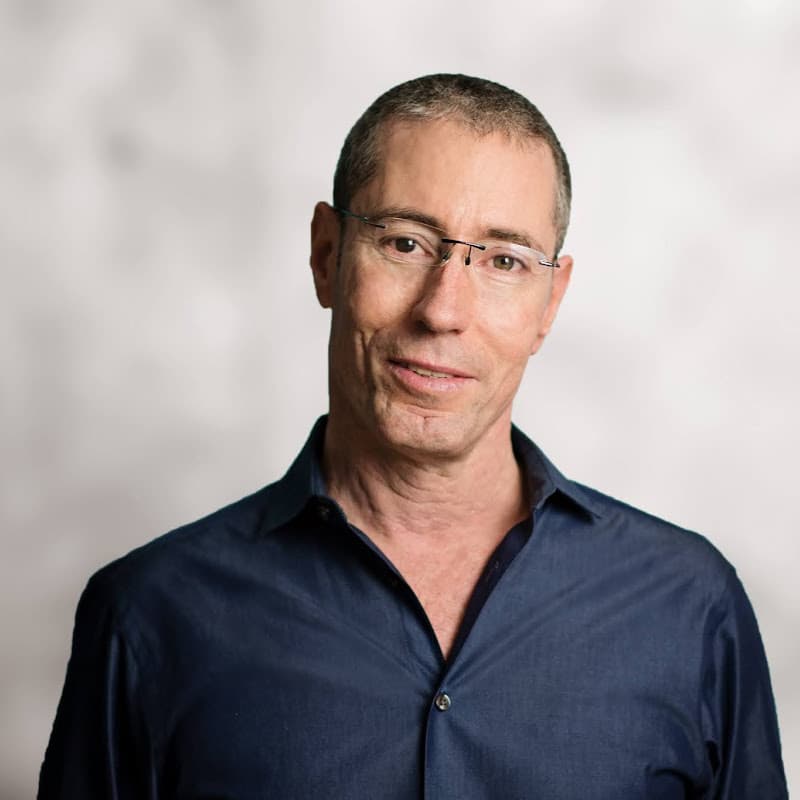
Full Transcript Introduction to the Training 0:01 Everyone. My name is Avinoam Lerner. 0:03 It's good to be here with you, 0:05 and I want to welcome you to today's training, 0:07 where we're going to talk about the missing piece in cancer 0:11 healing and recovery. 0:13 Why your suppressed emotions and unresolved trauma undermine 0:16 your healing, and what can we actually do about it? 0:19 What can we do to actually address them at the source, 0:22 so we can heal better and get better outcomes. 0:26 That's what most of my clients are interested in. 0:29 Hopefully that's what you're looking for as well. 0:31 But first and foremost, 0:33 let me quickly share who this training is for so that you 0:36 know that you're in the right place. 0:37 And I will say that if you're currently in treatment and it 0:40 feels like you're doing all the right things, 0:43 but you're not seeing the kind of progress that you were hoping for, 0:47 I highly encourage you to stay tuned because this missing 0:49 piece that we're going to discuss here could very well be 0:53 the reason for why that is the case. 0:55 And I will also say that if you understand that lasting healing 0:59 means treating the whole of you, 1:01 not just addressing your physical body, 1:03 and you're looking for a methodology, 1:06 one that works alongside your traditional medical care, 1:10 then stay tuned, yes, this training is for you. 1:14 So we're gonna spend important time together here. 1:18 My goal is very simple: 1:19 it is to simply demystify the healing process, 1:23 so you can fully understand not just the steps you need to take 1:26 to support your healing and recovery, 1:28 but understand the science, 1:30 the scientific premise behind it and the mechanism by which 1:33 this kind of healing, the healing you desire, 1:37 is attainable because that will give you a great deal of 1:39 confidence in your ability to do this kind of work, 1:43 to heal and overcome this illness. 1:46 More specifically, we're gonna talk about three main things. 1:50 We'll start with the challenge, which is why our stress, 1:53 suppressed emotions and unresolved trauma fuel this 1:56 illness that we're dealing with, and why they, 1:59 these kind of patterns, 2:01 why they inhibit our body's ability to heal. 2:03 So that's the challenge. 2:05 Then we're gonna talk about the remedy, if you will. 2:07 We're gonna talk about why the subconscious mind is the key to 2:10 resolving these challenges, these patterns, if you will, 2:14 and improving the efficacy of our medical treatment. 2:18 And last but not least, 2:19 we're gonna talk about the implementation. 2:22 In other words, the very steps we need to take to rewire our 2:26 subconscious mind and upgrade our mental and emotional 2:29 framework so we can experience greater well-being 2:33 throughout our treatment. 2:35 Because it may seem like we're living here now in twenty 2:39 twenty six, but many of us mentally and emotionally 2:43 operate by definitions that we acquired in the past. 2:45 In other words, our operating system is running Windows 93, even though 2:51 we are now in 2026. 2:53 So that will make sense as we go along. 2:56 But to talk about all the things we need to talk about in 2:59 a responsible way. 3:01 We do need some ground rules, need to be on the same page, 3:04 so let me say this: 3:05 everything that I'll be sharing with you here today is not 3:08 presented as an alternative to medical treatment. 3:12 Medical treatments save lives; 3:13 it's important for me to acknowledge that. 3:16 Secondly, this is not a do-nothing, 3:18 get-healed kind of approach or methodology. 3:20 There is work to be done, certainly, 3:23 and there are no typical results, 3:24 and that's true of everything we do in life. 3:27 There are no typical results because our success or lack 3:29 thereof depends to a great extent on our level of 3:33 participation, in other words, 3:34 on whether or not we're actually going to do the work. 3:37 It's true of everything we do in life; 3:39 it's not reserved for regaining our health. 3:44 And now that I've said that, 3:46 and before we get into the nuts and bolts here, 3:50 I want to quickly check in with you to see where you are 3:53 mentally and emotionally. 3:54 In other words, do any of the following statements that I'm going to
Why Cancer Healing Requires a Whole-Person Approach 3:58 read for you resonate with you? 4:01 For example, do you ever wonder if maybe your doctors aren't 4:05 seeing the whole picture, 4:06 or they're just not telling you the whole story? 4:10 Do you ever feel like you're just 4:13 submitting your body to treatment? 4:15 Just letting doctors do things to your body with no real say 4:19 or control over your own experience? 4:24 Do you feel deep down that there has to be some kind of 4:27 link between this illness, this cancer, 4:31 and the tough times that you've been through in your life, 4:34 but you have no idea what to do about it? 4:37 And the reason I'm asking these questions is that if any of 4:41 these statements sound like you or resonate with you, 4:45 what I want you to know is that these are just symptoms. 4:48 These are the symptoms of this missing piece that we're going to talk about. 4:52 They're not the problem, or they're not the real issue. 4:55 The real problem is that you have not yet learned to 4:59 actively engage your subconscious mind, 5:02 which is your body's operating system. 5:05 And we'll talk about what that actually means in just a 5:08 second, but for right now, I want you to understand this: 5:12 when you learn how to engage your subconscious mind 5:15 methodically, properly, 5:17 then things will begin to change in real time for the 5:21 better, which in some way will mean that you'll wake up 5:25 feeling more confident about your ability to heal because 5:27 you'll understand or you will know that your mind and your 5:30 body are working together rather than engaging in a conflict. 5:35 It can mean that you'll notice a meaningful shift in how your 5:38 body responds to treatment, with fewer side effects and 5:42 faster recovery between sessions. 5:45 I know that's the case for many of my clients, 5:47 and you have more agency. 5:49 In other words, you regain some of the trust lost due 5:53 to the diagnosis. 5:56 And just so you know who I am and that I know what I'm 5:59 talking about, again, my name is Avinoam Lerner. 6:02 I am a cancer and trauma recovery coach, 6:04 a holistic therapist, a published author, 6:07 and a TEDx speaker, and I've been doing this kind of work. 6:10 I've been helping cancer patients and survivors maximize 6:14 the efficacy of their medical treatment for twenty-five years 6:17 now, a long time. 6:19 And now that you know that, we have everything out of the way, 6:22 now we can actually dive into the scientific premise of this 6:26 work, and why the subconscious mind is the missing key 6:31 component to our ability to heal and recover. 6:34 We're gonna talk about the science behind it, 6:37 the scientific premise, 6:38 and I'll share my discovery of this truth or path through 6:42 working with clients. 6:45 Because, again, as I just said, 6:47 I've been doing this work now for a long period of time, 6:50 and during these many years, 6:53 I've seen some people who created incredible 6:55 transformations with regard to their health. 6:58 These are people who just seem to be able to sail through the 7:02 course of their medical treatment, 7:04 with minimal side effects; 7:05 they were able to maintain their energy, their optimism, 7:08 their quality of life. 7:10 Oftentimes, they were able to achieve better treatment outcomes 7:13 faster than expected. 7:16 Now, to be fair, 7:17 I've also seen many others who had a very different 7:20 experience, right? 7:21 Others who suffered unnecessarily, 7:23 who struggled to even complete their treatment regimen, 7:26 which lessened their odds of recovery. 7:28 And even after their treatment ended, 7:32 deemed successful, defined as successful, 7:35 they were no evidence 7:38 of cancer, they still lived in constant fear and anxiety of recurrence. 7:43 So that obviously is not what we want. 7:46 So over time, as I began to really study these, 7:49 those people we call exceptional patients, 7:51 those patients who did very well, 7:54 who fared better on every marker, 7:56 and learned about the scientific premise behind this 7:59 phenomenon, the science of psychoneuroimmunology, 8:02 it all started making sense. 8:04 And if it's helpful, psychoneuroimmunology 8:09 it's a big word, you can certainly search it, 8:11 but it's a field of scientific study that came about in the 8:14 1970s from the University of Rochester in New York, 8:18 and it outlined, mapped for the first time 8:23 these pathways 8:26 of how the mind, the non physical part of who we are, 8:29 affect the organic tissue, more specifically our biology and immune system. 8:34 So we're gonna talk about that in just a second, but 8:38 when you read these signs, 8:39 it became very clear to me that there are four specific 8:43 things that these people, we call exceptional patients, 8:47 that they were doing differently to get different 8:50 and better results. 8:51 And most of the time, 8:54 they weren't even really aware that they were doing anything 8:57 different, which certainly surprised me. 8:59 In other words, they were unconsciously competent, 9:03 and we want to become very consciously competent, 9:05 we want to 9:07 predict, to methodically apply the method so that 9:12 we can get tangible results. 9:15 What I found really profound was that 9:21 things began to change for the better with my 9:24 clients when I incorporated these four shifts, 9:28 which I call shifts, 9:30 into my practice and formalized them or turned them into a 9:33 formal practice, which I call mindful remission. 9:36 And mindful remission, kind of in a nutshell, 9:40 we use the mind as the access point. 9:42 In other words, we use our thoughts, beliefs, perceptions, 9:45 and the subconscious mind to signal the brain, 9:49 to communicate better information to our immune 9:53 system via the central nervous system. 9:56 That's the pathway that psychoneuroimmunology shed 10:00 light on and proved to be at work here. 10:05 So we can use this pathway to trigger the healing response 10:09 instead of the stress response, 10:11 and we'll talk about how to do just that in just a moment. 10:14 But the change I'm kind of referring to with regard to my 10:18 clients was a significant improvement in their ability to 10:22 respond to their medical treatment and to heal, 10:25 and not just physically. 10:27 Mean, mentally and emotionally, they were calmer, 10:30 they were more confident, they were more resilient, 10:33 as if something within them kind of clicked back into 10:37 place, and I hear it from clients again and again, 10:40 something clicked back into place, 10:42 even though they were obviously still going through treatment, 10:46 and that kind of surprised me. 10:47 Well, 10:50 let's get started. 10:51 Let's dive into shift number one, because again, 10:54 I want you to get to the nuts and bolts here. 10:56 Shift number one, which states that you can't 11:00 fight cancer when you're fighting yourself, 11:03 is a very important shift. 11:05 What it essentially means is that you can't maintain an 11:09 internal negative environment mentally and emotionally and 11:13 expect your body to thrive. 11:15 Hopefully, this makes perfect sense to you, 11:17 at least intuitively. 11:19 You're not just a physical body. 11:21 Yes, of course, you live in a physical body, we all do, 11:26 but you also have other dimensions to you as well. 11:30 You have mental dimension, emotional dimension, 11:32 spiritual dimension, and this kind of shift, 11:37 in a way, shift number one, 11:39 is part of the reason why we haven't really won the war on 11:42 cancer, if you will. 11:43 We haven't cured cancer. 11:44 Despite the endless amount of resources and years of research.
How the Subconscious Mind Shapes Illness Patterns 11:48 And the point is that we haven't been able to address 11:52 cancer fully because most treatments only treat 11:57 the physical body and not the person living within this physical body. 12:01 Medical treatment is extremely important, 12:03 but it only works on the physical manifestation of 12:06 cancer, in other words, the tumor, 12:09 when we should be treating really the whole person. 12:12 Now intuitively, we know this, 12:14 but what this actually means to you is that any approach to 12:17 healing, to recovery, that you're going to take, 12:21 needs to address all of you, 12:24 not just your physical dimension. 12:27 Otherwise, it's just plain incomplete. 12:30 Now, the fact is that seventy to ninety percent of all 12:34 illnesses, including cancer, 12:36 are aggravated by stress and emotional trauma. 12:39 We know these to be true. 12:40 Research, it's black and white, 12:43 and that means that the more stress you're under, 12:45 the more unresolved emotional trauma you carry, 12:50 the more these kinds of aspects and underlying patterns 12:53 actually fuel the illness. 12:56 Does that make sense? 12:58 And here is why that actually happens: 13:00 when we are under stress, 13:02 our body produces a massive amount of a substance called cortisol. 13:06 Now that's the body's stress hormone. 13:09 Prolonged exposure to cortisol, because a little bit is fine, 13:14 it's what we need to do in life to have some resistance and work through. 13:19 So a little bit is fine, 13:20 but prolonged exposure to this stress hormone, 13:23 and we know this again through research, 13:26 actually suppresses the functioning of our immune 13:29 system, and it shuts down or diminishes 13:33 the effectiveness or the power of natural killer cells, 13:37 which are cells that, their job, 13:39 whose job is to identify and destroy the tumor and the cancer cells 13:45 that we want them to, or that we need to, in order to heal. 13:48 And the problem, as you can see, 13:50 is that modern medical treatment, 13:52 while addressing the physical body and these physical 13:54 aspects, it doesn't address the underlying patterns 13:59 of stress and trauma that are unfortunately inflaming 14:03 or contributing to this illness. 14:07 So this is an important point. 14:11 And a good way to think about it, 14:14 I want you to imagine that out of our one hundred percent of 14:17 experience, let's say fifty percent is physical. 14:22 Most of our experience is physical because we live in a physical body. 14:25 So, fifty percent is physical, 14:27 twenty-five percent we can say is mental, 14:29 and twenty-five percent is emotional. 14:31 Now, your numbers can be slightly 14:34 different, but even if we just, 14:36 and that's what I want you to consider, 14:37 even if we just address the twenty-five percent, 14:40 either mental or emotional, 14:42 if we resolve this twenty-five percent, 14:46 wouldn't you want to increase your odds of healing and 14:48 recovery by twenty-five percent? 14:49 Of course you would, I know any one of my clients does. 14:56 So that's what the first shift is all about. 14:58 It's about treating cancer not as a local event within 15:03 the physical body, treating it not as a particular failure 15:08 of an organ or part of the body, 15:10 but rather as a whole-person event. 15:12 In other words, we need to treat the whole person. 15:15 So that's what the first shift is about. 15:18 Let's talk about how to do that 15:22 and what we need to address here. 15:24 So let's talk about the second shift, which is: 15:26 we need to understand how our illness thought 15:29 patterns are being formed so that we can resolve them. 15:34 And this is important. 15:35 And 15:39 we start with the following statement: 15:41 that our body responds to what we think about. 15:46 Again, our body responds to what we think about. 15:48 It's such an obvious thing, 15:49 I shouldn't really have to say it, but what I've learned from, 15:53 again, working with people, 15:53 is that many of us just don't really think about it in this way. 15:58 But it becomes very clear when we look a little closer into 16:02 these phenomena, right? 16:03 When you watch a scary movie, for example, 16:06 I tend to avoid those, 16:07 but when you watch a scary movie because you like that, 16:10 your heart starts racing, your body is responding, 16:14 even though you're in the comfort and safety of your own home. 16:16 You're not out there experiencing this horror. 16:20 And that's because your body is responding to the mental images 16:24 that you're viewing, the movie that you're watching. 16:28 But it doesn't have to be an external stimulus that 16:31 activates this kind of biology or experience within our body. 16:35 For example, when you think about your favorite food, 16:39 your mouth begins to water, right? 16:42 That is your body responding to your imagination, 16:46 to your mental imagery, if you will. 16:49 So what does that tell us? 16:50 It tells us that our mental imagery, our imagination, 16:54 our thoughts, perceptions, and beliefs can cause an immediate 16:58 effect within our body, I mean, right away. 17:02 And that's the mind-body connection in a nutshell. 17:05 Something happens in our mind, 17:07 and we have a physical experience as a result of that. 17:10 Now, when it comes to cancer, 17:12 there are nearly always habitual mental patterns that 17:16 we're running that are causing us to stress, 17:21 that are unintentionally diminishing or hurting the 17:25 functioning of our immune system, 17:26 and that are actually letting cancer thrive because they 17:31 render the body vulnerable. 17:33 Our biology doesn't work in an optimal fashion, right? 17:37 So then illness can more readily develop, 17:40 so the body is vulnerable. 17:42 And we can quickly take a deeper look at how this 17:46 actually works. 17:47 Now, I will say that you have a conscious mind, we all do, right? 17:51 But we have a conscious mind, let's say it this way. 17:53 We have a conscious mind that is logical and rational, 17:57 which is our thinking mind, 17:59 and it's the part of our mind that listens to me right now, 18:03 analyzing, critiquing my words. 18:06 To simplify things, let's say that the conscious mind is 18:09 responsible for thinking. 18:12 Now, we have a subconscious mind as well. 18:15 The subconscious mind is our emotional mind, 18:18 and it is far more powerful. 18:21 Our subconscious mind runs most of our bodily functions. 18:24 For example, right now, 18:26 your digestion is going on, 18:28 your body temperature is regulated, your breathing, 18:30 and your heart is beating. 18:32 In other words, your subconscious mind is 18:34 responsible for functioning. 18:38 To understand just how much more powerful the subconscious 18:41 mind, the emotional mind, 18:43 is in comparison to the conscious 18:45 mind, it's helpful to understand that it processes 18:49 eleven million bits of information per second, 18:53 compared to only forty bits per second of the conscious mind. 18:57 If that's not impressive, let's do the math here, 18:59 and you will realize that your subconscious mind is two 19:02 hundred and seventy-five thousand times faster 19:06 than your conscious mind. 19:08 But, and this is an important but, 19:12 as powerful as the subconscious mind is, 19:14 it has one big flaw that we're going to take or use to our advantage. 19:19 And that flaw is that it's entirely literal. 19:23 In other words, your subconscious mind, 19:25 as powerful as it is, 19:26 it cannot tell the difference between actual 19:30 events that are happening in front of us to 19:34 events that you and me vividly imagine. 19:39 It cannot tell the difference, 19:41 hence us thinking about our favorite 19:44 food, and boom, the body is responding. 19:47 And this is a point worth remembering because this flaw 19:51 is really the key to hacking our biology and getting 19:55 better treatment outcomes. 19:57 The subconscious mind 20:03 allows us this access point, 20:05 and it's worth remembering that it has a massive influence over our biology. 20:09 Breathing, heartbeat, as I mentioned, digestion, 20:12 body temperature, 20:13 all of these processes take place without our conscious 20:15 participation. 20:18 And more importantly, to our point, 20:19 the subconscious mind also has influence, in part, 20:23 over the functioning of our immune system. 20:25 So it's not that it's the only part that governs our immune 20:28 system, but it's got influence over it. 20:31 And this is what we're going to 20:34 utilize to our advantage. 20:36 Okay? 20:37 This flowing design, if you will, 20:40 is how we intentionally engage and support 20:44 the healing response within our body. 20:47 That's how we activate it. 20:49 The subconscious mind operates on beliefs. 20:53 In other words, your beliefs over time harden 20:57 into conditions, if that's a good way to put it. 21:01 And what we know with absolute certainty, 21:03 and I need you to stay with me on this, 21:06 what we know with absolute certainty is that most of the 21:09 beliefs that we're having, all of us, 21:12 that we're carrying around, 21:14 they were installed in our mind when we were very, very young. 21:19 Which means that they are likely, 21:21 and this is not a judgment of who we are, 21:23 but they are likely, 21:25 for the most part, distorted, entirely wrong, 21:30 or not entirely true. 21:32 It's not because we are not smart enough or anything like 21:35 that, but it's because when we were very young, 21:38 our mental and emotional or psychological faculties 21:43 were not yet fully developed, 21:45 so we couldn't really exercise a lot of judgment around it. 21:50 But here's the thing. 21:52 Your subconscious mind 21:55 doesn't know that, and it doesn't care. 21:57 It doesn't know that these beliefs or perceptions are 22:00 distorted and wrong, and it doesn't care. 22:03 If it believes things deeply, 22:06 it will proceed to act on these beliefs as if they are real,
Marthau2019s Story: Releasing Suppressed Grief 22:11 which means for us specifically that perhaps distorted beliefs 22:15 bring about distorted conditions, in our case, illness. 22:20 Now, based on my experience, again, twenty-five years, 22:23 I can tell you that 22:26 many cancer patients actually have very specific beliefs that 22:31 create what I call illness thought patterns, 22:33 so illness thought form and illness paradigm, 22:37 and unless these thought paradigms are reversed, 22:41 they will continue to diminish the functioning of our immune 22:45 system and render our body vulnerable. 22:48 They will promote disharmony within our body. 22:52 So let's look a little deeper at these illness thought 22:55 patterns and how they form, 22:57 because we want to understand this, 22:59 we want to really know what we need to do here. 23:01 So, let's say this: earlier in life, when you were, again, 23:05 very, very young, you received all kinds of 23:08 statements, suggestions from figures of authority in your life. 23:11 It could be your parents or your caretakers. 23:14 If we talk about family, you receive suggestions like, 23:17 perhaps, Well, our family always gets sick, 23:20 or Illness runs in our family, 23:23 or My grandmother had cancer, 23:26 and her grandmother had cancer, and then when I had cancer, 23:29 it just felt like it was my turn. 23:31 Something to this extent, something quite basic. 23:34 What I call family mythology. 23:36 Now, these suggestions came from people who we relied 23:41 on to stay alive. 23:43 So we just accepted them without question. 23:48 And those suggestions, 23:49 and they got compounded over the years because we like, 23:52 people like to tell the same stories, 23:54 the same family mythology. 23:56 Over the years, they hardened into beliefs, 23:58 and these beliefs began to shape 24:02 our reality, 24:05 our internal reality, because they started impacting 24:08 or altering our biochemistry. 24:11 They either set up a cascade 24:15 of hormones that created an abundance of health for us, 24:19 or they set up a cascade of hormones that created 24:21 additional stress and further suppressed our immune function, 24:25 so eventually we reached the point 24:27 where our immune system can no longer maintain optimal 24:31 health, and that has allowed illness to more 24:35 readily develop. 24:37 Does that make sense? 24:38 Hopefully, that makes sense to you. So here's the bottom line. 24:41 The bottom line is this: 24:43 there are habitual thought patterns that got installed in 24:47 your mind, in your subconscious mind, when you were very young. 24:50 They programmed you, without your knowledge or consent, 24:54 if you will, for expressing health in a certain way. 24:58 And if you don't reprogram these thought patterns from ill 25:02 health back to health, 25:04 then your subconscious mind will continue sabotaging your 25:08 biology, your progress, your immune system, 25:11 and your potential for healing and recovery. 25:14 There is no in between for the mind. 25:17 Either our subconscious mind is working to promote health, 25:20 or it works to diminish it. 25:22 And if it's working to diminish it, 25:24 you wanna do something about it right away so that you can give 25:26 yourself every possible edge and advantage 25:31 to overcome this illness. 25:34 And someone who did just that, 25:36 and I wanna share a past client's story, 25:41 and this past client is Martha, 25:43 who at sixty-three was diagnosed with lung cancer. 25:47 And Martha was a very active person all her life with a big 25:50 social circle, but now, with this diagnosis, 25:54 and so much has changed, 25:56 with an oxygen tank attached to her hip, 25:59 she had to slow down. 26:01 Her mobility was severely restricted as a result of that, 26:06 and even standing for long periods of time became difficult, 26:09 which meant that she wasn't really able to host her family 26:12 as much as she wanted, and that had an impact. 26:16 And mentally and emotionally, the change in her identity from 26:20 an active and independent person who's the head of her 26:23 family, to now being a cancer patient, 26:27 this kind of change was extremely hard for her to 26:30 process and certainly to accept. 26:33 Now, if we look back into Martha's childhood, 26:35 it was complicated. 26:37 Martha grew up in a very religious home, 26:40 and this is not a criticism of religion, obviously, 26:42 but in her words, 26:44 it was an atmosphere that was full of tension. 26:47 It was strict, it was rigid, it was domineering, 26:51 and from a very young age, 26:53 Martha said that she learned that bottling her emotions is 26:57 safer than expressing them, 26:59 and maybe it resonates with some of you. 27:02 Martha never heard the word I love you. 27:05 It was just not 27:07 spoken, not expressed. 27:09 She never felt safe enough to cry. 27:12 And over the years, 27:13 her grief accumulated like dust in a locked room, 27:16 until one day her lungs collapsed under the weight of it all. 27:20 Now in many ancient traditions, 27:23 the lung is considered to be the home of unspoken sorrow, 27:27 grief, and for Martha, every breath
Root Causes, Gene Expression, and What Doesnu2019t Work 27:30 expressed that. 27:31 Every breath became a struggle under the weight of her 27:35 unprocessed pain and unexpressed pain, 27:38 suppressed emotions. 27:40 When we began working together, 27:42 obviously she didn't know what to expect, 27:44 but something somewhere inside her, 27:47 something said or whispered, It is time. 27:50 Time to speak what had been silenced, 27:54 time to feel what had been buried, 27:58 time to let the body exhale all that it's been holding, 28:02 all those suppressed emotions for decades, 28:05 and maybe that resonates with some of you as well. 28:09 Session by session, Martha began to 28:13 speak and release words that she had never really been able 28:17 to reach before. 28:19 She let herself be seen for the first time in decades, 28:22 and she was finally ready to release this unheard cry 28:27 of her mind and heart, in other words, her grief. 28:30 And she cried, and she raged, she remembered, 28:34 and then she breathed. 28:36 And not just air, but life. 28:39 It really, I know it sounds poetic, 28:41 but it's really the best way to describe it. 28:43 And as the suppressed cry of her heart found its voice, 28:46 something began to shift within her, 28:49 because healing didn't just happen in her body, 28:52 it happened in her story. 28:53 Again, this refers right back to shift number one that 28:58 we have to shift our view of cancer from a 29:02 failure of a specific part of the body to a whole 29:06 person event. 29:07 So healing didn't just happen in her body, 29:09 it happened in her story as well. 29:11 And Martha began to realize, 29:13 she discovered that healing isn't always just about 29:15 fighting the disease, 29:16 it's sometimes about listening to the message beneath it. 29:20 And she was able to do that, and once she did, 29:23 the path forward opened like a long awaited breath. 29:28 And I'm happy to report that she's still going strong at the 29:31 time of this recording. 29:34 So this is a really good thing. 29:35 But speaking of suppressed emotions, 29:38 let's talk about the third shift. 29:40 We're getting into the thick of it, as we like to say. 29:43 Addressing the root cause, not just trimming the leaves, 29:48 and that will make sense in just a moment. 29:50 What I want you to understand about this particular shift is 29:53 that it relates to a very big scientific project called the 29:57 Human Genome Project, which you may have heard about. 30:01 The project itself was concluded in two thousand and 30:04 three, and the theory, 30:05 when researchers started looking into the Human Genome 30:09 Project, the theory was that we're gonna find, finally find, 30:13 the individual genes responsible for illnesses such as cancer. 30:17 So the 30:19 implication here was enormous. 30:21 But that was a false theory, 30:24 because what researchers have found is that 30:28 there are a very small number of genes and very many 30:31 conditions and illnesses, so that theory didn't hold water. 30:36 Then they went back to the drawing board, 30:38 and what was eventually concluded is that it's not a 30:42 particular gene per a particular condition or 30:45 illness, but rather it's a combination of genes, 30:48 some of them are turned on, some of them are turned off, 30:52 that express in a specific condition or illness. 30:57 So that was a very big step forward, 30:58 but then they had to ask the following question, 31:01 the very important question, okay, if certain genes 31:05 are turned on and some of them are turned off, 31:07 what causes that? 31:09 What turns some genes on and what turns some genes off? 31:14 So the answer, while complex in a way, 31:18 was that amongst the various factors, 31:21 there are mental and emotional patterns that influence 31:25 our biology through the nervous system, 31:28 hormonal and immune pathways, which 31:32 can in turn affect gene expression. 31:35 So very important. 31:37 Again, the answer is complex, 31:39 but amongst the different factors, 31:41 there are mental and emotional patterns, 31:43 which are exactly what we're going after, 31:45 that influence our biology. 31:48 And that's why we are here talking about this work. 31:53 It's a scientific premise in a way for everything we do here, 31:56 everything that mindful remission is here to help us solve. 32:01 And it's why we get results, 32:03 because it's evidence-based and we know what we're looking after. 32:07 We get results with mindful omission, 32:09 which I call a game-changer methodology. 32:12 I'm calling it a game-changer methodology because it's 32:15 actually how we tangibly, practically, 32:18 are able to identify and then reverse 32:22 illness thought patterns, and in doing so, 32:26 engage the body's immune response. 32:27 In other words, we support it, 32:29 we allow it to do what it's designed to do, 32:31 which is to eliminate any abnormalities in our blood. 32:34 My point is that illness thought patterns live 32:37 in our subconscious mind. 32:39 So unless we address the subconscious mind directly, 32:43 healing these patterns just cannot happen. 32:45 And again, I'm not putting down any therapeutic approach here, 32:48 like talk therapy, for example, I'm just stating the fact. 32:52 If we look at conventional talk therapy, 32:54 it primarily addresses the conscious mind, 32:57 hence talk therapy, right? 32:58 We're gonna talk about it. 33:00 To access the subconscious mind, we need a different tool, 33:04 we'll talk about that tool in just a second. 33:08 But before we go there, 33:09 before we talk about what's actually going to work, 33:12 let's quickly talk about what many of us have been told to 33:15 do, what I call 33:17 conventional wisdom. 33:19 And the one thing I want you to understand is that conventional 33:21 wisdom is a recipe for conventional results, 33:24 and conventional results, when it comes to cancer, 33:26 is just not good enough. 33:28 It means recurrences, not what we want. 33:31 Now, what I'm talking about are likely things or suggestions 33:35 that you've heard from well-intended people in your life. 33:38 Some of them may very well be aware that there is a mind-body 33:41 connection, even. 33:43 But these suggestions go as follows. 33:45 For example, 33:47 you need to start thinking more positively, right? 33:50 I mean, being so negative. Be positive. 33:55 That's one suggestion. 33:56 Another is that you need to meditate to lower your stress level. 34:00 Not a bad idea, 34:01 but we'll talk about why it's flawed in just a second. 34:04 You've probably heard that you need to join a support group, which 34:08 is a great idea, except that, from my perspective, 34:10 or my experience, 34:13 many of these support groups have people who just focus on 34:16 fear and commiserating and talking themselves out of being full of life. 34:21 Or maybe you heard that you need to wear pink to join the cause. 34:27 These are things that seem to float 34:31 out there in the cancer sphere, but none of these activities, that's why 34:36 I want to talk about them, 34:37 none of these activities actually address the unique 34:40 subconscious patterns that are impacting your biology, 34:44 inhibiting your immune response. 34:47 The lessons, the beliefs, 34:49 the perceptions instilled in your mind when you were very 34:52 young are very different from mine or from everybody else, right? 34:55 So 34:57 what that means is that we can't use a one-size-fits-all approach. 35:02 We have to go straight to the source, 35:04 and at the end of the day, we have to learn that to be true. 35:08 I mean, we know this through research. 35:10 Our biology and immune system, 35:13 they don't respond to conscious effort. 35:16 They just don't respond to conscious effort. 35:20 They respond directly to signals from the subconscious 35:22 mind, the emotional mind again. 35:25 And a somewhat humorous visual that I like to use about 35:30 this kind of surface level 35:34 conventional wisdom tools is I want you to imagine that you're 35:37 trying to upgrade your laptop computer performance by 35:42 painting your monitor a different color. 35:46 But that's what many of these surface level, 35:48 even mind body approaches to cancer, 35:51 that's what they're trying to do. 35:52 They're only working at the surface level of the conscious mind. 35:56 And either you know,
The Mindful Remission Process and Jamesu2019s Story 35:58 completely ignore the subconscious mind or they just 36:00 can't change the deeper programming or the mental code 36:05 properly. 36:07 So whatever approach you're gonna use, 36:09 I'm just saying you need to go directly to the subconscious 36:12 mind if you really want it to work. 36:15 And now that we know what doesn't work, 36:17 we can actually talk about 36:19 what does. 36:21 Here it is. 36:22 Here is the new way, 36:24 which highlights the mindful remission way, 36:26 which highlights the fact that we need to access and reprogram 36:29 the subconscious patterns that are inhibiting our biology and 36:33 immune response. 36:34 It works like this. 36:35 I will just give you an overview and then go step by step. 36:40 So the first thing we need to do here is to locate in the 36:43 subconscious mind the event, the initial event, 36:47 that planted the seed for a particular illness 36:51 thought pattern. 36:52 Once we identify that, it can be a situation, event, 36:58 or anything in between, then we can release the emotional 37:01 intensity trapped in that event. 37:05 We then can begin to look at this event from a different perspective, 37:10 come to a new decision about what that actually meant, 37:13 in other words, reverse the incorrect perceptions or the 37:17 meaning that we have assigned to that event, 37:19 and then we can apply forgiveness, 37:21 we'll talk about what that means in just a moment, 37:23 and then we can assimilate all of it into our present 37:27 awareness so it's automatic. 37:30 Okay, so let's take it step by step, 37:32 because this is really the heart of the matter here. 37:37 The first thing we need to do is to access the subconscious mind. 37:40 To do that, we use hypnotherapy, 37:43 a particular type of hypnotherapy, 37:46 as the key to the door of the subconscious mind. 37:50 And we need to access the subconscious mind to identify 37:52 the original, again, that particular moment 37:55 in time, situation, or event that caused us to shift 37:59 our identity, or perception, or belief about who we are from positive 38:05 to negative, or limiting. 38:08 That's the moment or experience that planted the seed of the 38:11 illness pattern. 38:13 Now, there might be more than just one event. 38:16 Okay, well, we'll address each one of them, 38:20 but that's what we do. 38:21 Now, once we find the event, 38:24 that moment in time where things have shifted for us 38:27 internally, in terms of our understanding of who we are, 38:30 from positive to negative or limiting, 38:34 then we need to release the trapped emotions within that 38:37 event, because usually these moments in time where something 38:41 shifted within us, they were very 38:45 emotionalized situations. 38:47 We tend to call them trauma, 38:48 but it doesn't have to be all that dramatic. 38:51 They were very emotional situations, 38:55 which is why they kind of got so ingrained deeply in 38:59 our subconscious mind, 39:00 because the subconscious mind is the emotional mind. 39:02 So we need to release the trapped emotions 39:06 around the event, because, 39:10 like thick fog that prevents us from seeing the road properly 39:14 when we're driving, these intense emotions prevent 39:17 us from seeing the event 39:21 through a clear lens, in a way. 39:26 The intensity prevents us from finding the good in that which 39:28 we previously perceived as bad. 39:30 It prevents us from looking at the same situation from a 39:33 different perspective so we can come to a new decision about 39:36 what that moment actually meant for us. 39:40 So 39:42 when we do that, we'll be able to think about the event, 39:46 when we release the trapped emotions, 39:47 we'll be able to think about that event, 39:49 the really traumatic thing that happened to us, but you know, 39:52 it just won't sizzle anymore, if I can describe it as such. 39:56 It won't hurt anymore because we released the emotional 40:00 intensity around it. 40:02 And once we've done that, 40:04 now we can actually view the whole event 40:07 with a new sense of clarity and reverse the distorted meaning 40:11 that we have assigned to this event, 40:13 if it was indeed distorted, 40:15 the meaning that promoted limitation and negativity, 40:19 we can replace that meaning with a more empowering one, a better one, 40:24 one that will promote balance and health rather than 40:28 imbalance, if that makes sense. 40:31 What I want to make sure that you understand is that we're 40:33 not changing what happened to us in the past. 40:37 That's not possible. 40:39 All we are aiming to do is change the meaning that we have 40:43 assigned to what has happened to us. 40:44 Okay? And that's an important distinction. 40:48 Then, once we've done that, 40:50 now we can use forgiveness to heal the entire moment in 40:55 time, the entire thing, the entire event. 40:57 Now, by forgiveness I don't mean that what happened to us 41:01 or what someone did to us is okay. 41:04 That's not what I mean at all. 41:07 What I mean by forgiveness, 41:10 in the context of mindful remission at least, is that 41:16 we're no longer going to allow this particular event 41:21 or that particular person to hold sway 41:24 over our lives or health. 41:28 We're not going to allow that event or person to jeopardize 41:31 our ability to heal and recover. 41:34 We're not doing that anymore. 41:37 And finally, when we have applied forgiveness, 41:41 we can integrate the whole thing so it's automatic, 41:43 and the health thought pattern completely 41:47 overrides the illness pattern that was there before. 41:49 Okay, now look, we might have to do this with a few different 41:52 deeply emotionalized events. 41:54 Yes, understandable. 41:55 I mean, life is complex, we live the life. 41:58 We might have to do this with several people, 41:59 or several beliefs that are currently sabotaging your 42:03 progress beneath the surface. 42:05 But the one thing I want you to understand is that 42:08 once you replace an illness pattern with a health pattern, 42:13 your subconscious mind begins to work 42:17 to your benefit. 42:19 It begins to support your body's campaign for healing and recovery. 42:23 Things become easier, better. 42:26 It's not to say that 42:29 going through treatment is easy, 42:31 but things will be ten times easier. 42:34 Absolutely. 42:35 Alright? 42:36 So let's highlight some of the things that we talked about so far, 42:40 because I want to make sure that it stays fresh in your mind. 42:44 First we said that you can't fight cancer when you're 42:46 fighting yourself. 42:47 Think of it like standing in front of the 42:50 mirror with a sad face, 42:53 hoping to see a smiling reflection, right? 42:55 Not going to happen. 42:57 The second shift we talked about is about releasing 43:00 suppressed emotions, essentially, illness 43:04 thought forms, 43:05 how do we release them from the subconscious mind so we can 43:08 support the body's healing for recovery? 43:11 And last but not least, 43:12 we understand that addressing the root cause of our distress, 43:15 that moment in time, shifting our mental programming 43:20 for the better, 43:22 can impact treatment outcome for the better. 43:25 It's as simple as that. That's the equation. 43:28 And that brings me to the fourth shift. 43:31 We're moving fast, I want you to stay with me, 43:33 we're almost done. 43:35 This shift is shift in identity. 43:38 From feeling perhaps like a cancer victim to 43:43 perceiving yourself as a healing powerhouse. 43:45 And this is so important because one of the biggest 43:49 challenges for cancer patients, 43:51 one of the biggest problems that they're facing, 43:54 is the feeling that everything is out of their realm of control. 43:58 And again, we know through psycho neuroimmunology, 44:02 this field of research have identified specific patterns. 44:07 We're talking about helplessness, 44:09 hopelessness, and stress as immune suppressant patterns. 44:13 So we know these patterns are not working in our favor. 44:18 We also know now that by engaging our subconscious mind, 44:22 we can actually get ourselves back in the driver's seat, 44:26 metaphorical driver's seat, if you will. 44:28 We can recruit the most powerful ally that we have that 44:31 we can, and that is ourselves. 44:33 And a good example for someone who's done that. 44:36 Let's talk about James for a moment, 44:38 another client who turned things around quite beautifully. 44:42 Now James was diagnosed in twenty nineteen with 44:46 prostate cancer, and he was sixty years old. 44:49 And after his surgery, he found himself grieving 44:53 a great deal, not just for the physical loss 44:57 of his libido, but for something much deeper. 45:01 His sense of identity, 45:05 something shifted. 45:06 His value and worth, his manhood, 45:10 in other words, his emotional pain, 45:12 it was running much deeper than the diagnosis. 45:16 And if we look at James' childhood, again, 45:20 there's a lot there. 45:21 So first of all, his dad was a recovered alcoholic, 45:24 and James said that growing up there were many, 45:28 many rules and a lot of criticism, 45:30 plenty of judgment that he contended with, 45:32 to avoid being on the receiving end of his father's 45:36 rage, James did all that he could to succeed 45:40 academically, because that brought some peace and quiet. 45:44 So to stay safe, James did everything he could to excel in school. 45:49 He developed, unintentionally, this pattern of being a perfectionist. 45:55 But beneath the success that he was having, 45:59 there was fear, there was anxiety, 46:01 there was a crushing sense of not being 46:04 something enough, and in a way he walked on 46:08 eggshells and waited anxiously for the 46:11 other shoe to drop at any moment, because it happened, 46:14 and it was very difficult for him to experience. 46:18 James struggled with a great deal of self blame. 46:21 He blamed his cancer on his 46:25 wild, young years, if you will, on drinking, partying, 46:28 on his sexuality. 46:29 He internalized a lot of shame, and he believed that he, 46:33 in a way, was the problem; he was the disappointment; he, 46:37 well, something within him was broken. 46:40 And this was the seed of illness, in a way, 46:43 the true illness eating away at him from the inside out, 46:47 and maybe that, again, 46:48 resonates with some of you watching right now. 46:53 Through our work, 46:57 James began to meet himself 47:00 with compassion instead of judgment. 47:03 He learned to make peace with his past and began to 47:06 embrace his identity, not as a flaw, 47:10 but as something quite sacred. 47:13 He released years of self-blame, 47:16 and he finally was able to forgive the boy that he once 47:19 was, the boy who just wanted to feel free, 47:23 get from under this weight of oppression. 47:27 And he was able to mend through 47:31 this kind of work his fractured relationship with his body, 47:34 with his story, with his soul in a way, 47:37 and for the first time, 47:38 he was able to really look forward to a future that was 47:42 filled with possibilities instead of doom. 47:46 Now, look,
Taking Control and Booking a Consultation 47:48 this is James' story. 47:49 You heard Martha's stories. Maybe you have your own story. 47:53 Now, you've heard everything I have to say. 47:57 Now you have a choice to make. 47:58 You can either keep going to your doctor's appointments and 48:02 just rely on the physical approach to healing, 48:05 while the whole time you're filled with stress, 48:07 you're filled with anxiety, 48:09 knowing that you're unintentionally 48:12 working against yourself, suppressing your immune system, 48:15 and making it harder for the body to recover. 48:18 Or if you want to take control of what you actually can 48:22 control, which is your own mental and emotional state, In other words, 48:25 you want to feel confident about the path you're on, 48:29 and you want to use the mindful remission approach to get 48:33 better treatment outcomes, not just to make 48:38 your immune system stronger, but for you to feel better, 48:41 so that you don't just survive, 48:43 you get to thrive through this moment in time, 48:46 without all this stuff weighing heavy on you, 48:49 without all the past and negativity 48:51 weighing you down and holding you back. 48:54 If that's what you want, then here is what I have for you. 48:58 I've set aside some time in the next forty eight hours to speak 49:02 with you personally. 49:03 It's important for me to speak to each and every one of you 49:06 personally about how you can begin to integrate this 49:08 approach into your individual cancer journey. 49:13 You can do that starting today. 49:16 With twenty five years of doing this kind of work, 49:19 whatever your biggest challenge is, I've seen it, 49:22 and I know how to address it, how to support you. 49:24 So I encourage you to book a call using the calendar or the 49:28 form link beneath this video Just to get started, 49:32 what we'll do is we'll jump on Zoom for about forty minutes or 49:36 so to do some work. 49:39 Number one, what we'll do is we'll get very clear on where you are right now. 49:43 Your treatment, your challenges, what's working, 49:46 what's not working. 49:47 So that's the first thing we're going to do. 49:49 Number two: we'll identify the very patterns that are affecting 49:52 your immune system even right now. 49:55 Number three: I'm going to lay out a crystal clear path for you to healing 50:00 what's in the way of the results that you want, and number four, 50:04 we'll talk about how you can begin to shift illness patterns 50:08 into health patterns so you can move forward with confidence. 50:12 But here is the thing. 50:14 This call, 50:16 it's not for everyone here. 50:18 It is for you, and I want to be just very clear. 50:21 It is for you if you're currently, as I said, 50:23 going through treatment and you understand that the physical 50:26 approach to healing is just 50:30 not enough. 50:30 It's not enough for lasting healing. 50:33 It is for you this kind of call if you recognize that unless 50:36 you change the internal environment in your mind, 50:39 the internal environment that produced illness in the first 50:42 place, that unless you change that environment, 50:45 that it'll just come back again and again, 50:48 the symptoms will come back again and again, 50:50 and that's unacceptable to you. 50:53 So then it's for you, 50:54 and it's for you if you want to leave no stone unturned, 50:57 you're willing to invest in yourself in a way to 51:00 get the best possible outcome. 51:03 If all this is true for you, then absolutely use the form, 51:07 the link beneath this video, 51:09 to book your consultation right now. 51:11 And if I didn't mention it, this is a free consultation. 51:14 In other words, there's no charge for this call. 51:17 Having said that, 51:18 I do want to say that there are only so many people I can talk 51:22 to and support, so many spots on my calendar. 51:25 The purpose of this kind of consultation is for us to meet, 51:29 so we can find out what's possible for you moving forward. 51:33 See if you're a ready candidate for this kind of work. Okay? 51:37 All right. 51:37 Well, 51:39 once again, thank you so much for joining me here today. 51:43 My name is Avinoam Lerner, 51:44 and I hope that now you can see that the healing you desire 51:49 is actually attainable, 51:50 that the scientific premise behind it is solid, 51:53 and what I really want you to know is that it doesn't have 51:58 to be this hard. 51:59 I mean, no one's going to tell you that going through cancer treatment 52:03 is easy in any way, 52:05 but it just doesn't have to be this hard, 52:09 or as hard as it has been. 52:10 If your mind is unintentionally self-sabotaging your progress 52:13 because there's a conflict right there in your mind, 52:16 in your subconscious mind, 52:19 just know that we can resolve this conflict. 52:20 And when we do, everything gets ten times easier, 52:23 so you don't have to struggle. 52:25 The struggle is optional, the anxiety is optional, 52:28 the fear is optional. 52:29 So click the link under this video. 52:32 Use the calendar to book your appointment, 52:34 and we'll be talking very shortly. 52:37 I look forward to it. Take care.
Comments