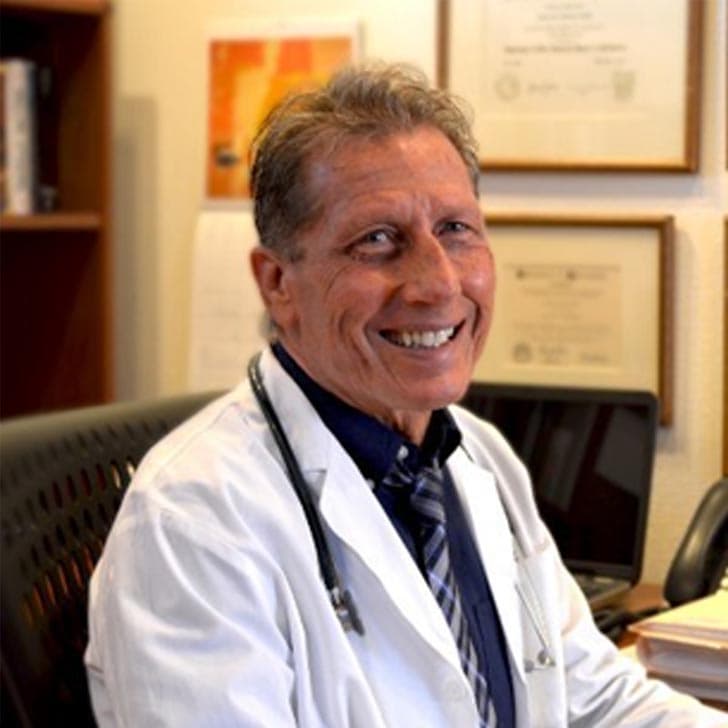
Full Transcript Introduction and Doctor Minkoffu2019s Background 0:00 Hello and welcome. 0:02 My guest today is Doctor David Minkoff. 0:06 Doctor David Minkoff is a board 0:09 certified physician and graduate of the University of Wisconsin 0:13 Medical School, where he was elected to the Alpha Omega 0:18 Alpha Honors Medical fraternity for academic excellence. 0:23 He completed advanced training in pediatrics 0:26 and infectious disease at the University of California, San Diego, 0:31 and served as a clinical faculty member and co-director 0:36 of a neural network intensive care unit. 0:40 In the late 90s, Doctor Minkoff transitioned into integrative 0:45 and functional medicine, ultimately co-founding Live Works Wellness Center, 0:51 now one of the largest integrative clinics in the United States. 0:56 He is also the founder of Body Health, a nutrition company 1:00 known for science driven solutions to modern health challenges 1:06 and accomplished endurance athlete. 1:09 Doctor Minkoff has completed 43 full Ironman reactions, 1:14 and he is the Amazon best selling author of The Search for the Perfect Protein. 1:21 He is about helping people achieve optimal health, 1:25 performance and longevity, and he leaves a lifestyle. 1:30 It is welcome, Doctor Minkoff, 1:33 and I'm delighted to have you to the Cancer Breakthrough Semi. 1:39 Thank you. 1:39 I'm honored to be here with you. 1:42 You're all mine for at least 25 years. 1:47 Yes, I think we met 1:49 at an integrative cancer conference in the 90s. 1:53 We were introduced by. 1:58 I think, wasn't it at at Thomas Roar? 2:02 No, I don't think so. 2:04 I don't think so. Okay. 2:05 But I mean, you were I mean, it was pretty rare back in the 90s 2:10 to to transition for a doctor from classical training 2:14 to integrative and functional medicine. 2:17 What led you to to make that this big change, 2:21 and what does it meant for you professionally to do this?
The Shift to Integrative Medicine 2:26 I change. 2:28 Well, my motivation was that my wife, 2:33 who you know very well, is also a big fan of yours. 2:37 He's a registered nurse 2:39 and she got interested in nutrition and health, 2:42 and she was doing some counseling for the school system in San Diego, 2:47 which is where we lived at the time, to help people with their diets. 2:50 And she actually started a company called Better Life Plans, 2:53 where she was coaching people on how to live healthier. 2:56 This is back in like middle 90s. 2:59 And she was going to seminars to learn about this stuff, 3:02 and she was very excited about it, and I wasn't very excited about it. 3:07 At the time. 3:08 I was a full time emergency room doctor, and she dragged me to a meeting 3:13 with Doctor Jeffrey Bland, who was a nutritional biochemist. 3:17 He had worked with Linus Pauling and we went to his lecture. 3:22 It was a day long lecture, and he impressed me 3:25 as maybe the smartest guy I'd ever met. 3:29 He had a reading rate of over 1000 words per minute. 3:32 He had a photographic memory. 3:35 He had the largest collection of natural medicine and natural nutrition 3:40 nutritional biochemistry journals of anyone in the United States. 3:45 And I came home and it was like, wow, she got my interest. 3:50 Now, unbeknownst to me, one of the things she learned 3:53 was that the silver fillings 3:56 in your teeth contain mercury. 3:59 Yeah. 3:59 And she had proceeded to go to a dentist and get them all drilled out. 4:04 The way the dentist makes a mercury filling is they take liquid mercury, 4:08 and they add zinc and silver and copper and tin to it. 4:13 It makes an amalgam. It's very hard. 4:16 The problem is that the mercury 4:19 at room temperature is liquid, 4:23 but it boils at 110 degrees. 4:27 And if you have a cup of soup or coffee, 4:29 that's 160 or 170 degrees, 4:33 the mercury in the filling will bowl. 4:36 It will go from a sort of liquid amalgam state to a gas. 4:41 And you can inhale the mercury, or the mercury could go into your soft palate. 4:45 You can swallow it, it can go to your stomach and it's very bad. 4:49 So she went to a dentist and had them all taken out. 4:53 And she had a lot. 4:53 She probably had ten silver fillings in all her molar teeth, 4:58 and he wasn't experienced with doing this. 5:02 He just took his high speed drill and he drilled it all out. 5:05 It was no protection for her. 5:07 And the mercury went all over. 5:09 A few months later, 5:10 she was very proud of her now white teeth, because he had been great before. 5:15 But some months later she started to experience 5:19 some pain over her thyroid and she came to me with it. 5:22 And I. I'm the emergency room. 5:24 I know all the good doctors at the hospital, 5:27 and I send her to the thyroid specialist, and he looks at her 5:30 and he doesn't ultrasound and he does some blood tests and he says, 5:33 yeah, you've got an autoimmune condition of your thyroid 5:37 called Hashimoto's thyroiditis. 5:39 Your body's attacking your thyroid, 5:42 but we don't really have a treatment for this. 5:44 Your thyroid gland appears to be working just fine. 5:47 And we're just going to observe you. 5:49 There isn't anything you need to do. 5:51 Okay. 5:53 A few weeks later, she started to get some funny 5:56 pain over her right side, right below her rib cage, 5:59 and I sent some blood off for her, and it showed that her liver tests, 6:03 her liver enzymes were elevated. 6:06 So I sent her to the liver specialist, my favorite liver specialist, 6:11 and he saw her and he did an ultrasound of her liver. 6:14 He said, there's no cancer there. 6:16 It looks like the same auto. 6:18 There's no virus infection. 6:20 It looks like the same autoimmune disease that's affecting the thyroid 6:23 is affecting the liver. 6:26 But we'll just watch it. 6:27 There isn't anything to do. 6:30 Another month or two goes by and she wakes up in the morning. 6:34 Now she's a very good triathlete. 6:35 She does swim, bike, run. 6:37 She does events. She does. 6:38 I do the Ironman level. 6:40 She does lower level, but she's very good. 6:43 She was very dedicated. 6:44 And she wakes up one morning and she said, my arm is weak. 6:47 I can't lift up my arm. 6:48 She was going to brush her teeth. She said, I can't look. 6:50 So I'm a little befuddled by this. 6:52 And I send her to my favorite neurologist 6:56 who does a brain MRI and doesn't exam on her 6:58 and says, it looks like you've got a continuation 7:02 of this autoimmune condition, but when it hits the nervous system 7:06 and when the myelin around the myelin coating around your nerves 7:11 gets attacked, we call that multiple sclerosis. 7:15 And now this is a serious condition, and we need to do something with you. 7:19 And the standard 7:20 treatment at the time was to give her high dose corticosteroid drugs. 7:24 And another very serious drug called interferon, which makes people sick. 7:30 At this point, 7:30 I woke up with this whole thing and I didn't know what to do, 7:34 but it sounded like what was going to be done to her was not. 7:38 There had to be a better. 7:39 There had to be something better. 7:41 So she owns a home health care nursing business, 7:45 and I went to pick her up one night, and a dentist had moved in 7:49 right next to her space in the strip mall and on the marquee 7:53 it said Natural Dentistry. 7:55 And when I drove to pick her up, he happened to be it was like 530 or 6:00. 7:59 He happened to be walking out of his office, 8:00 and I thought I'd just go in and do myself. 8:03 She wasn't quite ready to come and he said, I'm Doctor Ray beam. 8:08 Great to meet you. 8:09 And I said, I'm intrigued by the marquee. 8:11 It says natural dentistry. 8:13 What does that mean? 8:16 And he said, well, we're a group of dentists 8:19 who believe that the teeth and the mouth 8:22 are actually part of the body. 8:26 Surprise. 8:29 And you wouldn't do anything in the mouth that you don't do in the body. 8:33 For example, if the if a dentist does a root canal procedure,
Mercury Toxicity and the Start of Body Health 8:36 nobody leaves in dead organs. 8:40 You know, when a root canal procedure is done, the tooth killed. 8:43 Nobody leaves in dead organs. 8:44 We wouldn't do that. 8:46 He said similar with like Mercury. 8:48 Now, at this time Mercury had been in contact lens solution. 8:54 It's called thimerosal. 8:55 It was in vaccinations. 8:57 And there was an awareness of this, 9:00 that it was now being pulled out because mercury was very poisonous, 9:05 probably number two on the list of poisons. 9:08 You know, uranium is maybe worse, but this is very bad. 9:11 So he's telling me about this and I'm thinking, Holy cow, 9:15 she had her mercury taken out of it. 9:17 Aerosolized. 9:19 Maybe this is what's wrong with her. 9:22 So I tell him the story that I just told you, 9:25 and he says she's mercury toxic. 9:28 Absolutely. 9:29 Mercury is a major cause of autoimmune disease, 9:32 but there's nobody in this town that's going to help you. 9:35 And there is a guy in Seattle 9:38 who trains doctors in this stuff, and you better go see him. 9:43 And the next weekend he happened to be offering a course. 9:46 And I got on a plane and I went to Seattle, and I did 9:49 the course, and I learned how you could test in Detox Mercury. 9:54 And I came back home and I tested her. 9:57 And she was mercury toxic. 9:58 Her blood level, Mercury was very high. 10:00 And I did the things he told me how to, you know, what to do. 10:04 And with which I assume was an. 10:08 Well, it was. 10:09 Yeah, it was a herbal mix in libre detox and and and it's interesting 10:14 because in the middle of this thing, I met a kind of a suburban biochemist 10:19 who was working at Harvard, and we partnered in making a liver, 10:24 a mercury heavy metal detox product called Metal Free. 10:28 And so I started this, this nutrition company called Body Health. 10:31 Our first product was Metal free, 10:34 and it was an 10:34 oral product, and it would really well and very safely. 10:38 And we gave that to her. 10:40 And in six months all her symptoms had gone away. 10:43 Her liver went back to normal, her thyroid went back to normal. 10:45 All of the neurological stuff went back to normal. 10:48 Now I wasn't really going to work, you know, do anything else with anybody else. 10:53 But our friends kind of started watching this thing 10:57 and they started to call me up like, I've got chronic migraine headaches, 11:01 I've got ulcerative colitis, I got rheumatoid arthritis. 11:05 Can you help me? 11:06 And in the emergency room, it's shift work. 11:08 So it's, 11:09 you know, it was 12 hour shifts, either seven in the morning till seven at night 11:12 or seven to night, seven in the morning. 11:13 And I would work about 14 shifts a month that I had days off in between and, 11:18 and in her nursing office she had an extra room. 11:22 So I said, meet me at the nursing office at 2:00 and we can play. 11:27 Wasn't charging anybody. 11:28 I wasn't sure 11:29 I really knew what I was doing, but I was applying what this doctor taught me 11:33 and it really worked. 11:34 And people started to get better. 11:36 And within about six months I had a booming full practice, literally. 11:42 And we had to 11:43 we had three little rooms in a nursing office 11:45 and we had to rent the space next door. 11:47 It was about 3000ft², 11:48 and we and we rented the space out, and we hired some people to help us. 11:52 And I was, I was I had gotten tired of the emergency room. 11:56 I was it was, it was I just was over that and this was fun. 12:01 And so we we then got like committed to this. 12:05 So we were going to seminars, you know, a couple times a month who knows. 12:09 Stuff we don't know. 12:11 Learn collation, learn biological medicine, learn herbology, 12:15 learn homeopathy, learn ozone, 12:18 learn training for you know, all type screening. 12:22 And so I've learned all these things and the practice is just continued to grow. 12:26 So we now have about 40,000ft² of clinic space and five medical doctors, 12:32 foreigners, practitioners, a staff of about 120 people. 12:36 We really specialize in people 12:38 who have serious chronic illness. 12:42 Probably 75% of what we see is cancer. 12:46 But people with neurological disease 12:48 or autoimmune disease or chronic fatigue or long Covid, you know, 12:52 there's just tons of these people who and with our sort of experience. 12:57 So I've been doing this almost 30 years. 13:00 We've learned a lot. 13:01 And we can really help people that have these conditions 13:04 so that they can get their lives back. 13:08 So me, a little bit through the journey of a patient 13:11 has been diagnosed with cancer at the hospital. 13:15 He or she makes the decision to get a second opinion, 13:19 to see an integrative doctor, and it calls your clinic. 13:24 And then what happens? 13:27 So usually the people 13:29 have already done traditional therapy. 13:32 They've done radiation, chemotherapy, surgery. 13:35 They're sort of railroaded into that. 13:37 They're afraid and they do it and it doesn't work. 13:42 Or in three months it comes back or they're afraid 13:45 if they do any more of it, they feel like they're going to die 13:49 and they're looking or 13:50 they're put on hospice like there's nothing more we can do for you. 13:55 And so all of these people are reaching out for, 13:58 well, is there any is there anything else that you can do? 14:03 And so the vast majority of people are in that condition. 14:06 They're usually stage 3 or 4 disease. 14:08 They're kind of medical wreckage. 14:10 You know, they've been harmed by the treatments that they've had. 14:13 So that's mostly who we see. 14:15 So the average patient comes to Clearwater where we're basically water Florida. 14:20 They do a consult on the phone. 14:22 They learn about what we do. 14:24 They come for an in-person consult. 14:26 And the average program is about 12 weeks. 14:30 So they come to Clearwater. 14:31 They spend pretty much Monday through Friday with us in the clinic. 14:36 We have we have, you know, 14:39 I think I've got the biggest collection of modalities to treat the body, 14:44 you know, pulse, magnetic field and human regenerator. 14:49 There's only 25 in the whole country. I've got five of them. 14:52 You know, this is a plasma therapy that really heals the body. 14:55 Hyperbaric oxygen cocoon baths from Hungary. 14:58 We've got five baths. 15:00 You know, we do low dose fractionated chemotherapy. 15:04 So iPPt we've done about probably 25,000 15:09 IPT treatments since 1997 when I learned it. 15:14 It's the most it's a terrific therapy. 15:17 People don't lose their hair. 15:18 They don't get sick. 15:20 They when you add that to the other modalities 15:24 of what is the correct diet for them, what's the right 15:27 anti-cancer repurposed drugs,
Building an Integrative Cancer Clinic 15:30 you know, whether it's been vendors, all ivermectin 15:33 mice and, you know, so we've got a whole thing with this. 15:37 When you add low dose chemotherapy, IPT, insulin potentiated therapy. 15:43 I learned this from the guy who invented it. 15:46 He's a he's a on in Mexico. 15:48 It's a it's a phenomenal therapy. 15:50 It's very safe. 15:51 We've never had someone get a treatment and go to the hospital. 15:53 We've never had someone get a get one of these treatments and die. 15:57 But it really makes a difference. 15:59 And it shrinks tumors. 16:00 And when you do these, 16:02 all these other things at the same time, we get a much better effect. 16:05 So depending on the cancer and the person because it's always very individual, 16:10 usually the breast cancer and the prostate cancers are pretty easy. 16:14 Like they respond. 16:15 My sister two years ago 16:18 was diagnosed with pancreatic cancer. 16:21 Stage four. 16:23 She had a big mass in her pancreas, 16:25 big mass in her lungs, big mass in her liver. 16:29 She was about 60 pounds overweight and very diabetic. 16:34 Her hemoglobin A1 C was over 11 when she was diagnosed. 16:38 She went to the cancer hospital. They actually refused to see her. 16:40 They said there's no we can't even help you. 16:43 So she's my little sister. 16:45 And I said, well, let's see what we can do. 16:47 So we're now celebrating two years. 16:49 You would not notice anything wrong with her now I just did. 16:53 It's probably her fourth Pet scan. 16:56 There's still masses. 16:57 They're they're shrinking slowly. 17:00 She has no symptoms. It's in her lungs. 17:03 She has no shortness of breath or chest pain. 17:05 It's in her liver. 17:06 Her liver functions are normal. 17:08 She's, you know, on a ketogenic diet, 17:11 her diabetes is almost gone and she's lost about 60 pounds. 17:17 And if you saw her walking around, she just looked bright. 17:20 She's a medical professional. 17:21 She's an occupational therapist. 17:22 She has a big practice. She's like perfect. 17:26 And we we see that from time to time. 17:29 And people who are are especially in France 17:33 because it's a socialist medicine. 17:37 Sometimes you have 17:38 to wait for months and months and months before you have the surgery. 17:42 And we have a number of people who decide to take the supplements of 17:47 Vittoria while waiting for the surgery. 17:51 And when the surgery happens, the surgeon tells them, well, 17:57 the tumor was there, but it was only caused. 18:01 The tumor is still there, but it has kind of dried 18:05 and and died 18:09 without being totally eliminated by the body. 18:11 But it has stopped being an active, growing tumor. 18:17 Right. 18:18 So I'm not anti any therapy. 18:20 Sometimes surgery is needed or helpful. 18:23 Sometimes radiation is needed or helpful. 18:26 High dose chemotherapy I you know we don't I just haven't seen that work. 18:30 But if you have someone that's got a metastatic lesion in their spine 18:35 or in their hip and they have a lot of pain, 18:37 sometimes local radiation can be helpful. 18:39 So I work with other professionals, but usually 18:43 the sort of program that we do is quite successful with people. 18:47 And we're not promising them a cure, but positive life and longevity. 18:53 And, you know, I've got some people now 11 years out who are you know, 18:58 she was a stage three breast cancer and she has no evidence of disease. 19:02 So I think that I just wish more 19:05 people would see us quicker when you get diagnosed. 19:10 And even before you go through all the biopsies, it looks like, 19:13 hey, you've got prostate cancer. 19:15 There's a breast up there and it looks like you've got cancer. 19:17 I just wish people would come to us sooner because it's way easier to handle 19:22 if you get them earlier. Absolutely. 19:25 They have a chance to get better. 19:26 I've got a gal now. She's. 19:28 The other thing that we're seeing is that the cancer now 19:31 is not an old person's disease. 19:34 We are seeing people with breast cancer in their 20s and colon cancer in their 20s. 19:39 And I have a gal now. 19:40 She's a professional golfer. 19:41 She's amazing, fit, like amazing. 19:46 And she had a breast mass that was probably bigger than a between 19:50 a golf ball and probably small tennis ball in her breast as a stage one. 19:57 And in ten 19:58 weeks, doing IPT and the other therapies, her scan is negative. 20:02 There's no lump there and I can't even find it. 20:05 So there's no reason to even do surgery on her 20:07 because she's going to need to be followed and we will do that. 20:10 Keep her on a regimen. 20:11 She doesn't have to be in the clinic anymore. 20:13 She she can go back to her home. 20:15 And, you know, periodically we need to see her and we do some things 20:18 to keep them, 20:20 to keep their natural killer cells high and keep their lifestyle straight 20:24 so that they can contain this whatever cancer cells are left in your body. 20:29 And you are also 20:31 the founder of Body Health, which is a nutrition company. 20:35 So how do you incorporate nutrition into 20:38 your cancer approach, cancer treatment and cancer prevention. 20:43 So body health started with battle free. 20:46 That original product and the we don't have a cancer line of supplements. 20:52 We have methylation. 20:53 We have a lot of things for people for fitness and athletes. 20:56 One of the things that cancer patients need really a lot of 21:01 is to be able to build their body protein. 21:04 And so we have a amino acid product called Perfect Amino. 21:08 And it's a way to get in the amino acids 21:12 that you would get in animal proteins without actually taking animal proteins. 21:18 And so these cancer patients are anemic and they need protein. 21:21 And their serum proteins are low. 21:24 And this is a way to give them a supplement so that we can build them up. 21:27 We have 35 or 40 products now with body help we have 21:31 you know, we have reds and greens and amino 21:34 acids and pre-workout and post-workout body health. 21:37 Com if anybody's interested, there's a lot of you know, 21:41 so that's all incorporated into the program including your stuff. 21:46 You know 21:46 we're using these products because you know they're really good. 21:50 They really work. 21:51 And prostate Bell you know these and the products for when they get anemic 21:56 and when they're white House go down your products are they're like a mainstay. 22:00 So we are you know we try to use the best available stuff. 22:04 Body health has a lot of good stuff.
Cancer Treatment Philosophy and Patient Cases 22:05 But we're not in this in this cancer area. 22:08 And so we use other companies like yours to shore up our, our program. 22:13 I never heard of I mean, our products for anemia. 22:17 Can you share what you have observed and blocking on the name. 22:22 It's the it's the little the little things to to build up your red blood cells. 22:28 Because the abilities mostly to help white blood cells. 22:32 Well, and white blood cells. What's the product's name? 22:34 But build something. 22:36 Build real, build real build types with white blood cells and platelets. 22:41 Yeah. Fantastic. 22:43 I almost everybody we see 22:45 is on we put on that product terrific product. 22:49 But thank you. 22:50 So since we were together in in June I'm using Anchor Bell on all 22:55 all the female cancers and prostate and all the 22:58 you know all the guys with prostate cancer. 23:01 So the their these are very unique and they're very you know they're 23:04 they're just great products. 23:05 And you know, the cancer industry's sort of 23:10 thought process is, you know, it's chemo radiation and surgery. 23:15 And those are kind of the equivalent of a nuclear attack on the body. 23:20 You know, they're all very strong, very harsh, 23:23 and they cause a lot of damage. 23:25 And what I tell patients is that we're doing a different 23:29 a different philosophy, which is death by a thousand paper cuts. 23:35 If I give you prostate Bell 23:37 and I give you repurposed medications, anti parasitic 23:42 and I give you hyperthermia local heat or whole body hyperthermia. 23:48 These aren't and I give you low dose fractionated chemotherapy. 23:52 And I give you high dose vitamin C and high dose curcumin and IV ozone glycerin. 23:58 And I put you on the human regenerator. 24:01 These are like paper cuts. 24:05 But if you hit the tumor with enough paper cuts, you could kill it. 24:08 And these things are all things that otherwise build up the body. 24:15 So then the body isn't killed off 24:17 by your therapy, and none of the none of the therapies, 24:20 none of the chemotherapies will kill 100% of the cancer cells. 24:24 The best drugs maybe kill 8,084% of the cancer cells, 24:28 but they're also going to kill 84% of your natural killer cells, 24:31 which are the lymphocytes that are supposed to protect you. 24:34 And pretty soon when you when you do those harsh therapies, 24:37 the cancers get more aggressive, they get angry, they metastasize. 24:43 And if we do the paper cut, if you do low dose chemotherapy and high 24:47 dose things that are saved vitamin C, curcumin, 24:50 artemisinin, which is a wormwood oil extract, or resveratrol 24:54 or quercetin, these are all available IV and we test the person's 24:58 circulating tumor cells to find out what they're sensitive to. 25:03 You know, sometimes vitamin C doesn't work. 25:05 What kind of tests do you do for that? 25:08 Well, the the Greek test, the GCC test is really excellent. 25:12 And sometimes vitamin C and curcumin are really good, but sometimes they're not. 25:17 So if I'm giving it, I want to have some indication 25:20 that it's going to actually work. 25:22 So it might be vitamin C and resveratrol 25:25 are the best things that kill that particular cancer cell. 25:28 And then we're you know, we're trying to make this 25:31 targeted toward the person and their cancer. 25:35 All colon cancers are the same and all breast cancers aren't the same. 25:39 They are unique in each individual. 25:41 And if you just have standard therapy that you do, which is what the US do 25:46 about 60% of the time, we find 25:49 they're going to have the right thing, but about 40% of the time they're not. 25:52 The drugs they're using aren't the best ones. 25:55 And so we can do better. Yeah. 25:57 And so beyond cancer, I mean, can you you say a little bit more 26:02 about more specifically what others a chronic illnesses that you see 26:06 mostly in your clinic? 26:08 Yeah, we're seeing a ton of long Covid. 26:10 One of the things that we've learned is about 80% of the world was vaccinated, 26:15 but the people who got vaccinated 26:18 shed their vaccine. 26:21 This vaccine was encapsulated in lipid nanoparticles. 26:26 These are exosomes. 26:28 And they shed them through their breaths, through their sweat. 26:31 And their friends got vaccine Covid as well. 26:37 And so what's happening is that those particles are causing their own bodies. 26:42 It's a genetic therapy. 26:44 So the gene therapy causes their body to make spike protein. 26:50 So for the last 15 months 26:53 we've done antibody levels on every patient. 26:57 If you got the vaccine your antibody level should be zero, 27:01 unless you had Covid in the last six months, which very few people have 27:06 and the people who got the vaccine, 27:08 it should be zero range from 5000 to greater than 25,000. 27:12 This is five years later, almost six years later, people 27:16 who didn't get the vaccine run in the low hundreds to low thousands. 27:21 I've only had five people 27:23 now this we've seen thousands of people in the last 15 months. 27:26 I've only seen five people who had no spike protein antibody. 27:31 And so that is making spike protein. 27:33 And when you look at their blood under dark field, you can see the spike 27:37 protein residuals in their blood. 27:41 They look like self-assembling nanoparticles. 27:44 They look like a rector sets in
Nutrition, Chronic Illness, and Long COVID 27:47 99% of people's blood. 27:50 It's still there. 27:52 It's highly inflammatory. 27:54 It causes clots. 27:56 It the spike protein crosses the blood brain barrier. 28:00 It can get into the nervous system and cause neuro inflammatory disease. 28:06 And then, you know, 28:07 you add that to the rest of the stuff that people run into chronic Lyme 28:11 and reactivated Epstein-Barr, you know, and a parasite load. 28:16 So a lot of the other people we see are coming in with those kind of complaints. 28:20 I'm tired, I can't think, I can't sleep, I can't remember. 28:25 My joints are killing me. 28:27 My gut is followed up and 28:29 and so this is the this is this is these people can be helped, 28:33 but they just have to have a place where they can go, where 28:37 there's enough appreciation for all these things going on, 28:41 where you can handle each of these problems. 28:44 And then people start to get better. 28:46 You can handle the Covid and you can handle the Epstein-Barr 28:49 reactivation, and you can handle their Lyme disease 28:52 and their parasite load, and fix their leaky gut and boost up their nutrition. 28:57 They're deficient in vitamin A or selenium or I don't see why not. 29:02 If anybody would like to have a kind of a 29:05 s retreat in your clinic, well, it should be. 29:08 Look, I'm still trying to get optimum performance myself. 29:12 I'm all red today because I'm doing a half iron man in three weeks, and I was. 29:17 So it's 97 degrees here in Florida, and 29:21 I was on my bike for four hours today outside. 29:24 And then I came home and ran for an hour. 29:26 And I can do it. 29:27 I'm 78 years old and and I feel fine. 29:32 I got little sunburned, but I feel fine. 29:35 And so I look at myself as I do all the patients, and I run myself 29:39 through all these things about every 6 to 9 months, 29:41 and you find things my exact level was low or 29:44 my selenium was lower, and I picked up a parasite somewhere, or, 29:47 you know, and then when you look at the body of this way very completely, 29:54 you can fix it before it breaks down. 29:57 Most of the people we're seeing have broken down, but the problem is the same. 30:01 They have things in their body that aren't supposed to be there, 30:05 and they have things missing from their body that are supposed to be there. 30:08 And many of the people need dental, 30:11 you know, they've got root canals or cavitation or mercury in their teeth. 30:15 So we work very closely with local 30:17 with three really good biological dentists here at Todd. 30:21 And it worked very closely with upper cervical chiropractors 30:25 because this atlas bone and many people is off. 30:28 And if you have people who know how to fix it and cranial sacral 30:31 therapy and colon therapy, these are things that are long term 30:36 in medicine or para medicine. 30:39 And boy, they really make a difference 30:43 getting people back. 30:45 And someone comes down with a symptom score. 30:47 We have people. 30:48 Right. 30:48 There's a there's a list of do you have gas 1 to 5. 30:52 Do you have pain in your joints. 30:54 How's your sleep. 30:55 And they come in with a symptom score of 120. 30:59 They are a mess. 31:01 And then 31:01 6 or 8 weeks later we do all the fixes 31:05 and then we get the symptom score and it might be in half. 31:10 Now they don't remember what they wrote down, 31:12 but the things that they are grading themselves on now are not there anymore. 31:18 And when they get under 30, it's like you're kicked out, you go home, 31:22 you know, keep up the diet, keep up the nutrition, keep up the supplements.
Clinic Location and How to Get Help 31:27 Let's see you in three months. 31:28 We'll recheck these things and then you can live. 31:30 You can get your life back. 31:33 Well, thank you for everything you are doing. 31:37 I think a lot of people will 31:40 really feel that they need to visit your clinic. 31:43 So tell us again where you are located and how to reach out to you. 31:49 Okay, so we're in Clearwater, Florida. 31:52 This is Tampa Bay. 31:53 Tampa's on the east side and we're on the west side. 31:56 Our clinic is called Life Works. 31:58 One word LIFEWORKS Wellness center. 32:02 So if you go to a Life Works wellness center.com, 32:04 there are probably 600 videos on there of all different topics. 32:08 So you may want to learn some about that. 32:11 If you want to talk to 32:12 someone at our clinic if you're interested or your friends that are interested 32:15 that have chronic illness, 32:17 you know, the things that we talked about, they can call in, submit the form. 32:21 One of our people will talk to you and then see if it's the right fit. 32:25 And we're, you know, we're seeing new patients and we're happy to try to help. 32:30 People 32:31 sank you so much. 32:33 Doctor Minkoff, it was Doctor Minkoff 32:36 with How to Heal Cancer and Illness.

Comments