Full Transcript Why our past shows up in motherhood 0:00 Our 0:06 past experiences, whether they be buried 0:10 in our memory from childhood or 0:13 whatever, can impact our current life 0:17 and especially if we're going into 0:19 motherhood, whether it be trying to 0:22 conceive and maybe struggling there with 0:24 our fertility, struggling with pregnancy 0:26 losses, or just trying to be the best 0:29 parent we can be. Our wounds can show up
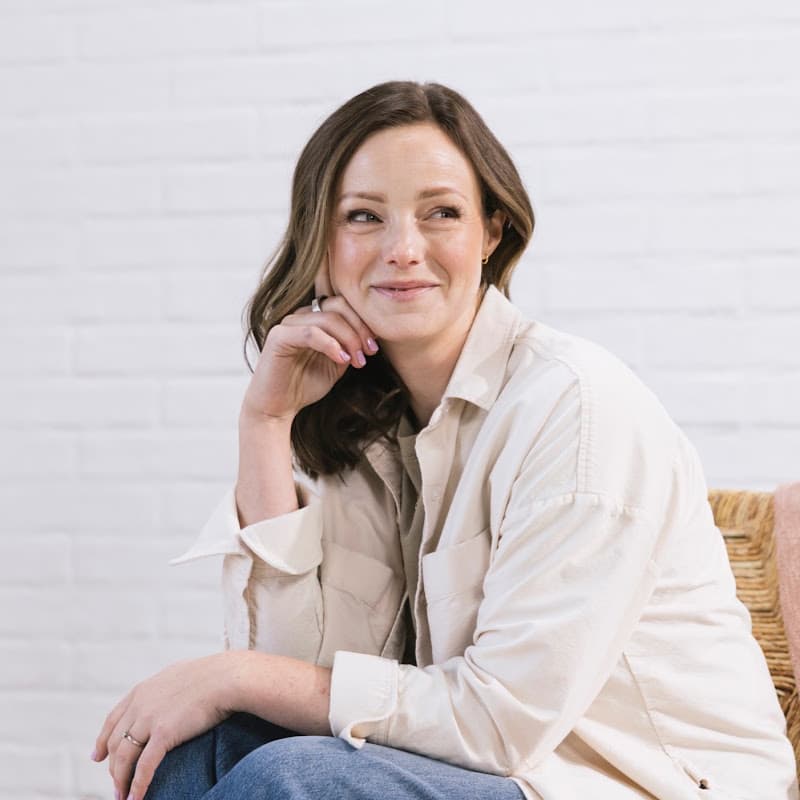
This week's guest, Angel Sierpina 0:33 and can give our nervous system the 0:35 signal of not being safe even if we are. 0:39 And I think all of us, especially those 0:42 of us who are really on top of things 0:44 and high achieving could really benefit 0:47 from more conversation around this of 0:49 what we can really do. And this week I 0:51 have Angel Serpina who's an integrated 0:54 health coach and certified meditation 0:55 instructor. She's also the founder of 0:57 the whole mother program at Redefine 0:59 Wellness and Treatment Center. And we 1:02 talk about what we can actually do in 1:04 our day-to-day life to help our body 1:08 feel safe again and be able to process 1:11 the previous trauma, all the stresses 1:14 that we have, all the comparison, and be 1:16 able to move forward and really have our 1:19 body be in the best positioning to do 1:22 all the things that we want to do. was 1:24 really a beautiful conversation about 1:26 how she works. And again, she really 1:28 leaves some very actionable tips that 1:30 you can do right now today, even while 1:33 you're listening, but also as soon as 1:35 you get off of the, you know, as soon as 1:37 you finish listening to this, some 1:39 things that you can start putting into 1:41 your routine right now to start changing 1:45 your body's perception of its safety and 1:47 really start to move the needle on again 1:50 your fertility, your hormones, or just 1:54 feeling present and really calm and 1:56 satisfied. as a mom. I hope you enjoy.
Angel's postpartum story and how it led her here 1:59 Angel, thank you so much for being with 2:00 me today. Thank you for inviting me. I'm 2:04 really grateful to be here. Now, before 2:06 we dive in, I'd love to hear a little 2:08 bit more about your journey if you don't 2:10 mind sharing how you came to support 2:12 women in the way that you do now. I'd 2:15 love to share that story. I have three 2:18 grown children. They're all in late 20s, 2:21 early 30s. And when they were very 2:24 small, it was sometime right around the 2:27 birth of our third child that I 2:31 experienced some postpartum blues. And 2:34 no one talked about that. I had no idea 2:37 what that was. I started to feel like, 2:39 oh my gosh, what's wrong with me? Am I 2:42 going to be a good mother? Am I going to 2:43 be able to handle three kids under the 2:46 age of five? And 2:49 the really 2:51 the turning point for me was when I went 2:53 to my family care doctor, 2:57 explained what was going on and I 3:00 started crying. I was doing a lot of 3:03 crying in those like the first 8 days 3:07 after. So I thought, you know, there's 3:10 got to be a solution to this. There's 3:12 probably something physically wrong with 3:14 me. I had no idea. So I talked to the 3:18 doctor and he said, "Well, why don't I 3:21 give you a prescription for Prozac and 3:24 and just take this until things smooth 3:26 out." So he handed me the prescription 3:30 and I walked out of the office and I sat 3:34 in my car and cried for 20 minutes. I 3:37 didn't feel all heard and I didn't think 3:40 that a prescription was what I needed. I 3:43 didn't know what I needed. But what I 3:46 realized in the following weeks and 3:49 months of getting some counseling and 3:52 some therapy was that there was a lot of 3:55 my childhood that was coming up and I 3:59 was experiencing a lot of overwhelm and 4:03 fear around am I going to be able to do 4:05 this right now? That was a long time 4:09 ago. Now I see what young mothers are 4:13 going through with the constant 4:15 comparison, 4:17 looking at social media, Instagram, the 4:20 perfect mom doing everything right. 4:23 She's back in shape. And I thought, "Oh 4:26 my gosh, I thought I had it bad with no 4:28 resources." But now in addition to 4:32 limited resources around this, there's 4:35 also this tremendous pressure that moms 4:39 have about being the perfect mother. And 4:43 then the the topic of getting pregnant 4:47 is also really charged for moms who are 4:51 trying to get pregnant and can't. And 4:53 then they're seeing all of these 4:55 Instagram photos of like, "Oh, I'm 4:58 pregnant again." And no one really ever 5:00 talks about what that journey is like 5:03 and that it could be difficult and there 5:06 could be some, you know, problems along 5:10 the way. So 5:12 that was when I decided I wanted to help 5:15 mothers and I wasn't really feeling like 5:18 I was fully qualified to do that. So, 5:22 four years ago, I went back to school 5:24 and I just graduated last December from 5:28 ASU and got my degree in integrative 5:31 health. And in my last semester, I was 5:35 required to do an internship and I chose 5:39 Redefine Wellness and Treatment. And I
Finding her way into trauma informed care 5:42 started working there in the mental 5:45 health field and traumainformed care, 5:48 which I wasn't planning to go into, but 5:50 I started to see and and the beautiful 5:53 way that the universe works is 5:55 everything started to point to this is 5:58 what you want to do. This is what I was 6:01 trying to help people do is learn about 6:05 their nervous system and calming their 6:07 nervous system. And then we also have a 6:10 postpartum 6:12 category there where we see moms who are 6:16 in postpartum. And so it was just a 6:19 natural fit. They said, "Well, why don't 6:20 you bring your whole mother here and you 6:23 can further develop our postpartum 6:26 program." So 6:29 >> yeah, 6:30 >> that's so beautiful. I love when you 6:32 know you can go through an experience. 6:34 It sounds like that was very hard and 6:36 overwhelming 6:37 >> and just 6:38 >> be able to though use that for good and 6:41 transer transform so many other women's 6:44 lives and their experiences in 6:46 motherhood and postpartum. That's so 6:48 incredible and congratulations on your 6:50 recent graduation. 6:53 >> Well, 6:56 within a year so yeah you 6:59 >> Yes. I think I think what I really 7:03 realized when I saw my doctor and left 7:06 their feeling unheard was that's that's 7:10 where I really wanted to pour into other 7:13 mothers and women is letting them know 7:16 they are heard that it's not just their 7:19 labs. It's not just what the doctor 7:22 sees. There's a lot of other things 7:24 going on inside of us. 7:26 >> I completely agree with you. Yeah. 7:28 Unfortunately, that is all too common 7:31 still to this day with just, you know, 7:35 conventional doctors not having enough 7:36 time or the right focus to really be 7:39 able to support women and so many women 7:41 feel completely, you know, dismissed, 7:43 unheard in their experiences. So, it's 7:46 incredible to have practitioners like 7:47 you who can really spend the time to 7:49 make them feel completely understood. 7:52 That's so that's that's a lot of where 7:53 the medicine is in my opinion. 7:55 >> Yes. And I I talk about that medicine a 7:59 lot in in terms of our wounds, 8:02 whatever's happened throughout our life. 8:05 It can either deter us from living the 8:08 best possible life that we want for 8:11 ourselves and our families, or we can 8:13 take that and turn it into medicine for 8:16 ourselves and for the people around us. 8:19 >> Yeah, it's beautiful. It's really like a 8:21 a shift in perspective, right? Is it 8:23 destroy me and just tear me down or is 8:25 this going to, you know, 8:27 >> give me that fire to to create a new 8:30 normal for other people? I love that 8:33 >> with that. You know, you mentioned some 8:35 of the comparison and overwhelm that 8:37 comes up, you know, with being a mom, 8:39 with just being a woman nowadays.
What unresolved trauma tells your nervous system 8:42 And and then you also mentioned sort of 8:44 some of those wounds. Maybe to start, 8:46 how do those things play into our 8:49 nervous system? like what what is that 8:51 doing to our nervous system and you know 8:54 what is the message that our body's 8:55 getting? 8:57 >> So constant stress or unresolved traumas 9:02 and traumas can be either little tea 9:05 traumas or big tea traumas. So whatever 9:08 happens in your life that you don't 9:11 fully digest or process, it stays in 9:16 your body and it kind of becomes a 9:18 signal to your nervous system that I'm 9:20 not safe. And so when I look at a woman 9:25 or we sit down and we talk about things, 9:28 that's usually the first thing that I'm 9:31 kind of looking for is to see like how 9:34 does she even present in her body? Is it
How to tell real danger from a triggered nervous system 9:38 kind of a tight feeling of like I'm not 9:40 safe here? when we're in a situation, we 9:44 can tell ourselves, I'm feeling 9:47 activated, but I know that I am safe. 9:50 You know, and that's part of the work 9:52 that we do there is helping them 9:55 differentiate between when they're 9:57 actually unsafe or when their nervous 10:00 system is just feeling unsafe. I love
Big T trauma vs little T trauma 10:03 that that you differentiate between I 10:06 can be big trauma. I like the big T or 10:08 little T trauma because that's one thing 10:10 that I I notice when talking with 10:12 people. They're like, well, I didn't 10:13 have anything major. I didn't have 10:14 anything major. And it's like we're 10:16 always comparing to someone else like, 10:17 well, I didn't have to go through a war 10:19 or something like that with any like 10:20 worst case scenario. It's almost like a 10:22 little bit of I don't know, like 10:23 minimizing our own experience a little 10:25 bit of, oh, well, I didn't go through 10:26 something. People go through worse. 10:29 Right. You know, I like how you 10:30 mentioned it's just something that's 10:31 unresolved. So, it could be something so 10:33 small that like 10:35 >> we thought we were being abandoned and 10:36 we weren't or something that just been 10:38 there and wasn't processed ever and then 10:41 we're now we're afraid of abandonment or 10:43 whatever it may be. So, that's that's 10:45 such a beautiful example I think for 10:47 women to be able to kind of open up 10:48 their mind to what could be present for 10:50 them. what could be present and also to 10:54 your point not dismissing things that 10:58 bring up a feeling in us. So all of our 11:01 emotions carry information and so 11:05 whether it was a little tea trauma like 11:08 you know it it could even be something 11:11 like being in a car accident you know is 11:14 a trauma for someone or being having a 11:18 medical procedure that was very scary. 11:21 All of these things count. So on the 11:24 spectrum of traumas, yes, you could say 11:26 there are these big T traumas like being 11:29 abused as a child, but it doesn't 11:32 discount that all of those traumas make 11:37 a difference in our nervous system and 11:40 really not dismiss anything. And it's 11:43 not even about reliving a trauma to heal 11:46 it. It's really about just starting to 11:50 gently look at the things in our life 11:53 that are still there that we never fully 11:56 digested. We never fully process those 11:59 things. And particularly with 12:01 motherhood, there's so many wounds 12:04 around motherhood. You might have heard 12:07 of like the mother wound. So things that 12:10 our mothers did or said with us and how 12:14 we take that into our own motherhood.
Fear and shame around fertility and miscarriage 12:16 So, I'm curious in your practice, you're 12:20 working with women who are having 12:23 fertility challenges. 12:26 Do you ever hear much about 12:30 fear or shame around 12:33 miscarriages or fear or shame around 12:37 whether or not they'll be a good mother? 12:40 You know, yes. And I think the 12:42 impression that I get is that people 12:43 that's not the on the forefront of their 12:45 mind. 12:46 >> But when I ask about it, especially if I 12:48 ask that specifically, then then they'll 12:52 sort of admit that, oh yeah, well, you 12:54 know, I didn't really have a great role 12:56 model or my mom wasn't the best and I'm 12:58 changing that. Like they they may feel 13:00 like they've processed and healed a lot 13:01 of that, but it's still walking into 13:03 this unknown of now they're going to be 13:05 in the role of mother or parent. And you 13:09 know, it's a big mystery of how am I 13:11 going to be able to handle that? So, 13:13 absolutely. And especially with 13:15 pregnancy loss, too. I mean, even for 13:17 someone who maybe wasn't afraid before 13:19 it happened, once someone has a 13:20 pregnancy loss, 13:21 >> Yeah. 13:22 >> every single couple that I've ever 13:24 talked to who's had a pregnancy loss, 13:25 even if it was something, you know, oh, 13:27 we weren't even trying and it happened, 13:28 they're still afraid it's going to 13:29 happen again.
Why pregnancy loss carries so much hidden grief 13:31 >> Yes. 13:32 >> So, it's there is definitely a lot of 13:33 fear there 13:34 >> and that itself is a very real trauma. 13:37 Yeah. 13:38 >> The interesting thing about miscarriage 13:42 or or having a difficult time getting 13:45 pregnant is that people don't really 13:48 talk about it. They and again this 13:50 probably comes to the comparison thing 13:52 where they don't want to say what's 13:54 going on because are they going to be 13:56 judged as you know oh you're not able to 13:58 get pregnant and then after miscarriage 14:03 it's there's so much ambiguous grief 14:07 because nobody acknowledges it really 14:10 you know someone dies in your family you 14:13 have a funeral or you have a celebration 14:16 of life it's not something that you just 14:19 brush over. But with miscarriage, it's 14:22 every bit as much a huge loss, but it's 14:25 not talked about. Right. Absolutely. And 14:28 I, you know, I think it's it's good more 14:30 and more people are talking about it and 14:32 there are support groups and things like 14:33 that, but still often times with the 14:37 people that someone's closest with, 14:38 they're they don't want to talk about it 14:40 with their mom and dad because they're 14:42 pushing them to have kids or something 14:43 like there's there's all this, 14:45 >> you know, conflicting feelings. And so, 14:48 yeah, often times women or couples are 14:50 going through it alone. And with 14:52 pregnancy loss, you know, oftentimes 14:54 they haven't even told anyone yet, so 14:56 they don't tell them after. And I'll 14:59 have people ask me too, you know, once 15:02 they do get pregnant finally and it's 15:04 staying around like that, you know, the 15:06 pregnancy is going really well. 15:08 Sometimes they'll ask me, well, should I 15:10 tell people or not? And I'm always like,
Should you tell people you're pregnant again after a loss 15:12 I mean, it has to be what you're 15:13 comfortable with, but just think about 15:15 this. I was like, do you want those 15:16 people to be on your side and supporting 15:17 you no matter what happens, 15:19 >> or do you not want the pressure? like 15:21 what is it going to be for your 15:23 experience and so that you know you know 15:27 there's there can be beauty in sharing 15:28 it and also sharing the loss even if it 15:30 is it means they're also disappointing 15:32 those people around them they also get 15:34 the support to not have to go through it 15:35 alone 15:36 >> yes 15:38 >> that's an excellent point and I think 15:40 you do have to selectively choose who 15:44 you're going to share those kinds of 15:46 things with because when you go through 15:49 any kind of trauma 15:51 One of the things that's very beneficial 15:54 is being able to have another human 15:58 being witness your grief, witness your 16:01 loss. But that's a very specific kind of
The power of 16:04 person, right? Like you said, someone 16:07 that you know, you can completely trust 16:10 that loves you just the way you are, 16:12 that isn't going to try to fix anything. 16:16 They're just witnessing the loss and the 16:19 grief. 16:20 >> Yeah, that's beautiful. And you 16:22 mentioned too, you know, like moving 16:24 things through our body, experiencing 16:27 the grief. I mean, you point to one 16:30 piece of it, too, of just letting 16:31 someone witness that experience with 16:32 you. I feel like that alone just helps 16:35 move it through and help you process it. 16:38 >> But what you know, how what does that 16:40 look like for a lot of people? How can 16:42 they if they are identifying okay I have 16:44 some you know some stuff some baggage 16:47 that is maybe affecting me currently and 16:48 making me feel unsafe what do they do 16:51 from there 16:53 so first of all having a trusted person 16:56 is really important and I have one very 17:00 close friend who also happens to be a 17:02 first cousin and we call each other our 17:05 confessors because whenever I have 17:09 something that I feel is even the 17:12 slightest bit like, "Oh, I'm so ashamed 17:14 that I even thought this about this 17:16 person or or I did this or whatever it 17:18 is." To be able to verbalize that, have 17:21 her witness it and not judge me. That's 17:25 very powerful. And it works for grief, 17:27 it works for shame, it works for trauma. 17:31 The other thing that you can do is 17:35 a somatic work just means working with 17:38 the body. So, therapeutic touch is 17:41 something that I practice where I work. 17:44 And it's done fully clothed and usually 17:47 light music if if the client can 17:50 tolerate that. 17:52 And we just start at the head and move 17:55 our way down. And it's just very light 17:58 but very intentional and intuitive 18:01 touch. So, a lot of times clients report 18:05 to me that, "Oh my gosh, when you put 18:08 your hands on my chest like this, I 18:10 started to shake." So, you don't need to 18:15 identify what the emotion is that you're 18:18 releasing, but the body will give you 18:20 signs that it is releasing. So, that 18:24 therapeutic touch, I think, is really 18:27 important. And it's a little bit 18:29 different than traditional massage 18:32 therapy. You need a practitioner who is 18:35 very keyed into that sort of energetic 18:38 work with with trauma and what the 18:41 body's holding. So that's a good way if 18:45 you don't have access to therapeutic 18:47 touch. I love just doing this for 18:50 myself. Like a couple times a day, I put 18:54 my hands on my heart like this and I 18:57 close my eyes and I just ask myself, 19:00 "What am I feeling right now?" And we do 19:05 this 19:06 five or 10 times a day at Redefine 19:09 Wellness Center. And people sometimes 19:12 get annoyed with it. We'll be like, 19:14 "Let's do a feeling check-in. How are 19:15 you feeling?" They're like, "We did this 19:17 this morning. We've done this five 19:19 times." But the reason that we encourage 19:23 people to do this throughout the day is 19:27 you could be feeling one way in the 19:28 morning. You could wake up feeling 19:31 really great and by 10:00 19:34 something has happened. There's been an 19:36 interaction. Somebody said something to 19:38 you. Maybe you had a tense moment with 19:42 your partner. 19:44 And so the internal landscape is already 19:48 changing. And now your nervous system 19:51 recognizes that as a threat. So now 19:54 you're in fight or flight and you take 19:56 that into the next moment. So just 20:00 checking in with yourself, you know, 20:02 hands over the heart. If you're in a 20:05 place where you you feel like you can't 20:07 do that, maybe you're in the work 20:08 environment, you can simply bring your 20:12 attention to your breath and just 20:15 notice, I'm breathing in and I know that 20:19 I am here and I am safe in this moment 20:24 and I'm breathing out any worry or 20:27 anxiety about my future. That's a real 20:31 simple quick thing you can do. 20:33 A lot of times when I drive, I have a a 20:36 30 minute commute to work. So driving is 20:40 kind of in a good and bad way my think 20:44 tank. So if I'm getting into ruminating 20:47 thoughts about the past or the future, 20:51 then I just do that quick breath check 20:54 in and just tell myself, I'm here right 20:58 now in this moment and I am safe. And 21:01 then I just notice I'm breathing in, I'm 21:05 breathing out. And when you bring your 21:07 awareness to your breath, you really 21:10 can't be thinking about other other 21:12 things, you know? 21:13 >> It's meditative practice, too. 21:16 >> Yeah. Oh, that's so wonderful. I feel 21:18 like those are really 21:20 such like attainable tips that you know 21:23 that you can just really do in any 21:25 setting, any time of day. And it sounds 21:27 like maybe the more the better even to 21:30 do those 21:31 to really see how am I feeling. It is 21:34 really amazing to me. You know, I 21:36 >> wasn't always aware that I am now 21:39 >> and and so it's very like very fresh in 21:43 my mind to know how I'd go through the 21:45 day very blindly to not knowing how I 21:47 was feeling and what things were making 21:48 me feel. And you just it's like reactive 21:50 reactive reactive to everything. 21:52 >> Yeah. 21:53 And now I'm being more intentional and 21:55 more aware. And it really is fascinating 21:57 to be able to see it in real time of 21:59 like, oh wow, that tiny interaction that 22:02 that email I got somehow sort of 22:03 triggered me a little bit, but then 22:05 you're able to just catch it so much 22:07 more quickly then to say, "Oh, but wait, 22:09 it just it's triggering that one little 22:11 thing. Oh, that's silly. Okay." And then 22:13 just move on rather than have it really 22:16 have this domino effect throughout your 22:18 entire day. So that is really powerful. 22:21 >> Yes. And especially when you're busy, 22:23 like in your practice, I can imagine 22:25 there's not a lot of time between seeing 22:28 patients. And so that checkin is really 22:32 important because you're giving it kind 22:36 of a placeholder. Even if you don't have 22:39 time to fully deal with what the email 22:43 brought up for you, you're giving it a 22:45 placeholder. You're saying, "I'm here. 22:48 I'm feeling this. I don't have time to 22:51 dive into it right now, but I will get 22:53 to that later today or whenever in the 22:56 evening. And then that lets your your 22:58 nervous system know, oh, okay, we're 23:00 good. And then you walk into your next 23:04 meeting or your next patient or your 23:06 next interaction with your kids free of 23:09 that. So, you're not piling it up as the 23:12 day goes on. 23:13 >> Yeah, I love that. And I I think it's 23:16 again it feels maybe more attainable to 23:18 me than you know the typical thought 23:21 about therapy or something like talk 23:22 therapy. 23:24 You know the impression that I get. I 23:26 think a lot of people have the feeling 23:27 of oh trauma like you mentioned earlier 23:29 you have to think about it and process 23:31 it and relive it and it feels like such 23:34 heavy work. And I like the fact that 23:36 with this kind of more sematic approach 23:38 it's like you don't have to understand 23:40 it. You don't necessarily have to figure 23:42 it out. you can just let it go. I think 23:46 that's very free probably to a lot of 23:48 people. And I guess a question on that 23:50 of like where how do those two things 23:53 play into it? You know, especially from, 23:55 you know, dealing with trauma and maybe 23:57 some more, you know, big trauma or 23:59 little trauma in processing it. Can we 24:02 get away with just processing it 24:04 sematically or is there a place for sort 24:05 of both and working handinhand with 24:07 those? 24:08 >> Yes, there is definitely a place for 24:11 both things. Our practice is very 24:13 integrative. So as I I mentioned in our 24:16 our brief little chat at the beginning, 24:19 we do have a clinical psychologist. We 24:23 have a psychiatric nurse practitioner 24:26 who handle the medication and 24:28 prescribing if that's necessary. We also 24:31 have talk therapy with our licensed 24:34 therapists. So we have close to 40 24:38 different modalities, but that's 24:39 definitely part of it. We don't see it 24:42 as you can just come and do sematic 24:44 work. It's it's kind of a a blend of a 24:47 lot of things. 24:48 >> That's great. And I feel like that, you 24:50 know, I I think of things as a spiral 24:52 like is a negative spiral again like 24:54 going through our day and it's 24:55 everything's compounding or is it a 24:57 positive spiral of you know I imagine 24:59 those things then just impact the other 25:02 so beautifully and really help you know 25:04 if you can stay grounded and safe 25:05 feeling in therapy and be able to talk 25:07 through something gain some tools. Okay. 25:09 Okay. Then you go into the next scenario 25:11 with tools and regulation like you know 25:14 what a beautiful ripple effect that that 25:16 has then. Yes, that's exactly that's 25:19 exactly what we do because most of our 25:21 clients are there minimum half the day. 25:24 Some of them are there the full day. So 25:26 they start at 8:30 in the morning and we 25:28 have meditation and we have yoga and we 25:31 have somatic therapeutic touch and and 25:34 then they have their group sessions and 25:37 a session with a counselor or a 25:39 therapist. So it is a beautiful way each 25:44 thing 25:45 builds on the other and each thing also 25:48 you know just helps the other piece work 25:51 that much better. 25:52 >> Amazing. I want to touch on generational 25:55 trauma and sort of that idea of, you 25:57 know, how does how do you see that at 25:59 play especially with mothers? 26:02 >> I do. I see that at play with women who 26:06 are actively being mothers and also with 26:11 women who have had miscarriages and 26:13 haven't been able to conceive. Yeah. 26:16 Well, you know, from my standpoint with 26:18 all the medical background and seeing 26:20 the physical piece of it, I do of course 26:23 there are other barriers at play, but to 26:25 me it's really interesting because the 26:26 more we learn about the ovaries in 26:28 particular and our hormone production, 26:30 the more we realize that it's so tied 26:33 into our nervous system 26:34 >> and our body's perception of 26:37 >> and so it is very interesting to me. I 26:39 do think that there's a physical 26:41 energetic connection there and I I I 26:44 really believe you know if we have such 26:46 a deep feeling that is like so ingrained 26:50 in us that it's truth you know it might 26:52 not actually be truth but it becomes a 26:53 truth to us like to her that you know 26:56 that client that you mentioned I'm I'm 26:58 not worthy I'm not going to be a good 27:00 mom I'm not lovable whatever the story 27:01 is 27:02 >> right so ingrained then our body can 27:05 follow along and be like well we're not 27:08 meant to do this we're not going to be 27:09 good at this. So, it's almost like, you 27:11 know, all of our cells are getting this 27:13 message from our brain, even if it's not 27:15 true. And so, I do I, you know, again, 27:18 the more that I, you know, look at all 27:20 the research and everything, I think the 27:22 more we we don't really see the whole 27:24 picture. And I think that that is a big 27:26 driver for a lot of things. I I love 27:29 that you actually are thinking about all 27:33 of that when you're helping somebody on 27:36 their fertility journey because gosh, 27:39 you're your patients are so lucky. You 27:43 know, I don't know how many doctors are 27:45 doing that. 27:47 I think it's again, it's just so 27:49 important to me. You know, I have the 27:51 the ability to look at the big picture 27:54 in in functional medicine. We're able to 27:56 zoom out. We're able to spend a lot of 27:57 time And it's it's a piece of it for 28:00 sure. And again, you know, I I've seen 28:02 it again and again too where we have 28:03 some, you know, past trauma or sort of 28:06 the type A personality I see a lot where 28:09 someone a woman's trying to do it all 28:11 perfectly and and that's where it 28:15 becomes a really tough point. She's 28:16 really trying to get pregnant and do it 28:18 all right, but then it's also just she's 28:19 kind of working against herself and 28:21 she's so stressed out. So yeah, it's 28:23 it's definitely a piece of it for sure. 28:25 >> Yes. And that particular situation when 28:29 a woman is trying to do it perfectly, 28:32 what I've found in in my experience is 28:35 that usually comes back to a childhood 28:38 belief that I'm not enough. So the way 28:42 that we become enough is we're 28:45 continually trying to do everything 28:48 perfectly because the messaging that we 28:52 received or our interpretation of it was 28:54 that we were not enough. 28:56 >> So Oh, go ahead. 28:59 >> I was going to ask, are there are there 29:01 ways that this shows up outside of, you 29:03 know, when someone before someone 29:05 already has recurrent miscarriages or 29:08 something like that? Are are there also 29:09 kind of warning signs that you see in 29:11 you know the clients that you work with? 29:13 Something where you'd say okay this is a 29:15 sign that you're you know you're in 29:18 fight or flight you have some past 29:20 stories. 29:23 I think that 29:25 if you want to call it type A 29:27 personalities or let's call it um person 29:30 who really strives for perfection in 29:34 everything they do. I see them having a 29:38 much more difficult time because 29:42 even if they successfully get pregnant 29:46 then every step of the way they are 29:49 maybe in my opinion over researching 29:52 everything. And so everything becomes 29:55 this this ideal like there's only one 30:00 perfect way to do this. And as we know 30:03 in pregnancy, a lot of different things 30:05 can happen and for sure in motherhood. 30:08 So just because somebody gives you this 30:11 picture perfect template on Instagram 30:14 and says this is the way a good mother 30:16 does it or this is the way a perfect 30:18 pregnancy goes. It's not reality. 30:22 So I do think that people who have that 30:25 not enough story or living in that idea 30:29 of perfectionism in everything they do, 30:33 it's going to be hard. So that would be 30:36 I mean that might be a place where you 30:38 you would notice if someone is asking 30:41 you a lot of questions and you kind of 30:44 know the type right when they want to 30:47 know exactly how to do it exactly right 30:50 and that that could lead to 30:53 disappointment. 30:54 >> Yeah. Yeah. And it's not that you know 30:57 just so everyone knows type A people are 30:59 great. Oh, 31:01 >> right. I am one tend to be same. And 31:04 these are the people too. I mean these 31:05 are a lot of the women that I come to 31:06 have come to see me as well because 31:08 they're also very high functioning. 31:11 They're very successful. They do really 31:13 incredible things in the world. Yeah. 31:15 >> But then they're also just kind of 31:17 burning the candle on both ends, so to 31:19 speak, a lot of the time and they're 31:20 getting burned out and they're having 31:22 these types of issues. So, it's it's 31:24 definitely a double-edged sword in my 31:26 mind. 31:27 >> Yeah. And I think to your point, those 31:30 personality types are really high 31:33 producers, too. And with that high 31:35 production, usually we see that there's 31:39 very little time for rest, for true 31:41 rest. So, another great tool that we can 31:45 give your listeners is just a 10minute 31:48 meditation every day. You can do it any 31:51 time of the day, but typically in the 31:54 morning is what I like to recommend 31:56 because it sets a nice tone for the rest 31:59 of your day. And it's a way to check in 32:02 with yourself. Meditation 32:06 to me is quieting the mind and and 32:09 listening to source for how I want to 32:12 move through my day. And 32:15 in most of our lives, we're we're 32:18 thinking beings. So we have thousands of 32:21 thoughts a day and typically we have a 32:24 thought and we have this tiny little 32:26 space before the next thought and the 32:28 next thought and 90% of our thoughts are 32:32 recycled. So we're thinking about things 32:35 that happened last year, last week. 32:38 We're ruminating about the future, but 32:41 there's no room or space for new 32:44 thoughts. So in meditation, we're just 32:48 creating a pause, a longer gap between 32:53 this thought and the next thought. And 32:56 one of the easiest ways that you can do 32:58 that is bringing your awareness to your 33:01 breath. So that breath, that beautiful 33:05 life-giving breath that animates 33:08 everything we do, that's the quickest, 33:10 easiest tool to bring us back into 33:13 regulation to meditate with. So that's 33:17 that's another easy one, I think. 33:19 >> Amazing. Just getting into the present 33:21 and turning the thinking with all that. 33:24 >> Yes. And you know, it's hard to turn it 33:28 off. So when you bring your awareness to 33:31 your breath, then that's what you're on 33:34 and you you really can't think about 33:36 anything else. And then of course the 33:38 thoughts continue to come and you just 33:40 notice them without any judgment and 33:43 return your attention to your breath. 33:46 Amazing. 33:48 That's so beautiful. And again, so 33:49 simple. I think that's amazing to just 33:51 like give busy women and moms something 33:54 they can just do anytime, you know, 33:57 maybe before bed having little Yes. And 34:01 you can even do that when you're driving 34:03 to work with your eyes open, of course, 34:05 but just bringing your attention to your 34:08 breath and and doing a round of 10 34:12 breaths while you're driving. 34:14 >> Yeah. Beautiful. Well, I appreciate you 34:17 sharing this incredible insight and 34:19 these actionable tips where again I 34:20 think it's so important where we can 34:22 just, you know, not just get information 34:24 and more and more information because 34:26 there's overload of that nowadays being 34:28 able to take something away from it and 34:29 really start to change 34:32 >> right now today, you know, start with 34:34 this is so powerful 34:35 >> right in this present moment. 34:38 >> Well, thank you again, Angel, for being 34:39 here today. Where can people find you? 34:42 >> Thank you so much for having me. This 34:44 has been a real joy for me to be able to 34:46 share and get to know more about what 34:47 you do. They can find me on Instagram, 34:51 Whole Mother Angel, 34:54 and also at Redefine 34:57 WT, Redefine Wellness and Treatment. 35:01 Incredible. Well, thank you so much. 35:03 >> Thank you. I hope you have a beautiful 35:05 day. And when we end our little chat 35:09 here, take a minute to check in and see 35:12 how you're feeling.
Comments