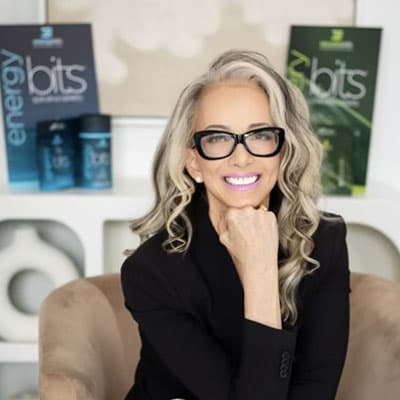
Full Transcript Introduction to Algae and the Guest 0:00 We have a quote from NASA that says, one gram of algae has the same nutrition as a thousand grams of fruits and vegetables. 0:07 Spirulina is very chewy because it has highest protein in the world, three times more protein than steak. 0:12 And even as recently as World War II, if they ran out of blood for transfusions, they would give the injured liquid chlorophyll. 0:18 Chlorophyl builds your blood, full stop. 0:20 So with spiruline, there was a knock on it for a minute because there were heavy metals found in it. 0:25 I eat it all day long, and by the way, I'm turning 70, that's seven zero, in a couple of months. 0:31 But there's a blue pigment in spirulina. 0:33 I am sure you've never heard of it before, but you really need to know it. 0:36 What does it do? 0:37 If you're overwhelmed with chronic health symptoms and still don't have answers, you are not alone. 0:42 On Redefining Wellness with Dr. 0:44 Javin, we'll be exploring root causes like Lyme disease, mold and parasites. 0:49 And I'll guide you with simple and practical steps towards real healing. 0:55 Welcome back to another episode on Redefining Wellness Podcast. 0:59 I'm your host, Dr. 1:00 J.B. 1:00 Moore, and today I am with Catherine Arnsten, PhD, founder and CEO of Energy Bits. 1:08 And honestly, her story is pretty cool. 1:11 Getting to know her over the last few years, meeting her at different events, And her journey is, well, it's one that's so common to so many of us that 1:20 are in this field, right? 1:23 somebody we love or ourselves that just makes us break through the norms and figure out what's actually going to work for someone. 1:31 So her sister was diagnosed with breast cancer. 1:34 Her oncologist told her an alkaline diet would help be able to get her well. 1:39 So what did Catherine do? 1:44 She put her brain to it. 1:45 She dove in from a corporate career and researched everything alkaline. 1:50 And that's when Energy Bits was born. 1:52 After the last 15 years of research, podcasting, which is honestly where I met you first, and then diving into everything, 2:01 she's here today to tell us why algae is going to be such a powerful tool for us. 2:08 So thank you for joining us today. 2:10 Well, thank you, Dr. 2:11 Javan. 2:11 Yes. 2:12 And it's fun to think that we've known each other almost a decade, and here we are. 2:18 So we're still committed to what we do and loving every moment of it. 2:23 Anyone who's met me over the last 16 years, I was passionate about algae.
Why Nutrient Density Matters 2:27 Spirulina chlorella is what I'm going to talk about today. 2:28 I've been passionate 16 year ago and I have since learned even more about it, gone down so many rabbit holes. 2:38 I am still even more passionate, if that's possible, so passionate that I'm actually writing a book about it, which will come out this fall. 2:45 So stay tuned. 2:45 It's called Love Your Health to Bits with Algae. 2:51 Algy was the first life on earth four billion years ago. 2:53 Was a cyanobacteria, a spirulina, what you will talk about is a cyano bacteria, Which is one of the reasons why I call spirula spiritualina. 3:01 something spiritual about being the first life on earth and it's still here. 3:04 But most people are either confused about what algae is, and rightfully so, because no one until me has explained what it is and why it so critical for 3:15 all of us to be taking this juncture in our world, both for longevity, for protecting your health, regaining your healthy, 3:25 improving your energy, your focus, And of course, it also a sustainable crop. 3:31 I look forward to sharing a few pearls of wisdom from my bits of algae. 3:38 Well, let's first off start with what is a benefit of allergy spirulina? 3:42 What's a benefits? 3:43 Why do people care? 3:44 Right now, we have chronic disease escalating at a rate that's never been seen before, particularly in North America. 3:52 And I attribute it to, and many of my colleagues do, perhaps you do as well, to two main things. 3:58 We are no longer getting the nutrition that our body needs to live optimally. 4:03 we're not getting nutrition, that needs live at all. 4:06 and that covers a couple of reasons. 4:08 Even if you are eating vegetables, the soils are so over-crop, there's no minerals in the soil for the plants that you can pull up. 4:13 And they're grown so far away that by the time they harvest them before they are completely ripe. 4:18 So then they throw them in a truck and they stick them into a warehouse. 4:21 And by time, they get to the store and then to your plate, there's very little nutrition there. 4:26 Then of course, 75% of Americans are eating ultra-processed foods. 4:30 No nutrition, so you can't run a car without gas. 4:32 You can use your phone without electricity and charging it. 4:36 Well, your body is the same way. 4:37 There's nutrients it just needs to function properly and we aren't getting it from our food. 4:42 Algae, as you're going to find out in a minute, is the most nutrient-dense food in the world, particularly spirulina, which fills all nutritional gaps. 4:49 That's why I say spirullina is, the key is your nutritional insurance. 4:53 The other problem that we're running into is we live in very toxic soup these days. 4:57 It doesn't matter whether it's the air or the water. 4:59 the food, the cosmetics, your clothing. 5:03 We are absorbing and all sorts of toxins, whether it's glyphosate, mold spores is a big deal, microplastics, and we can't get them out. 5:13 And so the average adult I read now has 800 toxins in them, which our immune systems simply weren't built to sustain. 5:21 By the way, when you have toxins on your body, You have what are called receptor cells on your cells to allow certain nutrients in, 5:30 antioxidants, proteins, whatever. 5:32 Well, if you have toxins, it's like the toxin is sitting there, like someone stole your parking spot. 5:38 I used to live in Boston, and so parking was at a premium there. 5:41 And so lots of people would guard their parking spots with their life. 5:44 But if a car is in there you can't get in. 5:47 So you cannot get great nutrition into your cell if the toxins are taking the parking So things like chlorella algae, which is the other key algae we'll 5:55 talk about, are known primarily as a detoxing chelating algae. 6:00 It has other great nutrients as well as like spirulina has 40 vitamins, minerals, but it's primarily a detoxing cleansing algae helps your body repair. 6:10 So the two algae do quite different things. 6:12 Chlorylla I refer to as your health insurance. 6:15 spirulina as your nutritional insurance because everything you eat after that is bonus and you'll get all of your nutrients that you need to live optimally 6:24 and then chlorella, as I mentioned, will pull all the toxins. 6:27 Now we'll go into dosage and when to take them because you want to them at different times of the day and they do different things at dosages. 6:36 The reason I like algae so much is that If you had your own garden, and not many people do these days, but if you have your home garden you could probably 6:45 get most of the nutrition that you need from your garden. 6:47 But then, you know, then you'd have to clean it, cook it eat it. 6:51 And the reality is a lot of people just aren't home, don't have gardens and don' have time to do all that work or the kids won't eat them or they give 7:00 you gas. 7:01 Lots of, people especially get older, they have difficulty with digestion. 7:05 even if you had your own garden, a lot of vegetables just aren't an option for you.
Spirulina vs. Chlorella Basics 7:10 So the great thing about algae, at least the ones we sell at Energy Bits, and the website is energybits.com in case you're interested, 7:17 they come in tiny tablets that you could swallow or chew. 7:21 And we'll talk about the two algae a second. 7:24 Spirulina is very chewy because it has the highest protein in the world. 7:27 Three times more protein than steak. 7:29 So a lot of people don't like the chewiness because you know with that much protein and it's loaded with essentially fatty acids can be a little stick 7:36 to your teeth a bit. 7:37 But it usually you're hungry and tired and you want energy and focus. 7:41 You want to get to work or a workout in morning or the afternoon. 7:44 That's when you usually have spirulin which is a blue-green algae, which is why we packaged SARS. 7:50 And the blue package, I designed the packaging so that you know it's a blue green algae. 7:55 Oh, look, it says energy. 7:56 So I guess it gives you energy, of course it does. 8:00 Of course, chlorella is a green allergy. 8:03 You can also swallow it or chew it, or mix it in a smoothie. 8:07 Look, its in the green package because it is green. 8:10 It's also a plant. 8:12 Spirulina, as I mentioned at the very beginning, is a bacteria, it's a cyanobacteria, so it gets absorbed instantly. 8:18 So generally you have spiruline in the morning or the afternoon, and we recommend we'll go into more detail, chlorella, before bed because it helps you sleep. 8:26 It has the highest tryptophan in world, which is the precursor to melatonin, but also is precursors to serotonin which helps with what's called bowel movements. 8:37 Get rid of what I call the junk in your trunk. 8:40 So let's go back to some of the things you said in there because you you set a lot I want to start to unpack a little bit of it but one of those things 8:46 that you were talking about was You mentioned we're not getting enough nutrients because food is hyper processed today and I 100% agree I did a talk last 8:56 year when I was presenting to a hundred and well hundred about fifteen hundred doctors and my It was at a cell core conference and When I was speaking 9:08 up there, my topic that I talking about was nutritional density in food and the lack of it within the supply that we're getting. 9:15 So farms are farming the same land. 9:19 And when you farm land, what I researching is I found that you put the plant in and instead of doing rotational crops and then giving time for other crop 9:27 to grow a year off basically, where the little ground will actually replenish itself with minerals. 9:33 We're not doing that anymore. 9:35 So as you start looking at the data, you look down and you go, an apple today is at best equivalent to a fifth of what an Apple would have been. 9:46 So let me just make that context for people. 9:48 You have to eat five apples from 1950. Sorry, one apple from 1950 is the equivalent of five apples today. 9:55 So just think about that. 9:56 You have to eat five times more. 9:57 Well, this is a part of the reason why we're gaining weight. 10:00 And as I was researching this, you have that eat so many more calories to get satiated because that hunger is due to the fact we don't get enough nutrition, 10:12 at least a portion of hunger. 10:13 Is so then when you're talking about algae and spirulina. 10:17 And you said that there's a significantly higher potency, because with algae, spirulinum, we're not doing the same thing, 10:25 right? 10:26 We're like over farming the ocean. 10:28 So what's going on there? 10:29 It's grown in fresh waters. 10:31 It is called hydroponic farming. 10:33 There is algae in the oceans. 10:36 I'll segue back to give you a description of what algae is. 10:42 At EnergyBits we grow ours in Taiwan, which is the gold standard. 10:46 for growing algae, but 99% of the algae that is consumed in tablet form or sold tablet-form or powder, whether it's at Tray or Joel's, 10:57 Whole Foods or us at Energy Bits, they're grown in freshwater and they are grown Asia. 11:02 not America. 11:04 And I'm actually just finishing up my chapter on sustainability right now because algae is also the most sustainable crop in the world. 11:11 But to your point about the nutrition, we have a quote from NASA that says, one gram of algae has the same nutrition as a thousand grams of fruits and vegetables. 11:21 One to a thousand. 11:22 So to your point, you have to eat five apples today to get just the nutrition of one apple from, back in the fifties, which is not, 11:31 it's, You can't do that. 11:32 You just, A, have the budget. 11:34 B, Have the time to Eat it all. 11:36 And you don't want all those calories. 11:38 By the way, all these tablets that we sell, They are so nutrient dense, and I use that quote from NASA. 11:46 Each tablet has the equivalent nutrition as one pound of vegetables. 11:51 One pound in one of these tablets are about the size of a baby asteroid. 11:55 There is nothing in the world with more nutrition than spirulina and chlorella algae, at least not ours. 12:00 I can't say everybody has highest quality, which is why... 12:06 That one 80-bitty tablet is the same as an entire pound of fruits and vegetables? 12:12 And how much does that tablet weigh? 12:15 Well, it's 250 grams, so I'll give you another visual. 12:18 So we sell them in large bags of a thousand tablets, and I use that same calculation to determine how much nutrition is in each bag. 12:26 And I came up with 551 pounds of vegetables, nutrition from the vegetables in one of our bags. 12:35 Visually, that's 30, three zero grocery carts of food.
How Spirulina Supports Energy 12:41 30 grocery carts of food right here. 12:44 And here's why it works out to that weight. 12:48 First, and as I mentioned earlier, spirulina has the highest protein in the world by weight, has three times more protein than steak or chicken or fish. 12:56 It has to highest chlorophyll in world. 12:58 Even the United Nations, 50 years ago, had a global conference endorsing spirullina as the answer to world hunger because A, 13:05 it had the high protein and B, is a sustainable crop. 13:10 So, and maybe this is where I'll unwind a little bit and explain what algae is, because algae, is its own food category. 13:18 And there are two main categories, macroalgae and microalgy. 13:22 Macroalge is that stringy stuff that you see washing up on shore, also known as seaweed, dulse, or kelp. 13:28 It's very high in fiber, has virtually no nutrition. 13:33 High fiber, no nutrition. 13:35 It all has iodine, which can be good or bad, depending on your need. 13:38 And it's only in the ocean. 13:39 That's why they call it seaweed. 13:41 We're talking about microalgae. 13:43 Its called a micro because it is microscopic in size. 13:46 I read once that you can get a million microalgae on the heva pin. 13:52 So now you're starting to see when you consolidate micro-algy into these tablets, you start to say what's going on nutritionally. 14:00 And using that quote from NASA, and they feed it to the astronauts for that reason, the nutritional density is off the charts. 14:10 Now, it has either zero fiber or very little fiber. 14:14 Spirulina has zero-fiber because it's a bacteria, has no cellulose wall. 14:19 The good news about that is that it gets into your bloodstream instantly if you chew it, like I do, or swallow it. 14:25 It's about 10 minutes. 14:26 So not only is it bioavailable, that was a concentrated nutrition, it's bio-available nutrition because it is not just what you eat, 14:33 but what your absorb. 14:34 And when it comes to protein, your body can't absorb protein. 14:38 It has to break down into amino acids. 14:40 Sometimes you might eat 50 grams of chicken, but you only end up absorbing 5 grams as aminos because you had a compromised digestion. 14:46 When you get 5g of protein from algae, because all the protein is already in amino acid form, you'll get five grams, so one for one. 14:57 So spherulina, so algae, macro and micro. 15:00 Macro, you can see, is that stringy stuff. 15:02 Onshore, low nutrition, high fiber. 15:05 Microalgae, either no fiber, very little fiber but nutrient dense. 15:10 Now within microalgy, there are tens of thousands of strains, but the two most popular that are harvested as food crops are blue green and green. 15:21 And one strain of blue-green is spirulina, and one string of green is chlorella. 15:28 Now, I point out this distinction because lots of people will go online and they'll Google blue green algae, or maybe they live near a beach and sometimes 15:36 they will get warnings, a blue, green, algae closing your beach, stay away, toxic. 15:41 It's not spirullina. 15:42 You know, it's another part of the bluegreen algae family. 15:48 Spirulena is only harvested in farms as food. 15:53 It doesn't wash up on your beach. 15:57 But by the way, don't get angry at the algae for closing your beaches because what does it do? 16:02 It's Mother Nature's Cleanup Act. 16:04 So it showed up because there were bacteria and toxins in the water, which you couldn't see. 16:09 and algae will kill bacteria and absorb toxins. 16:13 And it does the same thing in your body too. 16:15 So let's not get angry with the algae. 16:19 It's like the Zumba that comes in and cleans up after a big mess has been cleared up. 16:26 We're talking about spirulina and chlorella as two microalgae, and they do have quite different effects on your health. 16:36 That's why you take them for at different times for different reasons. 16:39 And we can get into that next if you like. 16:43 You know, as you're going through this is like super nutrition, which majority of all of us need. 16:49 I mean, unless like you said, you grow on your own vegetables, doing your rotational crops, eating organic farm raised meats. 16:56 It's so hard today to get the nutrients. 16:58 And so you got super nutrients now detox I'm all about because most of my practices and practice have to do with toxins like metal and molds and ending 17:09 up with this environmental toxic burden. 17:10 And I'm running testing on people every single day and I've seen the accumulation of this burden and for some people, unfortunately, 17:18 by the time they get to me, it has broken their immune system and they are feeling awful, brain fog, fatigue. 17:24 One of the big things we use is chlorella. 17:27 We use a lot of chlorella, It's an incredible super nutrient that can help to detoxify different metals and budge toxins out of their bodies. 17:36 So yeah, can you explain a little bit of the density, the potency and the effectiveness of this. 17:41 As a physician, I'm always looking for nutrition that works at the cellular level. 17:45 Microalgae like spirulina and Corella are among the most nutrient dense foods on the planet, rich in protein, vitamins, minerals and antioxidants in a 17:53 form your body can easily absorb. 17:54 EnergyBits makes it simple with pure microalgy tablets and nothing else. 17:59 Spirulinas supports energy and endurance while Corellas is helping with detox and recovery. 18:04 Sometimes the most powerful nutrition is also the simplest. 18:08 Go to energybits.com and use the code redefining wellness to get 20% off your order. 18:17 Sure. 18:18 So in both cases, the spirulina and the chlorella, a starter dose would be 10 tablets. 18:25 And they are so tiny, honestly, they're so easy to swallow down the hatch in a second. 18:31 Again, spirullina gets absorbed quickly because it's a bacteria, it doesn't have any cell wall. 18:37 The kind of energy you get from spirulina, first of all, you'll get it immediately and also long term. 18:42 The way that works is because the spirullina is loaded with B vitamins, which convert the glucose, the aminos, into energy. 18:51 So you get a lift in focus and your hunger goes away. 18:57 You could have 30 for lunch and you wouldn't be hungry for a couple of hours for one calorie per tablet. 19:01 And of course, it took seconds to swallow. 19:03 We probably don't have time to go too deep today, but spirulina also has the highest concentration of an antioxidant called superoxide dismutase, 19:13 which protects the mitochondria from free radical damage. 19:16 Now, mitochondria are what generates cellular energy. 19:19 And cellular is used for everything, not just running to the grocery store or a great workout. 19:24 It's for your brain, your neurotransmitters, lymphatic system, heartbeat, lungs, digestion. 19:29 So mitochondrion are your source of life, basically. 19:34 But they get damaged by free radicals, which are, you know, some of them are from toxic toxins, and some are for too many carbs, 19:40 a whole bunch of reasons. 19:42 And our body slows down the production of this protective antioxidant as we get older, so you don't have as much protection.
How Chlorella Supports Detox and Sleep 19:50 Spirulina has the highest concentration of that particular antioxidate called superoxidized mitase. 19:56 And because it's a bacteria, it gets absorbed quickly, almost bypasses digestion, so it goes straight into the mitochondria. 20:02 So you get a nice lift of energy within, you know, 10 minutes if you swallow it or instantly if to them, and you'll get your mitochondrion starting to function, 20:12 starting regenerate so that you have long-term benefits on the cellular energy level. 20:19 So, 10 would be a starter amount, but if you are trying to correct a situation, a health condition, or you want to prevent one, 20:26 30 tablets a day would our recommended dose. 20:31 If you're on a GLP-1, please take at least 30 a And if you're not eating, your cells aren't getting the nourishment, probably weren't gaining the nutrition anyways, 20:45 but we want to protect your muscle and your cell because they're constantly regenerating and they need to be fed. 20:50 It's like a bird with their little chirps in the nest, they needed to fed every day, so do your sales. 20:56 So 30 is really a better number. 20:59 By the way, we feel NHL teams, NFL teams and the hockey players, They take 75 spirulina before a game because they need lots of energy on the ice and focus. 21:12 And so this is what gives it to them. 21:13 They put it in their smoothie and then they take seventy-five chlorella after the game to pull out toxins like lactic acid. 21:21 So that's spirulin. 21:22 Let's switch over to chlorella. 21:23 Chloerella is, we call ours recovery bits because it helps you recover from your day, from sports, your life, and from drinking. 21:31 How does it do that? 21:34 It basically cleanses your body, your blood, and chelates. 21:38 The chELating is primarily done in two ways. 21:42 One is because chlorella has a very hard cellulose wall, which attaches to heavy metals, pesticides, glyphosate, mold, spore, 21:50 anything that shouldn't be in there, including alcohol, because your bodies converts alcohol into toxins. 21:55 and it pulls them out. 21:57 Now, it does it in your blood. 21:59 It will pull them in an hour and a half. 22:01 So, if you're drinking alcohol, you'll sober in a hour-and-a-half and you will never have a hangover. 22:05 Your cells are denser, so it takes about a week to 10 days to pull toxins out of your cells. 22:11 You organs are even densers. 22:13 That's really like a month to six months, possibly. 22:16 So that's one thing, is the attachment of the hard cell wall to the toxins and chelates, which means holds onto them and pulls them out. 22:24 Now, you can take just 10 chlorella for the benefits of chlorophyll, but for detox you really need to be taking a minimum of 20, preferably 30, or there 22:35 won't be enough juice for it to hold onto those toxins. 22:39 Which leads me to the other reason why chlorella helps you. 22:42 It doesn't detox you, but it cleanses you because it has the highest concentration of chlorophyll in the world. 22:48 Some people may know, Dr. 22:50 Moore, you probably know this already. 22:52 Chlorophylle, the chemical composition of Chloryphil is virtually identical to your hemoglobin. 22:57 The only difference is Chorophylla is a magnesium atom in your middle. 23:00 Your blood has an iron atom. 23:02 and that iron atom is what carries oxygen. 23:06 The trouble is we're not getting enough chlorophyll. 23:08 My arugula goes yellow after day three because, to the point we had earlier, there's not enough minerals in the soil for the plants to do anything of any significance. 23:17 Chlorophylle was always used to help the injured or after surgeries. 23:23 They used give them liquid chlorphyll, And even as recently as World War II, if they ran out of blood for transfusions, they would give the injured liquid 23:30 chlorophyll because it would build their blood as quickly as if it had a blood transfusion. 23:34 So chlorophyll builds your blood, full stop. 23:38 And of course, when you have healthy blood which circulates around and travels through your body and down through you're liver where everything gets cleaned out, 23:45 that helps you heal as well. 23:48 The reason why Chlorella is called Chlorella is because of the high chlorophyll. 23:53 There's nothing in the world with more chlorofil than chlorella. 23:56 It has 25 times more chlorophyl than liquid chlorophil, and 500 times than arugula. 24:02 So now we've talked about the hard cell wall, the higher chlorophyll, which also, by the way, travels through your liver and pulls out all that, 24:08 helps cleanse all the organs and your colon. 24:11 Now it also has fiber which feeds the gut biome, which also works in cleansing your body because you want the healthy bacteria to be growing. 24:20 And this is really important. 24:22 So chlorella does have that hard cell wall, so it does feed the good biomes. 24:29 It also has the very high concentration of glutathione, which is considered a master antioxidant, particularly for the liver. 24:36 The liver, think of your liver as your water treatment plant. 24:39 It gets rid of all the, it treats your blood. 24:42 I recently read that it pumps, It cleans 250, I think it's 250 grams of blood, have to get my number right. 24:51 Anyways, if it cleans your body, an extraordinary amount of you blood every single day. 24:55 So you want your lever to be working well, and glutathione really helps with that. 25:00 So does chlorophyll. 25:01 Chlorophylls is known for being really helpful for the liver. 25:05 And then the other things that the chlorophil, chlorella does is, as I mentioned earlier, it has the highest concentration of tryptophan. 25:13 Why is trypophane related to detox? 25:15 Well, the way your body gets rid of toxins are four pathways, sweat, breath, urine and bowel movements. 25:24 I'm going to address bowel movement. 25:26 Because if you're not having a bowel moment every day, it's like, and I call it, you know, amusingly, the drunk in your trunk. 25:32 It's, like having garbage truck parked in front of your house. 25:35 That's not good. 25:37 And what happens if it's sitting there in your colon, your blood circulates around, because what's down there is stuff your body didn't want, 25:42 toxins, other stuff. 25:44 So your will circulate and recirculate the toxins. 25:48 We need to get what is in our colon out on a regular basis. 25:53 And one way to do that is with serotonin. 25:57 It controls what it is called motility. 25:59 Fancy word for saying a poop. 26:02 So because chlorella has the highest tryptophan, which is a precursor to melatonin and serotonin, it stimulates bowel movements. 26:11 By the way, seratonine is also known as your happy neurotransmitter, and which affects your brain. 26:17 But interestingly, 80% of it's made in your gut and used in you gut. 26:23 So, because chlorophyll and chlidella have this ability to stimulate the production of that, It helps keep your colon clean and bowel movements regular. 26:34 So there's all these amazing things that chlorella does. 26:37 Also that precursor of tryptophan helps you get to sleep because it stimulates melatonin.
Quality, Testing, and Heavy Metal Concerns 26:45 And when your body is sleeping, that's when you do the detox and repair. 26:49 When you're in deep sleep. 26:51 So taking chlorella before bed will help you get into that deep sleep so you can have a better repair, have better detox. 26:58 You're getting your beauty rest and all this other great stuff and cleanup crews in there working on your behalf. 27:03 So very much an immune builder, cleansing algae, detoxing algae helps you recover. 27:11 And so, you see how the two of them work quite differently. 27:14 But again, 10 tablets of each. 27:16 Could be a starter amount, but for true therapeutic benefits, chlorella, and both of them, especially chleorell, you really need 38. Now, 27:26 clorela actually tastes pretty good. 27:27 I eat it all day long. 27:28 And I do take it before bed, I chew mine, put sea salt on it or either with pistachio nuts or trail mix or something. 27:37 It tastes like a soy nut or a centaur seed. 27:42 So it's pretty nice. 27:45 So I want to talk about your product because I've done some testing with spirulina before and there's been some tests coming out and I know you carry a 27:51 high quality. 27:52 So with Spirulia there was a knock on it for a minute because there were heavy metals found in it and what can you talk there because some people are a 28:00 little scared of it. 28:01 And I wanna help you to clear that up with some of the things you've talked about. 28:05 Yes. 28:05 Well, like anything, there's variations in quality. 28:09 And what I like to point out is that I'm not aware of any other algae. 28:15 All we do is algae, and I wasn't even planning on starting a company. 28:18 I just wanted to help my sister get better from cancer, which she did, by the way, I see her every year and saw her just a few weeks ago, 28:25 so that's the happiest news of all. 28:28 So everything we do and everything I've ever done at the company was to put people first. 28:34 Most other spirulina chlorella tablets, not all, but vast majority of them are made by companies that sell anywhere from 50 to 100 or 200 other products. 28:43 So they really pay attention. 28:45 It's just another product to them. 28:47 And it's not to me, it it is personal for me. 28:50 Everything I do because I'm doing this for the betterment of the world and for you. 28:57 It's all about high integrity and so I do everything I can. 29:00 In fact, I'm on my way to Taiwan next week to see our farms. 29:04 I going to be doing all sorts of video because I want to take the mystery out of all of this so people can trust that this is the real deal and I am taking 29:13 a 24-hour flight to get over there to show you about all this stuff. 29:16 So what makes us different? 29:18 Well, there's a couple of things. 29:19 First of all, as I mentioned, 99% of algae is grown in Asia because that's where the industry started. 29:23 So it's India, China, Japan, Taiwan, Korea, the Philippines. 29:29 Taiwan is known as the gold standard. 29:31 It's very big industry there. 29:33 And it took me forever to find companies that would have the same rigor as what I was looking for. 29:41 And two of the main rigorous things that are important are this. 29:46 First of all, you need clean water to grow it in because algae will absorb whatever's in the water. 29:51 So that's why it shows up on your beach to absorb, whatever the toxins are. 29:55 We use triple filtered spring mountain water and we do micro-toxin testing. 30:01 Here in the United States, I don't know any other company that tests their algae. 30:04 Here, in United states, they just get the tests from China or Japan. 30:09 I mean, honestly they could put anything on those tests. 30:12 But we make sure there's a trail that you can follow and there are FDA approved labs. 30:17 We spend like $50,000 a year. 30:19 We test for nutritionals, for metals, pesticides, and for microtoxins. 30:24 Some of these labs took me years to find because there's such specialty tests. 30:28 The water is so clean that you can feed this, you could give this to your children, your pets. 30:35 I eat it all day long. 30:37 By the way, I'm turning 70 in a couple of months. 30:42 This is a main food for me and I'd be dead by now. 30:46 for all the amount I eat because I ate so much of it. 30:50 So the clean water is really critical. 30:53 The next part, growing algae is not like growing broccoli or carrots. 30:59 It's a very complicated crop. 31:01 And so it's more like making wine. 31:05 When you make wine, it is affected by the angle of the sun and all the different processes. 31:09 So that's one of reasons why Taiwan is the highest quality, the location of it and the angel of sun. 31:15 But the other key piece, and this is why it took me so long to find companies that I could work with, is we do not use high heat to dry our algae. 31:23 Why is this important? 31:24 Well, high heat deactivates enzymes, pigments. 31:29 It doesn't matter whether you're using high-heat to boil your vegetables at home. 31:34 At 114 degrees, you deactivate stuff. 31:37 And that's really unfortunate because there are some really important nutrients in spirulina and chlorella, one I already mentioned called superoxide dismutase, 31:45 which is an antioxidant, but it's also an enzyme. 31:49 So it deactivated if you use high Virtually all of the lower quality, lower priced algae companies in India and China use high heat. 31:59 Why? 31:59 Because they're lower price, so they have to sell more. 32:03 So to sale more, they need to get to market quickly, and to do that they to cut corners. 32:08 High heat is one of corners they can cut. 32:10 They can dry this stuff so much faster. 32:13 That's like buying a car at a great price and then you lift the hood and there's no engine in there. 32:18 Wasn't such a good price, was it? 32:20 So this is really important. 32:21 And I have science that we reference. 32:24 It's not just the enzymes that are deactivated. 32:27 Pigments. 32:28 There's a blue pigment in sclerulina. 32:30 probably never heard of it. 32:31 There's two pigments in spirulina, the chlorophyll, which we talked about, is the only pigment in chlorella. 32:37 But there's a blue pigment called phycocyanin. 32:40 It's spelled P-H-Y-C-O- C- Y-N-I- N. 32:44 Really important pigment. 32:46 I'm sure you've never of heard it before, but you really need to know it! 32:49 What does it do? 32:50 Well, in a healthy cell, it speeds up something in your electron transport chain, which is where the actual energy is created, 32:58 it speeds up a little helper cell called cytochrome C. 33:01 Think of these helper cells, there's two of them. 33:03 Cyto-chromes C, think of this like a Ferrari. 33:05 And the way the energy's actually created at the cellular level through this electron-transport chain is very similar to like, 33:11 a relay race. 33:12 With the relay-race, you have a runner and they have baton in their hand, and the pass the batons to the next runner who runs a distance and then passes 33:19 it to next to runner, then they try to cross the finish line for anybody else. 33:23 Well, a simplified way to describe how the energy is made in your mitochondria through this thing called the electron transport chain, 33:30 there are proteins, they call them as molecules, that pass a baton, except it's not a Baton. 33:36 It's an electron from one runner to the next, and there's four of them. 33:41 And then the goal is to get to end the last molecule where the ATP is produced. 33:46 Now, in that process, you have these two little helper molecules. 33:50 And I like to say, think of them as like a Ferrari. 33:52 So if someone was running a marathon and they were worried that they couldn't get from, they might stall at mile 20, maybe they have some friends hiding 34:00 in the bush with a ferrari. 34:03 and they pick them up at mile 19 and jump in the car and rush them off to mile 20. Cheating, yes, but you get the idea. 34:10 It speeds up that poor runner who's tired. 34:13 Well, you have this little Ferrari in that process, the electron transport chain, called cytochrome C. 34:18 Now, in a healthy cell, the blue pigment sees that little Ferrari and goes, all right, let's do this.
Phycocyanin and Cellular Energy 34:25 Boom. 34:26 And it speeds it up. 34:27 That's one of the reasons why spirulina gives you energy and chlorella does not. 34:34 It's because of that blue pigments speeding up the cytochrome C molecule. 34:38 Here's what's really cool, though. 34:40 If you have a cancer cell or a senescent cell, which is the cell that is subdivided so often that it's not healthy and it is basically inflammatory and 34:48 you don't really want it, if you had one of those, let's say the cancer cells, the blue pigment in spirulina detects that as a cell and instead of flooring 34:59 the Ferrari and getting more energy, get moving along, it ejects the which then triggers something called capases, which triggers apoptosis, 35:09 and kills the cancer cell. 35:12 Boom, mic drop. 35:14 Mother nature has provided us with our own natural way to kill cancer cells. 35:20 And it does it automatically. 35:23 You can Google phycocyanin and cancer treatments and you'll see the same science that I'm seeing. 35:32 I've got examples of phychocynin put in petri dishes with cancer and 24 hours later the cancer cell are gone. 35:38 The chemotherapy companies use phygocin in their chemo treatments now. 35:42 And the way they can tell whether their treatments are working is they measure the amount of cytochrome C in your plasma. 35:51 Because if there's a lot of it, that means that a lots of was ejected, so it was killing the cancer cells. 35:56 Unbelievable, right? 35:57 Now, it's deactivated by high heat. 36:02 You don't want to give up that precious automatic ability to kill cancer cells. 36:08 Do you? 36:09 I don t. 36:10 No. 36:10 So these are just two examples of why high heat really destroys things. 36:18 That's why food that they use high-heat is lifeless. 36:22 This is why I'm not a big fan of dry powders, and in most cases they use high heat to mix the powdors, which of course deactivates all these critical nutrients. 36:32 There are exceptions, there's always exceptions. 36:35 So incredible. 36:38 incredible amount of information that you have on this specific topic, which I think people really appreciate as they learn about it, 36:45 because it is a topic that's not well understood by the majority of people. 36:48 I mean, you're getting out there. 36:49 It's your passion. 36:50 You're talking about. 36:51 But there are so many more people that need to know. 36:53 All right, You've mentioned it as we've gone through this. 36:57 the practical application, how you actually implement this. 37:00 You've, you've kind of said, well, if you want this or if your doing this, or you're over here, If you are a professional athlete, 37:06 75 a day. 37:06 If your goal standard is more like 30, and you introduce 10, can you give me a run down on, okay, this is the first time they've heard of energy bets and 37:17 they want to increase energy and detox. 37:20 What do they do from the beginning to just staying strong and healthy? 37:24 Yeah. 37:25 Well, we try not to overwhelm people. 37:27 So if you're looking for filling nutritional gaps and maybe just boosting your immune system, 10 spirulina tablets in the morning and 10 chlorella tablets 37:39 at night, energy bits. 37:41 would be sufficient. 37:42 But again, if you want to kind of up your game or if your currently have cancer or were diagnosed with heart disease or you have high blood pressure or 37:51 high cholesterol or your having brain fog or in your 40s and 50s, I would strongly recommend if start at 10, give yourself a week at ten, 37:58 but ease up to 15 or 20. It's food. 38:08 We call them bits because they're bits of food, they are not a supplement, or they aren't a drug. 38:12 So we're not here to push the product. 38:16 You'll know when you start to feel tired, like everyone, not me, but everyone else, seems to have a two o'clock or three o clock slump. 38:24 So that's when you would grab another 10 or 15. They come in canisters, they come into little pouches. 38:30 You can have as much as you want. 38:32 Children can, we generally suggest half their age or their aged. 38:37 So if they're 10, give them five to 10 a day. 38:38 If they are six, gives them three to six. 38:40 Honestly, I think they could have more than that, but that is a nice number. 38:43 Pets love them. 38:46 Same thing if they're a small 20-pound dog, you maybe give them five a day. 38:49 If they are a 50- pound dog you know they expensive. 38:55 So you can gauge how to use them. 38:59 The kind of energy you get from spirulina, it's not It is not a stimulant. 39:03 First of all, there's no caffeine, chemicals, or sugar. 39:07 And when you take any of those, you get a rush of energy and then a crash. 39:12 Sort of like putting paper on a fire. 39:13 Spirulina, because it works at the cellular level, I call it quiet energy. 39:18 So if you had 20 or 30 and you went for a workout, you would run further, run faster, lift more, or lift heavier without any additional effort. 39:27 Because the ATP is being generated at, directed to that activity. 39:33 However, if just sat on the couch, it probably might just feel more awake, but it's not really doing that much for you. 39:41 But it is healing. 39:42 The energy goes to where it needed. 39:46 By the way, I also call spirulina brain food because it has so much of that blue phycocyanin that also protects your telomeres, 39:54 and your brain has the most mitochondria. 39:56 There's two million mitochondrion per neurotransmitter. 40:00 highest concentration of mitochondria in your body. 40:03 So when you're taking this on a regular basis, the first thing that's going to heal is your brain. 40:09 And we also know that we refer to fatty fish as brain food. 40:13 Well, it's because the omega-3, and I tell people, where do you think the fish got the Omega- 3 from? 40:17 Yeah, they got it from algae. 40:19 So, and usually it goes rancid and this will never go rincid. 40:22 So think of Skerolina as brain food. 40:25 If you're having a little fatigue at two o'clock, three o clock, or you don't have time for lunch, just have as many as you want. 40:32 I do. 40:33 And you will feel better in about 15 or 20 minutes or instantly if you chew them. 40:39 Same with chlorella, if you could take it during the day, it helps with digestion. 40:44 It also helps pulling out, as I mentioned, lactic acid and all the toxins.
Practical Dosing and Daily Use 40:49 Definitely helps you with sleep. 40:51 So you can take during day and mix it up with the chloella or spirulina, but try to take before bed. 40:57 10 will give you the chlorophyll that will help with the peristalsis and there's 20 vitamins and minerals in here so it helps with your immune system but 41:10 for the detox you really do need 20 to 30. Now if you are having chemotherapy now and some people are You definitely want the 30, you might even want more 41:20 because one of the toxins that will pull out is radiation and radiation makes people nauseous. 41:25 So do your treatment and then the next day take 30 or 60 if you want and it will poll the excess radiation out so you're not as nauseas. 41:34 Same as spirulina, we want you to be feeling, you know, healing as fast as possible. 41:40 And when you're sick, very often you don't feel like eating. 41:43 So you are not getting nourished, which it's a catch-22. 41:47 You need nourishment to heal, but you won't be eating, so you could just swallow these and you'll get the nourishments that your body needs. 41:56 to heal. 41:57 It's really medical-grade food. 41:58 That's why we actually don't sell through retail stores. 42:01 We sell it through our website or through doctor's offices, wellness clinics, biohacking clinics because it's medical grade food, 42:09 at least ours is. 42:10 Can't say the same thing for most of the other products that are out there. 42:14 So anyway, so if that helps you, and also if you're doing any bio-hackin, Please take spirulina before red light, cryotherapy, 42:25 saunas. 42:26 Why is that? 42:27 Because, well, let's go for the redlight. 42:29 Redlight with chlorophyll, when you blend red-light-with-chlorophyl, it speeds up that other helper molecule that I mentioned. 42:36 I didn't tell you what it was. 42:37 It's CoQ10, which also speeds-up the flow of the ATP cell energy, and it also reduces inflammation. 42:47 Now, yes, there's more chlorophyll in chlorella, but it takes longer to get into your body. 42:52 So I would generally recommend spirulina before any red light, before a sauna. 42:58 What does sauna do? 42:59 It makes you sweat. 43:01 It's a detox pathway. 43:06 some nourishment in there and chlorophyll in their while it's going on, while you're sweating, you are going to get a more efficient release. 43:14 And then after each of those, You want to take chlorella because that's the, it is the cleanup crew. 43:20 So whatever toxins were released, maybe through the red light or through those sweating and or even through cryotherapy, 43:27 chlorella will pull it out. 43:29 So anyone who's at a biohacking center, this is generally what we intend to find for those purposes. 43:36 More is always better when it comes to algae. 43:38 But now I will say, Because there's so much chlorophyll in here, your poop might be a little green. 43:44 It'll be darker. 43:46 So don't panic. 43:48 Only 10% of the chlorophil actually gets absorbed in your stomach and it works its way through your liver and then down through colon where it's, 43:54 you know, killing bacteria, stimulating periostalsis, cleansing out your lever. 43:59 And so the soil comes out in in the bowel movement. 44:03 But it is perfectly fine. 44:05 I will say that if you don't pair spirulina with chlorella, because chloral spirula has so much protein, three times more protein than steak, 44:14 fish or chicken, you want to be sure that you take more water, or at least be that sure you're taking chlorella because some people might get a little 44:24 constipated with that concentration of protein if don have more to take with it. 44:30 But that constipation will go away when you take chlorella. 44:34 I have another constepation tip, by the way. 44:36 It has nothing to do with algae. 44:39 Fresh pineapple. 44:40 Yes, ladies and gentlemen, add fresh pineapple! 44:43 The bromelain in fresh pineapples is a miracle! 44:48 It helps with digestion, it helps the elimination and fresh pineapple and chlorella. 44:53 I had somebody email me yesterday because they have some friends, the friend is getting married and the bride and mother of the brides are so stressed. 45:04 they are so constipated, they had to go to the ER. 45:09 And because I'm writing about this now, last year there were 800,000 ER visits just for constibation. 45:18 This is a big problem. 45:20 Just go into any pharmacy and look at all the stool softeners that are on those shelves. 45:24 Definitely a very interesting topic for sure. 45:28 Now, you know, You said so many big things, so amazing things about algae spirulina here. 45:37 How do people find energy bits? 45:39 Where are they going to go to get energy bit? 45:41 Well, we have a website, energybits.com, E-N-E-R-G-Y-B-I-T-S, and we had a 20% discount code for your community, which is redefining wellness, 45:52 all one word, no space at it. 45:54 And so you can get, you have large bags, really fun canisters, boxes of single servings. 45:59 The discount codes works on everything all the time. 46:03 Now here's the thing I want to share with people.
Where to Buy EnergyBits and Closing 46:06 Normally a large bag is $130, a thousand tablets, which remember I mentioned is 551 pounds of vegetables. 46:12 That's 30 grocery carts of food. 46:14 Now with the 20% discount, it comes down to $104. If you took 10 tablets a day, That works out, it would last you three months if you only take 10 a day. 46:30 It works to mic drop a dollar a days. 46:35 So you can get the nutrition that you need for a $1 a and get that junk in your trunk out of your body for another $2. $ 2 a is all it requires. 46:46 And you could eliminate a multivitamin, fish oil, collagen powder, probably a biotin, a whole bunch of other supplements. 46:53 If you don't like vegetables, You don't have to eat anymore. 46:57 So it saves you money. 46:59 It saves your time. 47:00 it's very affordable. 47:02 The reality is Mother Nature has provided us with everything that we need, whether it is red light from the sun, breath work for oxygenating our cells, 47:12 sleep is next to godliness as far as I'm concerned, movement. 47:17 I can't do anything about love, but algae is right in there with, well, actually probably can do something with love. 47:22 Actually wrote a book called The Algae Love Story. 47:24 Algae is affordable. 47:26 Ours is clean and pure. 47:30 And it does everything that's not being done by your food now. 47:36 It's a nice gift to us by Mother Nature, but you have to be sure that you're getting it from a good source like us, EnergyBits. 47:43 Energybits.com. 47:44 I really appreciate you jumping on here and educating and just giving so much information. 47:49 If you are listening right now, energybits .com, try it out. 47:54 I mean, I know personally, getting enough veggies in sometimes is a little bit tough. 47:59 And then also getting them, finding them getting in the house, cooking them. 48:02 Getting them ready and not letting them go bad is another tough task. 48:05 So go try energy bits. 48:06 I just wanna thank you for joining me on here today and to everyone listening, can't wait to see you back on our next episode. 48:13 Thank you, for tuning in to redefining wellness with Dr. 48:15 Javin. 48:16 If this episode spoke to you please follow and share this podcast with someone who is ready to take control of their chronic health symptoms. 48:24 Also, please consider leaving a review. 48:26 It helps more people find the show. 48:28 See you here again.

Comments