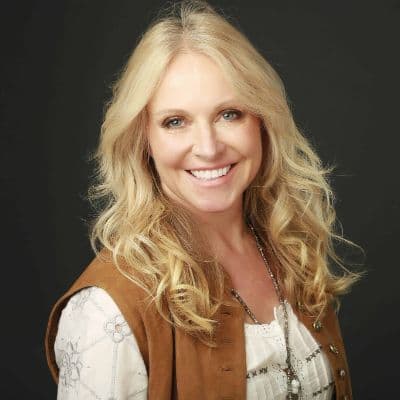
Full Transcript Jane McLellandu2019s Cancer Journey 0:00 Well, this is an absolute pleasure. 0:02 I have Jane McLelland with me. 0:04 She is the author of How to Starve Cancer. 0:07 Jane, thank you so much for being with me here today. 0:10 Always a pleasure to be with you. Michael. 0:12 Well, you are your you're a warrior. 0:16 You you. Yes you are. 0:19 You survived a very serious type of cancer. 0:22 And then you altered how to start cancer. 0:25 Going through your journey, 0:27 can you tell me a little bit what happened in your own cancer journey 0:29 that made you so determined to help other patients understand their office? Yes. 0:34 And I think from a patient's perspective, you know, when we're looking at 0:38 because my my big thing is I've become like the founder 0:41 of the repurposing drugs movement for cancer. 0:44 And my journey really was a ten year journey from 1994 to 2004. 0:50 And I had cancer recur several times. 0:52 Initially it was in my cervix. It was aggressive. 0:55 It was already in quite a lot of my lymph nodes. 0:57 They took out loads, right? 0:59 I didn't know that metformin at that time was useful for 1:02 I've just read about that literally in the past few days. 1:05 Metformin may stop lymphedema. 1:08 It remains a big problem in my life, but much less. 1:11 And then I it then spread to my lungs in 1999. 1:15 Meantime, I lost my mother to breast cancer. 1:18 Cancer has been a big feature of my life, right? 1:21 And then when I thought I was kind of controlling it, 1:25 I was doing a lot of integrative things, intravenous vitamin C supplements, 1:30 and I thought that was controlling it, but it wasn't. 1:33 And then I ended up having another occurrence, and this time 1:36 it came back as Milo dysplasia, which was mutating to acute myeloid 1:41 leukemia, which is a rapid progression to the ground. 1:47 If you know what I mean, into the. 1:48 So it was an urgent situation that demanded a complete rethink. 1:53 So what I've been doing, I realized, probably wasn't enough. 1:56 I'm not one to sort of turn my back on traditional 1:59 standard medicines, and I wouldn't have done it. 2:02 I thought there was something they could have added that would have helped. 2:05 But the problem was that chemo and radiotherapy, which I'd had 2:08 prior, had actually caused the problem. 2:11 So I didn't want any more of that. 2:13 But I put together a cocktail that involved various repurposed strokes. 2:18 So I added one called die, which I think 2:21 is vastly underused by many integrative doctors. 2:24 And this works on it's 2:26 normally used as an antiplatelet drug, but it works on a cholesterol pathway. 2:30 It also stops a cancer pulling in and reusing nucleosides to build new DNA. 2:37 Then I added 2:38 I added a stat in, so I added lover Satin, which was very common back then. 2:43 Had anybody gets hold of that these days. 2:45 And then I added a toddler, which is an arthritis strike. 2:48 It's more of a non-steroidal. 2:50 So I did that in. 2:51 Then as I progressed I sort of I'd already added berberine, which is 2:55 kind of like a natural form of metformin. 2:58 But later on I added the metformin in about 2007. 3:02 So like moving down the line. 3:04 But in 2003, this is when I got this 3:07 myeloid dysplasia happening. 3:10 I added this in thinking, well I might buy myself some more time. 3:14 I really didn't think I had long, nobody thought I had any time 3:18 and it completely disappeared within seven months. 3:21 My markers were almost normal. 3:23 They didn't quite get back to normal. 3:25 I had a marker done called 3:28 PKM two, which kind of detects glycolysis. 3:32 Didn't 3:33 quite get into normal range, but I thought I'd done enough. 3:36 And I see this a lot. 3:37 I see patients coming off their repurposed cocktail too early. 3:41 Well, I did because I didn't know anybody done it. 3:43 I was kind of like my own guinea pig here. 3:45 I'd gone to different doctors to pieces together 3:48 because nobody said he'd go, Jane, here's a cocktail. 3:51 Try this. 3:52 I was breaking new territory here, and I didn't know how long to be on them. 3:57 How much? How what? 3:58 There were so many questions, and I. 4:00 I was unsure, so I came off them. 4:03 My cancer came roaring back the next year. 4:05 Fortunately, it was a big enough cocktail to suppress the cancer. 4:10 And I've been, you know, it's gone. 4:12 I haven't had any cancer since 2004 touching wood. 4:17 But yeah, so I've been I've been healthy and this whole thing was so traumatic, 4:23 I can't tell you terrifying at, you know, at such a young age, 4:27 because I was only 30 when I was first diagnosed 4:30 and then 35 when it spread to my lungs. 4:33 Messed up my whole life for a long time. 4:35 It took me a while to get my whole life back on track. 4:38 I knew I could, you know, I'd had a stroke to me. 4:39 I couldn't have kids. 4:40 I thought my partner at the time was going to leave me. 4:44 All of these things were so it was hugely traumatic 4:47 emotionally, very straining with my mum dying as well. 4:51 So I, I have empathy with, with cancer patients out there. 4:56 So let's do this. Let's, let's get you better. 4:58 Let's not make you suffer in the same way that I, I really suffered, 5:02 you know, and I want to make sure that we actually smooth the path 5:06 a little bit easier for patients who follow on behind. 5:10 So that's part of my plan going forward, is to create more evidence 5:16 for patients to look at these cocktails of drugs 5:20 and personalize what works best for different patients. 5:24 Because out there on the internet, I see a lot of noise about people 5:28 promoting particular things, and they just focus on a few little things 5:35 and they say that's going to be right for everyone. 5:38 Of course, it's not going to be right. 5:39 You know, the Kito diet doesn't work for everyone either. 5:42 Make tin doesn't work for everyone.
Repurposed Drugs and the Metro Map 5:43 And yet we have all of this going on in the background out there on the web, 5:48 you know, and people are confused. They don't know what to do. 5:50 And when you've got sage for cancer, your ground for anything. 5:53 You know, if somebody says the keto diets are going to be the answer, 5:56 they'll do it. 5:57 But I've, you know, 5:57 I'm I'm writing a lot more on 5:59 I've got a Substack and I write a lot more about things. 6:02 And I wrote one recently about how some cancers actually use ketones. 6:08 So pancreatic cancer and acute myeloid leukemia, for example, 6:12 actually use ketones. 6:13 And you are much more likely to become sick. 6:16 So there are these nuances to every different type of cancer. 6:22 And my mission, if you like, now, is to save as many lives as possible, 6:27 making it as easy for patients 6:30 to be given the right cocktails, which is not the biggest cocktail. 6:34 What I want to find to cocktails that are the most effective, 6:39 most evidence supported for them personally. 6:43 Right. 6:44 So it's not the ketones going to work for everyone that doesn't work. 6:47 Or, you know, there are doctors out there just prescribing very high doses 6:52 of ivermectin and fan design and pretty much nothing else. 6:57 And, you know, it's ignoring the science that's out there already. 7:01 So yeah, it's a mission I feel yeah, I feel like it's gone off track. 7:06 Right. 7:06 I felt I felt the repurposed movement was doing fine and now it's just wash. 7:12 It's gone off. It's headed off into a different direction. 7:14 I don't know whether you found that it. 7:17 I see that it becomes so hyper focus 7:19 on the IRA mechanism is all that 7:22 they all the other tools just kind of seem to fall into the background. 7:26 And they, you know, that conversation is so strong on the internet. 7:30 So it's hard for patients that are newly diagnosed 7:34 to not listen to that conversation because it's so prevalent. 7:38 So you, you wrote, I mean, in your book, How to Start Cancer. 7:43 I mean, you created this Metro map. 7:45 Yeah. Right. Right here. 7:46 Yes. That's what I'm most known for, which is that 7:50 and it was a simplistic view of the different fuels that you get. 7:55 You got your carb protein and fat, right. 7:59 And fat tends to be ignored by some people as well. 8:02 But there are fat pathways that are, 8:04 you know, all cancers will use not I mean, they will use glucose, 8:08 they will use glutamine, which is an amino acid. 8:11 But the fat aspect is another area which I feel 8:14 is totally underutilized 8:17 because it's not just that the cancer is taking. 8:20 In fact it does. 8:21 It has fat transporters. It has. So the LDL 8:25 and the CD 8:26 36, these are transporters that will actually bring fat in to the cell. 8:30 But the cell itself is making fatty acids to create 8:35 new building blocks for its daughter cells. 8:39 So there are lots of different pathways 8:42 that the cancer is using differently to the healthy cells. 8:45 We're trying to look at the differences between what a healthy cell is doing 8:51 and what a cancer cell is doing, so that we can target specifically, 8:55 we're not trying to damage 8:56 the healthy cells, we're just trying to target the cancer cells. 9:00 And we can be quite specific about that with the metabolism, because 9:05 most of your healthy cells, the hardly any I think really that 9:08 you psychosis all the time but that that is specific to cancer. 9:12 So by attacking that by actually trying to reduce the glycolysis 9:17 or this aerobic glycolysis that happens in the cancer cell, 9:20 we can be quite specific about trying to kill the cancer 9:23 cell and trying to keep the healthy cell healthy. 9:26 Yeah. 9:26 And so the challenge that I see frequently is that people 9:30 then get wrapped up into saying, well, I gotta stay away eating glutamine. 9:35 I get to stay away eating serine Metheny. 9:38 I mean, all these different amino acids. 9:40 And then here they go. 9:42 And obviously our healthy cells are not getting nutrition 9:45 and they getting weak, feeble while they're trying to 9:48 starve their cancer and they're starving themselves. 9:51 So how how do you how do you deal with that. 9:55 Well, that is an issue. 9:56 And I think again, that's a lot of noise out there. 9:59 And for me, I did a low GI paleo type of diet. 10:03 It wasn't a real keto diet that could be seen as sort of 70 10:08 or read an 80% fat. Mine was very much a 10:11 sort of a well-balanced paleo diet, but it was low GI. 10:14 So I had things like I actually had black rice, 10:18 red rice, and mixing with quinoa, and I had porridge for breakfast. 10:22 I had sweet potatoes. 10:24 I didn't have huge quantities of them. 10:26 I kept the volume low and I'd always mix them in with, 10:29 you know, there weren't carbs on their own. 10:31 I'd always make sure that I had. 10:33 They followed something else. 10:35 So you actually had fat and, well, lots of vegetables first. 10:39 But the kind of fat was olive oil. I take a lot of fish. 10:42 I still do take a lot of fish oils every day. So. 10:45 So it's a matter of getting the balance right. 10:48 And I think today most diets are completely out of sync with 10:52 what would be deemed healthy in the past. 10:55 So do you feel that? 10:57 I mean, obviously low glycemic. 10:59 Yeah, that seems to be a good standard. 11:02 So it is standard, I would say for anybody who's actually going through cancer, 11:07 that is the number one thing you should do. 11:09 But Laird, on top of that you can do a bit of intermittent fasting. 11:13 You can even do two days of, 11:16 you know, not the same day necessarily, but two days of fasting during the week. 11:20 They've looked at some cancers that respond well to that. 11:23 But things like breast cancer, they're now running a trial, doing a 168 11:28 and layering metformin into that. 11:31 So that's that's a trial that's ongoing at the moment. 11:33 They did the Mar 32 trial which was looking at metformin and breast cancer. 11:39 And it was like, oh, it failed. 11:40 But actually they didn't look at it in the right synergistic way. 11:45 Right. 11:46 So they knew that metformin is great for diabetics. 11:49 And they could see the results when you add met warm into 11:53 a diabetic person and they have cancer, you can see they lost. 11:57 You know, they survive in fact longer than than people who haven't got diabetes. 12:02 So there was that very strong signal. 12:04 So they thought they would have a look at breast cancer patients 12:08 who were non-diabetic and have a look at whether there was that signal 12:12 with the metformin, but it didn't really show up. 12:15 And that's a problem with when you look at just individual drugs 12:19 or just combining things, but they're not quite looking at the right synergy.
Diet, Fasting, and Metabolic Phenotypes 12:25 So the thing that triggers and this is research 12:27 that's been done by Ricardo Cabot Soley and his partners. 12:32 But they had a look at metformin combined with fasting. 12:37 And it's when you do the two together boom. 12:40 That's when you get really good effects with metformin. 12:44 So they're looking at metformin with the 168 daily intermittent fasting. 12:49 So that's ongoing at the moment. 12:51 So we'll wait and see what the results are of that. 12:54 But certainly the signal seems to be very positive on that. 12:57 And how do you and I want to get back to diet a little bit. 13:01 But I want to kind of follow a how do you navigate the, 13:05 you know, synergistic effect. 13:06 Because, I mean, it seems to me that a lot of people, they, 13:10 you know, 13:10 they get a little familiarized with repurposed drugs 13:12 and they just kind of stack things on top of each other. 13:15 And, and it just becomes more and more and more versus 13:19 just really being kind of keeping us as tight and effective as possible. 13:24 Yeah. 13:25 And that is the issue is so look at what are the main drivers. 13:28 What is the key metabolic phenotype of your cancer. 13:32 But not only that, you also have to look at what drug that patient has been 13:36 given if they're on oxygen or if they're on full strength. 13:40 The actual cocktail will differ entirely. 13:44 So in fact, with Sylvestre, you might need to be on more of a keto diet. 13:48 I don't like Kito generally for breast cancer patients, 13:51 but if you're on any of the other drugs, tamoxifen 13:55 powder, all of the other ones that are there for for breast cancer, 13:59 then you're 14:00 looking at more of an intermittent fasting and you are looking at a completely 14:04 different cocktail of drugs, because the result 14:08 that the escape routes of cancer can be different. 14:11 And I think this is an important point that people need to understand. 14:14 It's all about the escape groups that cancer can use to get around 14:19 all of these drugs, the standard of care drugs, 14:22 because they all have resistance mechanisms. 14:25 And I like to teach people that cancer is a bit like a seasoned criminal. 14:31 Right. 14:31 So at stage 1 or 2, they're like a petty thief 14:35 and they can do a bit of shoplifting. 14:38 You put them in detention, 14:39 give them a bit of chemo, and they might learn to live with society. 14:43 But then when they get to say, 3 or 4, they've learned the escape routes. 14:47 So if you've got chemo coming in the front door, 14:50 they go, well, I've got the back door, I've got the tunnel under the wall, 14:52 I've got the escape hatch out the roof, I've got that side window. 14:57 Then you've got the escape routes of the escape routes. 15:00 Right. 15:01 And so it's it is this a process? 15:04 And you know that the point being that we need to understand 15:07 not just the metabolic phenotype, 15:09 but we also need to understand the escape routes of the drugs, you know, 15:13 and actually work out how best to keep that patient doing really well, 15:20 not necessarily take them off the sound of care, 15:22 but even with chemo, you can make chemotherapy work 15:26 much better if you understand what those escape routes are. 15:30 Now, I don't particularly like to high doses of chemo 15:34 when you get to stage four because you're just killing off your immune system, 15:38 there are there's I think a lot more people are starting to use lower dose. 15:42 Chemo doesn't have to be totally low dose. 15:45 I mean, a lot of doctors are actually using 10% in a metronomic way, 15:49 and that seems to work quite well for colorectal cancer. 15:53 But, you know, I do worry 15:55 that there is this overload of chemo with stage four cancer patients 16:01 and that kind of ruins their chance to get their natural killer 16:04 cells working to get the T cells into the tumor. 16:08 And the other thing we've got to look about, actually, is the 16:11 physical nature of the tumor as well. 16:15 So some tumors have got really thick stroma. 16:18 So how do you reach that stroma. 16:20 So pancreatic cancer for example who's got this really thick stroma. 16:24 So you can't get the drug. So you can't get the supplements in. 16:27 It doesn't matter whether it's standard of care, whether it's intravenous 16:30 vitamin C, whatever it is, you actually need to breach the stroma. 16:33 Although actually interference vitamin C has been shown to be particularly useful 16:37 with pancreatic cancer. 16:39 But the point being that you need to breach that stroma 16:42 in order to make things work better, you've got to breach that stroma. 16:46 And there are there's kind of like little cocktail, 16:49 which I think is really good to try and breach that stroma. 16:52 One of them is para calcium, which, it helps to just break down 16:58 the it's like a vitamin D analog, but it just helps to break down 17:02 some of that fibrous network and then dissolve 17:06 because it breaks down the tubulin and it just makes it easier to get in. 17:09 And then what was the other one blows out. 17:11 And so that's a blood pressure medication. 17:14 And that trio really helps really well to help the drugs 17:18 get into a pancreatic tumor for example. 17:22 And they're doing research on that combination at Fox Chase I think. 17:25 So that's that's all useful information. 17:28 And Doctor Steve Biggleswade, who is a long term survivor of pancreatic 17:33 cancer breaching the stromal, was kind of like the number one thing he had to do. 17:37 And I think that's important. 17:38 We need to look at the physical nature of, you know, 17:41 there are so many different aspects to it and it is complex. 17:44 So yeah. What do you focus on first? 17:46 And I think it varies depending on the type. 17:49 The nature of the cancer is to wait where your focus is, and that's where 17:53 something like you, you've got experience working with cancer for many, many years. 17:58 I know a lot of people have come in recently, some doctors, 18:01 and they don't have the knowledge base 18:04 of understanding the nature of cancer. 18:08 And you can't you can't replicate that kind of knowledge. 18:12 You've you've acquired it over many, many years. 18:14 Right. 18:15 So I'm hoping that we will eventually get much 18:19 more collaboration between oncologists and integrative oncologists. 18:23 But right now, I feel like there's too much noise 18:27 going on about the ivermectin and the keto, 18:30 and it's just creating a clash between both sides. 18:34 And we should be working together. 18:36 And I felt like we were doing well with the revolution. 18:40 And I feel like it's kind of been dismantled. 18:43 But it's made certainly made doctors more aware of repurposing since Covid. 18:48 But I do feel there's this sort of kickback 18:51 where doctors were really punished for prescribing either. 18:55 And there's a bit of a I told you so going on with doctors 18:59 trying to vindicate themselves from saying, 19:01 I got all these results for, for cancer 19:04 and you should not have stopped, as you know, I mean, I, I just feel 19:09 we need proper collaboration going forward. 19:13 The cancer patient is not interested in politics and why you should be pushing. 19:18 You know, the push for either marketing has got to noisy way too noisy. 19:22 I don't know whether you feel that, but you know, 19:24 some I do, and I think the issue is that we 19:28 I think as a society we moved towards kind of like a TikTok society 19:32 where we can only handle some bites and then that becomes our whole world. 19:37 And so we, we are not willing 19:40 to take the time of the energy to go dig deeper. 19:44 And so we listen then to simplistic messaging. 19:48 Yeah. And that is what we follow. 19:50 And that can be then idles ivermectin and been dissolved. 19:54 It can be ketogenic diet. 19:56 It can be let's stay away from all amino acids because they all feed cancers. 20:01 And I'm going to be for it. 20:03 I mean so it's all these different things. 20:06 And so I'm going to start my cancer and I'm just going to be, 20:09 you know, fasting all the time. 20:11 And so it's all these kind of simplistic pathways that people then follow 20:16 because they hear that, that messaging so strongly and or whether it's, you know, 20:21 chlorine dioxide and this is the only, only solution or, you know, it's 20:25 that kind of thing, you know, and not recognizing, like you're saying, 20:30 cancers complex, cancer 20:32 is evolving, a cancer is shifting cancers. 20:36 I mean, it's a highly intelligent tissue 20:39 that is continually finding ways to figure out how to how to survive. 20:45 Exactly. 20:46 So shapeshifter and that's what patients really need to understand. 20:50 So I've met and van benzyl will be blocking quite a few. 20:55 I mean they both blocked quite a few pathways. 20:57 But if you look at my metro map, there's a huge number of things 21:00 that they're not blocking. 21:02 And of course, there's you know, a lot of the noise is about 21:05 I had a patient who had prostate cancer seven months later, 21:10 their prey, there are no evidence of disease, 21:13 but how long are they no evidence of disease for. 21:16 And you and I could talk about that every day about patients 21:19 that we see that go into no evidence of disease. 21:22 We don't go on to social media shouting about it all the time. 21:25 But we see it so often, like every day. 21:28 But it's using a bigger, carefully curated cocktail. 21:32 But we know it's going to be safe for the patient. 21:35 Very worried about the safety of patients 21:38 taking very high doses of either Magdalen. 21:41 And they're basing these. 21:43 I mean, we're now looking at one milligram per kilo of body 21:47 weight is now being recommended by one particular doctor. 21:51 Well, actually goes up to 2.5mg/kg sometimes. So. 21:55 Oh my god. 21:56 So no where is the evidence. 21:58 And they're basing this on in vitro tests. 22:01 And we know that that doesn't correlate to results in the person. 22:07 And they looked at this with ivermectin and Bal
Escape Routes, Stroma, and Personalized Cocktails 22:10 which is an immune a therapy drug. 22:13 Then they thought that it would have great effects. 22:15 But in fact out of eight patients, I think one didn't get into remission 22:20 but had stability and six of them progressed, you know. 22:23 So actually you've got to look again 22:26 at the bigger cocktail, what's actually happening in the patient. 22:28 You can't see the escape routes just by looking in a petri dish. 22:32 Right. 22:33 And not really. 22:35 You've got to see how the patient responds. 22:38 And it's short sighted in my view. 22:41 There are better cocktails out there. 22:43 And I might and does do a lot of things, but it overlaps 22:46 with a lot of other things that are in my metro map. 22:49 So do you need it? 22:50 Where is the distinct functional reason for having so much either met 22:56 and when there are safer drugs that you could actually load in 22:59 that would do a better job in a bigger cocktail. 23:02 So actually, as long as there's synergy, you can get 23:05 a bigger cocktail, much lower doses of everything. 23:09 And I know that most doctors in my network kind of prescribed by Vermette, 23:14 and some of them are doing it more regularly, but twice a week, 23:17 maybe three times a week at much lower doses. 23:21 That's program to be safer. 23:23 The liver toxicity also comes from the basil 23:26 at very high doses, so that should be pulsed as well. 23:29 It's tricky to get it all right. 23:31 You know you have to be a magician. 23:33 But this is where I'm trying to create this AI tool, created this framework. 23:39 So and I know that you're doing some stuff as well, but this is all to create 23:43 for my network of doctors if they want to. 23:46 And it's a clinician facing tool to be able to look at all 23:50 the different aspects of the cancer and from from the physical nature 23:54 of the cancer right through to the metabolic phenotype. 23:57 Synthetic lethality is everything to try and 24:00 look at different ways we can get better cocktails together. 24:03 It's not necessarily the biggest or the highest dose. 24:07 It's the smallest, best supported combination, 24:11 that we can create that addresses all of those important escape routes. 24:17 So that's that's what I want to do. And I'm building this register. 24:19 I'm going to have a registry. 24:21 It'll be on a website called G or dog that's global 24:26 integrative oncology registry like dial. 24:30 And then that'll be where patients can go and log their details 24:35 so they can put in for free. 24:36 They can just add all their details in there. 24:39 We need that information. 24:40 We need to collect the data. 24:42 We can look at all of this high dose ivermectin stuff. 24:45 Let's see how long these patients actually survive where I want it 24:49 to be treatment agnostic. 24:51 So whoever it doesn't matter which protocol you're doing, 24:55 I just want to see you know, what the results are. 24:58 How long they last are maybe entirely wrong about 25:01 high dose ivermectin, but right now I'm. 25:04 I'm concerned. 25:06 That's all I'll say is I'm very concerned about it. 25:09 And so what are you when you say kind of a what type of dosage 25:13 do you feel okay with just so people can hear that, 25:17 you know, because they hear, you know, 1mg/kg. 25:20 And like I mentioned, 25:21 sometimes, you know, some more aggressive than two and a half. 25:24 So what dosage do you tend to feel. 25:26 Okay. But. 25:28 Well, you know, I'm not a doctor, so I can't say. 25:30 But the doctors who I work with tend to prescribe 24, 36mg twice a week, 25:36 and that's that's, that tends to be around that kind of dosage. 25:40 Not higher than 36th January. 25:43 Yeah. Yeah. 25:44 And so you're talking about phenotype. 25:47 And obviously you have genetic mutations. 25:50 You have the type of cancer the physical structure of the cancer. 25:54 How does a patient figure out what kind of phenotype they have. 25:58 This is the wonder of a I Michael. So 26:02 it's so easy right. 26:05 So I would try and do this by hand if you like, in the old days 26:09 before I and I'd be on PubMed search and searching. 26:13 I have built up files of things about the metabolic phenotype. 26:18 But there are this is something that is being explored by cancer researchers. 26:23 They are building up documents that sort of provide 26:27 you information on what kind of behavior 26:31 that cancer cell is going to demonstrate, and it's kind of like a, a fingerprint. 26:35 And each different kind of cancer has a specific fingerprint. 26:41 So it's easy for easy these days. 26:44 I mean, I'm so jealous, really. 26:47 I mean, I think how hard it was for me, right? 26:50 And, you know, I've been pouring through so much research every day, 26:55 and I still do it, but, 26:56 you know, and it's important to keep on top of the research. 26:59 But now you can just type in what's my metabolic. 27:02 So that's the first thing you should do is what is the metabolic phenotype 27:06 of my cancer. 27:07 In fact that may not be the first thing you should do. 27:10 You should probably write in a different thing first, which is does my cancer? 27:14 Is my cancer driven more by glycolysis or ox Foss? 27:20 That will give you a big clue if it says Ox Foss. 27:23 Ketogenic diet is a no no. 27:26 So that's 27:27 a big, big point for people to know. 27:30 So if they type in Oxford versus glycolysis, if it's like this. 27:36 Well, there's there's good reasons for doing it, you know. 27:38 But the low GI diet will help both. 27:40 That's not to say don't do a low GI diet, but the ox foss means 27:44 you need things to block that pathway. 27:48 This is something that Tom Seefried is not particularly happy about. 27:52 But blocking Oxford is really important. 27:55 And breast cancer patients, if you look up the metabolic phenotype 27:59 of estrogen positive breast cancer, which is like 28:02 the majority of patients that we see, their phenotype 28:07 is that it will be driven by Ox Foss above glycolysis. 28:11 Right. 28:12 And the metabolic phenotype means that they shouldn't be doing a ketogenic diet. 28:16 And this has caused a bit of eruption. 28:18 I did some articles on Substack about it. 28:21 I've got a bit of kickback on it. That's fine, 28:23 but we all need to be discussing it, right and raise these points. 28:27 We shouldn't just be sitting there feeling happy that, oh, the ketosis, 28:30 what I've been told. 28:31 So no, I want patients to do their own research and to be independent thinkers. 28:37 And that's what I like. 28:37 I love it and patients questioned me. 28:40 They say, well, what about this? 28:41 It means they're thinking about it. 28:43 They're not just being passive patients. 28:46 They're being proactive and they're helping themselves. 28:48 And I love that. 28:49 And so and that's a challenge as we're talking about. 28:52 It's that some doctors yeah some some voices out 28:55 there are very evangelistic you know and it's like becomes a faith. 29:00 And they have to defend their faith, you know, 29:02 because they've spent so much energy and time into it. 29:06 And so then and when they feel the back is against the wall, then they push harder, 29:11 you know. So I think that is a big challenge. 29:13 And what I love is to always be okay with being wrong. 29:17 Yeah. Not not not only to. 29:19 Yeah, yeah. Not to be. 29:21 I want to be proven wrong. 29:22 It doesn't mean that I'm always wrong, but I 29:25 if there are better ways I want to do better ways. 29:27 Yeah. And I wrote a an apology. 29:30 Kind of like an apology a few days ago on subsect because I had been concerned 29:36 because asparagine, which is amino acid, can actually drive metastases. 29:41 It drives the EMT the to transition. 29:45 So and I mentioned it in my first book in 2018. 29:49 And this is the time when the whole asparagine 29:53 kind of problem with breast cancer was being exposed. 29:59 And they all the journalists were talking about to stay off asparagus. 30:04 So I was a bit concerned about it. 30:05 So I didn't know the amino acid content of prosperous. 30:09 So I said self asparagus. 30:11 And I realized that she is actually very low, just historical. 30:15 It's just a historical incident that it just happened that when they were 30:19 testing asparagus juice, that they noticed this amino acid. 30:24 So the amino acid got named after asparagus, but it's not very high in. 30:30 And asparagus has got a lot of benefits. 30:32 I kind of said, look guys, I was wrong. 30:35 And I'm, you know, and I'm happy to admit when I'm wrong. 30:38 And it means patients are eating healthier. 30:41 Great. 30:41 You know, but I think there is a lot of food anxiety out there. 30:46 But this is where, you know, 30:47 and particularly with looking at lowering some of these amino acids. 30:51 But this is where the repurposed drugs come in. 30:53 So disulfiram circling, they can be great at lowering 30:56 the lowering serine which can drive colorectal cancer. 31:00 Disulfiram seems to be particularly good for colorectal cancer. 31:05 And it works a bit. 31:06 It has synthetically fallacy with an APC deficient cancer, 31:12 and about 60% of colorectal cancers have got an a PC deficiency. 31:18 So that's a massive synergistic cocktail that could be added. 31:23 And I don't know very many colorectal cancer patients 31:26 who are actually using disulfiram. But that's like a big thing. 31:29 And I wrote another Substack is kind of like my new thing. 31:32 I have so many articles bursting from me. 31:35 Right. 31:36 And I've been thinking about this for years. 31:37 I've got to tell people about, oh, and then just running out of time. 31:40 But actually doing a subset makes me publish something every week. 31:44 And it's good discipline for me, and I think people are enjoying it. 31:47 So I'm enjoying it. Yeah. I'm. 31:50 Yeah. Oh, you're on this. 31:51 Okay, great. Okay, good. I love what you do. 31:54 So. Yeah. 31:55 Yeah. 31:55 So, you know, and I, I think it's important 31:59 and that the science is moving so fast in this area. 32:02 That thing about metformin, the lymphedema, it's like, oh, God. 32:05 You know, only I'd know if only they were prescribing that 32:08 when, you know, when I had the risk of the lymphedema. 32:11 Nobody ever told me that I ended up with both legs, 32:14 but mostly in my right leg, and traveling on a plane disaster. 32:19 And they didn't give me any support stockings for years. 32:22 Nothing. 32:23 They gave me no information, nothing at all. 32:26 And I was wearing Ted stockings because it couldn't get hold of 32:28 anything else, you know, all full, awful hopeless. 32:33 Really? 32:34 Yeah, yeah. 32:35 Madison and I see this in the integrative space. 32:37 I see medicine evolving. 32:39 But, you know, integrative space, you know, we're evolving so much or we're 32:43 dealing with two decades ago and what the tools we have now, 32:47 I mean, it's night and day and and it's really cool to see. 32:50 Yeah. It's really it is. 32:52 So I want to can I go back a little bit, you know, because I, 32:56 you know we talked about ketogenic diet, but I don't want to kind of make
AI, Registry Data, and Patient Guidance 32:59 that one point where you're saying that some cancers actually produce ketones. 33:05 So yes, means that they are actually benefiting from ketones 33:10 and it is part of their survival mechanism. 33:13 Exactly right. That's exactly right. 33:16 And pancreatic cancer and acute myeloid say again acute 33:20 myeloid leukemia are two cancers that do that. 33:24 So you cannot be using, you know, and the toad that there is some evidence, 33:29 short term evidence looking at the keto diet with pancreatic cancer. 33:34 But really it is to me the it's not looking at the big picture, 33:39 very short sighted is 33:42 what kills a lot of pancreatic cancer patients. 33:45 The Kito diet will just promote 33:49 Axia not safe in my view. 33:51 That is not something that anybody with pancreatic cancer should be looking at. 33:56 Not unless they're doing some other stuff, which again, is dodgy 34:00 looking at dexamethasone, looking at. 34:02 So there, you know, there are ways to try and block that. 34:05 But there is safer, easier ways to do it. 34:08 You know what I mean. 34:09 It's looking at the best cocktail 34:12 for that person, for that patient sitting in front of you. 34:15 And I know a lot of doctors kind of prescribe 34:19 the same cocktail of medicines, thinking, well, it worked for this patient 34:23 with that cancer. 34:23 So therefore it might work with this patient with cancer. 34:26 But each cancer is specific and it has to be personalized. 34:31 You have to look into all the nitty gritty details. 34:34 And that was part of my metro map, was to say, you've got to check this out. 34:38 Which of those pathways on that map are going to be best for you? 34:44 So I have an online course 34:45 where I teach people about them, and then they go away and research them. 34:49 People do like that as well. 34:51 So it's been it's been a journey. 34:54 I've gone from the book, which I didn't really want to write, but I did it. 34:59 And then I didn't 34:59 want to create the online course, but people saying, I don't get it. 35:02 So then I had to create the online course, and now I think we've got AI. 35:06 Let's make use of that. Right. 35:08 So I've got this framework, and I'd love you to think 35:11 about trying it out and be a better user for it and give me some feedback on it. 35:17 And yeah, just just see if that helps you or not. 35:20 It's it's meant to help the clinician and in fact other health. 35:23 I'll be also creating some more lifestyle and supplement 35:27 information to back up what the doctor's stirring. 35:31 So it should be a deepening of the effect. 35:36 So it's all about not contraindicated. 35:39 So they work together right. 35:40 So you can have a nutritionist. 35:41 They might undo what you're trying to do in the clinic would be disaster. 35:45 So it's meant to be so that we get this overall effect 35:50 and a collaboration between people. 35:53 And I want with the evidence going back into the registry as well, 35:57 so that when we see doctors doing particular cocktails 36:01 that are similar, they can collaborate, write a case, write their own case 36:05 reports, write a paper on it, and then we can hopefully move the needle. 36:10 Right. 36:12 And so I, you know, that's that's a plan 36:15 that is the big the big pan the master plan. 36:18 Of course at the end of the day, 36:20 like you're saying, it's not how things are behaving on a, on a PT dish. 36:24 Yeah, it's not about that. 36:25 It's what actually happens in individuals that are doing these things. 36:30 And that's the beauty. 36:30 Now with AI, if you can feed this information, 36:34 it has this tremendous capability to analyze a large quantity of data. 36:40 And but it's just that we need the data there. 36:42 So if people are then willing to kind of bring in and kind of report 36:48 exactly what they're doing, and then the impact of what they're doing, 36:52 now, we can analyze that and we can make sense of that. 36:55 And that is what's phenomenal to be able to to have registry. 37:00 And so I everyone out there, you should take advantage of it 37:03 because I feel that this is going to help us move the needle and understand 37:08 and prove what is right, what is wrong, and how to do it best, you know. 37:12 So I applaud your at for ten doing this because I know that it's not easy. 37:17 You know these things and it's linked up to data behind. 37:20 So it'll be able to work out the kind of pathways 37:24 that have been blocked and maybe what the gaps were. 37:27 It's all about not just why it failed as well as why it worked. 37:31 So that's that's all part of it. 37:33 Yeah, it's a big project. 37:35 And yes, it's getting there. 37:38 It's getting there. 37:39 And one of the comments you made 37:40 is that you got off your cocktail too early, you know. 37:44 So a lot of people there in the mindset. 37:47 Well Foreman it does this that on my body. 37:50 You know I started 37:52 does this and I want to kind of get off this I'm no evidence of disease. 37:55 Now what kind of time frame should 37:57 people have in their mind in regards to the cocktails? 38:00 Oh, I still take a cocktail every night and every morning I take my metformin. 38:05 And I also have cystic fibrosis, which I didn't know when I was diagnosed. 38:10 And this has become another. 38:12 This wife had so many chest infections 38:14 and things going forward and in the past, and I could never understand it. 38:17 But yeah, I still take that cocktail and it was a lesson to me. 38:21 And I see the patients who do the best are the ones that stick to it, 38:25 and it's not a big effort to just carry on taking them at forming in the satin, 38:31 and I take them all every night as well I have because I've also, 38:35 you see, I'm a real genetic mess. 38:36 I have to that I'm homozygous for ApoE4 as well. 38:41 So I know that the lipid side can be a potential problem. 38:46 But as long as these things are low toxicity 38:48 and they're not interfering with other drugs that you may need to be on. 38:53 Terrific. 38:54 I mean, there's now research coming on, coming out on PCs, canine 38:58 inhibitors, which show they help immunotherapies work better. 39:02 This is all emerging information. 39:05 So this is called statins by themselves don't work very well. 39:09 But actually link in the PCs canine or die. 39:13 And you create a circuit that means it works better. 39:17 But this is you know I think it's a big learning curve. 39:20 It's a big learning curve. 39:21 But patients are the ones that want to know it. 39:24 Unfortunately, oncologists 39:27 don't want to know it because they feel overloaded. 39:29 It's overwhelming. 39:30 There is so much information out there. 39:32 How did they find you know, and they hear about ivermectin. 39:36 They hear about from vendors. 39:38 They hear about mob and us all. 39:41 And they look 39:42 it up and they go, well, that's just overdosed and doesn't sound safe, 39:46 but it puts a bad name on the whole of the integrative, side, which is a problem. 39:52 You know, I want collaboration between each side. 39:56 Not a war. 40:00 And, you know. 40:01 Exactly, exactly. 40:03 That's a whole that's a whole idea, you know, 40:05 is that we it's not going to benefit the patient, is it? 40:08 Yeah. So no. 40:09 Exactly. Yeah. 40:10 Me defending my position is not helping the patient. 40:13 We want to make sure whatever is needed is is where we need to go. 40:18 Yeah. 40:18 And that's exactly that's really going. 40:21 Yeah. 40:22 So for someone that is an overwhelmed. 40:26 Yeah. 40:26 Kind of to finalize it. 40:28 Someone that's overwhelmed by cancer diagnosis. 40:30 What in your mind 40:32 are the three most useful questions they can take to their care team. 40:36 And what are the three most important things to do? 40:39 I think number one is educate yourself. 40:42 I think that's really key. 40:44 Unless you have you know, that's that's really important to educate yourself, 40:48 get yourself a good mindset. 40:50 Now a lot of people get that mindset from finding survival stories. 40:55 Now you might just come across all the testimonials on the high dose either. 41:00 But you need to move beyond that. 41:02 Right? 41:02 So so number one is sort of fine. 41:06 Fine. 41:07 Educate yourself and survivors, 41:10 and then find themselves find a good doctor like you. 41:13 Right. This is so important. 41:15 You cannot put these cocktails together on your own. 41:18 You just can't do it. 41:20 And you need a good doctor. 41:21 And, you know, first thing, it's like, off you go. 41:23 And obviously a good mindset. 41:24 So the mindset comes from all these survival stories 41:27 and that's what you need to do. 41:29 So really education mindset doctor 41:34 that I would say would be my three top recommendations. 41:39 Yeah yeah I love that. 41:41 And I think just kind of reiterate to people 41:43 understand cancer can manufacture, they can recycle, 41:48 they can obtain nutrients that we try to remove in our diet. 41:53 So these metabolic treatment must account for these escape routes. 41:58 You know, that you're talking about while preserving 42:01 your energy, the patient strength, your energy. 42:04 So because because kept sexy is a big deal. 42:07 And so we need to kind of look at the whole picture 42:11 rather than just having simplistic approaches. 42:14 Totally agree. 42:15 And it is complex and there are so many factors to come into it. 42:21 The algorithm in my AI has about seven steps that it goes through, looking at 42:27 from the fuel sources through to the the overall coverage of what it's doing. 42:32 And each step. 42:33 It goes through a whole world of trying to look at everything, 42:36 and then it tries to eventually piece it all together into this cocktail. 42:40 But it's hugely complex. 42:42 I could never do that. Now. 42:44 I defer to AI all the time now cause it's so good. 42:49 I created this framework, which is great, and it's I've loaded it 42:53 with the certain number of, you know, accessible, easy, repurposed drugs. 42:59 And I've loaded it 43:00 with supplements with the most benefit and pre-clinical research behind. 43:04 And yeah, it's terrific I, I'm thrilled with it. 43:10 Yeah I mean it's a game changer in so many ways. 43:13 So yeah. Yeah. 43:14 And I just hope that oncologists actually start to use it a little bit more. 43:18 I mean, they're a bit wary of it quite rightly. 43:21 And it does tell you what you want to hear. 43:23 Right. 43:25 It is a suit say yeah. Yes. 43:27 And you need to say be honest 43:29 and find the contrary evidence and you know, and actually make it 43:34 look in all the right places and then come up with an answer. 43:39 Right. 43:39 But it does tend to focus sometimes on tiny 43:43 contrary evidence when there's a ton of positive evidence. 43:47 And but, you know, that's all that's all part of the big picture. 43:51 And just understanding all of that and weighing out the benefits 43:54 and the negatives. 43:55 And I think the cancer patients, if you're stage four, 43:58 and this is where the danger is that you're much more willing to take a risk. 44:03 For me, I took that risk because what was the alternative? 44:06 I was going to die. 44:07 So I took that risk, and I went running out 44:09 to find different doctors to prescribe me things. 44:11 And people are getting these high doses of drugs 44:16 because they're accessible and they're cheap relative to going to 44:20 a doctor and getting a much better curated, more intelligently stacked, 44:26 list of drugs to put on there, you know, put into their protocol. 44:32 It's the way it is. 44:33 Unfortunately, and some patients will do well. 44:37 But, you know, let's look at safety first. 44:39 I would say I agree, I agree. 44:42 Well, Jane, thank you so much for what you're doing for your I was 44:45 I was going to use the word untiring but I know it's not untiring. 44:49 So it's exhausting. 44:50 So I appreciate what you do and what you're bringing. 44:54 I mean that's such an important conversation. 44:57 And you're really. 44:58 Yeah. 44:59 With the amount of resources that one young lady 45:02 can have to be able to move the needle to such an extent. 45:06 You're doing a phenomenal job. 45:07 Thank you. 45:08 Thank you. Michael. 45:09 Thank you so much for having me on. Thank you.

Comments