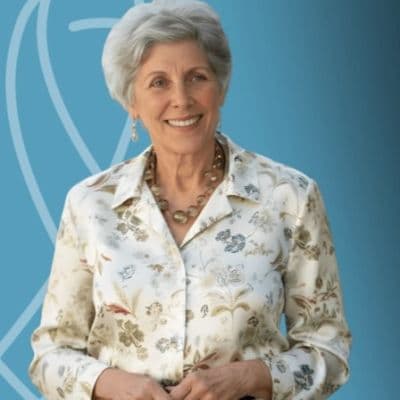
Full Transcript Introduction to Margaret Straus and Gerson Therapy 0:00 Well, this is a treat. 0:01 I get to have Margaret Straus again. 0:04 She is the granddaughter of Max Gerson. 0:08 Yeah. 0:08 And like I mentioned, Max Gershon came up with the Gershon therapy. 0:12 That has helped. 0:13 I don't know how many patient people battling cancer and, 0:17 you know, successfully been able to come out on the other side. 0:21 Margaret, thank you so much for joining me again. 0:23 You're very welcome. Thank you. 0:26 So yeah, I really appreciate the story to. 0:30 Can I get more of a understanding of who, Max. 0:33 You know, your grandfather was as a. 0:35 Yeah, as a person and also the journey that he went through. 0:39 And I know there's so many stories in regards 0:42 to the Gershwin therapy and the evolution of it. 0:45 And I know there there are a number of more that I wanted you to tell. 0:48 So but first, you know, do you mind 0:51 just kind of sharing what is the Gershwin therapy? 0:54 What is it consist of for people that don't know? 0:57 Okay. 0:58 The Gershwin therapy is a very intensive 1:01 nutritional and detoxifying therapy. 1:04 It consists of all organic, 1:07 freshly cooked, freshly prepared foods 1:10 salads, potatoes, vegetables, soup a very special soup 1:16 that has a very important role in the therapy. 1:19 Very small amounts of, you know, bread specially made without salt. 1:24 The diet is completely salt free. 1:27 And if you'd like, we'd talk about the problem of sodium and potassium 1:31 that's so vital to the core of the therapy. 1:35 So the diet is salt free. 1:37 And so there is juices diet. 1:41 And then there's detoxification. 1:43 Because with all the amount of juice that we give to the patient, 1:47 the toxins begin to leave the tissues wherever they are, 1:51 the organs, the fatty tissues and so on where they're stored. 1:54 And they begin to 1:55 go out into the bloodstream and they can be an overload of the liver. 2:00 So in order to open the bile ducts 2:03 of the liver, we administer coffee animals. 2:07 Now I mentioned the kind of the history 2:10 of the coffee animal in our previous conversation. 2:13 And this has become a vital and a vital part of the therapy. 2:19 It cannot be omitted. 2:21 So we tell people, if you just want to do the diet, okay. 2:24 Because some people say, oh, I don't want to do the the coffee animal,
How the Gerson Therapy Works 2:28 but you can do mostly men, 2:31 but you can't do more than about 2 or 3 juices a day and not take them. 2:36 You'll feel rotten. 2:37 And, you know, sometimes even just changing diet 2:41 can have that effect of bringing toxins out of your body. 2:44 And if it's too quickly, headaches, 2:48 nausea, lightheadedness, and so on. 2:51 So it's not an optional as far as we can send on the girls and therapy. 2:56 The the last part of it is supplementation 3:00 because the diet itself and the juices and some of the are very high in potassium. 3:05 But my grandfather found that he really needed to flood the body 3:09 with immense amounts of potassium in order to remove the sodium, 3:14 because there's a competition at the cellular level 3:17 of between potassium and sodium. 3:20 And one of the initial things that happens in chronic diseases 3:25 is that the body loses potassium and retain sodium, 3:31 and the retention of sodium, of course, gathers water edema. 3:36 So once you begin to eat 3:40 a high potassium diet and take extra potassium in the juices, 3:46 there's a tremendous outpouring of edema of liquid and so on. 3:51 Some patients say they get up all night, 3:53 you know, for quite a while because there's they even if a person 3:58 doesn't look swollen, the sodium and edema is still there. 4:03 And so this has to come out. 4:05 And I'd like to say a word about the potassium that we give in large 4:08 quantities. 4:09 Doctor Gerson, he did not use potassium chloride. 4:13 You know, some doctors say, oh, you give potassium, the heart stops 4:17 because that's what they saw in medical school. 4:19 You know, they inject potassium chloride into the heart and stuff, 4:22 but there's nothing like that. 4:24 He did approximately 600 4:27 experiments in order to find the right combination 4:31 of potassium souls that would do what he wanted them to do. 4:37 So, you know, don't go out to the pharmacy and get, 4:40 you know, a pills of potassium or something, is it? 4:44 Not at all that so the three salts, I'll say them on the air so people know 4:50 are potassium gluconate, 4:52 potassium phosphate and potassium acetate. 4:57 And those are mixed 33g of each in a little container. 5:02 And you put that whole container of 5:05 about 100g into a liter of warm 5:09 ish water not to warm, and you completely dissolve them. 5:13 And it is of that solution that you take the required amount of potassium. 5:18 So if your protocol says 5:22 four teaspoons of potassium in each juice, that's what you do. 5:27 Now occasionally it happens. 5:30 People are toxic and their relatives are distracted. 5:34 It occasionally happens that the patients take the salts directly 5:38 and put them into the juice. 5:40 Now that means they're taking ten times because this is 10% solution. 5:46 They're taking ten times the dosage that we want to give. 5:50 And you know, the first time it happened to me and the person said, 5:53 I bought these salts and they're supposed to last for three weeks. 5:56 And I they were all gone in five days. 6:00 So I knew what she'd done. Of course. 6:02 And by first reaction was, how do you feel? 6:07 Because I was terrified is huge. 6:10 We already give large amounts and the food is high in potassium. 6:15 Oh, I feel okay. 6:16 I just have a little scratchy in my throat. 6:19 Moral of the story this potassium is not toxic. 6:23 Obviously, if there are kidney problems and high potassium 6:27 okay, these are all to be worked out by the practitioner. 6:31 But to a strong sick person, 6:35 these are not quantities that have any danger at all for them. 6:39 Even if they make a mistake, which we hope they won't. 6:43 So that's the potassium. 6:45 And if you like, I can go in a little bit to some some of the research 6:49 that came out after doctor Son's death. 6:52 Yeah. That. 6:53 Yeah. Would I would love. 6:56 Yeah. 6:57 Would I would love to if you can explain a little bit 7:00 kind of the reasoning I mean I understand with the edema, 7:04 the sodium holding on to water, but what are other reasons as well. 7:08 Like potassium was such a vital. 7:10 Interestingly enough, I told you my grandfather worked empirically. 7:15 He knew that the sodium potassium balance was off 7:18 and he had to do something about it, but he wasn't sure if he finally found 7:22 this potassium solution and so on. 7:25 But it's very interesting. 7:27 After his death, so much research came out that bore out his ideas. 7:33 The only problem is that if you have research that says, 7:36 oh yes, potassium is important and so on, and then you have research that says 7:41 pancreatic enzymes are important, then you have research that says 7:44 that vegetarian of a vegan diet and so on is good. 7:49 It's like having a lot of bricks and not having a house. 7:54 And that is exactly the way he saw 7:57 it is a pile of facts 8:00 is not a theory, it's just a pile of fact. 8:03 But these interestingly enough, he had the house and after his death, 8:09 some of the reasons were explained that he didn't have 8:13 the equipment or the laboratory or so on to do some of this research. 8:17 And one of the very interesting things that my mother talked about 8:22 and, well, we all do in 19. 8:25 I think it was 75. 8:27 My grandfather died in 59, in 1975. 8:30 I think the book came out by Dixon and Webb called enzymes. 8:35 And in a table that they have there, 8:39 they show that in every case, 8:42 potassium is an enzyme enhancer 8:47 activator and sodium is an enzyme inhibitor. 8:52 What are we doing with this therapy? 8:54 We're giving all these juices 8:56 that are full of live enzymes and the food full of live enzymes. 9:00 And what is an enzyme? 9:01 An enzyme is a catalyst necessary for every function in your body.
Potassium, Enzymes, and the Science Behind the Therapy 9:07 So that's already a good reason 9:09 to get the sodium out of the body and replace it with potassium. 9:14 Yeah, yeah. 9:16 And that's 9:18 yeah. 9:18 Those proteolytic enzymes you talking about Doctor Baird 9:21 and yeah the Kelly protocol. Yeah. 9:24 So those proteolytic enzymes are key for the body to 9:28 for the immune system to be able to defend itself, and also for the d 9:31 cloaking of the tumor so that the immune system can see it. 9:35 So, so enzymes are. 9:38 Would you like me to. 9:39 Would you like me to say something about the trophoblast theory or. 9:43 I would like, I would love. Yeah, I would love that. 9:46 Yes. 9:47 Well, Doctor Beard, at the 9:49 beginning of last century, he he discovered something very interesting. 9:53 The trough of blast is a sort of an immature cell 9:58 that carries, that is, carries the egg and the seed, 10:02 and it has to be implanted into the wall of the uterus to 10:06 then become an embryo and grow. 10:10 And in order to do that, 10:11 it has to suppress the immune 10:15 response of the uterus because it's foreign, it has it's 10:19 a new, new thing, and it has to be able to grow very fast. 10:25 Okay. 10:26 Now these are typical characteristics of a tumor okay. 10:32 It with chemical sort of activity. 10:36 It paralyzes the place where it has to grow 10:41 so that it doesn't do the immune response doesn't kill it. 10:45 And then it grows and grows and grows undifferentiated. 10:51 So how come 10:53 this tumor, which is a blast, which the beginning of the of life, 10:57 how come the body doesn't kill it or react to it? 11:03 And interestingly enough, this when the embryo reaches 56 days, 11:10 which is about eight weeks, 11:13 this undifferentiated quick 11:16 growth is suddenly halted. 11:19 And was the name Doctor 11:21 Beard realized he, you know, through his work. 11:25 And that was the moment in which 11:28 the pancreas of the embryo 11:31 began to give off pancreatic enzymes. 11:35 And it was the M dimes that stopped the rapid growth 11:40 and turned the trough of blast into an embryo 11:43 with differentiated growth and, you know, all the cells and so on. 11:48 So he deduced that also the mother's pancreatic enzymes 11:54 help, in that sense to halt the rapid, 11:58 uncontrolled growth of the truffle blast. 12:02 So he deduced from that somehow 12:05 these pancreatic enzymes maybe could control cancer. Now, 12:10 there is really no difference 12:13 structurally between the trophoblast and the cancer cell. 12:17 They're the same thing. 12:19 And so this squirt of pancreatic enzymes is what transformed the system. 12:25 So he rightly deduced that the pancreatic enzymes 12:29 would have possibly a very big role in controlling cancer. 12:34 Now why do I pancreatic enzymes not do that. 12:39 Well, first of all, we overload them with animal proteins 12:44 because these these enzymes are also meant 12:48 to digest animal protein. 12:51 And if we take too much of it and they're overworked, 12:55 they're not there for us to destroy roaming cancer. 12:59 So cells in the body or the beginning of a tumor. 13:03 Another thing, interestingly 13:05 enough, is that they work. 13:09 They are inhibited in their work by sodium. 13:13 And if. Yeah. 13:15 And if you have a high protein diet 13:19 that also and honestly I can't describe the chemistry 13:23 because I'm not a doctor or a chemist or anything, but apparently that inhibits 13:28 the release of sodium into the urine out of the body. 13:33 So, you know, high protein or protein in the diet. 13:37 And we do at a certain point introduced protein because you have to. 13:41 But at the beginning, no. 13:44 And that 13:45 because we need to get rid of the sodium and we need to get rid of the edema. 13:50 And the protein not only inhibits that and is 13:55 and is paralyzed by too much meat that it hasn't been able to digest. 14:00 So you know this, they're all hangs together. 14:04 You know, it's magnificent. 14:06 And John Beard realized that he used 14:09 he had a big success with that at the beginning. 14:12 But then there was probably some insufficiency in the production 14:16 of these enzymes. 14:18 And so, you know, it faded out into less important. 14:22 But people like Kelly and Doctor Gonzalez and of course, my grandfather, 14:27 they realized the importance of they give you large 14:30 quantities of pancreatic enzymes. 14:33 Yeah. Yeah. It's such a powerful 14:36 tool. 14:37 Yeah. 14:38 And and it's it's amazing with utilizing 14:42 these combinations with doing proteolytic enzymes along with, 14:47 you know, the Gershwin therapy, with how powerful that can be. 14:51 Yes, indeed. 14:52 And the one thing I mean, it's a big thing. 14:54 It's the fundamental thing that Gerson therapy varies from Kelly 14:58 and Gonzalez is the various food types, 15:03 you know, the, you know, 10 or 12 different kinds of diets. 15:07 And if you're this, you get the more meat you miss where you get less meat. 15:11 Now he managed to have good results. 15:14 I don't deny it, but he 15:16 I would like to look into it a little bit more because I'm not sure. 15:20 I don't think that's probably a good idea. 15:22 I think you can practically, with some exceptions, 15:26 give the same kind of diet, like the gruesome diet to most cancer patients. 15:32 Yeah. Yeah, yeah. 15:33 With the with the Kelly and Gonzalez. 15:35 Yeah. 15:35 They have the metabolic typing and then different diets depending on what type. 15:39 And like you're saying 12 different types and and so yeah. 15:44 But my mother always said I never quarrel with results. 15:48 Okay. 15:49 So if they have results they know what they're doing is just a 15:52 different approach. 15:54 And I think it proves that our bodies are meant to be healthy. 15:59 And if you do some of the right things and, you know, 16:03 and he obviously did and then I mean, lots of enzymes and so on. 16:07 Then you get results because there are things 16:10 that poison the body and things that don't poison the body. 16:13 Now, I knew we knew. 16:16 My daughter knew a very famous he he just died at 92. 16:20 World famous conductor called Roger Norrington. 16:23 Sir Roger anointed. 16:25 And since my daughter is a violinist and he was a patient of Nick Gonzalez, 16:30 who was a great friend of my mother's, Nick said, oh, 16:34 he she sent him a CD or something, and he said, oh my God, she's marvelous. 16:38 She must meet doctor Roger. 16:41 So he organized this meeting between them, 16:44 and they actually did two fantastic CDs together. 16:47 And he organized this meeting and it was very nice. 16:52 They went out for a coffee or whatever tea. 16:55 And he had been on Nicholas Gonzalez's 16:59 therapy for something like 15 years already. 17:03 He had melanoma. 17:04 Now melanoma responds to natural therapies beautifully. 17:08 Anyway, he 15 years later, 17:11 he took out a bag of supplements 17:15 and that's was what he was taking every day. 17:18 Now, you see that doesn't go with Gerson patients. 17:22 Our patients don't take supplements that like that. 17:24 They eat the food.
Patient Recovery Stories and Clinical Examples 17:26 And maybe still they'll take a little bit of potassium, maybe a little iodine, 17:31 you know, maybe a little something here and there. 17:34 But they don't take hundreds of pills every day. 17:38 And that's something. 17:39 And with the cost, I mean the cost as well. 17:43 Yeah. 17:44 I think just the pancreatic enzymes can be up in the 70 to 100. 17:49 I actually I think it was 100 17:50 plus with the Nick Gonzalez just said pancreatic enzymes. 17:54 So yeah it can how many for how many. 17:59 It can be at least a hundred plus. 18:03 You know the Gonzalez yeah. Program. 18:05 Oh well how many tablets. How many tablets. 18:08 How many tablets for that. 18:10 Yeah. 18:11 So just just two pancreatic enzymes for $100. 18:14 No, no, I'm saying that they can be 100 tablets a day at least. 18:20 Oh pancreatic enzymes. Oh. 18:22 Oh, yeah. Oh, yes. Yeah. Exactly. 18:24 Now we use maybe 15 or 20 with girls in there. 18:30 Yeah. 18:31 Some people try to use more and so on okay. 18:33 That's fine. 18:34 Now of course it also the quality of the product is very important. 18:39 Nick God I think got them from New Zealand to see got this source there and so on. 18:44 Yeah. Yeah. 18:45 But anyway I would not be very keen to do a therapy that requires that. 18:52 No, no. 18:53 And so with Gershon therapy I do you mind sharing a few stories 18:58 of some patients that you saw or you were part of their journey, 19:02 you know, using just so people can understand the power, okay. 19:07 They come up 19:08 when I, when they come up, you know, and trying to think back on them. 19:11 Yeah. 19:12 Well let's talk about Davison 19:15 because she was an extremely dramatic case. 19:19 You know, 19:20 my mother always said that if she'd come to the clinic, she wouldn't have made it. 19:23 She had melanoma, hundreds of tumors. 19:27 You could up and down her arms and neck. 19:30 And her whole body was covered with melanoma tumors. 19:33 Her hair was thinning. 19:34 She was giving away her possessions. 19:36 And, you know, this kind. 19:38 She was expecting to die very soon. 19:40 Now, she hadn't had chemotherapy. That's important. 19:43 And she found the Gershom book, I think was my grandfather's book. 19:47 My mother's book had not come out yet. 19:49 And he found she found the book and she bought herself a pile of bags 19:54 of carrots and apples and goodness knows what. 19:57 And she got herself a machine, 19:59 and she started juicing, and she was juicing and juicing. 20:02 And then she started taking the animals one after the other. 20:06 She took so many and her, since she took so many enemas, 20:10 her daughter quit school temporarily. 20:14 She was about 13 and she stayed home and she used for her mother even all night. 20:19 You see. Now, she wouldn't have gotten that at the clinic. 20:21 So there was this huge out 20:24 pouring of material from her body. 20:27 Black, you know, the the black sort of like ash would come out of her skin. 20:33 And it was in it's an incredible story. 20:36 Try and find it. 20:37 It's on I think it's on Amazon. 20:39 It's called cancer winner Jackie Davison. 20:42 Anyway, she just kept it up and kept it up and she got better. 20:48 She died I 20:50 think 25 years later she was about 75. 20:53 And she probably went off the therapy and did all, all kinds of things. 20:57 She was in her 40s when this was going on, when she had this terrible situation. 21:02 So that was an extremely dramatic situation. 21:06 We have excellent results with melanoma, which is one of the deadliest cancers. 21:12 As you know, 21:14 they had a bishop who I mentioned yesterday, who came to me when she was 57 21:19 and she had taken the mole out of her leg, but a year later 21:22 it had come back in her groin. 21:25 And that's the beginning of the end. 21:27 The doctor said, you know, she had six weeks to six months 21:31 to live and blah, blah, blah. 21:34 And anyway, she did the therapy. 21:38 And she mentions in her book that after about a week 21:44 her her blood results, which 21:46 in the at the beginning showed that she had diabetes 21:49 and she didn't know it, so she had diabetes, she didn't have. 21:53 And after a week or ten days, her blood sugar was normal. 21:58 So and also her arthritis was healing. 22:03 So it's very important to realize that this is not a specific therapy, 22:08 that the therapy you can't heal one thing and not heal the other. 22:13 And sometimes the body starts with something that you know 22:17 doesn't matter to you. 22:19 For example, you have a tumor and you want that to be attacked and destroyed. 22:24 And but your body sees it, you've got sinus trouble 22:27 and your head is full of of mucus and so on, and that's blocking you. 22:33 So it says, okay, we've got to start with that and other things. 22:36 For example, a bone that was broken when you were a child 22:40 and never really healed properly. 22:43 So, you know, gets to work on that and, 22:46 and a big flare up, you can have redness and swelling and so on. 22:51 But then when that's over, 22:54 the thing is healed properly, a small scar. 22:57 And you know this. 22:59 So this is, I think, very important for people to understand. 23:02 Oh, what do I do for arthritis? 23:04 The same thing, except not so intensive. 23:09 You know, instead of five animals and 13 juices or ten juices or whatever, 23:14 you maybe do eight juices and three animals, you know, that sort of thing. 23:17 It's just a question of degree and medication 23:21 according to the individuals means. 23:24 So that's another story. 23:27 Yeah. Then we had a lady. 23:28 This was interesting. 23:30 Yeah. 23:31 I was just saying a lot of a lot of times people don't understand that the body, 23:35 the tumors, essentially the capsule toxic mass. 23:40 And so the body wants to clean up things around it 23:44 first, you know, before it starts, usually not encapsulated. 23:47 Yeah. Yeah. 23:48 So yeah, if it's encapsulated you're lucky. 23:52 Yeah. Yes. Yes. 23:53 But it's yeah it's in one location. 23:55 You have things concentrated. 23:57 So then it may want to just clear up like you're saying sinuses first 24:01 clean up the joints first and clean up the terrain before 24:04 it starts to pull toxins out of the out of the tumor. 24:07 So can you explain a little bit how how is it 24:11 because Gerson is very detoxifying and you're flooding with nutrients 24:15 and then you're detoxifying lots of potassium. 24:19 How does that get rid of a tumor. 24:21 Well, the the enzymes and so on the and the potassium. 24:26 So they work on the defenses of the tumor. 24:30 If you have a tumor your immune system isn't working properly. 24:33 So by building up the immune system, it's the immune system 24:37 that gets to work on the tumor and begins to break it down and eliminate it. 24:43 That had an interesting situation 24:46 after she had done the therapy and she, you know, field, 24:49 a lump came up in her groin 24:53 and she called it little Rock. 24:55 And she was very upset about that. 24:57 It wasn't growing, but it was there, you know, and she said, well, I thought that. 25:02 And they took her back into the hospital and they decided they do. 25:06 They do a little operation to get just take it out. 25:09 And when they got when they got that open, 25:13 this tumor practically just lifted out. 25:16 You know, how tumors are attached 25:17 by blood vessels and and so on, practically just lifted out. 25:21 It was attached by a tiny thread. 25:24 And when they analyzed it, 25:27 it was a very thick calcium layer 25:31 with a few malignant cells in the inside. 25:34 So the body had surrounded this and neutralized it. 25:40 You know, that was malignant. 25:42 Cells couldn't go anywhere. 25:44 So, you know, 25:45 this was so she was like, oh, I had another tumor. 25:49 I'm not going to be, you know, I'm on the cured incurables. 25:51 And my mother said, are you kidding? 25:54 You proved that it works. 25:57 You proved exactly what? 25:58 Because necrotic tissue and, 26:01 you know, just a few active cells is, you know, that's what we want. 26:05 So there's all kinds of ways I want to tell the story of one story, 26:10 because it indicates the importance of the teeth, 26:15 how, you know, you absolutely have to have your teeth 26:19 looked at all divided. 26:22 What do they call root canals removed. 26:25 And slowly, maybe towards 6 or 8 months. 26:29 The also the metal fillings. 26:31 But the root canals are very important. 26:34 We have a patient who had lymphoma. 26:39 She had, you know, tumors all around in her neck. 26:43 And she did she had had one shot of chemotherapy just 26:48 just so she could travel to the clinic because she was afraid 26:53 the esophagus or the or whatever was going to get, you know, squashed. 26:58 Anyway, she got to the clinic and I guess 27:01 fortunately, just before going, she had broken a tooth. 27:05 It was a root canal tooth. 27:07 And she described it as looking a bit like the Grand Canyon. 27:11 It was all jagged and so on. 27:13 So she knew she had battled that taken out. 27:15 She went to the dentist and the dentist found that she had five 27:21 infected root canals. 27:23 And there was so much tumor here, but nowhere else. 27:28 It was all here because the lymph glands, they were being poisoned from the teeth. 27:33 So she had madly, madly enough. 27:37 She had all five removed at one city, which was totally mad. 27:41 And of course, that set off the whole thing again. 27:43 But then the therapy cured her. 27:46 I mean, you know, after that way. 27:48 So I think it's very important to note that this can happen. 27:53 There is one doctor, I don't remember who he was who said that 27:56 all tumors above the neck come from infected teeth. 28:02 And that's why root canals are so terrible. 28:05 Yeah. If people don't realize. 28:07 But the truth is dead. 28:09 Yeah, but it isn't is dead. 28:11 But it has all these little canals 28:14 leading into the dead part that fill with bacteria. 28:18 Because usually when the tooth is living, there's an exchange of the between these, 28:23 the outside and the inside of the tooth, but instead 28:26 it just keeps getting this infected material building up in it. 28:30 So that's I think it's really important for people to realize that, yeah,
Teeth, Root Canals, and Final Reflections 28:35 I know their cancer clinics. 28:36 I won't even see a patient if they haven't fixed their teeth first. 28:41 You know that that's that's how vital and vital it is. 28:44 And it's absolutely right. 28:46 I mean, you're pouring all this stuff in and it's useless because you can't get 28:53 at that infection with juices and detoxification. 28:56 You just can't it doesn't it? Yeah. 29:00 Yeah. 29:01 Well, so in the other story you, you want to do before we close. 29:06 Yes. There's one other. 29:07 This one is because she. I was dealing with her. 29:10 We didn't have a doctor then and it was only me. 29:12 And this was a very intelligent lady. 29:15 And she really wanted to do therapy. 29:17 She had tumors in her breast. 29:19 I think it was one breast. And. 29:22 And she was wondering if she should have the operation. 29:26 She did not want the operation, did not want to mess deck to me. 29:30 And I'm always very, very cautious in these cases 29:34 because I know a lot of women who have lived 30 29:37 and more years after conventional therapy for breast cancer. 29:41 It's one of the things that can maybe not, 29:45 but can give you a very long survival. 29:47 So I never say to people, don't 29:50 do conventional therapy when they have breast cancer. 29:53 I said, look, totally your decision. 29:56 I won't have anything to do with it. I explained why 30:00 and she's and I said, but if you like, 30:04 we can start Gerson and monitor you very carefully. 30:08 And if eventually you want to have the mystic, you can have it. 30:12 So that's what she decided to do. 30:14 And she was one of these a little bit fearful people, 30:19 not too bad, but anxious. 30:22 And we went on with the therapy. 30:24 And she was also had this huge amount of mucus in her head. 30:28 And she said when this all drained out, 30:32 she could hear better, she could smell better. 30:34 You know, she had had tons of antibiotics as a child and so on. 30:38 But again, the tumors didn't seem to be responding, 30:44 although they were breaking up. 30:48 They were, you know, sort of there are lots of them, 30:51 you know, one big one breaking up and, and so on. 30:54 And she, she just it wasn't enough for her. She. 30:58 So I said have the, have the mastectomy. 31:01 Then you do therapy and you'll heal, you know. 31:03 So she had this mistake to me. 31:05 And I mean, selfishly, I'm glad she did 31:09 because so much of that tissue was necrotic 31:14 and, you know, 31:16 so it didn't prove that the therapy hadn't worked on her tumors. 31:20 It proved that it had. 31:21 But the cells, it's fatty tissue of the breast 31:24 is a bit difficult, you know, to get these things out there. 31:27 But it had worked on them to kill them. 31:31 So that was another I found very, very interesting case. 31:35 Yeah. 31:36 So it's, it's 31:37 you have the tissue like you're saying there's there's not enough circulation. 31:42 It's fatty. 31:43 You know, also when you kill the tumor was killed and the chronic. 31:47 Yeah. It just couldn't go anywhere. 31:49 So it's still there even though it was an active. 31:51 Yeah. Yeah. Yeah. Right. 31:54 So in sense having it, having it taken out and off I suppose that was a good thing. 31:59 But the doctors, you know, she was getting brought juices 32:03 in the hospital and the doctors said, you know, this scar was in three days. 32:08 It was a scar and it was getting, you know, better. 32:11 And so they said they'd never seen that before. 32:14 So this is another point I'd like to make. 32:17 I think I might have made a study that whatever treatment you decide to do, 32:23 even chemotherapy, radiation or conventional therapy, 32:28 if you eat this way and take the juices and detoxify, 32:32 everything's going to work better, 32:34 because your body will be stronger and will be able to fight. 32:38 Yeah, yeah, that that's the thing is that if you flood the body with nutrients 32:42 and you open up detoxification pathways, the body's always going to do better. 32:47 Yeah. 32:48 Well, Margaret, thank you so much for spending this time with me for, 32:52 you know, dedicating time for two interviews. 32:56 You've seen so much, you've kind of. And. 32:59 No problem. Yeah. I really appreciate this.
Comments