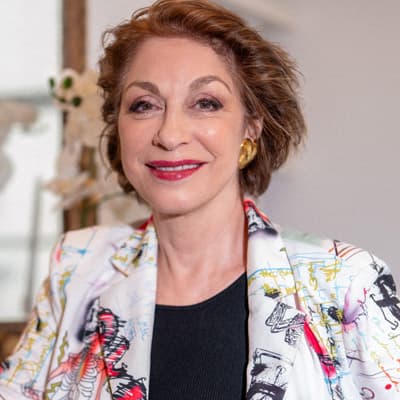
Full Transcript Introduction to Carol Lourieu2019s Integrative Work 0:00 Doctor Carol Lourie stands at the intersection of deep 0:04 clinical mastery and modern integrative healing, 0:08 a natural part Chinese medicine practitioner, 0:12 acupuncturist, and Amir with over four decades of experience. 0:18 She guides women through every phase 0:21 of voice cancer, from diagnosis to creating a clear, 0:26 evidence based strategy for long term wellness, 0:30 especially when conventional care offers 0:33 little guidance for what comes next. 0:37 Her work is both unapologetically 0:41 integrative and deeply human. 0:44 Through nourishing the targeted supplementation, 0:48 emotional and trauma informed recovery and nervous system support 0:53 helps women move from depletion and uncertainty 0:58 into self trust, strength, and renewed momentum. 1:03 Drawing and decades of clinical experience, 1:07 Kerala fares a grounded, strategic and personal path, 1:11 helping women feel strong in their bodies, confident in their choices 1:17 and fully present in lies filled with energy, joy and fulfillment. 1:24 Doctor Carol Lurie 1:25 welcome to the cancer breakthrough. 1:28 Sami, 1:30 thank you so much for having me. 1:32 I'm so honored to be included in this important event. 1:37 Sank you. 1:38 Thank you so much, Carol. 1:40 I am delighted to have you today as we are going to speak about recovering 1:44 your health and reclaiming yourself after breast cancer. 1:49 I think the work that you are doing is absolutely fabulous and so important, 1:55 because there are more and more breast cancer at the same time. 1:59 I mean, breast cancer is not killing women as is, right? 2:03 It's used to do that a few decades ago.
Personal Journey Into Breast Cancer Care 2:07 So there is more and more women who are can't 2:10 breast cancer survivors and they need help. 2:13 They need help because the treatment is brutal 2:17 and there's a need to to recover 2:20 their physical, metabolic, emotional health. 2:24 And that can last long after the treatment. 2:27 So it's really, really important 2:28 what you are doing, the work you are doing with all those women. 2:32 But before we start to speak about that, can you tell us quickly 2:37 what is your own journey? 2:39 How did you get into this very specific niche 2:44 and specialized work with women with breast cancer 2:50 to share this? 2:51 I had a very successful clinical practice 2:55 in Berkeley, California, focusing on 2:58 at that point it was women's health, but with a specialty infertility. 3:01 And one day I received a phone call and I thought it was a crank call. 3:05 But it turns out it was my dear friend who was historically crying on the phone 3:10 saying they found a lump. 3:12 And I said to her, don't worry, I'm going to be coming with you 3:16 to every appointment. You're not alone. 3:17 So that began in 18 month journey of my getting an up 3:22 close and personal experience of what it was like to go through 3:26 every aspect of breast cancer care at UCSF in San Francisco, 3:30 which is one of the larger teaching and research institutions in the country. 3:35 And it was a very. 3:36 I opening experience, and I'll give you an example. 3:40 For the first time, we were in the infusion room. 3:43 She was getting chemotherapy, and we came prepared 3:45 with healing tea and meditation, music and acupuncture needles. 3:49 And the nurse looks at her and says, well, you're a little thin. 3:53 Would you like some? And sure. 3:55 Now the number one ingredient of insure is sugar. 3:59 And then as she's getting chemotherapy, 4:02 the candy cart goes walking by. 4:06 So that. 4:07 And then they offered her a popsicle or a cupcake. 4:09 So here we are trying to supposedly kill cancer cells, but at the same time 4:16 feed them sugar. 4:17 And sugar is the number one gas for the cancer gas tank. 4:21 So that was a very big eye opener for me as a practitioner. 4:25 And of course, 4:26 in between her chemotherapy infusions, I began to treat her with needles 4:30 and herbs and supplements and nutrition and bone broth and the smoothie. 4:35 And her oncologist looked at her bloodwork 4:38 and one time and said, so what are you guys doing? 4:41 And I thought there was a big problem. 4:43 And I explained it to her and she said, well, 4:46 this is not the blood work of somebody who's had four chemotherapy infusions, 4:50 and I'm going to refer lots of patients to you. 4:53 So within a month my practice went from fertility to breast cancer. 4:58 And that was 15, 16 years ago. 5:01 So I went to study more about this. 5:05 I had a basic foundation, but I knew I needed to study more. 5:08 And I attended Donna Jansz three year 5:12 integrative oncology program and the need. 5:15 Unfortunately, outgrew my practice, and I developed this online
From Diagnosis to Conventional Treatment 5:19 life coaching program where I can reach women 5:22 throughout the US, Canada and actually the world. 5:25 Yes. It's amazing. 5:27 I mean, and think women around the world actually should know should know 5:32 more about you and you are offering such a great service to to all those women. 5:38 So let's suppose, I mean, we we have a young lady, 5:42 a young man worked as been diagnosed, she feels first, let's start with that. 5:47 She's taking a shower. She feels a love. 5:51 What do you think she would do to. 5:54 Well, she should do. 5:55 She should probably call her or her primary 5:59 care physician and then get a referral for a mammogram. 6:02 And from that moment on, if they find something suspicious, 6:05 she will be shepherded through the medical oncology protocol, 6:09 which is mammogram diagnostic 6:12 ultrasound, biopsy, pathology report and then meeting with the oncologist 6:18 for some results and determination of treatment. 6:22 Now, the world of medical oncology treats the tumor. 6:26 They have developed very specific protocols for breast cancer. 6:30 And they those protocols have been developed through the studies 6:35 of drugs supported by the pharmaceutical industry. 6:39 So they have a very specific protocol. 6:41 And women with certain types of breast cancer are all treated the same. 6:45 Now from an integrative standpoint, not not all breast cancer is the same. 6:49 Everybody's metabolic driving factors are different. 6:53 Breast cancer is a chronic metabolic disease. 6:57 And what I mean by that is metabolic diseases 7:01 are similar to diabetes or Crohn's disease or any autoimmune disease. 7:05 It's a disruption of your internal pathways. 7:09 So medical oncology treats the tumor. 7:13 They don't really look at the metabolic pathway disruption. 7:17 But there is a lot of information that your body gives off. 7:21 If you do a deeper dive into blood work and genomic testing. 7:26 And there's a lot of information now available, 7:30 the signature test tells how many circulating tumor cells 7:33 there are, and you have protocols for that with your products. 7:36 So there's a lot of information available. 7:39 But the young woman and more and more young women are unfortunately developing 7:44 breast cancer. 7:45 And I have my own approach and philosophy about that. 7:49 It's due to the toxicity of the body, products and the environment we live in. 7:54 It's not just genetics. 7:55 Genetics play a very small part in the development of breast cancer. 8:00 There is also a lot of talk about the emotional role 8:05 of the development 8:08 of breast cancer, but I believe the emotional role 8:12 cannot be separated from the metabolic consequences. 8:17 And they have answered. 8:18 Would you like to speak about that because you mentioned the cancer 8:21 as a metabolic disease, but I think it's really seriously linked 8:26 to the emotional state 100%. 8:29 And I'm so glad you brought that up, because I recently had a conversation with
Breast Cancer as a Metabolic and Emotional Disease 8:33 a breast doctor, and I was talking about the emotional component of breast cancer. 8:38 And she said to me, there's actually no studies indicating 8:42 that there is an emotional contribution towards the development of breast cancer. 8:46 And I actually said, well, not in my research. 8:49 I have found some. 8:50 And but every woman's story, 8:53 if you ask her what happened 8:56 20 years or five years or in the last few years, 9:00 she will report that there was a period of high stress. 9:04 And often women will say to me, I had been molested 9:08 25 years ago or 30 years ago. 9:11 And so what happens in our body in a moment of trauma impacts ourselves. 9:17 And of course, when you're younger and you're the victim of such a horrible 9:21 event, you don't have any options and you just go into self-protection. 9:27 Hopefully most women survive. 9:30 Some women do not. 9:31 But many years later, as an adult, when they're under 9:34 a period of stress, those memories come to surface. 9:38 And then the stress with the elevated cortisol creating inflammation 9:43 that can turn on what was not really active. 9:47 And then the woman will develop breast cancer. 9:50 There isn't one cause of breast cancer, but as you just said, 9:54 I am a firm believer that you cannot really separate 9:56 the emotional story from the physical aspects. 10:00 And that's a critical component of the work that I do in my coaching program. 10:05 Can you give us a little bit more details about what this coaching program entails 10:10 without regard? 10:11 Of course, there's two really important components of it. 10:14 There is the Empowered Library, which has all the has interviews 10:19 and research and over 100 articles and books and everything. 10:23 A woman needs to really feel 10:25 like she has a reference instead of being on Doctor Google. 10:29 There is a section on bone health, and that's a very critical component. 10:33 After a woman has finished treatment and is then placed on either tamoxifen 10:38 or an aromatase inhibitor, there is an entire section on advanced testing. 10:43 What do you need to be able to speak to your oncologist or integrative 10:46 practitioner or primary care physician about what other blood work and testing 10:51 do you need to understand what is happening in my body after treatment? 10:55 How did it really work so that if there's going to be a problem, 11:00 you understand and you have some pre knowledge before all of a sudden 11:03 you were told that you have stage three or stage for its metastasized. 11:08 There is an entire section on supplements 11:11 and I use that phrase targeted supplements. 11:13 It's not let's throw the kitchen sink at your body 11:17 and take anything that anybody on Facebook is saying is good. 11:20 So the supplement protocol is a live being. 11:23 It changes as your needs change. 11:26 If you've had radiation, there's something called a radiation recovery protocol. 11:31 And if you've had chemotherapy, we need to actually really 11:34 look at what's happening in your gut and help your gut recover. 11:38 And then there's inflammation protocols. 11:41 So we have to give you food and supplements to reduce that inflammation. 11:46 So this is the emotional physical reference for you. 11:50 And you have 24 over seven access to that. 11:53 And then there's the live group coaching where we meet on Tuesdays.
What the Coaching Program Includes 11:57 The women are there. 11:58 They get to interact with me live, and they get to interact with each other 12:02 in a group. 12:03 You come and you get your questions answered in live time. 12:06 And we meet almost every week except during the holidays. 12:11 There are some times when the class isn't happening, but 12:14 it's really an expert giving you advice 12:18 on how to get back on your healing path and the support you need. 12:22 Because one of the most important things for you to realize is 12:27 being told that it's okay to eat. 12:30 Everything in moderation is not a good thing. 12:33 After you've had cancer. 12:35 Yeah, it's not enough. It's not enough. 12:37 And you yourself, 12:38 you have a mean, you have great knowledge also about food and cooking. 12:43 I mean, you have been I mean there 12:46 and you have attended some a lot of I mean, you were a chef, right? 12:50 I was many years ago and now I use that. 12:53 Well, I was always like a very natural, organic chef. 12:56 But now I used to be also a chef and a pastry chef. 13:00 That's how I worked my way through undergraduate and natural Path school. 13:04 But now I apply my pastry skills to making gluten free 13:08 and extremely, extremely low sugar. 13:11 And the attitude of these pastry goods is 13:15 it's your birthday, it's the holidays. 13:18 You are going to want to eat something. 13:21 And instead of eating something that's made 13:23 with regular flour and a ton of white sugar, 13:26 you can stay in control of what you put in your body 13:29 and eat something that's made with oat flour and buckwheat and teff. 13:33 And maybe it has two tablespoons of maple sirup, sugar or honey in it. 13:37 Maybe. 13:38 So it's a treat, but everyone else will get to enjoy it. 13:42 So there are some very specific lifestyle choices that you get to make. 13:48 Notice I'm not. 13:49 I can't tell. 13:50 As adults you don't want to be told what to do. 13:53 It's a choice. 13:54 Everything you do for healing needs to be a choice that you readily 13:58 embrace, and everything needs to work for you and your lifestyle. 14:04 Zoe's always a balance 14:05 between the immune function and the development of cancer. 14:10 Cancer grows because the immune function is not working properly. 14:15 Otherwise it would stop the growth of cancer. 14:19 So you base specific attention to 14:23 rebuild the immune system of women after cancer diagnosis. 14:28 How do you do that? 14:29 Well, that's a great question. 14:31 I thank you for answering it. 14:33 There is there are very specific blood tests 14:36 that can guide and show what's happening with your immune system. 14:41 An example is one woman was tested by an integrative physician 14:46 that she was working with in conjunction to me, and we discovered 14:50 that she had a lot of mold, previous mold exposure and mycotoxin exposure. 14:55 Now, it wasn't an active moment, but that mold exposure 15:00 has depressed her immune system and her CDK CD eight cells. 15:05 That ratio was very low. 15:08 So with integrative treatment, 15:11 we will be able to see that important number increase. 15:14 And then that guides how she eats, what supplements 15:18 she takes, what infusions she's receiving from her integrative physician. 15:23 So there is testing and then there is looking at lifestyle. 15:27 What kind of products 15:29 is the woman using in her house for cleaning, for putting on her body? 15:33 There's this one advertisement which drives me crazy. 15:36 This supposed ob gyn doctor is putting body wash on herself, 15:41 which I looked on and at, and it's filled with chemicals.
Nutrition, Supplements, and Immune Support 15:46 So when you use chemicals on what you put in your body, 15:50 or dryer sheets or over-the-counter laundry detergent, 15:54 you are then absorbing those estrogen disrupting chemicals into your body. 15:59 And that contributes to inflammation. 16:01 So your body is then having to choose between there's inflammation 16:06 or there's a cancer cell and I can't keep up. 16:09 So that is one of the ways, in a very simple terms, that cancer 16:14 gets a hold in your body. 16:17 Yeah. 16:17 And you were mentioning this TV ad carcinogens are everywhere 16:23 and most industrial products 16:26 are loaded with carcinogens for kind. 16:30 So how is he averaged women able 16:34 to navigate this this information 16:38 in one wise I even some doctors 16:41 I mean you were mentioning a doctor who is developed this this product. 16:46 There are doctors with a white code saying one thing, 16:50 and then there are doctors with the same similar white code saying other things. 16:55 And then there is the internet with a flurry of of whatever. 16:59 How do you think? 17:00 I mean, it's pretty difficult now to find the proper information. 17:06 How do you do you think people should proceed 17:09 to become pay a face 17:12 information on even easy information? 17:16 I think this is an example of 17:18 the expression I use that cancer creates chaos. 17:20 And cancer in a very simple level is cells 17:24 that have stopped paying attention to the healthy stop and go. 17:28 They just keep going. 17:30 And you have this influx, as you just said, of overwhelming 17:35 emotional and physical overload information 17:38 with the internet, with a doctor saying different things. 17:41 I think a woman needs to find one person that is experienced, 17:47 licensed, has been in clinical practice, knows what 17:51 she's he or she is talking about, and just follow that person. 17:55 I mean, you have to choose wisely because you're right. 17:58 You, your money and your life are very important. 18:01 Your life more than your money. 18:03 But you need to find someone that you resonate with 18:06 and that you believe is based in research and has done the work. 18:11 I take the medical component of breast cancer extremely seriously. 18:15 I attend the San Antonio Breast Cancer Conference virtually, 18:19 because I think it's important for me to understand 18:22 what's happening with the drug studies, as well as being well 18:25 versed on research in the world of integrative methodology 18:29 and testing and all of that, because we need to be responsible. 18:33 It's not like somebody went to the beauty parlor and doesn't like their hair color. 18:36 I mean, this is a very serious metabolic problem. 18:40 And so there as far as lifestyle is concerned, 18:44 which is what you're talking about being exposed to carcinogens. 18:47 Your home is the only place you have 100% control over what you bring into it. 18:53 So you can filter your water, you can filter your air, 18:56 you can use organic products. 18:59 You can not use nonstick pans or aluminum pans. 19:03 And you can gradually, like increase the health of what you bring into your home. 19:08 And it's a gradual process. 19:10 This is something that can take a woman 3 to 6 months, 19:14 a woman and her partner 3 to 6 months to redo your home. 19:18 So it's not filled with environmental toxins. 19:22 But in the end, that time has passed 19:25 and now you have a home that is really a true sanctuary for you. 19:28 And I like very much a fact that you are addressing
Reducing Environmental Toxins at Home 19:32 those little things that day after day can make a difference, 19:37 because all that is compounding and creates a universe 19:42 where the body can heal, rather than increasing the chances 19:46 of being a carcinogenic environment and induce recurrence of cancer. 19:52 Because having it once is one thing, I mean it twice, 19:55 and having cancer coming back is even worse. 19:58 Prognosis and absolutely terrible experience 20:03 to to go through, because that's nothing more deflecting than having cancer. 20:08 Cancer is back when you are exhausted and you feel 20:12 you have done everything, almost everything you could do. 20:15 So that leads us to how do you think women can create 20:20 a long term wellness plan to reduce the risk of recurrence? 20:24 There is this aspect of women with breast cancer, and this is where 20:27 my homeopathic medicine philosophy comes into play. 20:31 In homeopathic medicine, there is this philosophy of a miasma, 20:36 and amazing is a phrase that's used for certain 20:41 diseases, have energetic states and have descriptive states. 20:45 And there is a homeopathic remedy 20:47 for women with breast cancer made out of breast cancer tissue, actually. 20:51 And what they've discovered. 20:53 And I'm going to describe this remedy. 20:55 And when I do this in my live group coaching 20:57 or in a free webinar, women go, oh yeah, that's me. 21:00 So women with breast cancer tend to be very bright, 21:03 very accomplished, very independent. 21:06 They don't like to ask for help 21:08 because somebody will not do it as well as they do, 21:11 and they take care of everyone else at the expense of themselves. 21:15 So women with breast cancer have this philosophy or this perspective 21:20 that they don't need to seek help, that they can figure this out on their own. 21:25 They can go into Doctor Google and get their supplements together and everything. 21:29 So I like to explain this this way. 21:33 Asking somebody to do that who is not a science 21:36 based person is like asking me to go like fix a car. 21:39 I would have no idea even if you gave me a manual. 21:43 It's not my area of expertise. 21:45 So I think one of the most important things that a woman initially, 21:49 whether she's initially diagnosed in the middle of treatment 21:52 or finished treatment and now on tamoxifen or an AI can do 21:57 is to find someone who really knows this is their area of expertise, 22:01 and guide you to what supplements do you take now? 22:06 What you're going through? Treatment. 22:07 Your metabolic needs are different 22:09 than if you finish treatment and you're on hormone blocking therapy. 22:14 There's different stages of breast cancer 22:16 and they have very different requirements. 22:19 So I think that is one of the most important things that 22:23 no matter what type of cancer you have, but we're talking about breast cancer. 22:27 Find a practitioner who really knows what they're talking about 22:31 and let them guide you. You're still the head. 22:33 You're still the head of the team. You're not. 22:35 I know medical oncology tells women they're part of the team. 22:39 Yes, you're but you're the head of the team. 22:41 You get to decide everything, all aspects of your treatment. 22:47 So let's say I've been diagnosed with cancer. 22:50 I have listening to this podcast, 22:53 and I am feeling that really I want to work with you. 22:57 How do I proceed? 22:58 What will happen next? 23:01 Well, if you go to my website and it's my name Carol 23:04 Lori LOURI ecom.
Long-Term Wellness and Recurrence Prevention 23:08 Just one word. 23:09 I have a contact me page there, and if I respond to everyone who reaches 23:13 out to me, just fill out my contact me page and I will get back to you. 23:18 It's very easy. 23:18 I try to make it as easy as possible, but. 23:22 But after that I mean, I. 23:24 Yes, I am involved in a you mentioned webinar 23:28 so I have it's individual consultation with you. 23:32 It's group coaching how that works. 23:36 So what is going to to happen. 23:39 So if you go to my website and contact me, there's an apply to work with me form. 23:44 Once I receive that I reach out to the person, the woman, 23:48 and there is a complimentary zoom call that follows. 23:51 And during that appointment, we will decide 23:54 what your needs are and what is best suited for you. 23:58 According to where you are 23:59 emotionally and financially and what you're able to undertake, 24:03 it can either be in live group coaching or individual coaching. 24:07 It really depends on what your needs are. 24:09 I treat every woman individually and try 24:13 to serve women in that capacity. 24:17 So the received 24:18 some books or say some some manual 24:21 to follow their receive their individualized protocol. 24:25 They meet with you once a month. 24:27 So what is going on. 24:29 So if they're in the life of coaching program, 24:32 they have the access to the empowered library. 24:35 And then the live group coaching happens weekly on Tuesdays from 4 p.m. 24:40 Pacific to 7 p.m. 24:42 eastern or 7 p.m. eastern. 24:44 And you know, it's on zoom. 24:47 We need on zoom. 24:48 And we're there and everyone gets their questions answered live. 24:52 And then if women have questions in between the sessions, they either 24:56 put it in the private Facebook group or they reach out to me through email 25:01 and concierge care happens depending on what the women's needs are. 25:05 But we always meet on zoom, okay? 25:09 And generally, as an average, women work with you. 25:13 For how long? 25:14 How long do they stay? 25:16 Well, when you are a member of the live group coaching 25:19 program, one of the bonuses you have VIP access. 25:22 So I have women who joined three years ago 25:25 when they were in the middle of treatment, and they come back once a month 25:28 just to check in and ask me questions so you can come back. 25:32 As long as I'm doing my life coaching program. You. 25:35 It's not like it's only eight weeks and then it ends. 25:38 It's ongoing and you can come back for as long as you want. 25:42 And my experience has been a lot of women 25:46 come initially every week and then they disappear. 25:49 But the women who come in at least once a month on one of those Tuesday meetings, 25:54 those are the women who are able to stay on their protocol and their food, 26:00 because there is a way in which the standard American diet 26:04 and the standard American lifestyle can drag you off your healing path. 26:08 And it's not like your healing path is that different from your other life, 26:14 but it is slightly different, and it does require a rhythm 26:18 of eating properly and making your healing smoothie 26:22 and getting into organization of your supplements so they fit into your life. 26:27 And you don't have to open 12 bottles every day.
How to Work With Carol Lourie 26:31 That doesn't work for anybody. 26:32 And I have systems that I teach everyone because I've been doing this 26:36 with thousands of women over extended periods of time to make 26:40 things really easy, but it takes a while to get all of that in place. 26:44 So that's why I really encourage women to continue to come. 26:48 And the live group coaching, the live coaching individually. 26:52 A woman is about to see her oncologist and she wants to check in with me 26:56 about tests. 26:57 She should ask, questions she should ask, and we have that conversation. 27:01 So I help guide her to receive the best medical care possible. 27:06 It's a perfect mix balance of individualized 27:12 support and also 27:13 group support support group a weekly support group. 27:17 And I think everybody going through cancer absolutely needs that. 27:22 I agree that the emotional shift that women receive, 27:27 and I can see it when they first come in, 27:29 they're a little deflated and overwhelmed, and then they realize, oh, 27:32 there's a path and there's guidance and oh, I don't have to do this myself. 27:36 And there are other women who are just like me within a like a couple sessions. 27:42 It's like they're uplifted and it's a beautiful thing to see. 27:45 And that's why my, the name of my program is empowered against recurrence, 27:51 empowered to really important word. 27:52 There isn't enough of that for women, 27:54 especially in the world of medical oncology. 27:57 Absolutely. Absolutely. 27:59 Thank you. 27:59 Carol, thank you for the wonderful work that you are doing. 28:03 And thank you for empowering women all around the world, 28:07 especially when they are going through difficult times. 28:10 Well, thank you so much for having me, Sylvie. 28:12 I'm honored to be here. Thank you.
Comments