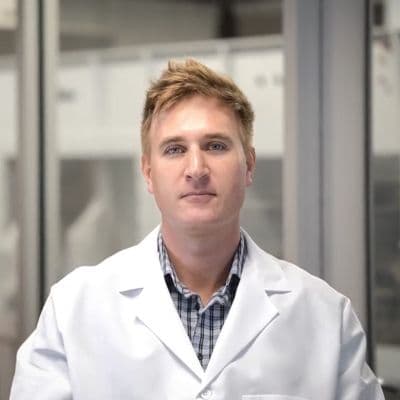
Full Transcript Introduction and Guest Background 0:00 Welcome back, ladies and gentlemen. 0:02 My name is Nathalie Niddam. 0:03 I am your host for the Bioregulator and Peptide Summit. 0:06 And today I have the great pleasure of welcoming Doctor Jordan R. 0:10 Plews, who is an innovator in biotech and stem cell research 0:15 specializing in regenerative medicine and esthetics. 0:18 He's got a bachelor's degree in biochemical engineering, 0:20 as well as a doctorate in molecular 0:22 biology and stem cell research from University College London, 0:27 as well as a postdoc and business school training from Stanford. 0:30 How long were you in school from Stanford? 0:33 His pioneering research has advanced the understanding of cellular reprograming 0:38 and induced pluripotency, 0:40 which you're going to tell us what that means in a minute. 0:42 Jordan co-founded factor five skincare in 2015 and lives in 2020, 0:48 developing cutting edge skincare products, leveraging human stem cell and exosome 0:52 technology, advancing medical esthetics and regenerative skincare. 0:56 Who Doctor Plews now applies his expertise at the intersection 1:00 of regenerative medicine 1:02 and longevity, advancing innovations that leverage cellular 1:05 and molecular pathways to optimize skin 1:07 and scalp health, extend healthy lifespan, and redefine human performance. 1:11 Isn't Vitale lucky to have you? 1:13 Doctor Jordan Plews, welcome to the show. 1:16 It is a pleasure to have you here today. 1:19 Pleasure to be here. 1:20 I'm looking forward to this. 1:22 I mean, we've we've talked before, but I, you know, you 1:24 we can never really learn enough about this stuff. 1:26 And there's so many questions around, you know, 1:30 and I think it's just also the this the space of stem cells and exosomes, 1:34 the regenerative space is moving so fast that, 1:38 you know, certainly as a consumer we can't keep up. 1:41 I, I'm guessing with all these degrees and things you've got, 1:44 you are at the forefront of this business. 1:46 But it's it's a fascinating area. 1:48 And, you know, 1:51 you've had an interesting career arc where you started biochemical engineering. 1:54 You moved into the research side of stem cells, and then you had kind of 1:59 an epiphany, right? 2:01 You decided, yeah, this lab work isn't doing it for me. 2:03 Do you want to talk to us about that a little bit? 2:05 Sure, yeah. 2:07 Now, when I was doing my my postdoc, I got an opportunity 2:11 to branch out and go down the entrepreneurship track. And, 2:15 you know, I was really 2:18 impatient. 2:19 You guess you could say, after doing all this research and feeling like we have 2:23 so much information on stem cells, I want to see this technology applied. 2:27 How do we get practical benefits from stem cell research? 2:31 And that actually drew me towards esthetics. 2:35 Ultimately, I didn't expect to end 2:37 up in a medical statics at all, but there were a few skincare products
From Stem Cell Research to Aesthetics 2:41 on the market that were cell derived all the way back to 2001. 2:45 And basically I was challenged by some partners and some investors 2:49 like, hey, you know, we could probably do something better here, right? 2:51 We could put some some of this technology to practical use. 2:55 And that's how I ended up kind of 2:57 walking back and forth across this line from kind of biotech into medical statics. 3:01 And I've kind of wandered back and forth over the last 10 or 15 years. 3:04 Yeah. 3:05 And so how much more advanced do you feel we are now relative to when you started? 3:10 In some 3:11 ways, it's been a huge jump, and in other ways 3:14 it's still not moving quickly enough. 3:18 You know, I don't want to go down a whole rabbit hole and get on my soapbox, 3:21 but I do feel like the methodology on how some of these technologies 3:26 have been evaluated and getting them to the clinic has been so stringent 3:30 that there have been things that have been developed that are really incredible, 3:34 that just have never made it actually into use. 3:37 And so we have to keep pushing the envelope and finding ways to show safety, 3:41 finding ways to show reproducibility so that we can eventually benefit across 3:46 the board, across the body with these sort of regenerative technologies. 3:50 Right. 3:50 So you're talking about regulations right now, like all the safety rulings 3:53 and the the restrictions on what material, where it comes from, where, 3:57 what you can do with it, that kind of thing. 3:59 Yeah. 3:59 And I'm not anti regulation at all. 4:01 I think that it's there for good reason. 4:03 But I do think that there is a methodology that's been put into place 4:07 that's based more around approving things like a pill of aspirin 4:10 and Tylenol than they are regenerative therapies. 4:13 And unfortunately, you know, there are things that 4:17 there's great evidence that it can have a substantial impact 4:20 that are just not out there yet. 4:22 And I think this is where, you know, oddly enough, esthetics has had an opportunity 4:28 to be at the tip of the spear sometimes on some of this technology. 4:33 Yeah, no for sure. 4:34 So you are the scientific advisor 4:37 for Vitali, who's one of the sponsors of the summit, 4:40 which is amazing, one of my favorite companies. 4:42 And you share this passion of GCHQ copper peptides, right. 4:46 Like was the copper peptides, were they on your radar 4:49 before they approached you or did they kind of say, hey, 4:52 have you checked out this guy's work being Doctor Lauren Picot? 4:56 Oh, yeah. 4:57 No, I actually had a friend who unfortunately had non-Hodgkin's lymphoma. 5:00 She had something on lymph node removed from her neck, was having a scar. 5:04 And so I went down a rabbit hole 5:06 trying to figure out how do you get rid of the scar for her? 5:09 Because she was, you know, 22 years old at the time. 5:11 I stumbled on the work of Lauren Picot, who basically developed the copper 5:15 peptides and did a lot of great work all the way back to the 70s on this. 5:19 And then I went on to form a couple of companies and a variety of products, 5:22 and regularly would put GHG copper peptides in those products. 5:26 So when I was introduced to Vitali by a friend, we just it was like kismet. 5:31 We really understood each other. 5:33 We had this shared passion and it was basically, 5:36 we don't want to be making things to just cover up problems. 5:39 We want to nourish the skin, we want to leverage the biology. 5:42 And I think that's what Vitali has been doing, and that's 5:45 what I've been trying to help further, you know, grow that 5:48 that kind of mindset with, with these new products. 5:51 Yeah. 5:52 Well, I mean, so what's interesting now is what we're seeing in the skin 5:55 care world is these two worlds colliding, right? 5:58 The peptide space and now the stem cell exosome space. 6:03 So let's let's talk a little bit about these. 6:07 You know the adipose derived stem cells the zero age and derive stem cells 6:12 help us to kind of get oriented in that space because we're going to move 6:17 from stem cells to exosomes. 6:18 But let's start by getting the audience oriented around this world. 6:22 And by the end of the podcast, guys, we're going to bring it together 6:25 and talk about why we think stacking these things really make sense. 6:30 Yeah, yeah. 6:31 So if you go all the way back to the 1970s with Lauren Picard, 6:34 he basically found that 6:36 GCHQ copper peptides were a critical part of what's found in plasma. 6:40 That's doing a lot of the work is affecting thousands of genes, 6:44 and we keep finding more interesting use cases from it. 6:47 But you could think about it 6:48 as like the most important factor that's pulling out of young plasma. 6:51 We know it goes down with age, but on top of that,
Copper Peptides and Vitali Partnership 6:56 when it comes to stem cells, we understood in 2001 6:59 with products that were fibroblast conditioned media derived. 7:02 The fibroblast is one cell that makes up the skin 7:05 and it's a dominant one, but it's one component. 7:08 And so we were taking that. 7:09 There's a couple of products that have been out like say over 20 years 7:12 now that have been fueling skin with those kind of factors. 7:15 And that's a small piece of the puzzle, and we evolve from there 7:19 to understand that there's even more factors in platelets. 7:22 And we saw the rise of things like PRP, the vampire facial 7:27 that was really popularized by Doctor Charles Reynolds, who I consider a friend. 7:30 But now we've really moved on from that to say that 7:33 what's even better 7:34 than what you're getting from the platelets, 7:35 what the platelet factors are really talking to in many cases here 7:39 is, is the stem cells. 7:40 And so in the adult body, the adult stem cell 7:43 or the medicine stem cell or MSC is really the one that you want. 7:48 And I started there by using adipose. 7:51 That was the first set of products. 7:53 Because people are getting liposuction done every day. 7:55 They're throwing that away. 7:56 They don't they don't ask to go home with that. 7:59 But really what this happy to get rid of it. 8:01 Really pretty happy to get rid of it. 8:03 We were saving them a biohazard disposal fee, frankly, to take that fat 8:07 and isolate from it about 1%, that is, stem cells and use those. 8:10 But as you can imagine, if you're pulling fat from somebody 8:15 with their probably not in the best shape, they're probably not the healthiest. 8:18 Sitting there thinking, what else are you pulling? 8:21 Yeah. Right. 8:21 So so there was a there was a slight concern that we could do better. 8:25 And there are certain use cases where I think adipose is very interesting, 8:28 but generally speaking, younger is better. 8:31 And what I was kind of going down 8:33 this path, that was sort of a common sense answer. 8:35 Now, the science really does support that. 8:37 There's a variety of papers to show across a variety of cell types 8:41 that younger cells are producing a different blend of factors. 8:45 They're producing different exosomes, 8:47 different extracellular vesicles, different proteins, different microRNAs, 8:51 and that phenotype, that snapshot of what those cells 8:55 are producing at a young state versus an old state is different. 8:58 And as you might guess, the younger state is better. 9:02 And I say this is kind of common sense, because if I asked you, you know, 9:06 hey, if you needed a liver transplant, would you want it from a 15 year 9:09 old or an 80 year old? 9:11 You probably wouldn't hesitate to say, I want the young one, right? 9:13 You don't need to be a scientist to do that. 9:15 But I think the science is now catching up to really explain why 9:18 that is how that is. 9:20 And so I did move from the adipose to bill as the preferred source. 9:25 And I think really where the science is at today is youngest possible 9:31 ethically sourced mesenchymal stem cells or in some cases progenitor cells. 9:36 These are the earliest cells that are helping 9:39 with repair, helping with maintenance. 9:42 And so to me it's a frame shift on how do we think about aging. 9:47 It's it's more this idea that we're degrading slowly death by a thousand cuts. 9:52 And if you can maintain the maintenance system, the repair system, 9:56 in real time, then you slow the whole thing down for sure. 9:59 For sure. 10:00 So okay, so we're talking we've been talking about stem cells. 10:03 Mesenchymal stem cells 10:05 help us to make the leap to the exosomes because exosomes is really right now, 10:09 at least in skincare for the most part, is where it seems to be, where it's at. 10:14 There have been a couple of big launches. 10:15 Talk to us a little bit about what is it about the exosomes, and 10:19 are you getting those as well from the same material that you would be 10:24 getting the zero age and derived stem cells like talk to us about exosomes. 10:28 Where do they fit in? Sure. 10:30 Yeah. 10:30 So I started from a place where I was working in a heart lab 10:33 and my old Pi, he was until recently head of the American Heart Association. 10:37 And we were looking at it because heart disease is the number one killer. 10:41 And so if you can affect that with stem cells, that's really awesome. 10:45 And so members of my lab 10:46 were injecting stem cells of different kinds into the heart. 10:49 We were differentiating them into cardiomyocytes
Stem Cells, Age, and Regenerative Signaling 10:52 injecting those into the heart after causing a heart attack. 10:55 This is usually in a pig model. 10:56 And what we saw was in all these different cases, there was some improvement. 11:00 But the surprise was that there was if you take the factors, 11:04 they're being released, the tone of the exosomes 11:06 and put that into a hydrogel and inject that into the heart. 11:10 After an MRI, you saw improvement as well, and sometimes 11:13 even a greater improvement than putting the cells in there. 11:17 And I think that comes from this basic idea that we thought that the stem cell 11:21 at one point might be turning into a heart cell when it's placed near 11:25 a heart injury, but in actual fact, it's more of a signaling cascade. 11:29 So the injury is releasing 11:31 signals, the stem cells picking up the downstream of those signals 11:35 and then responding by releasing exosomes, by releasing exosomes. 11:40 Interesting. 11:40 And so yeah, so really it's a set of instructions 11:43 that's being given out after a specific stimuli 11:47 and that that you can take those and you can concentrate them. 11:52 You can make them in abundance. 11:54 And they're not alive. 11:55 They don't divide. 11:56 They're not like some people talk about them like their cells or their life. 11:59 They're not alive. 11:59 And this was a big deal for me because stem cells require 12:04 all this fancy equipment. 12:05 You have to have incubators, you have to have the right guess. 12:07 Make sure the right media make sure so many little things 12:10 that you have to track for the microenvironment. 12:11 I can't put that in a bottle on the shelf. 12:15 The cells would not survive. 12:16 And so I know there are products out there that claim that their cells in there 12:19 that there's not isn't it's not real. 12:21 But exosomes right. 12:23 The vesicles you if you do the chemistry right and you're careful with them, 12:27 they can be stabilized, they can be applied. 12:30 And there's a variety of different ways to do that. 12:32 But as a biochemical engineer, 12:33 that was sort of like a task I thought I can tackle that. 12:36 And that frameshift led me to, you know, basically what I've done over the last 12:41 10 to 15 years where I would argue what we're trying to do now is grab 12:46 a snapshot of what the stem cells producing after a specific stimuli 12:51 so that it thinks that there's this damage that has occurred, 12:55 and it's responding with those anti damage signals. 12:59 And then we're applying that and topping up 13:02 those factors that your skin was making in abundance 13:05 naturally when you were younger and you didn't need any products frankly. 13:09 Right. That's what we're trying to get back to. 13:11 So let's say for a product like the Vitali product, 13:15 do you basically treat the stem cell like 13:18 do you take a population stem cells, subject them to a specific stimuli 13:23 in order for them to produce these specific exosomes that you then 13:27 incorporate into the product? 13:29 I'm trying to get my head around this because would you 13:32 would you take mesenchymal, you know, those zero age stem cells 13:36 and would you expose them to a different stressor? 13:39 If, let's say, you were trying to fix somebody's 13:41 heart versus trying to fix somebody's skin? 13:44 Yes, yes. 13:45 So as a scientific advisor to Vitali for this Vita product, 13:50 we talked about the things that are important to look at the ways 13:53 that you want to 13:54 look at this in the laboratory, the types of testing and every kind of 13:58 turn of the crank here getting better and better with how we do this. 14:02 But effectively, there is a level of control that you want to have. 14:06 You want to have as much consistency and reproducibility as possible. 14:11 You know, 14:11 I think people in their heads often imagine that maybe there's a different 14:14 umbilical cord coming in every week 14:17 and that there's this batch of batch difference. 14:19 But that's not that's not what's happening. Actually. 14:21 There are a variety of methodologies here around cell banking and, you know, 14:26 controlling lab protocols so that you get a very reproducible output. 14:30 And, yes, the signal cascade, you want to tweak that and prove that. 14:34 And I would argue 14:35 that the best thing for 14:36 the heart is probably not the best thing for the skin or the brain. 14:39 And over time, you know, we've learned various ways to tweak it better and better 14:44 and to tweak it in the same way so that what you're getting is consistent. 14:48 I think that's important 14:49 because so many of the cell derived products I see out there, 14:51 they have so much inherent batch to batch variability 14:55 that could be tied to the various donors. 14:58 It could be tied to lab processes not being very methodically done. 15:03 So how do you ensure because you're not going to use 15:06 you're not using just one umbilical cord, like you're still going to have to get. 15:10 Yeah. 15:11 Like you can because isn't there a story where the that there's variability also in 15:17 how often the stem cells are being asked to excrete these exosomes. 15:21 And then over time quality of the exosomes might decline. 15:24 And so there's a number of times that you're going to pass the quiet. 15:28 Yeah. Before you're like they're done. 15:32 We need a new batch. 15:34 So the jargon here is, is cell passages. 15:36 You could think about it as cell 15:37 doublings, generally speaking, as the cell is dividing in the dish. 15:42 You can think about that as synthetic aging. 15:44 Right. 15:44 It's just growing dividing, dividing the same way 15:46 your cells are dividing dividing over time. 15:48 But we could speed that up or slow that down in the laboratory environment. 15:52 So generally you want to keep low passage low number of cell doublings. 15:57 Yeah. 15:57 Generally you know you don't want to have one single donor that, you know 16:01 if there's one thing wrong with it, you know you're stuck with it. 16:05 Yeah. 16:05 And one of the approaches to this, I don't think I'm giving away 16:09 any secrets here is that you have multiple donors that you blend together. 16:13 So imagine you have ten people lined up, and this guy has one gene 16:16 that's not expressing. 16:17 And this guy has another gene that's not expressing. 16:19 But you put them all blended together. 16:21 They cover each other. They cover for each other. Right. 16:24 You might get 90% expression and that one guy is not right. 16:28 But the idea is to normalize. 16:30 And this is how this is just a cell therapy approach in general. 16:33 You want to normalize the the production. 16:35 So you want to normalize the protein output. 16:37 So if there was one important protein 16:39 that one of these cell lines is not producing, the likelihood 16:42 that the other nine or other 99, in a perfect world we'd have 100 going in. 16:46 Right? 16:46 But in practical sense probably five, ten, 20 that are blended. 16:50 You normalize against it. 16:52 That's that's sort of the approach and helps with consistency in that way. 16:56 Okay. 16:57 And now what do you say to people I saw this on 17:01 there was some social media posts that another company had put up. 17:04 And there's some guy who claims to be highly qualified at something 17:10 other than being really angry and who was basically calling out 17:14 any company that claims to have exosomes in their products, 17:17 claiming that, well, exosomes have to be stored at -80 degrees. 17:21 It is physically impossible to have exosomes that are going 17:24 to do anything in any product 17:26 that's sold off the shelf and not kept in a -80 degree fridge.
Exosomes and Their Role in Skin Repair 17:29 So, you know, his view is so out there. 17:34 But I wanted to bring it up because I think it's important 17:37 for people to understand, like, what do you say to that? 17:39 Like, clearly he must be missing some kind of information because, you know, 17:43 I think there's a lot of like the vitality 17:47 people are not in the business of pulling the wool over people's eyes. 17:49 Like, these are not those people. So 17:53 I don't think help us understand. 17:55 Yeah, certainly 17:55 I'm not interested in making products that don't work and neither are they. 17:59 And while I could say that there are 18:03 a variety of factors involved, and that to say that 18:06 every single interaction that's possible has been accounted for is, is not likely. 18:11 Right? 18:12 There's there's an understanding here that, you know, we're looking 18:16 at a variety of different pathways that are all working together. 18:20 And this is sort of a group approach. Right? 18:23 I think the previous approach to skincare has been mostly 18:26 like what I call the hero ingredient model, 18:29 where you make one thing really well, 18:31 maybe some synthetic chemicals, synthetic peptides, 18:33 something usually that's not natural and we throw it at the skin and we look 18:37 at, you know, the typical markers 18:39 like what's going on with college and what's going on with elastin 18:41 when in reality in the body, it's a symphony. 18:43 It's a variety of hundreds of thousands of factors 18:46 interacting with each other, you know? 18:47 And to your point, there are folks that when exosomes first launched in the market 18:53 in the United States, they were sold frozen in a vial. 18:57 And there's some reasons for why they did that. 19:00 And there's some reasons they had to do that. 19:02 But it wasn't because exosomes 19:05 are active or only active in those temperatures. 19:08 I mean, you're 98.6 degrees. 19:11 I hope 19:12 and hopefully tell you that your body is full of billions of exosomes right now. 19:17 You're it's not something that only stem cells produce. 19:20 All of our cells are talking to each other all of the time. 19:23 And so, you know, really the game here is how do we create an environment 19:28 that is sufficiently similar to what's going on in our body, right. 19:33 That that these exosomes can remain stable and outside of the body. 19:38 And it's not a temperature thing because again, if they were 19:41 if the temperature was the reason that they just degraded, 19:43 then they wouldn't work in your 98.6 degree body. 19:46 So this this idea of that. Yeah. 19:49 And this should be common sense if you stop and think about it. 19:52 But it is a lot of right. 19:54 And the other the other angle to 19:56 this is I know that the first companies that came out with this, 19:59 I won't name names, but they were in the United States. 20:01 And another big location that was 20:03 this work was being done as over in Korea or internationally. 20:06 Yeah. 20:06 And they had to figure out a way to ship them. 20:09 And when you ship cold, 20:11 you know you're not going to get them within three days. 20:14 Right after customs and everything 20:16 that dry ice that you usually ship them on, it's going to be exhausted. 20:20 And so then you're upset. 20:22 So what they did was a lot of companies started going down the path of life. 20:26 And there are strategies that work, particularly 20:30 for proteins and growth factors. 20:33 But they typically don't work for RNA, which is can be a component 20:37 like the microRNA which is a regulatory RNA and a variety of things, honestly. 20:41 But there is some there's some clear drawbacks to life, 20:46 but the main thing is solved for these companies internationally 20:50 was a way to ship this product without having to use dry 20:54 ice and worry about it getting, you know, ruined in customs effectively. 20:58 We took a different approach here. 21:00 I've taken a different approach in general to say rather than try to take something 21:05 that we know has water in it and freeze it, and therefore water expands kind of. 21:09 Right. Yeah. It could lies the cells, right? Yeah. 21:12 Well, definitely will lie cells if you don't use a preservative 21:15 and it can lies exosomes if they don't have a preservative. 21:18 And generally speaking most preservatives are set of toxic. 21:22 They're not actually something you want to put in or on your body. 21:25 And so most people don't have a lab to wash off the cry of protectant. 21:29 Like, you know, I would. 21:31 And so we have to come up with better ways. 21:33 And so, you know, our approach has been how do we stabilize it in an environment 21:38 where we're removing as many of the sources of degradation, 21:42 you know, and this has been something that's been a long journey 21:46 and a lot of things to work on. 21:47 But again, without giving away all the secrets here. 21:51 Yeah, you can imagine most exosomes are in a little vial. 21:54 They're sitting at the bottom. 21:55 They got a bunch of air on top of them. 21:57 This is how they're sold. 21:58 That air is going to get into the liquid. 22:00 It's going to oxidize the lipid bilayer. 22:02 And that's going to lead to degradation. 22:04 It's not that they just magically pop like bubbles. 22:07 In fact, if you look at the physics 22:08 behind the bilayer, which is supported by quitters equation, 22:12 you can see that as they get smaller and smaller, they actually get stronger. 22:17 And this is what allows them to fly through your arteries, your veins, 22:20 your capillaries, 22:21 changing pressure along the way and still being able to do their job. 22:25 They have to be able to get around within your limp system. 22:27 I mean, we found them 22:28 in every biological fluid in the body saliva, urine, blood, everything. 22:32 So anyway, we're talking about now exosomes. 22:36 Yeah yeah yeah. 22:38 Okay. So why exosomes and GCC. 22:42 Well I mean gcc 22:44 I think about as being the best thing you're going to pull out of plasma. 22:48 And a lot of the Lauren Picard work supports that. 22:51 It also we know is a part of the signaling cascade. 22:54 So if you look at the canonical four phase of wound healing model, you know, 22:59 you have the hemostatic inflammation, proliferation, and remodeling. 23:03 Platelets play a role in those first couple of phases, 23:08 but they don't cover all four phases. 23:10 Fibroblasts, which have been source of various 23:12 products, are kind of in the middle, mostly in the proliferation phase. 23:15 But then there's some gaps. 23:16 And if you look at that model, there's a great paper in 2021 23:20 by it's Yang yang, Yang it out. 23:23 Great way of laying it out where it shows the cell types involved. 23:27 You can see that there are some gaps and that the stem cell 23:31 or in some cases progenitor cells actually cover all four phases. 23:35 And that's really the goal is how do we guide 23:38 through all four phases of the wound healing cascade? 23:42 Because the idea here 23:43 is that your repair system, which is related to wound healing, 23:46 related to repair and maintenance, is breaking down with time. 23:50 And we need to top it up just in the same way. 23:53 We've learned that 23:54 topping up the hormonal system in the right way can be helpful, right? 23:58 Crude analogy, but this is the thing is, as we're aging, 24:01 we're producing less and less. 24:03 It's not just collagen that's going down. 24:04 It's not just to last and going down. 24:06 I know we talk about that a lot in a static, 24:08 but there are hundreds of molecules that are going down with age. 24:11 And so GCHQ so so is the approach basically the GCS 24:16 taking care of one piece of the pie, and then you've got the exosomes 24:20 taking care of another piece. 24:21 Now you were mentioning wound healing but aging skin is not wounded. So. 24:27 Right, right. 24:28 So how do we. 24:29 So number one, the interaction between the two or the complement between the two.
Product Stability, Delivery, and Regulation 24:34 Let's talk about that a little bit. 24:35 And then let's talk about in in a world where and or maybe 24:39 is that why we should all be micro needling regularly or whatever 24:43 the case may be right like to is it a good idea to be 24:46 doing the performing these micro injuries? 24:48 But what about in between? 24:50 Like do the exosomes? 24:51 How do we know they're going to stimulate any kind of repair 24:55 or regeneration, if you will, of the skin when the skin is not actually injured? 24:59 Yeah. 25:00 So a lot of the best stuff I'm seeing in the last ten or so years 25:04 has come from the wound healing space. 25:06 And it's the basic understanding that, yes, I'm a fan of micro. 25:10 I'm a fan of controlled micro injury. 25:12 I do think it has benefits. 25:14 I do think it helps with uptake of a of things, but at the same time, 25:18 when your skin was young and healthy, you didn't need any products. 25:21 Your cells were releasing all these factors without that. 25:24 Right. 25:24 And so one of the ways 25:26 to think about some of these more minor injuries, I mean, not even like a 25:30 like imagine when you were a kid and you got sunburn, right? 25:32 Like a week later, your skin is fine. You don't notice it. 25:35 You might pay for it down the line, but it's that sort of repair system. 25:38 So I know we think about the wound healing as a literal wound, 25:41 but a lot of the same parts of that cascade 25:44 are activated regardless of what the insult is, right? 25:48 We just need the, the, 25:50 the cells that are tied to maintenance and repair to kind of wake up and go. 25:54 There has been damage here. We got to do some cleanup. 25:56 We've got to do some repair. 25:58 Now, when it comes to topical factors, the skin is a great barrier. 26:03 We know that. 26:03 But there are a handful of studies now, including double blind studies 26:06 that do show even histology improvements underneath the skin. 26:10 So people say how is it getting in? Right. How is it? 26:13 And you ask somebody who's used a quality product 26:16 like Vita for a good amount of time, they see it in the mirror themselves. 26:20 This is not a debatable thing. 26:22 You've got you've got sweat glands, you've got hair follicles that are 26:26 hundreds to thousands of times larger than the diameter of these exosomes. 26:30 I don't think people quite grasp 26:31 the difference in size between an average exosome and the pores and things 26:35 in your face, and I think everyone already knows the skin around your eye very thin 26:39 compared to other parts of your body, so the absorption of products differs. 26:43 I think while people, especially in a lot of the skincare 26:46 industry, talk about the skin 26:48 like a metal plate with holes of a specific size 26:51 drilled into it, you know it can't be bigger than 500 dolphins. 26:54 There's various tropes I've heard over and over. 26:56 There's just as many additional papers out there that show a benefit that you know 27:01 does not make sense based on that model, that that's this firm limit. 27:06 I think there's certainly improvements 27:08 that can be had by doing things like micro needling. 27:12 But I think we're also gravitating towards a future with less pain, more gain. 27:17 It used to be more pain, more gain, more wounding, more, more result. 27:20 I think this is a step in 27:22 the direction of you can do benefits without all the pain. 27:26 Can you get more benefits, better benefits by causing some wounding and opening 27:29 some things up? 27:30 Yeah, sure. 27:31 And both the GCC and the exosomes are coming from 27:34 this wound healing background, in my opinion. 27:36 And there's there's additional things that we've learned across the last ten years 27:40 that go beyond just the wound care as well. 27:43 Nice. 27:44 And so actually, I wanted to ask you this. 27:46 You were saying copper peptides plural. 27:49 And we talk about GCHQ copper. 27:52 So is there is there more than one form. 27:56 There are other forms that exist. 27:58 I think most of the the research is on GCHQ copper. 28:02 There's actually some interesting stuff on copper as well. 28:06 I think I've read that somewhere. 28:07 Yeah, but that's not operated. 28:10 Yeah, yeah. 28:11 No, this is an area again, I think if you're looking at hair in particular, 28:15 there's some interesting stuff with HC, but GCHQ copper peptides, 28:19 this is the law and Picard version is really the foundation and I would argue 28:24 probably the most clinical data and studies based on that. 28:28 It's somewhere in the realm of 3000 genes. 28:31 I believe that we're activated by this. 28:33 So very powerful for for a single peptide. 28:36 It's very powerful. 28:37 And not all peptides fall into this, this bucket. 28:40 I would say most single peptides, single molecule are anything like this. 28:44 And this is again why I think exosomes and some of these regenerative, 28:47 this regenerative mindset is so important because our body 28:51 is not run on like an A plus B equals C mentality. 28:55 It's much more like a biological soup. 28:56 It's much more like a symphony with all these different actors playing 29:00 together in harmony. 29:02 And we need to bridge to that. 29:04 And it's much more complicated. 29:06 It's difficult to get there. 29:07 But, you know, 29:08 this is where academia has been focusing for at least the last 20 years. 29:13 I say in the last ten we've seen a dramatic increase. 29:16 Like if you search Google Scholar today for exosomes and skin, 29:20 you'll find over 100,000 articles that pop up. 29:23 So, you know, a lot of people go, oh, this is not very well studied. 29:26 This is new, this is cut. 29:28 You know, it's cutting edge, but it's also not this area 29:31 that is totally misunderstood or not well researched. 29:34 It's not well translated. 29:37 It's not been brought into practical use fully. 29:39 And it's not in the clinic yet. 29:41 But, you know, I think this is coming. 29:44 It's just a matter of time at this point. 29:46 Yeah. So what do you think the title is? 29:48 I mean, you would think that at this point that in the medical profession for wound 29:52 healing, these, you know, you're using this in, 29:55 but it shouldn't be too big a leap into the wound healing world 29:59 to be applying some of these products. 30:01 Like not not that it would be Vita particularly, but the ingredients in Vita 30:06 that are being leveraged like the exosomes that have been 30:10 I guess they've been pro not programed, but maybe 30:13 they've been harvested from a cell that's been triggered in a certain way 30:17 to produce the information packets that will drive 30:20 the regeneration at the skin level or under the skin, really. 30:24 And then the GCC, 30:25 you would think that they would be they'd be going there right now. 30:29 There's there's definitely things in the clinic. 30:31 There's some things definitely things being worked on. 30:34 You know, I started from a place where 30:36 originally products were conditioned media products. 30:40 They're taking everything that the cell is excreting, 30:43 but then you're also grabbing potentially apoptotic bodies. 30:46 You're grabbing things that are maybe not wanted. 30:49 And so the next step was to kind of filter that out. 30:52 And then you have these products. 30:54 And then exosomes are really a filtering of the tone. 30:58 But it's this idea that we if we know that the soup 31:01 the condition media, everything is secreted is helpful. 31:04 And we know that purifying that is even more helpful. 31:07 We might trace this 31:08 right down to like a handful of things and what the FDA would like. 31:12 I think what regulators would prefer is to say we have found this one molecule, 31:15 and this one molecule is actually doing all of these things 31:19 that we've been seeing. 31:20 And the truth is that that's very, very unlikely. 31:23 It's much more like we've got a symphony of actors here 31:27 that when they're all put together, they have checks and balances,
Reprogramming, Longevity, and Future Applications 31:30 they work together and they're synergistic. 31:32 And this is why this is a hard to explain thing and hard 31:36 to push through a regulatory pathway. 31:38 Whereas something like an aspirin, 31:39 like a very specific molecule, you can define it very, very well. 31:43 That's what the FDA likes to deal with. 31:45 That's what regulators like to see. 31:46 So I think we're we're slowly moving to a middle ground 31:49 where the FDA is understanding. 31:51 We've got to look at things more complicated. 31:53 We've got 31:53 to be able to work with the soup, even if it's a it's a very defined soup. 31:57 If it's a very reproducible soup, you know, that's more important 32:01 than getting all the way down to, you know, what's the of a single molecule. 32:06 And, you know, you've seen things like the Sinclair 32:09 clinical trial that's been been approved and some of that work. 32:12 And that traces back to, you know, I did my doctorate work, like 32:15 I said, I'd induced pluripotent, see, you know, published 32:19 the first paper using mRNA to try to activate pluripotency genes. 32:23 And ultimately, 32:24 I think this line of research is going to bear a lot of fruit, 32:28 and we're seeing a lot of investment in it. 32:30 But, you know, I was working on this in 2007, 32:34 and now we're just seeing a lot of investment here in 2025 2026. 32:38 So things do take time. 32:40 But this is where I say there's there's always been 32:42 this gap between where the technology is and then where the world is, 32:47 where the regulatory world is, where the clinical ability is. 32:51 Yeah. The Sinclair child. 32:53 Do you want to quickly explain that to people what that is? 32:56 Yeah. 32:56 So Shinji Yamanaka got the Nobel Prize for four factors 33:01 in 2012 for socks to Simek and Kayla for 33:05 Simek is in about 70% of cancers. 33:08 So Sinclair 33:10 and a variety of others realize we we can't move forward with using CMAC. 33:14 This is too oncogenic. 33:15 And he pulled that out and use the remaining three factors. 33:18 And to show that there was a partial reprograming 33:21 and that this partial reprograming often takes an older cell back 33:25 to what appears to be a younger state, a younger version of that cell, 33:29 and he's shown in a mouse model that he could reverse vision loss. 33:33 And so that has now been extrapolated into a human trial. 33:36 And that's very exciting. 33:38 You can imagine if you have functional loss 33:41 and you could regain it with these factors that could be life changing. 33:45 And so I think we're all patiently waiting and hoping that that works out, 33:49 and that this could be a bridge 33:52 into the next generation of regenerative medicine here. 33:55 But yeah. 33:57 Do you think it'll ever translate to skincare? 34:00 I do. 34:00 There are people that are looking at it, working on it. 34:03 I was at a longevity meeting 34:04 at the Buck in December, and I saw a few inklings of that already. 34:08 I do think part of the reason I started, I started from a place of pluripotent 34:13 stem cells, which was, you know, back in the early 2000, embryonic. 34:17 And then I said, look, we're, you know, there's issues there. 34:19 People don't want to use embryos. 34:21 And was working on that transition to induce pluripotent stem cells. 34:25 So how do we take a skin cell, for example, 34:27 push it back to a state that's very much like an embryonic stem cell. 34:30 And then from there go forward into heart, into brain, into lung. 34:34 And that's where I spent a lot of time until my postdoc 34:37 and after that, where I started to shift more towards mesenchymal. 34:40 Because frankly, if you get one pluripotent 34:44 cell that's not fully differentiated, that presents a risk. 34:47 And so you can't cure someone's problem and give them cancer at the same time. 34:52 And so that's why 34:52 most of the practical applications have been using this in stem cells 34:57 or progenitor cells or things that are much more locked in 35:00 and don't have this apparent oncogenic activity. 35:04 But if we can crack the code on this and get all the benefits without 35:07 the oncogenes, 35:09 I think that's going to be really exciting, right? 35:11 But in the meantime, we have 35:13 so many time we have had in the meantime, we have Vita. 35:17 And Vita brings together this world of the exosomes 35:21 that are somewhat specific to skin regeneration. 35:26 We've established that given their size, 35:29 how many Daltons are they typically the. 35:32 So Daltons is a mass measurement. 35:34 Sorry exosomes, 35:35 we talk about really the diameter being between 30 and 150 nanometers. 35:39 They usually are more close to 100 nanometers. 35:41 You got to get under an electron microscope 35:43 typically to visualize these things. 35:45 They're very, very small. 35:47 To put it in comparison, 35:48 a typical cell is about 200 times larger than a typical exosome. 35:53 Wow. Roughly only little and so small enough to get across the skin 35:58 barrier, right? 35:59 Well, this is another way to think about it. 36:02 Remember, we started in the 90s 36:03 with making these synthetic proteins where we would modify any coli. 36:07 And I did this when I was at Pfizer. 36:09 We genetically modified and IT coli to produce a protein like a growth factor. 36:13 And then, 36:14 you know, 36:14 people forget that these bacteria that are getting these synthetic growth 36:18 factors at it, they don't have an elastic reticulum or Golgi apparatus. 36:22 So a lot of times they don't have the right folding. 36:24 They don't have the right glycosylation tail. 36:26 They're not stable. 36:27 They're not quite as good. Right. 36:29 So but then we took those and we put them onto skin. 36:32 We saw some improvements. 36:34 And they're seeing the movements in a lot of things. 36:35 But what improved it even further was to lipid encapsulate it. 36:39 So you might remember as far back as early 2000 36:42 where lipo encapsulating proteins were lipo 36:44 encapsulating everything, and then what we discovered was making it smaller. 36:48 Micro lipid encapsulation was even better, right? 36:51 And so smaller. 36:53 Now, ironically, we find nature is actually beat us to the punch here. 36:58 Exosomes are nano lipid encapsulation. 37:01 That's really what they are. And so nature. 37:03 Yeah from nature it's a built in delivery system. 37:05 And like I say, if you do some digging into the physics 37:07 behind the Cordis equation, you basically find that the smaller 37:11 the diameter, the tougher these things are from the outside in. 37:15 It's sort of akin to the arc physics of 37:18 like a bridge holds a bridge together, but on a spherical model. 37:21 And so it's very interesting. Right. 37:23 And this is the reason why when you, when, if you, if you go all the way back, 37:27 if you were involved in early exosome research, what we were doing is taking 37:31 condition medium and running it through an ultra centrifuge. 37:35 It's 100,000 g forces. Okay. 37:38 Like right now they're trying to 37:39 launch satellites into space from Palo Alto using this giant centrifuge. 37:43 And they're doing 10,000 G to launch a satellite into space. 37:47 Okay, so we're talking ten times that amount of central 37:50 force is being used to put an exosome at the bottom of a vial. 37:54 And then I then I have people telling me that they're super fragile and I'm like, 37:58 I don't buy it. 37:58 Okay, okay. 38:00 Average humans passing out at 5G. Okay. 38:03 And within 100,000 G to get these things to the bottom. 38:06 And I'm not saying that they're never damaged. Nothing happens. 38:08 But that is an incredible amount of force that's hard to wrap your head around. 38:12 And so they have to be tough. 38:14 And it's interesting that 38:15 the smaller they are, the tougher they are and the better they are at delivery. 38:18 So nature again has beat us to the punch. 38:20 So the next question and the last question is now 38:23 you've got this super tough little exosome. 38:27 How is it going to deliver the payload. 38:29 Is it merging. Is it the two. 38:31 Is it the two cell membrane merging with the membrane of the exosome. 38:35 And then a melding like how does that work? 38:39 There's a variety of ways that it can work. 38:41 But what you're describing is is mostly accurate. 38:43 They are covered in tetra spans. 38:46 And there are other markers that can differ from exosome population 38:50 to exosome population. 38:52 But effectively you can imagine it like a lock 38:54 and key mechanism where the exosome has these markers on the surface. 38:58 The cell is expressing something on the surface,
Vitali, Results, and Closing Remarks 39:00 such as maybe inflammation markers. 39:02 The two are kind of latching together, and then the cell is bringing it in 39:06 and taking opening the payload the message and reading the message effectively. 39:11 That's that's the kind of canonical way that it's thought about. 39:15 Now can they just merge? Yes. 39:17 Can they pop outside of the cell and then release their contents? 39:20 And maybe that is doing something as well, like a pair of effect? 39:24 Yes, that's possible. 39:25 But traditionally, yeah, this sort of docking 39:27 mechanism you're describing, I think is how most people envision it. 39:30 And that's the way it's understood. Nice. 39:33 And meanwhile you have GCC that is docking on receptors 39:37 on the cell, initiating a cascade from that perspective. 39:40 So it's really like a multi multi approach 39:44 strategy to get to trigger regeneration in the cell. 39:48 Exactly. 39:49 This is the thing right. 39:50 Is and we're all talking about molecules here that are found in the body. 39:54 These things we're all in in the lab. 39:56 Exactly right. 39:57 I think this is the funny thing to me is people think 39:59 I need to pull something from a plant that is nothing like my biology. 40:02 I need to pull something from a laboratory that a chemist cooked up. 40:05 It's totally synthetic, you know, looking back on things like margarine. 40:09 We learned some hard lessons here 40:10 that synthetically made things are often not processed by your body. 40:14 Your body doesn't know what to do with them. 40:16 So while there's a lot of fear and whatnot. 40:18 I think you have to remember we're starting with molecules 40:22 that are or were in the body naturally. 40:25 And so there's natural pathways on how to process them. 40:28 And not to say that there's not a lot of things to think about here, but 40:33 the amount of misinformation and misunderstanding is still pretty high. 40:36 And I think it'll take some time 40:38 before we can delineate the snake oil from the things that actually makes sense 40:42 and, you know, really have a science that everyone agrees on. 40:46 Yeah. Well, and in the meantime, you have legions of people. 40:48 And I've spoken to a lot of them who swear by your stuff. 40:52 They swear by Vita. 40:54 They, you know, 40:55 people who've been using it for a couple of months absolutely believe 40:58 that they're seeing changes in their skin, seeing improvements. 41:02 And I think that that in and of itself, I mean, Vitali products, just the GCC 41:07 copper creams alone were driving beautiful results on aging skin. 41:12 So even the body cream. Right. 41:14 So you're now layering another powerhouse 41:18 of messaging two cells to communicate very specific instructions. 41:25 It's pretty powerful stuff. 41:26 And it's pretty sure. 41:27 So you can get it out of a little bottle on your counter. 41:30 I mean, you know, 41:30 like if you really think about it, this is pretty wild stuff, right? 41:33 Oh for sure. Yeah. 41:35 And this is something where I think, you know, 41:36 you might not have heard of the Tully before. 41:38 They've been around for many years. 41:39 They use the same source as Lauren Picard, 41:41 who's behind all the copper peptide research. 41:43 And it's because they're not some massive marketing engine. 41:47 Some of these companies have so much marketing, they are not interested. 41:51 They're interested in the science, interested 41:53 in making real products that work. 41:54 And so reorders matter. 41:56 You have to have a product that works so people order it more than once. 41:59 You can't just slap some junk in there and put some hype on the bottle. 42:02 And so, you know, when I realized that we were thinking the same way, 42:06 it was easy to to work with them and partner with them, I love it. 42:09 Jordan, this has been a fascinating conversation. 42:11 I know that every time I talk to you, I learned something more or I, you know, 42:16 I fine tune a little bit of the knowledge that I thought I was having. 42:19 So thank you so much for taking the time to do this, and thanks for your support. 42:24 And hopefully everybody listening to 42:26 this has learned a little something about exosomes and GCC. 42:29 And I know we have also an interview coming up with Debbie, 42:32 where we're going to dive a little deeper into the side of things. 42:34 So thank you so much for taking the time. 42:37 I think the I mean, where can people find out more and learn 42:41 more about Ali and is yeah. 42:44 On Vitale skincare, you can use the Doctor Talks code to get a discount. 42:49 I think it's 20% off with doctor talks on Vitality Skincare, if I'm correct. 42:54 That's what I think they told me. 42:55 But yeah, you know, 42:56 this is a brand that's kind of flying under the radar, I think, for what it is. 43:00 And and thank you so much for for having me and giving me an opportunity 43:04 to speak on this. It's always great to talk to you. 43:06 Always a pleasure. 43:07 And the link and the code folks will be in the show notes of the episode. 43:11 Thank you again, Jordan. It was a pleasure. Thank you.
Comments