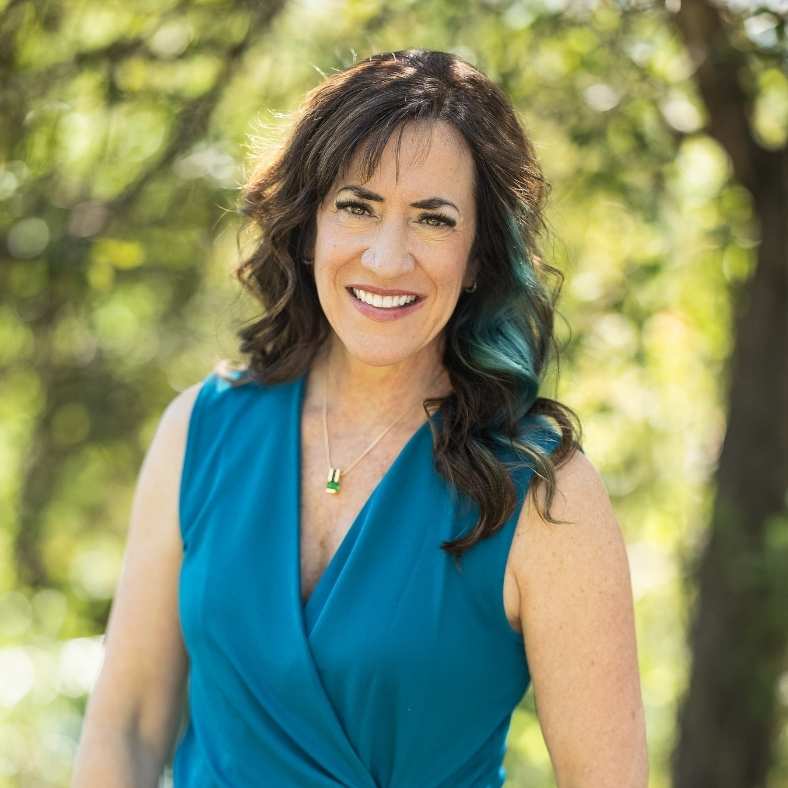
Full Transcript Introduction and guest background 0:00 I really think that the vast majority of women would benefit and I invite them to at least give a try to replenishing hormones with bioidentical hormones. 0:11 So there's a few things that are important. 0:12 Number one is that, the hormones are bio identical. 0:15 The women's health initiative study used estrogen from horses. 0:18 Women's bodies do not make that estrogen. 0:20 They, as I was mentioning, they use progestin. 0:23 Our bodies don't make pro gestin, so bio-identically hormones When we use estrogen, we want to use an alternative method other than by mouth, 0:31 and it is truly beneficial. 0:34 I believe that all women can benefit from replenishing hormones, even if they've gone into menopause. 0:48 With the wisdom from holistic, alternative and these conventional medicines, we are here to challenge the status quo. 0:56 We're curious about the connectivity and complexity between diverse fields of knowledge as a relief to consciousness, chronic illness, 1:04 mental health, resilience and beyond. 1:06 Learning more about art and science of healing, or listening to stories of extraordinary healing. 1:12 You're in the right place. 1:14 Let's dive in. 1:15 Welcome to another episode of Two Curious MDs where medicine is more than science. 1:19 It's story, art, and connection. 1:21 Today we have a special guest. 1:23 Her name is Dr. 1:24 Liz Lister. 1:25 She's a board certified OB-GYN with 35 years of experience and is passionate about helping women and men in midlife to boost their energy and balance their 1:35 hormones and achieve their optimal health. 1:38 She's also a bestselling author and podcaster, a mom of two grown sons, widow and a world traveler. 1:45 Dr. 1:45 Liz helps people in person and online to feel their best so that they can do their. 1:50 I love that. 1:52 And thank you for being here, Dr Liz. 1:55 My pleasure. 1:55 Delighted to be here. 1:57 Thank you. 1:58 I am really interested to learn more about what I hear often from women at our center is, I just don't feel like myself anymore. 2:07 And what is actually happening hormonally when women enter menopause?
Hormone changes across perimenopause and menopause 2:13 And also, if we could talk also about their cycle, like from the beginning of their cycles, which I think starts even before they start their period. 2:22 Right. 2:23 Even after what happens, after they go through menopause. 2:26 So that whole lineage of what actually happens. 2:29 And what does that look like? 2:30 If you can explain that to our audience, that would be really wonderful. 2:34 Sure, absolutely. 2:35 First of all, I'm delighted that you said that exact phrase because my patients say that exactly phrase to me as well. 2:41 To the point that the first book that I wrote was an encapsulation of the steps that take patients through. 2:48 And so I called it Dr. 2:49 Liz's easy guide to menopause, five simple steps to balance your hormones and feel like yourself again. 2:55 I literally put that phrase into the book title. 2:58 So that's just great. 2:59 Yeah, absolutely. 3:02 The classic way of understanding it, and I'll give the classic ages. 3:07 of when hormones start to change, although as we all are aware, there's a lot of hormone disruptors in our world nowadays, 3:15 and so we are seeing these younger and younger. 3:18 But definitely by the time a woman is in her 30s, her progesterone starts to decline. 3:24 Progesteron calms the brain and helps with sleep. 3:28 helps calm anxiety. 3:30 So those are the types of things that start to prop up a little bit as early as in her 30s. 3:35 Again, sometimes even younger. 3:37 But then by the time we get into our 40s, the estrogen starts to fluctuate. 3:42 And that can cause issues. 3:44 It can cost the period to be irregular. 3:47 It can cause mood disturbances, it can make sleep worse, that can do the temperature, right? 3:51 Most people know about hot flashes and night sweats, they made the Menopause the musical about that. 3:57 But there's all sorts of other things. 3:59 It influences insulin resistance, and so all our usual efforts stop working in terms of managing our weight and our metabolism. 4:08 And then there's other hormones that do a steady decline, probably starting in our 20s, definitely by our 30s. 4:14 So testosterone, a lot of women aren't even aware that we have testosterone. 4:19 And it's a wonderful hormone for us. 4:21 It's very, it a mood stabilizer for women. 4:24 DHEA is an adrenal hormone. 4:26 And when we just go, go go and we don't get enough sleep and just push through, our adrenals take the hit. 4:32 So that's the little nutshell of what's happening through premenopause and then perimenopaus can be ten Or more years. 4:43 Average age of going into menopause is 51 years young. 4:47 However, changes can start to happen a decade or more prior to that. 4:54 And a lot of times women get dismissed, right? 4:57 Oh, you're still having your period. 4:58 Or as youths also say, we talk about band-aids. 5:01 Right? 5:02 They're anxious or their sleep is disrupted and they're given a medication or a sleeping pill or birth control pill to control their cycles. 5:10 And as I like to say, sometimes you need a band-aid, but you don't want to only put a Band-Aid. 5:15 Yeah. 5:16 Well, we do think of estrogen and progesterone and even testosterone as reproductive hormones. 5:22 But what else are they? 5:24 They do so many functions of the body. 5:26 It's absolutely incredible. 5:28 Well as I was mentioning, they directly impact metabolism. 5:31 All right. 5:32 So one of my definitions of good hormone balance for women in midlife especially and mid-life and beyond is Your efforts for managing your system and your 5:45 weight are working. 5:46 That's good hormone balance. 5:48 When your efforts are not working, that means that something is going on underneath. 5:53 So metabolism, brain function, cognitive function. 5:58 Women really get worried. 5:59 They start to think that they're developing dementia. 6:02 I have to do a lot of reassuring. 6:05 There is data that shows that when a woman goes into the one to two-year transition into menopause, that's when the symptoms are usually the worst. 6:14 And then she comes out on the other side, and the hormones are really at low levels. 6:18 The symptoms settle down. 6:20 However, we have what I call a modern problem, which is we live a third, sometimes up to a half of our life, in menoppause now.
Birth control, medical menopause, and symptom management 6:30 That did not used to be the case. 6:31 We didn't live this long. 6:33 Yeah. 6:35 So tell us more about, then, hormone replacement treatments and what are the options? 6:39 Because, of course, we have, I do believe also, and you can correct me if I'm wrong, that birth control is a form of menopause, 6:47 right? 6:47 We're actually eliciting a medical menoppause. 6:50 Tell us about that cohort of patients who are on birth-control and having symptoms. 6:56 And then what are the symptoms that you see in menopause as well? 7:00 Yes, absolutely. 7:02 You're correct. 7:02 That's absolutely correct, right? 7:04 The birth control pills basically shut down the cycle to prevent ovulation so a woman doesn't get pregnant. 7:11 Now, of all the people who do the type of more alternative medicine, I always talk about a continuum of doctors. 7:18 There's conventional doctors who are, again, just putting the band-aids on all of the way down to the other end of which is going to include doctors who 7:30 do all kinds of things that are very experimental and that type of thing. 7:33 But I'm on this side of the middle because that's where the preventive approach lives. 7:38 So when we have women in midlife who are having these types of symptoms, they don't want the band-aids. 7:46 They know that something is off, they're just not feeling the way that they know is normal for themselves. 7:53 So, say again where we were headed with that question, because I can talk in so many directions. 7:57 Yeah, I'd like to kind of understand a little bit about the effect of medical menopause on the younger age women on their mental health, 8:05 and of course, what is a similar, if not different, effect on men opause, on mental Yeah, it is different. 8:13 Yeah. 8:13 It's different for a variety of reasons. 8:15 So one of the things we've learned about hormone therapy is that oral estrogen is not as ideal as transdermal. 8:23 A birth control pill, of course, is oral estrogen. 8:26 That's one feature that can be an issue. 8:30 Because oral estrogen, we swallow it, it goes in the stomach, goes straight over to the liver and stimulates the first pass effect and stimulate clotting 8:38 factors to be produced. 8:39 And we know birth control pills do this. 8:41 So they do it even more in women who smoke. 8:46 So, we know that about oral estrogen and we've learned that in the last couple of decades. 8:51 Women in midlife and beyond who actually really can benefit immensely from hormone replenishment were deprived. 8:58 They were denied those options because of what I call the long dark shadow of the Women's Health Initiative study. 9:05 But we learned from that study that transdermal estrogen, and from a lot of other data, the transgermel estrogen does not have that increased risk of a 9:15 blood clots, heart attack, stroke. 9:16 So that is why birth control pills have increased that risk. 9:20 Also, the way that that non-bioidentical estrogen and a nonbiodentical progestin, okay, we also learned from the Women's Health Initiative and lot of other 9:33 studies that bioidentically pro-gesterone is very beneficial. 9:38 That is what our female ovaries make, our human ovary. 9:44 They do not make the progestin that's in a birth control pill. 9:47 And so we see it's very interesting because those hormones, for example, they increase sex hormone binding globulin. 9:55 This is a protein that one of my colleagues talks about it like an Uber, Uber car driving around the estradiol and testosterone, 10:03 delivering it around body. 10:04 And if there's too much SHBG, then it doesn't allow those hormones to exert their effect. 10:10 So this is how birth control pills treat acne. 10:15 and treat hercotism, right? 10:16 So if you have a young woman, she may have polycystic ovary syndrome, which is now being renamed as it should be, because it doesn't require anyone to 10:24 have cysts on their ovaries, but it's a hormonal alteration. 10:29 And so birth control pills will treat the symptoms signs of that hormonal imbalance by increasing the binding glob and acts like a sponge and it's gonna
Bioidentical hormone therapy and delivery methods 10:41 soak up the testosterone and then you have a teenage girl whose acne is gonna get better, which can of course be extremely mentally distressing for a young woman. 10:51 And so, but again, as we talk about it, it is a band aid. 10:55 It's not treating the underlying what's happening there. 10:57 That is interesting because there's still conflicting discussion about. 11:03 All right. 11:04 I was raised in between those two worlds, the conventional world and the more integrative. 11:11 I'll say, we say alternative. 11:13 I think we said integrative now. 11:14 That word's gone by the wayside. 11:16 But my parents are both doctors. 11:18 They're both retired now, my mom was a pediatrician and my dad was an neurologist when they were practicing. 11:24 And so for my Dad, if it wasn't in the New England Journal of Medicine, it just wasn' true. 11:28 Yeah. 11:29 My mom had more influence by parents doing research and asking, so she and I have had Yeah. 11:35 Different types of conversations. 11:37 But a lot of, you know, in regular medical circles, it's a useful band-aid. 11:42 The birth control pill is a helpful band aid. 11:43 It can also control symptoms going into menopause. 11:49 So for example, a woman's in maybe as early as her thirties, but oftentimes by her forties her cycles getting irregular and she may still need birth All right, 11:58 so I'm not as anti as some of my colleagues because I think that it has to be a net benefit to the woman so it can have the benefit of providing birth control. 12:12 Women in perimenopause who think they can't get pregnant anymore often end up with a surprise. 12:18 Yeah. 12:18 Tell us a little bit about how you do with your philosophy on hormone replacement for postmenopausal women. 12:25 And also if I can add on another question for those patients in perimenopause as they're fluctuating their hormones. 12:34 I love that. 12:34 So I'm getting bolder as I get older. 12:37 Yeah. 12:38 I really think that the vast majority of women would benefit and I invite them to at least give a try to replenishing hormones with bioidentical hormones. 12:51 So there's a few things that are important. 12:52 Number one is that, the hormones are bio identical. 12:55 so the women's health initiative study used estrogen from horses. 12:59 Women's bodies do not make that estrogen. 13:02 As I was mentioning, they use progestin. 13:04 Our bodies don't make pro gestin, so bioidentical hormones. 13:08 When we use estrogen, we want to use an alternative method other than by mouth, right? 13:14 And it is truly beneficial. 13:17 I believe that all women can benefit from replenishing hormones, even if they've gone into menopause. 13:25 They went into menopause and it was pretty smooth and they felt okay. 13:30 So they didn't pursue hormones. 13:32 And then they get to around age, like late fifties or sixties and all of a sudden the system crashes. 13:38 Correct. 13:40 From almost one day to the next, just not sleeping. 13:43 Mood has just completely gone by the wayside. 13:46 Also a lot of women who are having children a little bit later in life. 13:50 So they're in menopause and they may have small children or they might have teenagers in the house. 13:57 And so hormone balance really helps with what I call stress tolerance. 14:02 So what's your approach then to doing a management of, say, you know, do you do kind of single kind-of dosing throughout their cycle or presumed cycle? 14:11 Or do do cyclical adjustments in dosage, even for postmenopausal women? 14:16 What is your kind approach to kind monitoring their cycles and adjusting based on where they're at in their transition? 14:23 Yeah, absolutely, so my approach starts with their symptoms. 14:27 It starts what she's feeling. 14:30 If poor sleep is anywhere on the list, we always start there. 14:34 And progesterone can be used all by itself. 14:38 Estrogen, if a woman has her uterus and she's using any kind of estrogen, she needs to have balance it with pro testosterone. 14:44 But a women who is not completely into menopause, uh, Testosterone is a wonderful hormone for women. 14:51 It really can help. 14:53 And on a long list, cognitively, metabolically, it helps with bones, muscle, helps, like I've said earlier, with the emotional sort of stability. 15:04 I really think testosterone is the main reason that, you know, men are bathed in 20 times as much testosterone as we have. 15:11 That's not menopause. 15:12 Then they really have more than we do. 15:14 Although there's declines as well. 15:17 But I think testosterone is the reason they look at us and they just don't understand what the problem is. 15:24 Where we're upset, we are off balance, and testosterone can be really helpful with that. 15:29 I want to insert one more piece for women who are not fully into menopause. 15:34 This is very fascinating and so important. 15:38 We start to lose bone mass before we even completely go into Menopausal. 15:43 So typically by like late 40s. 15:45 And we don't build as much bone mass as the men do. 15:47 That's one of the reasons osteoporosis is more common in women than in men because they just build more bone mess in the first place. 15:57 So I'm really getting more and more gung-ho. 15:59 The older I get, the more Gung Ho I am getting to encourage women definitely not to suffer, not tolerate symptoms. 16:07 It's just not necessary. 16:09 Luckily doctors are You know, they're thinking like it's new information, but it is not new. 16:14 These are things that those of us who do this kind of practice have known for several decades. 16:18 But it was more out there in the discussion and in a doctor's awareness. 16:24 What is the best formulation for testosterone administration? 16:27 You mentioned progesterone, what are the most best formulations for women? 16:32 At the time of our conversation today, There are no FDA approved forms of testosterone for women. 16:40 So there are a few different ways for woman to get testosterone, usually from a compounding pharmacy. 16:46 I know several doctors who use the FDA-approved, the products are FDA proof for men that they will use those for They feel more comfortable with the production 16:59 of that. 17:00 However, it's a misconception that compounding pharmacies are not regulated. 17:06 They absolutely are regulated, and so the most common ways that I have women use testosterone are usually topical, a gel or a cream. 17:17 It can be applied on the inner forearm, the belly, inner thigh, could be translabial. 17:22 A lot of different ways. 17:24 Also, trochies that are, again, made by a compounding pharmacy under the tongue.
Risks, breast cancer concerns, and local estrogen use 17:28 There's also hormone pellets that I have as part of my practice. 17:32 Those are common in some parts of the country, but it's kind of surprising. 17:36 It's quite hit and miss where women can go to get hormone pallets, and men can get them also. 17:41 And then, of course, injection. 17:43 Some women just love, you know, who don't mind doing the self-injecting. 17:47 That's going to give really great levels, so lots of options. 17:51 What are the ways that you would monitor, say, their response by labs or symptoms or both? 17:57 Both. 17:58 Definitely both. 17:59 My priority is how they're feeling. 18:02 my priority as the symptoms. 18:03 I definitely do blood work. 18:05 Sometimes I'll do other types of testing, urine or saliva, depending on what's happening. 18:10 And I start everything low dose and go up slowly. 18:12 So start low and slow, another important principle of hormone replenishment. 18:18 Those are sort of the nutshell. 18:20 And again, depending on what's happening. 18:23 We don't want to do everything all at once. 18:26 If she's been in menopause and all the levels are close to zero, we really want go slowly and I want start every thing on the same day. 18:35 Yeah. 18:35 Do you recommend any imaging prior to, I mean, with the women's health initiative, there was always this cancer scare. 18:41 And for women who are receptor positive or have had a history of breast cancer, what is your view on hormone replacement? 18:48 Well, the data is, has good news. 18:50 The data shows that hormone therapy lowers the risk of breast cancer. 18:55 It also lowers, it also lowered mortality, even in the women's health initiative study. 19:05 So I always talk about absolute risk versus relative risk. 19:09 So, for example, the relative risk was reported as somewhere in the neighborhood of 30% increased risk of breast cancer in women on the non-bioidentical 19:19 estrogen and the progestin. 19:20 However, that absolute risk is four additional women out of 10,000. So it was a small increase from an absolute-risk standpoint. 19:29 And in those women, they had lower mortality of all causes, including breast-cancer. 19:37 So luckily the data, it also hormone replenishment lowers the risk of colon cancer, heart disease, dementia. 19:43 It's really a very osteoporosis, bone fracture. 19:46 I have a few patients who are again receptor positive had post breast cancer. 19:51 Which is a better kind. 19:53 Right. 19:53 That's actually a... 19:54 And they've been told not to even touch hormone replacement. 19:57 What is your view there? 19:58 So that is unfortunate. 20:00 And again, so for example, I believe based on my reading of the data that they can use testosterone with impunity and they get a lot of benefit out of that. 20:12 Probably also progesterone. 20:14 So it's really, it is difficult, you know, and I would never try to persuade a woman to do something she's not comfortable with. 20:20 Absolutely not. 20:22 I usually try have that shared decision-making, as the phrase goes, that we're using these days. 20:28 And there are also some, for example, a woman who's had breast cancer and let's say she's having recurrent urinary tract infections or she is having painful 20:38 sex or cannot have sex and intimacy with her partner, then she gets to weigh those possibilities against each other. 20:45 But it's mostly considered that the local use, like vaginal use of estradiol is really not going to stimulate anything in the body. 20:54 It's not gonna help those other risks. 20:56 Lowering, it's gonna lower breast cancer, colon cancer dementia, those require higher levels. 21:02 However, very important to avoid those silent bladder infections because they can ascend, they could become kidney infections. 21:10 It's a huge morbidity in women in their 80s and older who don't have that genitourinary syndrome of menopause treated, easily treated. 21:21 And, you know, these women can end up in the, even in intensive care from sepsis. 21:26 So small local treatment that can have a Yeah. 21:32 What do you think doctors are getting wrong right now in this age of hormone replacement and treating women in general? 21:38 Doctors? 21:38 A lot of doctors now are overwhelmed and just not able to take the time to really look at the data. 21:45 And so, like I said, we've had over 20 years of this long, dark shadow of the Women's Health Initiative, and it's only been in about since late 2025 that 21:58 There were, for example, in summer of 2025, there was a roundtable for menopause that the FDA commissioner at the time convened. 22:07 And that was just awesome. 22:10 People can find that on YouTube. 22:12 Yeah, it's really worth listening to. 22:14 You will just hear experts speak very passionately about the benefits. 22:19 Study after study after the study was presented, correct? 22:23 Yeah. 22:23 Yeah, so doctors are just, I'm not sure it's possible to keep pace. 22:27 The pace has been fast. 22:29 And even a study that I was aware of 15 years ago showing a 17-year delay between new research and implementation. 22:40 And now what we have with, especially AI, we've got just information coming at us at this high, high speed. 22:47 And it just takes a long time to implement into practice. 22:52 It doesn't make sense to me anymore that. 22:56 If hormones in general, like in all hormones, including vitamin D, I include that. 23:02 That's right. 23:03 It's a hormone. 23:03 Influence, sleep, mood, cognition, sexuality, metabolism, who we are, identity, and how we feel about our body. 23:13 Why has it taken it so long? 23:15 Why is this such a controversial topic? 23:19 Like, it's like we start to whisper when we started talking about replacement. 23:23 Like why? 23:24 What is it about our society that we are missing here? 23:27 And what do you think that is? 23:29 Well, God bless the celebrities who are going into menopause and who were talking and sort of bringing it out of the shadows. 23:36 So I think I'll put more thought into that.
Why menopause care is still misunderstood 23:40 You know, I don't like to say, that any particular group of people is out to get us or keep us down or anything like that. 23:46 However, we really have to be, and I tell this to women, that we have be the tail that wags the dog. 23:54 We just have advocate for ourselves. 23:57 Doctors have, We used to say eight minutes in a visit. 24:00 I think it's gotten less than that now. 24:03 for most doctors in most practices. 24:05 Yeah. 24:06 And one thing that's also shown in many studies is that doctors won't bring up topics. 24:11 Women, I'm sure men as well, but we need to bring-up the things we to talk about. 24:17 We need talk-about it like when we walk in, like as soon as the doctor walks in the room. 24:21 That's right. 24:21 Because the doctors' worst fear is we're going to ask the important questions while they're actually like by and trying to leave. 24:27 Yes. 24:29 By the way, yes. 24:30 So the constraints on doctors definitely has a lot to do with it. 24:35 This takes time to talk to. 24:39 I love my job because I get to to women all day. 24:42 That's right. 24:43 Sometimes men, about 5% of my practice. 24:45 But I really, really love it and I enjoy it, and... 24:49 I left the insurance world a little over a decade ago. 24:52 Because now I can spend the time that I want to spend and that my patient needs me to spent with her. 24:58 So I've freed from those constraints, which has been a good thing. 25:02 Well, I'm going to go through some rapid fire questions. 25:04 What do you think? 25:05 Okay. 25:06 Okay, ready. 25:08 So rapid fire with Dr. 25:10 Liz Lister. 25:11 Estrogen. 25:12 Hormone or neurotransmitters, best friend? 25:15 Ooh, both. 25:17 Okay. 25:18 Most underrated hormone for women? 25:20 Testosterone. 25:22 most misunderstood hormone? 25:24 Estrogens. 25:26 Progesterone, calming or complicated? 25:30 Calming. 25:32 It really isn't. 25:33 Anyone can use just a little bit. 25:36 Yes. 25:36 Okay. 25:38 Testosterone in women, overhyped or underappreciated? 25:42 Underappreciated. 25:43 Perimenopausal symptom that surprises women the most? 25:47 The cognitive changes. 25:49 They don't connect that with hormones. 25:52 Yeah. 25:53 Anxiety at 45, hormones, life or both? 25:57 Both. 25:59 Brain fog, hormones or sleep deprivation? 26:04 I'm going to give sleep depravation 51% and 49% to hormones. 26:08 Okay. 26:10 One symptom women don't realize can be related to perimenopause. 26:20 Short fuse Oh Cranky with co-workers and kids and yeah snapping. 26:28 Yeah, they know that they actually like Yes. 26:30 Yes, especially when you're tired. 26:32 It tends to happen like when your sleep deprivies Normal hormone level. 26:39 What does that mean reassuring or potentially misleading? 26:43 Well, the other word potential misleading or yeah reassurings What does normal mean? 26:49 We have to go with potentially misleading because the levels are just, they're secondary to how she's feeling. 26:55 Yeah. 26:56 I have a friend, she is in her late 50s and she feels fantastic with a really high testosterone level. 27:02 She just loves it. 27:03 That's it! 27:04 That is where she feel good. 27:05 It's okay. 27:07 So testosterone for women, when should women be talking to their doctors about it? 27:13 Well, really by their 40s at the latest, but good luck getting it checked. 27:20 Good luck, right? 27:22 Yeah, that's true. 27:23 Okay. 27:24 Alcohol after menopause, does the body really respond differently? 27:27 That's so interesting. 27:30 I think yes. 27:31 Yeah.I think so too. 27:33 One food you could encourage women to eat more of? 27:37 Anything with fiber. 27:40 I was going to say wild yam, and soy, there's lots of natural hormones too. 27:46 Yes. 27:47 Biggest menopausal myth you would like to retire? 27:50 Ooh, that hormones are dangerous. 27:54 Yeah. 27:55 Okay, finish this sentence. 27:57 Menopause isn't the end of anything. 28:02 That's a good one. 28:03 It's the beginning of a whole new opening chapter. 28:07 And then as we close our podcast recording today, what would be a question that you are curious about? 28:15 Because this is Two Curious MDs. 28:18 question that I'm curious about is a way for women to have a process to go through. 28:27 I would love to see women, even starting in adolescence, right, when that's when hormone changes really begin. 28:33 To have method that they could, that maybe you and I will develop this.
Rapid-fire hormone myths and takeaways 28:42 that women can use really at every age, every decade to think about their own hormones, talk about the hormones with their doctor, 28:53 get checked regularly, because that's when we'll know about normal, when can do baseline on every woman who's 15, and then when she's 20, then she is 30, 40, 29:01 that then we will really know. 29:05 It's very interesting. 29:05 In my own practice, before I was a pediatric hospitalist, so I really dealt with just that cohort of patients. 29:11 And now that I see women of all ages, all the way past 82, and the young adults, I find it that, that get to ask those questions that are more intrigued about. 29:24 I kind of see the younger adults looking at their apps and saying, okay, And I'm like, oh, there is an app for that. 29:37 And then they're really tracking it and they have so much like awareness. 29:40 Then I see now in the older age group and like oh let's think, now tell me about your cycle when you first started. 29:48 They were going back in time to really understand exactly how they got to where they are. 29:53 That whole history is so And getting to just ask those questions, sitting with patients like you said, wow, it really, I think I wish we could do this 30:04 more in just general conversation, you know, with just our family. 30:09 Hey, my daughter does it with me. 30:10 I used to be very embarrassed talking about my period, but she's like telling everybody in my family, this is where I'm at, 30:16 and we're like, Okay. 30:19 But it's a conversation that you can have without the stigma, without that like, oh my God, I'm so embarrassed about having a period. 30:29 That's how we grew up. 30:30 You had to hide it. 30:31 This is a beautiful, beautiful expression of how your body changes every single day and every, single month and even after it, 30:41 you know, things change or your transition. 30:43 So I think it is beautiful thing to celebrate now. 30:45 Absolutely. 30:46 It absolutely is. 30:47 So tell our audience how they can contact you. 30:50 I'm sure they will have lots of questions to ask you, I do feel that that's our largest cohort of patients coming to me for treating their mental health. 30:57 And I would love to see more people like you and I could refer to you say, yes, she knows what to say. 31:04 She's not going to be afraid of hormone replacement, which is often still a lot of people, a lotta doctors, gynecologists included, 31:10 who are telling women the opposite, that they should avoid this. 31:16 We need more of you. 31:17 Tell us how they can contact you? 31:20 Very easy to reach me through my website, which is drlizmd.com.
Closing reflections and how to contact Dr. Liz 31:28 Every page of the website which has lots of information on it has a place to click to book a free discovery call. 31:36 And so I love doing those calls and I have wonderful people on my team who also help me with those. 31:41 So that's very easy. 31:43 And I love answering questions. 31:45 That's really, my heart is the heart of a teacher. 31:48 So I just, I loved what I do. 31:51 Let the audience see your book, you know, bestselling author. 31:53 You've written a book. 31:54 I'd love to have that in our center as well. 31:57 Yes. 31:58 Yeah. 31:58 This is, here's the one, the first one. 32:02 The five simple steps to balancing your hormones and feeling like yourself again. 32:06 This one is the bestseller. 32:09 This is called Go for Great, Dr. 32:11 Liz's Guide to Thrive at Every Age. 32:13 So, you know, this was a bit of a step forward for me to put myself on the cover. 32:18 It was little, a little while ago, but I love writing as other books that I've been a part of. 32:22 All of that's on my website as well. 32:24 Yeah, it's obviously very important to share your knowledge. 32:27 I'd love to host that in our center too for women. 32:30 And I'm a big proponent for people in general, especially for woman, because we have been the silent. 32:36 majority for such a long time and have been silenced, I feel. 32:41 And now we're awakening to that. 32:43 We are. 32:44 As men are as well. 32:45 I think this is another topic to be had, but TRT is also just as important in men as it is in women. 32:52 Absolutely. 32:53 Thank you. 32:58 Thanks for joining us on the Two Curious MD podcast. 33:02 We hope today's episode inspired you to ask new questions and explore fresh perspectives. 33:24 post or comment with a question or curious inquiry that you have and seek to explore or learn with us. 33:30 Stay curious and we'll see you next time.
Comments