She Picked Up Her First Dumbbell at 69

Women’s Midlife Health Expert & Board-Certified OB/GYN in Private Practice
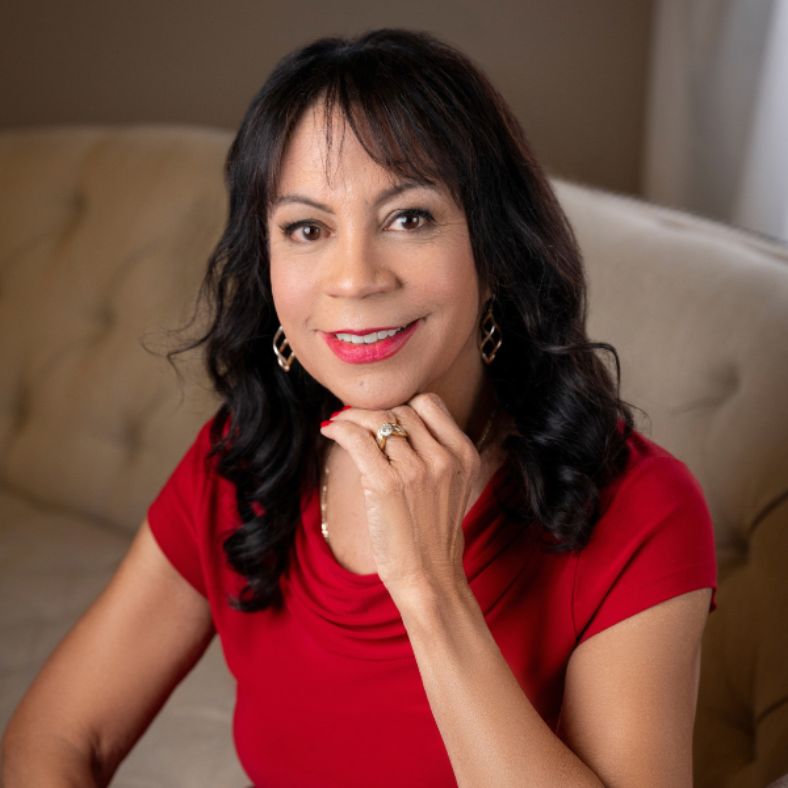
Creator of the Stability Solution Program
- You won’t bulk up by accident. Maria Cristina’s first trainer told her that getting bulky takes a lot of testosterone, years of very heavy lifting, and often drugs. For a woman in midlife and beyond, lifting weights builds strength and shape, and that’s about it.
- Muscle is medicine at any age. Resistance training supports both muscle and bone, and Maria Cristina points to research showing that even very old adults can gain muscle with light, steady training. Showing up matters far more than how much you lift.
- Start with two minutes. Her Stability Solution program begins with two minutes a day, a goal nobody can fail. Stack it onto a habit you already have, build from there, and let consistency do the heavy lifting.
Full Transcript
Welcome to Hotness, the podcast that brings you practical tools to balance your hormones and rekindle connection, confidence, and desire in midlife and beyond.
I'm your host, Dr. Liz Lister. Hotners is a safe space for honest conversations about menopause, sex, identity, love, loss, reinvention, and desire, because you can embrace your hotness at every age.
Welcome to Hot Nose, the podcast that brings your hormones, confidence and desire back online. And oh my gosh, I am so excited for you to hear my conversation with Dr.
Maria Christina Sheehan. She is absolutely a beacon of transformation, empowerment, getting stronger as we get older. She's absolutely amazing. she has two master's degree and a doctorate in academia.
As she served in the education world for 20 years as a college president was the culmination of her career. And then she turned to health and wellness.
She's been on the aging and awesome TV series. she's a speaker, she is an author. Her most recent book that she published, which I will link to for you, is called you are not too old and it's not to late.
Wait till you hear the things that you started doing when she was 69 years young and the thing that's she doing now at the age of 80, She is absolutely so wonderful.
She created a program called the Stability Solution. It was such a delightful conversation. Not that this is weird for me to get emotional, but I got emotional at thinking how amazing she is and how she's just committed to growth forever.
I just want to be her when I grow up and you will too. Please enjoy my conversation with Dr. Maria Christina. Hi, Dr Maria Cristina. Welcome to Hotness.
Oh, thank you so much. I'm so excited to be here. That is true. And tell us about that. I mean, women that age are told that we're supposed to be slowing down or just getting older.
Tell us that story of how you got started in the fitness world. Well, of course, I was in the academic world for over 40 years. In the last 20 of which I served as a college president, a lot of pressure there.
Very rewarding, but you really are under a lotta stress. So then your question, how did I make that pivot? I was watching my colleagues decline with all kinds of cardiovascular issues and, you know, a couple of them literally dying at their deaths.
And there shall I go the same way, I was in the same kind of condition that they were in. We were slowing down, you know, all in our sixties, slowing it down and getting heavy and having chemical issues.
And of course, the organization will just move on and the regions will say, hey, Time for a search if you're dying at your desk. So I mean, not to be ghoulish about it, but the organization has to move on.
And so I thought if I don't decide myself and take responsibility myself, it's lovely if the organizations will support you in your health. I'm totally into that world right now of what organizations can do, But it isn't really the organizational responsibility.
It's a personal responsibility, And so once you own that, you have to decide, okay, then how are you going to approach the years ahead? And there's a lot of negativity about aging, and we tend to think of old people as useless, invisible, on and on, in decline, not able to do anything.
And I thought, gee whiz, I have longevity in my family, but I do not have health. Okay, so what does this mean? Okay it means the worst ever. It means you're just gonna go on, but your body is going to be in decline and so your ability to enjoy life is gonna be negligible.
And so, I mean, it can be to that point where you are in a care facility and there are so many women, even in their late 60s and 70s, of course by 80s.
Of course, they're in care facilities. Okay, that's the worst case. And the lesson worst cases, you can't do the things you want to do. You can get down on the ground and play with a puppy or run after the grandkids or be able to carry your own overnight case and flip it into the overhead bend.
The things that you wanted to be have that independence. I mean, if you just decline, that's just, you know, looking at that as my future at 69, I thought, well, there's got to be another way.
And then my financial advisor. The funny thing is I had this financial advisor for years and years, and he had seen me puff up and puff and up. He finally said, you know, I think you should see my trainer.
And I thought, there is no way I'm picking up one of those weights, because you're going to be all bulky and you can look like the Hulk. Right. Women think that.
They think about that with weights. It's a myth, but we see these overdeveloped women and it looks like you could put a man's face in it would be. Not the way you want to look, okay?
You don't want it to be masculine. But I was so desperate, Liz, that I thought… Oh, heck, I'm going to go because, you know, until I was by the luck to hear, the only thing showing was my hands.
It was so body conscious of how overweight I what. And so I got this all time trainer. I mean, he had won international awards for decades and he was very old school.
Like bodybuilding awards. Yes. These bodybuilding, international body building awards, yeah. All over his studio are these, you know, massive trophies.
And so the first thing I said is just this, Dr. Liz, we're just talking about it, but you're thinking this myth of thinking, I don't want to get all bulky.
First of all, you don't have enough testosterone in your body, and you haven't been lifting too heavy for 20 years, And you're not using drugs. And if you are not doing those three things, forget it.
You're NOT going to be overly bulky. That's not going happen. It just won't happen." And so I started. I mean, I kind of got pushed into it because I was desperate.
Didn't know what to do. But at 69, thinking of longevity in the family, Well, what is my future going to be? What do I want to do as those years go on?
Do I wanna live my life the way my mom did? Powerful question. And a lot of my clients that I see are overwhelmingly, they're with me because they don't want do what their mom is doing.
They see their mom and they say, is that gonna be me? And if that's gonna me, then I don't want it. I want another way. And I said, good, I've got another for you.
Absolutely. You got led down the path to competing, yes? Were you 71 when you got on a bodybuilding stage and won a gold? Yes, I'm one goal that tell I want to hear about this.
This is unbelievable I've known you a few years, but I didn't know this story is awesome It's not about competition and you're not it's about competing with others But tell us that story and and why it matters to you.
I know it matter to more than the trophy So please please share that with us OK, so I did start at 69. OK. So I got the old time, you know, a bodybuilder coach.
And here's what we don't know as women is that our bodies have the capacity of one. I think it's not just women. But the body, if you give it a chance, especially with resistance training, it has an amazing ability to respond as long as you are consistent.
It's not about heavy weights, because there have been studies on centenarians, and if they can lift up a two-pound weight and gain a little bit of muscle mass, If they could do it 100, then anybody can do that, right?
And so it's that just consistent little pattern. And after two years, I was like, whoa! feeling so much stronger and you can tell the strength because you're building on your load capacity.
So you start off at, you know, two pounds and your at five pounds, and then you were at 10 pounds. And, when I started out in one of the pull exercises, a cable exercise, I set it off a 20 pounds I've been training for 11 years now and I pull 120 pounds Oh my goodness.
I mean, yes, okay. Yes, please continue. Back to your question. Okay, so how did I get to the stage? Okay. I was in the academic world. You know, it's very conservative, well, was when I there.
And then you're wearing the Academic Regalia, you are covered up to here, there's nothing showing but your face. So the idea of competing, I would never have thought that that would be something I'd do.
But then my coach- Yeah, show a lot more. Yeah. Oh yeah. Okay. All right. It wasn't just the resistance training because what he told me was here is the nutritional guideline and it was a bodybuilder guideline.
And it I couldn't do it and so what I was noticing with my body and with resistance training, I tell my clients this, you can't just do one and not the other, okay?
You were a holistic body, and you just can train a bad diet, so I became my own first client and I did a very good job with myself. I love that. So my own first client.
I loved that, okay. All right. And so then the weight became not an issue because it was high protein and all the right kind of nutrients into my body along with resistance training.
That's what we know. Now there's so much more research on it. We'll get into that later. I'm not bundled up to here. I am wearing shorts, I wear a little crop top, and I feel pretty good.
And so my coach says, you know, think you could really compete. Well, you know, I have academic awards, but I've never won a trophy. That would be fun.
Oh my God, that is so good. Okay, okay. So in the world of competition, there are all these subcategories. I started off with sports. With sports, your tennis shoes, you know, shorts and you wear a top and then you have a sports theme.
And so I think weights was my sports team. So I had little weight and, you come out, and do a little t-turn. I loved that so much. There was one other 70 year old, but I beat her.
Oh my gosh, that's so good. Interestingly enough, you see the men compete into their nineties. The women are usually gone in competition by around 60 or so.
You see very few past 60. It's interesting. Interesting. Why do you think that is? Do you it's a health issue or a confidence issue, or what do think is happening?
I think men have been in the world of fitness and competition longer, of course, than women have. And then I, I'd think that there's an artificial ceiling that women put on this because, you know, I have seen several 80-year-old competitors.
They've been out there. Very, very several, three, okay? So I think it's an artificial ceiling that women just don't think that they can do at past 50 or so.
Now that 50 to 60 is very competitive. But after 60, I'd think, and of course, it is not for the shy in terms of, The level of preparation is hard. I stopped at 76. But during the time from 71 to 76, I did sports, figure, swimsuit, and bikini.
Oh my goodness me. You're going to have to show me that next time I see you. It's in my book. Okay, okay. All right, fantastic, which we'll put a link to we will definitely put link your book.
Oh My goodness me. I mean you're just such an inspiration I'm actually like sitting here getting emotional just you know, we're told that We're supposed to slow down But you're like a walking example of what is possible that is just I'm absolutely emotional right now.
You know, I see that in my practice. I obviously I take care mostly of women midlife and they're tired. They're resigned and and their doctor even told them it's just aging.
And so. What do you say to a woman who's feeling like that? So I think that our docs are not trained substantially in longevity, right? Okay, so most of your training is the earlier years, but you don't do a lot of a deep dive into what is necessary for the person that's over 65, over 75, Okay, so that body of research is very limited.
And so in the training, what are doctors going to say for the most part? They haven't been trained in kinesiology. So they're not going be able to tell you how your muscles move or what you need to do.
Because aging stereotypically is about slowing down and not being able do things. That is what the expectation is, and that is our dilemma in our society today, is that we believe we've incorporated that, okay?
We've absorbed it into our mental state that that's going to happen, that it's just the way it is. And that isn't just that way. I call that the J word, just, the word just.
Right? Right. So I deal with a lot of that in my book. A lot the myths, the cognitive decline myth, you know, sarcopenia and osteoporosis, those are reversible, okay?
There's an intervention that you do not have to go down. that path of losing all your muscle mass. If you do nothing, yes, you will. But there's an intervention, okay?
And that's your resistance training. And so the resistance is going to hit bone health, muscle health. It is, you know, so essential, but it doesn't get enough attention.
And it isn't about big, heavy weights. So I have a program, the Stability Solution, where we go very slowly with people. But we get into weights and resistance training so that once the woman finishes this program she can go to any gym and feel, hey, I can handle this.
You know, because there are things that you can do in a gym. Yup. Because that's where I was. I would never have gone into a jam because I thought I'd been intimidated.
But after you know a few things, you could walk in with your head high and say, hey, let me take a look at what's available here because, I could do something.
I love that so much. And you talk about muscle, you refer to it as medicine, muscle as a medicine. Absolutely, that's completely true. I loved that. So what would you say to a woman who's in her, I don't know, about 40s, but certainly like 50s maybe even 60s where she's doing all cardio, right?
I mean, enjoy those classes. But I'm aware that it is not connected to longevity. right? Because it's not building muscle, you know, and they pitch those to a Zumba and all the jazzercise and their fun.
But what do you say to woman who's, not doing anything in the resistance or weights and she's doing all cardio? So I would probably recommend the book Forever Strong by Dr.
Gabrielle Lyons. I heard her speak. Yeah, she's amazing. Isn't she great? Yeah she is really something. So if you're not convinced that it's necessary, but you'd like to explore, she goes into the science of why skeletal muscle is not only good for longevity, but the quality of life that we're going to have as we move through our years ahead.
And what we have, and you can start at any time. And I love talking to older women as well as younger women, because you know, you hear these women in their 40s saying, oh my gosh, I'm going to be 50. Oh, no.
Right. Yes, that was me before I turned 40. Well, if we're worried, at 50, then what is 70 gonna be like? And what does 80 gonna like if we're already anticipating the decline?
The body goes where the mind takes it. So it is very mental. It is making the decision. In my book, You're Not Too Old, It's Not too Late, we really start with where are you?
Where are in your thinking? You can read this little book in about 20 minutes or you can journal your way through it and decide, okay, I can make a change.
And I give examples of women I've worked with in the past and what their transformation has been. They've gained exactly what they wanted. I could run after the grandkids, get down on the ground and play with a puppy.
But I'm not afraid of falling because I am strong now. It's about that strength because strength gives us independence. Yes, that's right. Stability, independence.
I said that to my mom all the time. Just don't fall. That's your only job. Do not fall down. So stability training is absolutely essential to that. What would you say is your biggest piece of advice?
And this is not my last question, by the way, but a biggest peace of vice, what might be your bigger lesson about reinventing yourself, being resilient, I think we tend to make it harder than it is.
My coach first told me the word that I hated because he kept saying it over and over, it was consistency. You have to stay consistent. Why did you hate it?
I wanted him to stop it, but it's essential. It's like taking these little steps. These little steps add up to something that's a really big result. And because we're not spending all day in the gym, we are thinking, well, that is nothing.
No, no, it adds up something and it's not that hard. So that why in my stability solution program, It just starts with two minutes a day. That's all. And it won't, you don't go past two minutes.
Okay. Anyone can do that. Then you can, if then that's a win. And that you build on that, and then it's doable. So you make it so that You can't fail because everyone can Do two Minutes and Then your habits stack.
Awesome. so, so whatever your habit is, You add something into it, something that that But you do it every day. Exactly. Like brushing my teeth and my water bottle, I make sure that it ends up right next to each other.
And I have stacked those habits to start the day off with a whole thing of water. Habit stacking. Beautiful. I love that. Okay. So are you 80 now or have you already had another birthday?
Okay, now, and you're doing full splits and handstands. Well, I'm working toward it. Okay, all right. You're working towards us. And so I want to hear just a little bit more about what is your routine like now?
So I love how you described to get started, because that's absolutely key. What is Your routine look like Now? For everyone, it's wherever you are, that's where you begin, you know?
And for me now, its 11 years. And so what you have to do as you age is counterintuitive, is you to have do more, not less. And there's an MD researcher that wrote the book, Reversing Alzheimer's.
And what she's talking about is doing something that's mentally challenging at the same time you're doing that is physically challenging. So I thought, okay, so what am I doing?
So, with weights, it's not mentally challenge. It's physically challenge for me, but you have to do breath and you do a few things, and it is not as challenging as something else I discovered for myself.
So since I had been doing this, you know, I was very… What did you find? Gymnastics, okay? So, yeah. Yes. I see you do these moves on your Instagram.
Okay. We'll make sure that's on the show too. Because I, it was so strong. I thought, well, what is the extra thing I can do because we want to add something more every year.
So I've always been fascinated with gymnastics, but never thought I could do it. And then most studios cut you off at like 18 and you can't go. but then there's a couple of gyms that take adults.
Because I'm profoundly deaf, so I need somebody that's going to be one-on-one with me, right? So I take private lessons because I don't want to miss anything.
So what I found was I was strong enough to get on rings and go upside down, and hold myself up there. That is so amazing. I love it so much. So that got too easy.
So she said, oh no, you need to do this and now you, now, and so, so now it is, You have to remember all of these body positions and you have be, it's so intentional.
I mean, It's very mental because you can't let your fear You have to be able to, you know, go for it. And so that is the challenge for me is overcoming fear, really having this, now she's teaching me a routine on the balance beam and it's like, oh my gosh.
Wow. Oh no. I'm writing that down. Don't let your fear interfere. But we don't, we're not going to go straight to that. We're going start where we are and we start with small steps.
Right. And cardio, as you said, you know, that's fun and it's good. I mean, cardio is good, walking is, good lots of benefits to them, but it is simply not enough.
So if you're walking and you are doing a strength training and then I did yoga because for the flexibility. So if we don't intervene in how our bodies are going to move, they are not going move.
Okay, that's it. And so that a sedentary lifestyle and the food that we're eating is killing us today and it's aging us in a way that shouldn't be aging.
So my mission is to get out as much information as I can to women to say, there's another path. You don't have to go down the decline path. You can go to the path where you're excited about, I want to be on the balance beam when I'm 90. Okay.
So, but that's a mental thing, right? And so that was beautiful. Why not? Why, not, why not see what the body is capable of. And if we don' t try it, we d n't know what we're capable.
That's right, that's absolutely right. I love that so much. What I'm about to ask you, we're going to put in the show notes, but if people want to reach you they want, to learn about the Stability Solution program, they wanna read your books, can they start with your website?
Does that lead to all of the wonderful things that you do? Go ahead, tell us the website and I'll make sure it's in The Show Notes as well. Okay, it's drmurielcristina.com.
And so there I have some free exercises. I am a free chapter to my book. I have the book and I had the stability solution. Beautiful. That is absolutely fantastic.
Everyone is going to want to be you when they grow up when when I see this or hear this episode. I want to wrap us up by asking you a question I ask each of my guests, which is, what is one thing that you personally do to connect with your own hotness?
Well, I do think it's how I start my day. I think it's how I spent my day with prayer, with meditation, and with total thanksgiving that another day has been given.
Now that's another opportunity for me to show up for myself. That is so beautiful. Show up yourself and also for us. Thank you so much. You are completely inspiring and I look forward to getting to see you again soon.
And in the meantime, I know you're just going to keep at it, so I'm very, very excited for people to meet you from this episode. So thank you so much for being in this conversation with me today.
It's been a pleasure. Thanks for listening to Hotness. Help more women find these practical tools by liking, sharing, and following the show, as well as leaving a review.
As a gift for listening, go to drlizmd.com forward slash hotness for your free midlife guide filled with powerful support for you mind, body and soul because you can embrace your hotnes at every age.
Comments