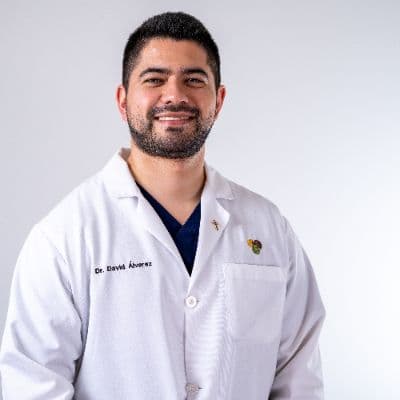
Full Transcript Introduction to Dr. Alvarez and ITC 0:00 Hello and welcome everybody. 0:03 Today it is my pleasure to have in the studio Doctor David Alvarez. 0:08 Doctor David Alvarez is a board certified physician 0:12 who heard his medical degree from university Xochicalco 0:18 he is also certified in advanced cardiovascular 0:21 life support by the American Heart Association. 0:26 Doctor Alvarez is working at the Immunity 0:29 Therapies and also known as ITC, for more than ten years. 0:34 Doctor Alvarez, alongside Doctor Carlos Bautista with ITC founder, 0:39 worked as an assistant medical director. 0:42 This year, he was appointed medical director, 0:45 assuming expanded clinical leadership and greater responsibility 0:50 for patient care and medical operations. 0:53 Congratulations on that. 0:55 Thank you. 0:56 In his role, Doctor Alvarez provides daily Hansen patient care 1:01 while leading the development of individual treatment plans. 1:06 He also serves on its medical board, 1:09 where he contributes to the research, development and continuous 1:14 improvement of the center's integrative treatment programs. 1:18 Known for his clinical expertise, 1:21 compassion, and passion centered approach. 1:25 Doctor Alvarez is dedicated to helping patients achieve the best possible 1:30 health outcomes through personalized, 1:33 evidence informed, integrative care. 1:37 His philosophy and Pfizer's treating the whole person, 1:41 not just the disease, by combining advanced medical knowledge 1:45 with a comprehensive and holistic approach to healing. 1:50 Doctor Alvarez, welcome to the Cancer Breakthrough Summit. 1:55 Thank you so much. 1:56 It's a pleasure being here. 1:57 Thanks for the opportunity. 2:00 So it's great to having you today, 2:03 and I am delighted that you have chosen 2:07 to speak to us about the ITC healing approach 2:12 to breast cancer and integrative and personalized path to care. 2:18 And I think it is so important to have so many options 2:22 about treating breast cancer, because it is such a, I mean, 2:28 killer for when it comes to, to women and cancer. 2:32 But first, I would like to know you did not go to to medical schools 2:36 thinking you would want you wanted to become an integrative doctor. 2:41 Did you are and how did you come to specialize in breast cancer. 2:47 So typically on medical school. 2:49 So there's a certain amount of years that you go into literally school.
How Dr. Alvarez Entered Integrative Oncology 2:54 Then you go into practices and then you do an internship and some social work. 3:00 And from there you specialize on the type of which specialty 3:04 you're interested on doing. 3:05 When I finished my internship 3:07 and my social work, I always wanted to be a pediatrician, 3:11 which has nothing to do with what I do days. 3:15 And two things happen. 3:17 One of them is that my mother was diagnosed with a rare immune 3:21 disease called leaking plainness, which is a disease 3:24 where you develop also in different areas, including the oral cavity, 3:30 the esophagus, genitals. 3:33 You could have special patches on the on the armpits as well. 3:37 And we treated her with all types 3:40 of standard medications, including steroids, immune suppressors. 3:46 We were about to start immunotherapy. 3:48 Right. Toxin map. 3:50 You can even use chemo like cyclophosphamide. 3:53 Methotrexate. 3:55 And what opened my eyes a lot is that after trying so many things in 4:00 and starting to have side effects, such as Cushing's syndrome by the steroid, 4:06 one day she decided to try more, more natural methods, including, 4:10 you know, acupuncture and specifically some 4:14 natural path medicine, homeopathy. 4:18 So, I mean, we didn't know what was going to work, but she tried it. 4:22 She was so desperate, and she responded in a matter of days. 4:26 She she started responding. 4:28 That opened my eyes that there was, you know, something else outside of the box. 4:33 And also my uncle, which was very close to me, was diagnosed 4:37 with squamous cell carcinoma of the base of the tongue. 4:41 And again, I was still, you know, doing all my finishing medical school basically. 4:47 So we didn't know better. 4:49 We didn't know that there were other options. 4:51 He decided to do the standard treatment. 4:54 He received radiation 35 sessions. 4:56 He received chemotherapy, I believe, on a weekly basis. 5:00 And he did everything on how it's supposed to be done. 5:04 But there were two little things. 5:06 One is that they radiated the wrong side of the tongue. 5:09 So he received the 35 sessions like it was supposed to be, but on the left side. 5:14 And he suffered a lot with complications. 5:17 Something that kept my attention is that during that time there was no follow up. 5:23 There was no one guiding him. 5:25 There was no one, I mean, besides me trying to do whatever I could at that time. 5:31 So those two things impacted me a lot. 5:34 And, you know, I think it's part of what happens or it's 5:37 part of what some doctors can experience when they decide to go this route. 5:42 That's my story. 5:44 Okay. 5:45 And now you are the medical director at IDC. 5:48 What is it and what is it? 5:51 So I see it's alternative cancer treatment hospital. 5:56 We used to be a clinic. Now we're a hospital. 5:58 It's actually seven floors of alternative and functional medicine, 6:02 where we have hospital rooms to treat patients 6:05 with severe infections, pain, complications. 6:09 We have critical care as well. 6:11 We have a lab where we develop all of our immune 6:15 immunotherapies, immune boosting treatments. 6:18 We have a big kitchen. 6:19 We have a big dining area. 6:21 We have a conference room. So it's a hospital. 6:24 That doctor about that design to treat patients and to have everything 6:29 under one same roof to be able to achieve the the best result. 6:34 And you are located in Tijuana, Mexico. 6:37 We are located in Tijuana, Mexico. 6:39 We are in the middle of the business district area. 6:42 We're very close to the border. 6:44 It's like a ten minute drive from where we are. 6:47 Yeah, yeah. 6:48 And do you see a lot of breast cancer patients coming 6:52 to, to ITC to to get treated. 6:55 Right. 6:56 There's, there's a lot of, of patients with breast cancer. 7:00 Most of our patients with advanced stages either because they received 7:05 several lines of treatment and it didn't work well for them, 7:09 or because they decided just to keep it under observation. 7:12 We also get nowadays we're getting a lot of patients 7:17 where they decide to do everything from step one, which is the diagnosis, 7:22 which is the staging, learning about the type of cancer, the receptors. 7:27 There's a lot of information, particularly that breast cancer
What ITC Is and Who It Treats 7:31 can give us to give a more specific or more targeted approach. 7:37 I would say that breast cancer is one of the top five 7:42 most common types of cancer that that we treat. 7:47 How would you define exactly breast cancer? 7:50 Because it has many women, you know, 7:54 saying, oh, I have a triple negative, I have this, I have that. 7:58 What is your vision of breast cancer? 8:01 So it's it's actually a difficult question. 8:05 And I well I was preparing for this. 8:07 I was doing my research learning from different, you know, from different areas. 8:13 Right. Including the our team of doctors. 8:16 First we have to define what cancer in general is, 8:20 which is basically a group of diseases 8:24 in which abnormal cells acquire changes 8:28 that allow them to divide and grow in an uncontrolled way, 8:33 you know, potentially invading surrounding tissues. 8:38 In some cases, they can spread to distant 8:41 part of the bodies, which is, you know, including other organs. 8:46 And I would define breast cancer 8:50 more as a type of cancer 8:52 where cells, cancer cells begin 8:55 in the breast, most commonly in the ducts or lobules. 9:00 And I would say that it's not just one disease. 9:04 I wouldn't say that is just one particular form of breast cancer. 9:08 There are different histological types and more importantly, 9:12 different biological subtypes. 9:15 Breast cancer. 9:16 It's one of the types of cancer next to melanomas in long tumors 9:20 that more information can can provide us to try a more specific approach. 9:27 Breast cancer is no longer simply treated according to where the tumor is. 9:32 We increasingly treat the cancer breast cancer 9:36 according more to what biologically is what the tumor is. 9:40 Okay. 9:41 I mean, you mentioned that a number of people are now coming from 9:47 day one 9:48 of diagnosis, and they want to do everything for 9:52 holistically integrating 9:54 from a stage one, which which is obviously a great thing. 9:59 But how treatable is right. 10:02 Cancer when it comes get patients at a late stage. 10:06 They have already been treated in the US, for example, with conventionally 10:12 and and that does not
Understanding Breast Cancer and Its Subtypes 10:15 provide the the outcomes that we're hoping for. 10:18 And now they are coming to south of the border 10:23 at coming to ITC to to see you 10:26 and how how to treat. 10:30 I mean, what is a reasonable level of hope you can give to, to those ladies? 10:35 And what factors have the greatest impact on the treatment outcomes? 10:41 Like they said, nowadays, these tumors 10:44 provide a lot of biological information. 10:48 Even in advanced or metastatic breast cancer, 10:52 we have way more therapeutic treatments 10:55 or options today that what we had in the in the past. 11:00 The key to the key is understanding biologically the tumor. 11:06 And this type of tumors can provide different things, 11:09 not just the anatomy, the receptors, gene alterations. 11:15 You know, nowadays we have the option of of using 11:19 there's there's a big research on the Her2 11:21 or there's an extension of the Her2, which is classified. 11:26 Now that's her two low or Her2 ultra low. 11:30 There's there's a whole you know, we can talk hours about that that subject. 11:35 But just how complex this type of tumors are allows us to apply different types 11:41 of targeted therapies that typically work well to take control of the disease. 11:46 And all of this, their options allow us to have a sustainable follow up regiment. 11:52 But I believe, and I always tell my patients this, that 11:56 breast cancer, even metastatic breast cancer, is no longer a death sentence. 12:02 There's hope. 12:02 There's options. 12:03 There's treatments that work very well. 12:05 There's there's diet. 12:07 There's a lot of research that were conducting on breast cancer. 12:11 And I'm very optimistic for with with the outcomes that we can achieve, 12:16 I would say seven out of ten women respond very well to what we do. 12:22 There's challenging forms of cancer. 12:24 There are some that are known, you know, to be more aggressive, such as triple 12:28 negative breast tumors, for example, or when we have the inflammatory component. 12:34 But even in those cases, you know, our treatment or combination of therapies 12:38 works very well to what we want 12:41 here is, is to take control of the disease. 12:44 And from there, enter what we know as a side to phase, 12:48 which means that we start to bring down the cancer load in different areas 12:53 locally and systemically, preventing some of these cells to keep feeding 12:58 the other organs that might be affected, such as the bone, 13:01 such as the labor, such as the lung, such as the brain. 13:05 But there's options. 13:06 I would definitely say there's there's hope. 13:08 And I'm very happy with what we are doing here nowadays. 13:12 Is there any specific treatment that is done 13:15 developed by you and Doctor Batista? 13:18 Is there something specific that people will find that ITC 13:24 and and not anywhere else? Yes. 13:27 Doctor has been in this field for over 30 years. 13:31 I've been here with him. 13:33 Mean officially would be ten years. 13:35 But even when I was a student, I was working for him, learning 13:39 from him, taking vital signs, taking notes next to him. 13:44 So there's different things 13:45 that I've seen that that have been developing for a long time. 13:49 There is what I normally tell my patients is that there's really no secret 13:54 to what we do. 13:55 It's not about one particular type of treatment, it's the combination. 13:59 Typically, we work a lot with therapies that particularly particularly
Advanced and Personalized Breast Cancer Care 14:05 for breast cancer, we want to enhance as much as we can 14:09 the immune response, which like I said, at some point in the conference, 14:14 the immune response would be the steps that the immune system needs to follow 14:18 to recognize an antigen, an antigen, basically, it's 14:22 something that doesn't belong to our body, and our immune system will find out ways 14:27 to recognizing that it could be primarily through the cells, 14:32 it could be through the B cells, it could be through the T cells. 14:35 It could be through NK cells, the macrophage. 14:38 So for breast cancer, what we do is we work a lot with dendritic cell therapy. 14:44 Again antigen presenting cell treatment. 14:47 We work a lot on on the specific transfer factor 14:51 to increase the amount of specific antibodies. 14:54 So B cells and T cells can be more more effective against this. 14:59 We also work with therapies that can help to reduce circulating 15:03 tumor cells mononuclear cell activation. 15:06 Treatment. 15:07 Ibi salina meissen the macrophage activating factor. 15:12 So it's a lot of treatment that is designed to create recognition 15:16 of the of the disease. 15:18 And at the same time, let's say make the the cancer 15:22 more vulnerable to the different immune boosting treatments. 15:26 So we work a lot with hyperthermia. 15:28 We work a lot with ultrasound therapies. 15:31 So no dynamic treatment. 15:32 And in particular we work a lot on on bringing down systemic inflammation. 15:38 There's several treatments that work well for that PML 15:41 hyperbaric rife treatment. 15:45 So we use therapies that have been used for years. 15:49 And we've been incorporating new new treatments 15:52 and new technology as as time goes by, 15:56 typically patients with breast cancer stay three weeks, six weeks. 16:01 That's a realistic expectation. 16:04 In a lot of the times. 16:05 There's a lot of tumor load to treat, and 16:08 that's an appropriate amount of time to take control of the disease. 16:12 But more importantly, customize a sustainable follow up regimen. 16:17 Because I think an important part of what what we do happens here. 16:23 But I also need to make sure that my patient needs to know 16:27 needs, needs know what's to do. 16:29 One once she's at home because they cannot stay here years, right? 16:34 Yeah. Yeah, absolutely. 16:36 So tell me more about this follow up regimen. 16:39 So during the during the treatment time we're constantly evaluating what what 16:44 options were what I be what supplements what diet works better for them. 16:50 Then based on that we customize a follow up regimen. 16:54 Could be there's a long list of supplements or treatments 16:58 that patients can follow up with, but it could be Doctor Batiste Herbal Blend. 17:03 It could be B 17. 17:05 It could be, for example, uncle in science it could be diet. 17:11 We focus a lot in an alkaline diet, low glycemic index diet as well. 17:16 There's the option of doing antibody treatment. 17:20 There's a treatment where we take a sample out of an actual tumor 17:24 to create an antibody. 17:26 Patients can follow up with that at home. 17:29 And it's it's very common. 17:31 And it's even being more common that patients come back 17:34 every three months, every six months for a shorter amount of time. 17:38 But for a follow up. 17:40 So we know specifically where they are and what we been able to achieve. 17:45 How many women are you treating 17:48 at a given time at the at the clinic right now we have about it's 17:54 September has been not that you know, 17:58 we haven't had that much amount of patients and like other months. 18:03 But right now we have about 25 patients. 18:06 I would say from those 25, at least 50% have breast cancer. 18:10 Yeah. 18:11 I mean, people are of course, I mean listening 18:15 because they are interested and concerned with, with cancer. But, 18:21 a lot 18:22 of people, I mean, are also interested in 18:25 not getting a breast cancer. 18:28 What do you think are the best steps a woman could do to reduce 18:33 a risk of developing breast cancer? 18:37 That's that's a very good question. 18:39 I think that the best medicine that we have now a days is prevention. 18:44 Right. 18:45 And prevention starts the minute patients start to self explore their breast. 18:51 Prevention starts the minute where patients take a look at the mirror 18:55 and see how symmetric their breast looks. 18:58 Prevention starts the minute where you have those routine 19:02 studies doesn't have to be necessarily a mammogram. 19:05 There's a lot of patients that are against it. 19:07 I'm not a huge fan of it. 19:09 I feel there's other methods. 19:11 There's the I believe a lot on the breast ultrasound. 19:14 I think that breast MRI can provide a great, great images. 19:19 Nowadays there's technology 19:22 such as acute imaging, which is very promising. 19:26 We don't have it yet, but we're working on it. 19:29 So I would say self explorer I would say take good care of your diet.
ITC Treatment Methods and Follow-Up 19:33 I would say manage your stress. 19:36 I was we constantly have meetings with different specialists 19:41 and we work with we work with the press, oncologists, surgical oncologists. 19:46 And what he said is that really the best thing that you can do to prevent 19:51 cancer is work on bringing down your stress, work 19:54 on your emotions, work on bringing down the risk of anxiety, depression. 19:59 All of those factors play an important role on our immune system. 20:03 I believe that there's nothing worse than stress, anxiety, depression 20:08 for our immune system, so emotions play a huge role. 20:12 Diet. 20:13 Work on a proper diet. 20:16 Low on sweets. 20:17 Low on process meats. 20:19 I particularly I recommend low dairy products 20:23 and of course exercise. 20:25 Those are the three big keys on for patients to stay healthy. 20:30 Are you Wednesday at the 20:33 at this ITC you are educating them to 20:37 on all those modalities to reduce their risk when they're coming back. 20:42 Are you helping them also to address their emotions 20:45 and this kind of modalities. Yes. 20:49 So the the tree member itself includes different different lines of therapy. 20:55 Right. So some of the treatments are intravenous. 20:57 Some of the treatments are local. 20:59 Some of the treatment works particularly on the immune system. 21:03 A part of the treatment is designed to bring to bring down systemic inflammation. 21:08 But emotions play an important role. 21:12 And this is such an important subject because I have to tell you, 21:16 we've tried different, different professionals to help us. 21:20 We've tried with psychologists, we've tried more with spiritual counseling, 21:25 we've tried with different with different professionals. 21:28 And now a day we've been working very, very well 21:32 with a wellness coach, which actually he had cancer. 21:37 So he understands very well how patients could feel 21:41 and how the whole healing process looks like. 21:44 He was actually a patient here, not for long, but he was here. 21:49 So he he understands very well what we what we do. 21:53 So there's we definitely focus on the emotional part. 21:57 And it consists of different techniques meditations 1 22:00 to 1 consultations, you know occupation. 22:05 There's there's different therapies that that he applies. 22:08 Yeah. 22:08 And says that's also thinks that people can continue to do 22:12 when they are back home. 22:14 And the and follow up is about treating 22:19 and being people to get to a healing beyond treating the disease itself. 22:24 Yeah. 22:24 Ideally we we when we, when we finish the, the course of treatment, 22:29 we sit with our patients and we go, first of all, review all the blood work. 22:34 We compare how patients have responded where we are in terms of tumor markers. 22:39 For example, we check the imaging studies, we give them their discharge. 22:43 But also this interview is important because this is where we determine 22:48 what patients are going to do at home to continue to have control of their disease. 22:53 And there's different things. There's different. 22:54 There might be even imaging studies that we ask for, 22:58 but I always recommend that there's some form of emotional therapy. 23:04 I believe that it's a huge part of of this journey, of this cancer journey. 23:09 I mean, it's yours. 23:10 So I commending some specific diets, some supplements are individualized. 23:15 Can you be so yes or no. 23:18 Department typically goes and has a consultation with them 23:22 where we recommend our diet protocol in make terms. 23:26 It's by is basically a low glycemic index diet. 23:30 Certain supplements requires you to avoid certain types of food 23:35 while you're taking it. 23:36 So all of those details are given at the at the end, 23:40 of course, changes on the lifestyle. 23:43 There's we struggle a lot with patients that drink alcohol or that smoke tabaco. 23:48 So of course we we recommend to to avoid that low end process. 23:53 Me there's different things that we use to substitute 23:57 dairy such as almond milk, coconut milk.
Prevention, Lifestyle, and Emotional Support 24:00 There's other options in there. 24:01 But yes, it's it's another important part of the of the follow up regiment diet. 24:07 And when it comes to supplements like I said there's there's different options. 24:11 There's the option of taking B17. 24:14 There's the option of taking oral selenium Icin. 24:17 There's for example the artemisinin 24:20 artemisinin supplement mistletoe. 24:25 There's options, you know for follow up. 24:27 But the most important thing is that we don't lose track of our patients. 24:32 Typically the follow up call it's in about two months 24:35 two months and a half, but usually in about a month. 24:38 They were really calling us to to ask questions. 24:41 So we know how they're doing, we know how they're responding, 24:45 and we understand how their particular follow up regiment looks like. 24:50 And besides breast cancer, we have spoken a lot about 24:55 I mean, like ITC, 24:57 I assume you are seeing also a lot of other kind of cancer. 25:02 What are the most common kind of cancer you have to treat. 25:07 We see a lot of colorectal cancer. 25:10 Unfortunately colorectal cancer is on the rise for for young patients. 25:15 This was typically a disease for older patients. 25:18 Patients over 6065 I have a patient 25:22 who's 25 years old you know fighting metastatic colorectal cancer. 25:27 We treat a lot of long cancer. 25:29 There's two subtypes non-small cell and small cell. 25:33 We treat a lot of of non-small cell lung cancer. 25:37 We treat a lot of non-Hodgkin's and Hodgkin's lymphomas, pancreatic cancer. 25:42 Unfortunately we're seeing it more bile duct tumors as well. 25:46 Cholangiocarcinoma. 25:47 There's different forms of cancer that we treat. 25:50 Unfortunately, the way I can explain it 25:54 is that we get a lot of the cases that nobody else wants to treat. 25:58 We also treat very rare forms of sarcomas. 26:01 And you saw comas, lipo sarcomas, synovial sarcomas. 26:06 So it's you keep studying here every day because you have to be updated to be able 26:11 to to manage this, the type of cases and how complex they are and how advance. 26:17 Yeah. 26:18 And every time you come up with some 26:21 personalized and integrative strategy. 26:25 Right. 26:26 That's right. 26:27 Every every patient we don't 26:28 I mean, might sound cliche, but we don't see patients as a number. 26:32 It's every patient has the that has the will to fight. 26:35 There's always hope. That's what I believe. 26:38 And the treatment should be personalized. 26:40 The treatment should be customized according to their needs. 26:43 We can have two identical forms 26:46 of breast cancer, let's say, but in the same size, 26:50 located on the same area, affecting the same amount of lymph nodes. 26:55 But the treatment has to be different for both. 26:58 Biologically, these tumors are different. 27:00 So there's not one size fits all type of regiment here. 27:05 So sounds I mean really good 27:09 people need this personalized thank you for doing what you what you are doing. 27:13 How people can reach ITC and decide 27:18 if it is best path for themselves. 27:21 So there's our phone number and contact information. 27:26 It's on our web page. 27:27 You can find us on Google. 27:29 We have a lot.
Other Cancers Treated and How to Contact ITC 27:30 We work a lot with Facebook. 27:31 We work with social media, we work with Twitter, we work with Instagram. 27:36 So basically you can find us online. 27:39 And typically what happens is that you just submit a message. 27:44 And typically we respond within the next 12 hours 27:48 so we can schedule a one on one consultation. 27:51 It could be through soon. 27:53 It would be with Doctor Batista, it would be with Doctor 27:56 Galileo, Doctor Roscoe, Doctor Rivera myself. 27:59 And that's where we decide. 28:01 Or we analyze the case. 28:03 We understand. We help you to understand where you are. 28:05 We help you to understand what are the options, 28:08 how the treatments are supposed to help you, what to expect. 28:12 And more than anything, a realistic expectation on what 28:15 to expect on the certain amount of time that that we recommend. 28:20 You are a hospital, meaning people have to find a room, 28:25 a place to stay near the hospital. 28:28 Technique. Practically. How does it work? 28:31 No, it's it's the logistics are very well 28:34 handled by Carlos Alvarez and the rest of the team. 28:38 We have apartments where patients could stay or we have we 28:43 you could stay at certain hotels where we where we work with them, 28:47 which are basically the hotel that we work with is like a five minute walk. 28:52 So it's it's very convenient. 28:54 Most of the patients, I would say 80% of our patients work 28:58 on the outpatient protocol because we have outpatient and inpatient protocol. 29:03 And I would say 80% of them stay at the apartments. 29:07 There's a shuttle 29:08 that brings you back and forth every day from Monday through Saturday. 29:12 And even in case of an emergency, the shot will bring you here. 29:16 There's always doctors on call 24 hours a day, doctors and nurses. 29:21 And if it's the hotel, it's the same thing. 29:24 Most of the hotels have the shuttle service. 29:27 Thank you. Thank you so much. 29:29 I think that, 29:32 is very reassuring for, for a lot of people listening to, to know 29:37 that there is this amount of care and, and all, all 29:42 the technical 29:43 parts of the logistics part is also well taken care of 29:46 because I think it's always a little bit frightening to 29:50 go outside of the US and, 29:54 and surrender to really to a medical group 29:58 in another country and not being so sure of what is going to happen. 30:02 But I think you have very well prepared everything, 30:06 and everybody can have a, a stay 30:11 where they can go from and heal from. 30:16 No, there's there's hope, there's other options. 30:19 Our philosophy consists more of not just treating the disease. 30:24 We want to support the the patient, the person through the entire journey 30:29 from diagnosis through treatment and to long term, you know, disease management. 30:35 So we're here for you. 30:37 It's it's a pleasure to be here today. 30:40 Thank you. 30:40 Thank you very much. 30:42 Alvarez. Pleasure in being here.

Comments