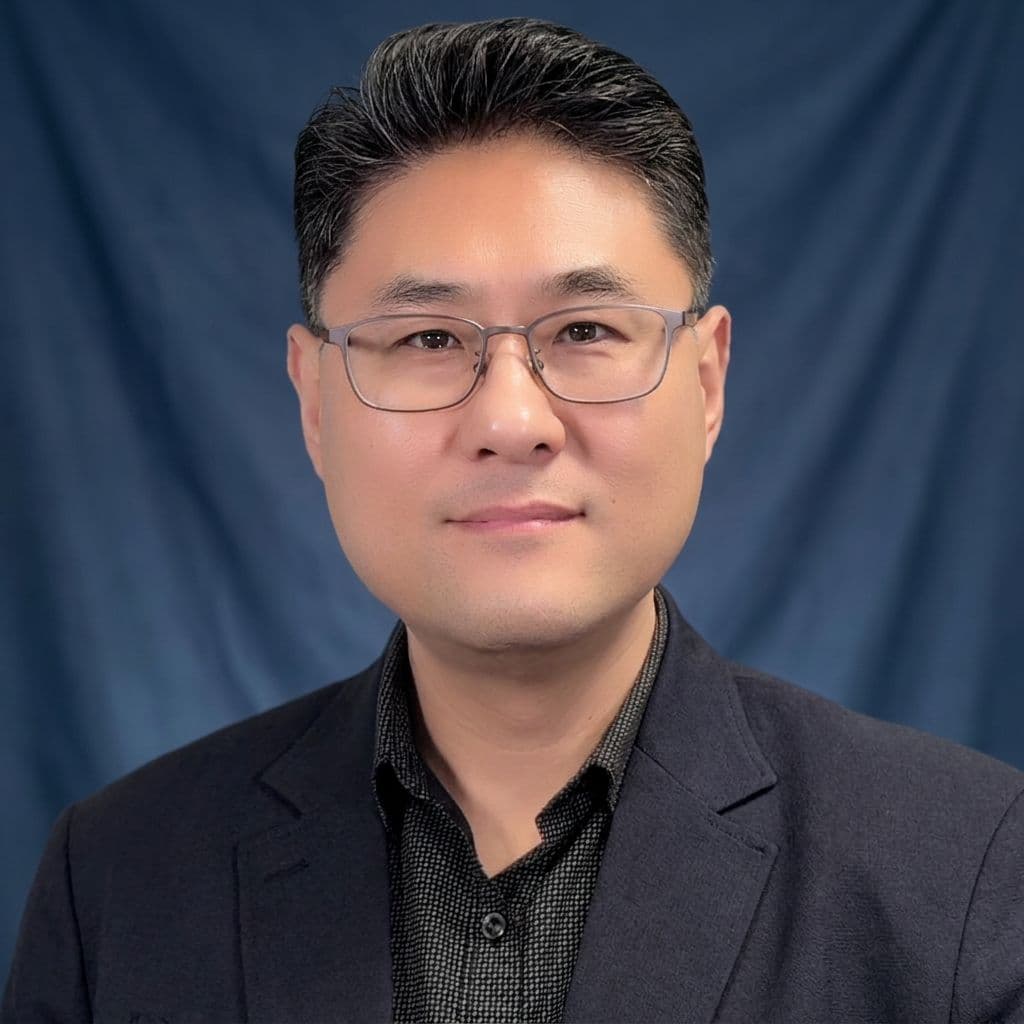
Full Transcript Introduction to Jae Lee and AIC 0:00 Hello, everybody. 0:01 My guest today is Jae Lee Jae Lee is CEO 0:05 and director of Advanced Calcium Research Institute in Turkey, 0:09 and director of the Calcium and Bone Health Institute in Vancouver, Canada. 0:15 An international speaker, Jae has presented at Integrative 0:20 Functional Anti-Aging medicine conferences 0:24 across America, Europe and Asia. 0:27 Jae works focuses on educating physicians 0:31 and health practitioners about anti or ionic calcium. 0:37 Supporting professional training and advancing research opportunities 0:41 in calcium and boneheads. 0:45 Welcome, Jae And tell me, 0:48 how did you get involved into this calcium research? And 0:54 I mean this is pretty in common. 0:56 You are not dreaming of that as a little boy. 0:58 Where are you? 1:00 Well, thank you, Sylvie, for the opportunity 1:02 to be here, to share about, I believe, to be it's a huge discovery 1:07 that's going to be opening a new chapter in the cancer treatment 1:13 we are pushing from calcium side, bone health side. 1:17 But there is a Hughes connection between bone health and overall health 1:22 and bone health, and even the development, progression and metastasis of cancer. 1:28 So we're going to be targeting cancer and bone access today. 1:33 I got involved with a and I 1:36 when I first encountered the the inventor of anti orbital calcium. 1:42 So everything started when this new form of calcium was invented. 1:46 It's essentially a carrier molecule of delivering 1:50 ionic calcium directly in our body 1:54 which stays ionic because as you know, in emergency cases 1:59 doctors may infuse calcium chloride right into your blood vessel. 2:03 But it goes in and supplies calcium in ionic form, 2:07 which is the only active form, but it just starts to bind 2:12 with all the binders in the blood and highly regulated by our body. 2:16 But this one stays ionic for 3 to 4 hours. 2:21 Therefore, it can really elevate your calcium level for sustained 2:26 period of time. 2:27 And this is where all the wonders happens, right? 2:30 So today we'll see how AIC stands for anti orbital. 2:34 Ionic calcium can really trigger strong bone building. 2:38 That could also counter the bone engine of cancer that's been feeding cancer. 2:43 Speaking of of cancer, when we think of bones we think you know 2:47 more structural support. 2:49 So what all kinds of bone environment play in helping cancer grow and spread. 2:53 That's a very good question. 2:55 So the the bone microenvironment 2:58 is it's highly attractive to cancer 3:02 because it provides the abundant resources for the cancer survival proliferation
How AIC Works in Bone and Cancer 3:08 and to actually turn it into very aggressive form 3:11 that could also escape bone in large in other parts of the body. 3:15 The bone is actually the largest 3:18 reservoir of all the minerals and growth factors. 3:22 And once it starts to release these factors 3:25 into our bones, cancer cells can exploit this, right? 3:29 And in a way, bone is where cancer can really reach 3:33 the systemic level of all different organs and really actually 3:37 prepare the organs for future metastasis. 3:42 So as you can see here, when cancer 3:45 arrives, the bone is always welcoming. 3:48 Right. 3:49 And cancer cells secretes 3:52 certain hormones like parathyroid hormone related proteins 3:58 that starts to really activate Azteca cells. 4:01 And these overactive osteoclast cells start to dissolve bones. 4:06 And this is where all those the growth factors are all stored in. 4:11 Right. 4:12 But because cancer hyper activates bone resorption, 4:15 all this course factors that spills out right 4:19 and within the microenvironment of bone right, 4:22 it really helps cancer cells to become aggressive. 4:26 And it also helps cancer cells to give us the tools 4:30 to activate more asset class cells like recruiter. 4:34 Right. 4:34 So that's why a lot of cancer patients have low bone density. 4:39 So it's a vicious cycle that cancer 4:42 cells initiate within our bone. Right. 4:45 Getting the signals out to resolve bone more. 4:48 And the bones are spills out growth factors and minerals. 4:52 And then we put more immune cells to break down more bones. 4:56 So the niche of bone metastasis becomes 5:00 the most favorable environment for cancer cells to survive. 5:05 So you speak of, you know, bone bone density and so on. 5:09 But there is a widespread confusion in both the public and sometimes 5:14 the medical communities between starter dietary calcium supplementation 5:19 and the tightly regulated ionic calcium signaling. 5:24 So can you explain to us the difference and why this this 5:29 this distinction is critical for cellular health. 5:33 Sure. 5:33 Well, when you're taking that supplement, 5:37 you're essentially putting calcium in our system in inactive form. 5:42 The guest I just did, it goes out to small intestine 5:45 and binding with vitamin D and peptides. 5:48 It goes into our body in inactive form. 5:52 Right. 5:52 The inactive form of calcium going in does not trigger any hormonal responses. 5:59 But there is an active form of calcium that is very tightly regulated 6:05 in our body because it is a signaling molecule. 6:09 Right. 6:10 So the serum ionic calcium level is very tightly regulated 6:16 by mainly two hormones, parathyroid hormone and calcitonin. 6:21 When the serum ionic calcium level drops a little bit 6:25 and the hormone comes out and start to resolve bone or increase 6:30 the uptake from kidney to bring it to the right level. 6:35 When the 6:35 level is little too high, then calcitonin, another hormone, comes out, 6:39 and this hormone starts to build bone so that the calcium can go into the bone. 6:46 Right. 6:47 So these two hormone balances the two bone cells. 6:53 One is bone building cells. 6:54 And what is bone resorption cells. 6:57 It has to be linked in in balance. 7:00 So with daily put calcium into the bones and take it out. 7:05 And this is how we also maintain the overall health of the bone. 7:10 Right. 7:11 But then here's the thing. 7:12 By taking supplements it doesn't know what to do. 7:16 It's like you're throwing bricks into our body and hoping 7:19 that you will start building buildings. 7:22 The important thing is that you got to give our body a signal that 7:26 the bone needs to be built. 7:28 So without the architect and contractor, the bricks going to be just sitting there. 7:33 That's why a lot of the doctors are against calcium supplementation, 7:38 because it could end up in the wrong places and calcifying your body. 7:42 So there's a health danger in calcium supplementation, 7:46 without giving the signal. 7:48 One thing about cancer patients is the cancer patients have really low 7:52 bone density because even with all the custom 7:55 supplementation, bodies keep giving the signaling to our body 7:59 that the bone has to be the calcium has to be taken out. 8:03 And somehow 8:05 giving calcium without the proper 8:08 signaling to build bone, it actually ends up in the wrong places. 8:14 And the most dangerous form of calcification that we have seen, 8:18 even though we know there arterial calcification and soft tissue 8:22 and bone spurs. 8:23 All of that is bad is what actually happens in cellular level. 8:27 Cellular level classification is the worst one because it actually 8:33 disrupts the tightly regulated and very precise 8:37 work of signaling molecule, which is the ionic form. 8:41 Right. 8:42 Because it goes into the cell and start calcifying the buffers 8:47 that are crucial in signaling. 8:50 So so what if you didn't support the proposed difference 8:54 and how it affects calcium signaling and bone remodeling? 8:58 Okay. So as we age 9:01 there's something called inflammation that happens to many pathways. 9:06 But overall as we grow older 9:09 a lot of our cells become assessment. 9:12 And this senescent cells becomes a factory of inflammatory cytokines. 9:18 And whenever there is an inflammation, the bone response 9:23 and bone resolves resorption happens 9:25 and gives out that I am a castle because our immune cells need 9:30 a. The burst of iron 9:32 calcium can be very helpful for our immune cells to gain that. 9:36 The proper motility and the power to fight infection. 9:41 Right. 9:42 But because inflammation has been going on for quite a long time 9:46 without even infection, right. 9:48 That's continuously takes the calcium out of the bones. 9:53 But it is exactly this continuous loss of bone calcium 9:57 in the form that increases the extracellular calcium load, 10:01 which in these two intracellular calcium load and many of that just ends up 10:07 in buffers inside the cells and the plasma and mitochondria, right. 10:12 In normal settings they need to have a higher concentration. 10:16 But what happens is that when too much of calcium is coming in 10:20 constantly, calcification happens into these buffers.
Calcium Signaling, Aging, and Bone Loss 10:25 So there is some cross talks and the spellings of calcium 10:28 in the side of cytosol. 10:30 And that is what really bringing calcium, this homeostasis in ourselves. 10:35 So cells cannot really communicate properly. 10:38 Mitochondria dysfunction happens and your stress happens. 10:43 And reactive oxygen is produced damaging 10:46 DNA and RNA that could actually lead to mutation. 10:49 This also disrupts cell cycle. 10:51 So cells can now repair it anymore. 10:53 And tons of cytokines are also coming up because of it. 10:57 So actually it is the overloaded calcium in ourselves. 11:03 There's causing what's called calcium. 11:06 That's a, you know, disease that's related to 11:10 the dysfunction of calcium use in our cells. 11:13 And that is actually, in many researchers have shown to be one of the major cause 11:18 of driving cancer development and progression and even metastasis, because 11:26 the most 11:26 important communication molecule is not communicating properly. 11:30 Yeah, that's that's fascinating. 11:32 And how do you know when to much calcium I mean calcium is too much. 11:38 How do you know you have too much of it. 11:41 Well, people find out later on 11:44 by doing bone mineral density tests that they have low bone density. 11:48 But when they have a low bone density, people just look at the risk of fracture. 11:53 But the science have shown that if you're not, 11:57 then most likely that you have 12:00 this calcium in cellular level. 12:03 So you have more calcium. 12:06 And there actually been good studies done out there. 12:09 It's a follow up study that shows that it feels strong 12:12 bones in your 50s you could actually live 11.6 years longer. 12:16 So that's pretty good adding ten years to your life. 12:20 But then another study of shown that if you have osteoporosis, then 12:23 your all cause mortality rises by 36%. 12:28 Now that is huge. 12:30 This is excluding the death related to factor. 12:34 So low bone density is not just a factual risk. 12:38 That means the something driving bone loss. 12:42 And it is usually the chronic inflammation or inflammation. 12:46 Right. 12:47 That's been constantly taking out the calcium. 12:49 And it is not just lost. 12:51 It accumulates at your level. 12:53 And this is what's been triggering this undetectable inflammation 12:57 in our body that pulls in more calcium from the bone. 13:01 So this cycle actually gets locked in. 13:05 Right. 13:05 So even when the original source of inflammation is removed, 13:12 once the bone is losing enough calcium 13:15 and it starts to recruit our immune cells to become after class 13:19 and start reinforcing that option, it just goes on by itself. 13:25 So cars, only the calcium coming out, accumulate in cellular level 13:30 disrupts the signaling, causing huge inflammation that triggers 13:36 the number three cytokines to be produced 13:39 and it travels back to the bone. 13:42 The thing is that when bone loss happens, 13:45 growth factors are spilled out in this course. 13:49 Factories are going all of our body 13:51 triggering fibroblast cells to to be exported by cancer. 13:55 And also the high level of phosphate 13:57 and calcium ions can also trigger the development of cancer. 14:01 Right. 14:02 So many researchers have shown that before cancer happens, calcium happens. 14:07 And calcium is also related to over 150 days of diseases, whether it is 14:12 Alzheimer's, Parkinson's, autoimmune metabolic syndrome, heart disease. 14:17 I mean, it's there, right? 14:19 So but but you know, I'm a little old lady. 14:23 Every time I'm going to the doctor, I ask me to put my 14:26 my finger in a little in a little system. 14:30 And then he says, oh, 14:31 you need to take more calcium and more vitamin D you have. Yes. 14:36 Your bones are getting fragile. 14:39 I have heard already that it 14:42 was not that simple and to 14:46 but but I mean, what would be what would be your message for all the 14:51 all the old little ladies like me? 14:55 Well, if you do a bond testing and then you find out 14:58 you have low bone density, I mean, it's it's all women in their 60s. 70s. 15:04 That's right. 15:04 Yes. Postmenopausal women have decreased extrusion level 15:09 and therefore it triggers more active asset class. 15:13 Well, if it's just a bone, then, 15:16 I mean, you can do exercises and other things, but then if you have 15:21 a constant driver in your body that's giving the signal to resolve bone, 15:27 which is chronic inflammation or inflammation that happens over aging, 15:32 then it's really hard to stop that with the hormonal loss. 15:37 But then the whole point is that this bone bone loss, right, 15:41 is not just the bone issue, the cellular issue. 15:45 It further feeds the inflammation. 15:47 Inflammation feeds the bone loss. 15:49 So you're locked in that chronic cycle, right. 15:53 So what we have seen through AIC 15:56 is that AC therapy focuses on 16:00 just putting ionic calcium, the active form of calcium in our body. 16:05 Right. 16:06 That can actually trigger the hormonal response to build bone rapidly. 16:12 That can counter even the bone loss that's cheaper 16:16 by inflammation and also aging too. 16:21 So we have done several research, 16:24 and the research have really have proven how AIC, 16:29 because it goes in our body in ionic form, 16:32 but it is not regulated by our body. 16:35 Right away it stays ionic for 2 to 4 hours. 16:39 So the serum ionic calcium level 16:42 can actually be elevated about 16:45 2 to 3% for 3 to 4 hours. 16:48 And that's a very tiny bit. 16:49 We're only putting zero point to 0.2mg per deciliter. 16:53 Right. 16:54 And but that slight elevation is a huge signal for our body. 17:00 You're talking about the ionic form that is tiny regulated, right. 17:04 So the instant that it goes into our body, it could down regulate the release of 17:10 hormone, which happens, you know, which gets overregulated for older people. 17:16 That's why you're losing bone faster. 17:18 So we can kind of downregulated. 17:20 At the same time, AI can trigger the release of calcitonin. 17:25 And the Kelsey tone in is something that really down regulates 17:29 also classic activity and starts to upregulate 17:33 as the blood cells, the bone building cells. 17:36 Right. 17:36 And then the important thing is that when the ionic calcium level rises 17:41 in the environment, what it does 17:44 is that it can actually trigger what's called BMP two, right? 17:48 That can turn mesenchymal stem cells into bone, building 17:52 osteoblast cells and build really strong bone. 17:57 Okay. 17:58 So so so so if women who are reluctant 18:02 to take hormones but are afraid of foster, 18:07 it could be. 18:08 I mean, the solution going into this, calcium, 18:13 very specific calcium and improving your bones, 18:17 improving your immunity without taking hormones. 18:21 Right. 18:22 Well, if you're low in hormone and you're taking the 18:26 bioidentical hormone, it's helpful. 18:28 It's helpful. 18:29 But just by having a hormonal therapy, it's hard to rebuild a bone. 18:34 In our study, the peer reviewed study you can see here 18:37 this is a breast cancer patients with bone metastases.
AIC Research, Bone Rebuilding, and Case Studies 18:40 You can see in this picture how AIC can rebuild a bone 18:44 that's been damaged by the cancer. 18:48 You can see how AIC can build bone faster 18:51 than cancer can break down in these slides. 18:56 And these slides as well. 18:59 So a was American Association for Cancer Research. 19:04 This is where all the big companies come to present their new findings. 19:08 And working with Moffitt Cancer and University of Arkansas, we're able 19:13 to present because our paper was accepted 19:17 and this was a study on multiple myeloma. 19:21 A multiple myeloma study was significant because multiple myeloma 19:25 is a cancer cells in the bone marrow that's breaking down bone, 19:29 and it nourishes on all the growth factors from the bone. 19:33 So it's a vicious it's it's a monster. 19:35 Right. 19:36 So we know that cancer cell is not just a seed, but it is a soul. 19:41 Right. 19:42 So by targeting the bone that the myeloma fees on, 19:47 we thought that we could stop the cancer progression. 19:51 And that's exactly what you've seen. 19:53 You can see here the the animal, the control group got planted the cells. 19:58 And there's two other groups that treatment before the treatment 20:03 of transplant received AIC about four weeks prior to transplantation. 20:08 And then Tat group received plantation two weeks after plantation. 20:14 You can see here that all the control group died. 20:18 And however, the ones that received AIC after transplant survived longer. 20:24 Some of them did not even develop. 20:26 And then the 20:27 ones that received AIC before transplant, most of them survived 20:32 is and many of them did not even develop myeloma. 20:36 But we have seen how that AIC rebuild the bone 20:39 that's been damaged by myeloma. 20:43 The red here indicates the mineralization right? 20:47 It mineralization bones and the bone density 20:50 and bone volume and trabecular thickness all went up. 20:54 Right. 20:55 And we have seen how AC was able to really shift 20:59 the cellular balance of osteoblast cells and asset class cells. 21:03 Right. 21:04 You can see here and the third 21:08 shift osteoclast cells were just half while osteoblast cells are doubled. 21:13 This is a huge change. 21:14 Your bone goes into hyper building mode right. 21:18 So we have found out that by depriving 21:23 all this nutrients from myself, that we're able to stop the progression 21:28 of multiple myeloma human cases. 21:31 We have seen this 80 year old lady end stage myeloma, right? 21:36 Her kidney was damaged and she had a severe osteoporosis. 21:39 You're talking about 80 year old lady, right? 21:42 Within about a year that she's just taking AIC. 21:46 You can see that her blood work sucked normalize. 21:49 But the wonderful thing was that her kidney function also got restored 21:52 from 12 to 62, which is pretty normal for her age 21:56 and her mineral density from -3.6, which is severe osteoporosis. 22:01 And this is without hormonal treatment. 22:03 Her bone density reverted to normal level, not just a subpoena. 22:08 There's another lady. 22:09 She did not get any oncology intervention for the first six months. 22:14 She was so depressed she decided not to go sit on colleges. 22:18 Her husband was very frustrated, but she agreed to take AIC. 22:23 And this is what happened to six months of just taking AIC. 22:27 She started out with a high calcium number hypocalcemia, which is dangerous, right? 22:32 However, just with AIC alone, without receiving anti drugs, 22:37 you can see that her blood calcium was back to normal level 22:41 and the other parameters were also normalizing as well. 22:46 Right. 22:47 So we can see here later on she decided to take Cosi oncologist. 22:52 And she was to receive two targeted therapy which targeted 22:56 myeloma cells and help myeloma cells to die out faster. 23:00 But then when she was in a good range, those two targeted therapies are removed 23:04 and she just remains currently on a I see 23:08 maintenance dose and everything looks pretty good to this point. 23:13 So basically, I know you're curious about how AIC may look like, right? 23:18 AIC is simply a transformed calcium carbonate molecule. 23:22 We change the ionic calcium with an orbital 23:25 bonding and anti bonding. 23:28 As you can see here, compared to the regular bonding it's very weak 23:32 bonding right. 23:34 So it increases the solubility. 23:36 But it's not just a solubility matter right. 23:39 It's very unique the chemical reaction because it's just simply disintegrates 23:44 in your stomach into cations and oxygen and carbon dioxide. 23:50 You find something unusual here because it does not 23:54 produce anions just cations, positive charge science. 23:58 And in the stomach it recruits the water molecule because it's taken with water 24:04 molecule and it goes into your body passively without digestion. 24:10 No vitamin D or peptide. 24:12 It just goes in passively through diffusion and asthmatic pressure. 24:16 It goes into our body. 24:18 You can see here from the studies from Simon Fraser University 24:22 that we have this molecule has high affinity with water molecules. 24:27 And it says here that AC exists in a hydration environment distinct 24:32 from that of a conventional calcium carbonate in room temperature. 24:37 It also flies out together with water. 24:41 So this is the only calcium that goes in our body in ionic form and is simply 24:46 does not bind with the binders in the blood for 3 to 4 hours. 24:51 Therefore, it can trigger all these bone building hormonal responses. 24:56 So do not think of this as a calcium supplementation at all. 24:59 It's a very small amount. 25:01 We're giving our body calcium signaling. 25:04 And that signaling is it's time to build bone. 25:08 So that's what ass has been doing. 25:10 It builds bone 25:12 and therefore it can really stop the cancer and bone axis that the bone 25:17 that's been feeding cancer development and the progression in metastasis. 25:21 And that's why the bone. 25:23 I think it's probably in large part in colleges, 25:26 consider it just one of the places where the cancer metastasized. 25:30 Right. 25:30 Like whether it's lungs or the liver, just one of the places 25:34 that cancer has lodged and just growing, causing pain. 25:39 But the bone is actually a broadcasting station. 25:43 This is what's been feeding the cancer and making our body 25:47 more favorable for cancer metastasis. 25:50 So AC is found to be a strong 25:54 candidate to target the bone and stop this, I guess 25:58 broadcasting that the cancer's been doing in our bombs. 26:04 But what about I mean, 26:07 without cancer as to 26:10 to avoid the disease eventually to come. 26:14 Even without cancer. 26:15 Of course, 26:17 the thing is that there is a study that has shown 26:20 that calcium apathy, calcium dysfunction happens before cancer happens, 26:25 meaning that the continuous bone loss 26:29 people who are losing bone faster, right? 26:32 People have weaker bones. 26:33 They're setting themselves up for the development 26:37 of chronic diseases, including cancer. 26:41 Right. 26:41 Because cancer labs, acidic environment. 26:44 Right. 26:45 And bone loss triggers definitely that all the growth factors are floating around. 26:51 If there's any circulating tumor cells, 26:54 then tumor cells are also able to really find more the nest, 26:59 because of the help of the immune cells that cancer can exploit. 27:04 And that happens whole lot better when you have low bone density 27:10 and acidic environment that this low bone density fees and all the growth factors, 27:14 because this growth factors are also producing the fortress 27:17 really helps cancer to latch and and help the primary tumor also to to grow. 27:24 So all these things we've been just looking at bone 27:26 as the victim of cancer to right. 27:30 But bone to be in actually 27:33 providing the environment for cancer development. 27:36 And it actually sends out the inflammatory cytokines, 27:41 chemokines to attract cancer to the bone. 27:44 And once cancer rise, that's where amplification happens. 27:49 And it's 27:50 prepping our entire body for cancer metastasis. 27:53 And that's why after the bone metastasis happens is so hard to defeat cancer. 27:58 Right. 27:59 But that cancer and bone 28:02 access the AFC can go and shut down. 28:05 And that's what makes the cancer treatment so much easier with AIC. 28:10 So strategy one is locking down 28:15 the bone matrix 28:17 and started from supporting cancer using AIC. 28:21 And then at the same time when we're building bone, 28:24 we have also found out that it is declassifying ourselves. 28:28 We've seen calcified tendonitis disappearing, the bone spurs disappearing. 28:32 Right. 28:33 It clears all the calcium that's in our body 28:36 that's been triggering inflammation also not just 28:40 the result of inflammation, but it reinforces inflammation. 28:44 We can we're able to stop it, right. 28:46 So it starts the localized inflammatory cascades as well. 28:50 And therefore it restores the cellular function as well. 28:56 So it reverses calcium apathy 28:59 so cells can communicate better and the mitochondrial function comes back. 29:04 Yard stress is downregulated. Right. 29:06 So reactive oxygen species also go down 29:10 to cells are becoming Haller Peltier 29:12 by reversing what's been feeding our disease. 29:16 Right. 29:17 And all the growth factors that cancers being just feeding on 29:20 gets locked in the vault again. 29:22 So no more help available for cancer from the bone, right. 29:26 Interesting studies actually been done in with Kyung University in South Korea. 29:31 Right. 29:32 We know that targeting cancer is not just the cells, 29:37 but then the entire ecosystem that the fortress that cash has been building on. 29:42 But AC have shown to actually take away 29:46 all those tools that the tumor cells were using 29:49 to protect itself, to become aggressive, that they would metastasize. 29:53 Right. 29:54 Whether it's interleukin 6 or 10 alpha, interleukin one data, 29:58 all those M and Cox two enzyme, all these things are down regulated. 30:02 As you can see here with AIC, you see the sharp decline, right. 30:08 And then also M keys, which are the molecular scissors 30:12 that cancer uses to break out of the matrix and metastasize. 30:17 You can see how all of these maps are just 30:21 downregulated with AIC as well. 30:24 Therefore, in a way, a C has shown to take away 30:29 the tools that can't just been using right and stripping cancer. 30:34 Right. 30:34 So the cancer become more vulnerable. 30:37 Right. 30:38 You see here that how without AIC cancer builds the fortress. 30:42 But now with AIC you can normalize the cancer microenvironment. 30:47 The reason the conventional cancer that's been using 30:51 very strong chemo is to penetrate this fortress. 30:55 But now without this fortress, with cancers 30:58 shipped away with all the tools that the cancers have been exploding, 31:02 including our immune cells, that low dose chemo. 31:07 Right. 31:08 Some of the packages has been using low dose chemo 31:10 to target the cancers and found to be very effective as well. 31:15 Right. 31:16 So the second strategy that AIC that uses for the cancer 31:20 is due to lactic acid to very effective in 31:25 binding with lactic acid, it turns into calcium lactate. 31:29 And they could really clear and bring that 31:33 low acidity back to the normal level 31:36 where our immune system can function properly. 31:40 Right. 31:40 Because when is down to 6 to 6.5 31:44 is a slightly Cilic environment, it turns off immune response. 31:48 And by bringing it back to the normal page, we can awaken our immune system. 31:53 And it can also stop Engine Genesis from happening. 31:56 A lot of benefits and it can really help. 31:59 The cancer cells also start changing its metabolism as well. 32:03 Interesting. 32:05 So I mean, it looks like 32:08 for someone who is receiving cancer treatment, 32:11 what should responsible consideration for for a AIC involved? 32:17 I mean, what is known about safety, kidney function, calcium monitoring, 32:22 possible interaction with existing therapies USP 32:26 speaking of chemotherapy, low dose chemotherapy. 32:30 But what about radiation? 32:33 What about the other things that are commonly used during cancer treatment? 32:39 Well, that in in 32:41 practice I see the integrity of oncology 32:45 being really in powerful and supporting the quality of life of patients first, 32:51 and then it could really assist 32:54 the treatment in the pathways that I've shared before. 32:57 And it doesn't have any contraindication. 33:00 So it's very safe because our body has plenty of ionic calcium. 33:04 Right. 33:05 But the thing is that as we age, that the basal ionic calcium levels 33:09 starts to drop and our body experiences ionic calcium deficiency. 33:14 And this ionic calcium deficiency cannot be resolved 33:18 by putting any form of calcium in our body, which could actually 33:22 calcified our body more. 33:23 So I see is the, I guess, the world's first ionic calcium delivery system 33:28 that could deliver ionic calcium, that could last 3 or 4 hours. 33:32 So it could, over time, can even help to normalize 33:37 ionic calcium deficiency in our body for the first time. 33:40 And that's been very helpful because it is healthy cellular function. 33:45 And it really, you know, it locks away all the growth factors 33:48 that the cache has been exploding at breaking down the bone. 33:51 So it's it's pretty powerful stopping the inflammation engine 33:57 that cancer in utilizing and also building up right. 34:01 Fissure cycle. Yeah. 34:03 That's why I mean I think it would be of interest for 34:06 I mean it's the entire spectrum from prevention 34:10 to cancer to cancer with metastasis. 34:13 So how can people 34:16 learn more about about this product. 34:19 Well aictherapy.com 34:22 that's advanced Calcium Users Institute site. 34:25 Interested practitioners can sign up and have a session with our researcher. 34:31 He agreed to do 25 minute session for Q&A. 34:35 And then that's the place where you can read 34:37 about our latest research and clinical cases and mechanism of action. 34:42 The studies 34:43 and our published research is available there as well for them to take a look at. 34:48 But I think the best thing is that they get to do this one on one, 34:54 in a session with our researcher. 34:56 And he loves to explain about calcium and AIC. 35:00 And he also published the book titled 35:03 Calcium Exposed, which is also selling in Amazon. 35:06 It's a good book to, if you are really interested in learning about what I see is 35:10 and how that could really help with not just cancer, but also other diseases. 35:15 I mean, there are a lot of studies done on dyadic calcium. 35:18 I mean, probably one of the most studied. 35:20 And in fact, if you just go to Google type, 35:23 I only tell some signaling and any disease you're going to find hands 35:27 of users already done. 35:29 And basically all of them kind of points calcium apathy 35:33 as the important pathway that leads to the diseases. 35:38 And there has been many suggestions that if we can somehow stop calcium 35:42 from happening, they might be able to stop the progression of the disease. 35:46 And that also includes cancer.
Safety, Dosing, and Clinical Use of AIC 35:49 But then it seems like AIC is doing just that. 35:53 Right? 35:53 So, we have also seen that in, 35:59 in some of the I mean, a lot of the slides 36:01 that I'm just passing through and showing you is available in. 36:05 Yes, as well. 36:07 You can see here the calcification, the shoulder is just simply disappearing 36:11 under the I see this tropic calcium heterotrophic calcium after the accident. 36:15 It's very painful. 36:17 Simply goes away in 45 days. 36:19 And what do you think all this calcium is going? 36:21 It's going back to where the calcium belongs, which is our bones. 36:24 Right. So it's a systemic. 36:26 And then also a cellular spring cleansing 36:29 for cleaning for the calcium. 36:33 We also by the way. 36:34 So we were able to present our research in ASB Amr 36:38 that's American Society for Bone Mineral Research. 36:41 And this is a peer reviewed paper that was published I think this paper was 36:45 very significant because you can see here that was 64% of osteoporosis patient. 36:50 Within eight months they became asked to pick and 12% 36:54 completely recovered and asked patients, 36:57 65% of them within eight months 37:00 recovered to normal bone density and osteoporosis. 37:04 Patients benefited the most. 37:06 And it was, you know, for all age groups, especially being a poster woman. 37:11 Selby so you can see here how this could really benefit you as well, right? 37:16 There's a huge jump in the mineral density. 37:20 And like I said before, because you can suppress PTA 37:25 and also can release your endogenous your own calcitonin. 37:29 Right. And then you can trigger BNP two. 37:33 And this is the paper that also we have published through 37:36 International Osteoporosis Foundation. 37:39 Right. 37:39 It shows how AIC can rebuild bone when the ovary was removed. 37:45 And as a process induced, a lot happens. 37:48 There's a rapid bone degradation. 37:51 But AIC, whether it's a density or bone volume or trabecular number, 37:56 able to restore all that, as you can see here, right 38:00 faster than body breaks down. 38:03 So what kind of test should a woman 38:07 ask your doctor to to assess, 38:11 this need of 38:14 this special calcium and then get a prescription 38:18 because a regular test as, as 38:20 you said at the beginning, is not showing that 38:25 the regular test can tell you 38:28 just osteopenia and that's it. 38:31 Yeah. 38:32 Well, I can tell you that Dexa scan, which is X-ray 38:36 based, gives you a bone density, but that bone density is not the 38:42 the holistic picture of a bone health. 38:44 If you take antiviral drugs, you may be able to keep on density, 38:49 but the bone needs to be remodeled every day repaired. 38:53 But you essentially stopping that and just keeping the old bone, right. 38:58 So here's the thing. 39:00 You two people can have same t score, but then ten fold difference 39:05 in bone strength because bone is all the the cross things, the connections. 39:10 Right. 39:11 So bone strength and bone density are two different things. 39:14 So but then still bone density is a good starting point. 39:19 Right. 39:19 So let's say you found that you have asked your process. 39:23 Our recommendation is to score one AIC 39:27 and just take it 2 to 3 times a day. 39:30 And after a year later, because Dexter is 39:32 kind of rough after year later, you can see, as you can see 39:35 in the cases that I've shared, that and the studies that I've shared 39:39 that you could experience for mineral density through the scan. 39:43 But there are certain tests. 39:45 The blood tests you can do, like CT is upon resorption marker. 39:49 Right. 39:50 You will see that marker before and after changing with AIC. 39:55 And also there's a bone formation marker 39:58 P1 and P that that also will go up. 40:01 That means your body is actively building bone. 40:04 So bone is not something that you feel. 40:08 But then there are simpler tests and there's also Rems, 40:13 which is ultrasound based, more advanced to sound based bone 40:17 scan that actually can measure your bone strength to. 40:20 These are the measures that you can use, but you don't want to not 40:24 take care of your bone, because bone is also 40:27 a sign of kind of inflammation going on in your body. 40:31 And if you lose bone fast, then it ends up with calcium up the. 40:36 That could lead to over 150 desert of diseases. 40:40 Okay, I see you have some clinical cases. 40:43 If you have some time, I would love to see a few of them. 40:46 Oh sure, sure. I'd love to share that with you. 40:48 To Anna, she had cervical cancer early age 39, but she had a surgery. 40:55 But then about four years later, he came back. 40:58 So she did chemo and he came back again. 41:01 So chemo, radiation, she received the maximum chemo dose that person can take. 41:05 So this is the time that she found out about the AIC. 41:09 And within four months she did biopsy and came out deny. 41:15 So she was ecstatic. 41:16 But then she stopped AIC right there. 41:19 She still has something. 41:21 That's what they did biopsy. It came out benign. 41:23 But then now she stopped and she disappeared. 41:27 And we found out that recurrence happened. 41:29 So she went for more targeted therapies 41:32 with cryo ablation, ethanol ablation, traveling around the world. 41:36 Cancer still came back. 41:38 So she later came back to receive AIC again in 2010. 41:43 This time it took about eight months and she did biopsy and came up benign. 41:48 So she was extended, but she was smart enough to continue AIC. 41:52 Right. Follow a protocol. 41:55 And then she from 3 to 4 doses down to two and one, 41:59 and she remains in with one dose presently. 42:04 And so this is the first time the biopsy this the second time she did biopsy. 42:09 And this is the scan. 42:12 And to this day which is 2026. 42:15 So it's been over five years now. 42:18 It's still cancer free right. 42:22 So you can see here this is just with AIC. 42:26 You can see how the format case gets smaller and smaller. 42:28 And the strange itself. 42:32 This is colorectal case. 42:34 Doctors were really surprised because how do you explain something like this 42:38 when your body is excreting the lesions that were in colon? 42:43 This is just one third of all. 42:45 They came out and this lady had 42:48 the breast cancer maintained by, I guess, the hormonal therapy. 42:52 And she was afraid to have a surgery because it increased the chance 42:56 of spreading cancer. 42:58 But then only thing changed in a protocol 43:01 is just adding AIC just a little over a month. 43:05 You can see that this part is completely gone, 43:08 and this part is getting smaller and smaller and smaller. 43:11 This is a good case because it shows what AI does. 43:14 So that's by adding AIC, right? 43:17 There's a brain cancer patient after surgery 43:20 keeps coming back with age intervention completely gone. 43:25 Right. 43:25 There's some this is also plastic cancer with different metastases. 43:30 You see that there's innumerable low density lesions. 43:33 The biopsy shows is the metastatic, you know, prostatic carcinoma. 43:39 As soon as this patient received AIC, you see that the PSA is dropping. 43:44 And then the largest tumor decreased significantly. 43:49 And there's no new lymph nodes. No I'm a 43:52 is very good case. 43:54 Just in a very short period of time of four months 43:57 a drastic change as a monotherapy. 44:00 Right. 44:01 So the biomarker plummets and physical tumor reduction happen. 44:05 The quality of life also improves sowing. 44:08 The AIC can be a good as a therapy. 44:11 This patient had a variant cancer offered to me 44:15 performed but the cancer market was too high. 44:18 So everything stopped. 44:19 And she just goes on a therapy and you can see that 44:23 just under AIC, the cancer marker is plummeting. 44:26 The thing about first two months, the quality of life reported was that she 44:31 experienced increased appetite and emotionally brighter. 44:35 She studied gardening and housework and not hiring sleeping pills to fall asleep. 44:41 And, you know, the life just was so much better that I see 44:46 this patient is still, of course, cancer free that had a celebrate gland 44:50 adenocarcinoma 3.5cm, so had it surgically removed. 44:56 But there were other growth there. 44:57 So it's twined with the blood vessels and and the nerve. 45:02 And so recommended to receive 33 sessions of had radiotherapy. 45:07 But you know how that is right. 45:08 But comes with a lot of side effects. 45:10 And one of that was losing his taste buds. 45:13 So he was so scared. 45:14 He just went on with AIC and about four months later everything is happy. 45:19 And to this day is the cancer free, right? How 45:25 do you take a I see 45:27 well, it comes in a liquid form, right. 45:30 And each bottle gives about 50 doses 45:33 in recommend patients to take three doses a day. 45:36 But this five ML. 45:37 Let's pass the five ML 45:41 you take when you say to take them. 45:42 You orally. 45:44 Orally. Yes okay. Thank you. 45:46 It just makes it with a drinking water. 45:48 Just water and little temperature water 300 to 500 ML. 45:53 And you just drink it on empty stomach and give over 30 minutes. 45:57 And all of that is going to be absorbed in 30 minutes. 46:00 So we recommend the patient to do it. 46:02 And as soon as the patient wakes up, when you know the patient is thirsty, 46:05 maybe 30 minutes before lunch and 30 minutes before dinner. 46:09 And that way you can squeeze in three doses, and the sweet spot 46:12 is between 3 to 6 month period of time, right? 46:16 I mean, this is not managing symptoms. 46:18 This actually goes in and start triggering bone building. 46:21 Right. 46:22 And then, you know, you're increasing US cells and downloading 46:26 getting our cloud cells and start taking all that calcium back to your bone 46:30 clearing from the cellular level, restoring cellular function, increasing 46:34 amount of control function, more energy and immune function comes back. 46:39 So it's it takes time. 46:41 That's why we say do this 3 to 6 month period of time, that the sweet spot 46:45 that you're going to experience all these things when your cell starts to recover 46:50 at the same time you're building bone and it is happening throughout your body. 46:54 So, I mean, you're doing this on doing something 46:57 that's been happening in your body for several decades. 47:00 So I think 2 to 6 month is pretty fast for what it does. 47:03 You can see the studies seeing how fast we're building bone. 47:06 That's why the details happens. 47:08 And this is the real bone that we're building. 47:11 And that's what we're able to stop the bone and cancer access as well. 47:14 So it makes it really takes cancer whole lot weaker because you're removing 47:20 all the the tools that the cancer's been using. 47:23 You know what, Sylvie? 47:25 Cancer hijacks calcium signaling 47:29 that that's why cancer can, I guess, exploit others the immune cells. 47:34 So let's say your body was operating in channel a cancer, 47:39 established another channel on its own. 47:42 Right. 47:42 And then it starts to exploit the local cancer cells to work for cancer 47:48 and AIC by bringing 47:51 the calcium homeostasis or systemic and cellular, 47:54 it can take away the channel away from cancer. 47:57 Right. 47:58 So cancer is exposed is no way of controlling other things. 48:02 So I, I know cancer is very complicated. 48:05 It is not, you know, simple. 48:07 But the way I works works pretty good for most cancer. 48:12 And it's been shown results even for like a year 48:16 and about to share here that within one month. 48:19 Because what's happening in the bone and hematopoietic stem cell, 48:23 the niche in the bone marrow, we can see that 48:26 there's rapid changes are happening right with AIC. 48:31 Right. 48:31 This is just happening a very short period of time. 48:34 And there's another blood cancer case. 48:39 Is there one one kind of cancer 48:42 for which seems to be more resistant to this approach? 48:47 Well, we had good cases 48:50 with of course, anything related to the bone. 48:53 Right. 48:54 And then the brain tumor and then the lung. 48:57 We had a stomach cancer, colon cancer, prostate cancer, 49:02 breast cancer and also multiple myeloma 49:05 and the lymphoma leukemia. 49:09 We had pretty good cases with these cancers and also liver cancer as well. 49:13 So I think it works so well because we're not targeting cancer cell. 49:18 It works well because we're targeting what's being most useful 49:23 for cancer to develop and grow. 49:25 In metastasize. 49:27 We are taking away the tools that cancer has been using. 49:30 Right. 49:30 And bone played a very important role in cancer, right? 49:35 Bone is not just one of the places the cancer goes, enlarges and grows. 49:39 Bone is what's actually 49:42 priming our bodies environment 49:46 for cancer development and it also for any cancers found. 49:49 Then it can really amplify its growth. 49:52 And once cancer arrives in 49:55 I guess we we call it home for cancer, right? 49:59 Comes home then that's where cancer just crazy. 50:03 It turns more aggressive spills out, more growth factors to support. 50:08 And even it goes back to the primary tumor. 50:10 Right. 50:11 And then it makes the primary tumor whole lot worse 50:14 all the more diverse and aggressive. 50:16 Yeah. 50:17 So without stopping bone it's hard to start cancer. 50:21 And just removing bone from this cancer 50:24 matrix, you find out that cancer becomes so weakened that 50:29 all the other therapies work so much better that they are targeting cancer. 50:33 I love that I love this, this approach, which 50:37 I mean, it works a lot and works by by, 50:40 yes, consumption with other therapies, 50:43 but also is can be used for prevention for, for so many people 50:48 and, and gives hope and something to do. 50:51 There are so many, 50:52 so many people who are afraid that you know of cancer as you age. 50:57 I mean, the the odds increase and you have your, 51:02 you know, that your bones are becoming weaker and weaker. 51:06 You are afraid to to fall. 51:08 But there is so much more to to look at. 51:11 And the fact that you are offering a solution 51:14 which is effective and toxic 51:18 and you have so much a wide ranging support, I 51:24 find that fascinating. 51:26 And I'm very, very grateful that you came to that to explain that to us. 51:30 Well, thank you, Sylvia. 51:31 You know, 51:31 I really thought you 51:32 for this opportunity to share the research that we've been doing. 51:36 We've been doing research with Rockefeller Cancer Institute and Martha Cancer 51:41 and and also something many university in South Korea 51:44 were doing some Alzheimer's study. 51:45 It's very effective for all the immune disease and heart disease. 51:49 Tons of cases actually. 51:51 But I know this is all about cancer, but these are the things that I guess are 51:55 practitioners can go to Aic30.com and then to find more resources 52:01 there and start really experiencing in their practice. 52:04 One molecule that we have found, and our first patient was 52:07 practically end stage prostate cancer patient about 15 years ago, 52:12 it was over 70 years old. 52:14 And interesting thing was that, you know, he actually stopped by, 52:18 you know, the inventor Doctor Pauli's office, 52:21 picking up a whole bunch of medications from the pharmacy. 52:25 And then what he had in his hand was a conventional calcium supplement. 52:30 And seeing that that the inventor gave his calcium, the AC to him. 52:35 Take this instead. 52:37 Probably work better for you. 52:38 A few days later, he gets a call back from his friend, 52:42 telling him, what is the sea of giving me? Why? 52:46 Because I can urinate so much better 52:48 that this was prostate cancer patient in stage urinating better. 52:52 So long story short, the same year he becomes cancer free. 52:56 To this day, his cancer free. 52:58 15 years later, he's taking just one dose a day, right? 53:01 So that's how everything started. 53:03 And still to this day, we're continuing with research based company out 53:08 more research and finding out why AIC is actually been so effective. 53:13 And we're really excited States to be able 53:17 to connect all these dots, especially for cancer. 53:20 Once again, for the people who are listening to us today 53:24 and who are not health professionals, 53:28 but they are fascinating, fascinated by what they have heard. 53:32 How can they get AIC? 53:35 How can they convince their doctor 53:38 that they want that form of calcium? 53:42 Sure. 53:43 Well, AIC is not sold to the people directly, 53:46 but only through the partnering doctors and clinics. 53:50 So any practitioner treats patients can sign up 53:55 for the count that aictheraphy.com 53:59 and that also have a zoom session with our researcher to learn more about it 54:03 and receive the dosing protocol and other PDF version of the books 54:07 to read more about it. 54:08 And they can start using AIC for their patients. 54:12 And along the way, there's a learning curve. 54:14 Of course, with just like anything, this is a new therapy. 54:17 This like calcium supplement. 54:18 This is calcium based therapy. 54:20 So there will be some learning curves. 54:22 And they could always go back to a C 54:26 and schedule another session to ask questions 54:29 and receive help for their patient. 54:31 Thank you very much. 54:33 This was eliminated. 54:35 Well thank you thank you, thank you very much. 54:38 Have a good day. You take care.

Comments