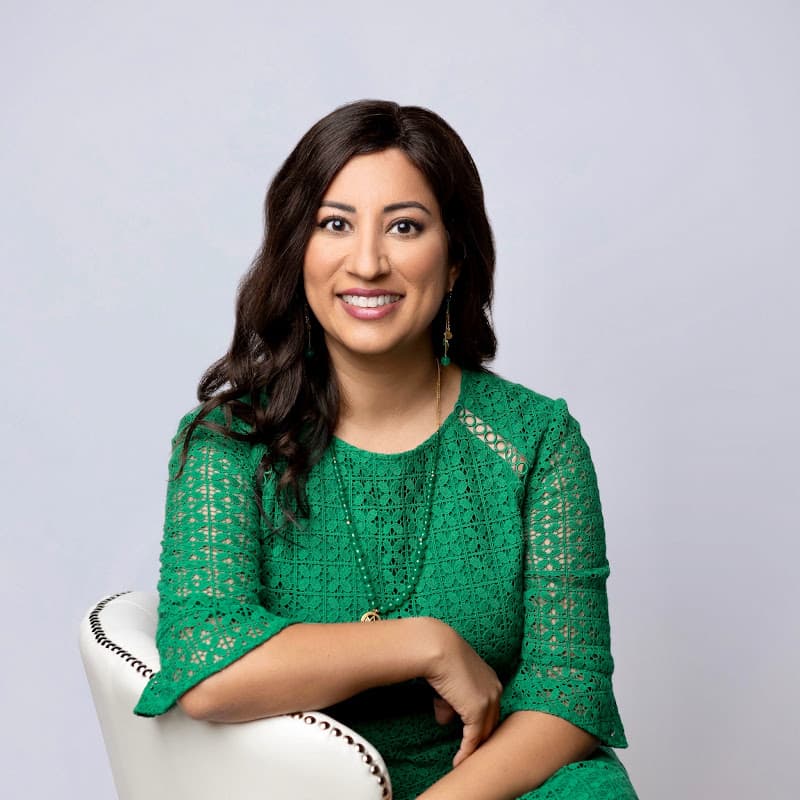
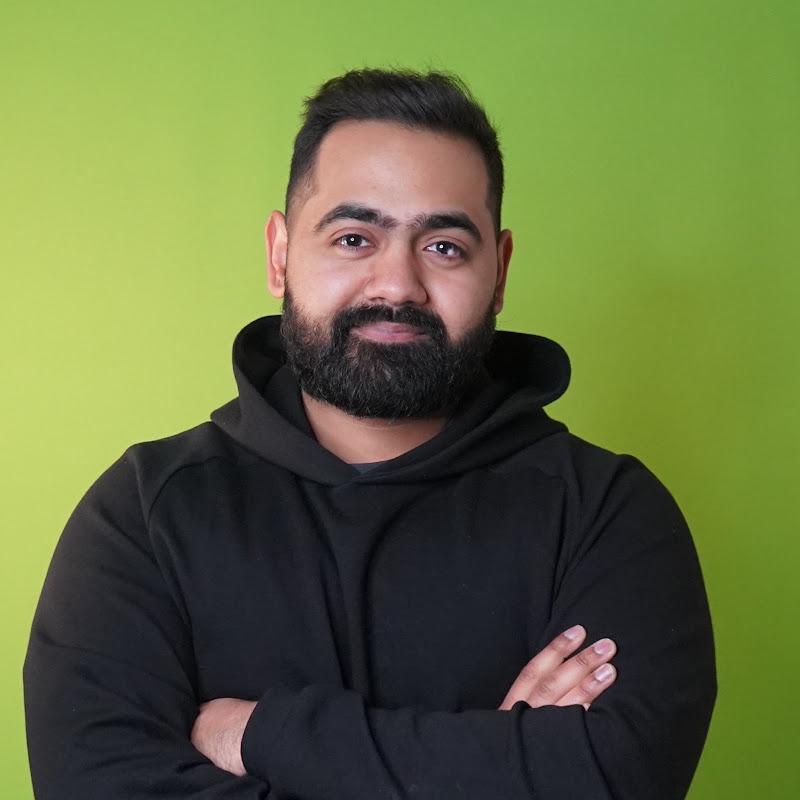
Full Transcript Summit Introduction and Colon Cancer Overview 0:00 Welcome everyone to the Gut Health and Longevity Summit. 0:02 I am so glad you're here. 0:04 And today we're going where some conversations 0:07 about health never go right inside the colon, 0:10 seeing through the eyes of a surgeon and, well, myself as a pathologist. 0:14 So first of all, I want to talk about colorectal cancer. 0:17 It is now the leading cause of cancer death in America in adults under age 50. 0:22 And most of the cancers begin as small polyps that grow quietly for years. 0:27 That gives us a very long window to find it 0:30 and really room to lower the odds of it forming at all. 0:34 And as a pathologist, I see the story from the microscope side, 0:38 and today I get to hear it from the operating room side, along with what 0:43 fiber does and the rest of the food on your plate has to do with it. 0:47 So my next guest, Doctor Karen Rajan, has spent nearly 0:51 a decade as a surgeon operating on the human gut. 0:54 He has seen up close what years of eating and waiting to do in the colon. 0:59 Then his own blood work surprised him, and he started applying 1:02 what he learned in surgery in his own plate. 1:05 He is a graduate of the Imperial College London, and spent over a decade 1:09 as a doctor and surgeon in the NHS, and he has also taught 1:13 as an honorary clinical lecturer at the University of Sutherland. 1:16 Since 2020, he has become one of the most trusted voices 1:20 in health education online, with more than 12 million followers. 1:23 That's a lot of people. 1:25 And he has held ambassador roles with the UN and the W.H.O., 1:30 and has advocated for a smoke free generation and improvements in the NHS. 1:34 He's the best selling 1:35 author of this book May Save Your Life and this is vital information. 1:40 And he is known for taking health myths people 1:43 pick up online and replacing them with what the evidence really says. 1:47 So welcome so much. 1:48 Between your operating room table and my microscope, 1:51 I think we're going to give people a view on the colon that they maybe never had. 1:57 So my first question for you is 2:01 you've spent years with your hands inside of people's abdomens. 2:04 What did surgery teach you about the colon 2:08 that you wish every person listening to new? 2:11 And when did that lesson become personal for you? 2:14 Yeah, I mean, 2:17 as you know 2:18 and as I know, the colon is very complex. 2:22 It has so many different layers 2:24 to it, and the different layers perform different functions, 2:27 you know, and most people don't see inside their colon like the inner lining. 2:31 We think about it, the average person will think about their colon 2:35 as this garbage shoot this disposal unit. 2:38 But actually when you see it, it is so filled with blood. 2:43 It's like I've got a very rich blood supply, so many different layers. 2:47 It hosts this entire ecosystem, the microbiome, 2:50 the actual colon lining, where often a lot of these cancers develop.
Why the Colon Matters and Personal Path to Gut Surgery 2:54 It's very delicate. It's very thin. 2:56 So actually it's a very dynamic, important environment 3:00 which has so many different functions 3:02 from obviously disposing waste as like a, you know, a conduit. 3:06 But more importantly, it's a very dynamic interface with the human 3:10 body, allows for nutrient absorption, water absorption. 3:13 You know, this sort of immune system overlap is parts of the colon 3:17 which, you know, are key to immune regulation. 3:19 So really, from how I see it, 3:22 you know, it's the center of so many diseases, 3:25 chronic diseases and acute it's, you know, has a key role to play 3:29 in nutrition, in immune regulation, you know, just quality of life. 3:35 And I think most people don't realize how important it is 3:38 until there's a problem with it. Yeah, absolutely. 3:40 And before we get into some of the problems 3:42 that develop, let's talk about where did this become personal for you. 3:47 Was it a certain case in surgery you saw, or was it your own health journey. 3:52 Like where where did this really become like, 3:54 okay, this is the conversation I have to have 3:56 because as a surgeon, I mean, you can be a colorectal surgeon. 3:59 You can be, you know, those neurosurgeons that call me 4:02 way too early in the morning for for a brain biopsy. 4:06 You can be in search. You could be all kinds. 4:08 But where did this really come from? 4:12 Yeah, for me, gut surgery was very important. 4:15 It came from, you know, my childhood experiences where, 4:18 you know, I was, you know, just playing with my cousin. 4:21 And he was suddenly just kind of collapsed to the ground 4:24 as though he was struck down by something invisible. 4:26 And, you know, turned out once he was rushed to the hospital, 4:29 he had a ruptured appendix. 4:30 And, you know, I was maybe 7 or 8 years old at the time, didn't 4:34 quite understand what an appendix was, what had been happening. 4:37 But then later, I knew, I found out that he was very close 4:41 to losing his life with the ruptured appendix. 4:43 And that kind of began 4:45 my journey of trying to understand more about the human body. 4:48 My mom's a doctor. She's a hematologist. 4:50 So, you know, I would continue to be fascinated by science. 4:54 And then just once I was a doctor 4:57 and then decided to choose surgical training. 5:00 I was just completely blown away by the breadth of organs 5:05 that you could operate on, and that you dealt 5:08 with as a general surgeon and a GI surgeon, 5:11 and how all these different organ systems are weirdly interconnected. 5:15 You can operate on the liver, and the liver can have an impact on the 5:19 colon and the small intestine, and the gallbladder 5:22 can have an impact on the colon, and the pancreas can have an impact, 5:26 you know, on the liver and on the small intestine. 5:29 And just all of you know, we talk about gut health and gut health 5:33 is an umbrella term which covers dozens of organs and dozens of metabolic, 5:38 well, hundreds of metabolic pathways and enzymes and hormones. 5:41 And so that's what attracted me towards, you know, gut surgery. 5:46 Yeah, absolutely. 5:47 And for somebody like myself who's well held way too many colons 5:52 in my hand after receiving them from somebody like you as a surgeon. 5:55 And I'm like, wow, I literally look at the person's colon. 5:59 I'm like, there's so much of a life story in this individual, 6:02 and I know we're going 6:03 to get into some like, case examples because I think this is important 6:06 because we've been talking plenty about everybody knows we need to eat 6:09 more foods, you know, like rainbow colors and all that. 6:12 But I think this is where we really get into like, 6:15 all right, this is disease here. 6:17 So let's talk about one of the ones that is becoming more prevalent than ever. 6:23 Like in the past, cancer was seen as a disease of the elderly. 6:28 Now we are seeing colorectal cancer start much earlier. 6:33 In fact, I actually have a colleague of mine 6:36 who really find developed colon cancer within a year. 6:40 Stage three had to get colorectal surgery, chemotherapy, all of that. 6:45 And I asked him, I'm like, what did you do in this past year? 6:48 And not saying that this is the cause of it because the cancer 6:51 is multifactorial. 6:53 But he did tell me that during that previous year, he totally changed his diet
How Colorectal Cancer Develops Over Time 6:58 to a very heavy carnivore 7:01 diet prior to the diagnosis. 7:05 And like I said, 7:06 I want to make it very clear to the people listening that cancer is multifactorial. 7:11 But we do know that there is some changes that happen in the body. 7:15 So can you walk people through, like 7:19 when people think of a tumor appearing, they think it comes out of nowhere. 7:23 But because colorectal cancer and the biologic events 7:28 that are happening start years earlier, can we talk a little bit about that? 7:32 Because I'm sure you work with a gastroenterologist 7:36 where they're sending you polyps, or maybe you're looking at the polyps. 7:40 I don't know how it works in the UK, but in the US it's a GI 7:43 doctor will go in and scope and then take out whatever polyps, 7:48 and then the pathologist like me will tell them if it's a tubular adenoma 7:53 to pull up a hyperplastic polyp or invasive adenocarcinoma, 7:57 and then the surgeon goes and takes it out. 7:59 So I don't know if that works differently in the UK, but 8:02 can you walk us through the actual physiology, the biology of 8:06 what's going on in the body, and then what kind of time span are we looking at? 8:11 Yeah, I 8:12 mean to some degree depends on the type of tumor. 8:15 They can be super aggressive ones 8:17 which develop and turn malignant over a very short time frame. 8:21 Especially, you know, some of these hereditary syndromes, 8:25 you can get rapid growth of polyps, you know, within the time span 8:29 of several months to, you know, just under a few years, just a couple of years. 8:33 But typically, you know, these polyps which are then precancerous and then turn 8:37 malignant, it's a several year long process, ten years, 15 years even. 8:42 And in the very early instances of those types of things, developing 8:47 the symptom can be no symptoms or at least vague symptoms that are very nebulous. 8:52 And you don't quite know whether it's just down to stress and the rigors of life. 8:56 And there's not the obvious stuff like changes in bowel habit, 9:00 dramatic weight loss, or bleeding. 9:02 Those things are often slightly later signs, 9:05 or at least intermediate signs in many cases. 9:07 So, you know, we still kind of subscribe to the two hit hypothesis of, 9:11 you know, 9:12 like tumor growth, where someone may have 9:14 an increased predisposition towards developing a cancer. 9:17 And then the second hit may be something lifestyle related directory 9:22 smoking exposures, environmental changes, age, 9:26 all those things and some of which are, you know, non modifiable factors. 9:30 But you know certainly 9:33 why we have screening to screening asymptomatic population. 9:35 So we can pick things up before they happen 9:37 and hopefully stop the cancer before it happens. 9:39 So it really is like a very indolent process 9:44 in most cases where it is going to take several years, 9:47 over a decade, maybe in some cases, and it can be anyone. 9:50 So it doesn't even have to be someone with a bad lifestyle. 9:54 You can have. 9:55 You can be the healthiest person in the world, eat 100g of fiber 9:58 a day and not smoke and do everything right and still get it 10:01 just because, you know, like you said, it's so multifactorial. 10:05 But we know that lifestyle factors have such a huge impact. 10:09 We even know this from the data. 10:11 You know, there was a meta analysis in the BMJ in 2010. 10:14 And whilst it was a relative risk, not absolute risk reduction, 10:17 we know from that 10:18 like an increase of ten grams of fiber, reduce your colon cancer risk by 10%. 10:23 You know, even taking into account the caveat, that's relative risk, 10:26 that's still a huge improvement in your cancer 10:30 risk just from eating like ten grams of fiber. 10:33 Yeah, absolutely. 10:34 I mean, I kind of see it from the perspective of 10:37 when many people think of cancer, they think, oh, it's genetics. 10:40 When we know that nine 10:41 and 95% is not genetics, but that's very different than mutations. 10:45 And those mutations are what we see over our lifetime. 10:49 So whether they are from those environmental exposures, 10:53 certain carcinogens can damage the DNA, chronic inflammation. 10:57 I mean, we are living in a very chronically inflamed 11:01 environment with so much kind of cellular oxidative 11:04 stress on our DNA and, you know, even some microbial. 11:08 And we'll get into get into those microbial toxins. 11:12 So some of the bacteria. Right. 11:14 So I know I'm thinking of this from the fact that every colon cancer 11:19 that I diagnose now gets a Kras mutation 11:22 testing to see, but only 40% of them have the mutation. 11:26 And the purpose of that is one see the mutation to have the treatment for it.
Symptoms, Risk Factors, and the Role of Fiber 11:30 But let's bring this into why are young people 11:35 getting diagnosed later and sicker? 11:38 What is some of the symptoms that, 11:42 like you said, people might be thinking these things are normal. 11:45 What are some of the symptoms that people should start thinking about 11:49 and be aware of that goes, oh, maybe I need to like look at what's going on. 11:55 Yeah. 11:55 I think, you know, the very obvious ones. 11:57 I mean, there's like a long laundry list of symptoms 11:59 you could potentially look out for, but I think the obvious ones would be 12:02 chronic changes to your bowel habits over several weeks. 12:05 For six weeks, something like that. 12:08 You're getting more constipated, more diarrhea, 12:10 or there's some sort of significant change from your baseline. 12:13 Any rectal bleeding 12:14 is something that you should see, and the rectal bleeding is not just red blood, 12:18 but anything that's abnormal, you know, like this dark change, 12:21 blood bright red maroon, the full spectrum of like red to black. 12:25 You should be aware of any significant weight loss. 12:29 That's, you know, unintentional is something that you should bear in mind. 12:34 And, you know, we often ask people, you know, like, 12:37 especially the elderly who may not be weighing themselves in a regular basis, 12:40 you know, if their clothes are getting looser. 12:42 So for me, those things would be, you know, like really important 12:45 to keep an eye on. 12:46 But there's some associated symptoms as well, like bloating. 12:49 It's quite a major one. 12:50 And we often think bloating is just physiological. 12:54 Or for a meal you feel bloated and it absolutely can be. 12:56 But if you have chronic bloating, which is pervasive in your life, 13:01 that it's impacting your quality of life 13:03 and not going away, that is something to be taken seriously. 13:06 Absolutely. 13:07 And one of the things might I add is anemia. 13:11 That that is sometimes where I see it often come up is like 13:14 the person just is not complaining of any symptoms. 13:17 But their blood work shows anemia. 13:20 And it's like okay, well what's the underlying cause 13:23 of you not having enough blood cells? 13:26 Okay. 13:26 So let's talk about fiber okay. 13:30 So what does fiber, a plant 13:33 rich diet actually do for colon cancer risk. 13:37 And where is the evidence the strongest versus it's still kind of unsettled. 13:43 Yeah we know that fiber has multiple roles in 13:46 you know, a health promotion specifically colon cancer. 13:49 We know from large data sets, epidemiological data sets, 13:52 meta analysis that the more fiber you consume, 13:56 you see a pretty significant, you know, drop off in your colorectal cancer risk. 14:00 And, you know, some of the largest meta analysis. 14:03 Reynolds at our 2019. 14:05 I believe it was where actually, you know, 14:08 most people recommend the 30 gram fiber a day is great. 14:12 You get most of the benefits of colon cancer reduction at 30g a day. 14:15 But if you look at the dose response curves in that study, 14:19 you get increasing reductions in colorectal cancer risk. 14:22 Beyond consuming 30g a day, you get reductions at 4045g a day. 14:27 So I would argue based on the lack of evidence, 14:31 we actually don't know what the upper limit of fiber is in terms 14:35 of seeing benefit in ongoing reductions in colon cancer risk. 14:39 We just don't have large data sets 14:41 because people are not eating that much fiber, right? 14:43 We know that people are eating around 30g of fiber, 14:46 and we have enough data to suggest that that does do some benefit. 14:49 Whilst it's not linear, there is some significant 14:52 association there that is obviously epidemiological data. 14:56 If we look at the mechanistic data, there's actually a couple of fantastic 15:00 preclinical studies which came in nature in the last 18 months. 15:04 And those one study and this was done in rodents. 15:06 But I think it's great to show the mechanism still of how fiber could help. 15:12 Now we all have whether you're healthy or unhealthy, 15:15 we will have, you know, certain types of E.coli, different 15:18 strains of E.coli, living as part of our gut flora. 15:21 Certain types of E.coli produce a toxin called coli bacteria, 15:26 and coli backed in has a oncogenic effect on the gut lining of the colonists. 15:33 The cells lining the colon, which means they can cause direct mutational impacts. 15:37 And interestingly, when there is increased fiber consumption, 15:44 that eventually 15:46 reduces the amount of food available for E coli. 15:50 Because other bacteria are propagate, they grow. 15:53 There's less food for E.coli. 15:54 So then there's less and less coli bacteria. 15:57 So there's less of that oncogenic burden because of that 16:01 that toxin that comes from that bacteria. 16:03 Correct. Yeah. 16:04 And so we can see from those studies directly that high fiber 16:08 means less E.coli and less of that genotypes in that actin, 16:13 which means you'd have mechanistically a reduced risk of colorectal 16:18 cancer mutations, which means hopefully less correct or cancer. 16:22 So you tie that mechanistic study or those mechanistic studies 16:26 with the epidemiological data. 16:27 We have direct cause and effect that fiber is good 16:31 as a preventative strategy for colon cancer okay. 16:35 And so we don't have an upper limit. 16:38 But what is the minimum. 16:40 You should you would say like what is an appropriate high fiber diet 16:46 that an individual who, you know, not just for colon cancer 16:50 but overall health, like 16:51 where do you kind of place that amount of fiber 16:53 and what does that look like in a day? 16:55 For me, I would actually raise it from 30 to 40 because again, I'm 16:59 looking at one of the largest data sets we have that Reynolds meta analysis. 17:02 And it's very clear for type two diabetes, cardiovascular health, 17:06 all cause mortality and colorectal cancer, which was studied in that meta analysis. 17:11 At 40g a day, we see like the largest decreases 17:16 in, you know, like risk for all those four things.
Diet, Microbiome Changes, and Screening 17:20 You know, you have a lower risk of dying, lower risk of developing 17:23 types of diabetes, heart disease and colon cancer at 40g. 17:26 So I would say your baseline should be moved up from 30 to 40. 17:30 Okay. 17:31 There was a study I believe, that came out of your own medical school where 17:37 African Americans and rural South Africans swapped diets for about two weeks. 17:42 Can you share with us a little bit more about the study, 17:45 like what happened inside their colons, and why does that study stick with people? 17:50 Yeah, it was actually a colleague of mine, James Kinross, who did that study. 17:54 And it was really interesting because, you know, 17:57 people in America have like, you know, the standard American diet, 18:01 it's higher in fats, processed foods, fiber deplete. 18:05 And, you know, certain 18:06 African populations will have a lower fat diet with higher fiber. 18:09 And what actually happens and what they saw is one of those changes in the colon. 18:14 If you significantly consume more fat 18:17 in your diet and the dietary patterns we see 18:21 where fat consumption is highest is typically like an omnivorous 18:26 or carnivorous dyer, where there's a lot of saturated fats. 18:30 Okay, so it's not really the the fat in this dyer came from 18:34 animal sources, not from plant sources like olive oil or things like that. 18:37 And actually you get an increased production of secondary bile acids. 18:42 These are by which are digested by the colon, by the microbiome. 18:46 Secondary bile acids are actually oncogenic. 18:50 There are pro-inflammatory substance. 18:53 And, you know, they drive inflammation. 18:55 And chronic low grade inflammation can also be, you know, toxic 18:59 to the lining of the colon and increased risk of DNA mutations. 19:03 So that's basically what happened. 19:04 They saw that you get increased production of secondary bile acids. 19:07 When those African populations suddenly started eating an American diet 19:11 just within a short time frame as two weeks. 19:14 Yeah. 19:14 So basically with eating the standard American diet or the Western diet, 19:19 the South Africans have, correct me if I'm wrong, they actually even 19:23 had rise in the markers. 19:24 But did they also have polyps then. 19:27 I can't remember. 19:29 Off the top of my head, 19:29 I only sort of know the sort of top line microbiome changes. 19:33 And so 19:34 definitely a more inflammatory profile, which, you know, has been established. 19:39 And yet still people will eat the standard American diet. 19:44 So let's get practical. 19:46 And at this point, I don't even know if we call it 19:48 the standard American diet, because I will say that, you know, 19:52 it's ultra processed food because when I see it in the UK 19:56 or I see it in other parts of Europe, but, you know, 19:58 when people are eating that, 19:59 that entire microbiome shift will happen in individuals. 20:02 Let's talk about screening. 20:04 When should people start and what are the options 20:08 and where do you see people make mistakes? 20:11 I know for me is like when I read the report and I'm like, poor prep. 20:16 And then I get these polyps that aren't actually polyps, you know, to look at. 20:20 So where does screening play a role? 20:23 What can people do to have better screening? 20:26 Where does testing like colorguard really come in? 20:29 Like if this was a family member, 20:31 this was your brother or sister, what would you tell them to do? 20:35 Yeah, we obviously have a slightly different 20:36 screening process in the UK versus the US. 20:39 You know, in the UK 20:40 there's like a national screening program where you hit the age of 50, 20:44 you get sent what is the equivalent of a color guard in the US. 20:47 But you know, the fit test basically where it's like, 20:51 you know, a slide where, you know, you send your poop sample back to the lab. 20:55 The lab analyzes for microscopic amounts of blood, hemoglobin in the poop sample. 21:00 And if there is significant amounts of microscopic blood, 21:02 you'll be put forward, maybe for a colonoscopy 21:05 or maybe even a CT scan if you're not fit for a colonoscopy. 21:08 And that's kind of like the procedure once you hit the age of 50. 21:11 And, you know, often, 21:12 you know, people also get like a one off flexible sigmoid copy, which is like a, 21:16 you know, like a third of a colonoscopy, you could call it. 21:20 And that's screening at like from 50 onwards in the US. 21:24 Obviously the screening is like 45, which I actually think is better. 21:27 I think more countries should move towards 45 and maybe even sooner. 21:30 There's, you know, some emerging research suggesting that there may be a 21:35 for screening from the age of 40, get a higher pick up rate as well. 21:38 And we might capture some of those false negatives. 21:41 Anyway. 21:43 I think where people go wrong is that in the UK there was actually 21:47 a pilot study when the Fit testing first came out, two thirds of people 21:51 who were sent the at home poop test didn't send back the poop tests. 21:55 Right? 21:56 So if you don't send back the test, we can't see what's going on. 22:00 So it's useless. Okay. 22:02 And we saw and when this fit testing was actually first rolled out in Spain, 22:06 in the Basque Country, there was a 50% reduction in colon cancer 22:11 deaths from starting a national surveillance program 22:15 for fit testing, or at least the regional Basque region fit testing. 22:20 So it's a significant reduction 22:21 in colon cancer deaths from picking them up earlier. 22:23 But I think when people go wrong is not giving it back 22:27 and not going to an appointment. 22:28 If you're called for a colonoscopy and not adhering to the protocol 22:33 that you're advised to do before a colonoscopy, you know, 22:37 obviously you have to take laxatives before you've got an Oscar, be 22:41 so that you're fully washed out and cleaned out. 22:43 So whoever the endoscopy is is getting a crystal clear 22:47 view of your code on doesn't work in all cases. 22:50 But sometimes that's because people can't tolerate the bowel prep or the laxatives, 22:54 and it is difficult. 22:55 But going through that pain and that difficulty allows you 22:59 the best possible chance of having a high quality ten out of ten procedure 23:04 where even the smallest of potential polyps can be seen 23:07 by the experience endoscopy. 23:09 So it really is in your favor to swallow that horrible, 23:14 you know, liquid, to make sure that you have the best outcome. 23:17 And just to give people an idea of what An is looking at. 23:22 I mean, literally when we get little samples, it's a millimeter. 23:25 It's like the little pen cap. 23:27 These are very small. 23:28 So if that colon is full of food, 23:32 the endoscopy is not going to be able to see it in order to biopsy. 23:35 And it's sometimes 23:36 when those polyps are taking out you're taking out the tubular adenoma 23:39 which is a low grade dysplasia precancerous. 23:42 So that's a great way to catch it. 23:44 So yes colonoscopies have never been anybody's favorite thing 23:47 to do in the world. 23:48 It's not like we do Friday night events and drink our blocks, 23:52 but it is very important. 23:54 So I think this is where, you know, there's a lot of 23:57 and is now done with an AI integration on the screen. 24:01 It's very novel. 24:02 It's not in every sensor, 24:03 but I think that could be advantageous to pick up those small things. 24:06 Yeah, absolutely. 24:07 And we're doing that also in pathology where we have like prostate core biopsies.
Meat, Processed Foods, and Diverticulitis Myths 24:11 And it picks up one single gland. 24:13 So yeah, this is where AI can actually be useful. 24:16 So if fiber sits on the protective side of the plate what's on the other side. 24:22 What does the evidence actually say 24:24 about processed meat red meat alcohol when it comes to the colon. 24:29 Yeah. 24:29 And listen, I think there will always be people 24:32 who can never be convinced to stop eating meat or whatever. 24:37 And, you know, that's their wish. 24:38 But I think there's like 24:39 pretty clear evidence now that there's also a spectrum of types of meat. 24:44 You mentioned cold cuts, deli meats, processed meats are obviously 24:49 worse on the scale than, you know, just not natural meats 24:53 or like whole cuts of meat and, you know, that are sort of organic, 24:57 if you will, and not cured high salt and, you know, processed in any way. 25:02 But even then, I think when it comes to meet even beyond the processing, 25:06 there's also a difference between red meat and then white meats, you know, in terms 25:10 of gut health and metabolic health and, you know, general impacts on the body. 25:15 Red meat 25:15 is going to have a bigger negative impact than white meat or fish, for example. 25:20 We know that, you know, Mediterranean diet, you know, those people 25:24 in certain regions still eat meat, but it's a very minimal amount of meat. 25:28 And it usually leans towards fish and dairy 25:32 products rather than, you know, like a huge amounts of red meat. 25:35 And typically I think the the guidance and the research narrows 25:38 down to a number that, you know, people even eating meat 25:42 should limit their red meat consumption to under 50g a day. 25:46 Yeah, right. 25:47 And you know, again, I don't want to fear monger people, 25:51 but for example, there's been studies suggesting that eating more than 50g of 25:57 process red meat per day and more than 50g is like more than two slices of bacon. 26:02 And I know that a lot of people eat more than 26:05 it's literally a hot dog. 26:06 Yeah, correct. 26:07 And that can have, again, a relative risk increase, but a relative risk 26:11 increase of 12% of your code on cancer risk. 26:14 And if we look at what that means, that means one extra case per 100. 26:20 You know, your risk goes up from four and 100 to 5 and 100, 26:23 which is not huge, but it's not insignificant. 26:26 So, you know, 26:27 I'm always of the belief that you should do 26:29 everything you can to stack the odds in your favor. 26:31 And, you know, if it's protein you want, there's other ways you can get protein. 26:35 And the other thing I'll say on this is that we just know that, 26:40 you know, from a metabolic profile as well, 26:42 you know, it comes with other trade offs, like the meat is not just meat 26:46 and protein. It comes with high saturated fat, 26:48 sometimes high salt, and obviously low in fiber. 26:51 And really, I, I care about the unholy trinity 26:55 of gut health, which is high salt, high fat and low fiber, 27:00 you know, and I'm going to add one more for you advanced glycation end products. 27:03 So ages. 27:05 Yeah. 27:05 That's like 27:06 especially because the way meat is cooked because it's not like you're going to eat 27:09 like most people are not eating boiled meat 27:11 or like they're eating grilled meat or whatever. 27:14 Exactly. 27:14 Yeah. 27:14 So, you know, like so, 27:16 you know, there's a very clear research we have on those things. 27:19 So the more you can limit those things, it's going to be better for your cancer 27:22 risk reduction, your gut health, your microbiome health as well. 27:26 Yeah. All right. 27:27 So let's switch over from colon cancer 27:30 into something that maybe is a little I'm not going to say more common. 27:34 But another thing you would see in the operating room 27:38 which is diverticulitis okay. 27:42 So for years people have been told stay away from nuts, seed popcorn. 27:47 So what does a surgeon say about seeing the inside of a colon? 27:52 Really tell people now about these foods. 27:55 Like when we think about diverticulitis or diverticulitis even, 28:00 which is essentially the same, except the idea is the inflammation part of it. 28:04 Yeah, I mean, I it's always been a big bugbear for me 28:08 when I've heard people online, even patients come to me being like, yeah, 28:13 I've been told that I can't have nuts and seeds, and I totally get it. 28:17 It's a very plausible mechanism, like, 28:20 hey, I've got these small herniation and these small sacks in my bowel. 28:24 It makes sense that I can't digest seeds and they'll get stuck in the colon. 28:27 It makes sense, like a lock and a key. 28:29 But that's not what happens, you know. 28:32 And really the reason the underlying 28:35 principle and pathology behind or the etiology behind diabetic 28:41 genesis 28:42 is because probably you've gone chronically without fiber for a long time. 28:45 You've been straining and it's like a hernia. 28:48 You've been straining 28:49 so much that your bowel develops hernias and weaknesses in the bowel. 28:53 Obviously there's a genetic component that as well, but it's usually 28:56 because driven by chronic constipation and low fiber. 28:59 And actually you need those nuts and seeds or you at least need more fiber. 29:04 You can't be avoiding those foods. 29:05 The only caveat I will say, if you have diabetic 29:09 and then you get diabetic colitis like a flare up an infection whilst you're 29:14 undergoing the active inflammation, you probably should dial back your fiber. 29:19 Because insoluble fibers can be abrasive to the lining of the colon. 29:24 And if you have a high fiber diet whilst you're in an active 29:27 flare up or an infection, that could worsen your pain. 29:31 So that's the only thing. 29:32 So we usually recommend a low residue diet while someone is in flare up mode. 29:37 Yeah. So that would be just for the audience listening. 29:40 So diverticulitis is you basically have like if this is the colon 29:45 and it should be a nice kind of straight lining in a way 29:48 it's the mucosa and muscle that out pouches. 29:51 And now you've got these kind of curves. 29:53 And this is kind of where not just nuts and seeds food kind of gets stuck in here. 29:58 And when food gets stuck in here, it can cause inflammation 30:02 and eventually sometimes even rupture. 30:05 So what Doctor Karen is saying is that at that time, 30:09 if you have the inflammation part of it and you're going through a treatment 30:14 for that, that's when you want to be really cautious 30:16 of the amount of fiber and nuts and seeds. 30:19 But I do believe there is a way that like that they can reintroduce it
Practical Steps to Protect Colon Health 30:23 after some point without having the bloating and do it safely. 30:27 What would be your recommendation then? 30:30 Yeah, it's as soon as the inflammation is settling and signs 30:33 that the inflammation is settling is obviously the pain is getting better. 30:36 Your bowels are normalizing 30:38 because there's necessary information and there's less loose stool. 30:40 Maybe the bleeding is stopped. 30:42 Then you start reintroducing gentle fibers, soluble 30:45 fibers, which are maybe low Fodmap and more gentle on the guard. 30:48 Try to minimize a lot of these, you know, cellulose and plant cell wall fibers, 30:52 which are insoluble and focus more on the soluble fibers, 30:56 which are maybe viscous and more gentle. 30:58 And then once you're kind of back to normal, you go to a normal diet. 31:02 Yeah. 31:03 So the more soluble fibers 31:04 would be things like oats or peeled and cooked vegetables, bananas, potatoes 31:09 like the softer ones rather than the like the dark leafy greens or the Pacific. 31:14 So the slower fermenting ones. 31:16 Okay, perfect. 31:17 So now last question for you. 31:19 And I want to be very concrete for the audience. 31:22 Somebody listening wants to protect their colon. 31:25 Like today. 31:26 They just listened to your talk and they're like, I, I'm all about 31:29 like making my colo sites, my intro sites actually as strong as possible. 31:35 What are three things they should do starting today or this week? 31:39 And I really I want you to be specific. 31:43 Yeah, I would 31:44 simplify it and just focus on the three P's prebiotic fiber 31:50 which you can get from, you know, beans, nuts, 31:54 seeds, oats, you know, like there's 31:57 a wonderful range of foods you can get your prebiotic fiber from. 32:00 The second P is your polyphenols. 32:02 These are antioxidant compounds which are found in plant foods. 32:06 You can also find them in spices and olive oil. 32:09 So polyphenols you can find in coffee, olive oil, spices in berries. 32:14 I think that berries are fantastic. 32:15 It's a way to get your polyphenols and your prebiotic fibers. 32:18 And then the last P is probiotic rich foods. 32:20 So fermented foods your kimchi is your NATO's your miso soups your yogurt. 32:25 Even if you don't want to go too fancy and which will help to kind of, you know, 32:30 continue to inject low amounts of just, you know, live microbes into your food. 32:35 But just make sure that if you're buying those probiotic rich foods, 32:39 check the back of the label to say that it says live and active cultures, 32:43 that it's not salted or pickled in any way that kills the bacteria. 32:47 So prebiotics, probiotics, and polyphenols do those three things very easily. 32:52 And you could literally do it today by having a yogurt bowl 32:56 with raspberries and some nuts that will have all three. 32:59 And you get your fiber, 33:00 you get your protein and you're helping your code on. 33:03 Perfect. All right. 33:05 Is there anything I missed that you want to talk about? 33:09 Did we cover did we cover it pretty good? 33:11 Yeah, I think we did. 33:13 All right, doctor Rajan, thank you so much. 33:15 Hearing the operating room side of a story I usually see on a slide 33:19 has been a real gift. I think, for the audience. 33:21 Most colon cancers give us years of warning, and the food on 33:25 our plate really shapes the colon and the polyps that grow from it. 33:29 That's what I wanted everyone to carry away from them. 33:32 You can find Doctor Rajan on Instagram, at Doctor Karan Rajan 33:35 and on TikTok, and I encourage you to look up his books as well. 33:40 Here's the key takeaway for you guys. 33:42 Most colon cancer take years to form. 33:45 Use those years, get screened on time, and don't ignore 33:49 any of the warning signs and feed your colon plants every day. 33:53 So thank you so much! 33:54 Stay tuned for another episode in one of our sessions.
Comments